The best exercises to lose belly fat are the ones that help you reduce overall body fat while building strength and consistency. A smart plan combines cardio, full body strength training, core work, nutrition, sleep, and recovery instead of relying on one “belly fat burning” move.
Belly fat can include subcutaneous fat under the skin and visceral fat around internal organs. You cannot choose exactly where your body loses fat first, but the right training plan can help improve body composition, waist measurements, and long term health habits.
- Can You Target Belly Fat With Exercise?
- What Is the Best Exercise to Lose Belly Fat?
- Best Cardio Exercises for Belly Fat Loss
- Best Strength Exercises for Belly Fat Loss
- Best Core Exercises for a Stronger Midsection
- HIIT vs Steady Cardio
- Weekly Workout Plans
- Diet and Lifestyle Support
- Safety Tips and Modifications
- Tracking Progress
- Common Mistakes
Key Takeaways
- No exercise spot reduces belly fat: Belly fat loss happens when your body reduces total fat over time, not because one move targets one area.
- The best plan combines methods: Cardio, strength training, core work, daily movement, nutrition, and recovery work better together than any single workout type.
- HIIT is time efficient, not magic: It can help improve fitness and body composition, but steady cardio may work just as well when total effort and consistency are matched.
- Strength training protects progress: Full body resistance training helps maintain muscle, improve training capacity, and support long term fat loss habits.
- Tracking should go beyond the scale: Waist measurement, progress photos, workout performance, sleep quality, and energy levels often tell a clearer story.
Can You Target Belly Fat With Exercise?
No, you cannot reliably target belly fat with a specific exercise. Crunches, planks, and sit ups can strengthen your midsection, but they do not force fat loss from that exact area.
Exercise training can reduce total fat and visceral fat even when scale weight changes are modest, which is why a full body plan matters more than chasing one abdominal move.[1]
| Common Belief | Better Explanation | What to Do Instead |
|---|---|---|
| Crunches burn belly fat directly | Crunches train abdominal muscles, not local fat loss | Add core work after cardio and strength sessions |
| Sweating more means more belly fat loss | Sweat mostly reflects heat and fluid loss | Track weekly consistency and waist changes |
| HIIT is always best | HIIT is useful but not ideal for every body or schedule | Choose a plan you can repeat safely |
What Is the Best Exercise to Lose Belly Fat?
The best exercise to lose belly fat is the one you can perform consistently at the right intensity. For most people, that means a mix of brisk walking, incline walking, cycling, rowing, full body strength training, and core stability work.
Start with low impact cardio and basic resistance training if you are a beginner. Add HIIT only after you can recover well from moderate sessions.
- Best for beginners: Brisk walking, incline walking, cycling, and machine based strength training are easier to repeat without excessive soreness.
- Best for busy schedules: Short full body strength circuits and controlled HIIT sessions can fit into limited training windows.
- Best for joint comfort: Cycling, rowing, elliptical training, and low impact circuits reduce repeated landing stress.
- Best for home gyms: Dumbbells, an adjustable bench, a Smith machine, and floor space can support both strength and conditioning.
Best Cardio Exercises for Belly Fat Loss
Cardio helps belly fat loss by increasing weekly energy expenditure and improving cardiovascular fitness. The best cardio option is the one you can perform often without pain, burnout, or schedule friction.
- Brisk walking: Brisk walking is the easiest starting point for most people. It builds consistency, supports recovery, and can be progressed with time, pace, incline, or total steps.
- Incline walking: Incline walking increases effort without requiring running. It is useful for home gym users who want a challenging but lower impact cardio option.
- Cycling: Cycling is joint friendly and easy to scale. It works well for intervals, steady sessions, and recovery days.
- Rowing: Rowing trains the legs, trunk, and upper body together. Use controlled technique because rushing the stroke can shift stress to the lower back.
- Elliptical training: Elliptical training is a strong option when running feels too harsh. It allows longer sessions with less repeated impact.
For home setups, place cardio near stable flooring and open training space. If your workout area needs better traction and noise control, consider rubber high density interlocking gym flooring mats before adding higher intensity drills.
Best Strength Exercises for Belly Fat Loss
Strength training helps belly fat loss by building or preserving lean mass while improving training capacity. It does not replace nutrition, but it makes your body more capable of handling consistent weekly exercise.
A systematic review and meta analysis found that aerobic training, resistance training, and combined exercise modalities can reduce subcutaneous abdominal fat, with aerobic training showing strong effects in the analyzed trials.[2]
| Exercise Pattern | Examples | Why It Helps |
|---|---|---|
| Squat pattern | Goblet squat, Smith machine squat, box squat | Trains large lower body muscles and supports full body energy demand |
| Hinge pattern | Romanian deadlift, hip hinge, kettlebell deadlift | Builds glutes, hamstrings, and posterior chain strength |
| Push pattern | Push ups, dumbbell press, machine press | Strengthens chest, shoulders, and triceps |
| Pull pattern | Dumbbell row, cable row, lat pulldown | Builds back strength and improves posture support |
| Carry pattern | Farmer carry, suitcase carry | Challenges grip, trunk stability, and total body control |
If you train at home, start with versatile equipment that supports progressive overload. A pair of hex rubber dumbbells and an adjustable weight bench can cover presses, rows, split squats, step ups, and core work.
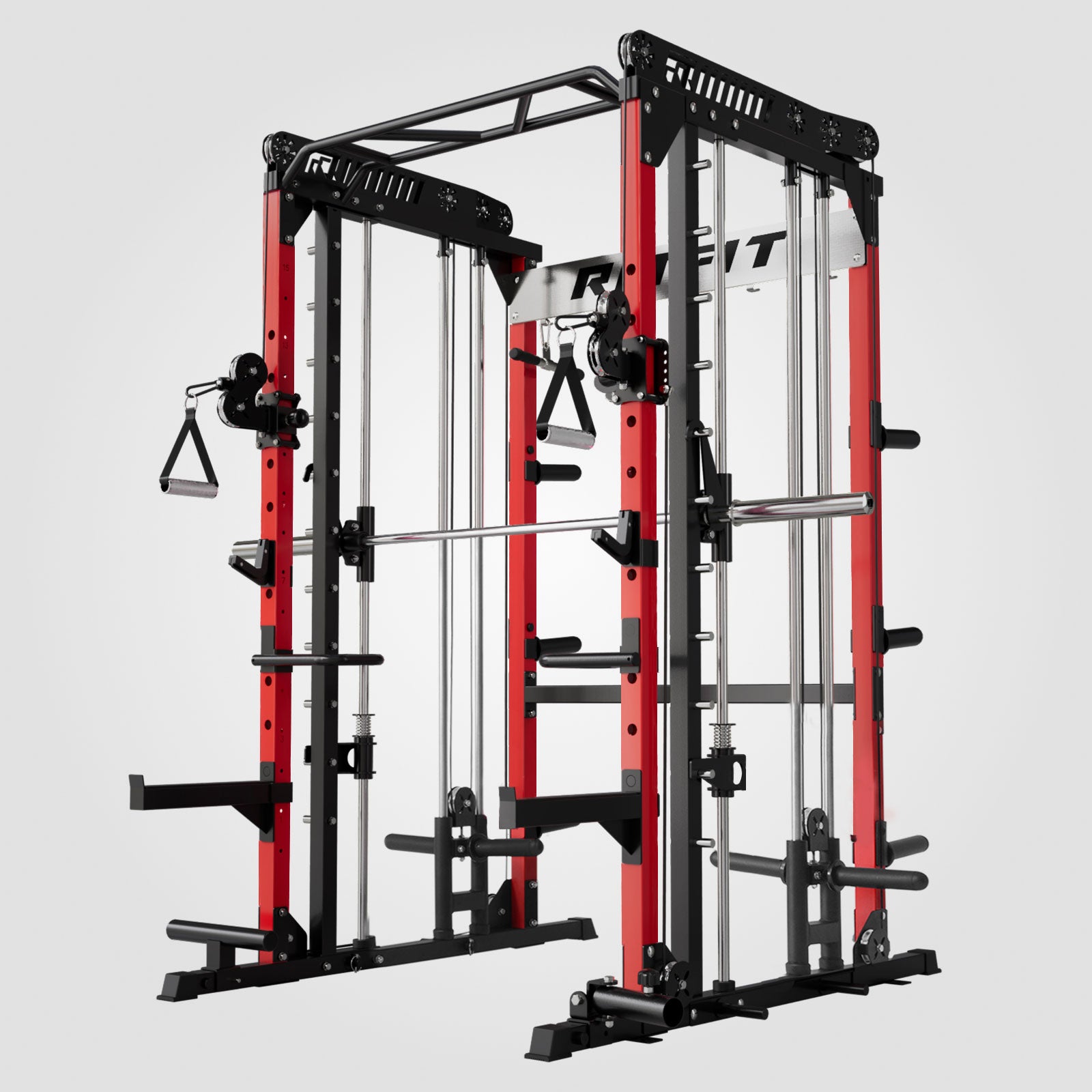
For a more structured strength station, a Smith machine for home gyms can help users train squats, presses, rows, and lunges with a guided bar path. Choose loads that let you control every rep instead of chasing fatigue.
Best Core Exercises for a Stronger Midsection
Core exercises strengthen the muscles that support your spine, pelvis, and rib cage. They should be used to build stability and control, not as the main driver of belly fat loss.
- Plank: Hold a straight line from shoulders to heels. Stop the set when your hips sag or your lower back takes over.
- Dead bug: Move opposite arm and leg while keeping your lower back controlled. This is useful for beginners who need low impact trunk training.
- Side plank: Train side body stability with the shoulder stacked and hips lifted. Bend the knees if the full version feels too intense.
- Pallof press: Press a cable or band straight out while resisting rotation. This trains anti rotation strength that carries over to lifting and daily movement.
- Farmer carry: Walk with controlled posture while holding weights at your sides. This builds grip, trunk stiffness, and whole body coordination.
Core work fits well after full body lifting or cardio. Keep most core sets controlled, repeatable, and pain free.
HIIT vs Steady Cardio for Belly Fat
HIIT can be a time efficient option for belly fat loss, but it is not automatically better for everyone. A 12 week study in obese young women found HIIT and moderate intensity continuous training had comparable effects on abdominal visceral fat reduction, while HIIT required less training time.[3]
Exercise intensity may influence abdominal fat changes, but higher intensity also increases recovery demands. One study in women with metabolic syndrome found high intensity exercise training was more effective than lower intensity training for reducing abdominal visceral fat and total abdominal fat.[4]
| Training Type | Best For | Use With Caution If |
|---|---|---|
| HIIT | Time efficient conditioning and advanced beginners | You have poor recovery, joint pain, or inconsistent training habits |
| Steady cardio | Beginners, recovery days, and sustainable weekly volume | You rely on long sessions but ignore strength and nutrition |
| Mixed training | Most long term fat loss plans | You add too much too soon and cannot recover |
Weekly Workout Plans
A good weekly plan should match your current fitness level, recovery ability, and schedule. Start with the lowest plan you can complete consistently, then progress gradually.
| Plan | Weekly Schedule | Best For |
|---|---|---|
| Beginner Plan | 3 walking sessions, 2 full body strength sessions, 2 short core finishers | New exercisers and people returning after a long break |
| Intermediate Plan | 2 strength sessions, 2 steady cardio sessions, 1 controlled HIIT session, 2 mobility or rest days | People who already train several days per week |
| Busy Schedule Plan | 3 sessions of 25 to 35 minutes using strength circuits and short cardio finishers | People with limited time who need simple structure |
- Beginner strength session: Perform goblet squats, dumbbell rows, incline push ups, hip hinges, and planks. Use 2 sets per move and stop with 2 to 3 reps left in reserve.
- Intermediate strength session: Perform squats, presses, rows, Romanian deadlifts, split squats, and carries. Use 3 to 4 sets per main movement with controlled form.
- Busy schedule session: Pair one lower body move, one upper body push, one upper body pull, and one core move. Keep rest short enough to stay focused but long enough to keep technique clean.
For home lifters who want one station for squats, presses, rows, cable work, and guided bar training, explore RitFit strength machines for home gyms. If you prefer a bench focused setup, the RitFit GATOR adjustable weight bench supports many dumbbell and barbell based movements.
Diet and Lifestyle Support
Exercise works best when your food intake supports a realistic calorie deficit. You do not need a crash diet, but you do need repeatable meals that control calories while providing enough protein, fiber, and fluids.
- Protein: Include a protein source at most meals. Protein supports fullness and helps preserve lean mass during fat loss.
- Fiber: Add vegetables, fruit, beans, or whole grains. Fiber can make calorie control easier because meals feel more filling.
- Liquid calories: Watch sugary drinks, alcohol, and oversized coffee add ons. These calories are easy to miss because they do not always feel like food.
- Meal consistency: Repeat simple meals that match your schedule. Consistency usually beats extreme rules.
Sleep and stress also matter because they interact with metabolic regulation, appetite, and recovery pathways.[5] Poor recovery can make workouts feel harder and make food decisions less consistent.
Safety Tips and Exercise Modifications
The safest belly fat workout is the one you can repeat without pain, dizziness, or excessive fatigue. Progress slowly and adjust exercise selection when your joints, recovery, or medical history require it.
- If you are new to exercise: Begin with walking, cycling, and basic strength movements. Avoid all out intervals until you can complete several weeks of moderate training comfortably.
- If you have knee discomfort: Use cycling, rowing with good form, step ups to a low surface, box squats, and controlled range of motion. Reduce jumping and running volume.
- If you have low back sensitivity: Prioritize dead bugs, side planks, supported rows, and hip hinges with light loads. Stop any movement that creates sharp or spreading pain.
- If you have high blood pressure or a medical condition: Ask a qualified healthcare professional before starting intense intervals or heavy lifting. Avoid breath holding during hard sets unless a coach has taught you proper bracing.
Good equipment setup can also reduce avoidable risk. Use stable flooring, clear space, secure collars on bars, and appropriate storage for barbells and weight plates.
How to Track Belly Fat Progress Beyond the Scale
The scale is useful, but it does not show the whole picture. Waist measurement, workout performance, and progress photos can reveal changes that daily body weight fluctuations hide.
| Metric | How Often | Why It Helps |
|---|---|---|
| Waist measurement | Every 2 to 4 weeks | Tracks abdominal size changes more directly than scale weight alone |
| Body weight trend | 2 to 4 times per week | Shows direction over time when averaged |
| Progress photos | Every 4 weeks | Shows visual changes in posture and body shape |
| Workout log | Every session | Shows whether strength, stamina, and consistency are improving |
| Sleep and energy | Weekly review | Helps explain plateaus and recovery issues |
Common Mistakes When Trying to Lose Belly Fat
Most belly fat plateaus come from inconsistent habits, not from choosing the wrong single exercise. Fix the basics before adding harder workouts.
- Doing only ab exercises: Core work is useful, but it should not replace cardio, strength training, and nutrition habits.
- Starting too hard: Extreme HIIT can create soreness and burnout. Build your base first, then add intensity.
- Ignoring strength training: Cardio can support fat loss, but strength training helps preserve muscle and improve body composition.
- Underestimating food intake: Exercise cannot consistently overcome high calorie intake. Use simple meal structure before trying complex diet rules.
- Tracking only weight: Scale weight can shift from water, salt, menstrual cycle changes, and soreness. Use waist measurement and performance trends too.
- Skipping recovery: Poor sleep and stress can make consistency harder. Treat recovery as part of the plan, not a reward after the plan.
FAQs
What is the best exercise to lose belly fat?
The best exercise to lose belly fat is the one you can repeat consistently while supporting a calorie deficit. For many people, that means brisk walking, incline walking, cycling, rowing, full body strength training, and core work combined into a weekly plan.
Can you lose belly fat with strength training?
Yes. Strength training can support belly fat loss by helping you preserve muscle, train large muscle groups, and improve long term workout capacity. It works best when paired with regular cardio, enough daily movement, protein focused meals, and realistic calorie control.
Is HIIT better than walking for belly fat loss?
Not always. HIIT can be more time efficient, but walking is easier to recover from and easier to repeat often. The better choice depends on your fitness level, joint comfort, schedule, and whether the workout helps you stay consistent.
How often should I exercise to lose belly fat?
Most people do well with three to five weekly workouts plus regular daily movement. A practical plan may include two or three cardio sessions, two strength sessions, and short core work after training, adjusted to your recovery and current fitness level.
What home gym equipment helps with belly fat workouts?
The most useful home gym equipment is versatile equipment that helps you train consistently. Dumbbells, an adjustable bench, stable flooring, a cardio option, and a Smith machine or strength station can support full body workouts, intervals, and progressive strength training.
How long does it take to lose belly fat with exercise?
Visible belly fat changes often take several weeks of consistent training, nutrition, sleep, and recovery. Some people notice better energy and waist changes before major scale changes, so track trends over four to eight weeks instead of judging daily results.
Should beginners do ab workouts every day to lose belly fat?
No. Beginners should not rely on daily ab workouts to lose belly fat. Two to four short core sessions per week are enough for most people when combined with walking, strength training, calorie control, and gradual progression.
Conclusion
The best exercise plan to lose belly fat is not one move, one machine, or one extreme routine. It is a repeatable combination of cardio, full body strength training, core stability, nutrition, sleep, and recovery.
Start with the version you can complete this week, then progress slowly. Consistency, safe form, and realistic habits will usually beat short bursts of intensity that you cannot maintain.
Disclaimer: This article is for general education only and is not medical advice. Exercise and weight loss needs vary by person, especially if you have pain, injury, pregnancy, cardiovascular concerns, diabetes, high blood pressure, or another medical condition. Speak with a qualified healthcare professional before starting a new fitness or weight loss program.
References
- Kolnes KJ Petersen MH Lien-Iversen T Højlund K Jensen J. Effect of exercise training on fat loss. Energetic perspectives and the role of improved adipose tissue function and body fat distribution. Front Physiol. 2021;12:737709. doi:10.3389/fphys.2021.737709
- Yarizadeh H Eftekhar R Anjom-Shoae J Speakman JR Djafarian K. The effect of aerobic and resistance training and combined exercise modalities on subcutaneous abdominal fat. A systematic review and meta-analysis of randomized clinical trials. Adv Nutr. 2021;12(1):179-196. doi:10.1093/advances/nmaa090
- Zhang H Tong TK Qiu W Zhang X Zhou S Liu Y He Y. Comparable effects of high-intensity interval training and prolonged continuous exercise training on abdominal visceral fat reduction in obese young women. J Diabetes Res. 2017;2017:5071740. doi:10.1155/2017/5071740
- Irving BA Davis CK Brock DW Weltman JY Swift D Barrett EJ Gaesser GA Weltman A. Effect of exercise training intensity on abdominal visceral fat and body composition. Med Sci Sports Exerc. 2008;40(11):1863-1872. doi:10.1249/MSS.0b013e3181801d40
- Hirotsu C Tufik S Andersen ML. Interactions between sleep, stress, and metabolism. From physiological to pathological conditions. Sleep Sci. 2015;8(3):143-152. doi:10.1016/j.slsci.2015.09.002