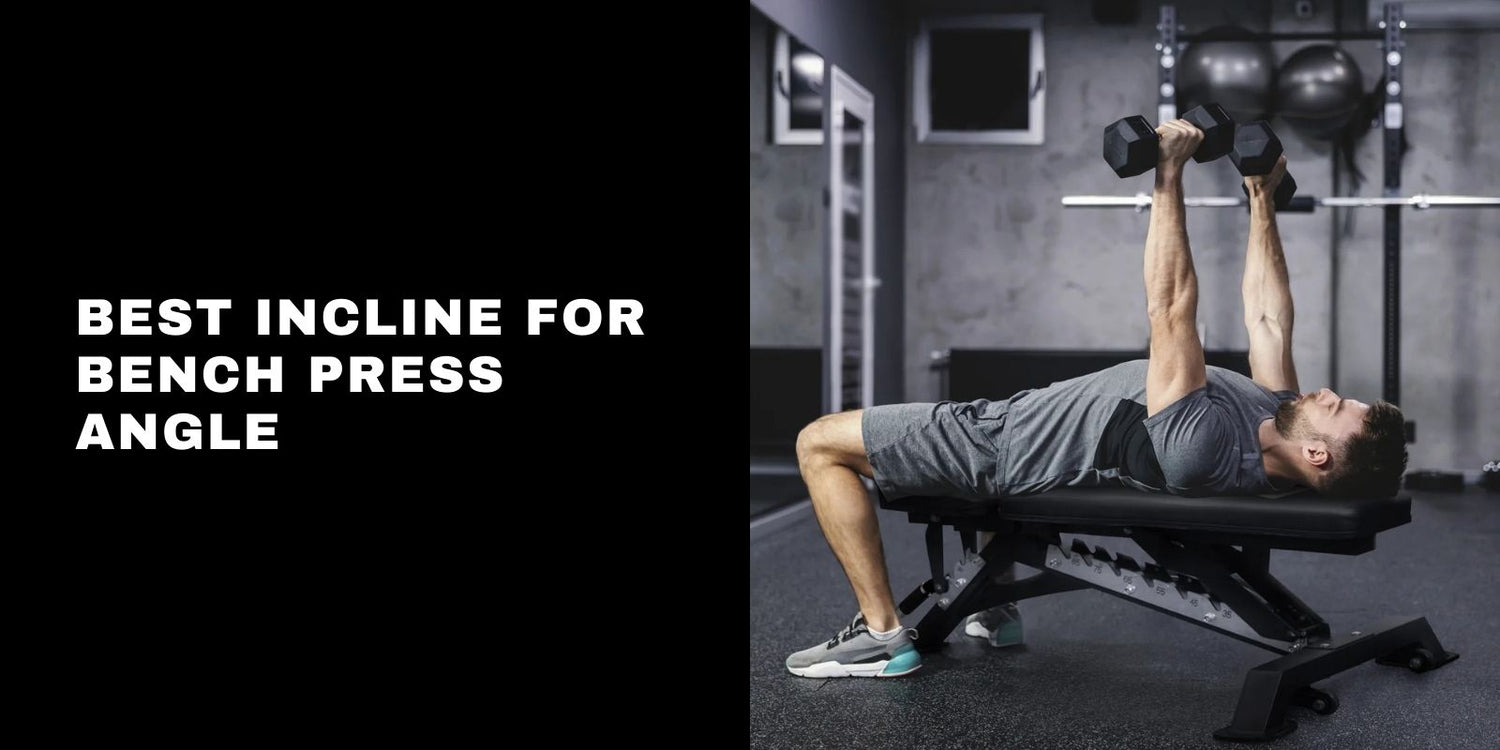
The best incline for bench press is usually 15 to 30 degrees for lifters who want stronger upper chest growth with less front shoulder takeover. This range helps target the clavicular head of the pectoralis major while keeping the movement closer to a chest press than a shoulder press.
This guide explains how bench angle changes muscle emphasis, how to set your adjustable bench, how to protect your shoulders, and how to program incline bench press into a home gym routine.
Table of Contents
- The Quick Answer: Best Incline Bench Angle
- What Is an Incline Bench Press?
- Muscles Worked by the Incline Bench Press
- How Bench Angle Changes Muscle Emphasis
- What Research and Coaching Experience Suggest
- Pros and Cons of Different Incline Bench Angles
- Incline Bench Angle Decision Table
- How to Choose the Best Incline Bench Angle for Your Goal
- How to Set the Incline Bench Correctly
- How to Do the Incline Bench Press Safely
- Why Your Shoulders Hurt During Incline Bench Press
- How to Program Incline Bench Press
- What to Look for in an Adjustable Bench
Key Takeaways
- Best default angle: Most lifters should start with a 15 to 30 degree incline for upper chest growth.
- Best simple starting point: A 30 degree incline is a practical first setting if your bench has multiple notches.
- Shoulder takeover warning: As the bench gets steeper, the anterior deltoids usually take on more work.
- 45 degree reality: A 45 degree incline can build strength, but it is not automatically the best angle for upper chest size.
- Best personal test: Choose the lowest angle that still lets you feel upper chest fatigue near the collarbone.
The Quick Answer: Best Incline Bench Angle
The best incline bench angle for most lifters is 15 to 30 degrees. This range usually gives a strong upper chest bias without pushing the movement too far toward a front shoulder press.
If you are unsure where to start, set your bench around 30 degrees and adjust one notch lower if your shoulders dominate. A lower angle is often better for lifters who feel pinching, front delt fatigue, or poor chest connection.
What Is an Incline Bench Press?
An incline bench press is a compound upper body exercise performed on a bench set above flat and below vertical. It trains the chest, shoulders, and triceps, with a stronger emphasis on the upper chest than a flat bench press.
The incline press sits between a flat chest press and an overhead shoulder press. As the bench gets more upright, the movement shifts away from the chest and toward the anterior deltoids.
- Flat bench press: Trains the full chest with more emphasis on the middle and lower pec fibers.
- Low incline bench press: Adds more upper chest emphasis while still allowing strong chest drive.
- High incline press: Trains the upper chest, front delts, and triceps, but often becomes shoulder dominant.
Muscles Worked by the Incline Bench Press
The incline bench press mainly works the upper chest, front shoulders, and triceps. The exact emphasis depends on bench angle, grip width, elbow path, range of motion, and load control.
- Clavicular head of pectoralis major: This upper chest region is the main reason lifters add incline pressing to a chest routine.
- Sternal head of pectoralis major: This mid chest region still assists, especially at lower incline angles.
- Anterior deltoids: These front shoulder muscles assist every incline press and become more active as the bench gets steeper.
- Triceps brachii: The triceps help extend the elbows and finish the press near lockout.
- Upper back and scapular stabilizers: These muscles help keep the shoulder blades packed and the press stable.
For a complete home gym pressing setup, pair incline work with stable support from an adjustable weight bench and suitable resistance tools. Many home gym users also rotate barbell pressing with hex rubber dumbbells to improve range of motion and joint comfort.
How Bench Angle Changes Muscle Emphasis
Bench angle changes the line of force and shifts stress across the upper chest, mid chest, front shoulders, and triceps. A small incline usually keeps the chest as the main driver, while a steep incline makes the press more shoulder dominant.
- 15 to 30 degrees: This is usually the best range for upper chest growth because it keeps the press chest focused.
- 30 to 45 degrees: This range can work well for balanced pressing strength, but lifters with dominant shoulders may feel less chest stimulus.
- 45 to 60 degrees: This range often increases front delt involvement and may reduce upper chest efficiency for many lifters.
- Above 60 degrees: This position is better treated as a shoulder focused press variation rather than a primary chest builder.
The best angle is not always the number printed on the bench. The best angle is the setting that lets you press hard, keep the shoulder blades stable, and feel the target work in the upper chest rather than mostly in the front delts.
What Research and Coaching Experience Suggest
Research on bench inclinations suggests that a 30 degree angle can produce strong upper pectoral activation, while inclines above 45 degrees tend to increase anterior deltoid involvement.[1] This supports the practical recommendation to start low before moving toward steeper settings.
Longer term training research also suggests that both horizontal and incline bench press variations can contribute to upper body strength and muscle development.[2] This means incline pressing should complement flat pressing rather than replace every other chest movement.
Shoulder load is also affected by bench press technique, including grip width, shoulder position, and movement path.[3] That is why a shoulder friendly incline press depends on both bench angle and execution, not the angle alone.
Pros and Cons of Different Incline Bench Angles
Each incline angle has a different use case. The right choice depends on whether your priority is upper chest size, pressing strength, shoulder comfort, or overhead press carryover.
Low Incline Bench Press
A low incline of 15 to 30 degrees is usually the best option for upper chest hypertrophy. It keeps the chest involved while reducing the chance that the front delts take over.
- Best for: Upper chest growth, shoulder sensitive lifters, home gym strength training, and long term pressing progress.
- Main benefit: It gives a strong upper chest bias while still allowing a stable and powerful pressing path.
- Main limitation: If you overarch your lower back, the movement can start to feel too much like a flat bench press.
Moderate Incline Bench Press
A moderate incline of 30 to 45 degrees is useful for balanced upper body strength. It trains the upper chest, front delts, and triceps together.
- Best for: Lifters who want a blend of chest growth and shoulder pressing strength.
- Main benefit: It is easy to set up on many commercial and home gym benches.
- Main limitation: Shoulder dominant lifters may lose upper chest tension as the angle approaches 45 degrees.
High Incline Bench Press
A high incline of 45 to 60 degrees is better for shoulder and triceps strength than pure upper chest growth. It can be useful, but it should not be the only incline setting in a chest program.
- Best for: Overhead strength carryover, front delt training, and pressing variety.
- Main benefit: It teaches a stronger upward pressing pattern with more shoulder involvement.
- Main limitation: It can create more front shoulder fatigue and may feel uncomfortable for some lifters.
Incline Bench Angle Decision Table
Use this table as a starting point, not a fixed rule. Your shoulder comfort, chest feedback, and recovery quality should guide the final adjustment.
| Goal or Situation | Best Starting Angle | What You Should Feel | Common Issue | Best Fix |
|---|---|---|---|---|
| Upper chest growth priority | 15 to 30 degrees | Fatigue near the clavicle line | Front delts take over | Lower the angle one notch and reduce load |
| Balanced strength and physique | 15 to 35 degrees | Chest, triceps, and moderate shoulders | Inconsistent bar path | Pause lightly and keep the shoulders packed |
| Shoulder sensitive lifters | 15 to 20 degrees | Chest work without sharp shoulder stress | Pinching in the front shoulder | Shorten range slightly and use dumbbells |
| Overhead press carryover | 30 to 45 degrees | Front delts and triceps working hard | Chest stimulus drops | Add low incline work as your main chest builder |
| Mostly front delts feeling everything | 15 to 25 degrees | Better upper chest pump | Angle is too steep for your build | Lower the angle and widen the grip slightly |
How to Choose the Best Incline Bench Angle for Your Goal
Choose your incline angle by goal first, then adjust based on muscle feel and joint comfort. A lifter training for upper chest size should not use the same default angle as a lifter chasing overhead press carryover.
- For maximum upper chest growth: Use 15 to 30 degrees and keep the bar path aimed toward the upper chest.
- For overall upper body strength: Use 15 to 35 degrees most of the time, then occasionally include 45 degrees for pressing variety.
- For shoulder friendly training: Start at 15 to 20 degrees and use a controlled range of motion.
- For dumbbell pressing: Use 15 to 30 degrees and allow the wrists and elbows to follow a natural path.
- For Smith machine incline press: Match the bench position to the fixed bar path and avoid forcing the shoulders into an awkward groove.
If you train with a rack or guided bar, make sure your bench position lets the bar meet your upper chest without neck or shoulder strain. A stable Smith machine home gym setup can help support repeatable pressing, but the angle still needs to match your body mechanics.
How to Set the Incline Bench Correctly
Set the bench low enough to keep chest tension and high enough to shift work toward the upper pecs. If your bench has no degree markings, use the visual slope and your muscle feedback to choose the closest setting.
- 15 to 20 degrees: Use the first notch above flat on most adjustable benches.
- 30 degrees: Use the second or third notch when the back pad looks gently inclined but not steep.
- 45 degrees: Use the clear diagonal position when you want more shoulder involvement.
- 60 degrees or higher: Use this as a shoulder focused press, not as your main upper chest angle.
Adjust the seat if your bench has one so you do not slide during the set. For home gyms, the RitFit benches collection is the most relevant category when you need stable incline settings for chest, shoulder, and dumbbell work.
How to Do the Incline Bench Press Safely
Safe incline bench press technique starts with a stable upper back, controlled bar path, and an angle that lets your chest do the work. Poor setup can turn a good upper chest exercise into a shoulder irritating press.
- Step 1: Set your bench: Start at 15 to 30 degrees and confirm the back pad feels stable before loading the bar.
- Step 2: Plant your feet: Keep both feet firmly on the floor to create full body stability.
- Step 3: Pack your shoulders: Pull your shoulder blades back and down before unracking the weight.
- Step 4: Use a controlled grip: Choose a grip slightly narrower than your flat bench grip if a wide grip bothers your shoulders.
- Step 5: Lower to the upper chest: Bring the bar down under control toward the upper chest, not the neck.
- Step 6: Press with control: Drive the bar up while keeping wrists stacked and elbows under the weight.
Avoid turning the incline press into a flat press by using an extreme lower back arch. A small natural arch is fine, but your torso should still match the incline angle.
Why Your Shoulders Hurt During Incline Bench Press
Your shoulders may hurt during incline bench press when the bench is too steep, the elbows flare too wide, the shoulder blades lose position, or the load is too heavy to control. Shoulder impingement literature also supports careful attention to posture, scapular mechanics, and pain free progression when managing shoulder symptoms.[5]
- Lower the angle: Move from 45 degrees to 30 degrees, or from 30 degrees to 15 degrees.
- Control the elbows: Keep elbows roughly 30 to 60 degrees from the torso instead of flaring straight out.
- Use dumbbells: Dumbbells allow a freer path and may feel better on sensitive shoulders.
- Slow the descent: Lower the weight smoothly and stop before your shoulder position collapses.
- Stop sharp pain: End the set if you feel sharp pain, numbness, tingling, or worsening pinching.
For lifters who want more control, dumbbell incline pressing with home gym dumbbells can be easier to adjust than a fixed bar path. Barbell pressing still works well when paired with a stable rack and a quality 7FT Olympic barbell.
How to Program Incline Bench Press
Program incline bench press 1 to 2 times per week based on your recovery and chest training volume. Evidence based loading reviews suggest that strength and hypertrophy can be trained across a range of loads when effort, progression, and total volume are managed well.[4]
- For muscle growth: Use 3 to 4 sets of 8 to 12 reps with a controlled tempo.
- For strength: Use 3 to 5 sets of 4 to 6 reps with longer rest periods.
- For shoulder sensitive training: Use 2 to 4 sets of 10 to 15 reps with lighter loads and slower lowering.
- For upper chest priority: Place incline bench first on chest day when you are fresh.
- For balanced chest development: Pair incline press with flat pressing, dumbbell pressing, push ups, or cable fly work.
A practical home gym chest day can combine incline bench press, flat dumbbell press, push ups, and cable fly variations. If you want a machine based chest and shoulder option, the 2 in 1 chest and shoulder press machine can support guided pressing variety.
What to Look for in an Adjustable Bench for Incline Pressing
The best adjustable bench for incline pressing should feel stable, support multiple low incline settings, and hold your body position under load. A bench with only steep angles may limit your ability to find the upper chest sweet spot.
- Low incline settings: Look for practical options around 15 to 30 degrees.
- Stable back pad: The pad should not wobble when you unrack, press, or set dumbbells in place.
- Seat adjustment: A secure seat angle helps prevent sliding during incline work.
- Weight capacity: Choose a bench that supports your body weight plus long term pressing loads.
- Home gym footprint: Make sure the bench fits your rack, dumbbell area, and storage space.
If you are building a complete home gym, choose a bench that works with dumbbells, barbells, and rack based pressing. You can pair a stable bench with RitFit M1 Smith Machine with Cable Crossover System or broader strength machines to support full body training beyond chest day.
Frequently Asked Questions About Incline Bench Press
What is the best incline for bench press?
The best incline for bench press is usually 15 to 30 degrees for upper chest growth. This range keeps the chest involved while limiting front shoulder takeover, making it a strong starting point for most lifters who want size, strength, and better pressing comfort.
Is 30 degrees better than 45 degrees for incline bench press?
Yes. 30 degrees is often better than 45 degrees if your main goal is upper chest growth. A 45 degree incline can still build strength, but many lifters feel more front delt fatigue, which may reduce chest focused tension during heavier sets.
Can a 15 degree incline build upper chest?
Yes. A 15 degree incline can build the upper chest, especially for lifters who feel shoulder discomfort at steeper angles. The angle is subtle, but it still shifts the press above flat and can improve chest tension when form stays controlled.
Why do I feel incline bench press in my shoulders?
You usually feel incline bench press in your shoulders because the bench is too steep, your elbows flare too wide, or the weight is too heavy. Lower the angle, pack the shoulder blades, reduce the load, and press toward the upper chest.
Should beginners use barbell or dumbbell incline bench press?
Beginners can use either, but dumbbells often feel more natural because each arm can move freely. Barbells are easier to load progressively, while dumbbells may be better for learning control, improving symmetry, and reducing shoulder irritation during early training.
How do I set an incline bench without degree markings?
Set the bench one or two notches above flat to approximate a low incline. If the back pad looks only slightly raised, it is usually near 15 to 30 degrees, while a clear diagonal position is often closer to 45 degrees.
Is incline bench press safe for shoulder pain?
No. Incline bench press is not automatically safe if you already have shoulder pain. Use a lower angle, lighter load, and pain free range, and stop if you feel sharp pain, pinching, numbness, or symptoms that worsen during the set.
How often should I train incline bench press?
Most lifters can train incline bench press 1 to 2 times per week. Use one heavier session for strength and one moderate session for muscle growth if recovery is good, and reduce frequency if shoulder or elbow soreness lingers.
Conclusion
The best incline for bench press is usually 15 to 30 degrees because it targets the upper chest while limiting excessive front shoulder dominance. Start around 30 degrees, lower the angle if your shoulders take over, and use your chest feel, joint comfort, and recovery as the final guide.
For long term progress, pair the right angle with stable setup, controlled form, progressive loading, and a bench that gives you enough low incline options.
Disclaimer: This article is for general fitness education only and is not medical advice. Stop any exercise that causes sharp pain, numbness, tingling, or worsening joint discomfort, and consult a qualified health professional before training if you have a current injury, medical condition, or post surgical restriction.
References
- Rodríguez-Ridao D, Antequera-Vique JA, Martín-Fuentes I, Muyor JM. Effect of five bench inclinations on the electromyographic activity of the pectoralis major, anterior deltoid, and triceps brachii during the bench press exercise. Int J Environ Res Public Health. 2020;17(19):7339. doi:10.3390/ijerph17197339
- Chaves SFN, Rocha-Junior VA, Encarnação IGA, Martins-Costa HC, Freitas EDS, Coelho DB, et al. Effects of horizontal and incline bench press on neuromuscular adaptations in untrained young men. Int J Exerc Sci. 2020;13(6):859-872. doi:10.70252/FDNB1158
- Noteboom L, Belli I, Hoozemans MJM, Seth A, Veeger HEJ, Van Der Helm FCT. Effects of bench press technique variations on musculoskeletal shoulder loads and potential injury risk. Front Physiol. 2024;15:1393235. doi:10.3389/fphys.2024.1393235
- Schoenfeld BJ, Grgic J, Van Every DW, Plotkin DL. Loading recommendations for muscle strength, hypertrophy, and local endurance: a re examination of the repetition continuum. Sports. 2021;9(2):32. doi:10.3390/sports9020032
- Escamilla RF, Hooks TR, Wilk KE. Optimal management of shoulder impingement syndrome. Open Access J Sports Med. 2014;5:13-24. doi:10.2147/OAJSM.S36646