A military workout builds functional strength, endurance, work capacity, and mental grit through bodyweight training, running, loaded movement, and disciplined progression. It works best when you scale intensity to your level, protect form, and train consistently instead of chasing exhaustion every session.
Train like the military if you want a routine that improves real world strength, conditioning, and self discipline at the same time. This approach is useful for basic training prep, athletic conditioning, and busy people who want an effective at home plan with minimal equipment.
Key Takeaways
- Military workouts train performance first: They improve strength, stamina, coordination, and fatigue resistance for real world movement.
- Military calisthenics is the foundation: Push ups, pull ups, squats, lunges, planks, crawls, and burpees build repeatable full body fitness with little or no equipment.
- Conditioning matters as much as strength: Running, sprint work, stairs, and loaded walking build the aerobic base and recovery capacity that military style training demands.
- Progression drives results: Add reps, rounds, density, range of motion, or harder exercise variations gradually instead of jumping to advanced volume too early.
- Good form is part of toughness: Real grit means staying composed under hard effort while respecting recovery, joint comfort, and clear stop signals.
What Is a Military Workout?
Military Calisthenics Explained
Military calisthenics is bodyweight training built around repeatable movements such as push ups, pull ups, squats, lunges, planks, crawls, and burpees. It develops movement quality, trunk stability, and muscular endurance without requiring machines or a large training space.
Goals of a Military Style Program
A military style program aims to build functional strength, cardiovascular stamina, muscular endurance, work capacity, and mental resilience. A strong plan also prepares you for practical demands such as repeated ground contact, fast transitions, loaded movement, and maintaining form while tired.
Principles Behind Effective Military Training
Progressive Overload with Bodyweight
Progressive overload still applies when you train with your own body weight. You create it by adding repetitions, increasing sets, slowing tempo, shortening rest, extending range of motion, or moving to a harder exercise variation.
High Work Capacity and Minimal Rest
Military workouts often use dense circuits because they train you to keep producing output with limited recovery time. This improves repeat effort conditioning, breathing control, and the ability to recover between hard bouts of work.
Full Body, Compound Movements
Compound movements should dominate because they train multiple muscle groups and movement patterns at once. Push ups, pull ups, squats, lunges, carries, crawls, and burpees build more transferable fitness than isolated single joint work alone.
Consistency, Discipline, and Grit
Results come from consistent sessions performed with intent, not from occasional punishment workouts. Discipline matters because military style fitness is built by repeated exposure to challenging but controlled work over time.
Safety First: Readiness, Warm Up, and Mobility
Who Should Get Medical Clearance
Get medical clearance before starting if you have cardiovascular symptoms, uncontrolled blood pressure, major joint pain, recent surgery, or a long period of inactivity behind you. Clearance also makes sense for older adults and anyone returning after injury because military style training often combines impact, volume, and limited rest.
Pre Workout Warm Up
Warm up for 5 to 10 minutes with easy cardio, dynamic mobility, and low effort rehearsal sets of the day’s main patterns. A simple sequence is brisk marching or light jogging, arm circles, leg swings, hip rotations, bodyweight squats, and incline push ups.
Technique Basics to Prevent Injury
Keep a neutral spine, brace the trunk, and use only ranges of motion you can control without losing alignment. Stop the set when speed, posture, or joint tracking breaks down because sloppy repetitions build risk faster than fitness.
Key Military Calisthenics Exercises
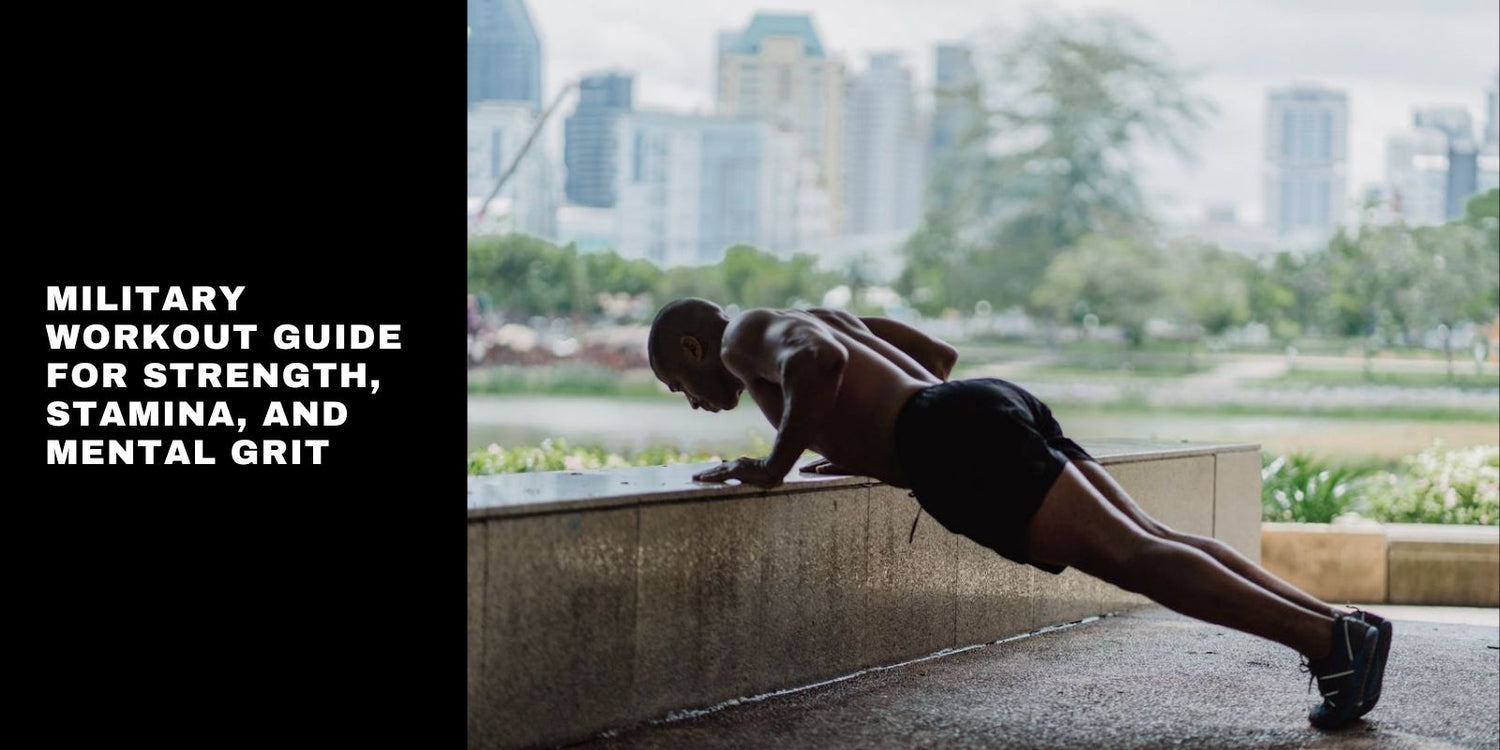
- Push Movements:Push ups are the cornerstone of upper body military training because they build pressing strength, trunk tension, and shoulder stability at the same time. Start with incline or knee assisted versions if needed, then progress to standard, hand release, decline, close grip, or tempo push ups.
- Pull Movements:Pull ups, chin ups, and rows build the pulling strength needed for balanced upper body development and better shoulder function. If full pull ups are not there yet, use band assistance, negatives, isometric holds, or inverted rows until you can control full range repetitions.
- Squat and Lunge Variations:Squats and lunges build leg strength, unilateral control, and the ability to absorb and produce force on tired legs. Start with bodyweight squats, split squats, reverse lunges, and step ups, then progress to jump squats, walking lunges, and pistol squat progressions when control is solid.
- Core and Trunk Stability:Planks, side planks, hollow holds, mountain climbers, and controlled leg raises train the trunk to resist collapse while the limbs move. That stability matters because military style sessions often demand repeated transitions, loaded movement, and good posture under fatigue.
Full Body Conditioning Moves
Burpees, bear crawls, shuttle runs, and squat thrusts connect upper body, lower body, and conditioning in one sequence. Use them to build full body fatigue tolerance, but keep each repetition clean so speed never replaces position.
Structuring a Military Style Workout
Choosing a Training Format
Use circuits, as many rounds as possible blocks, every minute on the minute intervals, or timed work and rest sets based on your goal and skill level. Circuits and timed sets are the simplest place to start because they let you control exercise order, effort, and recovery without overcomplicating the session.
Balancing Strength, Stamina, and Grit
Use harder exercise variations and slightly longer rest when strength is the priority, and use more total reps, shorter rest, and longer aerobic work when stamina is the priority. Build grit with a short finisher or final conditioning block that is demanding but technically repeatable, not reckless.
Frequency and Weekly Layout
Train military calisthenics 3 to 5 days per week, with 1 to 2 lower stress days for walking, mobility, easy cardio, or light skill work. A balanced week often includes an upper body and core day, a lower body and conditioning day, a full body circuit day, and optional running or rucking sessions.
Sample Military Calisthenics Workouts
Beginner Full Body Routine
Complete 3 to 4 rounds of 8 to 10 incline or floor push ups, 12 to 15 bodyweight squats, 8 to 10 inverted or towel rows, 16 to 20 walking lunges, and a 20 to 30 second plank. Rest about 60 seconds between rounds and stop each set with 1 to 2 quality reps still in reserve.
Intermediate Strength and Stamina Circuit
Complete 4 to 5 rounds of 12 to 15 push ups, 5 to 8 pull ups or assisted pull ups, 15 to 20 jump squats or split squats, 10 to 12 burpees, and 30 to 40 mountain climbers. Keep transitions short and rest 45 to 60 seconds between rounds.
Advanced Test Style Workout
Use a benchmark session only if you already tolerate high volume bodyweight work with strict form and recover well between sessions. A practical test is 50 to 100 total push ups, 50 to 100 sit ups or hollow rocks, 25 to 50 total pull ups, and a timed 1.5 mile run, divided into clean sets as needed.
Conditioning: Running, Rucking, and Sprints
How Cardio Fits with Military Calisthenics
Military fitness is not just upper body volume because aerobic base and repeat effort conditioning determine how well you recover between hard efforts. Running, stair work, rowing, cycling, and loaded walking can all support military calisthenics when they are programmed with purpose.
Simple Running Progression
Start with walk jog intervals for 20 to 30 minutes, then build to steady continuous runs before adding faster repeats. A simple weekly structure is two easy aerobic sessions and one short interval session once your legs and feet tolerate impact well.
Rucking and Loaded Carries
Start rucking with a light pack, upright posture, and a distance short enough to keep stride quality and foot comfort intact from start to finish. Loaded carries, hill walks, and stair climbs can build similar trunk and grip demands when you want less repetitive impact.
Progression, Tracking, and Testing Yourself
How to Progress Your Military Workout
Progress by adding repetitions, rounds, density, range of motion, or exercise difficulty one variable at a time. Small weekly increases beat occasional all out efforts because they create repeatable adaptation and lower the risk of overuse.
Simple Tracking System
Log the date, exercise selection, repetitions, rounds, rest periods, running distance, pace, and perceived effort after every session. That record shows whether your work capacity is rising and whether fatigue is accumulating faster than fitness.
Periodic Military Style Fitness Tests
Retest every 4 to 6 weeks with the same basic metrics, such as two minute push ups, a plank or sit up test, total pull ups, and a timed 1.5 mile run. Use the results to adjust training volume and progression instead of turning every week into a maximal effort week.
Building Grit: The Mental Side of Military Training
Embracing Discomfort vs. Avoiding Injury
Learn to tolerate hard breathing, muscle burn, and rising fatigue, but stop when you feel sharp pain, dizziness, chest symptoms, or sudden loss of coordination. Grit is staying composed under honest effort, not ignoring clear danger signals.
Habit, Discipline, and Routine
Discipline matters more than motivation because military style progress comes from repeated execution over months, not one brutal workout. Put sessions on a calendar, keep the plan simple, and show up often enough to make training automatic.
Mindset Tools
Break hard sessions into the next minute, the next set, or the next five clean repetitions instead of thinking about the whole workout at once. Controlled breathing, task focus, and honest pacing help you stay effective when fatigue starts to distort decision making.
Recovery, Nutrition, and Lifestyle
Rest and Sleep
Recovery is where strength, endurance, and movement quality improve after training stress. Aim for regular rest days and about 7 to 9 hours of sleep so your muscles, connective tissue, and nervous system have time to adapt.
Basic Nutrition for Performance
Eat enough protein, carbohydrates, fluids, and total calories to support repeated training and recovery. Underfueling makes military style conditioning feel harder, slows progress, and increases the chance of poor performance late in a session.
Mobility and Post Workout Care
Cool down with easy walking, light mobility, and simple stretching for the areas that feel most worked. Post workout care does not need to be complicated, but it should help you restore breathing, range of motion, and readiness for the next session.
Adapting Military Calisthenics to Your Level and Environment
Modifications for Beginners and Older Trainees
Scale movements with incline push ups, assisted rows, box squats, supported split squats, reduced impact conditioning, and shorter work intervals. Your first goal is consistent, pain free training quality, not proving toughness on day one.
Training with Minimal Space or Equipment
A military workout can work in a small room, garage, driveway, park, hallway, or stairwell if you choose movements that fit the space safely. A pull up bar, backpack, resistance band, timer, and open floor area are enough for most beginner and intermediate sessions.
Common Mistakes to Avoid
- Sacrificing form for reps: Low quality repetitions inflate numbers without building dependable fitness.
- Doing maximum intensity too often: Constant all out sessions reduce recovery quality and raise the chance of burnout or overuse.
- Skipping warm ups: Cold joints and rushed movement prep make hard sessions feel worse and increase technique breakdown.
- Ignoring lower body and trunk work: A push up heavy plan without leg strength, core control, and conditioning creates obvious performance gaps.
- Progressing too fast: Adding volume before your joints, feet, and connective tissue adapt is one of the fastest ways to stall.
Conclusion
A military workout works when you train with structure instead of chaos and build capacity before chasing punishment. Start with controllable calisthenics, layer in running or loaded movement, track progress honestly, and let strength, stamina, and grit rise together over time.
Disclaimer: This article is for general fitness education and is not medical advice. If you have heart, joint, spine, balance, or recovery concerns, or you are returning after injury or surgery, get clearance from a qualified clinician before starting high intensity training, running, or loaded carries.