Table of Contents
The Smith machine hack squat is a practical way to bias the quads while keeping a more upright squat pattern and a more repeatable bar path. It works especially well for solo home gym training, but the setup must match your machine, your ankle mobility, and your pain free range of motion.
Key Takeaways
- Quad focused setup: A Smith machine hack squat usually feels more quad dominant when your feet are slightly forward, your torso stays tall, and your knees can travel freely.
- Machine specific fit matters: Foot distance is not universal because angled and straight rail Smith machines do not feel the same.
- Depth should stay controlled: Parallel is a strong default, while deeper reps only make sense when you can keep pressure through the full foot and stay pain free.
- Tempo improves consistency: A controlled lowering phase helps you keep position, own the bottom, and avoid bouncing out of the hardest range.
- It is a useful home gym substitute: It is not identical to a dedicated hack squat machine, but it can still be a very effective quad builder when a home gym does not have a sled based option.
The Benefits of Smith Machine Hack Squat
The main benefit of the Smith machine hack squat is that it lets you train a squat pattern with lower balance demand and cleaner repeatability. Squat mechanics change meaningfully with trunk angle, stance width, foot rotation, and depth, which is why small setup changes can strongly affect how the movement feels and what muscles work hardest.[1]
- Stronger quad emphasis: A good Smith hack squat setup usually creates more knee travel and a more upright torso, which makes the movement feel more knee dominant than a standard Smith back squat.
- Better repeatability for solo training: The fixed bar path makes it easier to reproduce the same rep pattern from set to set, which is valuable when you train alone at home.
- Useful range of motion control: You can adjust foot distance, depth, and safeties more easily than in a free bar squat, which helps when you are rebuilding confidence or managing comfort.
- Clear hypertrophy application: This variation works well as a primary quad movement or as accessory volume after heavier compound work, especially when your goal is muscle growth instead of maximal skill transfer.
- Accessible machine alternative: If your home gym does not include a dedicated hack squat sled, the Smith version can still deliver a hard leg stimulus with less setup complexity than several free weight variations.
How To Do Hack Squats on the Smith Machine
The best Smith machine hack squat starts with a setup that lets you stay tall, keep your heels down, and move your knees forward without pain. Before you start, set the bar height, check the safeties, and test one or two foot positions until the bar path feels natural.
Quick Setup Checklist
- Bar height: Set the bar around upper chest to shoulder height so you can unrack it without shrugging or twisting.
- Safeties: Set the safeties just below your planned bottom position so a failed rep ends safely.
- Foot position: Start at about shoulder width with toes slightly out, then place your feet slightly forward of the bar line.
- Heel pressure: Keep pressure through the whole foot, especially the heel and mid foot, instead of drifting onto the toes.
- Rail angle: If your Smith machine uses angled rails, adjust your stance until the rep feels smooth and balanced.
Step 1: Set the machine and unrack the bar
Set the bar to a comfortable unrack height, load it evenly, and place the safeties before your first working set. Step under the bar with it resting across your upper back, then stand tall and rotate the hooks to unrack.
Step 2: Find your foot distance
Place your feet slightly forward of the bar line so you can keep a tall torso and let the knees travel forward. Start conservatively because too much forward distance often makes the rep feel jammed, disconnected, or unstable.
Step 3: Brace and descend under control
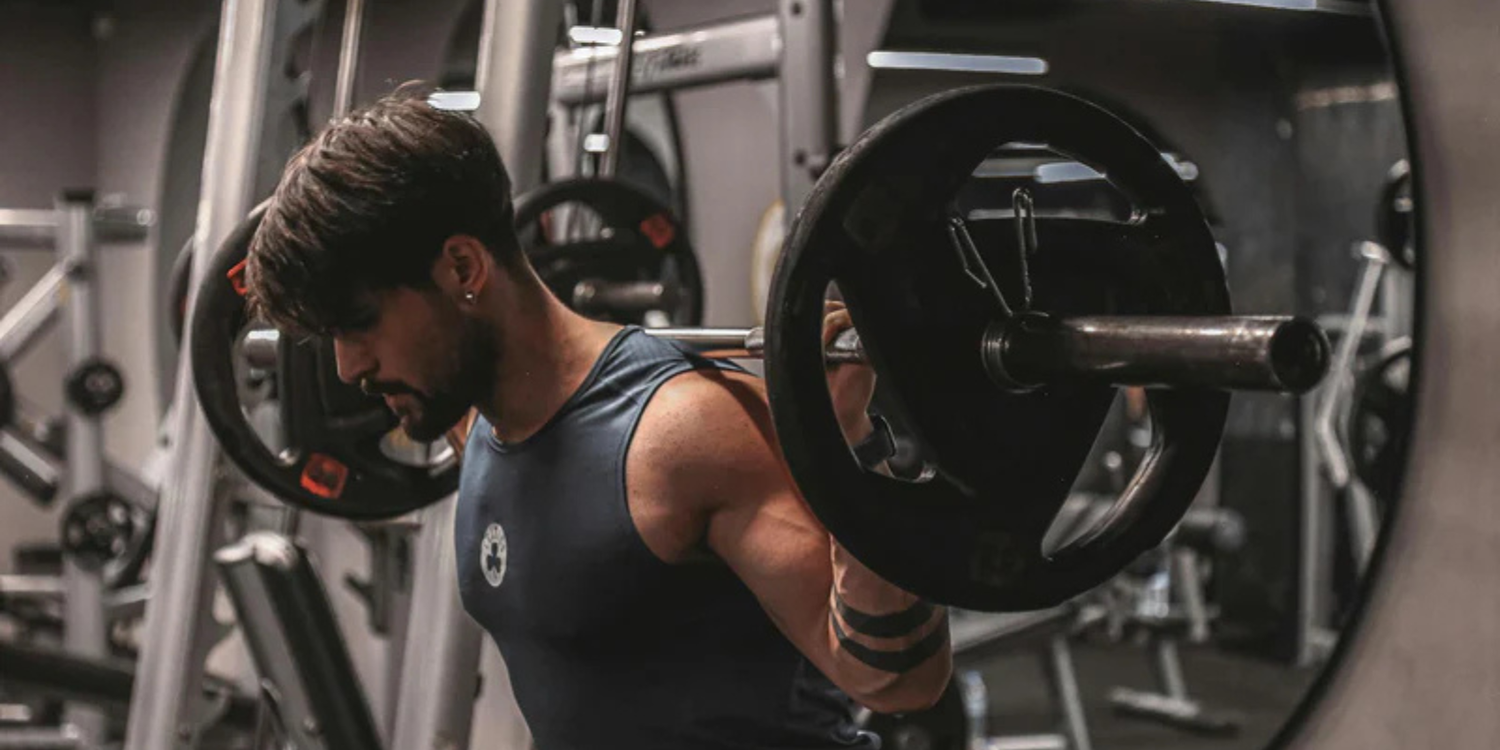
Brace your trunk, keep the ribs stacked over the pelvis, and lower by bending the knees while keeping the chest proud. Think about sitting down between your heels instead of folding at the hips like a conventional squat.
Step 4: Reach a controlled bottom position
Use a depth that keeps the heels planted and the knees tracking with the toes. Parallel is a strong baseline, while deeper reps are only worth using when you can stay smooth and pain free.
Step 5: Drive up through the full foot
Push the floor away through the heel and mid foot and let the knees keep tracking over the toes as you stand up. Finish the rep with the quads still working instead of snapping into an aggressive lockout.
For most lifters, 3 to 5 sets of 6 to 12 reps is a strong hypertrophy range, while lower rep work can be used when you want more load and cleaner strength specific practice. Broad loading zones can build muscle well, but heavier work remains more specific to maximal strength, which is why moderate loads and clean reps are a strong default for this movement.[4]
If you want more lower body options around this pattern, see our guide to the best Smith machine squat exercises, our full list of Smith machine leg workouts, and our tutorial on the Smith machine front squat.
Which Muscles Does the Smith Machine Hack Squat Work?
The Smith machine hack squat is usually quad dominant, but it still uses the glutes, adductors, calves, and trunk stabilizers to keep the rep organized. Different squat variations can shift activation across the gluteal, thigh, adductor, and lower back muscles, which is why setup details matter more than one universal cue.[2]
- Quadriceps: The quadriceps are the main drivers because this variation emphasizes knee extension and deep knee flexion under load.
- Gluteus maximus: The glutes help extend the hips and stabilize the bottom position, especially as depth increases.
- Adductors: The adductors help stabilize the pelvis and contribute to force production out of the bottom.
- Calves and foot stabilizers: The calves and smaller foot muscles help you keep pressure through the floor and prevent the rep from drifting forward.
- Core stabilizers: The abdominals and spinal stabilizers help you keep the torso stacked and resist collapsing under the bar.
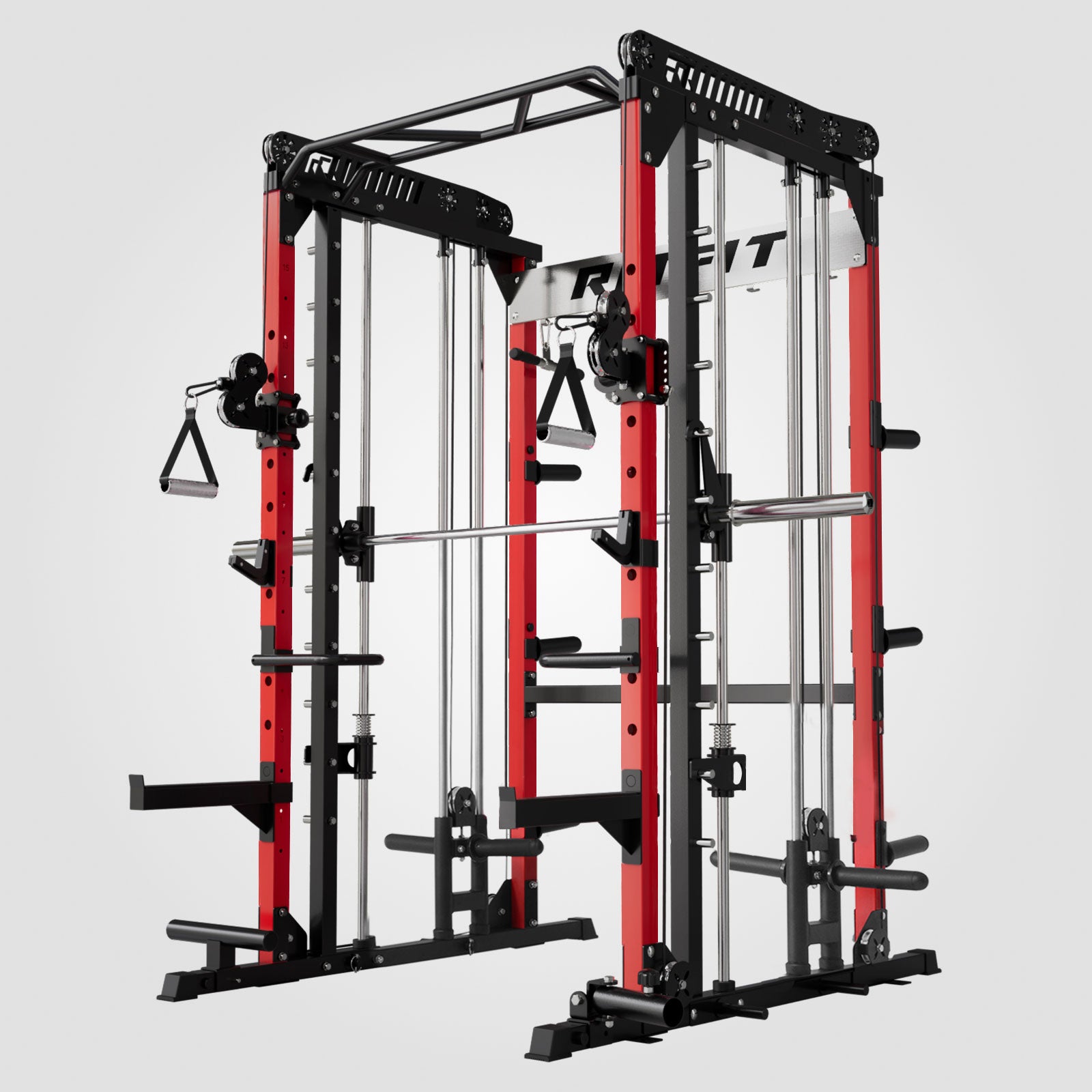
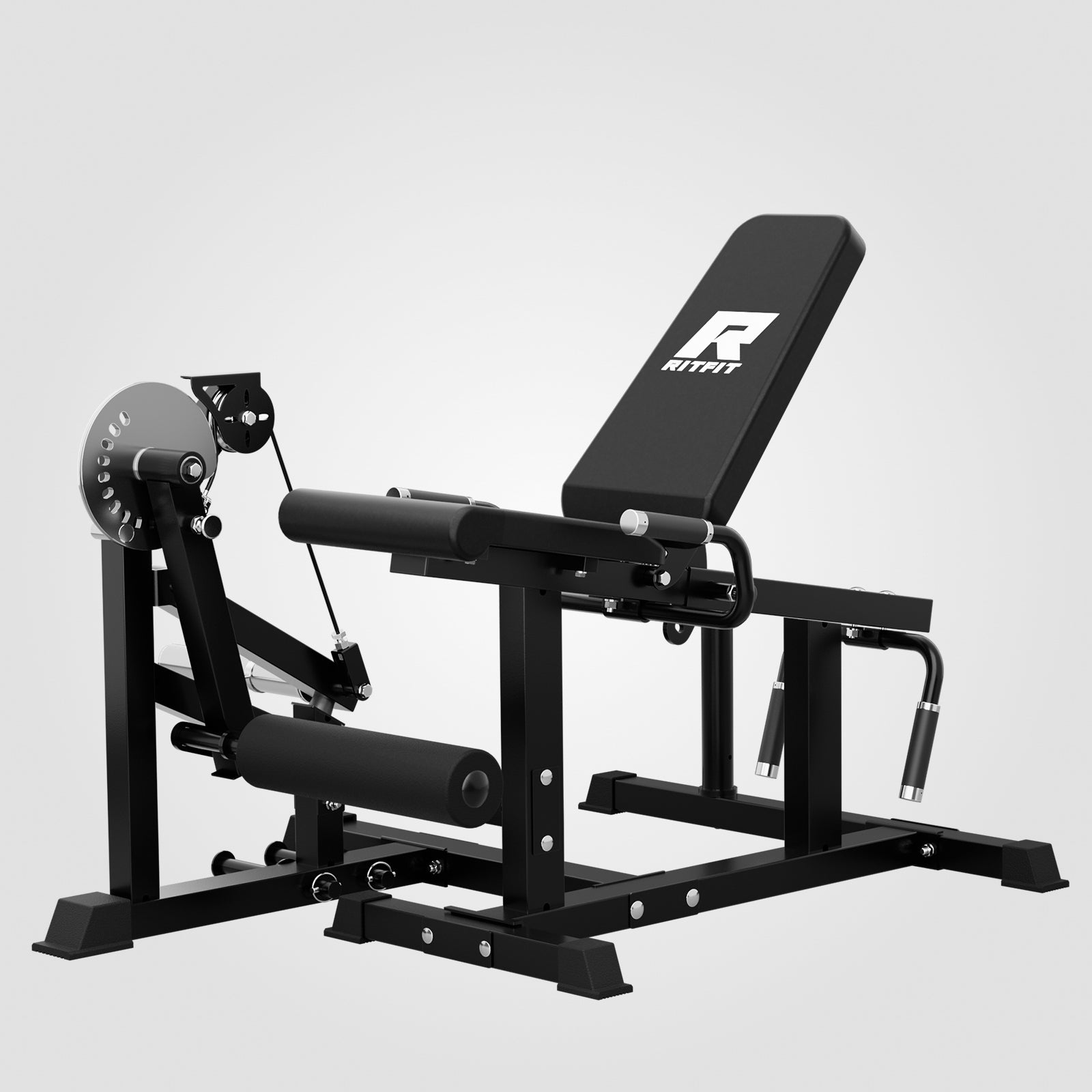
If your goal is a more complete lower body plan, you can compare this movement with a dedicated leg press and hack squat machine, explore more Smith machine options, or read our comparison on Smith machine vs power rack.
Common Mistakes To Avoid
The biggest mistakes on the Smith machine hack squat usually come from forcing a trendy setup instead of building one that matches your body and machine. Deep knee flexion can raise patellofemoral joint stress, so lifters with pain sensitive knees should prioritize controlled range and better positioning rather than chasing the deepest possible rep.[3]
- Setting the feet too far forward: An exaggerated forward stance often disconnects the rep from the floor and makes the bottom feel awkward instead of strong.
- Letting the heels lift: Rising onto the toes usually shifts the load into a weaker line and makes depth harder to own.
- Diving into the bottom: A fast drop removes control, reduces tension, and makes it harder to reverse the rep cleanly.
- Forcing painful depth: More depth is not automatically better if your knees, hips, or ankles stop you from staying stable and pain free.
- Using a shoulder position that feels jammed: If the upper back setup feels strained, adjust bar position, stance, or pad use instead of grinding through a bad start.
Tips For Smith Machine Hack Squat
The best coaching cues for this lift are simple because the goal is a repeatable rep, not a complicated checklist. Tempo, foot pressure, and knee tracking usually improve performance more than constantly changing stance width from set to set.
- Choose the right load: Start with a weight that lets you control the whole descent and keep the same body position on every rep.
- Use a steady lowering phase: A controlled eccentric helps you keep balance, hold tension, and avoid bouncing out of the hole. Movement tempo changes time under tension and affects performance, which is why a smooth lowering phase is usually more useful than a rushed descent.[5]
- Keep knees and toes aligned: Let the knees travel in the same general direction as the toes instead of collapsing inward.
- Recheck setup after warm ups: Your best foot position often becomes clearer after one or two ramp up sets.
- Program it with purpose: Use it as a main quad builder, an accessory after free squats, or a stable home gym substitute when you want hard leg work without a dedicated hack squat machine.
If you are newer to guided squatting patterns, our article on whether a Smith machine is good for beginners can help you decide where this variation fits your training.
FAQs
Can you do a Smith machine hack squat instead of a regular hack squat?
Yes. A Smith machine hack squat can work well when you need a quad focused squat pattern at home. It is not identical to a dedicated hack squat machine, but it can still deliver a stable setup, repeatable reps, and strong leg stimulus when your foot position fits the bar path.
Is the Smith machine hack squat good for quad growth?
Yes. The Smith machine hack squat can be very effective for quad growth because it lets you stay more upright and push the knees forward under control. That setup usually shifts more demand toward knee extension, which is why many lifters use it for hypertrophy focused leg work.
How far forward should your feet be in a Smith machine hack squat?
Start with your feet slightly in front of the bar line, then adjust until you can squat with your heels planted and your torso upright. For many lifters this means a small to moderate forward step, not an exaggerated stance that makes the movement feel awkward or unstable.
Is the Smith machine hack squat bad for your knees?
No. The exercise is not automatically bad for your knees, but it can become irritating if your setup forces painful tracking or excessive depth. Use a pain free range, control the descent, and change stance width or foot position if the front of the knee feels pinchy.
Should your heels stay flat during a Smith machine hack squat?
Yes. In most cases you should keep your heels flat so you can stay balanced and drive through the full foot. If your heels rise, the load often shifts into a weaker position and your setup may need a small change in foot distance or ankle mobility support.
What is the difference between a Smith machine hack squat and a machine hack squat?
A Smith machine hack squat uses the fixed bar path of a Smith machine, while a machine hack squat uses a dedicated sled and back pad. The dedicated machine usually feels more natural and easier to brace against, but the Smith version is more accessible in many home gyms.
Final Thoughts
The Smith machine hack squat is one of the best home gym options for lifters who want a repeatable, quad focused squat pattern without needing a dedicated sled machine. Build the setup around your machine, your mobility, and your comfort, then progress the load only after your reps look the same from top to bottom.
Disclaimer: This article is for general educational purposes only and is not medical advice. Stop the exercise if you feel sharp pain, numbness, loss of control, or joint irritation that builds across sets. If you have current knee, hip, ankle, or back symptoms, consult a qualified clinician or coach before progressing load or depth.
References
- Straub RK, Powers CM. A Biomechanical Review of the Squat Exercise: Implications for Clinical Practice. Int J Sports Phys Ther. 2024;19(4):490-501. doi:10.26603/001c.94600.
- Coratella G, Tornatore G, Caccavale F, Longo S, Esposito F, Cè E. The Activation of Gluteal, Thigh, and Lower Back Muscles in Different Squat Variations Performed by Competitive Bodybuilders: Implications for Resistance Training. Int J Environ Res Public Health. 2021;18(2):772. doi:10.3390/ijerph18020772.
- Pereira PM, Baptista JS, Conceição F, Duarte J, Ferraz J, Costa JT. Patellofemoral Pain Syndrome Risk Associated with Squats: A Systematic Review. Int J Environ Res Public Health. 2022;19(15):9241. doi:10.3390/ijerph19159241.
- Schoenfeld BJ, Grgic J, Van Every DW, Plotkin DL. Loading Recommendations for Muscle Strength, Hypertrophy, and Local Endurance: A Re Examination of the Repetition Continuum. Sports. 2021;9(2):32. doi:10.3390/sports9020032.
- Wilk M, Zając A, Tufano JJ. The Influence of Movement Tempo During Resistance Training on Muscular Strength and Hypertrophy Responses: A Review. Sports Med. 2021;51(8):1629-1650. doi:10.1007/s40279-021-01465-2.