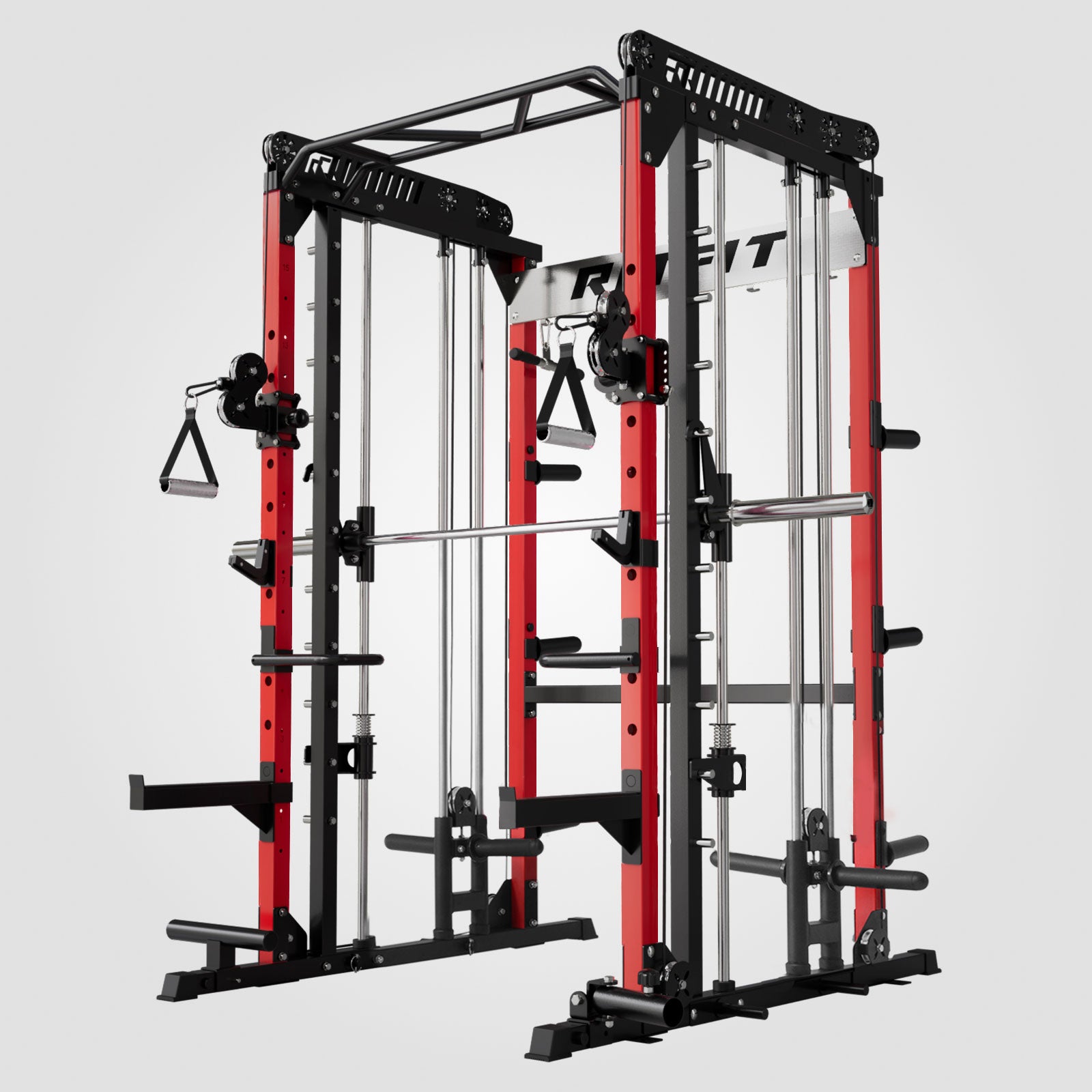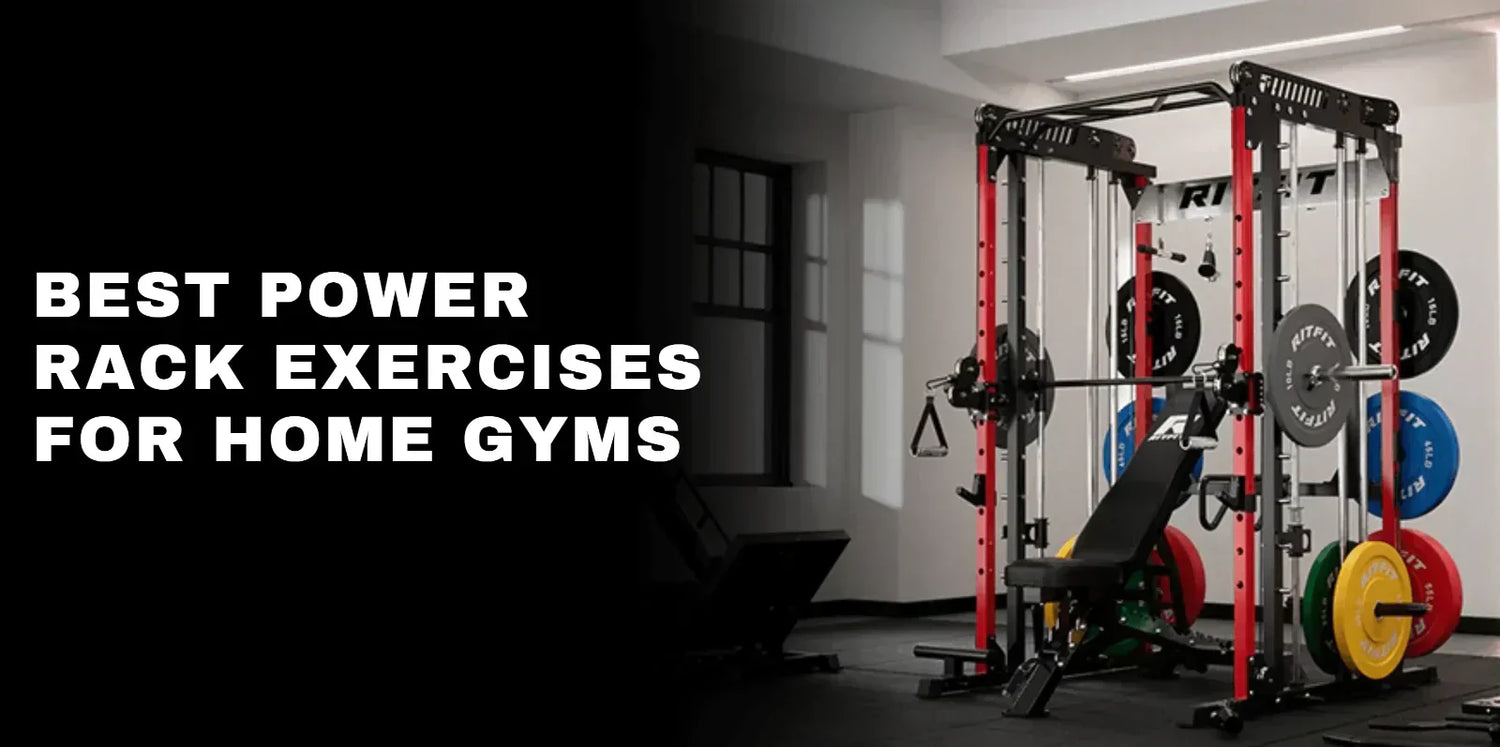
Power rack workouts can train your full body when you use the rack for more than squats and bench press. With safety pins, a pull up bar, J hooks, a bench, and optional attachments, one rack can support heavy strength work, bodyweight training, rows, dips, core work, and accessory training.
This guide shows how to use a power rack safely, which exercises target each muscle group, and how to build a simple routine for a home gym. It is written for lifters who train alone and want more value from their rack without adding several separate machines.
Table of Contents
Key Takeaways
- A power rack is more than a squat station: It can support squats, presses, pulls, rows, dips, core work, and attachment based training.
- Safety pins are the main solo training advantage: They help catch the bar during failed squats, presses, and rack pulls when set correctly.
- Pulling work balances pressing work: Pull ups, inverted rows, rack pulls, and face pulls train the upper back and make the routine more complete.
- Attachments expand the rack ecosystem: Dip handles, cable systems, pulley attachments, and leg training add ons can turn one rack into a broader home gym station.
- Progress depends on setup and control: Pin height, bench position, load selection, tempo, and recovery matter more than chasing maximum weight every session.
Best Power Rack Exercises by Muscle Group
The best power rack exercises cover legs, chest, back, shoulders, arms, and core in one training zone. This makes the rack especially useful for home gym users who want fewer machines and more exercise variety.
- Legs: Back squats, Anderson squats, split squats, rack supported lunges, and leg press attachment work.
- Chest: Pin bench press, incline bench press, rack push ups, and dips.
- Back: Rack pulls, pull ups, inverted rows, barbell rows, and cable face pulls.
- Shoulders: Pin overhead press, rack supported landmine press, pull ups, and face pulls.
- Arms: Dips, close grip pin press, cable curls, and cable tricep pushdowns.
- Core: Hanging knee raises, hanging leg raises, plank rows, and anti rotation cable work.
For a stronger home gym setup, pair your rack with an adjustable weight bench and a reliable set of Olympic barbells and weight plates. These pieces help unlock bench press, incline press, rack pulls, squats, rows, and loaded accessory work.
How Safety Pins Act Like an Invisible Spotter
Safety pins make power rack workouts safer for solo lifters because they can catch the bar before it reaches a dangerous position. They also allow partial range training, which can help lifters practice specific sticking points with controlled loading.
Rack Pulls
Rack pulls train back thickness, grip strength, traps, lats, and deadlift lockout strength by starting the bar from the pins instead of the floor. Set the pins near knee height, brace your core, keep the bar close, and stand tall without leaning back aggressively.
Pin Presses
Pin presses build pressing power by starting each rep from a dead stop on the safety pins. Research on resistance training loading suggests that different repetition ranges and load zones can support strength, hypertrophy, and endurance outcomes when programmed with clear goals.[1]
Anderson Squats
Anderson squats build bottom position strength because every rep starts from the pins instead of from a descent. Set the bar at a height where your thighs are near parallel, brace hard, drive through the floor, and avoid bouncing or twisting under the bar.
Vertical Integration: Pull Up Bar and Bodyweight Training
The upright frame and pull up bar turn a rack into a vertical training station. This is valuable for compact home gyms because it adds upper body pulling and core work without taking extra floor space.
Multi Grip Pull Ups
Multi grip pull ups train the lats, biceps, upper back, and grip while balancing the pressing work common in home gym routines. EMG research on pull up variations shows meaningful activation of the latissimus dorsi, posterior deltoid, middle trapezius, and biceps brachii during pull up movements.[2]
Inverted Rows
Inverted rows train the mid back, rear delts, rhomboids, and trunk while using a barbell set on the J hooks. Keep your body in a straight line, pull your chest toward the bar, and raise the bar height if full reps are too difficult.
Hanging Leg Raises
Hanging leg raises train the abs, hip flexors, grip, and trunk control from the pull up bar. Start with knee raises if straight leg raises cause swinging, then progress only when you can control the lowering phase.
If pull ups and cable rows are a priority, consider a rack platform that supports a power cage with cable system or compatible multi grip lat pull down bar. This gives you more ways to train vertical pulling, rows, and shoulder friendly accessory work.
Smart Upgrades: Power Rack Attachments
Power rack attachments can make one rack feel closer to a complete home gym. The best upgrades are the ones that match your real training goals, fit your rack, and do not interrupt safe barbell setup.
Dips
Dips train the chest, triceps, and front delts with a strong bodyweight pressing pattern. Keep the attachment secure, lower only as far as your shoulders tolerate comfortably, and stop the set before form breaks.
Leg Press and Hack Squat Attachments
Leg press or hack squat attachments add lower body volume when your back needs a break from loaded squats. Free weight and machine based strength training can both support strength and hypertrophy outcomes, so the best choice depends on the exercise, skill level, and training goal.[3]
Cable Work
Cable work adds constant tension and controlled accessory training that free weights do not always provide. Face pulls, tricep pushdowns, cable curls, rows, and anti rotation presses are useful for adding volume without loading the spine heavily.
For upgrade planning, browse RitFit rack attachments, the rack attachment aluminum pulley set, and the hack squat rack attachment. Choose attachments based on rack compatibility, available space, and the exercises you will repeat weekly.
What Power Rack Features Matter Most?
The best power rack for workouts is the one that fits your space, supports your lifts, and keeps setup simple. Before buying, check safety, attachment compatibility, pull up options, bench clearance, and plate storage.
- Safety pins or straps: These should be easy to adjust and strong enough for failed squats, presses, and rack pulls. Test pin height with an empty bar before adding load.
- Pull up bar: A pull up bar adds vertical pulling and hanging core work. Multi grip options can help different users find a more comfortable shoulder position.
- Bench clearance: Your bench should fit between the uprights and line up with the bar path. This matters most for bench press, incline press, and pin press work.
- Attachment compatibility: Compatible attachments help the rack grow with your training. Look for dip handles, pulley systems, landmine options, and leg training add ons if you want more variety.
- Home gym footprint: Measure ceiling height, side clearance, bench length, and plate loading room. A rack that barely fits on paper may feel frustrating during real workouts.
RitFit offers multiple rack paths, including power racks, Smith machine home gym systems, and folding squat rack options. Match the product type to your ceiling height, lifting confidence, and preferred training style.
The Total Rack Routine
This routine uses heavy pin work, bodyweight training, cable accessories, and controlled lower body work. Start with two days per week, then add volume only when your technique, recovery, and joint comfort stay consistent.
- Workout A, Push and Anterior Chain: Anderson squats, 4 sets of 5 reps, pin bench press, 4 sets of 6 to 8 reps, dips, 3 sets of 6 to 12 reps, hanging leg raises, 3 sets of 8 to 12 reps, cable tricep pushdowns, 3 sets of 12 to 15 reps.
- Workout B, Pull and Posterior Chain: Rack pulls, 3 sets of 6 to 8 reps, pull ups, 4 sets stopping before form breaks, inverted rows, 3 sets of 10 to 12 reps, leg press attachment work, 3 sets of 10 to 15 reps, cable face pulls, 3 sets of 15 to 20 reps.
- Beginner version: Use 2 working sets per exercise and leave 2 to 3 reps in reserve. Focus on pin height, bar control, and clean reps before adding weight.
- Intermediate version: Use 3 to 4 working sets for main lifts and add one accessory for your weakest movement pattern. Increase load only when every rep stays controlled.
- Progression rule: Add weight, reps, or sets slowly rather than changing everything at once. Training volume can support hypertrophy, but more volume should still match recovery capacity.[4]
Common Power Rack Workout Mistakes
Most power rack mistakes come from poor setup, too much load, or rushing attachment work. Fixing these basics makes the rack safer and more effective for long term training.
- Setting the safety pins too low: Pins should catch the bar before it reaches an unsafe bottom position. Test the setup with an empty bar first.
- Using too much weight on partial reps: Pin work can allow heavier loading, but the goal is controlled overload. Start lighter than expected and progress slowly.
- Training every set to failure: Failure is not required for every strength or muscle building set. A systematic review found no clear advantage of failure over non failure training for strength and hypertrophy when volume is considered.[5]
- Ignoring pulling volume: Heavy pressing without rows and pull ups can leave the program unbalanced. Pair pressing days with upper back work each week.
- Skipping warm ups: Warm ups prepare the joints and nervous system for heavier rack work. Use empty bar sets and gradual loading before heavy sets.
- Not checking attachment security: Dip handles, pulley systems, and leg attachments should be locked in place before each set. Stop immediately if anything shifts or feels unstable.
FAQs
What are the best power rack exercises for a full body workout?
The best power rack exercises are squats, pin presses, rack pulls, pull ups, inverted rows, dips, and hanging leg raises. Together, they train legs, chest, back, shoulders, arms, and core while using the rack frame, safety pins, pull up bar, and optional attachments.
Can beginners do power rack workouts safely at home?
Yes. Beginners can use power rack workouts safely when they start light, set the safety pins correctly, and stop before form breaks. The rack helps solo lifters practice squats, presses, rows, and assisted pull ups with more control than unsupported free lifting.
How should I set the safety pins for bench press with a power rack?
Set the safety pins slightly below your chest level when your shoulder blades are retracted on the bench. The bar should touch your chest during normal reps, but the pins should catch it before it traps your torso if a rep fails.
Is a pull up bar for power rack training worth using?
Yes. A pull up bar for power rack training adds vertical pulling, grip work, and hanging core exercises without using extra floor space. It is especially useful for balancing pressing volume with back work, which helps make a home gym program more complete.
Are power rack attachments worth it for home gyms?
Yes. Power rack attachments are worth it when they match exercises you will actually use, such as dips, cable rows, face pulls, landmine work, or leg training. They expand one rack into a broader training station, but they should fit your rack and space first.
How many days per week should I do power rack workouts?
Most lifters can start with two or three power rack workouts per week. Beginners should use fewer sets and leave reps in reserve, while intermediate lifters can add more weekly volume as long as joints, sleep, and performance stay consistent over time.
Which is better for home gyms, a power rack or Smith machine?
Neither is always better. A power rack gives more free weight freedom, while a Smith machine gives a guided bar path that many solo lifters like for controlled reps. The best choice depends on your space, training style, confidence level, and attachment needs.
Conclusion
A power rack can be the center of a complete home gym when you use its pins, pull up bar, J hooks, bench setup, and attachments with intention. Start with safe setup, train both pushing and pulling patterns, and progress gradually so the rack supports long term strength, muscle, and confidence.
Use your next session to test pin height, add one pulling movement, and build from the routine above. The best power rack workout is the one you can repeat safely, track clearly, and adjust as your strength improves.
Disclaimer
This article is for general educational purposes only and is not medical advice. If you have joint pain, back pain, heart concerns, previous injuries, or are new to strength training, consult a qualified healthcare professional or certified coach before starting a new power rack workout routine.
References
- Schoenfeld BJ, Grgic J, Van Every DW, Plotkin DL. Loading recommendations for muscle strength, hypertrophy, and local endurance: a re examination of the repetition continuum. Sports. 2021;9(2):32. doi:10.3390/sports9020032. PMCID: PMC7927075.
- Snarr RL, Hallmark AV, Casey JC, Esco MR. Electromyographical comparison of a traditional, suspension device, and towel pull up. J Hum Kinet. 2017;58:5-13. doi:10.1515/hukin-2017-0068. PMCID: PMC5548150.
- Haugen ME, Varvik FT, Larsen S, Haugen AS, van den Tillaar R, Bjornsen T. Effect of free weight vs machine based strength training on maximal strength, hypertrophy and jump performance: a systematic review and meta analysis. BMC Sports Sci Med Rehabil. 2023;15(1):103. doi:10.1186/s13102-023-00713-4. PMCID: PMC10426227.
- Schoenfeld BJ, Contreras B, Krieger J, Grgic J, Delcastillo K, Belliard R, Alto A. Resistance training volume enhances muscle hypertrophy but not strength in trained men. Med Sci Sports Exerc. 2019;51(1):94-103. doi:10.1249/MSS.0000000000001764. PMCID: PMC6303131.
- Grgic J, Schoenfeld BJ, Orazem J, Sabol F. Effects of resistance training performed to repetition failure or non failure on muscular strength and hypertrophy: a systematic review and meta analysis. J Sport Health Sci. 2022;11(2):202-211. doi:10.1016/j.jshs.2021.01.007. PMCID: PMC9068575.