A lat pulldown is a seated cable exercise that trains your back by pulling a bar or handle down toward your upper chest. It is one of the most beginner friendly ways to build lat strength, improve pulling mechanics, and prepare for pull ups.
This guide explains what a lat pulldown works, how to do it correctly, which mistakes to avoid, and how to set up a home gym for effective back training.
Table of Contents
Key Takeaways
- A lat pulldown trains the back: It mainly targets the latissimus dorsi, with support from the upper back, rear delts, biceps, and forearms.
- It is easier to scale than pull ups: The adjustable weight makes it useful for beginners, home gym users, and lifters building pull up strength.
- Form matters more than grip obsession: Recent EMG research found that common grip changes may not significantly alter lat activation, so controlled technique should come first.[1]
- Pull in front of the body: Pulling the bar toward the upper chest is the better default for most lifters, especially when training without direct coaching.
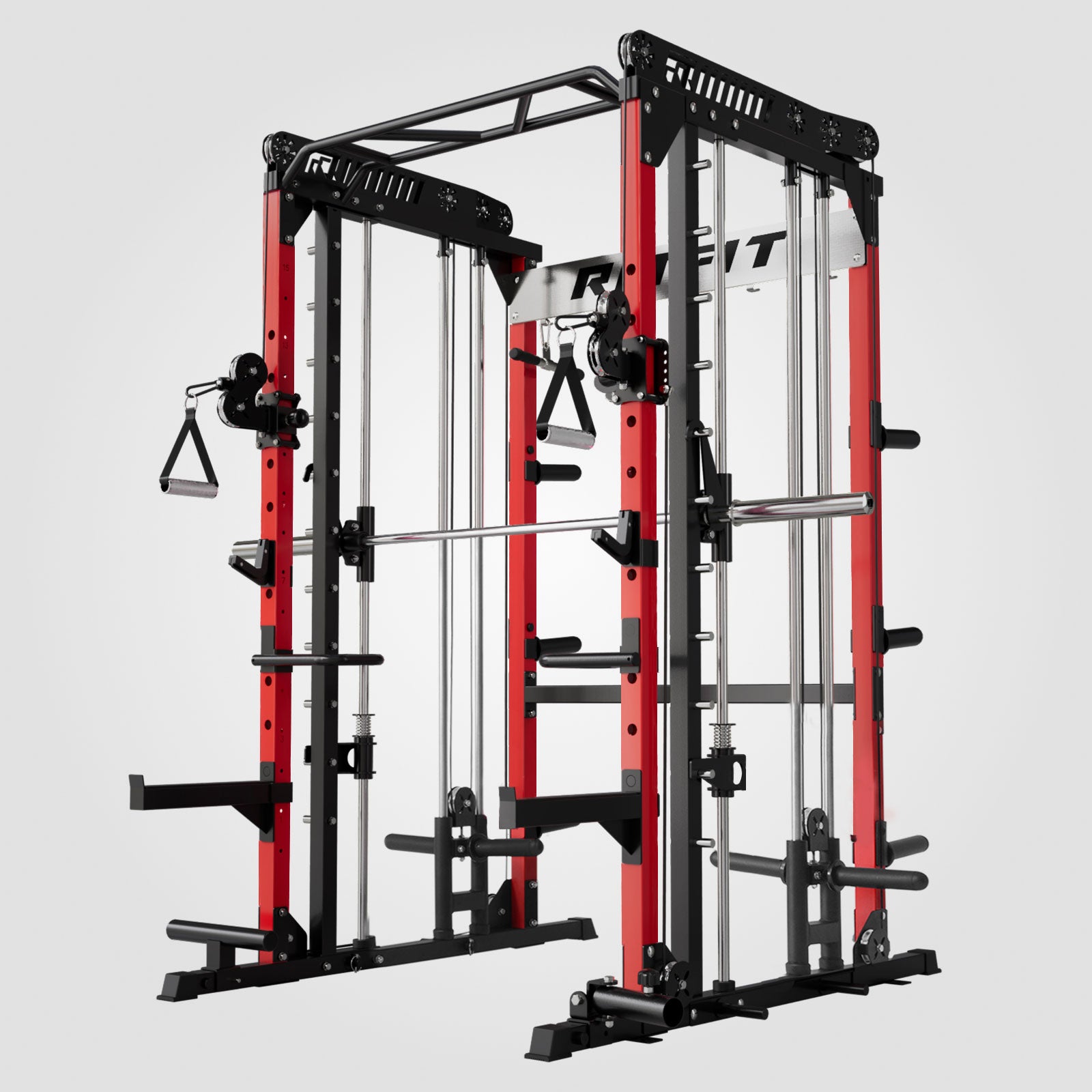
- Home gym setup is realistic: A cable station, Smith machine attachment, or dedicated lat pulldown attachment can bring vertical pulling into a compact home gym.
What Is a Lat Pulldown?
A lat pulldown is a cable based upper body exercise where you sit down and pull a bar, handle, or attachment from overhead toward your upper chest. The movement trains vertical pulling strength and helps build the wide back look many lifters associate with developed lats.
It is commonly performed on a lat pulldown machine, cable machine, or Smith machine with a lat pulldown attachment. For home gym users, it can be a more accessible option than pull ups because the resistance can be adjusted to your current strength level.
What Muscles Does a Lat Pulldown Work?
The lat pulldown mainly works the latissimus dorsi, but it also trains several upper back and arm muscles that assist the pull. This makes it a high value movement for back width, posture support, and pulling strength.
| Muscle | Role During the Lat Pulldown |
|---|---|
| Latissimus dorsi | Pulls the upper arm down and back, making it the primary target for back width. |
| Teres major | Assists shoulder extension and helps create a stronger pulling path. |
| Middle and lower traps | Help control scapular movement and support upper back stability. |
| Rhomboids | Assist with shoulder blade control during the lower part of the pull. |
| Rear delts | Support shoulder extension and help keep the pull balanced. |
| Biceps and forearms | Bend the elbows and help maintain grip on the bar or handle. |
How to Do a Lat Pulldown Correctly
Correct lat pulldown form starts with a stable seated position, controlled shoulder blades, and a pull that brings the elbows down instead of simply curling the bar with the hands. The goal is to feel the back working while keeping the neck, shoulders, and lower back controlled.
- Set the seat and thigh pad: Sit tall and lock your thighs under the pad so your body does not lift during the pull.
- Choose your grip: Start with a shoulder width or slightly wider overhand grip before experimenting with neutral or close grip attachments.
- Brace your torso: Keep your chest lifted, ribs controlled, and spine neutral before starting the rep.
- Pull the elbows down: Drive your elbows toward your sides and bring the bar toward the upper chest.
- Control the return: Let the arms reach overhead with control without letting the weight stack slam.
Best Form Cue
Think about pulling your elbows into your back pockets instead of pulling the bar with your hands.
Common Lat Pulldown Mistakes
The most common lat pulldown mistakes come from using too much weight, leaning too far back, and turning the movement into an arm dominant pull. Clean reps with a full stretch and controlled return usually build better results than heavy, rushed reps.
- Pulling behind the neck: Most lifters should avoid behind the neck pulldowns because they can place the shoulder in a more stressful position, and weightlifting injury literature specifically warns against the behind the neck latissimus dorsi pulldown position.[3]
- Leaning back too far: A slight lean is acceptable, but turning the movement into a row reduces the vertical pulling pattern.
- Using momentum: Swinging the torso usually means the weight is too heavy or the lifter is chasing reps instead of tension.
- Shrugging the shoulders: Letting the shoulders rise toward the ears reduces lat tension and may irritate the neck area.
- Stopping too high: Cutting the pull short can limit the useful range of motion and reduce back engagement.
- Letting the stack crash: Dropping the weight removes tension and can increase wear on the machine.
Lat Pulldown Benefits
The lat pulldown is useful because it builds back strength with adjustable resistance and a stable setup. It is especially valuable for beginners, lifters who cannot yet do pull ups, and home gym users who want cable based back training.
- Builds back width: The movement directly trains the lats, which contribute to a wider upper body appearance.
- Improves pulling strength: It strengthens the same general pattern used in pull ups, chin ups, rows, and climbing movements.
- Supports posture training: Controlled reps can strengthen upper back muscles that help manage shoulder blade position.
- Works well for beginners: The load can be adjusted more easily than bodyweight pull ups.
- Fits home gym programming: A lat pulldown attachment adds vertical pulling without needing a full commercial machine.
Lat Pulldown Variations
Lat pulldown variations change the feel of the movement, but they should not replace good control, full range of motion, and progressive overload. Research comparing front and back lat pull down patterns found different muscle excitation patterns, with the front variation showing greater overall excitation in several prime movers during key phases.[2]
| Variation | Best Use |
|---|---|
| Wide grip lat pulldown | Useful for lifters who feel a strong lat stretch and can keep the shoulders controlled. |
| Close grip lat pulldown | Helpful for a longer range of motion and a strong lower lat squeeze. |
| Neutral grip lat pulldown | Often comfortable for shoulders and elbows because the palms face each other. |
| Reverse grip lat pulldown | Adds more biceps involvement and can help some lifters feel the lower lats. |
| Single arm cable pulldown | Good for correcting side to side control and improving the mind muscle connection. |
| Straight arm pulldown | Best used as an accessory movement to isolate the lats without much elbow bending. |
Lat Pulldown vs Pull Up
The lat pulldown is easier to scale, while the pull up requires lifting your bodyweight. Both are valuable vertical pulling exercises, but the better choice depends on strength level, equipment access, and training goal.
| Exercise | Best For | Main Limitation |
|---|---|---|
| Lat pulldown | Beginners, higher rep back training, and controlled home gym workouts. | Requires a cable station or compatible attachment. |
| Pull up | Bodyweight strength, advanced pulling performance, and minimal equipment training. | Harder to scale for lifters who cannot yet lift their bodyweight. |
If you are still building strength, use lat pulldowns to practice the pulling pattern and gradually increase the load. You can also read RitFit's Smith machine pull up guide to build a complete vertical pulling progression.
How Much Weight Should You Use?
Use a weight that lets you complete smooth reps without leaning back, swinging, or losing shoulder control. For muscle growth, many lifters do well with moderate loads for 8 to 15 reps, while heavier loads can be used for lower rep strength work when form stays clean.[4]
- Beginners: Start with a light weight for 10 to 12 controlled reps.
- Muscle growth: Use a moderate weight for 8 to 15 reps with a full stretch and strong squeeze.
- Strength focus: Use heavier sets of 5 to 8 reps only if your torso and shoulders remain stable.
- Technique work: Use slower tempo reps and pause near the upper chest.
Can You Do Lat Pulldowns at Home?
Yes, you can do lat pulldowns at home if you have a cable system, lat pulldown attachment, or a Smith machine with compatible pulldown hardware. This setup is useful for home gym users who want strong back training without relying only on pull ups.
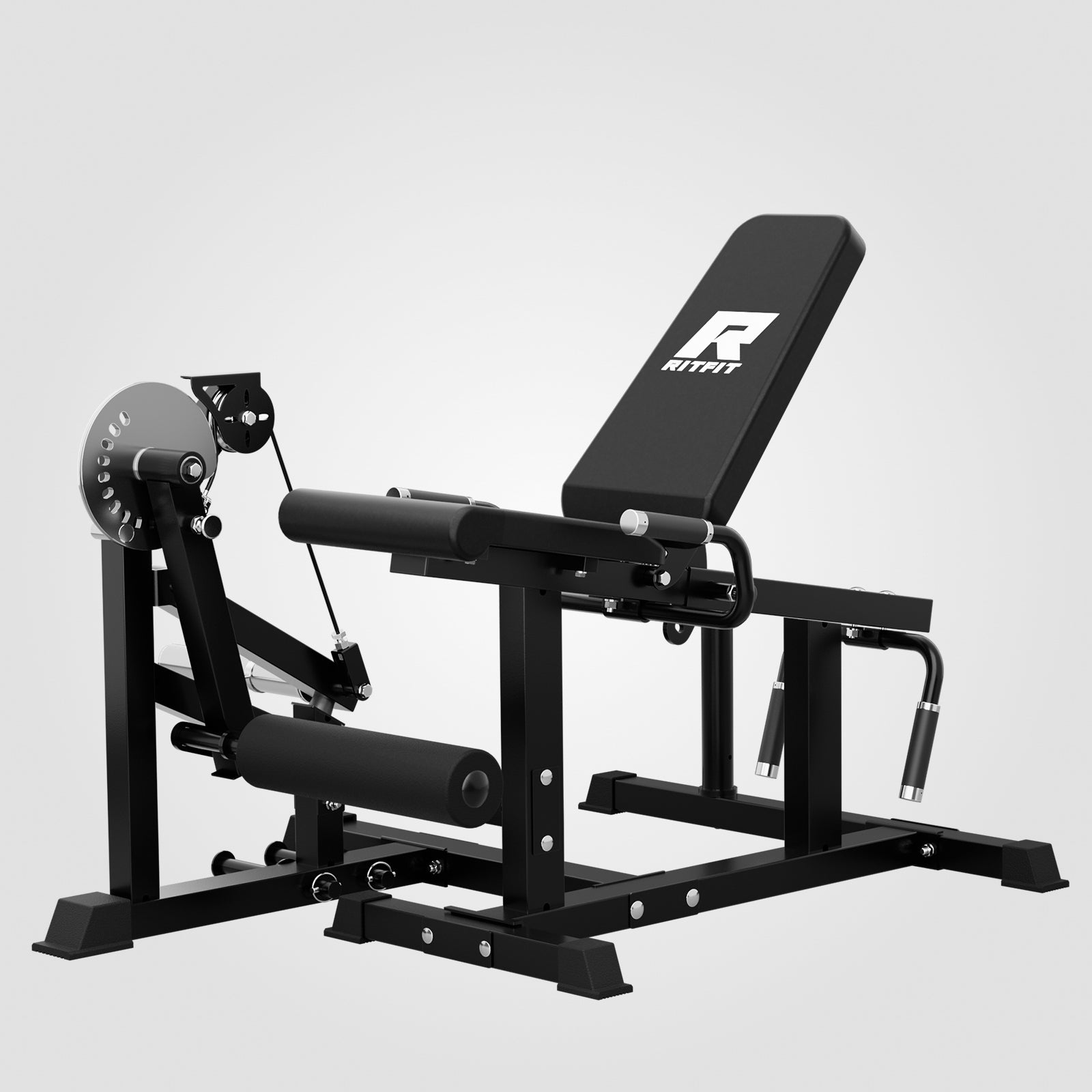
For a focused back training setup, RitFit offers lat pulldown attachments, an all in one multi grip lat pull down bar, and the RitFit cable crossover machine for cable based upper body training.
If you already train with RitFit Smith machine systems, the LPM1 lat pulldown leg holder attachment bundle for M1 PRO and the LPM2 high row pulldown attachment for M2 can help turn a rack based setup into a stronger back training station.
For broader equipment planning, explore the RitFit Smith machine collection, the rack attachments collection, and RitFit's guide on how to do a lat pulldown on a Smith machine.
Best Lat Pulldown Setup for Different Goals
The best setup depends on whether you want maximum back growth, compact equipment, or full body home gym versatility. A simple cable station works well for back isolation, while a Smith machine with attachments supports more total body exercises in one footprint.
- For beginners: Choose a stable cable system with a thigh pad so the body stays anchored during each pull.
- For small spaces: Choose an attachment based setup that adds vertical pulling without requiring a separate commercial machine.
- For back focused training: Add different handles so you can rotate wide, close, neutral, and single arm variations.
- For full body home gyms: Consider a Smith machine or cable crossover setup that supports pulldowns, rows, presses, squats, and accessory work.
Sample Lat Pulldown Workouts
Lat pulldowns can be trained once or twice per week depending on your total back training volume. Pair them with rows, rear delt work, and biceps training for a balanced upper body session.
| Goal | Workout Example |
|---|---|
| Beginner back strength | 3 sets of 10 to 12 reps with a controlled 2 second return. |
| Muscle growth | 4 sets of 8 to 12 reps, followed by seated cable rows and rear delt work. |
| Pull up progression | 3 sets of 6 to 10 heavier reps, then assisted pull ups or slow negatives. |
| Technique focus | 2 to 3 sets of 12 to 15 reps with a pause near the chest and a slow stretch overhead. |
FAQs
What is a lat pulldown?
A lat pulldown is a seated cable exercise for building back strength. You pull a bar or handle from overhead toward your upper chest, mainly training the lats, upper back, rear shoulders, and arms while using adjustable resistance.
What muscles does a lat pulldown work?
A lat pulldown mainly works the latissimus dorsi. It also trains the teres major, middle traps, lower traps, rhomboids, rear delts, biceps, and forearms, making it a strong choice for back width and pulling strength.
How do you do a lat pulldown correctly?
Sit tall, secure your thighs, grip the bar, brace your torso, and pull your elbows down toward your sides. Bring the bar near your upper chest, then return with control until your arms are extended overhead.
Can beginners do lat pulldowns?
Yes. Lat pulldowns are beginner friendly because the weight can be adjusted below bodyweight. Start light, learn to keep your chest lifted and shoulders controlled, then increase resistance only when each rep feels smooth.
Is a lat pulldown better than a pull up?
No. A lat pulldown is not strictly better than a pull up. It is easier to scale and better for controlled practice, while pull ups are better for bodyweight strength, so many lifters benefit from using both.
Should you pull the lat pulldown behind your neck?
No. Most lifters should pull the bar in front toward the upper chest. Behind the neck pulldowns can place the shoulders in a less comfortable position, especially for people with limited mobility or past shoulder irritation.
How much weight should you use for lat pulldowns?
Use a weight that allows clean reps without swinging or leaning far back. Most lifters should start with 10 to 12 controlled reps, then increase load gradually when they can keep the elbows moving smoothly down.
Can you do lat pulldowns at home?
Yes. You can do lat pulldowns at home with a cable machine, Smith machine attachment, or dedicated lat pulldown attachment. A compact setup is useful when you want back training without relying only on pull ups.
Conclusion
A lat pulldown is one of the best cable exercises for building back strength, learning vertical pulling mechanics, and progressing toward pull ups. Focus on controlled reps, a front of body pull path, steady shoulder position, and a setup that matches your space, strength level, and home gym goals.
Disclaimer
This article is for general fitness education only and is not medical advice. If you have shoulder, elbow, neck, or back pain, consult a qualified healthcare professional or certified trainer before starting or changing your training program.
References
- Buonsenso A, Di Fonza D, Di Claudio G, Carangelo M, Centorbi M, di Cagno A, Calcagno G, Fiorilli G. Electromyographic analysis of back muscle activation during lat pulldown exercise: effects of grip variations and forearm orientation. J Funct Morphol Kinesiol. 2025;10(3):345. doi:10.3390/jfmk10030345
- Padovan R, Toninelli N, Longo S, Tornatore G, Esposito F, Cè E, Coratella G. High density electromyography excitation in front vs. back lat pull down prime movers. J Hum Kinet. 2024;91:47-60. doi:10.5114/jhk/185211
- Golshani K, Cinque ME, O'Halloran P, Softness K, Keeling L, Macdonell JR. Upper extremity weightlifting injuries: diagnosis and management. J Orthop. 2018;15(1):24-27. doi:10.1016/j.jor.2017.11.005
- Schoenfeld BJ, Grgic J, Van Every DW, Plotkin DL. Loading recommendations for muscle strength, hypertrophy, and local endurance: a re examination of the repetition continuum. Sports. 2021;9(2):32. doi:10.3390/sports9020032