Weight training improves muscular strength more than cardiorespiratory fitness because it mainly trains your muscles and nervous system to produce high force for short efforts. Cardiorespiratory fitness improves more from sustained aerobic work that keeps your heart, lungs, blood vessels, and oxygen delivery system working continuously.
- Quick Answer
- Muscular Strength vs Cardiorespiratory Fitness
- Strength Training vs Weight Training
- Why Weight Training Builds Muscular Strength
- Why Weight Training Has a Smaller Effect on Cardiorespiratory Fitness
- Weight Training vs Cardio Training
- How to Train for Both Strength and Cardiorespiratory Fitness
- Common Misconceptions
Key Takeaways
- Weight training builds strength first: It directly challenges muscles with external resistance, controlled technique, and progressive overload.
- Cardio fitness needs sustained oxygen demand: The heart, lungs, and blood vessels adapt most when effort continues long enough to stress aerobic capacity.
- Lifting can raise heart rate: A higher heart rate during sets does not automatically mean the workout is training cardiorespiratory fitness like dedicated cardio.
- Rest periods change the training effect: Rest between lifting sets helps force production recover, but it breaks up the continuous demand needed for stronger aerobic adaptation.
- The best plan usually includes both: Strength training and cardio solve different fitness problems, so most people benefit from combining them.
Quick Answer
Weight training follows the principle of training specificity, which means the body adapts most to the stress it repeatedly performs. Strength and endurance training create different muscular, neural, and metabolic signals, so they produce different primary outcomes.[1]
When you lift weights, the main challenge is force production. When you run, cycle, row, or perform steady aerobic work, the main challenge is oxygen delivery and sustained energy production.
Muscular Strength vs Cardiorespiratory Fitness
Muscular strength is the ability of a muscle or muscle group to produce force against resistance. It matters for lifting, carrying, squatting, pushing, pulling, joint support, and everyday physical independence.
Cardiorespiratory fitness is the ability of the heart, lungs, blood vessels, and muscles to deliver and use oxygen during sustained activity. It matters for endurance, recovery, long walks, sports, conditioning, and general health.
- Muscular strength: Trained best with resistance, progressive overload, good technique, and enough recovery between hard efforts.
- Cardiorespiratory fitness: Trained best with repeated aerobic demand through walking, running, cycling, rowing, swimming, or structured intervals.
- Overlap: Both forms of training can improve general health, but each one has a different main adaptation.
Strength Training vs Weight Training
Strength training is any training method designed to improve the body’s ability to produce force. Weight training is one type of strength training that uses external loads such as dumbbells, barbells, machines, or weight plates.
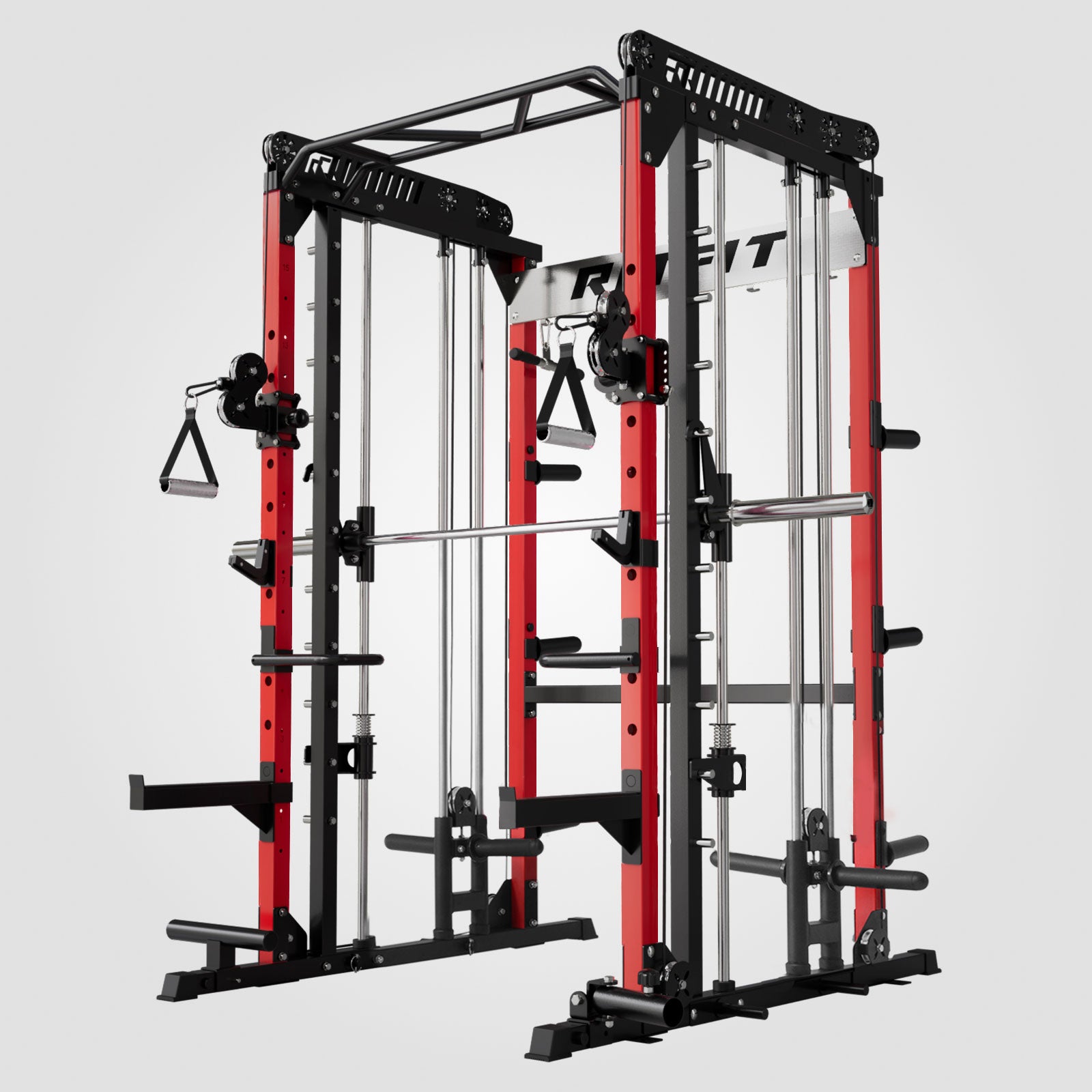
A home gym can support strength training with dumbbells, barbells and weight plates, benches, racks, and cable based systems. The right setup makes progressive overload easier to apply safely and consistently.
- Strength training examples: Bodyweight squats, push ups, resistance bands, loaded carries, cable rows, and machine based pressing.
- Weight training examples: Barbell squats, dumbbell presses, Romanian deadlifts, machine rows, and bench supported exercises.
- Main point: Weight training is strength training, but not all strength training requires weights.
Why Weight Training Builds Muscular Strength
Weight training builds strength because it repeatedly asks your body to control and overcome external resistance. The muscles, nervous system, connective tissues, and movement patterns adapt to that exact demand.
- Progressive overload: Strength improves when the body is gradually exposed to heavier loads, more reps, better control, or more total work.
- Motor unit recruitment: The nervous system becomes better at activating more muscle fibers when force demand is high.
- Muscle coordination: Repeated lifting improves timing, stability, bracing, and control across joints.
- Muscle fiber growth: Resistance training can increase muscle size, which gives the body more contractile tissue to produce force.
- Specific skill practice: A squat, deadlift, press, or row becomes stronger when the body practices that force pattern often.
Heavier loads, suitable rest, and repeatable technique are especially important for maximal strength, while load and repetition choices can shift emphasis toward hypertrophy or local muscular endurance.[2] This is why a lifter can become much stronger without seeing the same level of improvement in long distance endurance.
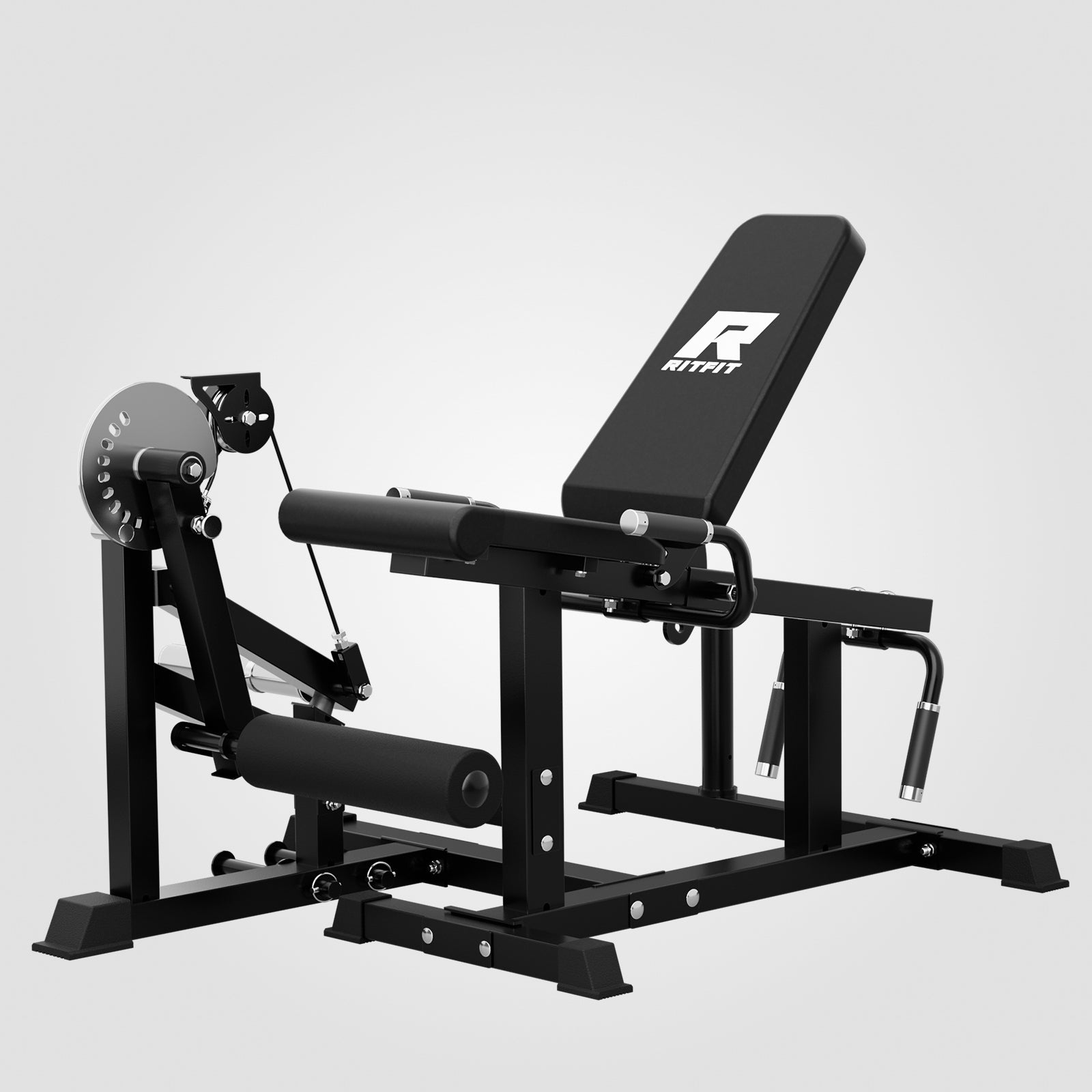
For a safer and more stable home setup, many lifters pair a rack or machine with a reliable bench such as the RitFit GATOR adjustable weight bench. A stable bench helps support pressing, rowing, split squat, and accessory movements.
How Energy Systems Shape the Result
Weight training often relies on short burst energy systems because hard sets are intense and brief. The ATP PC system and anaerobic glycolysis help power heavy reps, while the aerobic system contributes more during recovery and longer sessions.
- Heavy sets: A hard set of three to six reps mainly trains force output and neural drive.
- Moderate sets: A set of eight to twelve reps can build strength and muscle size when load and effort are appropriate.
- High volume circuits: Short rest circuits can increase breathing and heart rate, but they still need careful programming to avoid poor technique.
Why Beginners Often Get Stronger Quickly
Beginners often gain strength quickly because the nervous system learns how to use existing muscle more effectively. A meta analysis in older adults also supports resistance exercise as an effective method for improving multiple strength outcomes.[3]
The early phase is not only about muscle growth. Better coordination, improved confidence, and more efficient technique can all make the same weight feel easier.
Why Weight Training Has a Smaller Effect on Cardiorespiratory Fitness
Weight training usually has a smaller effect on cardiorespiratory fitness because most sets are too short to create continuous aerobic demand. The heart rate may rise, but rest periods interrupt the steady oxygen challenge.
- Sets are brief: A typical lifting set may last less than one minute, which is not long enough to train endurance like steady cardio.
- Rest breaks reduce continuity: Rest is useful for strength, but it lowers the sustained cardiovascular load.
- The main limiter is local force: In lifting, a set often ends because the working muscles fatigue, not because oxygen delivery has reached its limit.
- Aerobic adaptations need repetition: Stroke volume, capillary density, mitochondrial density, and oxygen use improve best with dedicated endurance work.
VO2max is a key measure of cardiorespiratory fitness, and exercise training intensity can influence how much it improves in healthy adults.[4] Traditional weight training can support general health, but it is not the most direct method for maximizing VO2max.
Weight Training vs Cardio Training
Weight training and cardio training are not competitors because they train different systems. The better question is how to use each one for the result you want.
| Training Type | Main Goal | Typical Effort | Main Adaptation | Best Examples |
|---|---|---|---|---|
| Weight Training | Build strength and muscle | Short hard sets with rest | Force production, motor control, hypertrophy | Squats, presses, rows, deadlifts, cable work |
| Cardio Training | Build endurance and oxygen delivery | Sustained or interval based effort | Heart, lungs, blood flow, aerobic capacity | Walking, running, rowing, cycling, swimming |
| Circuit Training | Blend strength and conditioning | Repeated exercises with shorter rest | Mixed muscular and cardiorespiratory demand | Dumbbell circuits, machine circuits, bodyweight circuits |
If your main goal is strength, build around progressive resistance with strength machines, free weights, or a rack system. If your main goal is endurance, include planned aerobic sessions instead of relying only on lifting.
How to Train for Both Strength and Cardiorespiratory Fitness
The best way to train both is to give each goal a clear place in the week. Circuit based resistance training can improve strength and cardiorespiratory variables when the load, rest, and exercise order are programmed properly.[5]
- Step 1: Lift for strength: Use two to four resistance sessions each week with compound exercises and planned progression.
- Step 2: Add cardio: Use two to three aerobic sessions each week through walking, cycling, rowing, or incline treadmill work.
- Step 3: Separate hard sessions when possible: Place heavy lower body lifting and hard cardio on different days when recovery is limited.
- Step 4: Use circuits strategically: Choose circuits when time is limited, but keep technique clean and avoid turning every set into a rushed effort.
- Step 5: Track recovery: Reduce volume if performance, sleep, joint comfort, or motivation drops for several sessions in a row.
For home lifters, a practical setup can include Smith machines, weight benches, dumbbells, and conditioning tools. A compact rack package can also make full body strength training more organized.
Sample Weekly Plan
This simple plan helps beginners train strength and cardiorespiratory fitness without making every session exhausting. Adjust the days based on soreness, schedule, and skill level.
| Day | Focus | Example Session |
|---|---|---|
| Monday | Strength | Squat pattern, press, row, core |
| Tuesday | Cardio | Twenty to thirty minutes easy to moderate aerobic work |
| Wednesday | Strength | Hinge pattern, bench movement, pull movement, accessories |
| Friday | Cardio | Intervals, incline walking, cycling, or rowing |
| Saturday | Optional mixed day | Light circuit, mobility, or technique practice |
Common Misconceptions
Many people confuse a hard workout with a specific training adaptation. A workout can feel intense and still mainly train strength, endurance, power, or conditioning depending on how it is structured.
- Misconception 1: If lifting raises heart rate, it must count as cardio. Heart rate alone does not define the training effect.
- Misconception 2: Cardio makes strength training useless. Cardio can support recovery and work capacity when volume and timing are managed.
- Misconception 3: Strength training only builds big muscles. It also improves coordination, joint control, bone loading, and functional capacity.
- Misconception 4: Machines are less useful than free weights. Machines, benches, racks, and cables can all support progressive overload when used with good technique.
Accessories can also make home training more complete when they match the workout goal. For example, rack attachments can expand exercise options without requiring a separate machine for every movement.
FAQs
Does weight training improve cardiorespiratory fitness?
Yes. Weight training can improve cardiorespiratory fitness slightly, especially in beginners or circuit style sessions. It usually does not replace dedicated aerobic training because normal lifting sets are short, separated by rest, and designed mainly for force production rather than sustained oxygen demand.
Why does weight training build muscular strength faster than cardio?
Weight training builds muscular strength faster because it asks muscles and nerves to produce high force against external resistance. Over time, the body improves motor unit recruitment, coordination, muscle size, and tolerance to heavier loads, which are the adaptations most directly linked to strength.
Can lifting weights count as cardio?
Sometimes. Lifting weights can feel like cardio when rest periods are short and exercises are arranged in circuits. Traditional strength training still has a different purpose, because each set targets force, control, and progressive overload more than continuous heart and lung demand.
Should I do cardio if I already lift weights?
Yes. You should include cardio if you want a more complete fitness plan. Strength training supports muscle, joints, bone, and daily function, while cardio better trains sustained oxygen delivery, endurance, and recovery between repeated efforts.
What is the best way to train strength and cardiorespiratory fitness together?
The best way is to separate the main goal of each session. Lift first on strength focused days, use cardio on separate days when possible, and choose circuit training when time is limited. This helps you improve strength without ignoring endurance.
How often should beginners combine weight training and cardio?
Beginners can often start with two or three strength sessions and two or three light cardio sessions each week. The exact mix should match recovery, goals, and schedule, and the first priority is consistent training with safe technique.
Conclusion
Weight training improves muscular strength more than cardiorespiratory fitness because it directly trains force production, neural coordination, and muscular adaptation. Cardiorespiratory fitness needs more sustained aerobic demand, so the most complete fitness plan usually combines resistance training with dedicated cardio.
Disclaimer
This article is for general fitness education only and is not medical advice. If you have heart disease, uncontrolled blood pressure, joint pain, dizziness during exercise, or are returning after injury, consult a qualified healthcare professional before starting or changing a training program.
References
- Hughes DC, Ellefsen S, Baar K. Adaptations to endurance and strength training. Cold Spring Harb Perspect Med. 2018;8(6):a029769. doi:10.1101/cshperspect.a029769
- Schoenfeld BJ, Grgic J, Van Every DW, Plotkin DL. Loading recommendations for muscle strength, hypertrophy, and local endurance: a re-examination of the repetition continuum. Sports (Basel). 2021;9(2):32. doi:10.3390/sports9020032
- Peterson MD, Rhea MR, Sen A, Gordon PM. Resistance exercise for muscular strength in older adults: a meta-analysis. Ageing Res Rev. 2010;9(3):226-237. doi:10.1016/j.arr.2010.03.004
- Crowley E, Powell C, Carson BP, Davies RW. The effect of exercise training intensity on VO2max in healthy adults: an overview of systematic reviews and meta-analyses. Transl Sports Med. 2022;2022:9310710. doi:10.1155/2022/9310710
- Ramos-Campo DJ, Andreu-Caravaca L, Martínez-Rodríguez A, Rubio-Arias JÁ. Effects of resistance circuit-based training on body composition, strength and cardiorespiratory fitness: a systematic review and meta-analysis. Biology (Basel). 2021;10(5):377. doi:10.3390/biology10050377