









Bench shoulder exercises help you build stronger, more stable shoulders at home with better body support than many standing movements. A bench lets you control angles, reduce momentum, and train the delts, rotator cuff, traps, and upper back with simple dumbbell movements.
This guide shows you how to warm up, perform each exercise, build a beginner friendly routine, and choose the right gear for safer shoulder training at home.
Table of Contents
Key Takeaways
- Bench shoulder exercises add support: Chest supported and seated positions reduce swinging and help you focus on clean shoulder movement.
- Light weights work best for control: External rotations, I raises, T raises, and rear delt flys should feel smooth before they feel heavy.
- An adjustable bench improves exercise variety: Flat, incline, and upright settings let you train the rear delts, traps, rotator cuff, and pressing pattern from different angles.
- Upper back strength supports shoulder comfort: Scapular stabilization exercise has been shown to improve pain, posture, flexibility, and shoulder mobility in people with shoulder impingement syndrome.[1]
- Stop painful movements early: Sharp pain, instability, or worsening symptoms are signs to reduce load, shorten range, or seek professional guidance.
Why Bench Based Shoulder Training Matters
Bench based shoulder training matters because it helps you strengthen the shoulders while limiting unnecessary body movement. The bench supports your chest, back, or seated posture so your delts, traps, rotator cuff, and upper back can do the work more cleanly.
Many daily shoulder problems come from weak posterior shoulder muscles, poor scapular control, and too much forward dominant posture. Specific scapular therapeutic exercises have been shown to help improve shoulder pain and function in research on shoulder pain populations.[2]
- Better support: Chest supported positions reduce lower back compensation and make it easier to feel the rear delts and mid back.
- Better angle control: A flat, incline, or upright bench changes the training angle without needing a large machine.
- Better home gym fit: A bench and dumbbells can support shoulder strength, posture training, and upper back work in a compact space.
If you want more bench based training ideas, see this bench workout routines guide for broader full body programming.
Who These Bench Shoulder Exercises Are Best For
These bench shoulder exercises are best for home gym users who want stronger shoulders, better posture, and more upper back control with dumbbells. They are especially useful when you want support, clear angles, and lower momentum during shoulder training.
- Beginners: The bench gives support while you learn controlled shoulder movement.
- Desk workers: Rear delt, trap, and rotator cuff work can help balance rounded posture from long sitting hours.
- Home gym lifters: You can train shoulders with a bench, dumbbells, and a small training area.
- Pressing focused lifters: Rear shoulder and upper back work can help balance frequent chest and shoulder pressing.
For a wider dumbbell based plan, use this shoulder workout with dumbbells as a companion resource.
Quick Bench Shoulder Warm Up
A quick shoulder warm up prepares the rotator cuff, shoulder blades, and upper back before loaded work. Spend 5 to 8 minutes moving slowly before you start the main exercises.
- Arm circles: Perform 20 to 30 seconds forward and 20 to 30 seconds backward.
- Bench slides: Sit or lie with your upper back supported on the bench and slide your arms up and down for 2 sets of 10 to 12 reps.
- Light reverse flys: Use very light dumbbells for 2 sets of 12 to 15 reps to wake up the rear delts and upper back.
- External rotation drill: Use a light dumbbell or mini band for 1 to 2 easy sets before the main work.
Move into the main workout when your shoulders feel warm, your range feels smoother, and the first few reps feel controlled.
Bench Shoulder Exercises Step by Step Guide
These bench shoulder exercises train the rotator cuff, delts, traps, rhomboids, and upper back through controlled dumbbell movement. Start light and focus on slow reps before increasing load.
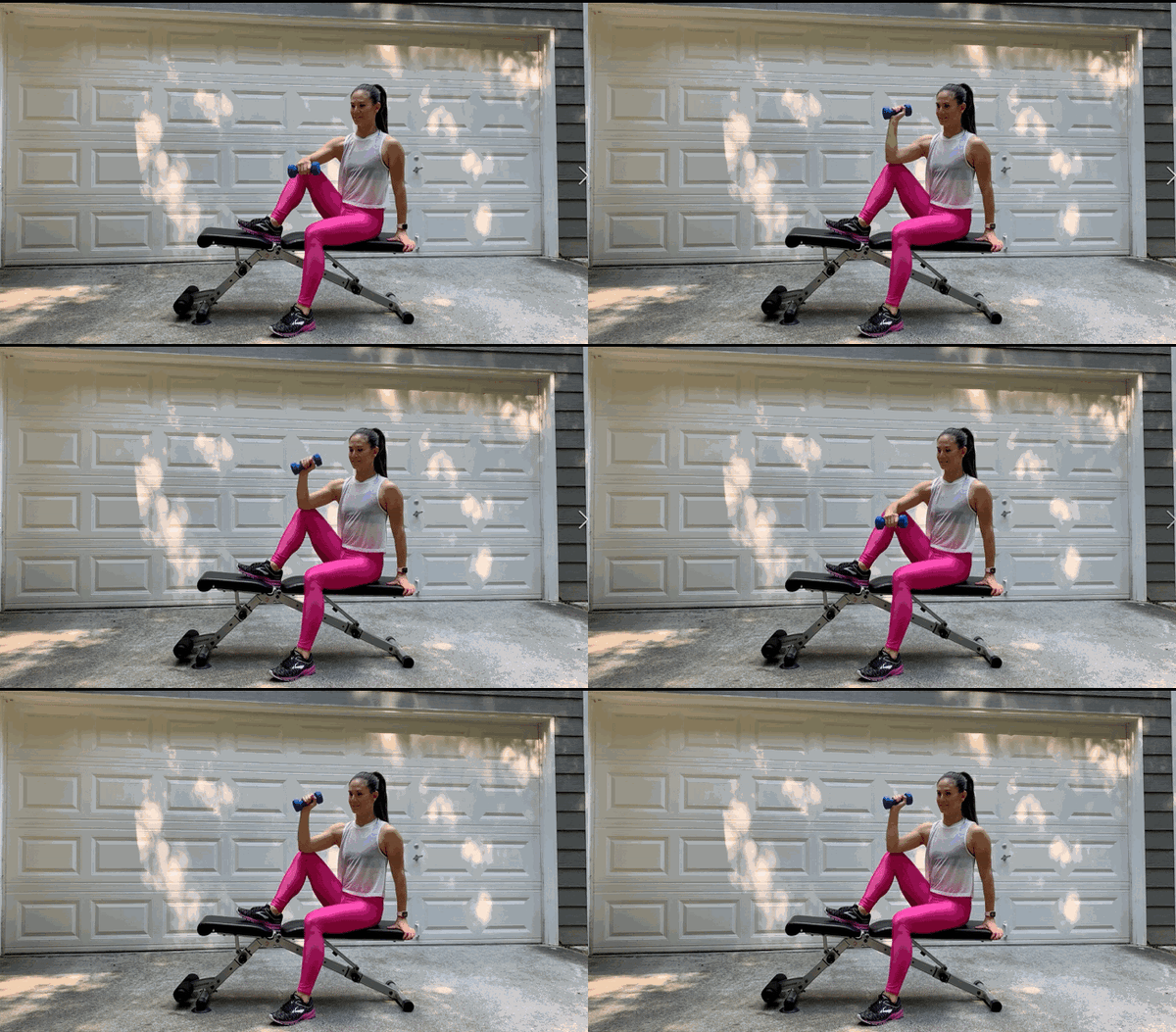
External Rotation
External rotation strengthens the rotator cuff muscles that help stabilize the shoulder during pressing, reaching, and overhead movement.
Muscles Worked
Rotator cuff, especially the infraspinatus and teres minor.
How to Do It
- Lie on your side on the bench or sit on the edge while holding a light dumbbell in the working hand.
- Keep your elbow bent to 90 degrees and close to your ribs.
- Rotate your forearm away from your body while keeping your upper arm still.
- Pause briefly at the top, then lower the weight with control.
Sets and Reps
Perform 2 to 3 sets of 12 to 15 reps per side with light weight.
Pro Tip
Use a slow tempo and avoid turning the torso to lift the weight. Shoulder external rotator eccentric training has been studied as a targeted approach for subacromial pain syndrome, which supports the value of controlled external rotation work.[3]
Incline I Raise
The incline I raise trains shoulder flexion, lower trap control, and upper back stability while the bench keeps your torso supported.
Muscles Worked
Lower traps, upper back, rear delts, and shoulder stabilizers.
How to Do It
- Set your adjustable bench to about 30 to 45 degrees and lie face down with your chest supported.
- Hold light dumbbells with your arms hanging down and palms facing each other.
- Brace your core and keep your neck long.
- Raise your straight arms forward in line with your head until your body forms an I shape.
- Pause for 1 second, then lower with control.
Sets and Reps
Perform 2 to 3 sets of 10 to 12 reps.
Pro Tip
Reach long through your fingertips and keep your shoulders away from your ears. If you feel your neck taking over, reduce the weight.

Incline T Raise
The incline T raise targets the rear delts, mid traps, and rhomboids to support posture and shoulder blade control.
Muscles Worked
Rear delts, mid traps, rhomboids, and upper back.
How to Do It
- Keep the bench at a low to moderate incline and lie chest down.
- Start with your arms hanging straight down and palms facing each other.
- Raise your arms out to the sides until your body forms a T shape.
- Squeeze your shoulder blades gently together at the top.
- Lower slowly while keeping tension in the upper back.
Sets and Reps
Perform 2 to 3 sets of 10 to 12 reps.
Pro Tip
Use lighter dumbbells than you expect. The goal is a clean rear shoulder contraction, not a heavy swing.

Incline Rear Delt Fly
The incline rear delt fly strengthens the back of the shoulders and mid back, which helps balance chest dominant pressing work.
Muscles Worked
Rear delts, rhomboids, mid traps, and upper back.
How to Do It
- Set your bench to a low incline and lie chest down with one dumbbell in each hand.
- Start with your arms hanging down and elbows slightly bent.
- Raise your arms out and slightly back until they are roughly in line with your torso.
- Squeeze the back of your shoulders gently at the top.
- Lower slowly and keep the motion controlled.
Sets and Reps
Perform 2 to 3 sets of 12 to 15 reps.
Pro Tip
Keep the chest supported and avoid shrugging. If your traps dominate the movement, reduce the weight and slow down.

Sample Bench Shoulder Workout You Can Do at Home
This sample routine gives you a simple way to train shoulders at home 2 to 3 times per week. Research on resistance training dose suggests that even lower volume strategies can improve strength when the work is performed consistently and progressively.[4]
Beginner Routine
Use this routine if you are new to bench shoulder exercises or returning after a long break.
- External Rotation: 2 sets of 12 to 15 reps per side.
- Incline I Raise: 2 sets of 10 to 12 reps.
- Incline T Raise: 2 sets of 10 to 12 reps.
- Incline Rear Delt Fly: 2 sets of 12 to 15 reps.
Intermediate Routine
Use this routine if you already control the beginner movements without shoulder pain.
- External Rotation: 3 sets of 12 reps per side.
- Incline I Raise: 3 sets of 12 reps.
- Incline T Raise: 3 sets of 12 reps.
- Incline Rear Delt Fly: 3 sets of 12 to 15 reps.
- Seated Dumbbell Shoulder Press: 3 sets of 8 to 10 reps with controlled form.
Rest 45 to 75 seconds between sets and keep 1 to 2 reps in reserve. This helps maintain form and reduces the chance of forcing painful shoulder positions.
For more ways to use a bench beyond shoulder training, read this guide to weight bench exercises at home.
Safety Tips and When to Be Careful
Bench shoulder exercises should feel controlled, stable, and joint friendly. Stop any movement that creates sharp pain, instability, numbness, or worsening symptoms.
- Start very light: External rotations and raise variations often require much less weight than presses.
- Control your shoulder blades: Think down and back without forcing a hard squeeze.
- Avoid painful range: Shorten the movement if the front of your shoulder feels pinched.
- Do not chase fatigue first: Shoulder quality matters more than burning out the muscles.
- Seek professional guidance: Get help if you have a past dislocation, rotator cuff tear, frozen shoulder, recent surgery, or persistent pain.
If you want a broader pain conscious bench plan, review this weight bench workouts without shoulder pain guide.
Recommended Gear for These Bench Shoulder Exercises
The best setup for this routine is simple, stable, and easy to adjust. You need a reliable adjustable bench, light to moderate dumbbells, and enough floor space to move your arms freely.
- Adjustable bench: A flat, incline, and upright bench gives you more angles for I raises, T raises, rear delt flys, and seated pressing.
- Light dumbbells: Use lighter weights for rotator cuff work and moderate weights for pressing and rear delt exercises.
- Optional mini band: A mini band can help warm up the rotator cuff and upper back before dumbbell work.
For this article topic, the most relevant product page is the RitFit GATOR 1600LB Adjustable Weight Bench, because the routine depends on stable incline and upright positions. You can also browse the full RitFit benches collection and pair your setup with options from the RitFit dumbbells collection.
If you are comparing bench options for a complete home gym, this guide to the best adjustable weight bench for home gym can help you match bench angle, stability, and space needs.
FAQs
How do bench shoulder exercises help improve posture?
Bench shoulder exercises improve posture by strengthening the rear delts, rotator cuff, traps, and upper back. These muscles help control the shoulder blades, reduce forward rounding, and support smoother pressing, reaching, and daily upper body movement when trained with light weight and consistent form.
What bench angle is best for shoulder exercises?
A low to moderate incline is usually best for raises and rear delt work. Start around 30 to 45 degrees for chest supported movements, then use an upright setting for dumbbell shoulder presses, while keeping the load light enough to control every rep.
Can I build stronger shoulders at home with only a bench and dumbbells?
Yes. A bench and dumbbells can train the delts, rotator cuff, traps, and upper back effectively. Use external rotations, incline raises, rear delt flys, and controlled pressing, then increase weight only when your range of motion stays smooth and pain free.
Is an adjustable bench better than a flat bench for shoulder workouts?
Yes. An adjustable bench gives you more angles for supported shoulder work than a flat bench. Incline settings help target rear delts and traps, while upright settings support pressing, making it easier to build a complete home shoulder routine with fewer pieces of equipment.
What weight should I use for rotator cuff exercises?
Use very light weight for rotator cuff exercises, often less than you use for raises or presses. The goal is control, not fatigue, so choose a dumbbell that lets you rotate smoothly without shoulder hiking, wrist twisting, or sharp discomfort.
How often should beginners do bench shoulder exercises?
Most beginners can train these bench shoulder exercises two times per week. Start with two sets per movement, rest at least one day between sessions, and add volume gradually when your shoulders feel stable, recovered, and free from lingering joint pain.
Should I stop if my shoulder hurts during pressing?
Yes. Stop pressing if you feel sharp, stabbing, or worsening shoulder pain. Reduce the incline, switch to a neutral grip, lower the weight, or shorten the range, and seek professional guidance if pain continues after training or affects daily movement.
Conclusion
Bench shoulder exercises turn a simple home gym bench into a focused tool for stronger shoulders, better posture, and more stable upper body movement. Start with light dumbbells, use controlled reps, and build consistency before adding load.
With an adjustable bench, dumbbells, and a smart warm up, you can train the rotator cuff, delts, traps, and upper back without needing a large machine. Keep the movement smooth, stay patient, and let better shoulder control guide your progress.
Disclaimer
This article is for general fitness education only and does not replace medical advice, diagnosis, or treatment. If you have shoulder pain, a previous injury, instability, numbness, recent surgery, or symptoms that worsen during exercise, consult a qualified healthcare professional or physical therapist before starting or continuing this routine.
References
- Moezy A, Sepehrifar S, Solaymani Dodaran M. The effects of scapular stabilization based exercise therapy on pain, posture, flexibility and shoulder mobility in patients with shoulder impingement syndrome: a controlled randomized clinical trial. Med J Islam Repub Iran. 2014;28:87.
- Melo ASC, Moreira JS, Afreixo V, Moreira-Gonçalves D, Donato H, Cruz EB, Vilas-Boas JP, Sousa ASP. Effectiveness of specific scapular therapeutic exercises in patients with shoulder pain: a systematic review with meta-analysis. JSES Rev Rep Tech. 2024;4(2):161-174. doi:10.1016/j.xrrt.2023.12.006
- Chaconas EJ, Kolber MJ, Hanney WJ, Daugherty ML, Wilson SH, Sheets C. Shoulder external rotator eccentric training versus general shoulder exercise for subacromial pain syndrome: a randomized controlled trial. Int J Sports Phys Ther. 2017;12(7):1121-1133. doi:10.26603/ijspt20171121
- Nuzzo JL, Pinto MD, Kirk BJC, Nosaka K. Resistance exercise minimal dose strategies for increasing muscle strength in the general population: an overview. Sports Med. 2024;54(5):1139-1162. doi:10.1007/s40279-024-02009-0





