You can build a strong, versatile home gym under $2000 if you focus on the right equipment first. For most people, the smartest path is to start with a rack, bench, barbell, plates, and floor protection, then add storage and accessories that match your space, training style, and long-term goals.
Key Takeaways
- A complete home gym under $2000 is realistic when you prioritize core strength equipment over low-value extras.
- The best setup depends on your training goal, available space, ceiling height, and whether you want a compact free weight station or an all-in-one system.
- A rack with safeties, an adjustable bench, an Olympic barbell, and a practical plate set gives most users the best return on budget.
- Real home gym value is not only about price. It is also about saving time, training on your own schedule, and creating a setup you will actually use.
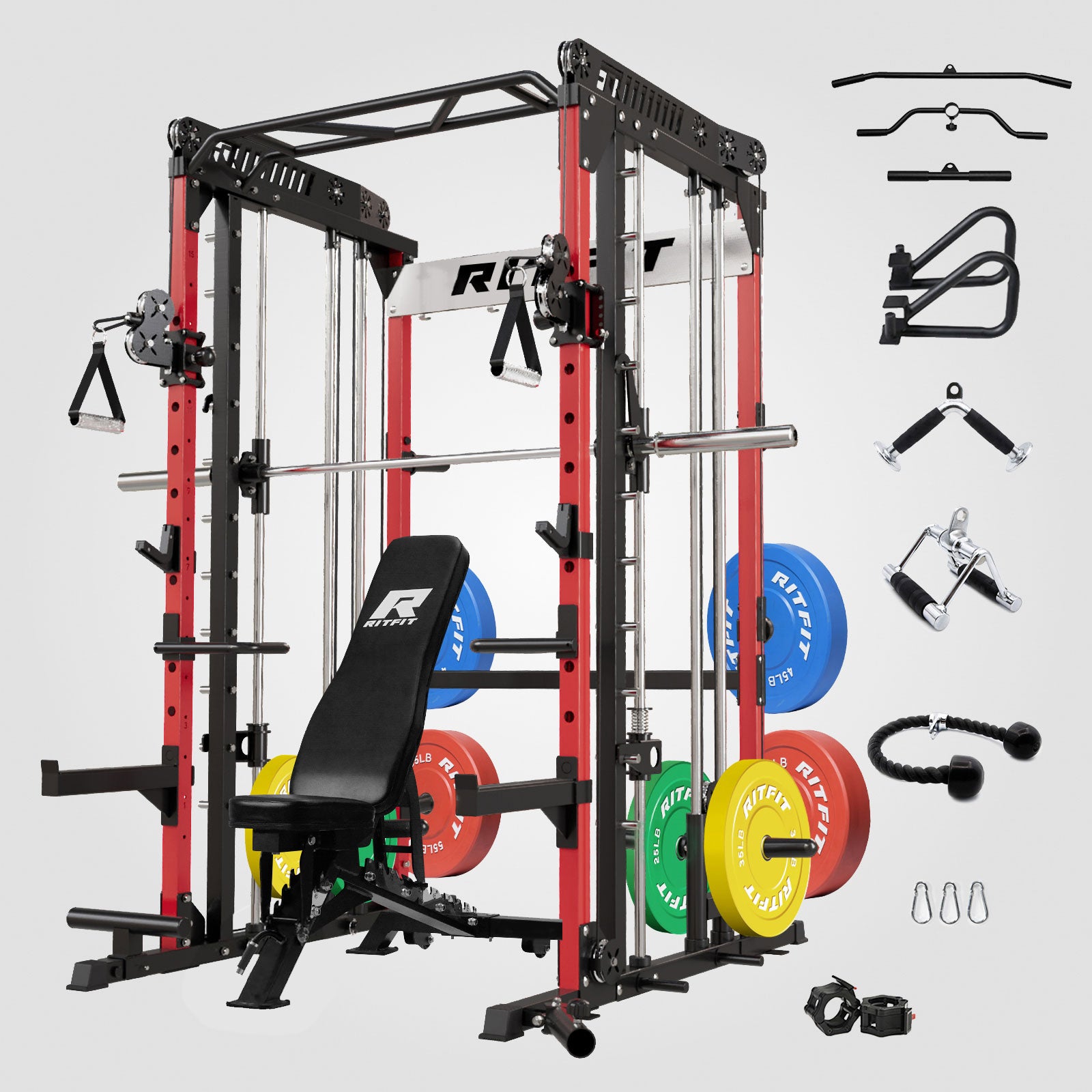
- Versatile systems like the RitFit M1 2.0 can deliver strong value for garage gyms because they combine a Smith machine, plate-loaded functional trainer, pull-up station, storage, and attachments in one footprint.
How to Choose Home Gym Equipment Under $2000
The best home gym is not the one with the most equipment. It is the one that fits your training needs, your floor space, and your budget without limiting safe progression.
Set Your Training Goals First
Start by deciding what you want your gym to do for you. If your priority is strength and muscle gain, your foundation should support squats, presses, deadlifts, rows, pull-ups, lunges, and progressive overload.
If your goal is general fitness, fat loss, or a family-friendly setup, flexibility matters more. In that case, a compact rack, adjustable bench, dumbbells, bands, and a small number of versatile accessories may offer better value than chasing a larger system too early.
Assess Your Space Before You Buy
Space planning matters just as much as product choice. Measure floor space, ceiling height, wall clearance, plate loading room, and how much space you need to move around the bench and barbell safely.
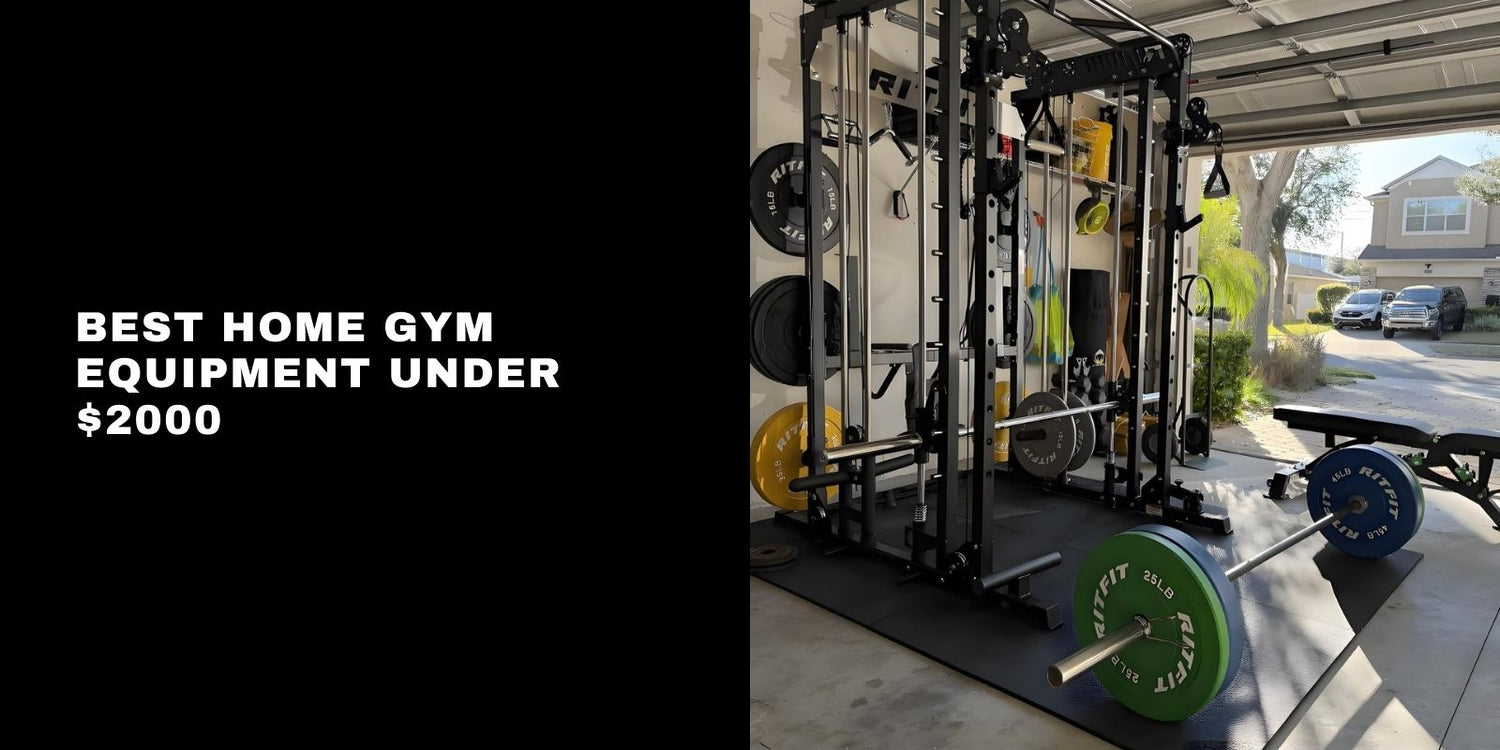
This matters even more in a garage gym. In one real garage upgrade, the goal was not just to add more equipment but to create better organization, better flow, and a layout that felt closer to a commercial gym experience without wasting usable space.
Use a real budget strategy.
If you want to stay under $2000, spend most of your budget on equipment that drives the most training value. For most home gyms, that means the rack or all in one trainer, the bench, the barbell, the plate set, and floor protection.
Storage, mirrors, bands, cable handles, and specialty tools can improve the experience, but they should support your main training rather than replace the essentials. That is how you stretch a limited budget without building a cluttered gym.
Think About Convenience, Not Just Cost
A home gym is still a luxury for many people, but the real value is often time, consistency, and privacy. You can train without commuting, waiting for machines, sitting in traffic, or adjusting your workout around a crowded commercial gym.
That matters even more for people who prefer to train alone, control their own music, and work out on a flexible schedule. In real life, that convenience is often what turns home gym equipment from a purchase into a long-term habit.
Put Safety and Build Quality First.
Do not trade away safety for a lower price. Your rack, safeties, bench, barbell, and plate setup should support solo training and give you room to progress with confidence.
Look for stable construction, practical weight capacity, smooth movement, and hardware that feels reliable during daily use. A good home gym should feel controlled and repeatable, not shaky, awkward, or limited after the first few months.
Best Complete Home Gym Setups Under $2000
The easiest way to build a great home gym is to match the setup to the way you actually train. These three paths cover the most common needs.
Strength and Power Setup
This setup is ideal for lifters who want to focus on the big compound lifts. It works best for squats, bench press, overhead press, deadlifts, rows, pull-ups, and steady progressive overload.
- Core components: A durable power rack or half rack with pull-up capability and dependable safeties.
- Lifting essentials: An Olympic barbell and a useful plate set with enough load for long-term progression.
- Support gear: A stable adjustable bench and dense rubber flooring or mats.
This is usually the best value for people who want serious barbell training without paying for features they will rarely use.
Compact and Apartment-Friendly Setup
This setup is best for limited space, shared rooms, and smaller home training areas. It focuses on low clutter and practical exercise variety.
- Core components: a foldable rack, compact squat stands, or a slim free weight station.
- Lifting essentials: A short barbell, adjustable dumbbells, or a compact plate setup depending on space.
- Support gear: A slim bench, vertical storage, and flooring that helps reduce noise and protect surfaces.
This route is often better than overspending on large machines when every square foot matters.
Versatile Family Fitness Setup
This setup works well when more than one person will use the gym. It balances barbell work, dumbbell training, accessory movements, and conditioning.
- Core components: a squat rack, adjustable bench, barbell, and moderate plate set.
- Versatility tools: Dumbbells, kettlebells, bands, or a jump rope for lighter sessions and mixed training styles.
- Main benefit: It supports both structured lifting and faster daily workouts for users with different experience levels.
This is often the most realistic choice for households that want flexibility without losing strength training capability.
Why All-in-One Systems Can Make Sense Under $2000
For some buyers, the best value is not a basic rack plus separate add-ons. It is a compact all-in-one system that combines multiple functions in one station.
A strong example is the RitFit M1 2.0, which was used in a real garage gym upgrade. Compared with the previous setup, which used a basic squat rack, the biggest advantage was clear: adding a functional trainer and Smith machine made the gym feel much more complete without requiring a massive footprint.
What Makes the RitFit M1 2.0 Stand Out
The M1 2.0 combines three major functions in one machine:
- A Smith machine for guided barbell work
- A plate-loaded functional trainer for cable exercises
- A rack structure for free weight training with safeties
That combination gives home users access to many of the features they often miss from a commercial gym, especially cable work, guided pressing and squatting, and more attachment-based variety.
Real World Footprint and Space Efficiency
In the garage gym setup referenced above, the M1 2.0 occupied about 68 inches in depth and 64 inches in width when including the ends of the Smith system. That is a practical footprint for the amount of function it delivers, especially for garage gyms that need strength training, cable work, and storage in one zone.
The rack is also around 85 inches tall, which matters for garage users thinking about ceiling clearance, pull up range of motion, and room layout.
Attachments That Add Real Training Value
One reason all-in-one systems can outperform pieced-together beginner builds is attachment efficiency. The M1 2.0 setup included:
- Sandwich J hooks
- Spotter arms for solo lifting
- A landmine attachment and landmine bar
- Band pegs
- A foot plate for low rows
- Dip handles
- Knurled aluminum cable handles
- A mini pull down or curl bar
- A traditional lat pulldown bar
- Carabiners for cable attachments
That matters because each attachment adds more movement options without requiring another large machine.
Why the Functional Trainer Matters
Many home gym users can absolutely get strong with just a rack, plates, and a barbell. But once training becomes more serious, cable work becomes one of the most missed features of a commercial gym.
A functional trainer opens up rows, flies, pushdowns, curls, lateral raises, face pulls, pulldowns, and many other movements that are difficult to match with free weights alone. That makes the gym feel more complete for hypertrophy, accessory work, and joint-friendly exercise variety.
Plate-Loaded vs. Selectorized
The M1 2.0 uses a plate-loaded functional trainer. That means you load plates onto the system rather than selecting weight from an integrated stack.
There are tradeoffs here. Selectorized systems are faster and more convenient, but they cost much more. Plate-loaded systems require more setup time, but they are often a far more budget-friendly way to add cable training, especially if you already own bumper plates.
Smoother Feel and Better Small Details
Small details can change how a machine feels in daily use. In this case, the system used aluminum pulleys rather than cheaper nylon or plastic pulleys, and that contributed to a smoother cable feel.
The upgraded pull-up bar also matters. On the newer version, the pull-up bar is angled rather than flat, which helps create a little more usable height and can feel better for taller users trying to get a fuller extension at the top station.
Storage and Organization Features
A good home gym is not only about exercise options. It is also about keeping the area clean and efficient. In the garage setup, storage was one of the biggest upgrade goals.
The M1 2.0 includes rear plate storage, horns, hooks for cable attachments, and bar storage options on the back. Even if not every garage layout can use all of them, built-in storage helps reduce clutter and keeps the training area more organized.
Best Individual RitFit Home Gym Equipment
If you do not want an all-in-one system or you want to build in stages, these are still the key categories to prioritize.
Best Power Rack or Squat Rack
A power rack is still one of the best investments in a home gym because it supports the biggest lifts safely. It gives you a strong foundation for squats, bench press, overhead press, rack pulls, and pull-ups, especially if you train alone.
Look for stable uprights, reliable safeties, pull-up capability, and attachment compatibility. A rack should not only fit your current needs but also leave room for future growth.
Best Adjustable Bench
A stable commercial-grade bench is one of the most underrated parts of a home gym. It supports heavy pressing, seated work, dumbbell training, and many accessory movements, and a poor bench can reduce both comfort and confidence.
Prioritize frame stability, pad quality, and a practical range of positions. A good adjustable bench often improves training quality more than buying another small accessory ever will.
Best Barbell for Budget Builds
A barbell should feel dependable for daily training and versatile enough for pressing, rowing, squatting, deadlifting, and landmine work. Good knurling, solid sleeve performance, and reliable durability matter much more than gimmicks.
For budget-conscious home gyms, the right barbell can remain useful for years even as the rest of the space evolves.
Best Plate Set for Home Use
A practical pace set determines how long your gym can keep up with your progress. Bumper plates are usually a strong choice for home gyms because they help protect flooring, reduce noise, and feel more garage-friendly than bare iron.
They also pair well with plate-loaded functional trainers, which can make an all-in-one system more cost-effective if you are already buying plates for barbell work.
Best Storage and Finishing Upgrades
Once your core training station is in place, storage becomes one of the most useful upgrades. In the real garage makeover, better organization was a major part of the transformation, and mirrors were added to help create a more polished training environment.
Storage trees, bar holders, wall hooks, mats, and mirrors do not replace the essentials, but they can dramatically improve how the gym looks, feels, and functions.
Sample RitFit Home Gym Builds
These sample builds keep the original buying logic but now reflect more real-world home gym use cases.
Barbell-Focused Strength Starter
Estimated total: Under $1500.
This build works best for users who want the core lifts and the best strength value per dollar.
Suggested build:
- RitFit power rack with safeties and pull-up bar
- Standard Olympic barbell
- Useful bumper plate set
- Flat or adjustable bench
- Protective floor mats
This setup covers the essentials and leaves room for later upgrades.
Balanced Strength and Cable Variety Build
Estimated total: Around the top end of the budget
This build is ideal for users who want barbell work plus more complete accessory and hypertrophy options.
Suggested build:
- RitFit M1 2.0 or another compact all-in-one rack system
- Commercial-grade adjustable bench
- Bumper plate set
- Included cable and landmine attachments
- Floor protection and simple storage
This route gives you a more commercial gym-style experience in one station and can be especially valuable for garage gyms.
Small Space Minimalist Build
Estimated total: $1000 to $1400
This build is best for spare rooms, small garages, or buyers who want a cleaner footprint.
Suggested build:
- Compact squat stands or foldable racks
- Adjustable bench
- Barbell or adjustable dumbbells depending on space
- Selective plate set
- Minimal storage and floor mats
It is simple, space-aware, and still supports meaningful, full-body progress.
Tips to Maximize Value From Your Home Gym
Buying the equipment is only the first step. Getting the most value means using the space in a way that supports consistency, progression, and long-term satisfaction.
- Build Around Movements, Not Just Products: Choose equipment that supports squats, hinges, presses, rows, pull-ups, lunges, and cable accessories if possible. The more useful movement patterns you can cover, the more complete your gym becomes.
- Prioritize Equipment That Solves Multiple Problems: A rack with safeties solves strength training, solo lifting, and upgraded flexibility. A functional trainer adds accessory work, hypertrophy, and more joint-friendly variety.
- Improve Organization Early: Storage is not just cosmetic. It improves safety, reduces clutter, and makes the gym faster to use, which can have a direct effect on how often you train.
- Upgrade the Feel of the Space: Small improvements such as mirrors, better lighting, cleaner wall color, and organized equipment can make a home gym feel more motivating. That matters because the best gym is the one that keeps pulling you back in.
- Expand Over Time: A great home gym does not need to be finished on day one. Many users build it piece by piece, learn what is missing, and refine the layout as their training style evolves.
FAQs
Is $2000 enough for a complete home gym?
Yes, for most beginners and intermediate users, $2000 is enough to build a complete and effective home gym. If you prioritize a rack, barbell, plates, bench, and flooring first, you can cover full-body strength training, hypertrophy work, and basic conditioning without needing commercial gym machines.
Can beginners start with a smaller budget and upgrade later?
Yes, and that is often the smartest route. A simple setup with a squat stand or compact rack, a barbell, plates, and a bench can support real progress at a lower starting cost, then expand later with better storage, attachments, dumbbells, or conditioning accessories.
Do I need a rack if I only want to lose weight?
Not always, but a rack makes strength training safer and more efficient. Building muscle through compound resistance training can support body composition, increase training efficiency, and make your home workouts more productive than relying on cardio alone.
How much space do I need for a barbell setup?
A barbell setup needs enough room for the rack, bench, plate loading, movement clearance, and safe lifting. Many users find that about 10 by 10 feet is a comfortable minimum for a basic strength station, though compact setups can work in smaller areas with careful planning.
Are RitFit products suitable for advanced lifters?
Many RitFit racks, benches, and core strength products are well suited for progressing lifters. Advanced users still need to check load capacity, footprint, exercise needs, and attachment compatibility, but a solid RitFit setup can support heavy compound training and long-term use when chosen carefully.
Conclusion
The best home gym equipment under $2000 is the equipment that fits your real life, not just your wish list. If you build around safe strength basics, smart space planning, and versatile tools that you will actually use, you can create a highly effective garage or home gym that saves time, supports long-term progress, and feels worth the investment every time you train.