The dips workout is widely considered the king of bodyweight upper-body exercises, targeting the chest, triceps, and anterior deltoids simultaneously. Whether you train at home with a freestanding station or at a commercial gym, mastering this compound push movement builds exceptional pressing power and muscle mass.
This comprehensive guide details proper dipping technique, muscle biomechanics, chest versus triceps variations, and progressive training strategies. Follow these step-by-step instructions to maximize upper-body hypertrophy while safeguarding your shoulder joints.
Quick Answer: A dips workout is a compound upper-body exercise that targets the triceps, chest, and front shoulders using parallel bars with either a forward or upright torso angle. Performing 3 to 4 sets of 8 to 12 controlled repetitions provides exceptional mechanical tension for complete upper-body muscle hypertrophy.
Key Takeaways
- Compound Activation: Dips recruit the pectoralis major, triceps brachii, and anterior deltoids in a single closed-chain pushing movement.
- Angle Specificity: A 45-degree forward torso lean shifts mechanical load onto the chest, whereas an upright torso isolates the triceps.
- Shoulder Safety: Maintaining active scapular depression and stopping when elbows reach 90 degrees prevents acromioclavicular joint strain.
- Progressive Overload: Lifters can scale dips from resistance band assistance to weighted belt loading as pressing strength increases.
- Home Gym Versatility: Freestanding dip stands and power rack attachments provide stable, space-efficient stations for upper-body conditioning.
Why Is the Dips Workout Essential for Upper Body Strength?
A dips workout serves as an indispensable compound movement that develops functional pushing strength across the entire upper kinetic chain. By lifting your own body weight through vertical elbow flexion and shoulder extension, you recruit more stabilizing musculature than standard machine presses.
Unlike open-chain pressing movements, parallel bar dips demand continuous core stabilization and scapular control. This closed-chain mechanic stimulates high neuromuscular activation in both the clavicular and sternal heads of the chest.
- Primary Movers: Heavy recruitment of the pectoralis major, pectoralis minor, and all three heads of the triceps brachii.
- Synergist Support: Strong involvement from the anterior deltoids, rhomboids, levator scapulae, and latissimus dorsi to stabilize each descent.
- Strength Carryover: Enhances lockout capability and raw pressing power for your traditional bench workout routines.
Integrating dips alongside structured 5x5 workout splits provides the progressive overload needed for long-term hypertrophy.[1] Furthermore, lifters preparing for tactical fitness or a military workout rely on bodyweight dips to build repeatable upper-body stamina.
How Do You Perform Parallel Bar Dips with Proper Form?
Executing dips with strict technique protects the rotator cuff while ensuring maximal mechanical tension on the target muscles. Maintaining steady eccentric control prevents abrupt ligamentous strain at the bottom of the movement.
Follow these four sequential steps to execute flawless parallel bar dips during your training sessions.
- Step 1 (The Setup): Grip the parallel bars firmly with palms facing inward, mount the station, and lock out your arms while depressing your shoulder blades downward away from your ears.
- Step 2 (The Descent): Inhale deeply, brace your core, and lower your torso under control until your upper arms are parallel to the floor, forming a 90-degree angle at the elbows.
- Step 3 (The Press): Exhale forcefully and drive your palms through the bars to push yourself upward, maintaining a steady torso angle without swinging your legs.
- Step 4 (The Lockout): Return to the starting position with your arms extended, pausing just short of a harsh elbow hyperextension to keep continuous muscle tension.
Pairing dips with high-intensity intervals in a metcon workouts guide regimen elevates cardiovascular conditioning while building muscular endurance. Watch the demonstration video below to review proper body alignment and elbow mechanics.
What Is the Difference Between Chest Dips and Tricep Dips?
The primary difference between chest dips and tricep dips lies in the angle of your torso and the path of your elbows during descent.[2] Modifying your body lean alters the moment arm, shifting mechanical stress between the sternal pectorals and the triceps brachii.[3]
To target the chest, lean your torso forward roughly 45 degrees, allow your elbows to flare outward slightly, and bend your knees behind you. For triceps isolation, maintain an upright vertical spine with elbows tucked close to your ribs throughout the repetition.
| Biomechanical Factor | Chest-Focused Dips | Triceps-Focused Dips |
|---|---|---|
| Torso Angle | 45-degree forward lean | Upright, perpendicular to floor |
| Elbow Position | Flared outward (roughly 30 to 45 degrees) | Tucked tight against ribs |
| Grip Width | Slightly wider than shoulder-width | Shoulder-width or narrow |
| Primary Muscle Emphasis | Lower and mid pectoralis major | Lateral and long heads of triceps |
| Leg Position | Bent at knees, crossed behind torso | Straight down or slightly forward |
Comparison reflects standard parallel bar mechanics and joint angles for muscle isolation.
Understanding these biomechanical nuances allows lifters to complement heavy barbell exercises from a structured bench workout guide. Expert strength coaches emphasize exercise selection versatility when programming compound movements.
"You could replace the bench work in this program with dips, dumbbell press, smith-machine press or machine chest press."
— Jeff Nippard, Science-Based Natural Bodybuilder and Powerlifter
Which Equipment and Dip Stations Are Best for Home Training?
Selecting durable dipping equipment depends on your available floor space, training goals, and budget. Freestanding dip stands offer dedicated stability, while rack attachments save footprint in compact home gym environments.
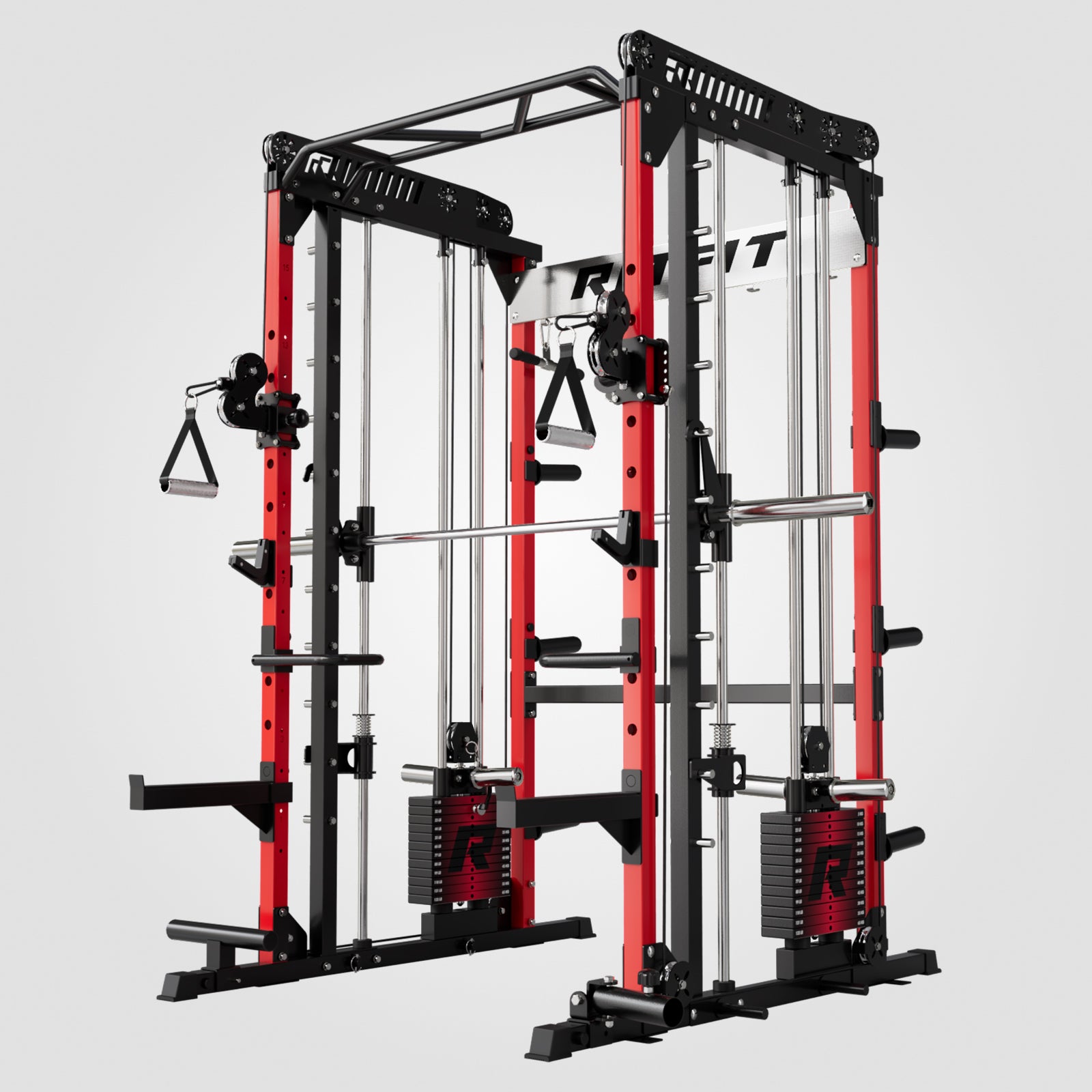
Lifters building a versatile home gym often choose all-in-one power cage configurations that incorporate dip bars and pull-up handles. High-capacity power rack packages provide heavy-duty steel frames that support both bodyweight training and loaded barbell work.
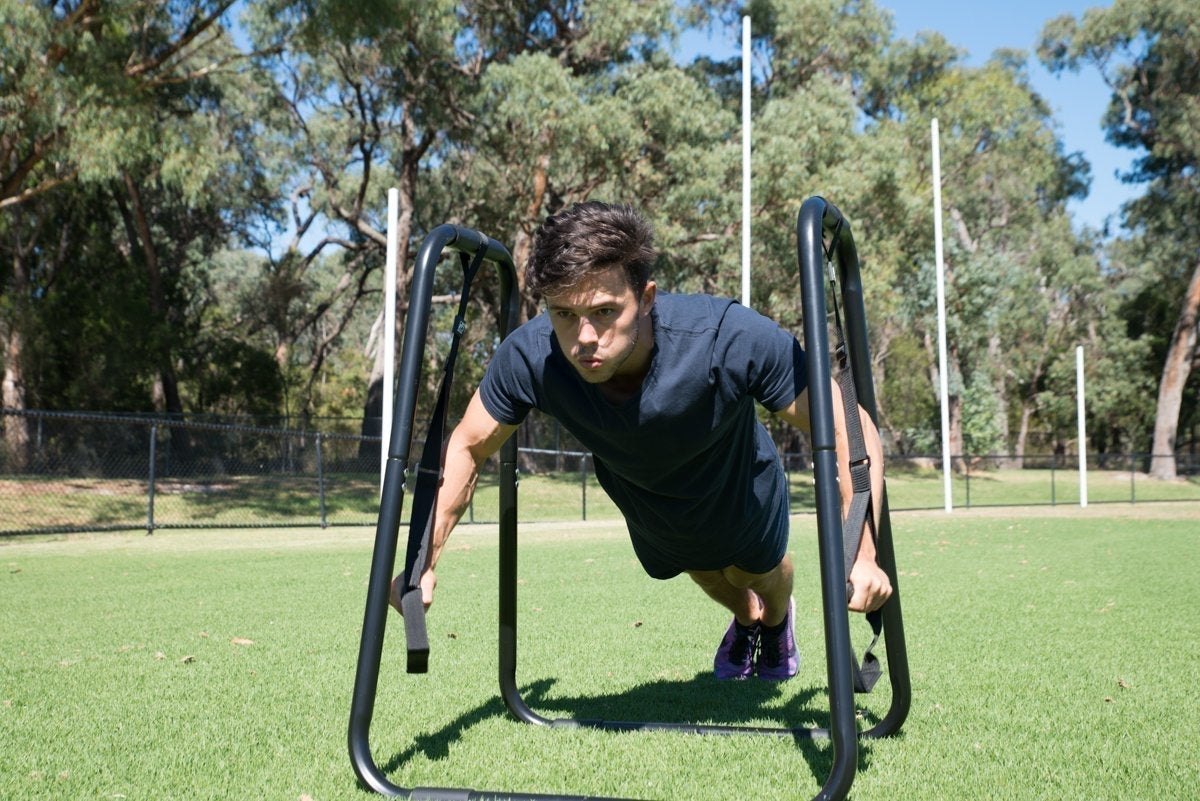
- Freestanding Dip Stations: Portable two-bar units that allow adjustable width settings and suspension strap integration for core exercises like a crunch workout.
- Power Cage Dip Attachments: Heavy steel Y-dip or multi-grip handles that slot directly into upright columns for rock-solid stability.
- Multi-Functional Units: Integrated equipment like a multi-functional smith machine combining cable crossovers, pull-up bars, and dipping horns.
- Adjustable Workout Benches: Heavy-duty weight benches can serve as sturdy platforms for beginner bench dips and triceps burnouts.
Review the comprehensive equipment overview in the video below to explore multi-functional home gym setups featuring integrated dip stations.
What Are the Most Common Dips Workout Mistakes to Avoid?
Avoiding technical errors on parallel bars is critical to prevent shoulder impingement and elbow tendonitis. Uncontrolled drops and poor shoulder positioning place excessive shear forces across the anterior capsule.
Correcting these four frequent errors ensures safe training and consistent strength progression over time.
- Excessive Descent Depth: Dropping shoulders below elbow level overstretches the anterior shoulder capsule, so stop when upper arms are parallel to the floor.
- Shoulder Shrugging: Allowing shoulders to creep toward your ears disengages the lats, so actively depress your scapulae throughout each rep.
- Kip and Body Swing: Using momentum reduces muscular tension on the chest and triceps while destabilizing your center of gravity.
- Abrupt Elbow Lockout: Snapping your elbows violently at the top stresses the joint cartilage rather than sustaining triceps contraction.
Beginners lacking the baseline strength for full bodyweight repetitions should utilize looped resistance bands or negative-only repetitions to build foundational control.
FAQs About Dips Workout
Are dips better for building chest or triceps?
Dips effectively build both chest and triceps depending on your torso angle and arm positioning. Leaning forward at a 45-degree angle with elbows slightly flared places greatest tension on the lower pectoralis major. Maintaining an upright torso with elbows tucked tight shifts the mechanical work directly onto the triceps brachii.
How many dips should a beginner perform per workout?
Beginners should aim for 3 to 4 sets of 5 to 8 controlled repetitions using proper technique. If bodyweight dips prove too challenging initially, incorporate resistance band assistance or perform slow eccentric negatives until baseline pressing strength improves over four to six weeks.
Why do dips cause shoulder discomfort for some lifters?
Shoulder discomfort during dips usually stems from descending too deep, shrugging the shoulders upward, or lacking adequate thoracic mobility. Descending beyond parallel places extreme stretching strain on the anterior shoulder capsule and rotator cuff tendons, so stopping at ninety degrees protects joint structures.
Can dips replace the barbell bench press in a workout routine?
Dips can effectively replace or complement the barbell bench press because they provide substantial mechanical overload to the pecs and triceps. As a closed-chain movement, dips frequently activate greater shoulder stabilizer musculature and allow natural scapular movement compared to lying fixed on a bench.
How do you add progressive overload to bodyweight dips?
You can progressively overload dips by increasing total repetitions, slowing down the eccentric lowering phase, or adding external resistance using a dip belt with weight plates. Advanced athletes can also introduce pauses at the bottom position to eliminate stretch reflex assistance and maximize muscle recruitment.
Conclusion
Mastering the dips workout provides an unmatched foundation for upper-body pushing power, chest definition, and triceps thickness. By dialing in your torso angle and maintaining strict scapular control, you can tailor this compound exercise to match your specific muscle-building goals.
Upgrade your training setup with dedicated home gym equipment and take advantage of the latest deals through the RitFit discount guide to equip your workout space today.
Disclaimer
Always consult a physician or qualified fitness professional before beginning any new strength training or bodyweight exercise program. Stop exercising immediately and seek medical attention if you experience severe pain, dizziness, or joint instability during performance.
References
1. Lopez P, Radaelli R, Taaffe DR, et al. Resistance Training Load Effects on Muscle Hypertrophy and Strength Gain: Systematic Review and Network Meta-analysis. Med Sci Sports Exerc. 2021;53(6):1206-1216. doi:10.1249/MSS.0000000000002585 PMCID: PMC8126497
2. Landin D, Thompson M, Jackson M. Functions of the Triceps Brachii in Humans: A Review. J Clin Med Res. 2018;10(4):290-293. doi:10.14740/jocmr3340w PMCID: PMC5827912
3. Kholinne E, Zulkarnain RF, Sun YC, Lim S, Chun JM, Jeon IH. The different role of each head of the triceps brachii muscle in elbow extension. Acta Orthop Traumatol Turc. 2018;52(3):201-205. doi:10.1016/j.aott.2018.02.005 PMCID: PMC6136322