How Much Should I Be Able to Bench?
Your bench press should match your body weight, training age, technique, and goal rather than a single internet milestone. Strength standards are useful benchmarks, but the best target is the next realistic jump you can own with clean form and steady progress.
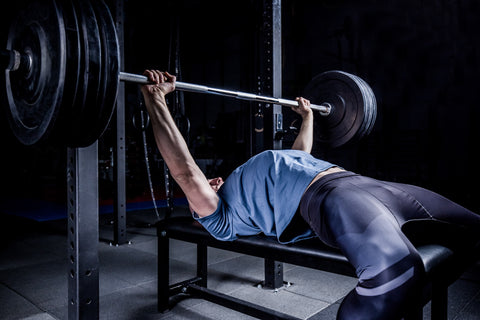
Whether you train on a home weight bench or in a commercial gym, the right number depends on control, consistency, and recovery as much as raw load. This guide shows how to benchmark your bench press, estimate your max more safely, and train with fewer setbacks.
Key Takeaways
- There is no single bench press number that fits everyone because body weight, training age, and technique all matter.
- Strength standards work best as reference points, not as judgments about your potential or progress.
- Beginners should master setup, bar path, and repeatable reps before chasing heavy singles.
- A hard set of three to five reps is often a safer way to estimate your max than testing a true one rep max.
- Most bench plateaus come from technique leaks, poor recovery, or bad load jumps rather than lack of effort.
How Much Should I Be Able to Bench?
Most lifters should judge bench press strength by body weight, experience, and bar control rather than ego numbers. A beginner can make excellent progress with the empty bar or a light load, while an advanced lifter should compare performance against longer term standards.
How Much Bench Press for Beginners?
Beginners should start with a load they can control for smooth reps and a stable bar path. For many people, that means the empty bar or a load under half of body weight until setup, touch point, and lockout look consistent.
- Best first goal: Learn to keep your feet planted, upper back tight, and wrists stacked over your forearms.
- Progress marker: Add weight only when every rep still touches the same spot on your chest and finishes under control.
- Safer setup: If you train alone, use a power cage or reliable safeties for heavy work.
How Much Can the Average Man or Woman Bench Press?
Strength charts are best used as reference points, not verdicts about your value as a lifter. They help you compare your estimated max with lifters at a similar body weight and training level.
Chart I. Bench Press Standards for Men
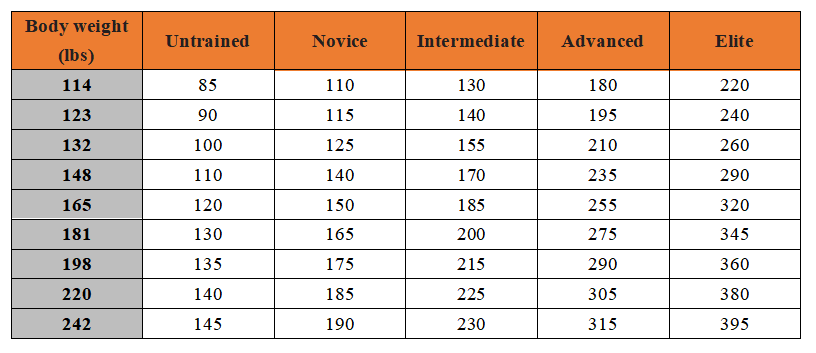
- Quick read for men: In this chart, an untrained 198 pound man is around 135 pounds, a novice around 175, an intermediate around 215, an advanced lifter around 290, and an elite lifter around 360.
- How to use it: Move one level at a time instead of jumping straight to advanced or elite targets.
Chart II. Bench Press Standards for Women
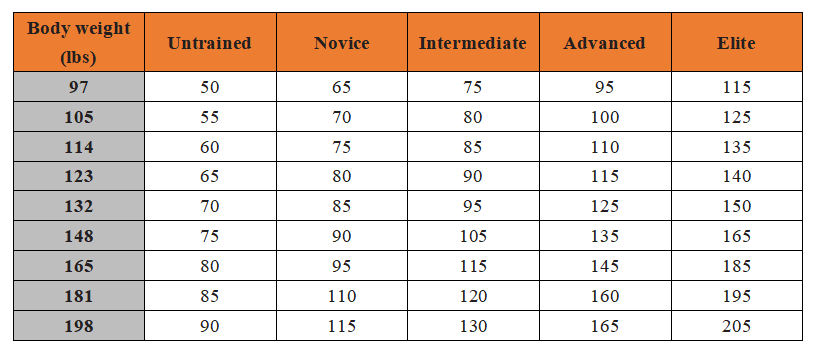
- Quick read for women: In this chart, an untrained 165 pound woman is around 80 pounds, a novice around 95, an intermediate around 105, an advanced lifter around 145, and an elite lifter around 185.
- What matters most: Use the chart to set realistic expectations, then judge progress by stronger technique and more repeatable reps.
Troubleshooting
Most bench press stalls come from technique leaks, poor load selection, or recovery gaps rather than low motivation. Fix the weak link before you chase another max attempt.
Problem: You fail off the chest.
This usually points to poor pause strength, an inconsistent touch point, or lost tightness on the way down. Light to moderate paused bench work and more upper back volume often improve the first half of the press.
- Likely causes: Weak pause strength, loose setup, or touching too high or too low on the chest.
- Best fix: Add two or three paused sets after your main bench work and keep your upper back pinned to the bench.
Problem: You fail near lockout.
This usually points to triceps weakness or a bar path that drifts too far forward. Stronger close grip work and a cleaner press back toward the rack often help.
- Likely causes: Triceps lag, poor elbow position, or pressing straight up instead of slightly back.
- Best fix: Use close grip bench, pushdowns, and lighter technique work that sharpens your finish.
Problem: Shoulder pain shows up.
Shoulder pain usually means your setup, grip width, or training volume is off. Reduce load first, then rebuild around pain free positions and better scapular control.
- Likely causes: Elbows flaring too early, losing upper back tightness, or using a grip that is too wide for your frame.
- Best fix: Narrow the grip slightly, keep the shoulder blades back and down, and stop pressing through sharp pain.
Problem: Your bench is stuck for 6 or more weeks.
A stalled bench usually reflects recovery issues, inconsistent progression, or not enough pulling volume to support pressing. A short deload and smaller weekly jumps often restart progress faster than another all out test.
- Likely causes: Low sleep, inconsistent calories, too much fatigue, or no structured progression.
- Best fix: Deload for one week, return with 2.5 pound jumps, and keep your pulling volume at least equal to your pressing volume.
How to Use These Bench Press Standards in Your Training
Use standards to choose your next realistic target, not to compare your chapter one with someone else’s chapter ten. The most productive jump is usually one level at a time.
- Pick the right column: Untrained means little or no lifting background, novice usually means several months, and intermediate usually means at least a year of consistent training.
- Set a near term goal: If you are close to a novice standard now, aim for a stable intermediate target over the next training block instead of chasing elite numbers.
- Match the goal to the plan: Use small load jumps, repeatable technique, and a schedule you can recover from week after week.
- Track the right inputs: Write down body weight, working sets, rep quality, pain signals, and missed reps so you can spot patterns early.
What Is the Average Bench Press by Age?
Bench press performance usually changes with age because muscle mass, recovery speed, and force output tend to decline over time. Age adjusted expectations help you train hard without turning every session into a max test.
Chart III. Average Bench Press by Age
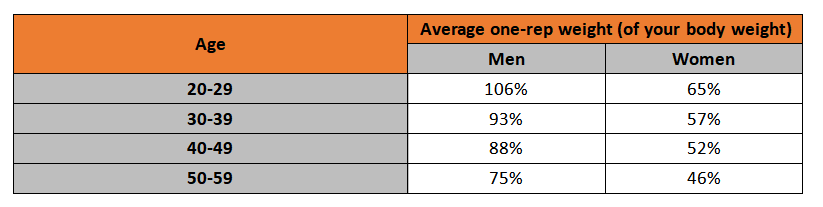
- What the chart shows: Younger lifters usually have a higher ceiling for peak strength, while older lifters benefit more from conservative loading and precise technique.
- How to apply it: Use age as context, not as an excuse, and focus on steady strength you can repeat without pain.
Disclaimer
This article is for general educational purposes and does not replace medical or coaching advice. If you have current pain, a recent injury, cardiovascular concerns, or limited lifting experience, use conservative loads and speak with a qualified professional before testing heavy singles.
What Is My One Rep Max?
Your one rep max is the heaviest weight you can lift once with solid form. Most lifters do not need to test a true max often because a hard set of three to five reps can estimate it with less risk.
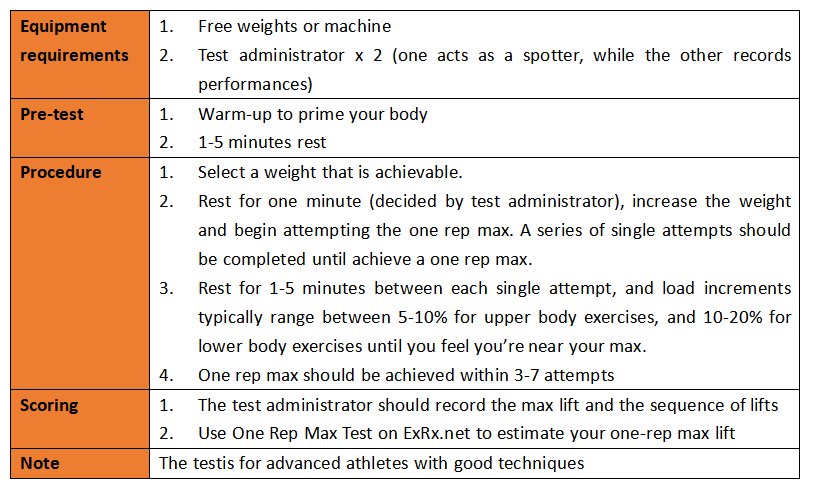
What a One Rep Max Estimate Is Good For
A one rep max estimate helps you set training percentages, measure progress, and compare strength levels more objectively. It is most useful when the estimate comes from clean reps rather than a sloppy grind.
- Programming: It helps you choose working weights for strength blocks and rep ranges.
- Progress tracking: It shows whether your strength is moving up even when your body weight stays the same.
- Reality check: It keeps your training targets honest when gym guesses start getting inflated.
Step by Step Mini Protocol
A submaximal test is safer for most beginners, older adults, and home gym lifters training alone. Use a gradual warm up, stop when speed or form falls off, and estimate your max from a strong triple or set of five.
- Step 1: Warm up. Do 5 to 10 minutes of light cardio, then ramp up with the empty bar and two or three progressively heavier sets.
- Step 2: Build to a hard set. Choose a weight you can lift for 3 to 5 strong reps without bouncing or losing position.
- Step 3: Rest fully. Take full rests of about 3 to 5 minutes so fatigue does not distort the estimate.
- Step 4: Stop on form breakdown. End the test when the bar path gets messy, your hips shift, or you need help to finish.
- Step 5: Estimate your max. Use the hard set to estimate your one rep max instead of forcing a risky single.
Checklist for Safety When Doing the Bench Press
Safe benching depends more on setup and decision making than courage. Most preventable problems happen when lifters rush warm ups, lose position, or test loads they cannot control.
- Warm up first: Use light cardio and at least two lighter bench sets before heavy work.
- Set your base: Keep your feet flat, upper back tight, and eyes under the bar before you unrack.
- Control the bar path: Lower to a consistent touch point and press with control instead of bouncing off the chest.
- Use a spotter or safeties: Heavy singles and top sets are safer when another person or rack pins can catch the bar.
- Respect pain signals: Stop immediately if you feel sharp pain in the shoulder, elbow, or wrist.
- Choose the right environment: Stable equipment, enough clearance, and good lighting matter more than hype.
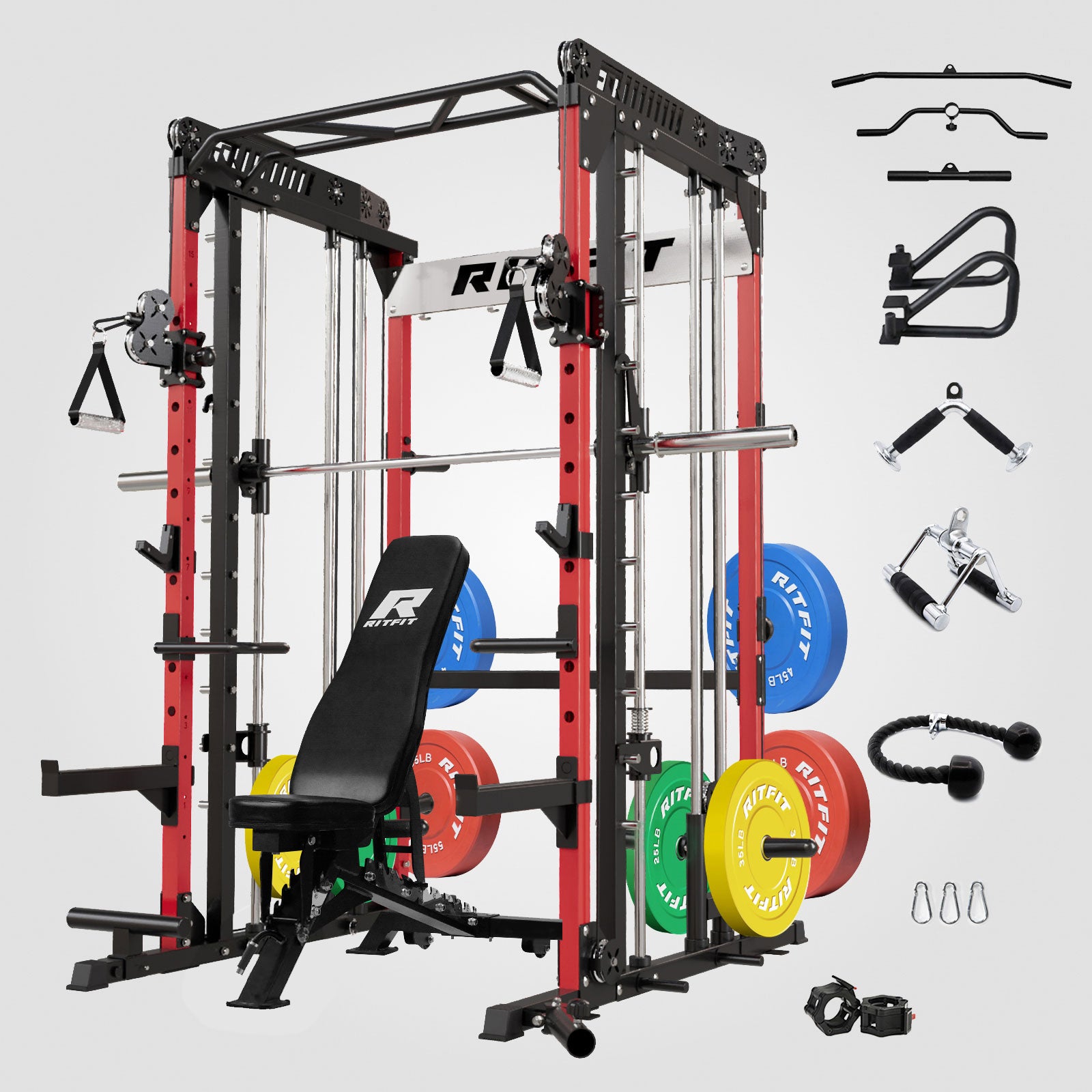
Helpful Equipment for Safer Bench Training at Home
The right equipment makes bench training safer, more repeatable, and easier to progress at home. A stable bench, a reliable barbell, and solid safeties remove avoidable friction from the lift.
- Adjustable Bench: RitFit Adjustable Bench
- Olympic Barbell: RitFit Olympic Barbell Bar
- Rack With Safeties: RitFit Buffalo Smith Machine
FAQ
How much should I be able to bench press?
You should lift a weight that matches your body weight and training age. There is no single number that fits everyone perfectly. Beginners should start with an empty bar and add load only when their technique and lockout remain completely consistent over time.
Is testing a true 1 rep max safe for beginners?
No. Beginners should avoid testing a true 1 rep max to prevent unnecessary injuries. A hard set of 3 to 5 reps is a much safer way to estimate your maximum limit. You should stop your test immediately when your form breaks down.
Why do I always fail the bench press near lockout?
You likely suffer from triceps weakness or poor elbow positioning during your lift. Pressing straight up instead of slightly back can also cause this specific problem. You can fix this by adding close grip bench work and pushdowns to sharpen your final pressing motion.
Do I need a spotter for heavy home bench training?
Yes. You must use a spotter or reliable safety pins when testing heavy singles. Safe benching depends heavily on your setup and decision making skills. A stable power cage removes avoidable friction and catches the barbell if you lose position during a hard set.
How do I fix sharp shoulder pain during the bench press?
You must reduce your lifting load first and stop pressing through the pain. This discomfort usually means your grip is too wide or your elbows flare too early. You should narrow your grip slightly and keep your shoulder blades pinned back against the bench.
Conclusion
The right bench press target is the heaviest load you can control with consistent setup, full range, and steady progress over time. Use standards to guide the next milestone, train with patience, and build a bench press that looks as strong as it feels.
References
- American College of Sports Medicine. General strength and resistance training guidance. ACSM
- Volpi E, Nazemi R, Fujita S. Muscle tissue changes with aging. Curr Opin Clin Nutr Metab Care. 2004;7(4):405-410. doi:10.1097/01.mco.0000134362.76653.b2
- Whisenant MJ, Panton LB, East WB, Broeder CE. Validation of submaximal prediction equations for the 1 repetition maximum bench press test on a group of collegiate football players. J Strength Cond Res. 2003;17(2):221-227. doi:10.1519/1533-4287(2003)017<0221:vospef>2.0.co;2