Table of Contents
- Are You a Beginner, a Pro, or Somewhere in Between
- Bicep Curl Benchmarks
- The Best Way to Pick Your Curl Weight
- Picking Your Tool
- 12 Bicep Curl Variations
- Understanding the Pump and Muscle Failure
- How to Safely Test Your Strength
- Advice for Women and Teens
- How to Get Stronger Over Time
- Frequently Asked Questions
Most people should curl a weight they can control for 8 to 12 strict reps, with the last 2 to 3 reps feeling hard but still clean. Benchmarks can give you context, but the right working weight depends on your goal, form, equipment, and recovery.
Key Takeaways
- The best curl weight is one you can control with strict form, full range of motion, and no body swing.
- For muscle growth, most lifters do best with 6 to 12 reps and a load that makes the last few reps challenging.
- Benchmarks are useful for context, but body size, limb length, wrist comfort, and technique can change the number.
- Dumbbells, barbells, EZ curl bars, and cables all train the elbow flexors differently and serve different goals.
- Progress happens faster when you add reps first, then increase weight in small jumps without sacrificing form.
Are You a Beginner, a Pro, or Somewhere in Between
Your training age matters because the same dumbbell can feel very different depending on technique, coordination, and recovery capacity. Use these categories as a practical guide, not as a label.
- Beginner: You have trained consistently for less than 6 months. Fast gains are common here because your body is still learning the pattern and improving coordination.
- Novice: You have trained consistently for about 6 to 12 months. Form is improving, but progress still depends heavily on clean reps, basic programming, and recovery.
- Intermediate: You usually reach this stage after 1 to 2 years of serious training. At this point, progress depends more on progression strategy, exercise selection, and fatigue control.
- Advanced or Elite: You have trained hard for several years and already have strong movement skill. Gains come slower here, so load selection, elbow health, and training quality matter even more.
Bicep Curl Benchmarks
These reference tables can help you see where your strength roughly sits, but they should never replace strict form and smart load selection. Curl standards vary with bodyweight, technique, grip style, and whether you use a true full range of motion.

Dumbbell Curl Standards Per Arm
Use this table as a rough strength reference for one arm dumbbell curls. Your real training weight for repeated sets will usually be lower than your top single effort.
| Level | Men lb | Women lb |
|---|---|---|
| Beginner | 14 | 8 |
| Novice | 29 | 17 |
| Intermediate | 52 | 30 |
| Advanced | 80 | 47 |
| Elite | 113 | 67 |
Barbell Curl Standards Total Weight
This table gives a rough reference for the total load on a barbell curl. A straight bar often lets you move more total weight, while an EZ curl bar may feel better on the wrists and elbows.
| Level | Men lb | Women lb |
|---|---|---|
| Beginner | 38 | 14 |
| Novice | 66 | 31 |
| Intermediate | 103 | 54 |
| Advanced | 149 | 85 |
| Elite | 201 | 120 |
As a simple training shortcut, many working sets for 8 to 12 reps fall well below a top single rep number. Tempo, grip, range of motion, and how strictly you control the eccentric can change that relationship a lot.
The Best Way to Pick Your Curl Weight
The smartest method is simple: match the load to your goal, then keep form strict enough that the biceps stay the prime mover. If your shoulders, hips, or lower back take over, the weight is too heavy for the target.
If Your Goal Is Muscle Growth
Most lifters grow well when they use a load they can control for 6 to 12 hard reps with steady tempo and clean elbow mechanics. This range balances tension, fatigue, and repeatable technique.
- Rep target: Aim for 8 to 12 strict reps on most working sets.
- Effort level: The last 2 to 3 reps should feel slow and challenging without turning into body English.
- Form standard: Keep your wrists stacked, your upper arm stable, and your lowering phase controlled.
If Your Goal Is Strength
Use a heavier load for lower reps when your technique is already solid and your joints tolerate the movement well. Strength work on curls should still look like a curl, not a standing clean in disguise.
- Rep target: Work mostly in the 3 to 6 rep range.
- Rest: Take longer rest periods so each set stays technically sharp.
- Equipment note: A barbell or EZ curl bar usually makes heavy loading easier than a dumbbell curl.
If Your Goal Is Pump and Endurance
Lighter weights can work well when you want more local fatigue, a strong pump, and more time under tension. This approach is especially useful with cables, preacher curls, and controlled dumbbell work.
- Rep target: Use loads you can control for 12 to 20 reps.
- Tempo: Keep tension constant instead of bouncing through the bottom.
- Best use: These sets work well as finishers after heavier work.
Picking Your Tool
The tool changes the feel of the lift, the line of pull, and the amount of stability you need to create. Choosing the right tool can make curls more productive and more joint friendly.

The Dumbbell
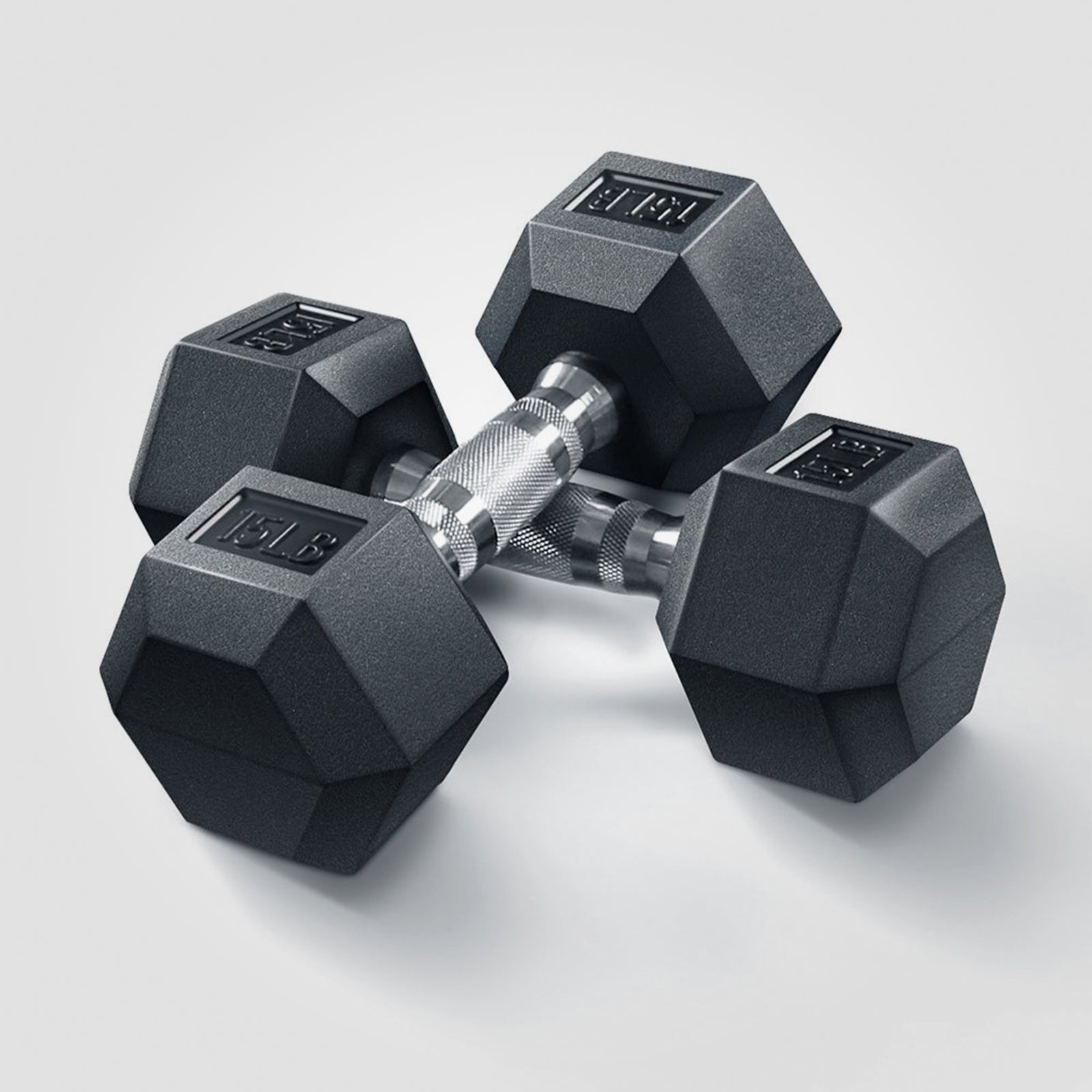
Dumbbells are usually the best starting point because they train each arm separately and allow a natural wrist path. They also make it easier to expose left to right imbalances and adjust your grip from supinated to neutral when needed.
- Best for: Strict hypertrophy work, unilateral training, and home gym flexibility.
- Why it works: Each arm has to stabilize independently, which increases control demands and improves symmetry.
- Smart option: Fixed pairs work well for simplicity, while adjustable dumbbells help when you need smaller progression jumps.
The Barbell
A barbell usually lets you move the most total load because both arms drive one implement together. If a straight bar irritates your wrists, an EZ curl bar often feels smoother and more sustainable.
- Best for: Strength focused curls and progressive overload with fewer moving parts.
- Why it works: The shared implement improves stability and makes load tracking simple.
- Related gear: Explore Olympic barbells and weight plates if you want heavier curl options at home.
The Cable
Cables keep tension more consistent across the rep and often make it easier to feel the biceps from stretch to peak contraction. They are especially useful for high rep work, Bayesian curls, and elbow friendly finishers.
- Best for: Constant tension, pump work, and controlled isolation.
- Why it works: The line of pull can stay challenging where free weights sometimes get easier.
- Technique tip: Match your body position to the cable line so the elbow flexors stay loaded through the full rep.
12 Bicep Curl Variations
Using more than one curl variation helps you train the biceps, brachialis, and forearm flexors through slightly different angles and grip demands. Rotate variations across training blocks instead of forcing one version forever.
- Standard Dumbbell Curl: A classic supinated curl that works well for most lifters.
- Hammer Curl: A neutral grip curl that emphasizes the brachialis and brachioradialis.
- Concentration Curl: A strict single arm curl that reduces body motion and improves focus.
- Preacher Curl: A supported curl that limits cheating and challenges the lower half of the range.
- Incline Dumbbell Curl: A stretch biased curl that lengthens the biceps at the bottom.
- Zottman Curl: A curl that trains supination on the way up and stronger forearm control on the way down.
- Cable Curl: A smooth resistance option that keeps tension more even.
- Spider Curl: A chest supported variation that makes the top half brutally honest.
- Barbell Curl: A simple mass and strength builder when done with strict torso control.
- Reverse Curl: A pronated curl that shifts more work to the brachialis and forearms.
- Bayesian Cable Curl: A cable variation that makes the stretched position very effective.
- 21s: A fatigue heavy sequence that combines bottom half reps, top half reps, and full reps.
Understanding the Pump and Muscle Failure
A pump is the tight, full feeling that builds when blood flow, metabolites, and muscular effort rise during a hard set. It can be a useful training signal, but it is not the only sign of productive work.
Muscle failure matters more when you define it correctly. For curls, technical failure is usually the smarter stopping point than absolute failure.
- Technical failure: You can still move the weight, but your wrists fold, your shoulders shrug, or your hips start helping.
- Absolute failure: You cannot complete another rep at all.
- Practical rule: Stop when the biceps stop being the clear driver of the movement.
Do Not Be an Ego Lifter
Ego lifting turns curls into a whole body heave and shifts tension away from the elbow flexors. It may impress nobody and it usually slows progress.
- Body swing: Hip drive launches the weight instead of your biceps lifting it.
- Half reps: Cutting the range short lets you move more load with less useful tension.
- Shoulder takeover: Front delts and traps start finishing the rep for you.
- Wrist collapse: Excessive wrist flexion can increase forearm strain and reduce curl quality.
Wall test: Stand with your back and elbows lightly against a wall and perform curls without losing contact. If the weight suddenly feels much heavier, your usual sets are probably using momentum.
How to Safely Test Your Strength
Most lifters do not need a true one rep max on curls, especially beginners and anyone with elbow or wrist irritation. A controlled rep test is safer and more useful for daily programming.
- Step 1: Sit or stand in a stable position with a light to moderate load you can control cleanly.
- Step 2: Perform as many strict reps as you can in 30 seconds without swinging or shortening the range.
- Step 3: If you can do more than 20 clean reps, the load is likely too light for standard hypertrophy work.
- Step 4: If you land around 10 to 15 clean reps, you probably have a practical starting point for training.
- Step 5: Retest after several weeks of consistent work instead of chasing a max every session.
Advice for Women and Teens
For Women
Women do not accidentally build massive arms from a few curl sessions each week. Biceps training is a useful way to build stronger arms, improve pulling strength, and feel more capable with free weights.
For Teens
Teens should focus on technique, patience, and sensible progression instead of reckless loading. Good coaching, clean mechanics, and joint friendly volume matter more than showing off with heavy dumbbells.
How to Get Stronger Over Time
The simplest long term strategy is to add reps before you add load. This keeps progression measurable without forcing sloppy jumps in weight.
- Step 1: Choose a weight you can curl for 8 strict reps.
- Step 2: Keep that load until you can perform 12 strict reps with the same form standard.
- Step 3: Increase the load by a small amount and return to 8 reps.
- Step 4: Repeat the cycle while protecting elbow position, wrist alignment, and tempo.
Frequently Asked Questions
What is the average curl weight for a man?
A practical reference point for an intermediate male lifter is about 52 pounds per arm on a dumbbell curl or about 103 pounds total on a barbell curl as a rough benchmark. Real working weights for quality sets are usually lower because strict reps matter more than single effort numbers.
What is the average curl weight for a woman?
A practical reference point for an intermediate female lifter is about 30 pounds per arm on a dumbbell curl or about 54 pounds total on a barbell curl as a rough benchmark. Your best training load still depends on control, comfort, and how cleanly you can keep the rep honest.
Why do my forearms hurt when I curl?
Forearm discomfort can happen when you grip too hard, flex the wrist excessively, or use more load than your wrists and forearms can stabilize well. Start by stacking the wrist, reducing load, and slowing the lowering phase, then get qualified advice if pain keeps returning.
How many times a week should I train my biceps?
For many lifters, training biceps 1 to 2 times per week is a practical starting range. Your ideal frequency depends on your total pulling volume, recovery, elbow tolerance, and whether biceps are already getting hard work from rows and pulldowns.
Should I train to absolute failure on curls?
Most lifters do better when they stop at technical failure instead of absolute failure. That approach keeps the tension where it belongs and lowers the odds of turning a clean curl into a risky cheat rep.
Conclusion
The right curl weight is the one that keeps the biceps doing the work while the final reps still feel difficult. If you stay strict, progress patiently, and match the tool to the goal, your curls will build more size and strength with less wasted effort.
Disclaimer: This article is for general education only and is not medical advice. If you have ongoing shoulder, elbow, wrist, neck, or back pain, or if curls cause sharp pain, numbness, or tingling, stop training and consult a qualified clinician or coach before continuing.
References
- Krzysztofik M, Wilk M, Wojdała G, Gołaś A. Maximizing Muscle Hypertrophy: A Systematic Review of Advanced Resistance Training Techniques and Methods. Int J Environ Res Public Health. 2019;16(24):4897.
- Schoenfeld BJ. The mechanisms of muscle hypertrophy and their application to resistance training. J Strength Cond Res. 2010;24(10):2857 to 2872.