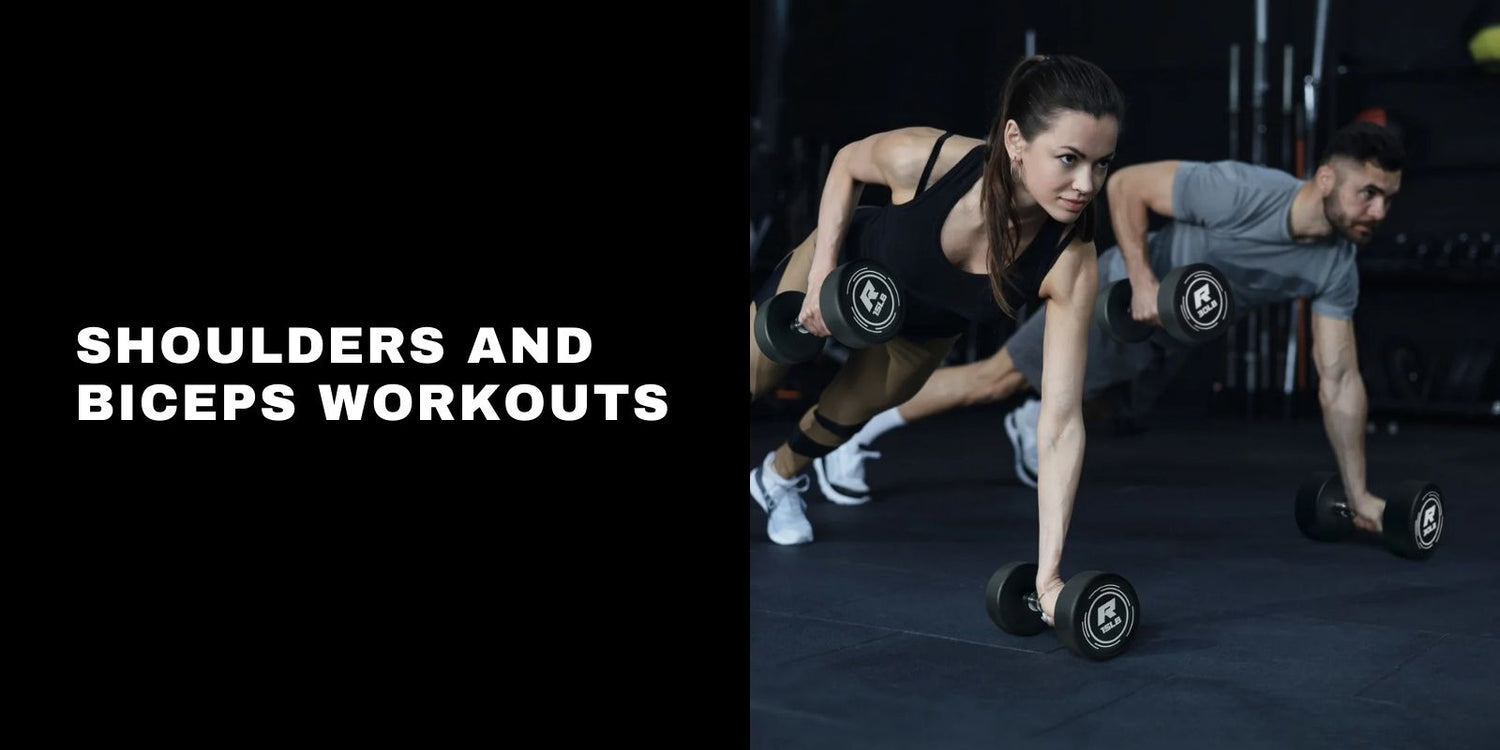
Designing the perfect training split is often about balancing efficiency with recovery. One common question that arises when organizing upper-body training is: Should you train shoulders and biceps together?
For many lifters, pairing a large muscle group with a smaller one is a staple strategy. While chest and triceps or back and biceps are the traditional "push" and "pull" pairings, combining shoulders and biceps offers a unique approach that can lead to better arm growth and improved time management. This guide explores the benefits and drawbacks of this combination, outlines how to structure an effective exercise with shoulder routine alongside biceps work, and provides sample workouts suitable for beginners, intermediates, and those with limited training time.
Shoulders and Biceps: Muscle Worked
Shoulder Anatomy (Deltoids & Supporting Muscles)
The shoulder is one of the most mobile joints in the body, primarily controlled by the deltoid muscles. The deltoids are divided into three distinct heads:
- Anterior (Front) Delt: Responsible for shoulder flexion and pushing movements.
- Lateral (Side) Delt: Responsible for lifting the arms out to the sides (abduction).
- Posterior (Rear) Delt: Responsible for pulling the arm backward and external rotation.
Common exercise with shoulder patterns include overhead presses, lateral raises, and upright rows. Because the shoulders are involved in almost every upper-body movement, managing fatigue is crucial.
Biceps Anatomy
The biceps brachii consists of two heads (long and short) and sits on the front of the upper arm. Along with the brachialis, its primary functions are elbow flexion (curling) and forearm supination (twisting the palm up). The biceps act as secondary movers during pulling exercises for the back but generally do not assist in the pressing movements that dominate shoulder training.
Movement Patterns & Overlap
The primary advantage of this pairing is the lack of functional overlap. Shoulders generally perform "push" movements (pressing overhead) or isolation raises, while biceps perform "pull" movements (curling). Unlike training chest and triceps, where the triceps are pre-exhausted from pressing, your biceps remain fresh for their specific work even after a heavy shoulder session.
Pros and Cons of Training Shoulders and Biceps Together
Benefits
- Performance Efficiency: Since shoulders and biceps don't compete for the same energy systems or muscle fibers, you can lift heavier on both muscle groups compared to a back-and-biceps day where the arms are already tired.
- Aesthetic Focus: For hypertrophy-focused lifters, this split creates a "glamour muscles" session, delivering a massive pump to the upper arms and delts simultaneously.
- Scheduling Flexibility: It is an excellent option for lifters running a 4-day split or those who have a dedicated day for chest and back.
Potential Drawbacks
- Fatigue Management: While the prime movers are different, heavy shoulder training taxes the central nervous system and the stabilizers around the shoulder joint. This can make holding heavy weights for biceps curls feel more challenging.
- Joint Sensitivity: Individuals with a history of shoulder impingement or tendinitis might find that combining heavy overhead pressing with heavy curling aggravates the joint capsule.
When It Makes Sense vs When It Doesn’t
This split makes the most sense if you are training 3–4 days per week and want to dedicate a session to arms and delts without interference from chest or back work. It is less ideal for powerlifters who need to prioritize bench press accessory work on their shoulder days.
How to Structure a Shoulder and Biceps Workout
Order of Exercises: Which Comes First?
The general rule of thumb is to train larger muscle groups before smaller ones. In this case, you should prioritize your heavy exercise with shoulder movements first. Physiological reviews on exercise order dictate that multi-joint movements (overhead presses) must precede single-joint movements (curls) to prevent central nervous system (CNS) fatigue from prematurely limiting your heaviest lifts.
However, if your primary goal is bringing up lagging arms, you might occasionally perform biceps work first, though this is an advanced technique.
Volume, Sets, and Reps
For hypertrophy (muscle growth), aim for:
- Shoulders: 3–4 exercises, 3–4 sets per exercise, 8–15 reps.
- Biceps: 2–3 exercises, 3 sets per exercise, 10–15 reps.
If your weekly schedule involves a lot of heavy bench pressing (which hits the front delts) or heavy rows (which hit the biceps), you may need to adjust volume to avoid overuse.
Rest Periods
Rest for 2–3 minutes between heavy sets of compound shoulder presses to allow full recovery. For isolation exercises like lateral raises or biceps curls, 60–90 seconds of rest is usually sufficient to maintain metabolic stress without sacrificing form.
Sample Shoulder and Biceps Workouts
Beginner Shoulder + Biceps Routine
This routine is designed to introduce the body to the split without overwhelming volume. Perform this 1–2 times per week.
- Seated Dumbbell Press: 3 sets of 8–10 reps
- Dumbbell Lateral Raises: 3 sets of 12–15 reps
- Barbell Biceps Curl: 3 sets of 10–12 reps
- Cable Hammer Curls: 3 sets of 12–15 reps
Intermediate Hypertrophy-Focused Routine
This workout targets all three heads of the deltoid and adds variety to the biceps work for maximum growth.
- Standing Overhead Barbell Press: 4 sets of 6–8 reps
- Dumbbell Lateral Raises: 4 sets of 12–15 reps
- Face Pulls (Rear Delt Focus): 3 sets of 15–20 reps
- Incline Dumbbell Curls: 3 sets of 10–12 reps
- Preacher Curls: 3 sets of 12–15 reps
Time-Efficient / 30–40 Minute Routine
For those short on time, supersetting an exercise with shoulder focus alongside a biceps movement keeps the heart rate up and finishes the workout quickly.
- Superset 1: Arnold Press (3 sets) + Hammer Curls (3 sets)
- Superset 2: Upright Rows (3 sets) + Barbell Curls (3 sets)
- Superset 3: Lateral Raises (3 sets) + Cable Curls (3 sets)
Best Shoulder Exercises (and How They Pair With Biceps Work)
Compound Exercise with Shoulder
The foundation of your workout should be a compound movement. The Overhead Press (Barbell or Dumbbell) is the gold standard for overall mass. The Arnold Press is another excellent variation that increases the range of motion and hits all deltoid heads.
Isolation Exercise with Shoulder
To cap off the shoulders, isolation is key. EMG data confirms that overhead pressing predominantly develops the anterior deltoid; therefore, isolation movements like Lateral Raises are an anatomical necessity for developing the lateral head and achieving shoulder width.Rear Delt Flyes or Face Pulls are crucial for posture and shoulder health. These movements are low-impact on the elbow, making them perfect to pair with heavy curling.
Grouping/Pairing Ideas
When supersetting, avoid grip-heavy shoulder exercises (like heavy shrugs) immediately before heavy curls. Instead, pair a movement like lateral raises (which require little grip strength) with dumbbell curls.
Best Biceps Exercises to Combine with Shoulder Day
Core Biceps Movements
Stick to the basics. The Barbell Curl allows for the most weight, while the Dumbbell Curl corrects imbalances. Hammer Curls are vital as they target the brachialis and brachioradialis, adding thickness to the arm.
Variation & Angles
Since the shoulders are complex, match them with varied biceps angles. Because the long head of the biceps technically crosses the shoulder joint, performing Incline Dumbbell Curls places the shoulder in extension. This creates a "stretch-mediated" hypertrophic stimulus that contrasts perfectly with the shortened shoulder position of an overhead press.
Matching Intensity with Shoulder Work
If you have just performed a heavy overhead press, your core and nervous system will be fatigued. It is often better to choose seated biceps exercises (like Preacher Curls) or machine curls towards the end of the workout to minimize the stability demands on your body.
Weekly Programming Examples
3-Day Split Example
- Day 1: Chest + Triceps
- Day 2: Back + Abs
- Day 3: Shoulders + Biceps + Legs (or Legs on a separate 4th day)
4-Day Upper/Lower Variation
A popular way to organize this is:
- Upper A: Chest and Back
- Lower A: Quads and Hamstrings
- Upper B: Shoulders and Biceps
- Lower B: Glutes and Calves
5–6 Day “Bro Split” Variation
In a traditional single-body-part split, Shoulder and Biceps day can be placed mid-week, ideally separated from Back day by at least 48 hours to ensure the biceps are recovered.
Safety, Recovery, and Common Mistakes
Shoulder Joint Safety
Always begin with a warm-up that includes dynamic stretching and a light exercise with shoulder activation, such as rotator cuff rotations or band pull-aparts. This prepares the joint capsule for the load.
Elbow and Wrist Health for Biceps
Shoulder pressing can compress the wrist joints. If you feel wrist pain, switch to EZ-bar curls or Hammer curls, which put the wrist in a more neutral position compared to a straight barbell.
Technique Mistakes
A common mistake is using momentum ("body English") to swing weights up during both lateral raises and curls. This shifts tension away from the target muscle and onto the lower back. Keep your torso rigid and focus on the muscle contraction.
FAQs
Should you train shoulders and biceps together?
Yes, you can train shoulders and biceps together. This pairing allows you to lift heavier weights for both muscle groups without overlap. Your biceps do not assist in overhead pressing movements. Your arms remain completely fresh for curling after you finish your heavy shoulder exercises.
Which muscle group should you train first when combining shoulders and biceps?
You must train your shoulders before your biceps. Larger muscle groups require heavy compound movements that demand maximum energy. Performing overhead presses first prevents central nervous system fatigue from ruining your lifts. You can finish your workout with isolated bicep curls once the heavy lifting is done.
Is it bad to superset heavy shoulder presses with bicep curls?
Yes, it is bad to superset heavy presses with curls. Heavy shoulder training heavily taxes your central nervous system and joint stabilizers. Holding heavy weights for curls immediately after overhead pressing limits your performance. You should rest completely between heavy sets to allow full recovery before doing arms.
How to structure a weekly workout split with a shoulders and biceps day?
You should place your shoulders and biceps day in the middle of your weekly routine. A good schedule separates this session from your main back day by at least two days. This delay ensures your biceps are fully recovered from pulling exercises before you train them again.
Can you train your rear deltoids during a shoulders and biceps workout?
Yes, you can easily include rear deltoid exercises in this specific workout split. Movements like face pulls and rear flyes are crucial for posture and shoulder health. These isolation exercises place very little impact on your elbow joints and pair perfectly with heavy bicep curling movements.
Conclusion
Should you train shoulders and biceps together? The answer is a resounding yes for most intermediate and aesthetic-focused lifters. This pairing allows you to attack the deltoids with heavy pressing while keeping the biceps fresh for isolation work.
To get the best results, remember to prioritize your heavy compound exercise with shoulder movements first, manage your volume, and ensure you aren't neglecting your rear delts. By following the frameworks and sample routines outlined above, you can build a time-efficient, effective upper-body routine that delivers capped shoulders and fuller arms.
Important disclaimer: This article is for general educational purposes only and is not medical advice. If you have shoulder, neck, back, elbow, or wrist pain, a recent injury or surgery, numbness or tingling, unexplained weakness, or dizziness, consult a qualified clinician before starting. Stop any exercise that causes sharp pain.
References
- Gentil P, Soares S, Bottaro M. Single vs. Multi-Joint Resistance Exercises: Effects on Muscle Strength and Hypertrophy. Asian J Sports Med. 2015;6(2):e24057. doi:10.5812/asjsm.24057
- Saeterbakken AH, Fimland MS. Effects of body position and loading modality on muscle activity and strength in shoulder presses. J Strength Cond Res. 2013;27(7):1824-1831. doi:10.1519/JSC.0b013e318276b873
- Hough PA, Ross EZ, Howatson G. Effects of dynamic and static stretching on vertical jump performance and electromyographic activity. J Strength Cond Res. 2009;23(2):507-512. doi:10.1519/JSC.0b013e31818cc65d