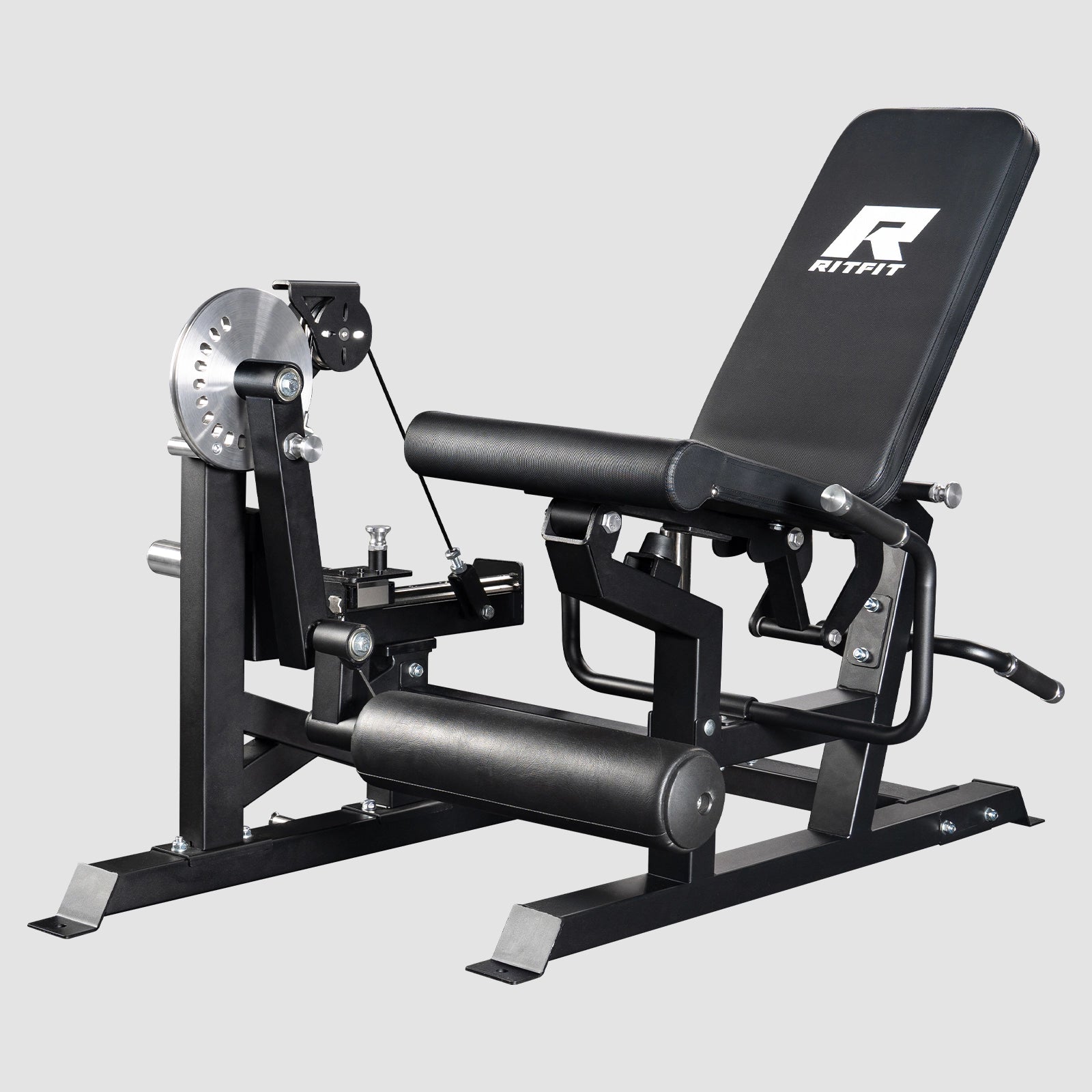
Understanding the different types of weightlifting bars is the first step to building a more effective home gym. Each bar is engineered for specific movements, and picking the wrong one leaves performance on the table.
This 2026 guide covers every major barbell type, from the versatile Olympic bar to specialty options like the trap bar and safety squat bar, with a full spec comparison table and a clear selection framework to match bars to your goals.
Quick Answer: The main types of weightlifting bars are the Olympic barbell, power bar, deadlift bar, EZ curl bar, hex trap bar, safety squat bar, and tricep bar. For most home gym owners, a 20 kg Olympic barbell with a 28 mm shaft and 50 mm rotating sleeves covers the widest range of exercises and is the best single-bar starting point.
Key Takeaways
- Olympic barbell first: A 20 kg Olympic bar with 50 mm rotating sleeves and a 28 or 28.5 mm shaft covers squats, deadlifts, bench press, rows, and overhead press, making it the best single-bar choice for most home gym owners.
- Shaft diameter defines the bar's purpose: 28 mm suits Olympic lifting and all-purpose training, 29 mm is the IPF powerlifting standard, and 27 mm gives deadlift bars their characteristic flex.
- Bearings vs. bushings matter for Olympic lifts: Needle bearings allow the fast sleeve spin required for cleans and snatches, while bronze bushings provide slower, controlled rotation that works well for powerlifting movements.
- Specialty bars solve specific problems: The trap bar reduces lower-back stress on deadlifts, the EZ curl bar takes wrist strain off curls and extensions, and the safety squat bar enables squatting for lifters with shoulder mobility limits.
- Standard bars are not a substitute: Standard bars with 25 mm non-rotating sleeves and limited load capacity are not suitable for serious training, and all Olympic-standard bars use the universal 50 mm sleeve system.
What Is a Weightlifting Bar?
A weightlifting bar is a steel implement consisting of a central shaft where you grip the bar, outer sleeves where weight plates are loaded, and knurling that provides grip texture. The sleeve diameter, shaft diameter, rotation system, and overall length determine which lifts each bar suits best.
- Shaft: The central gripping section, typically 1,310 mm long on a full-size bar; shaft diameter ranges from 25 mm to 50 mm depending on bar type.
- Sleeves: The outer sections where plates are loaded; Olympic-standard sleeves measure 50 mm in diameter and rotate independently of the shaft.
- Knurling: The textured grip pattern pressed into the steel shaft, ranging from passive (technique bars) to aggressive (power bars and deadlift bars).
- Collars: Clips or clamps that hold plates in place on the sleeves during a lift.
- Sleeve rotation system: Either needle bearings (fast spin, preferred for dynamic Olympic lifts) or bronze bushings (controlled spin, preferred for powerlifting).
Choosing the right bar type starts with understanding these components and how each specification changes under load.
What Is a Standard Straight Bar, and When Does It Fall Short?
A standard straight bar uses 25 mm non-rotating sleeves that only accept standard plates with 1-inch holes, typically weighs 6 to 9 kg, and has a load capacity of around 90 to 135 kg. Standard bars are found in entry-level dumbbell sets and budget home gym packages, but they are not a suitable foundation for serious strength training.
- Limited capacity: Most standard bars max out around 200 to 300 lbs, which is reached quickly as strength develops.
- No sleeve rotation: The fixed sleeves cannot spin during dynamic lifts, increasing torque stress on the wrists and elbows.
- Plate incompatibility: Standard 1-inch plates are not compatible with Olympic-standard 50 mm equipment, creating a dead-end investment.
For any long-term home gym, skipping straight to an Olympic barbell is the correct starting point. Olympic bars and plates use a universal 50 mm system compatible with all serious training equipment.
Why Is the Olympic Barbell the Standard for Home Gym Training?
The Olympic barbell is the universal standard for home gym, commercial gym, and competitive training because it combines a 50 mm rotating sleeve system, high load capacity, and a shaft diameter suited to the widest range of movements. The IWF specifies a men's bar at 20 kg, 220 cm long, with a 28 mm shaft diameter, and a women's bar at 15 kg, 201 cm long, with a 25 mm shaft diameter.
Men's vs. Women's Olympic Bar Specs
- Men's bar: 20 kg, 220 cm total length, 28 mm shaft diameter, 50 mm sleeves, approximately 415 mm of loadable sleeve length per side.
- Women's bar: 15 kg, 201 cm total length, 25 mm shaft diameter, 50 mm sleeves, approximately 320 mm of loadable sleeve length per side; the narrower shaft suits smaller hands and reduces grip fatigue during high-volume Olympic lifting.
- Load capacity: Quality Olympic bars handle well over 300 kg; premium bars are tested to 450 to 700 kg.
Bearings vs. Bushings: Which Rotation System Do You Need?
- Needle bearings: Tiny cylindrical rollers surrounding the shaft inside the sleeve provide fast, near-frictionless rotation, essential for the snatch and clean and jerk where the bar must spin freely during the catch phase.
- Bronze bushings: Solid metal rings that allow moderate, controlled sleeve rotation, which is preferred for powerlifting movements where the plates staying put matters more than spin speed.
- Practical guidance: For a one-bar home gym covering a mix of movements, needle bearings offer the most versatility; for dedicated powerlifting, bushings are simpler and more durable.
One device-validation study found that barbell velocity measurement varies significantly by tracking technology, reinforcing that sleeve rotation type meaningfully affects how a bar performs in dynamic resistance training contexts.[1] The RitFit 7ft Olympic Barbell is designed to this standard with multiple load capacity options.
To see how the Olympic bar compares directly with the original standard bar format, the Olympic bar vs. standard bar guide covers the key differences in detail.
How Does a Power Bar Differ from an Olympic Barbell?
A power bar is engineered specifically for the squat, bench press, and deadlift, featuring a 29 mm shaft (the IPF powerlifting standard), aggressive knurling including a center knurl that grips the upper back during squats, bronze bushing sleeves, and maximum shaft stiffness with minimal whip. The standard power bar is 20 kg and 220 cm long, with load capacities commonly exceeding 680 kg on premium models.
- 29 mm shaft: Slightly thicker than the 28 mm Olympic bar, adding stability and reducing flex under maximal squat and bench press loads.
- Center knurl: The textured ring at the shaft midpoint grips clothing during back squats, preventing the bar from sliding; men's Olympic bars typically omit this to protect the chest and thighs during cleans.
- Bushing sleeves: Controlled, slower rotation is the correct choice for static powerlifting movements where sleeve spin is not needed.
- Less whip: Power bars are designed to be rigid; flex during a heavy squat or bench press reduces bar path stability and is considered a negative for these lifts.
A power bar can perform squats, bench press, and deadlifts with a more competition-accurate feel, but its slower sleeve rotation makes it unsuitable for snatches and cleans. For a versatile home gym that includes Olympic-style movements, an Olympic barbell is the better first purchase.
What Makes a Deadlift Bar Different from a Power Bar?
A deadlift bar uses a 27 mm shaft (thinner than either an Olympic or power bar), measures 230 to 235 cm in total length, and is designed to flex more under load, storing energy that helps break the plates off the floor at the start of a max-effort pull. The combination of thinner shaft and longer length produces significantly more whip than a standard power bar.
- 27 mm shaft: The narrower circumference improves grip, particularly for double overhand grip during max pulls, and allows more flex.
- 230 to 235 cm length: The extra length compared to a standard 220 cm bar gives more bar travel before the plates leave the floor, increasing whip effect.
- Aggressive knurling: Deadlift bars often use volcano or aggressive mountain knurling to compensate for the thinner shaft during maximum-effort pulls.
- Not for squats or bench: The increased whip that benefits deadlifts creates instability during squats and is inappropriate for bench press.
A deadlift bar is a second or third bar purchase suited to competitive powerlifters training for max-effort pulls. Most home gym lifters do not need a dedicated deadlift bar unless they are competing or pulling over 200 kg consistently.
For specifics on how bar weight affects bench press mechanics, see the guide on how heavy a bench press bar is.
Why Should You Use an EZ Curl Bar for Arm Training?
The EZ curl bar uses angled grip sections that place the wrists in a partially supinated, partially neutral position during curls and skull crushers, reducing the wrist and elbow strain that accumulates with a fully supinated straight-bar grip. Olympic EZ curl bars weigh 6 to 13 kg, measure 120 to 135 cm in length, and use 50 mm Olympic sleeves.
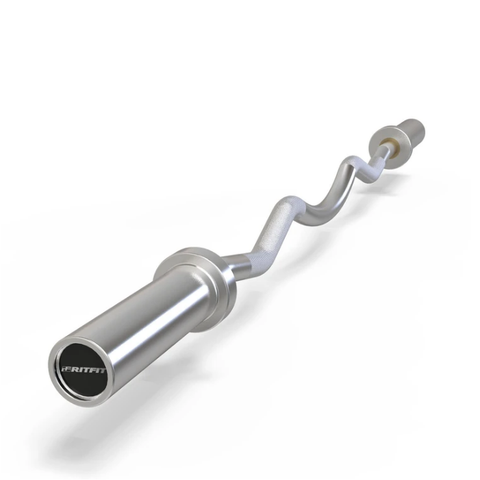
- Bicep curls: The angled grip allows the bicep to contract through its natural range without forcing the forearm into full supination.
- Skull crushers: The grip angle reduces elbow stress during tricep extensions, making high-volume arm training more sustainable.
- Preacher curls and upright rows: Both benefit from the reduced wrist torque the EZ bar provides.
- Who benefits most: Lifters with existing wrist discomfort, tendonitis, or high weekly arm training volume notice the most benefit from switching to an EZ curl bar.
The EZ curl bar is not a replacement for the Olympic barbell on compound movements; it is a specialized accessory bar. For a deeper look at this bar type, see what is an EZ curl bar, and for programming ideas, the best exercises with EZ curl bars covers practical training applications.
When Does a Hex Trap Bar Outperform a Straight Barbell?
The hex trap bar, also called the hex bar, places the lifter inside a hexagonal frame rather than behind a straight bar, shifting the load to a more centered and vertical position that allows a more upright torso angle during pulls. Hex trap bars typically weigh 18 to 40 kg depending on design and can handle 300 to 680 kg load capacity on heavier models.

- Trap bar deadlift: The neutral handle position and upright torso reduce shear force on the lumbar spine compared to a conventional straight-bar deadlift.
- Farmer's walk: The open frame design allows natural gait mechanics during loaded carries without the bar contacting the legs.
- Two handle heights: Most trap bars offer both low and high handle options, allowing lifters to adjust range of motion around mobility limits or injuries.
- Higher loads possible: Many lifters can move more weight on a trap bar deadlift than a conventional deadlift due to the more mechanically advantaged position.
One study on CrossFit training monitoring found that no single bar type suits every training modality equally, reinforcing that the trap bar fills a distinct role alongside straight bars in a well-equipped home gym rather than replacing them.[2] For technique details, the guide on how to do a trap bar deadlift covers setup and execution.
Who Should Use a Safety Squat Bar?
The safety squat bar (SSB) uses a padded yoke that sits across the upper back and shoulders, with forward-angling handles that let the arms brace against the bar rather than support it overhead, removing nearly all shoulder and elbow mobility requirements from the squat. Safety squat bars typically weigh 20 to 25 kg and measure around 226 cm in length.
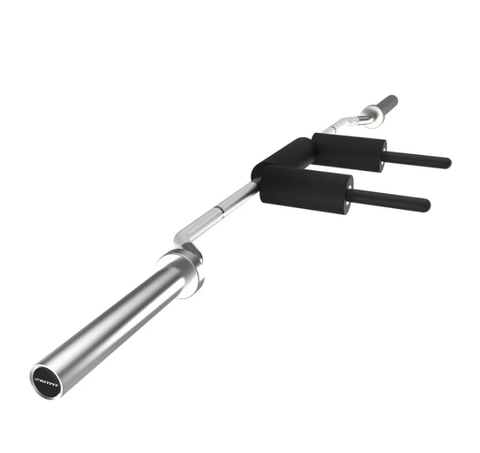
- Shoulder and elbow mobility: Lifters who cannot achieve the external rotation required to hold a standard bar across the upper back can squat pain-free with an SSB.
- Upper back and quad emphasis: The cambered yoke design pitches the torso slightly forward, increasing demand on the upper back and quads compared to a high-bar straight-bar squat.
- Good mornings and lunges: The SSB transfers to other lower-body movements where a standard bar creates shoulder discomfort.
- Fixed sleeves: Unlike straight bars, safety squat bars have fixed (non-rotating) sleeves, making them suitable for squatting but not for dynamic Olympic lifts.
The safety squat bar is not a workaround for shoulder issues; it is the correct tool for that situation and one of the most broadly useful specialty bars for long-term training sustainability.
What Is a Tricep Bar and How Is It Used?
The tricep bar, also called a multi-grip bar, is a short specialty bar with parallel neutral-grip handles positioned inside the sleeve attachments, typically weighing 10 to 15 kg and measuring 100 to 120 cm in length. The neutral grip option reduces anterior shoulder stress during pressing and arm extension movements.
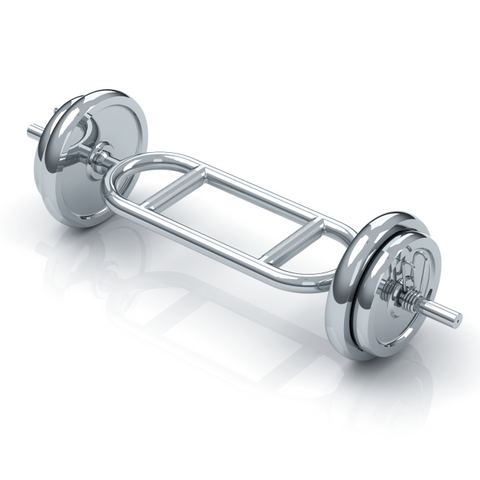
- Skull crushers: The neutral grip eliminates the wrist rotation stress of a straight bar or EZ bar during overhead tricep extensions.
- Close-grip press: Neutral-grip pressing reduces anterior shoulder fatigue, allowing higher training volumes on tricep-focused pressing work.
- Rows: The parallel handles can be used for neutral-grip bent-over rows, reducing shoulder impingement risk during high-volume pulling work.
The tricep bar is a tertiary accessory bar, typically a third or fourth purchase after the Olympic barbell and an EZ curl bar. It solves a specific shoulder comfort problem on pressing and extension movements and adds useful variety to arm training programs.
"For home gym purposes, a 28.5 or 29mm bar will be the most durable and provide the best service over time. NEVER buy a 32mm bar. They are either junk, or a specialty squat bar that a home gym doesn't need."
Mark Rippetoe, Strength Coach and Author of Starting Strength, Starting Strength, How to Build a Home Gym ↗
Barbell Spec Comparison: Shaft Diameter, Sleeve Size, and Load Capacity by Bar Type
The table below compares all major weightlifting bar types across the specifications that most directly affect performance: shaft diameter, sleeve diameter, typical load capacity, bar weight, and length.
| Bar Type | Shaft Diameter | Sleeve Diameter | Bar Weight | Length | Typical Load Capacity |
|---|---|---|---|---|---|
| Olympic barbell (men's) | 28 mm | 50 mm | 20 kg / 44 lbs | 220 cm | 300 kg+ |
| Olympic barbell (women's) | 25 mm | 50 mm | 15 kg / 33 lbs | 201 cm | 300 kg+ |
| All-purpose bar (28.5 mm) | 28.5 mm | 50 mm | 20 kg / 44 lbs | 220 cm | 300 kg+ |
| Power bar | 29 mm | 50 mm | 20 kg / 44 lbs | 220 cm | 680 kg+ |
| Deadlift bar | 27 mm | 50 mm | 20 kg / 44 lbs | 230-235 cm | 500 kg+ |
| EZ curl bar (Olympic) | 28 mm | 50 mm | 6-13 kg | 120-135 cm | 90 kg typical |
| Hex / trap bar | Varies | 50 mm | 18-40 kg | 160-238 cm | 300-680 kg |
| Safety squat bar | Fixed yoke | 50 mm | 20-25 kg | 226 cm | 300 kg+ |
| Tricep / multi-grip bar | 28 mm | 50 mm | 10-15 kg | 100-120 cm | 90-200 kg |
| Standard bar | Varies | 25 mm (non-rotating) | 6-9 kg | 180-210 cm | 90-135 kg |
Specs represent typical ranges; competition-certified bars may vary. Olympic-standard 50 mm sleeves accept all Olympic plates.
Research on wearable computing for resistance training notes that bar type and load data are foundational inputs to training tracking systems, reinforcing the value of matching bar specifications to training goals.[3]
For guidance on choosing between different bar formats for a smaller training space, see the 5-foot Olympic bar guide.
Which Barbell Should You Buy Based on Your Training Goal?
The right weightlifting bar depends on your primary training style, available space, and whether you plan to add specialty bars over time. The framework below matches bar type to the most common home gym scenarios.
Home Gym Owners Starting Out
- Best choice: A 20 kg Olympic barbell with a 28 or 28.5 mm shaft, needle bearings or quality bushings, and at least 190,000 PSI tensile strength.
- Why: One bar covers squats, deadlifts, bench press, overhead press, barbell rows, and power cleans, which is every foundational movement most home gym lifters need.
- Second bar: A trap bar is the most broadly useful second purchase for most home gym owners, adding lower-back-friendly deadlift variation and loaded carries without significant technique complexity.
As strength coach Mark Rippetoe advises, for home gym use a 28.5 or 29 mm bar will be the most durable and provide the best service over time, and a 32 mm squat specialty bar is not something a home gym needs.
The RitFit Patriotic Star Olympic Bar 20kg is a purpose-built option for this starting point.
Dedicated Powerlifters
- Best choice: A 29 mm power bar with aggressive knurling, center knurl, and bushing sleeves for squats and bench, paired with a dedicated deadlift bar for max pulls.
- Why: Competition powerlifting federations mandate 29 mm bars; training specificity to equipment matters for competition performance.
Olympic Weightlifters
- Best choice: An IWF-spec 28 mm Olympic barbell with needle bearings, passive to medium knurling, no center knurl, and verified whip characteristics.
- Why: Needle bearings are essential for the snatch and clean and jerk; the absence of center knurl prevents skin abrasion during cleans.
Lifters with Joint Issues or Limited Mobility
- Shoulder problems: The safety squat bar eliminates external shoulder rotation requirements for squatting; a Swiss or multi-grip bar does the same for pressing.
- Wrist and elbow issues: An EZ curl bar reduces strain during curl and extension accessory work versus a straight bar.
- Lower back sensitivity: The trap bar reduces lumbar shear force during pulling, making it preferable to conventional straight-bar deadlifts for this population.
For beginners learning to squat with a bar for the first time, the how to squat with a bar for beginners guide covers setup and common mistakes.
Research on mixed-modality training found that Olympic-style bars are used across diverse program types, supporting the versatility argument for a single Olympic barbell as the foundation bar for home gym setups.[2]
FAQs About Types of Weightlifting Bars
What is the difference between an Olympic barbell and a standard barbell?
An Olympic barbell has 50 mm rotating sleeves, weighs 20 kg for men and 15 kg for women, and handles over 300 kg. A standard barbell has 25 mm non-rotating sleeves, weighs 6 to 9 kg, and maxes out around 135 kg. The Olympic bar is the correct choice for serious home gym training.
How many types of weightlifting bars are there?
The main types are the Olympic barbell, power bar, deadlift bar, EZ curl bar, hex trap bar, safety squat bar, and tricep bar. The Olympic bar covers the widest range of lifts, while specialty bars solve specific mobility, grip, or performance needs as training advances.
What barbell should a beginner buy for a home gym?
A 20 kg Olympic barbell with a 28 or 28.5 mm shaft, 50 mm sleeves, and either bushing or needle-bearing rotation covers squats, deadlifts, bench press, rows, and overhead press. It is the most versatile single bar for a home gym and the best starting point for most lifters before adding specialty bars.
What is the difference between a power bar and an Olympic bar?
A power bar has a 29 mm shaft, aggressive knurling, center knurl, and minimal flex, built for squat, bench, and deadlift. An Olympic bar has a 28 mm shaft, moderate knurling, no center knurl, and controlled whip with faster sleeve rotation for dynamic lifts like cleans and snatches.
What is a trap bar and when should I use one?
A trap bar is a hexagonal frame you stand inside, shifting the load to a more upright pulling position. It reduces lower-back stress compared to a straight-bar deadlift, making it a strong choice for lifters with back sensitivity, beginners learning to pull, and athletes building leg and hip strength through deadlift variations and loaded carries.
Are needle bearings better than bushings in a barbell?
Needle bearings provide faster, near-frictionless sleeve spin that is essential for Olympic lifts where the bar must rotate during the catch. Bronze bushings give slower, controlled rotation that works well for squats, bench, and deadlifts, making them the preferred choice for dedicated powerlifting bars.
What is barbell whip and why does it matter?
Barbell whip refers to how much the bar flexes under load. Olympic and deadlift bars have more whip, helping experienced lifters time the pull in cleans and snatches, while power and squat bars are stiff by design to prevent unwanted movement during heavy static lifts.
Conclusion
The right types of weightlifting bars for your training depend on your goals, primary lifts, and any joint or mobility considerations. For most home gym owners, a 20 kg Olympic barbell is the correct first purchase, covering the full range of foundational movements with one versatile tool.
Add specialty bars as your training evolves: a trap bar for lower-back-friendly pulling, an EZ curl bar for arm training volume, and a safety squat bar if shoulder mobility limits your squatting. Start with the RitFit bars and plates collection to find the right bar for your current training stage.
Disclaimer
The information in this article is for general educational purposes only and does not constitute professional fitness, medical, or injury rehabilitation advice. Consult a qualified strength coach or healthcare professional before making significant changes to your training equipment or program, especially if you have existing joint issues or injuries.
Save on your next RitFit order
Tap the button to copy your code, then paste it at checkout.
References
1. Martínez-Cava A, Hernández-Belmonte A, Courel-Ibáñez J, Morán-Navarro R, González-Badillo JJ, Pallarés JG. Reliability of technologies to measure the barbell velocity: Implications for monitoring resistance training. PLoS One. 2020;15(6):e0232465. doi:10.1371/journal.pone.0232465. https://pmc.ncbi.nlm.nih.gov/articles/PMC7286482/
2. Mangine GT, Seay TR, et al. Quantifying CrossFit: Potential solutions for monitoring multimodal workloads and identifying training targets. Front Sports Act Living. 2022;4:949429. doi:10.3389/fspor.2022.949429. https://pmc.ncbi.nlm.nih.gov/articles/PMC9613943/
3. Coates W, Wahlström J. LEAN: Real-Time Analysis of Resistance Training Using Wearable Computing. Sensors (Basel). 2023;23(10):4602. doi:10.3390/s23104602. https://pmc.ncbi.nlm.nih.gov/articles/PMC10222347/