Table of Contents
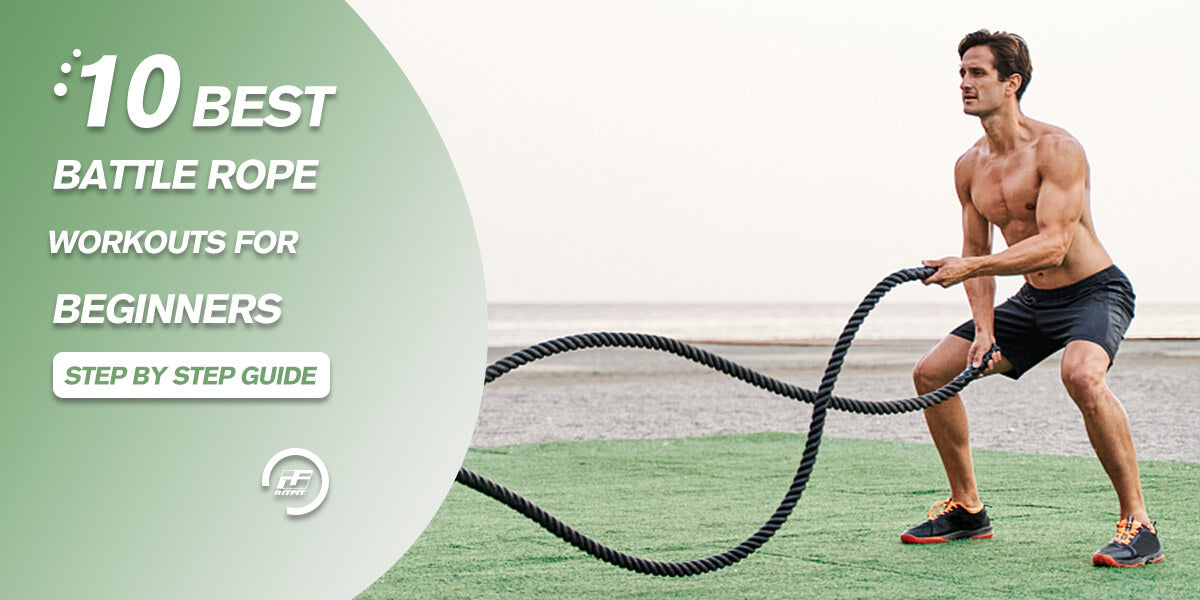
Battle rope workouts are one of the best beginner friendly ways to build conditioning, upper body endurance, and full body work capacity in a short session. This guide shows you how to use battle ropes safely, anchor them correctly, choose the right size, and follow a simple plan that actually feels doable at home.
If you are building a compact setup, start with this home gym equipment guide and make sure your training area is stable, uncluttered, and easy to reset between intervals.
What Is a Battle Rope?
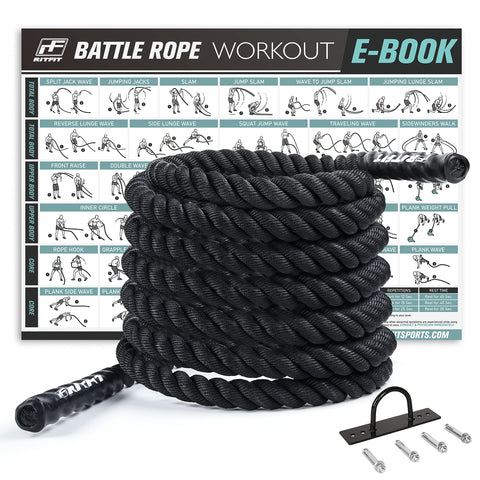
A battle rope is a thick, weighted training rope designed for waves, slams, circles, and conditioning intervals. It is simple to set up, easy to scale, and useful for beginners who want demanding workouts without needing a large machine.
Battle rope exercise can create substantial muscle activity through the shoulders, trunk, and lower body, which helps explain why even short sets feel intense.[1]
Key Takeaways
- Start simple: Alternating waves, snakes, and rope slams are the best entry points for most beginners.
- Use intervals: Short work periods with full control are better than long sets with sloppy posture.
- Choose the right rope: A 1.5 inch rope is the most beginner friendly option for most home users.
- Anchor matters: A stable anchor and enough clearance matter as much as the exercise itself.
- Progress slowly: Add time, density, or complexity one variable at a time.
How to Use a Battle Rope
Use a battle rope from a stable quarter squat with your chest up, knees soft, and spine neutral. Your goal is to create smooth, repeatable waves through the rope, not to yank it with your neck, lower back, or shrugging shoulders.
Battle ropes work especially well inside short conditioning blocks, so if you want more ideas for interval structure, see these HIIT workouts for cardio and these full body circuit training workouts.
Battle Rope Safety Tips for Beginners
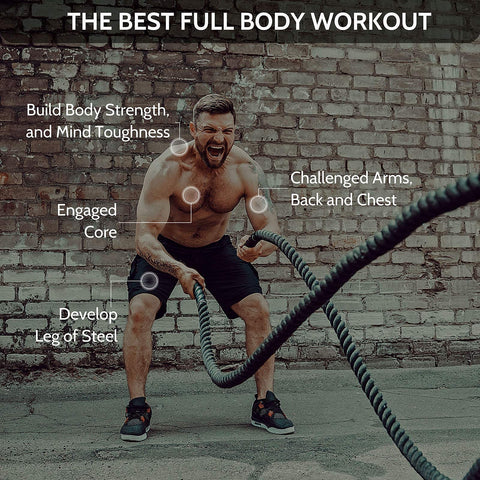
Battle rope training is beginner friendly when you keep the setup stable, the intervals short, and the posture clean. Most problems come from rushing into all out slams, using too much shoulder tension, or trying to train in a cramped area.
- Warm up first: Spend 5 to 10 minutes on arm circles, shoulder rolls, hip hinges, and bodyweight squats.
- Keep a stacked posture: Stay tall through the torso, keep the ribs down, and avoid rounding the lower back.
- Start with shorter sets: Use 15 to 20 seconds of work and 40 to 45 seconds of rest until the rhythm feels natural.
- Stop on sharp pain: Breathing hard and feeling muscular fatigue are normal, sharp pain in the shoulder, elbow, knee, or back is not.
- Respect medical limits: If you have uncontrolled blood pressure, recent surgery, serious joint injury, or known cardiovascular disease, get clearance before doing hard intervals.
- Clear the area: Make sure the rope path is free of boxes, benches, plates, or vehicles that the rope can catch during waves.
How to Anchor a Battle Rope
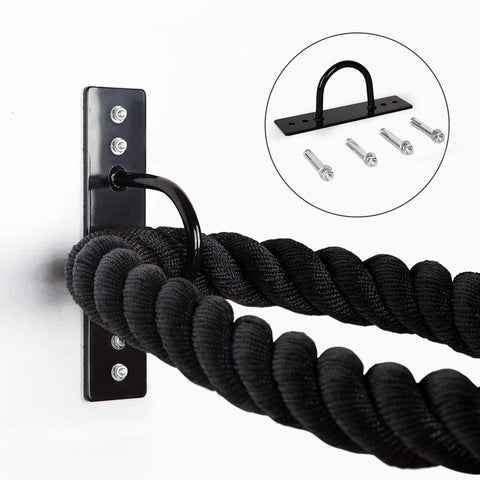
A battle rope should be anchored to something heavy, stable, and smooth enough to avoid rope damage. The best home setups usually involve a wall anchor, rack, post, or a very heavy object paired with a protective strap.
Anchoring Battle Ropes Indoors
Indoor anchoring works best when the rope can travel freely without scraping walls, bolts, or sharp rack edges. If you train on concrete or tile, pair the setup with proper home gym flooring or use durable gym flooring mats to improve grip and protect the surface.
- Set the anchor at a practical height, usually low to mid shin up to knee height.
- Use a strap or sleeve if the rope touches metal edges.
- Stand far enough back so each side of the rope keeps a slight curve instead of piling up flat.
- Test the setup with light waves before doing slams or fast intervals.
Anchoring Battle Ropes Outdoors
Outdoor anchoring gives you more usable rope length, which often makes the workout feel smoother and harder. It also helps if your garage is too short for full extension or if you want more clearance for slams.
- Use a wall mount, post, anchored ground sleeve, or a very stable outdoor structure.
- Check the surface so the rope does not drag through standing water, sharp gravel, or rough concrete edges.
- Use a covered rope or sleeve if weather exposure is frequent.
- Retest the anchor regularly because outdoor friction, moisture, and sunlight wear equipment faster.
The Best 10 Battle Rope Workouts for Beginners
Battle ropes are ideal for short HIIT style blocks because brief, hard intervals can improve exercise capacity and overall health when programmed well.[2] They also fit naturally into home circuits, finishers, and conditioning sessions that do not require a large machine footprint.
Battle Rope Workout 1, Jumping Slam
Jumping slams build power and rhythm, but they are better as a progression than a first step. Beginners should master the squat slam first, then add the jump when landing control stays solid.
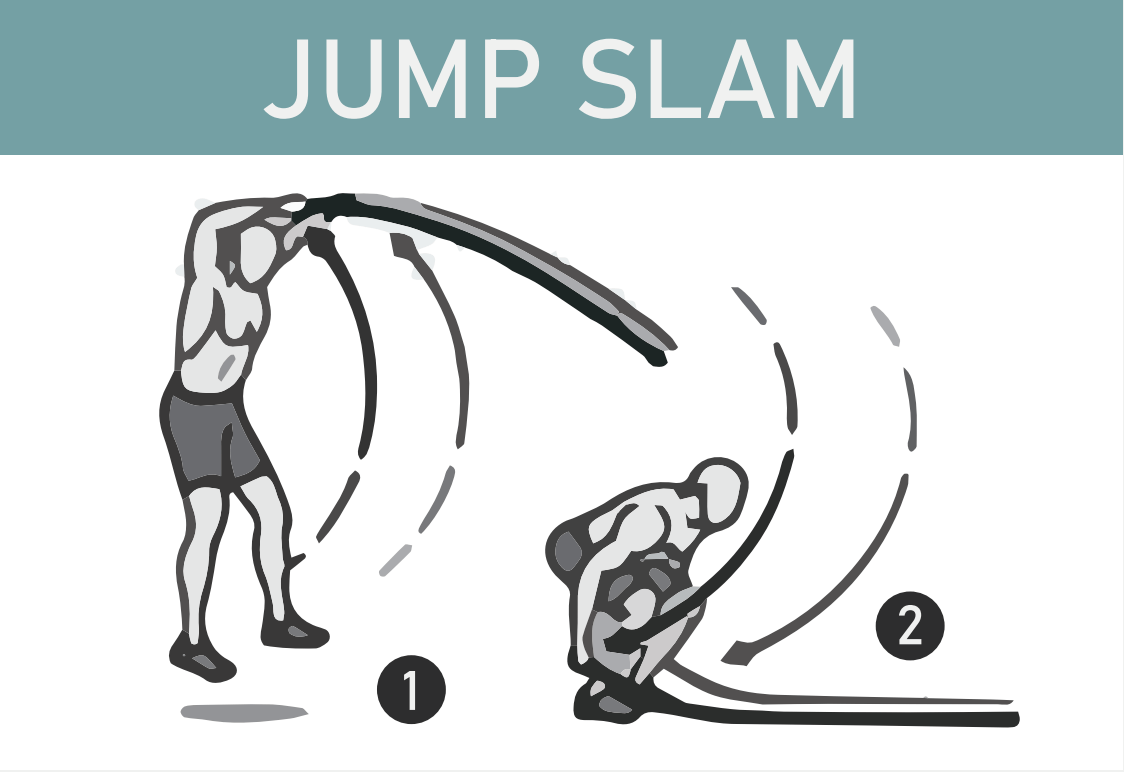
- Muscles worked: Shoulders, upper back, core, glutes, and legs.
- Difficulty: Intermediate.
- How to do it: Hold one rope end in each hand, dip into a shallow squat, reach overhead, then slam the ropes down as you land in control.
- Beginner option: Remove the jump and use a fast squat slam.
Battle Rope Workout 2, Jumping Jacks
Battle rope jumping jacks raise heart rate quickly and teach coordination between the arms and feet. They are effective, but the stepped version is the smarter starting point for most beginners.
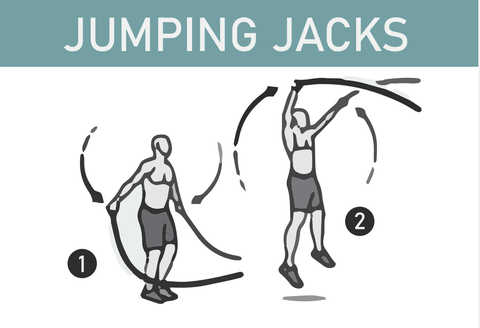
- Muscles worked: Shoulders, calves, quads, and trunk.
- Difficulty: Beginner to intermediate.
- How to do it: Step or jump the feet out as the arms rise, then bring the feet in as the ropes come down.
- Beginner option: Step the feet instead of jumping.
Battle Rope Workout 3, Battle Rope Snakes
Battle rope snakes are one of the best beginner patterns because they train control before speed. They also let you feel the rope path without needing heavy slams.
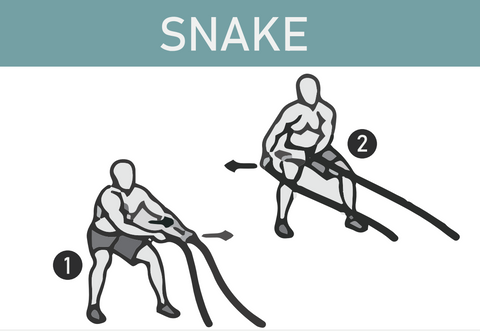
- Muscles worked: Shoulders, forearms, biceps, and quads.
- Difficulty: Beginner.
- How to do it: Keep the hands around waist height, move the ropes out and in, and create a side to side snake pattern.
- Beginner option: Slow the tempo until the rope path stays smooth.
Battle Rope Workout 4, Russian Twist Wave
Russian twist waves shift more of the challenge into the trunk and obliques. They work best with a short range of rotation and a tall chest, not with aggressive lower back twisting.
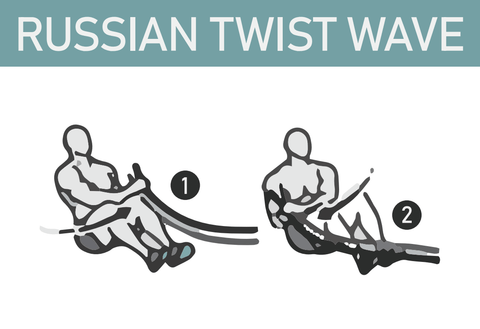
- Muscles worked: Obliques, abs, and deep trunk stabilizers.
- Difficulty: Beginner to intermediate.
- How to do it: Sit tall, keep the heels grounded, then move the ropes from side to side with the trunk leading the motion.
- Beginner option: Sit more upright and shorten the rotation.
Battle Rope Workout 5, Plank Waves
Plank waves combine trunk stability and rope control, so they feel harder than they look. They are excellent for advanced beginners who can already hold a solid plank without hip sway.
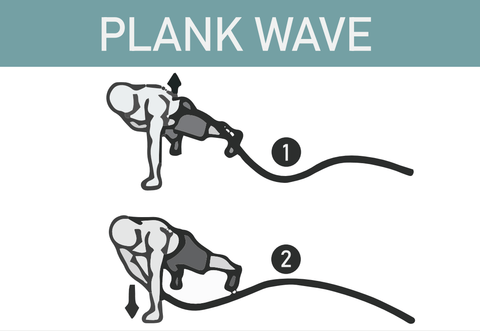
- Muscles worked: Rectus abdominis, obliques, shoulders, and glutes.
- Difficulty: Intermediate.
- How to do it: Start in a high plank, hold one rope end, and create short controlled waves without rotating the hips.
- Beginner option: Drop the knees and make smaller waves.
Battle Rope Workout 6, Alternating Waves
Alternating waves are the foundation of beginner battle rope training because they are simple, scalable, and easy to repeat in intervals. If you only learn one pattern first, make it this one.
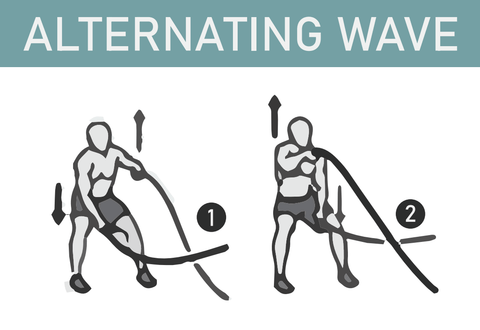
- Muscles worked: Shoulders, arms, upper back, and core.
- Difficulty: Beginner.
- How to do it: Hold one rope end in each hand and raise one arm as the other drops to create continuous alternating waves.
- Coaching cue: Think quick, snappy waves, not giant heaves.
Battle Rope Workout 7, Figure 8
Figure 8 waves teach coordinated trunk rotation and shoulder control. They are useful when you want a more flowing pattern than straight up and down waves.
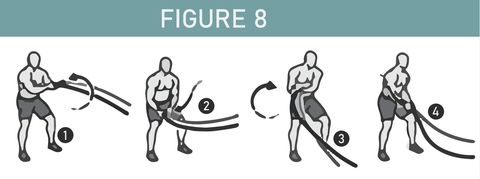
- Muscles worked: Core, shoulders, and upper back.
- Difficulty: Beginner to intermediate.
- How to do it: Sweep both ropes across the body and trace a smooth infinity pattern from side to side.
- Beginner option: Slow down until the shape stays clean.
Battle Rope Workout 8, Sidewinders Walk
Sidewinders work well for people who want lateral movement without jumping. They also fit nicely into garage circuits because the rope path stays low and controlled.
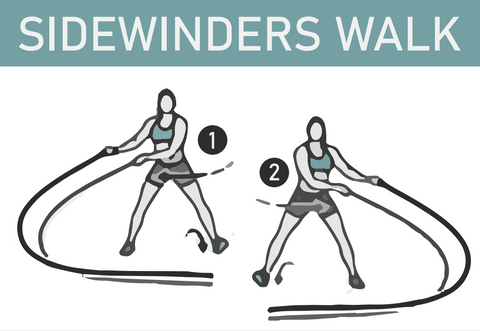
- Muscles worked: Abdominals, shoulders, lower back, and arms.
- Difficulty: Beginner to intermediate.
- How to do it: Sweep the ropes side to side as the hips rotate lightly and the feet stay grounded.
- Progression: Add a slow lateral walk once the rope path stays smooth.
Battle Rope Workout 9, Reverse Lunge Wave
Reverse lunge waves combine lower body control with upper body conditioning. They are more demanding than standard waves because the pattern challenges balance and timing at the same time.
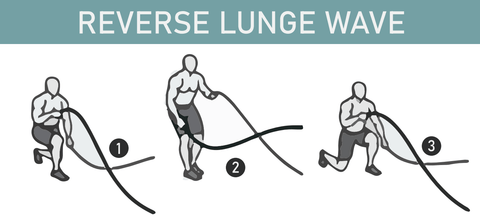
- Muscles worked: Shoulders, arms, core, glutes, and legs.
- Difficulty: Intermediate.
- How to do it: Perform alternating waves while stepping one leg back into a reverse lunge, then return and switch sides.
- Beginner option: Hold a split stance instead of stepping every rep.
Battle Rope Workout 10, Rope Slam
Rope slams are one of the simplest ways to make battle rope training feel athletic and powerful. They are great for short finishers, but only when the hips and trunk drive the slam instead of the neck and shoulders.
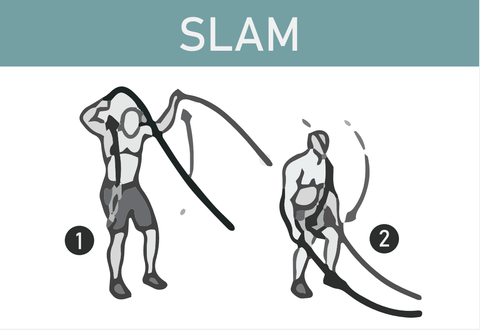
- Muscles worked: Shoulders, triceps, lats, core, and hips.
- Difficulty: Beginner to intermediate.
- How to do it: Raise both rope ends together, hinge slightly, then slam them down hard while bracing the trunk.
- Coaching cue: Drive from the hips, not just the arms.
Beginner Battle Rope Workout Plan, 10 to 15 Minutes
Beginners improve fastest when interval time and density increase gradually instead of randomly, which matches broader endurance and strength adaptation principles.[3] Start with patterns you can repeat cleanly, then add work time, movement complexity, or total rounds one step at a time.
Phase 1, 10 Minute Starter Routine
Use this phase during the first one to two weeks if you are new to battle ropes or returning after a long break. Keep the pace controlled and treat technique as the main goal.
- Exercises: Alternating Waves, Battle Rope Snakes, Sidewinders Walk, and Rope Slam without jumping.
- Work: 20 seconds.
- Rest: 40 seconds.
- Rounds: Perform the four exercises, then repeat the circuit three times.
- Focus: Smooth waves, steady breathing, and a stable trunk.
Phase 2, 12 to 15 Minute Progression
Move to this phase in weeks three to four once the starter routine feels controlled. Add harder patterns before you add extreme speed.
- Exercises: Add Jumping Jacks with the stepped version if needed, Reverse Lunge Wave, and Plank Waves with knees down if needed.
- Work: 25 to 30 seconds.
- Rest: 30 to 35 seconds.
- Rounds: Perform five to six exercises for two to three total rounds.
- Add on: Pair this plan with these core workouts if trunk endurance is your weak point.
What Size Battle Rope Should I Get?
A 1.5 inch battle rope is the best choice for most beginners because it balances grip comfort, wave control, and conditioning demand. A 50 foot rope is the most versatile option if you have the room, while 30 to 40 feet can work in tighter home setups.
Community questions about battle ropes often come down to room length, rope thickness, and whether a shorter setup still feels smooth, so size should be chosen around both fitness level and usable training space, not ego alone.
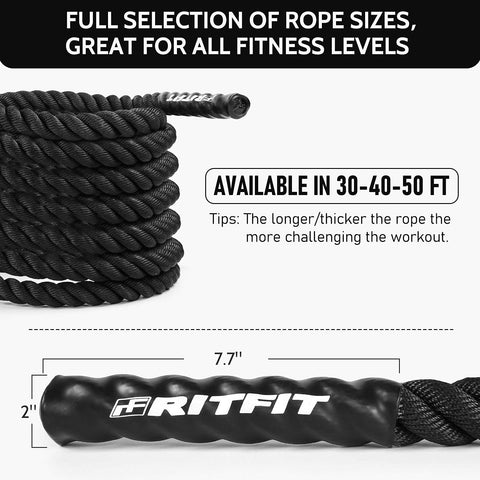
- 30 foot, 1.5 inch: Best for tight spaces and lighter conditioning work.
- 40 foot, 1.5 inch: Great middle ground for many garages and driveways.
- 50 foot, 1.5 inch: Best all around choice for beginners and intermediate users.
- 2 inch rope: Better for experienced users who want a heavier grip and forearm challenge.
- Related gear: If you are still rounding out your setup, browse home gym accessories that support compact conditioning spaces.
How Long Should a Battle Rope Workout Be?
A battle rope workout for beginners should usually last 10 to 15 minutes of actual interval work. That is enough time to drive a challenging conditioning response without letting technique collapse from fatigue.
Reviews on resistance exercise energy assessment note that hybrid and circuit style exercise can produce meaningful acute energy cost, which helps explain why battle rope finishers feel demanding in very little time.[4] Short vigorous activity bouts also count toward broader weekly physical activity targets, so brief rope sessions still matter when done consistently.[5]
- Starter duration: 5 to 8 minutes if your conditioning is low.
- Main target: 10 to 15 minutes for most beginners.
- Weekly frequency: Two to three sessions per week works well for most people.
- Best placement: Put battle ropes after lifting or as a separate conditioning block.
FAQs
What size battle rope is best for beginners?
A 1.5 inch battle rope is the best starting point for most beginners. It is easier to grip, easier to control, and still challenging enough for hard intervals, especially if you choose a 40 or 50 foot rope and keep your work periods honest.
How long should a beginner battle rope workout be?
A beginner battle rope workout should usually last 10 to 15 minutes of focused work. That is long enough to raise heart rate, build local muscular endurance, and practice good technique without letting fatigue turn every set into sloppy waves and shoulder driven movement.
Can battle rope workouts help with fat loss?
Yes. Battle rope workouts can support fat loss because they make it easier to accumulate vigorous work in a short time. They work best when paired with a calorie controlled diet, regular weekly training, and enough recovery to keep effort high and movement quality consistent.
Are battle ropes bad for shoulders?
No. Battle ropes are not automatically bad for shoulders, but poor posture and excessive tension can irritate them. Beginners should keep the chest up, shoulders down, elbows softly bent, and wave height controlled, then stop if sharp pain replaces normal muscle fatigue and breathing stress.
How do you anchor a battle rope at home?
You anchor a battle rope by looping it around a stable, heavy, non sharp anchor point. A rack, wall anchor, weighted sled, or very heavy kettlebell can work, but you should use a strap or protective sleeve so the rope does not fray against metal edges over time.
Where should battle ropes fit in a workout?
Battle ropes usually fit best after strength training or inside a short conditioning circuit. Doing them first can drain your grip, shoulders, and lungs before your main lifts, while doing them later lets you keep better barbell performance and still finish with demanding interval work.
How often should beginners do battle rope training?
Most beginners do well with battle rope training two or three times per week. That schedule gives you enough exposure to improve rhythm, work capacity, and confidence, while still leaving room for recovery so your forearms, shoulders, and trunk do not stay constantly fatigued.
What space do you need for battle rope workouts?
You usually need enough room for the rope to extend and travel freely without hitting walls, storage, or vehicles. Many home users can make a 20 foot setup work, but a little extra clearance in front of the anchor makes the waves feel smoother and the workout more effective.
Conclusion
Battle rope workouts are one of the fastest ways for beginners to add serious conditioning to a home program without buying a large cardio machine. Start with alternating waves, snakes, and rope slams, choose a rope size you can control, and progress with better rhythm before chasing harder variations or longer intervals.
Disclaimer: This guide is for general educational purposes only and is not medical advice. If you have shoulder pain, joint injury, cardiovascular disease, uncontrolled blood pressure, or any condition that affects exercise tolerance, speak with a qualified healthcare professional before starting high intensity rope training.
References
- Marín PJ, García-Gutiérrez MT, Da Silva-Grigoletto ME, Hazell TJ. The addition of synchronous whole-body vibration to battling rope exercise increases skeletal muscle activity. J Musculoskelet Neuronal Interact. 2015;15(3):240-248.
- Atakan MM, Li Y, Koşar ŞN, Turnagöl HH, Yan X. Evidence-based effects of high-intensity interval training on exercise capacity and health: a review with historical perspective. Int J Environ Res Public Health. 2021;18(13):7201. doi:10.3390/ijerph18137201
- Hughes DC, Ellefsen S, Baar K. Adaptations to endurance and strength training. Cold Spring Harb Perspect Med. 2018;8(6):a029769. doi:10.1101/cshperspect.a029769
- Mitchell L, Wilson L, Duthie G, et al. Methods to assess energy expenditure of resistance exercise: a systematic scoping review. Sports Med. 2024;54(9):2357-2372. doi:10.1007/s40279-024-02047-8
- Franklin BA, Eijsvogels TMH, Pandey A, Quindry J, Toth PP. Physical activity, cardiorespiratory fitness, and cardiovascular health: a clinical practice statement of the American Society for Preventive Cardiology Part II: physical activity, cardiorespiratory fitness, minimum and goal intensities for exercise training, prescriptive methods, and special patient populations. Am J Prev Cardiol. 2022;12:100425. doi:10.1016/j.ajpc.2022.100425