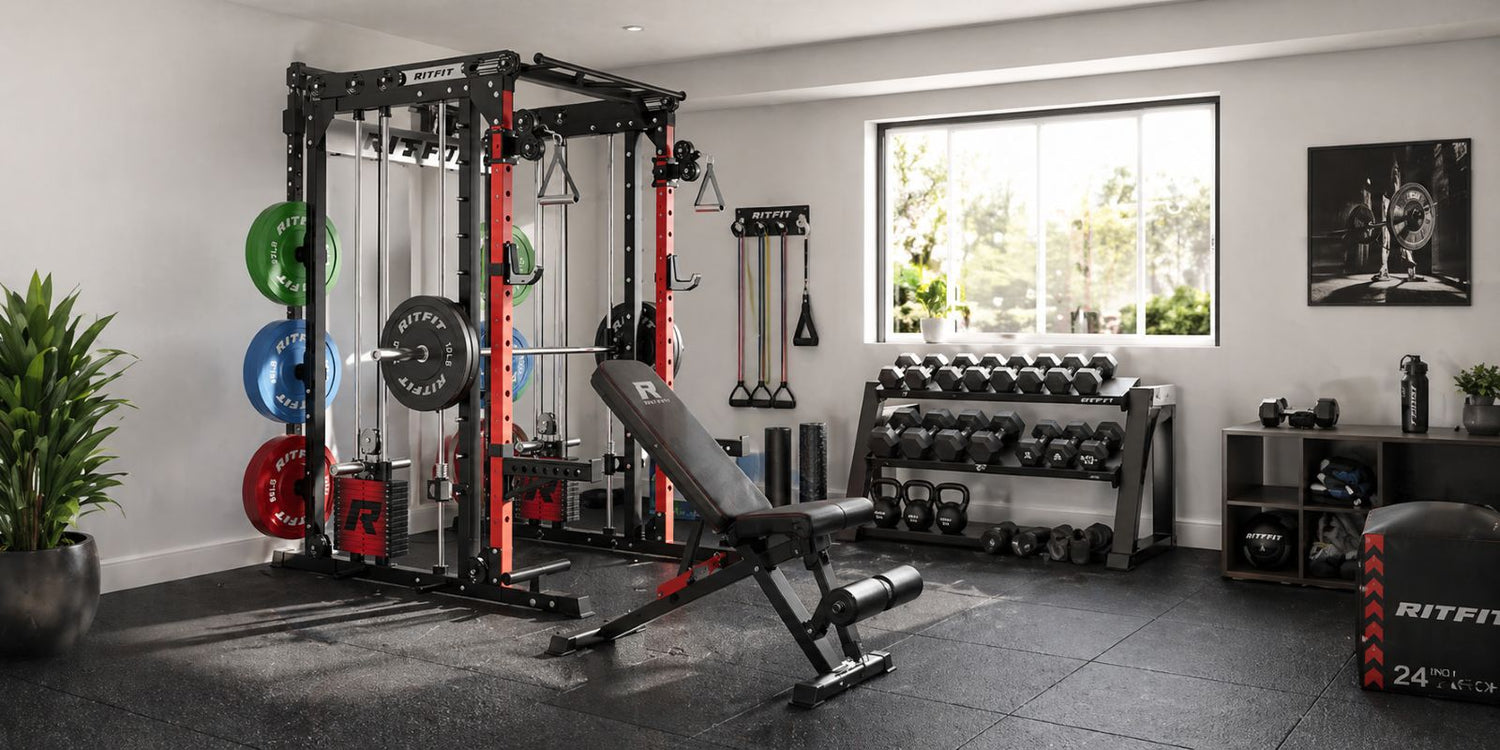
12x12 room can become a complete strength training space if you choose compact equipment, protect your floor, and leave enough clearance for barbell movement. The best setup usually starts with a rack, adjustable bench, Olympic barbell, weight plates, compact dumbbells, and vertical storage.
This guide shows how to plan a 144 square foot home gym without overcrowding the room. It focuses on practical layouts, safe clearance, essential equipment, and RitFit options for small room strength training.
Key Takeaways
- A 12x12 room is enough for serious strength training: The space can support squats, bench press, deadlifts, pull ups, dumbbell work, and accessory training when the layout is planned around clearance.
- The rack should be the anchor point: Place your main rack or Smith machine first, then plan the bench, plates, dumbbells, and floor work zone around it.
- Clearance matters more than equipment count: A 7 foot Olympic bar needs side loading space, and a bench needs room behind the head and around the rack uprights.
- Vertical storage protects floor space: Wall hooks, plate trees, bar holders, and compact dumbbell storage keep the center of the room usable.
- Buy fewer pieces with more functions: A power rack, adjustable bench, barbell set, and compact dumbbells usually outperform a crowded room full of single purpose machines.
12x12 Space Rules Before You Buy Equipment
A 12x12 home gym should be planned around movement space, not just equipment footprint. The room may look large when empty, but every rack, bench, bar, plate, and storage unit needs a safe working zone.
- Measure ceiling height: An 8 foot ceiling works for many rack and bench exercises, but overhead pressing and pull ups may require more height depending on user height and equipment design.
- Measure door width: Confirm that rack uprights, bench frames, barbell boxes, and freight packages can enter the room before ordering large equipment.
- Check barbell loading clearance: A 7 foot Olympic bar can fit in a 12 foot room, but you still need enough side access to load plates safely.
- Plan a walking path: Leave a clear path from the door to the rack, storage, and bench so the room does not feel trapped or cluttered.
- Confirm floor support: Heavy equipment and loaded barbells can concentrate force in small areas, so basement, garage, and upstairs rooms should be evaluated carefully.
- Protect the training surface: Use rubber flooring under the rack, deadlift area, and dumbbell zone to reduce noise and protect the subfloor.
Resistance training can improve muscle strength, muscle mass, and physical function when programmed consistently, but a safe home setup depends on proper exercise selection and load management.[1] A good layout reduces trip hazards, crowding, and awkward lifting angles before the first workout starts.
What Fits in a 12x12 Home Gym?
A 12x12 room can fit a complete strength setup, but it cannot fit every commercial gym machine comfortably. The smartest plan is to choose multi use equipment that covers the most movement patterns in the smallest footprint.
| Equipment | Fit in 12x12 Room | Best Use | Planning Note |
|---|---|---|---|
| Power rack | Yes | Squats, bench press, pull ups, safety work | Place it against a wall with front working space |
| Smith machine | Usually yes | Guided bar training, cable work, solo lifting | Check full height, width, depth, and cable path |
| Adjustable bench | Yes | Flat press, incline press, seated work, rows | Choose wheels or upright storage when possible |
| 7 foot Olympic barbell | Yes | Compound lifts and progressive loading | Needs side clearance for plate loading |
| Weight plates | Yes | Barbell and machine loading | Use wall pegs, rack storage, or a plate tree |
| Fixed dumbbell rack | Limited | Dumbbell strength and accessories | Compact racks or adjustable dumbbells save space |
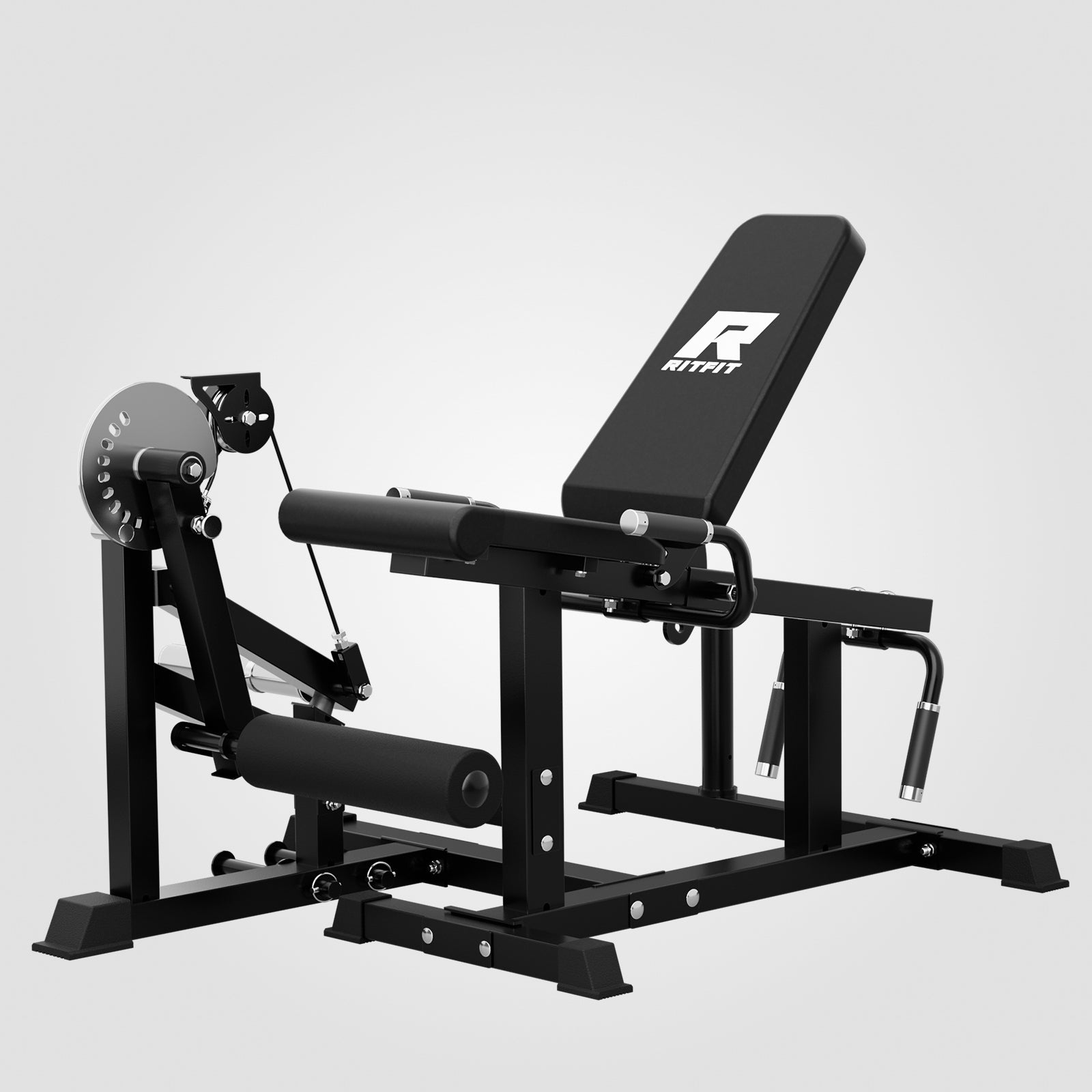
| Leg press machine | Sometimes | Lower body strength | Only choose compact models after measuring movement space |
| Treadmill | Not ideal | Cardio training | It often removes the open floor space needed for lifting |
Essential Equipment for a 12x12 Strength Gym
The best small room gym starts with equipment that supports multiple movement patterns. Prioritize compound lifts first, then add accessories only when they solve a specific training problem.
- Power rack or Smith machine: This is the training hub for squats, presses, pull ups, rows, safety work, and cable exercises if the unit includes cable functionality.
- Adjustable bench: A strong adjustable bench supports flat, incline, seated, and accessory movements without needing multiple benches.
- Olympic barbell: A standard 7 foot Olympic bar is the most versatile loading tool for strength training, but it must be stored safely when not in use.
- Weight plates: Olympic plates allow progressive overload for barbell lifts, rack work, and compatible plate loaded machines.
- Dumbbells: Dumbbells add unilateral work, accessory training, and quick volume without changing rack settings.
- Resistance bands: Bands take almost no storage space and support warm ups, mobility, assisted pull ups, and variable resistance.
- Storage system: Plate storage, bar storage, and accessory hooks are not optional in a 12x12 room because clutter reduces usable floor space.
For foundational lifting equipment, compare RitFit racks and home gym packages, RitFit adjustable weight benches, and RitFit barbells and weight plates before finalizing the layout.
Three Layout Options for Your 12x12 Space
The right 12x12 home gym layout depends on your main training goal. Choose the layout that protects your primary lifts first, then use the remaining wall space for storage and accessories.
| Layout | Best For | Main Placement | Space Priority |
|---|---|---|---|
| Strength focused layout | Squat, bench press, deadlift | Rack centered on back wall | Open floor in front of rack |
| Versatile training layout | Full body fitness and accessories | Rack on one wall, bench movable | Side wall dumbbell and band zone |
| Multi purpose room layout | Shared guest room or office gym | Folding rack or compact equipment on wall | Clear center floor after training |
- Strength focused layout: Place the rack against the back wall, store plates near the rack, and keep the center open for deadlifts and barbell setup.
- Versatile training layout: Keep the rack slightly off center, place dumbbells on the opposite wall, and use the bench as a movable station.
- Multi purpose room layout: Use foldable or compact equipment, vertical storage, and adjustable dumbbells so the room can return to normal use quickly.
Traditional strength training is reported as a comparatively safe resistance training method when performed with suitable exercise choice, progression, and technique control.[2] That makes a simple rack based layout more practical for many home lifters than a crowded room with too many machines.
RitFit Equipment Options for Small Rooms
RitFit equipment should be matched to the room purpose, not forced into the layout. A 12x12 strength room usually works best with one main training hub, one adjustable bench, one free weight system, and one storage plan.
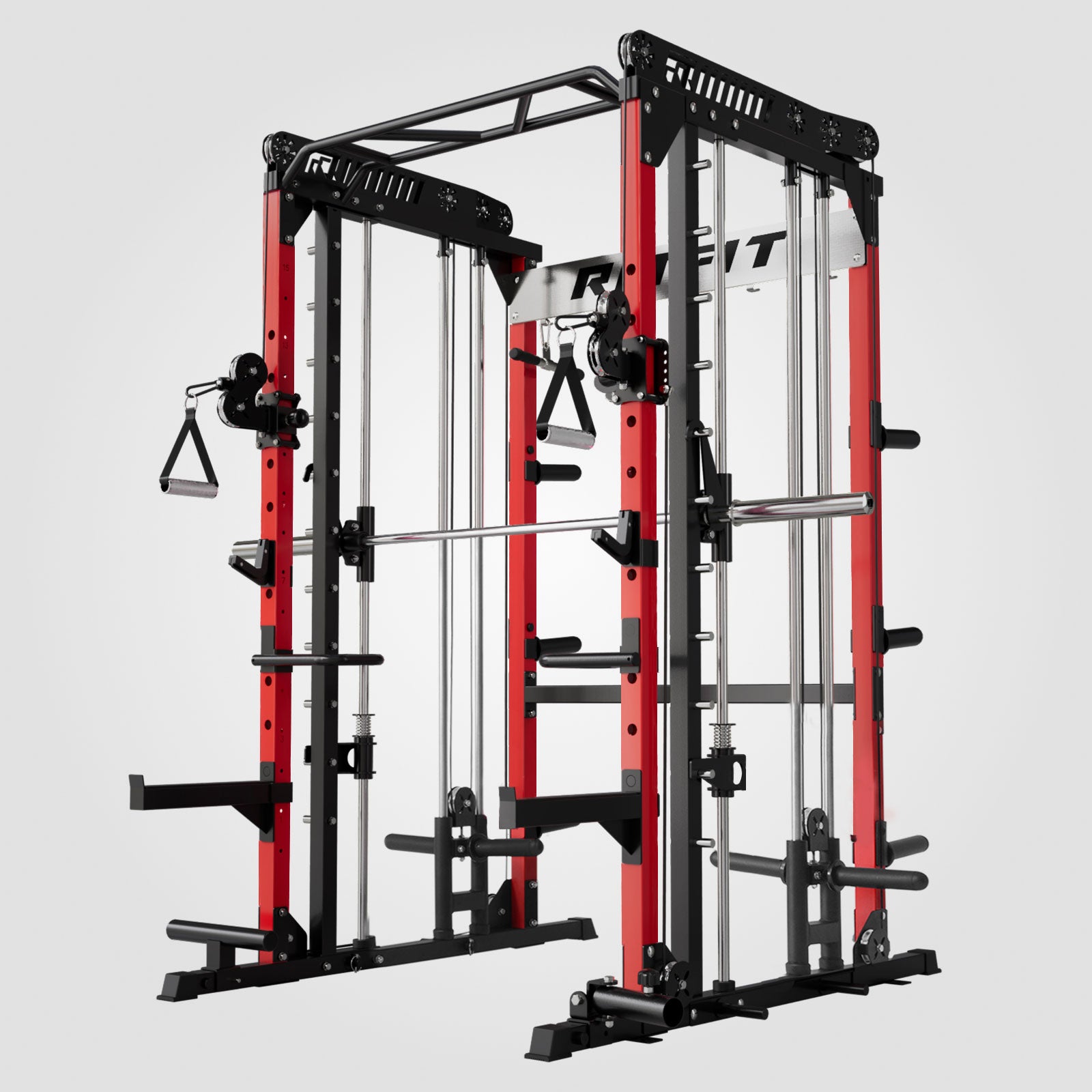
- For rack centered training: The RitFit P3 Power Cage with smooth cable system is a strong option when you want rack work and cable training in one station.
- For guided bar training: The RitFit Smith machine collection is useful for lifters who want a guided bar path, cable options, and more solo training confidence.
- For all in one training: The RitFit M1 multi functional home gym Smith machine can support full body training when the room can handle the full unit footprint and working space.
- For bench based training: The RitFit GATOR adjustable weight bench supports pressing, seated work, incline movements, and dumbbell training.
- For dumbbell work: The RitFit dumbbells collection is useful for rows, presses, lunges, curls, lateral raises, and unilateral accessory work.
- For low ceiling planning: Review the RitFit guide to Smith machines for low ceilings before placing tall equipment in a basement or converted spare room.
- For solo training safety: Read how to train safely on a Smith machine at home if your layout is designed for lifting without a spotter.
Home based resistance training can improve fitness and well being when people follow a consistent program, which makes equipment accessibility and room convenience important for long term adherence.[3] A compact setup that feels easy to use is often better than a larger setup that feels difficult to start.
Flooring, Lighting, and Ventilation
A 12x12 home gym needs protective flooring, bright lighting, and airflow because small rooms heat up quickly during hard training. These support elements are part of the layout, not finishing details.
- Rubber flooring: Use rubber mats or rubber tiles under the rack, dumbbell zone, and deadlift space to reduce impact and protect the subfloor.
- Full room coverage: A full 12x12 room equals 144 square feet, so calculate mat quantity by actual coverage instead of guessing from room size.
- Lighting: Use bright overhead LED lighting so the room feels open and you can clearly see bar position, hooks, plates, and floor edges.
- Ventilation: Add a fan, open a window when possible, or use climate control if the room becomes hot during heavy sessions.
- Noise control: Avoid dropping weights directly onto hard floors, especially in upstairs rooms, apartments, or shared homes.
Exercise selection and technique quality are linked to injury prevention in fitness settings, so the room should support controlled movement rather than force awkward lifting paths.[4] Flooring and open space help reduce unnecessary risk during pressing, pulling, squatting, and deadlifting.
Sample Training Programs for a 12x12 Gym
A 12x12 strength gym can support full body training three days per week with a rack, bench, barbell, plates, dumbbells, and bands. Keep programs simple so the equipment setup stays fast and repeatable.
| Training Day | Barbell Focus | Dumbbell Focus | Accessory Focus |
|---|---|---|---|
| Day 1 | Squat and overhead press | Dumbbell row | Pull ups and core |
| Day 2 | Bench press and Romanian deadlift | Dumbbell lunge | Band face pulls and curls |
| Day 3 | Deadlift and incline press | Dumbbell shoulder press | Split squats and carries |
Current resistance training prescription research supports flexible programming variables as long as volume, effort, progression, and consistency are managed.[5] This is why a compact home gym can still deliver serious results without copying a commercial gym floor.
Common 12x12 Home Gym Layout Mistakes
Most small gym problems come from buying equipment before measuring the room. The goal is to keep the room trainable, not simply filled with fitness equipment.
- Buying oversized machines first: Large machines can dominate the room and leave no open space for barbell or dumbbell work.
- Ignoring barbell side clearance: A bar may technically fit in the room while still being difficult to load safely.
- Skipping storage: Plates, collars, bands, handles, and bars need dedicated homes or they will take over the floor.
- Choosing fixed dumbbells too early: A long dumbbell rack may consume more wall space than a beginner or intermediate lifter needs.
- Forgetting ventilation: A small room can feel uncomfortable during hard training if airflow is not planned.
- Using thin flooring in high impact areas: Thin foam is not the same as heavy rubber flooring for barbell and dumbbell training.
FAQs
Is a 12x12 room big enough for a home gym?
Yes. A 12x12 room is big enough for a complete strength focused home gym when you prioritize a rack, adjustable bench, barbell, plates, compact dumbbells, and vertical storage. The main limit is not square footage alone, it is safe clearance around the bar and bench.
What equipment should I put in a 12x12 home gym?
Start with a rack or Smith machine, adjustable bench, Olympic barbell, weight plates, dumbbells, bands, and storage. This setup covers squats, presses, pulls, hip hinge movements, unilateral work, and accessories without filling the room with single purpose machines.
Can a 12x12 home gym fit a power rack?
Yes. A 12x12 home gym can fit a power rack if the rack is placed against one wall and the center space stays open. Measure rack height, rack depth, barbell width, plate loading clearance, and bench position before choosing the final placement.
Can I fit a Smith machine in a 12x12 room?
Yes. Many Smith machines can fit in a 12x12 room, but you must confirm the full footprint, height, cable travel, and working clearance. A Smith machine works best when it replaces several separate stations instead of being added to an already crowded room.
How much clearance do I need around a barbell in a small home gym?
Plan for enough side access to load and unload plates without twisting or hitting the wall. A 7 foot Olympic bar fits across a 12 foot room, but the layout should still leave practical hand space at both sleeves for safe plate changes.
What is the best flooring for a 12x12 home gym?
Rubber flooring is usually the best choice for a 12x12 home gym because it protects the subfloor, reduces noise, and supports heavy equipment. Use thicker rubber in the rack and deadlift zone, and calculate coverage from the full 144 square foot room size.
Should I use adjustable dumbbells or fixed dumbbells in a 12x12 gym?
Adjustable dumbbells or a compact dumbbell rack usually work better in a 12x12 gym. Fixed dumbbells are convenient, but a long rack can take valuable wall space that may be better used for plates, bars, hooks, or cable attachments.
What is the best 12x12 home gym layout for beginners?
The best beginner layout places the main rack or Smith machine on one wall, the bench inside or near the rack, storage along the side wall, and open floor space in the center. This keeps exercises simple, visible, and easier to repeat consistently.
Conclusion
A 12x12 home gym can support complete strength training when the layout is built around clearance, storage, and versatile equipment. Start with one main training hub, add an adjustable bench, barbell, plates, dumbbells, and rubber flooring, then expand only when the room still feels safe and easy to use.
Disclaimer
This article is for general fitness and space planning education only. Always confirm product dimensions, ceiling height, door clearance, floor capacity, and equipment assembly requirements before purchasing or installing home gym equipment. Consult a qualified professional before starting a new exercise program if you have pain, injury, medical conditions, or strength training limitations.
References
- McLeod JC, Currier BS, Lowisz CV, Phillips SM. The influence of resistance exercise training prescription variables on skeletal muscle mass, strength, and physical function in healthy adults: an umbrella review. J Sport Health Sci. 2024;13(1):47-60. doi:10.1016/j.jshs.2023.06.005
- Serafim TT, de Oliveira ES, Maffulli N, Migliorini F, Okubo R. Which resistance training is safest to practice? A systematic review. J Orthop Surg Res. 2023;18(1):296. doi:10.1186/s13018-023-03781-x
- Kikuchi N, Ohta T, Hashimoto Y, Mochizuki Y, Saito M, Kozuma A, et al. Effect of online home-based resistance exercise training on physical fitness, depression, stress, and well-being in middle-aged persons: a pilot study. Int J Environ Res Public Health. 2023;20(3):1769. doi:10.3390/ijerph20031769
- Bonilla DA, Cardozo LA, Vélez-Gutiérrez JM, Arévalo-Rodríguez A, Vargas-Molina S, Stout JR, et al. Exercise selection and common injuries in fitness centers: a systematic integrative review and practical recommendations. Int J Environ Res Public Health. 2022;19(19):12710. doi:10.3390/ijerph191912710
- Currier BS, D'Souza AC, Fiatarone Singh MA, et al. American College of Sports Medicine Position Stand. Resistance Training Prescription for Muscle Function, Hypertrophy, and Physical Performance in Healthy Adults: An Overview of Reviews. Med Sci Sports Exerc. 2026;58(4):851-872. doi:10.1249/MSS.0000000000003897