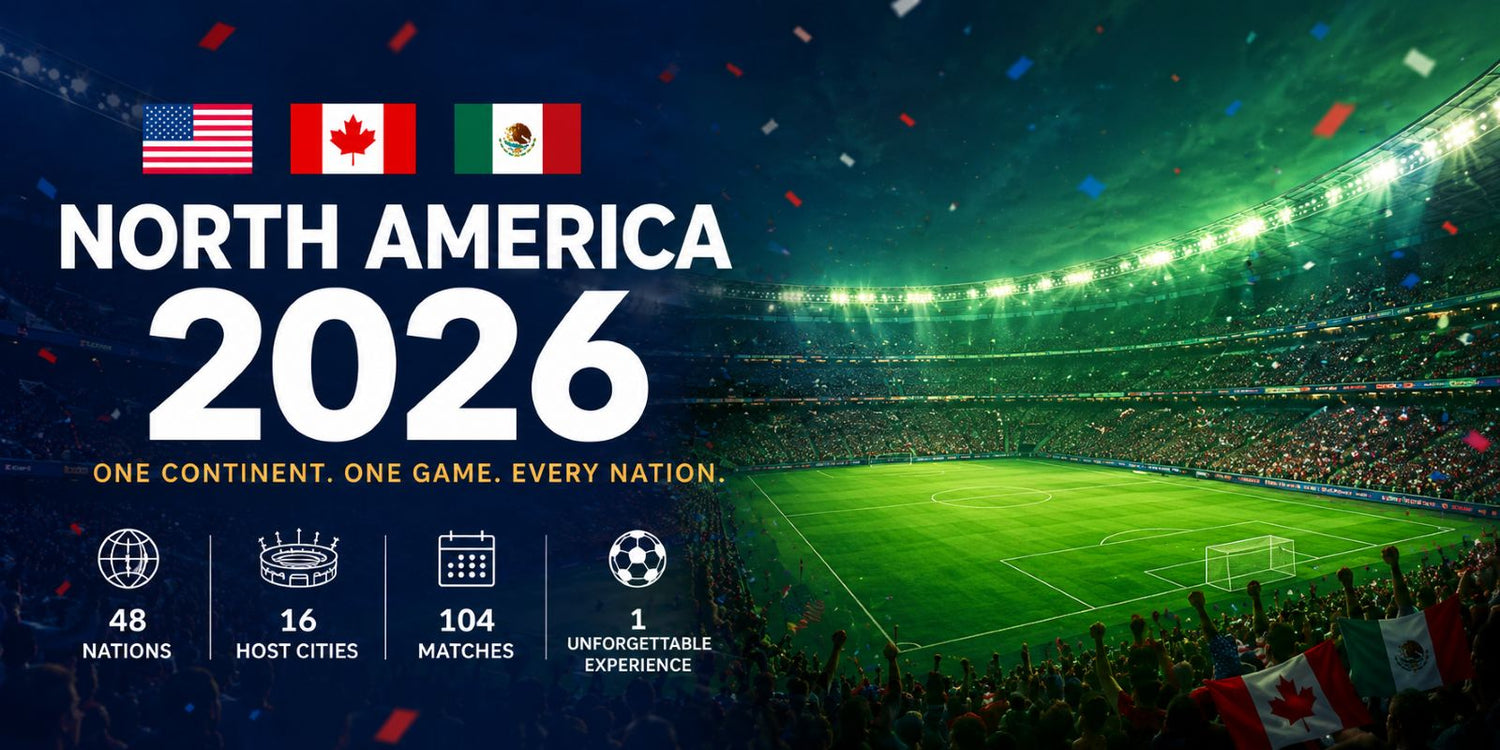
The 2026 international men's soccer tournament runs from June 11 to July 19 across Canada, Mexico, and the United States. This guide covers the competition format, all 12 groups, host cities, major dates, Korea Republic fixtures, and the knockout calendar.
Kickoff times are shown in the local time of each stadium. Confirm current schedules, venue instructions, transport notices, entry policies, and broadcast listings through primary sources close to matchday.
Published: June 11, 2026
Last Editorial Revision: June 15, 2026
Information Checked Through: June 11, 2026
Author: RitFit Editorial Team
Primary Source Types: Tournament organizer schedules, host city authorities, national soccer associations, venue notices, and licensed broadcasters
Editorial Status: Independent informational coverage with no product promotion, ticket marketing, or commercial event partnership claim.
Table of Contents
- Tournament Format and Key Dates
- Host Countries, Cities and Stadiums
- All 12 Groups and the 104 Match Structure
- Group Stage Schedule Highlights
- Mexico vs South Korea and Korea Republic Fixtures
- Knockout Stage Schedule
- Time Zones and Viewing Guide
- How to Plan Your Tournament Schedule
- Primary Source Checks and Updates
Key Takeaways
- Tournament window: The competition runs from June 11 through July 19, 2026.
- Expanded format: Forty eight teams compete in 12 groups before a 32 team knockout phase.
- Match total: The schedule contains 72 group fixtures and 32 knockout fixtures, creating 104 matches.
- Mexico vs South Korea: The Group A meeting is scheduled for June 18 at 19:00 local time in Guadalajara.
- Final date: The championship match is scheduled for July 19 at 15:00 local time in New York New Jersey.
Tournament Format and Key Dates
The expanded format begins with 12 groups of four teams. Each team plays three group fixtures before the highest ranked 32 teams enter single elimination play.
How the 48 Team Format Works
- Group stage: Forty eight teams compete across 72 fixtures.
- Automatic places: The first and second placed teams in every group advance.
- Additional places: The eight strongest third placed teams also advance.
- Knockout stage: The remaining 32 teams compete in single elimination matches.
- Total schedule: The complete competition contains 104 fixtures.
Competition Phase Dates
The group stage runs from June 11 to June 27, followed immediately by the opening knockout round. The final four phases take place between July 9 and July 19.
| Tournament Phase | Dates |
|---|---|
| Group Stage | June 11 to June 27, 2026 |
| Round of 32 | June 28 to July 3, 2026 |
| Round of 16 | July 4 to July 7, 2026 |
| Quarterfinals | July 9 to July 11, 2026 |
| Semifinals | July 14 to July 15, 2026 |
| Third Place Match | July 18, 2026 |
| Final | July 19, 2026 |
Major Calendar Anchors
These fixtures provide practical starting points for travel and viewing plans. Every kickoff below is shown in the local time of the host stadium.
| Match or Milestone | Date | Venue | Local Time |
|---|---|---|---|
| Mexico vs South Africa | Mexico City Stadium | 13:00 | |
| Canada vs Bosnia and Herzegovina | Toronto Stadium | 15:00 | |
| USA vs Paraguay | Los Angeles Stadium | 18:00 | |
| Mexico vs Korea Republic | Guadalajara Stadium | 19:00 | |
| Final | New York New Jersey Stadium | 15:00 |
Host Countries, Cities and Stadiums
Canada, Mexico, and the United States share hosting duties across 16 cities. The large geographic footprint makes venue location, travel distance, and local time checks essential.
Three Host Nations and 16 Host Cities
| Country | Number of Cities | Host Cities |
|---|---|---|
| Canada | 2 | Toronto, Vancouver |
| Mexico | 3 | Guadalajara, Mexico City, Monterrey |
| United States | 11 | Atlanta, Boston, Dallas, Houston, Kansas City, Los Angeles, Miami, New York New Jersey, Philadelphia, San Francisco Bay Area, Seattle |
Practical Regional Planning Clusters
These clusters are independent planning suggestions rather than organizer defined regions. Compare the confirmed venues for your selected fixtures before booking transport or accommodation.
- Western route: Vancouver, Seattle, San Francisco Bay Area, and Los Angeles.
- Central and Mexico route: Dallas, Houston, Kansas City, Monterrey, Guadalajara, and Mexico City.
- Eastern route: Toronto, Boston, New York New Jersey, Philadelphia, Atlanta, and Miami.
Staying within one regional cluster can reduce repeated long distance transfers. Travelers following one team may need more flexible reservations because later knockout venues depend on final group rankings.
All 12 Groups and the 104 Match Structure
The competition contains 12 groups of four national teams. Every group has six fixtures because each team plays the other three teams once.
All 12 Groups
| Group | Teams | Group Matches |
|---|---|---|
| Group A | Mexico, South Africa, Korea Republic, Czechia | 6 |
| Group B | Canada, Bosnia and Herzegovina, Qatar, Switzerland | 6 |
| Group C | Brazil, Morocco, Haiti, Scotland | 6 |
| Group D | USA, Paraguay, Australia, Türkiye | 6 |
| Group E | Germany, Curaçao, Côte d'Ivoire, Ecuador | 6 |
| Group F | Netherlands, Japan, Sweden, Tunisia | 6 |
| Group G | Belgium, Egypt, IR Iran, New Zealand | 6 |
| Group H | Spain, Cabo Verde, Saudi Arabia, Uruguay | 6 |
| Group I | France, Senegal, Iraq, Norway | 6 |
| Group J | Argentina, Algeria, Austria, Jordan | 6 |
| Group K | Portugal, Congo DR, Uzbekistan, Colombia | 6 |
| Group L | England, Croatia, Ghana, Panama | 6 |
| Total Group Stage Matches | 72 | |
How the Schedule Reaches 104 Matches
| Tournament Phase | Number of Matches |
|---|---|
| Group Stage | 72 |
| Round of 32 | 16 |
| Round of 16 | 8 |
| Quarterfinals | 4 |
| Semifinals | 2 |
| Third Place Match | 1 |
| Final | 1 |
| Total | 104 |
Which Teams Advance?
- First placed teams: Every group winner advances.
- Second placed teams: Every group runner up advances.
- Third placed teams: The eight strongest third placed teams advance.
- Final ranking: Group positions depend on the published ranking and tie breaking procedures.
Final knockout pairings cannot be completed until every relevant group position and third placed ranking has been confirmed.
Group Stage Schedule Highlights
The simplest way to manage 72 group fixtures is to track one team or group first, then add selected neutral matches. This approach also makes simultaneous final round fixtures easier to follow.
How to Follow the Three Group Rounds
- Opening round: Save the first fixture for every team or group you want to follow.
- Second round: Monitor early qualification, elimination, and goal difference scenarios.
- Final round: Track simultaneous fixtures and the ranking of third placed teams.
Host Nation Opening Fixtures
Mexico begins its campaign on June 11. Canada and the United States play their opening fixtures on June 12.
| Host Nation | Opening Fixture | Date | City | Local Time |
|---|---|---|---|---|
| Mexico | Mexico vs South Africa | June 11 | Mexico City | 13:00 |
| Canada | Canada vs Bosnia and Herzegovina | June 12 | Toronto | 15:00 |
| United States | USA vs Paraguay | June 12 | Los Angeles | 18:00 |
Mexico vs South Korea and Korea Republic Fixtures
Mexico and Korea Republic meet in Group A on June 18 in Guadalajara. South Korea is the common search phrase, while Korea Republic is the name used in the competition listings.
Mexico vs Korea Republic Match Details
| Fixture | Group | Date | Venue | Local Time |
|---|---|---|---|---|
| Mexico vs Korea Republic | Group A | Guadalajara Stadium | 19:00 |
Korea Republic Group A Schedule
Korea Republic plays its first two group fixtures in Guadalajara before completing the group stage in Monterrey. Supporters attending every match should plan for one city transfer.
| Fixture | Date | Venue | Local Time |
|---|---|---|---|
| Korea Republic vs Czechia | Guadalajara Stadium | 20:00 | |
| Mexico vs Korea Republic | Guadalajara Stadium | 19:00 | |
| South Africa vs Korea Republic | Monterrey Stadium | 19:00 |
Why Guadalajara Matters
Guadalajara hosts the first two Korea Republic fixtures, including the meeting with Mexico. Remaining in the same city through June 18 may simplify accommodation and local transport before the final group fixture in Monterrey.
Knockout Stage Schedule
The knockout stage begins on June 28 and continues through the final on July 19. Exact team paths depend on group positions and the eight qualifying third placed teams.
Round of 32 and Round of 16
- Round of 32: June 28 to July 3.
- Round of 16: July 4 to July 7.
- Team focused planning: Keep reservations flexible until the relevant group has finished.
- City focused planning: Select fixed venue dates when reducing late travel changes matters more than following one team.
Quarterfinals and Semifinals
The quarterfinals take place from July 9 to July 11. The semifinals follow on July 14 and July 15, when fewer host cities remain active.
Third Place Match and Final
The third place match is scheduled for July 18 in Miami. The final follows on July 19 at New York New Jersey Stadium, with kickoff scheduled for 15:00 local time.
Time Zones and Viewing Guide
Always save the local stadium kickoff before converting it into your own time zone. This reduces errors when fixtures move among Pacific, Central, Eastern, and Mexican host locations.
Keep Stadium Time as the Primary Reference
- Step one: Record the date, city, and local stadium time.
- Step two: Convert the kickoff for your current location.
- Step three: Check daylight saving rules for both locations.
- Step four: Reconfirm the converted time close to matchday.
Allow Recovery Between Distant Regions
Travel across multiple time zones can contribute to fatigue, sleep disruption, and jet lag.[1] Regional itineraries are generally easier to manage than repeated transfers between opposite coasts.
Protect Sleep When Watching Internationally
Repeated overnight viewing can reduce sleep quality, alertness, recovery, and cognitive performance.[2] Prioritize the most important live fixtures and use delayed viewing for lower priority matches.
Why Kickoff Time Can Matter
Research involving professional football has associated circadian alignment with differences in competitive performance.[3] Circadian timing should not be treated as a reliable standalone method for predicting match results.
How to Plan Your Tournament Schedule
Begin by deciding whether you are following one team, remaining in one city, or targeting one phase. That decision determines how much travel flexibility and schedule uncertainty you must manage.
Choose a Team, City, or Phase
- Team focused plan: Best for supporters willing to travel between host cities.
- City focused plan: Best for simpler accommodation and local transport arrangements.
- Phase focused plan: Best for neutral supporters targeting group fixtures or knockout rounds.
Build a Two Level Calendar
- Primary calendar: Add priority teams, fixed travel commitments, and confirmed venue dates.
- Optional calendar: Add neutral fixtures, delayed viewing options, and possible knockout windows.
- Final review: Compare every saved date and converted time with the current primary schedule.
Use Flexible Travel Policies
Knockout destinations may remain uncertain until group rankings are complete. Refundable accommodation and changeable transport can reduce the financial impact of an unexpected team path.
Primary Source Checks and Updates
This guide provides an independent planning summary. Live fixtures, venue operations, transport arrangements, entry procedures, and broadcast schedules should be reconfirmed through primary sources.
- Match information: Check the tournament organizer match center and current competition schedule.
- Team information: Check the relevant national soccer association.
- Venue information: Check the stadium operator and host city authority.
- Transport information: Check local airports, rail operators, and public transport authorities.
- Viewing information: Check the licensed broadcaster serving your region.
Update notice: Schedule details can change. Information in this article was checked through June 11, 2026, and should be reconfirmed before purchasing transport, entering a venue, or relying on a converted kickoff time.
FAQs About the 2026 International Soccer Schedule
When does the 2026 international soccer tournament start and end?
The tournament starts on June 11, 2026, and ends on July 19, 2026. It spans Canada, Mexico, and the United States, with group matches first, followed by five knockout rounds, a third place match, and the final, across a thirty nine day calendar.
How many groups and matches are in the 2026 soccer tournament?
The tournament contains 12 groups, 48 teams, and 104 matches. Each group has four teams and six fixtures, creating 72 group matches, while the knockout phase contains 32 matches from the opening elimination round through the final, producing the complete event total.
When is Mexico vs South Korea in the 2026 soccer tournament?
Mexico plays Korea Republic on June 18, 2026, at Guadalajara Stadium, with kickoff scheduled for 19:00 local time. The Group A match is the second fixture for both teams, so it may strongly influence qualification scenarios before the final group round.
What is the complete Korea Republic group schedule?
Korea Republic plays Czechia on June 11 in Guadalajara, Mexico on June 18 in Guadalajara, and South Africa on June 24 in Monterrey. Supporters attending all three fixtures should plan accommodation around the first two matches, then allow enough time for the transfer to Monterrey.
How do teams advance from the 2026 group stage?
The first and second placed teams in each group advance directly, producing 24 knockout participants. The eight strongest third placed teams also qualify, completing the 32 team elimination field after all group matches and ranking procedures have been fully completed.
Are the kickoff times in this schedule shown in local time?
Yes. Every kickoff in this guide uses the local time at the host stadium. Save that time first, convert it for your location, check daylight saving settings, and confirm the match page close to kickoff because calendar applications can apply different time zone rules.
How should supporters plan travel between host cities?
Travelers should begin with one team, one city cluster, or one tournament phase, then compare confirmed venues before booking. Regional plans reduce repeated long distance transfers, while flexible reservations can help when later knockout locations depend on group results and third placed rankings.
Where should readers confirm current match and venue information?
Readers should check the tournament organizer match center, host city notices, stadium guidance, national association updates, licensed broadcaster listings, and local transport authorities. Schedule details, entry procedures, and transport plans can change, so the final review should happen close to the relevant matchday.
Conclusion
The 2026 international soccer schedule is easier to manage when you begin with one team, city cluster, or competition phase. Save the group fixtures first, then add possible knockout windows as qualification paths become clear.
Keep stadium local time as your primary reference, allow realistic travel recovery, and reconfirm schedules, venue rules, transport notices, and viewing information through primary sources close to matchday.
Disclaimer
This independently prepared article is not affiliated with, endorsed by, sponsored by, or connected to the tournament organizer, host associations, participating teams, broadcasters, or event partners. Names, schedules, venues, and results are used only for factual editorial reporting, and readers should confirm current information with primary event, venue, transport, and broadcast sources.
References
- Janse van Rensburg DC, Jansen van Rensburg A, Fowler PM, et al. Managing travel fatigue and jet lag in athletes, a review and consensus statement. Sports Med. 2021;51(10):2029 to 2050. doi:10.1007/s40279-021-01502-0. PMC full text.
- Charest J, Grandner MA. Sleep and athletic performance, impacts on physical performance, mental performance, injury risk and recovery, and mental health. Sleep Med Clin. 2020;15(1):41 to 57. doi:10.1016/j.jsmc.2019.11.005. PMC full text.
- Smith RS, Efron B, Mah CD, Malhotra A. The impact of circadian misalignment on athletic performance in professional football players. Sleep. 2013;36(12):1999 to 2001. doi:10.5665/sleep.3248. PMC full text.