The 5/3/1 program is a simple strength plan for lifters who can no longer add weight every workout. It uses conservative percentages, planned progression, and deload weeks to build strength without forcing heavy max effort training every session.
This guide explains how to calculate your Training Max, run each weekly wave, choose assistance work, and set up a safe home gym routine for the squat, deadlift, bench press, and overhead press.
Table of Contents
Key Takeaways
- Best for: Lifters who have moved past true beginner linear progression and need slower, more sustainable strength progress.
- Main structure: 5/3/1 uses four week cycles built around the squat, deadlift, bench press, and overhead press.
- Training Max: All percentages are based on 90 percent of your estimated one rep max, not your true max.
- Safety focus: The final plus set should stop before ugly reps, form breakdown, or sharp joint pain.
- Home gym fit: The program works well with a rack or Smith machine, barbell, plates, bench, and simple assistance tools.
Who This Guide Is For
This guide is for lifters who have stalled on simple beginner progression and want a sustainable way to keep building strength. It is also useful for busy home gym users who need a repeatable plan that fits into 45 to 60 minute sessions.
If you are brand new to lifting, start with the Beginner On Ramp section before running the full 5/3/1 cycle. Technique quality matters more than chasing heavy percentages too early.
What Actually Is 5/3/1?

5/3/1 is a four week strength training cycle built around the squat, deadlift, bench press, and overhead press. The program uses planned changes in intensity and volume, which aligns with periodized resistance training principles for strength development.[1]
- Squat: The primary lower body strength lift.
- Deadlift: The primary hip hinge and posterior chain lift.
- Bench Press: The primary horizontal pressing lift.
- Overhead Press: The primary vertical pressing lift.
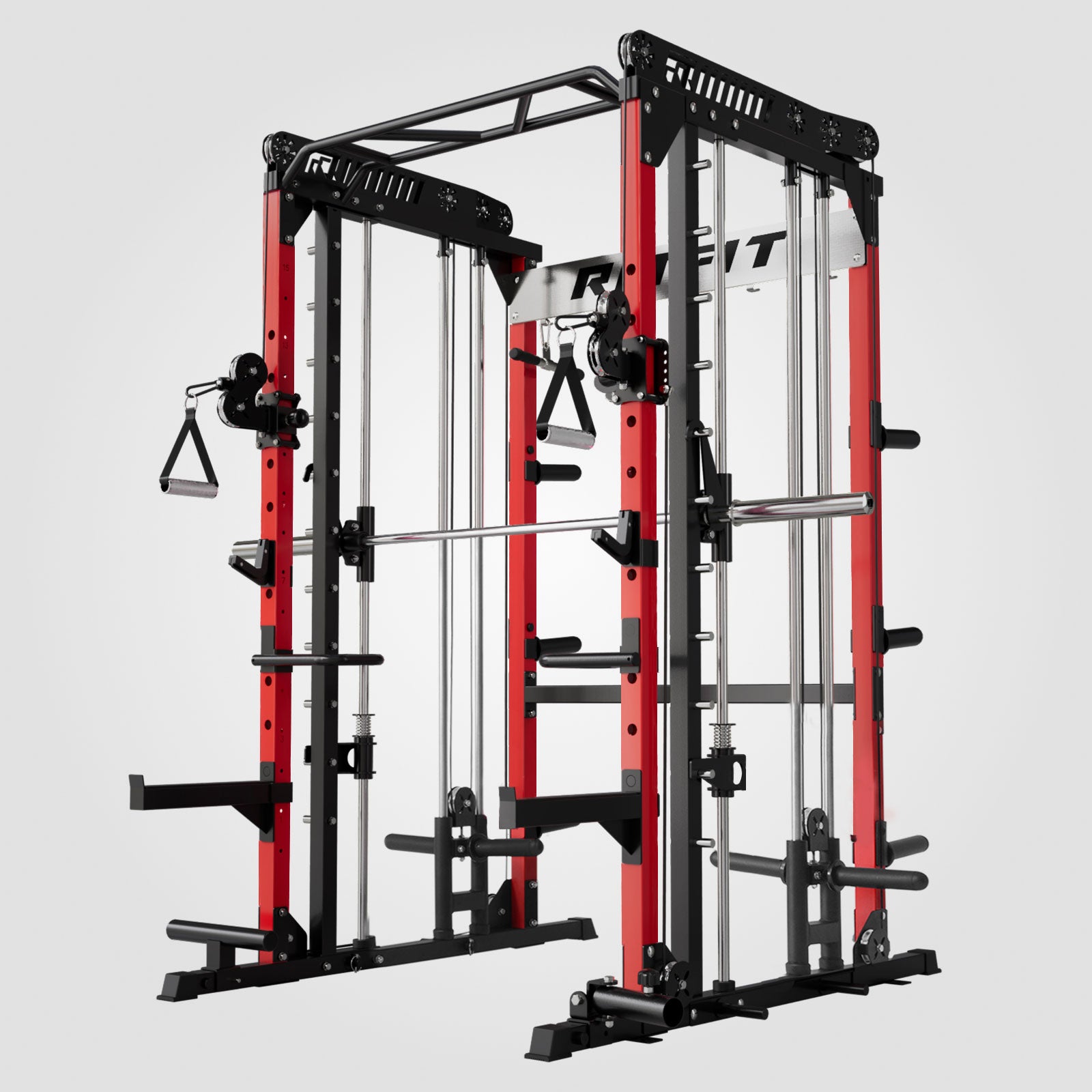
In a home gym, a quality Smith machine can support these movement patterns when you train alone and want a more controlled setup. A rack, Smith machine, barbell, plates, and adjustable bench are usually enough to run the main program.
The 4 Week Cycle
The cycle moves from manageable sets of five, to heavier triples, to a heavy one plus week, then to a lighter deload week.
| Week | Set 1 | Set 2 | Set 3 |
|---|---|---|---|
| Week 1 | 65 percent x 5 | 75 percent x 5 | 85 percent x 5 plus |
| Week 2 | 70 percent x 3 | 80 percent x 3 | 90 percent x 3 plus |
| Week 3 | 75 percent x 5 | 85 percent x 3 | 95 percent x 1 plus |
| Week 4 | 40 percent x 5 | 50 percent x 5 | 60 percent x 5 |
The Plus Set
The plus set is the final work set where you perform more reps than the minimum when your form is still clean.
- Do: Stop with about 1 to 2 reps in reserve.
- Do: End the set when bar speed slows sharply.
- Do not: Turn the plus set into a forced failure test.
- Do not: grind through pain or unstable positions.
Research on repetitions in reserve suggests that training closer to failure creates more acute neuromuscular fatigue than stopping farther from failure.[2] For most recreational lifters, clean repeatable reps are more useful than weekly all out grinders.
Is This Right For You?
5/3/1 is right for you if you need structured progress after beginner gains slow down. It is not the best first program if you are still learning how to squat, hinge, press, and brace consistently.
- Choose 5/3/1 if: You have already run a beginner program and your lifts no longer increase every session.
- Choose 5/3/1 if: You need a simple strength plan that works with a busy schedule.
- Choose 5/3/1 if: You train in a garage or home gym and want predictable weekly structure.
- Wait if: You are still unsure how to perform the main lifts with stable technique.
- Wait if: You constantly switch programs before giving one method enough time to work.
If you are building your setup from scratch, start with the essentials before adding specialty accessories. A stable adjustable bench, barbell and weight plates, and a rack or Smith machine cover the biggest needs.
If you are recovering from injury, have cardiovascular disease, joint disease, or have not been cleared for heavy lifting, speak with a qualified clinician before starting 5/3/1 or any heavy barbell program.
The Setup Guide: How to Actually Do It
Start by finding a conservative estimated one rep max for each main lift. You do not need to test a true maximum if a clean 3 to 5 rep set gives you a safer estimate.
Step 1: Estimate Your One Rep Max
Use a clean 3 to 5 rep set to estimate your one rep max for the squat, deadlift, bench press, and overhead press.
- Best practice: Use a rep max that looks like normal training, not a shaky survival lift.
- Safety rule: Stop any max test if your position changes dramatically.
- Home gym note: Set safeties, clear the floor, and avoid testing alone without a safe exit plan.
Step 2: Calculate Your Training Max
Your Training Max is 90 percent of your estimated one rep max, and every 5/3/1 percentage is based on that number.
| Input | Calculation | Result |
|---|---|---|
| Estimated one rep max | 200 pounds | 200 pounds |
| Training Max | 200 x 0.90 | 180 pounds |
| Week 1 top set | 180 x 0.85 | 153 pounds, round down to 150 or 155 |
Round your working weights to the nearest load you can actually build. If the number falls between available plates, round down during your first cycle.
Step 3: Warm Up Before Work Sets
Warm up with the empty bar, then take 2 to 4 ramp sets before your first work set.
- Simple warm up: Empty bar x 10, 40 percent x 5, 50 percent x 3, 60 percent x 2.
- Goal: Prepare joints, practice the movement, and reach the first work set without fatigue.
- Equipment note: Use rack attachments or safeties when lifting alone.
Step 4: Choose a Weekly Schedule
Run 5/3/1 three or four days per week, then keep the same schedule for a full cycle.
- 4 day option: Day 1 overhead press, Day 2 deadlift, Day 3 bench press, Day 4 squat.
- 3 day option: Day 1 overhead press and bench assistance, Day 2 deadlift and squat assistance, Day 3 bench press and hinge assistance.
- Time saver: If you have 45 minutes, keep assistance to 2 movements and cap each at 3 to 4 hard sets.
Step 5: Progress After the Cycle
After each four week cycle, add 10 pounds to the squat and deadlift Training Max and 5 pounds to the bench press and overhead press Training Max.
- Progress only if: You completed the required reps with solid form.
- Hold steady if: You reached the reps but your technique broke down.
- Reset if: You miss minimum reps on a lift more than once in a cycle.
Assistance Work: Do Not Overthink It
Assistance work should build muscle, improve balance, and support the main lift without stealing recovery. Training to failure is not always necessary for strength and hypertrophy, and non failure work can still be productive when effort and volume are appropriate.[3]
Option A: Boring But Big
Boring But Big adds 5 sets of 10 reps after the main lift, usually with a lighter percentage of your Training Max.
- Main lift: Complete the 5/3/1 work sets first.
- Volume work: Perform 5 sets of 10 with the same lift or a close variation.
- Starting point: Begin around 40 to 50 percent of Training Max if you are new to higher volume training.
- Recovery rule: Reduce volume first if your lower back, shoulders, or elbows feel constantly beat up.
Option B: The Triumvirate
The Triumvirate keeps each workout to three total exercises, making it a strong option for simple home gym training.
- Exercise 1: Main 5/3/1 lift.
- Exercise 2: One assistance lift for the same pattern.
- Exercise 3: One pulling, single leg, posterior chain, or core movement.
- Home gym fit: Dumbbells, cable handles, and bodyweight movements are enough for most assistance work.
For simple assistance tools, consider home gym dumbbells and cable machine handles. These help cover rows, presses, curls, triceps work, lunges, and core movements without complicating the program.
The Rules of the Road
The best 5/3/1 results usually come from patience, conservative loading, and clean repetition quality. Heavy load training can support maximal strength, but useful strength and hypertrophy adaptations can occur across a range of loading zones when programming is organized well.[4]
- Respect the deload: Week 4 should feel easier because the goal is recovery, not another max effort week.
- Start too light: The first cycles should build momentum instead of proving toughness.
- Condition wisely: Use easy conditioning, sled work, incline walking, or short intervals that do not ruin lower body recovery.
- Cap high rep plus sets: Stop early if reps get very high and the set turns into a conditioning test.
- Track one number: Record the reps from your plus set so you can see whether performance is trending up or down.
If you train in a garage, do not ignore the training surface. A secure lifting area with rubber high density interlocking gym flooring mats can make your setup cleaner and more stable.
Troubleshooting: What If It Goes Wrong?
Most 5/3/1 problems come from a Training Max that is too high, assistance volume that is too aggressive, or recovery that is too low. Fix those issues before blaming the program.
- If overhead press stalls: Reduce the Training Max by 5 to 10 percent and rebuild with cleaner reps.
- If knees hurt: Check warm ups, squat depth control, footwear, stance, and weekly lower body volume.
- If AMRAP reps drop suddenly: Cut assistance by 30 to 50 percent for one week and keep conditioning easy.
- If you feel beat up: Keep the main lift, reduce assistance, and complete the deload exactly as written.
- If form breaks down: End the set immediately and use the next cycle to improve rep quality.
Beginner On Ramp
Run this four week on ramp if you are new to the big four lifts or returning after a long break. It builds technique, work capacity, and confidence before you add percentage based loading.
- Schedule: Train 3 days per week for 45 to 60 minutes.
- Day A: Squat pattern, bench pattern, row.
- Day B: Hinge pattern, overhead press pattern, pulldown or pull up.
- Day C: Lighter squat pattern, lighter bench pattern, core, carries.
- Weeks 1 to 2: Perform 3 sets of 5 on main patterns with 2 to 3 assistance moves.
- Weeks 3 to 4: Perform 3 to 4 sets of 5 on main patterns with 2 to 3 assistance moves.
Keep every set 2 to 3 reps away from failure. After four weeks, estimate your one rep max conservatively, apply the 90 percent Training Max rule, and begin 5/3/1.
Technique Cues for the Big Four
Good technique makes the 5/3/1 percentages useful because each rep trains the same stable pattern. If a rep cannot be repeated with the same control, the set is over.
- Squat: Brace before you descend, keep your midfoot planted, and drive up with chest and hips rising together.
- Deadlift: Wedge toward the bar, lock your lats, push the floor away, and keep the bar close.
- Bench press: Set your upper back, stack wrists over elbows, and touch the same point on your chest each rep.
- Overhead press: Squeeze glutes and abs, keep ribs down, and move your head through as the bar passes your forehead.
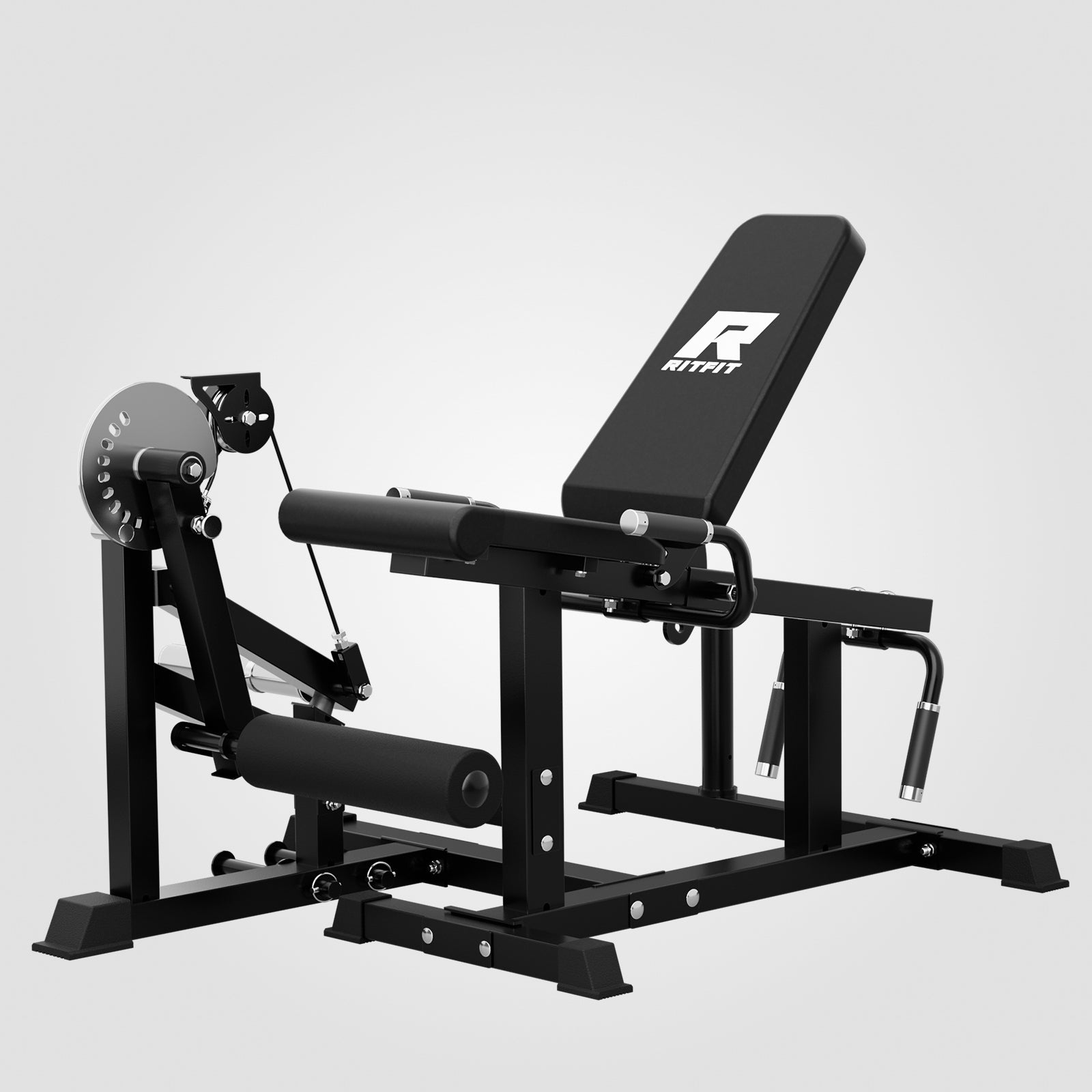
An adjustable weight bench can support bench press assistance, incline pressing, dumbbell rows, and seated overhead press variations. Keep the assistance work simple so your main lift performance stays the priority.
Safety SOP for 5/3/1
A safe 5/3/1 session starts before the first work set. Time efficient strength training can still be productive when exercise selection, rest periods, and volume are organized around the main goal.[5]
- Before training: Check safeties, clear the floor, warm up, and decide your plus set stop point.
- During training: Ramp gradually, keep form repeatable, and never chase reps through sharp pain.
- After training: Record plus set reps, note pain signals, and adjust assistance before changing the main lift.
- Pain rule: Sharp pain, radiating pain, numbness, or tingling is a hard stop.
- Solo lifting rule: Use safeties, spotter arms, or controlled machine paths when no spotter is available.
FAQs
Is the 5/3/1 program good for beginners?
Yes. The 5/3/1 program can work for beginners who already know the main lifts. True first time lifters should use the beginner on ramp first, because clean squat, hinge, bench, and press technique makes the percentage work safer and easier to follow.
How do I calculate my Training Max for 5/3/1?
Calculate your Training Max by multiplying your estimated one rep max by 0.90. Use a clean 3 to 5 rep set for the estimate, then round working weights down when needed, especially during your first cycle.
Should I take every 5/3/1 plus set to failure?
No. The plus set should stop before form breaks or bar speed slows sharply. Leave about 1 to 2 clean reps in reserve, because repeatable progress matters more than turning each top set into a risky max effort test.
What equipment do I need for the 5/3/1 program at home?
You need a barbell, plates, a rack or Smith machine, and a bench for the classic version. Dumbbells, cable handles, flooring, and rack attachments are useful extras, but the main program works best when the basic setup is safe and consistent.
Can I run 5/3/1 three days per week?
Yes. A three day 5/3/1 schedule works well for busy lifters. Keep the lift order consistent, avoid doubling up heavy missed sessions, and reduce assistance volume when recovery or session length becomes a problem.
How long should I run 5/3/1 before changing programs?
Run 5/3/1 for at least three full cycles before judging results. The program is designed for slow progress, so switching after one month often prevents you from seeing the benefit of conservative Training Max increases.
What should I do if I miss reps on 5/3/1?
Reduce your Training Max if you miss required reps more than once. First check sleep, food, warm ups, and assistance volume, because many stalls happen when recovery is poor or extra work is too aggressive.
Does 5/3/1 build muscle or only strength?
Yes. 5/3/1 can build muscle when assistance work adds enough quality volume. The main lifts drive strength, while rows, presses, lunges, curls, triceps work, and core training help add muscle and keep your body balanced.
Conclusion
The 5/3/1 program works because it makes strength training simple, conservative, and repeatable. If your beginner gains have stalled, start with a realistic Training Max, protect your form, respect the deload, and run at least three full cycles before judging the results.
For home gym lifters, the best plan is the one you can perform safely and consistently with the equipment you already use.
Disclaimer: This article is for general educational purposes only and is not medical advice. Strength training involves risk, especially with heavy compound lifts. Consult a qualified healthcare professional before starting if you have pain, injury history, medical conditions, or concerns about heavy resistance training.
References
- Evans JW. Periodized resistance training for enhancing skeletal muscle hypertrophy and strength: a mini-review. Front Physiol. 2019;10:13. doi:10.3389/fphys.2019.00013
- Refalo MC Helms ER Hamilton DL Fyfe JJ. Influence of resistance training proximity-to-failure, determined by repetitions-in-reserve, on neuromuscular fatigue in resistance-trained males and females. Sports Med Open. 2023;9(1):10. doi:10.1186/s40798-023-00554-y
- Nóbrega SR Libardi CA. Is resistance training to muscular failure necessary? Front Physiol. 2016;7:10. doi:10.3389/fphys.2016.00010
- Schoenfeld BJ Grgic J Van Every DW Plotkin DL. Loading recommendations for muscle strength, hypertrophy, and local endurance: a re-examination of the repetition continuum. Sports (Basel). 2021;9(2):32. doi:10.3390/sports9020032
- Iversen VM Norum M Schoenfeld BJ Fimland MS. No time to lift? Designing time-efficient training programs for strength and hypertrophy: a narrative review. Sports Med. 2021;51(10):2079-2095. doi:10.1007/s40279-021-01490-1