The best home exercises for knee pain are low impact movements that strengthen the quadriceps, glutes, hips, and hamstrings without irritating the joint. This guide shows five beginner friendly exercises, safe progressions, stretches, and warning signs so you can train smarter at home.
Table of Contents
Key Takeaways
- Start with low impact strength: Knee pain exercises should build support around the joint before adding speed, depth, or heavy resistance.
- Train the hips, not only the knees: Strong glutes and hip abductors help control knee alignment during walking, stairs, and squats.
- Use pain as feedback: Mild effort is acceptable, but sharp pain, swelling, locking, or instability means you should stop and seek guidance.
- Progress gradually: Increase range of motion first, then reps, then resistance.
- Keep the setup simple: A firm floor, mat, low step, resistance band, and light dumbbells are enough for most beginner knee friendly home workouts.
Before You Start: When Knee Exercises Are Safe
Knee exercises are safest when your pain is mild, stable, and not linked to a recent traumatic injury. Stop exercising and speak with a licensed healthcare professional if you have major swelling, a popping injury, locking, giving way, fever, or pain that worsens after training.
- Use the next day rule: Your knee should not feel more swollen, unstable, or painful the day after exercise.
- Keep pain controlled: Stay in a comfortable range and avoid sharp, catching, or stabbing pain.
- Move slowly: Controlled tempo is better than rushing through reps.
- Prioritize alignment: Keep the knee tracking over the middle toes during step ups, wall sits, and squatting patterns.
Understanding Knee Pain
Knee pain often improves when the muscles around the joint become stronger and better coordinated. Exercise training has been shown to improve pain, stiffness, joint function, and muscle weakness in people with knee osteoarthritis, although the right plan depends on the cause and severity of symptoms.[1]
Common Causes of Knee Pain
Knee pain can come from cartilage irritation, muscle weakness, poor tracking of the kneecap, tendon overload, or an acute injury.
- Osteoarthritis: This is a common source of knee pain in adults and is often linked with cartilage changes, stiffness, and reduced strength.
- Patellofemoral pain: This usually causes discomfort around or behind the kneecap, especially with stairs, squats, or long sitting.
- Ligament strain: This can happen after twisting, sudden direction changes, or trauma.
- Meniscus irritation: This may cause joint line pain, swelling, locking, or catching.
- Tendinopathy: This often creates pain near the patellar tendon or quadriceps tendon during loading.
- Hip weakness: Weak glutes and hip abductors can allow the knee to cave inward during daily movement.
Why Strengthening Helps
Strengthening helps because the quadriceps, hamstrings, glutes, and calves share load with the knee joint and improve movement control.
- Quadriceps support: Strong quads help control knee extension and improve stability during walking and stair climbing.
- Glute support: Strong glutes help control hip position and reduce inward knee collapse.
- Hamstring support: Strong hamstrings help balance forces around the knee.
- Calf support: Strong calves help absorb impact and support smooth gait mechanics.
The 5 Best Home Exercises for Knee Pain
The best knee pain exercises at home are simple, controlled, and easy to modify. Start with bodyweight only, then add a band, light dumbbells, or a higher step only when your knee tolerates the movement well.
1. Straight Leg Raises
Straight leg raises strengthen the quadriceps with very little knee bending, making them a useful starting exercise for many people with irritated knees.
- Best for: Mild knee pain, quad weakness, pain with deep bending, and early strength rebuilding.
- How to do it: Lie on your back, bend one knee, keep the other leg straight, tighten the thigh, lift the straight leg about 12 inches, pause, then lower slowly.
- Reps: Perform 2 to 3 sets of 10 to 15 reps per leg.
- Common mistake: Do not swing the leg or arch your lower back.
- Progression: Add a light ankle weight only after the movement feels smooth and pain controlled.
- Modify if needed: Keep the leg on the floor and tighten the quad for 5 seconds if lifting causes discomfort.
2. Wall Sits
Wall sits build quadriceps endurance while keeping the movement controlled and predictable.
- Best for: Knee pain that tolerates partial bending, weak quads, and users who need a joint friendly squat alternative.
- How to do it: Stand with your back against a wall, walk your feet forward, slide down to a shallow angle, hold, then return to standing.
- Reps: Perform 3 to 5 holds of 15 to 40 seconds.
- Common mistake: Do not drop into a deep position if your knee feels compressed or sharp.
- Progression: Increase hold time before increasing knee bend.
- Modify if needed: Use a higher wall sit angle and stop before pain rises.
3. Glute Bridges
Glute bridges strengthen the glutes and hamstrings, which help control hip position and reduce stress on the knees.
- Best for: Weak glutes, inward knee collapse, hip instability, and knee pain during squats or stairs.
- How to do it: Lie on your back with knees bent, press through your heels, squeeze your glutes, lift your hips, pause, then lower slowly.
- Reps: Perform 2 to 3 sets of 10 to 15 reps.
- Common mistake: Do not overarch your lower back at the top.
- Progression: Add a resistance band above the knees or progress to single leg bridges.
- Helpful link: For more glute focused training ideas, see this guide to best gym machines for glutes.
4. Clamshells
Clamshells target the gluteus medius and hip abductors, which help keep the knee aligned during walking, stairs, and single leg work.
- Best for: Knees that cave inward, patellofemoral pain, hip weakness, and poor single leg control.
- How to do it: Lie on your side with hips stacked, knees bent, feet together, lift the top knee, pause, then lower with control.
- Reps: Perform 2 to 3 sets of 15 to 20 reps per side.
- Common mistake: Do not roll your hips backward to fake a larger range of motion.
- Progression: Add a light loop band above the knees.
- Evidence note: Hip muscle strengthening has been shown to reduce pain and improve function in people with patellofemoral pain syndrome.[2]
5. Step Ups
Step ups strengthen the quads, glutes, and hamstrings in a pattern that directly supports stairs and daily movement.
- Best for: Stair pain, balance rebuilding, lower body coordination, and functional knee strength.
- How to do it: Place one foot on a stable low step, drive through that foot, step up with control, then step down slowly.
- Reps: Perform 2 to 3 sets of 8 to 12 reps per leg.
- Common mistake: Do not push hard off the trailing leg or let the front knee collapse inward.
- Progression: Increase step height gradually or hold light dumbbells once pain is controlled.
- Helpful link: A low aerobic step can support gentle progressions, and this aerobic stepper exercise guide shows beginner friendly movement options.
How to Choose the Right Exercise for Your Knee Pain
The right knee exercise depends on your pain location, movement tolerance, and current strength level. Choose the easiest exercise that feels controlled, then progress only when your knee feels stable during and after the session.
- Pain around the kneecap: Start with straight leg raises, shallow wall sits, glute bridges, and clamshells.
- Pain during stairs: Start with low step ups and focus on slow lowering.
- Knees caving inward: Prioritize clamshells, banded glute bridges, and hip control drills.
- Stiff knees after sitting: Use gentle walking, calf stretching, and light range of motion before strengthening.
- Swollen or unstable knees: Avoid loaded step ups and deep wall sits until you receive professional guidance.
Essential Stretches for Knee Pain
Stretching can support knee comfort when tight muscles limit movement or pull the joint into poor positions. Strengthening should remain the foundation, while stretching works best as a short support tool after warm up or training.
Hamstring Stretch
A hamstring stretch can reduce back of thigh tightness that affects knee and hip mechanics.
- How to do it: Lie on your back, raise one leg, hold behind the thigh, and straighten the knee until you feel a gentle stretch.
- Hold time: Hold for 20 to 30 seconds per leg.
- Safety cue: Do not force the knee into a locked or painful position.
Quadriceps Stretch
A quadriceps stretch can reduce front thigh tightness that may increase pressure around the kneecap.
- How to do it: Stand tall, hold one ankle behind you, bring your heel toward your glutes, and keep both knees close together.
- Hold time: Hold for 20 to 30 seconds per side.
- Safety cue: Keep your pelvis neutral and avoid arching your lower back.
Calf Stretch
A calf stretch helps ankle mobility, which can reduce compensation at the knee during walking and step ups.
- How to do it: Place both hands on a wall, step one leg back, keep the heel down, and lean forward gently.
- Hold time: Hold for 20 to 30 seconds per leg.
- Evidence note: Therapeutic exercise programs for patellofemoral pain often include hip, knee, and stretching components, with strengthening remaining central to improvement.[3]
Exercises to Avoid with Knee Pain
Avoid exercises that create sharp pain, swelling, joint catching, or a next day flare up. This does not mean these movements are always bad, but they should be delayed or modified until strength, control, and tolerance improve.
- Heavy deep squats: Avoid deep loaded knee bending if it creates pressure, sharp pain, or swelling.
- Jumping drills: Avoid jump squats, box jumps, and repeated landing work during painful flare ups.
- Running on hard surfaces: Reduce running if impact increases pain, especially during arthritis or tendon irritation.
- Heavy leg extensions: Use caution with heavy open chain knee extension if it aggravates the front of the knee.
- Forced knee stretches: Avoid aggressive behind the knee stretching or any position that pushes the knee into painful hyperextension.
Beginner Knee Health Program
A beginner knee pain program should start with two or three short sessions per week. The goal is to build tolerance, control, and confidence before adding resistance.
Week 1
Week 1 should focus on low irritation exercises that rebuild basic quad, glute, and hip control.
- Straight leg raises: 2 sets of 10 reps per side.
- Glute bridges: 2 sets of 10 reps.
- Clamshells: 2 sets of 12 reps per side.
- Calf stretch: 20 seconds per side.
- Optional walk: 5 to 10 minutes at an easy pace if it feels comfortable.
Week 2
Week 2 should add shallow wall sits and low step ups if the knee stayed calm during Week 1.
- Straight leg raises: 3 sets of 10 reps per side.
- Wall sits: 3 holds of 15 to 25 seconds.
- Glute bridges: 3 sets of 12 reps.
- Low step ups: 2 sets of 8 reps per side.
- Stretching: Hamstrings, quads, and calves for 20 to 30 seconds each.
Progression Rules
Progress only when your knee feels stable during exercise and does not flare up the next day.
- First: Increase control and comfort.
- Second: Increase reps or hold time.
- Third: Increase range of motion.
- Fourth: Add a band or light weight.
- Helpful link: When you are ready for loaded lower body work, the ultimate dumbbell leg workout can help you progress beyond rehab basics.
Home Gym Tips for Knee Friendly Training
A knee friendly home gym should make movement stable, low impact, and easy to progress gradually. Start with a non slip surface, a mat, a low step, a resistance band, and light weights before moving into heavier leg training.
- For basic resistance: Use light dumbbells after bodyweight step ups and bridges feel easy, and browse RitFit dumbbells for progressive home strength options.
- For supported positioning: A stable bench can help with modified bridges, seated mobility, and assisted lower body drills, and the RitFit weight benches collection offers home gym bench options.
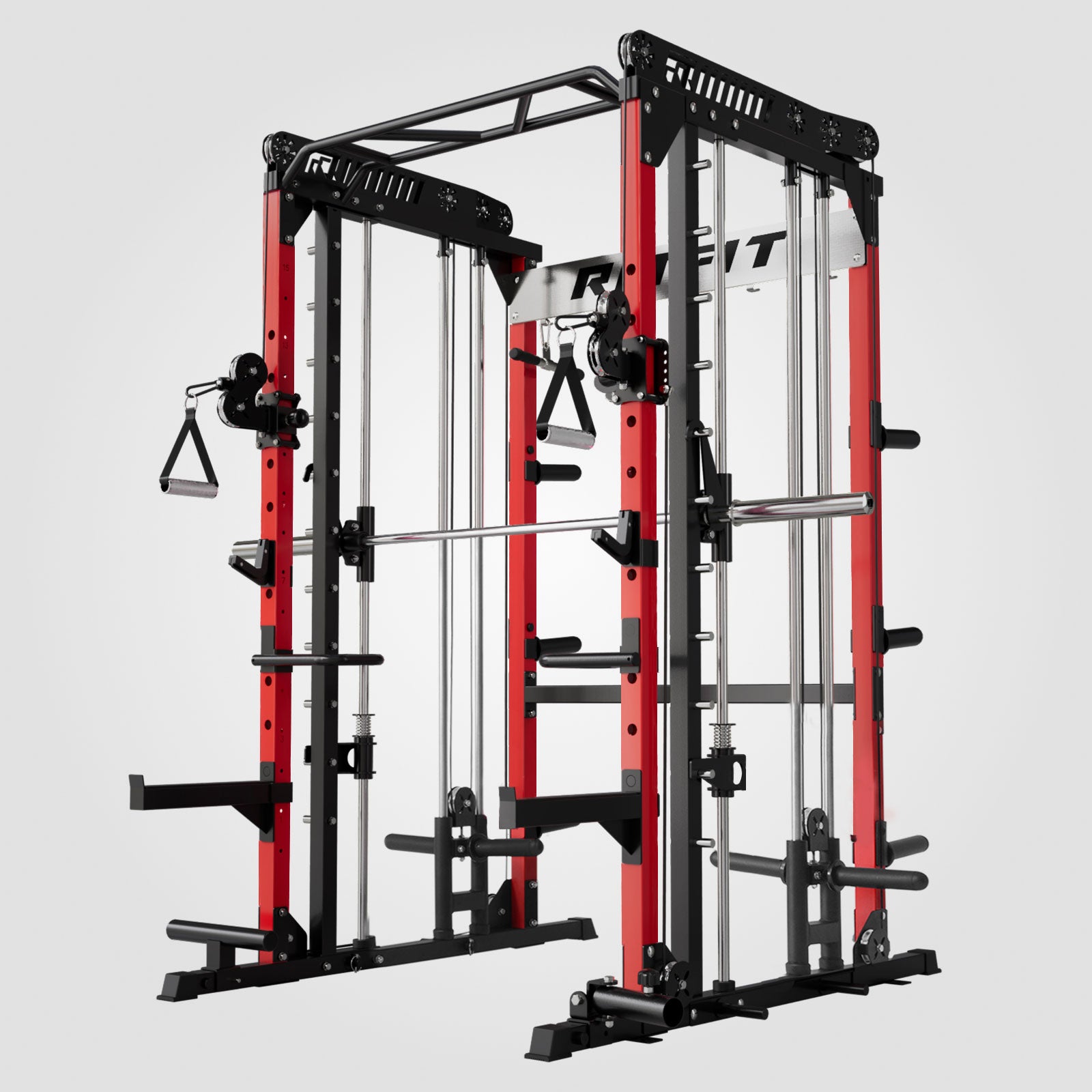
- For machine based training: Once pain is controlled, selected strength machines may help users rebuild lower body strength with more stability, and the RitFit strength machines collection is a useful next step.
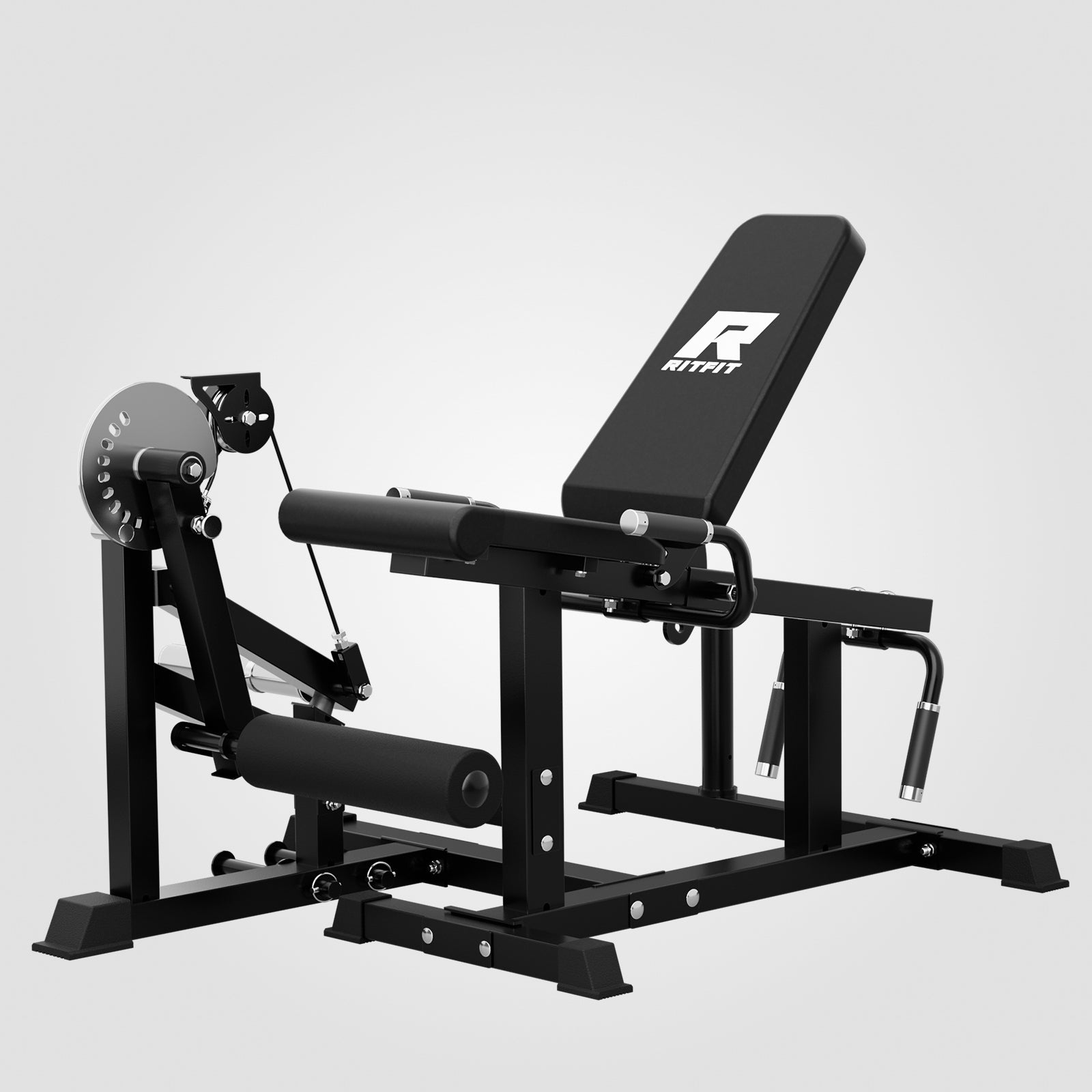
- For knee extension and hamstring work: Users who tolerate isolated training may explore the leg extension curl machine guide for controlled quad and hamstring training ideas.
- For safer heavy training: If you later return to squats or machine strength work, review this guide on how to train safely on the Smith machine at home.
- For step progressions: A stable box can support step up progressions, and this beginner plyo box exercise guide shows how to use height carefully.
Lifestyle Tips for Healthy Knees
Healthy knees need strength, movement variety, recovery, and smart loading. Small daily choices can reduce repetitive stress and help your exercise program work better.
- Maintain a healthy weight: Weight management may reduce knee joint load and improve symptoms in people with knee osteoarthritis.[4]
- Choose low impact cardio: Cycling, swimming, elliptical training, and easy walking can support conditioning without high impact landings.
- Break up sitting time: Stand, walk, or do gentle mobility every 30 to 60 minutes if your knees feel stiff after sitting.
- Use supportive footwear: Replace shoes when the cushioning feels flat, the outsole wears unevenly, or the shoe no longer feels stable.
- Recover between sessions: Give your knees time to adapt, especially when adding step ups, wall sits, or loaded exercises.
When to See a Doctor or Physical Therapist
See a healthcare professional if your knee pain is severe, sudden, unstable, or not improving with conservative exercise. Early evaluation is especially important when symptoms suggest trauma, infection, locking, or structural injury.
- Seek care after trauma: Get evaluated if pain began with a fall, twist, pop, or collision.
- Watch swelling: Significant swelling that does not improve with rest should be checked.
- Do not ignore instability: A knee that gives way, buckles, locks, or catches needs professional attention.
- Check systemic symptoms: Fever with knee pain and swelling requires medical evaluation.
- Get help if pain worsens: Pain that increases despite reducing load should not be pushed through.
FAQs
What is the best home exercise for knee pain?
The best home exercise for knee pain is often the straight leg raise because it strengthens the quadriceps with minimal knee bending. Glute bridges, clamshells, shallow wall sits, and low step ups can also help when they feel controlled and do not increase swelling or next day pain.
Can I do squats if I have knee pain?
Yes. You can do squats with knee pain if the range is shallow, controlled, and pain free. Start with wall sits or partial box squats before deeper squats, and stop if you feel sharp pain, swelling, catching, or instability during or after the movement.
Are step ups good for knee pain?
Yes. Step ups can be good for knee pain because they train the quads and glutes in a stair climbing pattern. Use a low stable step, move slowly, keep your knee aligned over the middle toes, and avoid pushing off hard with the back leg.
How often should I do knee pain exercises at home?
Most beginners can do knee pain exercises two to three times per week. Start with short sessions, keep soreness mild, and add volume gradually only when your knee feels stable during exercise and does not feel worse the next day.
Should I stretch or strengthen first for knee pain?
Strengthening should usually come first because stronger muscles improve support around the knee joint. Gentle mobility before training and short stretches after training can help comfort, but stretching alone rarely solves knee pain caused by weakness, poor control, or repeated overload.
What exercises should I avoid with bad knees?
Avoid exercises that cause sharp pain, swelling, locking, or next day flare ups. Heavy deep squats, jump training, fast direction changes, hard surface running, and heavy leg extensions may need to be modified until your knees have better strength, control, and tolerance.
Can weak glutes cause knee pain?
Yes. Weak glutes can contribute to knee pain by allowing the thigh and knee to drift inward during walking, stairs, squats, and lunges. Clamshells, glute bridges, and controlled step ups can help improve hip strength and knee alignment over time.
When should I stop exercising with knee pain?
Stop exercising if knee pain becomes sharp, the joint swells, the knee locks, or it feels unstable. You should also stop if symptoms feel worse later that day or the next morning, because that usually means the current exercise load is too high.
Conclusion
Knee pain exercises work best when they are simple, consistent, and matched to your current tolerance. Start with straight leg raises, wall sits, glute bridges, clamshells, and low step ups, then progress slowly as your knee becomes stronger and more stable.
Exercise therapy can support knee pain management, but symptoms vary by diagnosis, age, training history, and injury status.[5]
This article is for general fitness education only and does not replace medical diagnosis, treatment, or personalized physical therapy. Stop exercising and consult a licensed healthcare professional if you have severe pain, swelling, locking, instability, fever, recent trauma, or symptoms that worsen with exercise.
References
- Zeng CY, Zhang ZR, Tang ZM, Hua FZ. Benefits and mechanisms of exercise training for knee osteoarthritis. Front Physiol. 2021;12:794062. doi:10.3389/fphys.2021.794062
- Santos TRT, Oliveira BA, Ocarino JM, Holt KG, Fonseca ST. Effectiveness of hip muscle strengthening in patellofemoral pain syndrome patients: a systematic review. Braz J Phys Ther. 2015;19(3):167-176. doi:10.1590/bjpt-rbf.2014.0089
- Alba-Martín P, Gallego-Izquierdo T, Plaza-Manzano G, Romero-Franco N, Núñez-Nagy S, Pecos-Martín D. Effectiveness of therapeutic physical exercise in the treatment of patellofemoral pain syndrome: a systematic review. J Phys Ther Sci. 2015;27(7):2387-2390. doi:10.1589/jpts.27.2387
- Messier SP, Mihalko SL, Legault C, et al. Effects of intensive diet and exercise on knee joint loads, inflammation, and clinical outcomes among overweight and obese adults with knee osteoarthritis: the IDEA randomized clinical trial. JAMA. 2013;310(12):1263-1273. doi:10.1001/jama.2013.277669
- Mo L, Jiang B, Mei T, Zhou D. Exercise therapy for knee osteoarthritis: a systematic review and network meta-analysis. Orthop J Sports Med. 2023;11(5):23259671231172773. doi:10.1177/23259671231172773