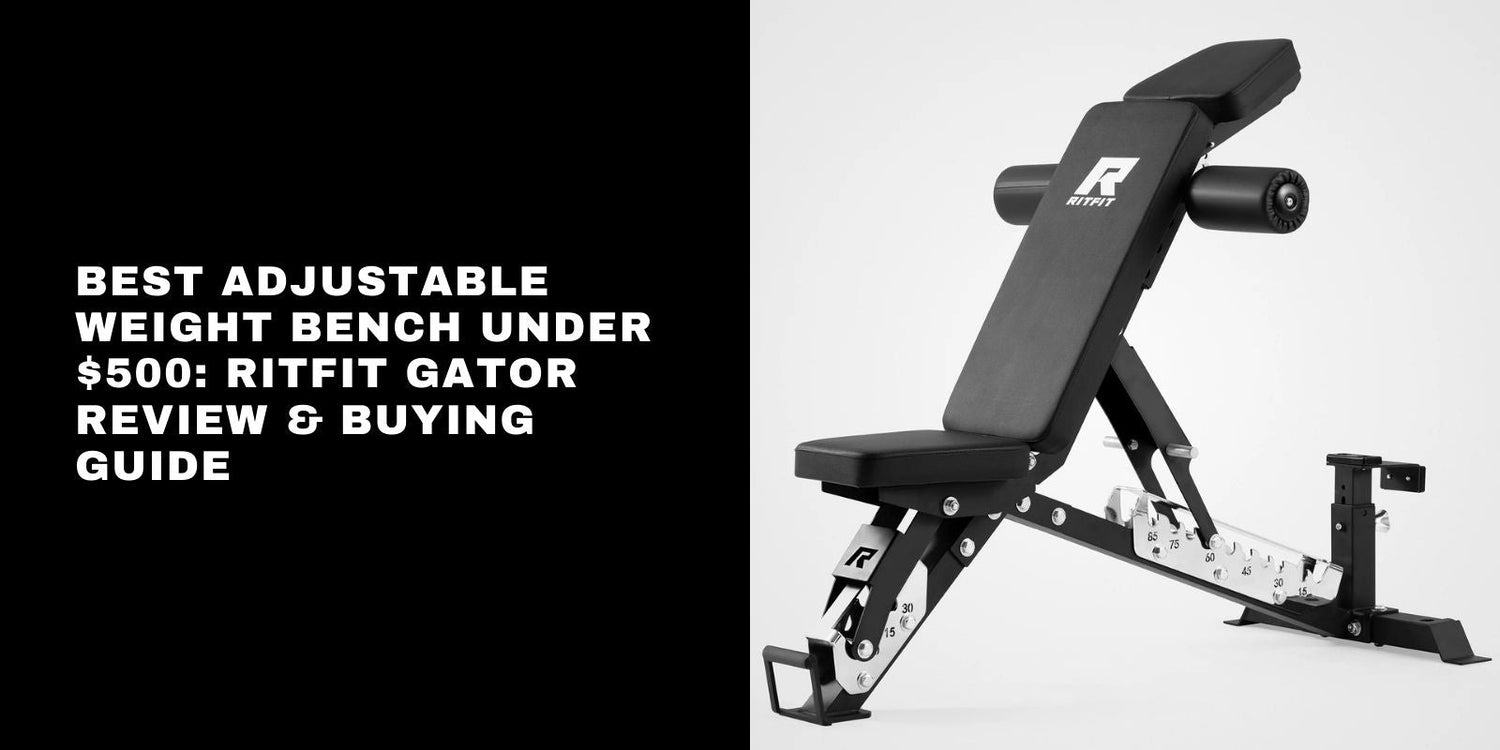
The best adjustable weight bench under $500 is the one that feels stable under load, adjusts quickly, and fits your home gym without wasting space. The RitFit GATOR adjustable weight bench is a strong choice because it combines a 1,600 lb weight capacity, 21 configurations, upright storage, and heavy duty construction at a sub $500 price point.
This guide reviews the GATOR for home gym users who want one serious bench for dumbbell work, barbell pressing, incline training, decline core work, and long term strength progression.
Table of Contents
- What to Look for in the Best Adjustable Weight Bench
- Overview of the RitFit GATOR Adjustable Weight Bench
- RitFit GATOR in Detail
- Pros and Cons of the RitFit GATOR
- RitFit GATOR vs. Other Adjustable Weight Benches
- Who the RitFit GATOR Is Best For
- Buying Tips for Getting More from a Bench
- How to Choose Between These 3 RitFit Benches
Key Takeaways
- Best overall fit: The RitFit GATOR is best for home gym users who want a heavy duty adjustable bench under $500.
- Main advantage: Its 1,600 lb weight capacity gives it stronger long term value than many lightweight budget benches.
- Training versatility: The 21 configurations support flat, incline, decline, seated, dumbbell, and core exercises.
- Space value: Upright storage, wheels, and a handle make the bench more practical for garages and shared rooms.
- Best buyer: It suits lifters who want durability and stability more than ultra light fold flat storage.
What to Look for in the Best Adjustable Weight Bench
The best adjustable weight bench should feel stable, support your future strength goals, and make daily training easier. Before comparing prices, check capacity, frame strength, adjustment range, comfort, storage, and how the bench pairs with your rack or dumbbells.
Weight Capacity and Stability
Choose a bench that supports your body weight plus the heaviest load you realistically expect to lift. A higher capacity usually signals stronger steel, better support geometry, and more confidence during heavy pressing and rowing.
Adjustability and Exercise Range
Choose a bench with flat, incline, decline, and seat adjustments if you want one bench to cover more exercises. Different bench angles can change upper body muscle activation during pressing movements, so angle options matter for training variety.[1]
Build Quality and Materials
Look for reinforced steel, stable footplates, durable upholstery, and dense foam. These details matter because a bench is repeatedly loaded, moved, wiped down, and adjusted during years of home gym use.
Comfort and Ergonomics
Choose firm padding that supports your body without feeling unstable. A practical pad shape, secure seat angle, and controlled head position help reduce distractions during presses, rows, curls, and seated shoulder work.
Storage and Portability
Choose a storage style that matches your room before buying the bench. Upright storage works well for garages and multipurpose rooms, while fold flat storage may be better for bedrooms or under bed storage.
Value for Money
The best bench under $500 should offer more than a low price. Long term value comes from stability, adjustment quality, material durability, warranty confidence, and how often you can use the bench in real workouts.
Overview of the RitFit GATOR Adjustable Weight Bench
The RitFit GATOR is built for home gym buyers who want a serious adjustable bench without moving into commercial pricing. It focuses on high capacity, broad positioning, easier storage, and a more stable lifting experience than many basic benches.
- Price point: Under $500.
- Weight capacity: 1,600 lbs.
- Construction: 50 x 70 mm heavy duty steel tubing with welded support.
- Adjustability: 21 total configurations across backrest, seat, headrest, and decline settings.
- Best use: Home gym dumbbell training, rack based pressing, incline work, decline work, and core training.
The GATOR stands out because it solves common bench complaints around wobble, limited angle choices, and storage inconvenience. Its preassembled main frame, enclosed adjustment brackets, magnetic locking headrest pin, and upright storage design make it feel more refined than many benches in the same price range.
RitFit GATOR in Detail
The RitFit GATOR is one of the strongest adjustable bench choices under $500 for users who prioritize stability, weight capacity, and long term progression. It is not the smallest bench available, but it gives serious home gym users a more secure base for training.
Design and Construction
The GATOR uses a reinforced 50 x 70 mm steel frame to support its 1,600 lb capacity. Its widened rear base, welded footplates, and anti scratch feet help keep the bench planted during heavy dumbbell and barbell work.
Adjustability Range
The 21 position setup makes the GATOR useful for flat pressing, incline pressing, seated shoulder work, decline pressing, rows, flyes, curls, and core exercises. Research on bench pressing shows that angle changes can influence muscle activation, so a broad adjustment range helps users train with more exercise variety.[2]
- Backrest positions: 10 positions from flat to near upright support flat bench work, incline pressing, and seated training.
- Headrest positions: 5 settings improve fit for users of different heights and support longer training sessions.
- Seat and decline settings: 3 seat angles and 3 decline settings help reduce sliding and expand core exercise options.
Performance in Real Workouts
The GATOR performs best when used for pressing, rows, seated dumbbell work, and decline core training. Resistance training outcomes are influenced by load, exercise choice, and progression, so a stable bench helps users train through a wider range of practical loading options.[3]
Comfort and User Experience
The 70 mm thick recycled high density foam is designed to feel firm enough for lifting while still providing support. The vinyl leather upholstery is also practical for home gyms because it can be wiped down after sweaty sessions.
Durability and Maintenance
The GATOR is built for repeated long term use rather than occasional light training. To maintain it, wipe the pads after workouts, keep adjustment points clean, and check hardware before heavy lifting days.
Pros and Cons of the RitFit GATOR
The RitFit GATOR is strongest when judged as a heavy duty adjustable weight bench for home gym strength training. Its main tradeoff is that the same construction that improves stability also makes it less compact than very light fold flat models.
Pros
The GATOR offers strong value because it combines high capacity, versatile positioning, upright storage, and a sturdy feel under load. These features make it a practical match for users building a more permanent home gym bench setup.
- High capacity: The 1,600 lb rating gives heavy lifters more headroom for progression.
- Strong stability: The wide base and reinforced frame reduce the shaky feel common in light benches.
- Broad versatility: The 21 configurations support pressing, rowing, curls, flyes, shoulder work, and core training.
- Practical storage: Upright storage, wheels, and a handle help manage space after training.
- Quick setup: The preassembled main frame reduces the assembly burden for home users.
Cons
The GATOR is not the best choice for users who need the lightest or flattest storage option. Its heavy duty build is better for stability than for under bed storage.
- Heavier frame: The stronger build makes it less convenient than very light tubular benches.
- Larger workout footprint: The wide base needs more open floor space during training.
- Not fold flat: Buyers who need hidden storage may prefer a compact foldable bench style.
RitFit GATOR vs. Other Adjustable Weight Benches
The RitFit GATOR stands out most clearly when compared on stability, load support, adjustment range, and storage practicality. Many benches under $500 can handle basic workouts, but fewer combine heavy capacity, 21 configurations, and upright storage in one design.
Side by Side Comparison
This comparison is most useful for buyers choosing between a serious long term bench and a lower cost starter bench. It focuses on practical home gym criteria rather than brand hype.
| Feature | RitFit GATOR | Generic Budget Bench | Standard Mid Range Bench |
|---|---|---|---|
| Typical Price | Under $500 | Under $200 | $300 to $450 |
| Weight Capacity | 1,600 lbs | About 600 lbs | About 1,000 lbs |
| Adjustability | 21 configurations with ladder style adjustment | Limited positions with basic pop pin adjustment | Standard ladder style adjustment |
| Storage | Upright storage with wheels | Often foldable but less stable | Often flat storage only |
| Best For | Heavy home gym use | Light occasional workouts | General strength training |
Where the RitFit GATOR Wins
The GATOR wins on load capacity, stability, and training flexibility. It is the better choice if you plan to use a Smith machine, power rack, dumbbells, or Olympic barbell setup for progressive training.
When Another Bench Might Be Better
Another bench may be better if your top priority is the smallest possible storage footprint. A lighter fold flat bench may suit a very small apartment, even though it usually gives up stability and capacity.
Who the RitFit GATOR Is Best For
The RitFit GATOR is best for lifters who want one adjustable bench that can support years of progression. It fits especially well in home gyms where durability, safety, and versatility matter more than the lightest possible frame.
- Home gym beginners: It works as a long term first bench because it leaves room for strength gains.
- Intermediate lifters: It supports heavier dumbbell and barbell work without feeling like a short term upgrade.
- Space conscious users: Upright storage and wheels help make it more manageable in garages and multipurpose rooms.
- Full body trainees: It pairs well with RitFit dumbbells, racks, Smith machines, and barbells and weight plates.
Buying Tips for Getting More from a Bench
A bench works best when it fits your room, your rack, and your preferred training style. Before buying, measure your space, plan your storage, and make sure the bench supports the exercises you actually perform.
Measure Your Space First
Measure the bench footprint plus the space needed to walk, adjust angles, and set up dumbbells safely. If your gym uses flooring, consider pairing the bench with interlocking gym flooring mats to protect the floor and create a more stable lifting area.
Pair It with the Right Equipment
The GATOR works best with a rack, Smith machine, dumbbell set, or barbell setup. Bench height, pad support, and angle options should match your most common exercises, not just the product photo.
Check Safety Before Heavy Sets
Confirm the backrest, seat, headrest, and decline setting are fully locked before each heavy set. For barbell work, use a rack with safeties or train with a spotter when the lift requires it.
How to Choose Between These 3 RitFit Benches
The right RitFit bench depends on your space, strength level, and storage needs. GATOR is the heavy duty choice, BWB01 is the balanced value choice, and PWB01 is the compact beginner choice.
| Model | Best For | Capacity Positioning | Storage Style | Core Advantage |
|---|---|---|---|---|
| PWB01 | Beginners and small rooms | Basic home use | Foldable | Lightweight, compact, and easy to start with. |
| BWB01 | Beginner to intermediate lifters | 1,300 lbs | Foldable design | Strong balance of value, stability, and space efficiency. |
| GATOR | Intermediate and heavy home gym users | 1,600 lbs | Upright storage with wheels | Heavy duty stability with precise adjustment options. |
- Choose GATOR: Pick this bench if heavy lifting, long term durability, and maximum stability are the priorities.
- Choose BWB01: Pick this bench if you want a strong middle ground between capacity, value, and storage convenience.
- Choose PWB01: Pick this bench if you are new to strength training and need a compact bench for basic dumbbell workouts.
FAQs
Is the RitFit GATOR adjustable weight bench worth it under $500?
Yes. The RitFit GATOR is worth considering under $500 if you want high capacity, broad adjustability, and upright storage in one bench. Its stronger frame and 21 configurations make it better suited for long term home gym training than many light budget benches.
Can the RitFit GATOR adjustable weight bench support heavy barbell pressing?
Yes. The GATOR is designed for heavy lifting with a 1,600 lb weight capacity and a wide reinforced base. It is best used with a stable rack or Smith machine, and users should always confirm the angle lock and hardware before loading heavy weight.
How to store the RitFit GATOR adjustable weight bench in a small home gym?
You can store the RitFit GATOR upright when your workout is finished. Transport wheels and a handle make it easier to move into a corner, garage wall, or shared training area, which helps protect usable floor space without choosing a flimsy fold flat bench.
What exercises can you do on the RitFit GATOR adjustable weight bench?
You can use the RitFit GATOR adjustable weight bench for flat presses, incline presses, decline presses, dumbbell rows, seated shoulder presses, curls, flyes, sit ups, and leg raises. Its backrest, seat, headrest, and decline settings help one bench cover upper body, full body, and core training.
Which RitFit adjustable weight bench should beginners choose?
Beginners should choose based on space, lifting goals, and how long they want the bench to last. PWB01 fits small rooms and casual dumbbell work, BWB01 balances storage and strength, and GATOR is the best match for heavier progression and a more permanent home gym setup.
Does the adjustable headrest on the RitFit GATOR weight bench matter?
Yes. An adjustable headrest helps the bench fit different user heights and improves neck support during long sessions. On the GATOR, the headrest adds comfort during incline and seated work, especially when several people in the same home gym use one bench.
Conclusion
The RitFit GATOR is one of the best adjustable weight benches under $500 for lifters who want stability, versatility, and long term home gym value. If you want one serious bench for heavy pressing, adjustable angle work, upright storage, and full body training, the GATOR is a compelling choice.
Disclaimer: This article is for general fitness education and product research only. It is not medical advice, physical therapy advice, or a personalized training prescription. Always follow the product manual, use proper lifting technique, inspect equipment before heavy use, and consult a qualified professional if you have pain, injury history, or medical concerns.
References
- Rodríguez Ridao D, Antequera Vique JA, Martín Fuentes I, Muyor JM. Effect of five bench inclinations on the electromyographic activity of the pectoralis major, anterior deltoid, and triceps brachii during the bench press exercise. Int J Environ Res Public Health. 2020;17(19):7339. doi:10.3390/ijerph17197339. Available at: https://pmc.ncbi.nlm.nih.gov/articles/PMC7579505/
- Chaves SFN, Rocha Júnior VA, Encarnação IGA, Martins Costa HC, Freitas EDS, Coelho DB, Franco FSC, Loenneke JP, Bottaro M, Ferreira Júnior JB. Effects of horizontal and incline bench press on neuromuscular adaptations in untrained young men. Int J Exerc Sci. 2020;13(6):859-872. Available at: https://pmc.ncbi.nlm.nih.gov/articles/PMC7449336/
- Lopez P, Radaelli R, Taaffe DR, Newton RU, Galvão DA, Trajano GS, Teodoro JL, Kraemer WJ, Häkkinen K, Pinto RS. Resistance training load effects on muscle hypertrophy and strength gain: systematic review and network meta analysis. Med Sci Sports Exerc. 2021;53(6):1206-1216. doi:10.1249/MSS.0000000000002585. Available at: https://pmc.ncbi.nlm.nih.gov/articles/PMC8126497/
- Bernárdez Vázquez R, Raya González J, Castillo D, Beato M. Resistance training variables for optimization of muscle hypertrophy: an umbrella review. Front Sports Act Living. 2022;4:949021. doi:10.3389/fspor.2022.949021. Available at: https://pmc.ncbi.nlm.nih.gov/articles/PMC9302196/