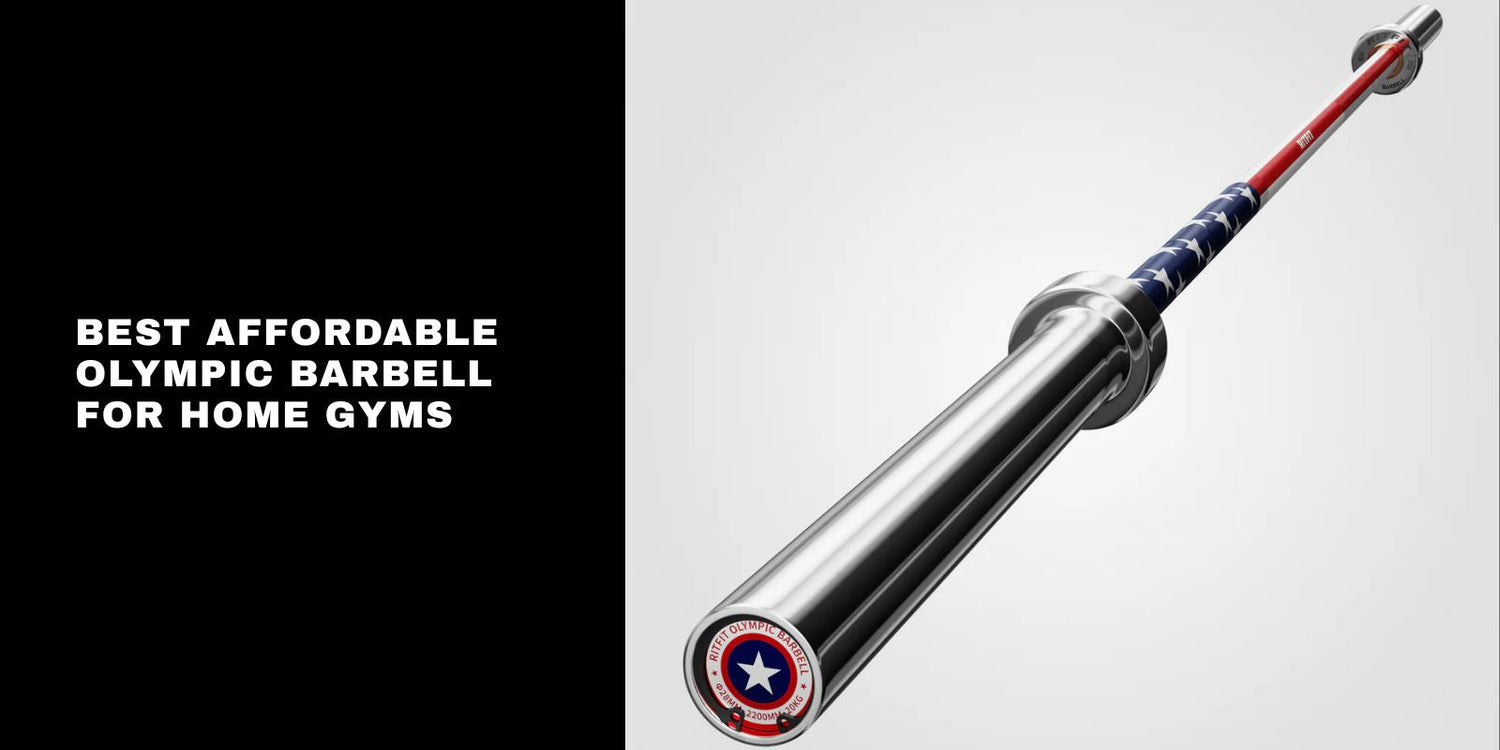
The best affordable Olympic barbell for most home gyms is a standard 7 foot bar that matches your current strength level, plate setup, rack width, and long term training goals. A good budget bar should feel secure in the hands, fit Olympic plates, rotate smoothly enough for your training style, and carry more load than you currently lift.
Table of Contents
Key Takeaways
- Choose capacity first: A barbell should be rated above your expected working loads, not just your current max.
- Match the bar to your training: General strength training usually needs a durable multipurpose bar, while Olympic lifts benefit from faster sleeve rotation.
- Bushings are enough for most home gyms: Squats, bench presses, deadlifts, rows, and overhead presses do not require premium needle bearings.
- Grip matters as much as load rating: Medium knurling is usually the best balance for home gym lifters who train both heavy sets and higher rep work.
- The RitFit 7FT Olympic Barbell is best positioned as a value focused home gym bar: Its 500 lb, 700 lb, and 1000 lb capacity options make it easier to match the bar to your training stage.
What Makes a Good Budget Olympic Barbell
A good budget Olympic barbell should be strong enough for your training, comfortable enough to grip, and compatible with your plates, bench, and rack. It should also avoid vague specifications that make it hard to judge safety, durability, and long term value.
Tensile Strength
Tensile strength helps describe how much stress the steel can tolerate before permanent deformation, but not every budget bar publishes this number. If a brand lists PSI, compare it alongside capacity, shaft diameter, intended use, and customer support instead of treating one number as the whole story.
- Entry level training: Beginners should still avoid unknown steel quality, unclear capacity claims, and bars that do not clearly support Olympic plates.
- Intermediate home gyms: Lifters progressing on squats, bench presses, deadlifts, and rows should prioritize capacity headroom and secure knurling.
- Heavy strength training: Advanced lifters should look for clearly published specifications, stronger steel data, reliable sleeves, and a bar rated far above normal working weight.
Bar Diameter and Hand Feel
Bar diameter affects grip comfort, stiffness, and pulling feel. Most home gym users do well with a general purpose Olympic bar before deciding whether they need a more specialized weightlifting or powerlifting bar.
- 28 mm bars: These usually feel easier to grip and may have more whip, which can suit Olympic style movements.
- 28.5 mm bars: This is a common multipurpose feel for lifters who train squats, presses, deadlifts, rows, and occasional dynamic lifts.
- 29 mm bars: These feel stiffer and are often preferred for powerlifting style squats, bench presses, and heavy pulls.
Sleeve Rotation
Sleeve rotation matters most when the bar turns quickly during cleans, snatches, and jerks. For slow strength lifts, a reliable bushing system is usually enough for a home gym barbell.
- Bushing sleeves: These are durable, affordable, and practical for most strength training in a garage gym or basement gym.
- Needle bearing sleeves: These spin faster and are better suited for dedicated Olympic weightlifting practice.
- Hybrid systems: These can work well for mixed training, but they are only worth paying for if sleeve spin is part of your real training needs.
Why Barbell Quality Matters for Home Gym Training
Barbell quality matters because the bar is the center of most progressive strength programs. Research on resistance training shows that load selection and progression influence strength and hypertrophy outcomes, so your bar should support consistent, repeatable training rather than limit your progress.[1]
A reliable Olympic barbell also makes your setup easier to scale. You can pair it with Olympic barbells and weight plates, a compatible rack, and a stable bench to build a simple home gym foundation.
500 lb vs 700 lb vs 1000 lb Capacity
The right capacity depends on your current lifts, your rate of progress, and whether you want a short term starter bar or a long term home gym bar. When in doubt, choose more capacity headroom than you need today.
500 lb Capacity
A 500 lb Olympic barbell is best for beginners, lighter strength training, and general fitness routines. It can be a practical first bar if your training focuses on controlled squats, bench presses, deadlifts, rows, presses, and accessory lifts.
700 lb Capacity
A 700 lb Olympic barbell is often the best middle ground for home gym owners who expect to progress. It gives more room for intermediate strength training without immediately moving into a premium price tier.
1000 lb Capacity
A 1000 lb Olympic barbell is the strongest choice for lifters who want more long term confidence and heavier loading potential. It is the best option in this group for users who plan to keep one bar through multiple training phases.
RitFit 7FT Olympic Barbell Review
The RitFit 7FT Olympic Barbell is a strong value option for home gym users who want one standard bar for general weightlifting. Its 500 lb, 700 lb, and 1000 lb capacity options make it easier to choose based on training level and budget.
- Best for beginners: Choose the 500 lb option if you are building a first home gym and training with controlled loads.
- Best for most progressing lifters: Choose the 700 lb option if you want more headroom for common barbell lifts.
- Best for long term use: Choose the 1000 lb option if you want the highest listed capacity in this RitFit barbell lineup.
- Best setup pairing: Use it with Olympic plates, barbell collars, a stable bench, and a rack that matches your training space.
Who Should Choose the RitFit 7FT Olympic Barbell
This bar is best for home gym owners who want a practical Olympic barbell for strength training without paying for highly specialized competition features. It fits buyers who train squats, bench presses, deadlifts, rows, presses, curls, lunges, and basic full body barbell workouts.
- New home gym owners: It gives you a simple Olympic bar foundation before you add specialty bars.
- Garage gym lifters: It works well as the main bar in a compact rack, bench, and plate setup.
- Budget focused buyers: It lets you choose capacity based on your current needs instead of overbuying immediately.
- General strength trainees: It is better suited to broad training than to one narrow competition style.
Who May Need a Different Barbell
Some lifters should consider a more specialized barbell instead of a general budget Olympic bar. Competitive Olympic weightlifters, competitive powerlifters, and very heavy lifters may want more detailed steel, whip, knurl, sleeve, and federation specific data before buying.
- Olympic weightlifters: Look for faster sleeve spin, verified bearing systems, and a 28 mm weightlifting shaft.
- Powerlifters: Look for a stiffer 29 mm bar, more aggressive knurl, and clearly published powerlifting focused specifications.
- Commercial gym owners: Look for bars built for high volume daily use and repeated drops if your facility demands it.
- Spec driven buyers: Confirm current shaft diameter, bar weight, finish, tensile strength, and warranty details on the product page before purchasing.
How to Choose by Training Style
Your training style should decide the bar before the price does. The best affordable Olympic barbell is the one that supports the way you actually lift each week.
For General Strength Training
Choose a multipurpose Olympic bar with enough capacity, comfortable knurling, and reliable sleeve rotation. This is the best fit for most home gym owners who train squat, bench press, deadlift, row, press, and loaded carry variations.
For Olympic Weightlifting
Prioritize sleeve spin, shaft whip, and a diameter that feels right for cleans, snatches, and jerks. Research on resistance training load suggests different loading ranges can support different adaptations, but Olympic lifting also depends heavily on technique and bar speed.[2]
For Powerlifting Style Training
Prioritize stiffness, grip security, and a stable feel under heavy squats, bench presses, and deadlifts. A bushing bar is usually practical here because these lifts do not require the same fast sleeve spin as Olympic lifts.
Budget Olympic Barbell Buying Checklist
Use this checklist before buying any affordable Olympic barbell. It helps separate a real value bar from a low price bar that may not support your training safely.
- Capacity rating: Choose a bar rated above your expected working loads and future strength goals.
- Plate compatibility: Confirm 2 inch Olympic sleeves if you use standard Olympic plates.
- Rack compatibility: Make sure the bar length and sleeve spacing work with your rack, bench, and J hooks.
- Grip feel: Choose medium knurling for the best mix of comfort and security in home gym training.
- Sleeve rotation: Choose bushings for general strength work and bearings for serious Olympic lifting.
- Finish and storage: Consider rust resistance if your bar will live in a garage, basement, or humid room.
- Training ecosystem: Pair the bar with Olympic bumper plates, barbell collars and accessories, and stable storage.
Best Home Gym Setup Around an Affordable Olympic Barbell
A good barbell works best when the rest of your setup is equally stable. For a complete strength station, pair the bar with a rack, bench, Olympic plates, collars, and enough floor clearance to load and unload safely.
- Rack setup: A power cage for barbell training adds safety for solo squats, presses, and rack pulls.
- Bench setup: A stable adjustable weight bench expands your barbell work to flat press, incline press, seated press, and supported rows.
- Plate setup: Olympic weight plates should load smoothly onto the sleeves and be secured with collars before every working set.
- Loading setup: A deadlift jack barbell stand can make heavy plate changes easier during deadlift training.
Maintenance Tips for Budget Barbells
Budget barbells last longer when they are cleaned, stored, and inspected consistently. Sweat, chalk, dust, and garage humidity can shorten the life of the finish and reduce sleeve performance.
After Each Workout
Wipe the shaft and sleeves with a dry cloth after training. This simple habit removes sweat and chalk before they settle into the knurling or finish.
Weekly Care
Brush the knurl with a nylon or brass brush depending on the finish and manufacturer guidance. Avoid harsh cleaning methods that can damage coating or make the shaft feel slick.
Monthly Inspection
Check sleeve rotation, end caps, collars, and visible bending signs once a month. Traditional resistance training is generally considered a safe method when performed with appropriate technique and equipment control, but worn equipment should not be ignored.[3]
Common Mistakes When Buying a Budget Olympic Barbell
The biggest mistake is buying only by price. A barbell is a long term training tool, so capacity, compatibility, grip, sleeve quality, and support matter more than saving a small amount upfront.
- Choosing unknown capacity: Avoid bars that do not clearly explain load rating or intended use.
- Ignoring plate compatibility: Standard Olympic plates need 2 inch sleeves, so confirm this before buying.
- Overpaying for bearings: Do not pay extra for needle bearings unless Olympic lifting is a real part of your program.
- Buying too little capacity: Your strength can increase quickly during consistent training, especially when progression is structured.
- Skipping safety equipment: Use collars, rack safeties, spotter arms, or a power cage when lifting alone.
Final Buying Recommendation
The best affordable Olympic barbell is the one that gives you enough capacity, reliable compatibility, and confidence under load without forcing you into features you do not need. For most home gym users, the RitFit 7FT Olympic Barbell is a strong value focused choice because it offers 500 lb, 700 lb, and 1000 lb options for different training stages.
Progressive resistance training has been shown to improve strength in older adults, which reinforces why a stable, scalable home gym setup can support long term fitness goals.[4] The right barbell should help you train consistently, safely, and progressively over years, not just solve your first workout.
FAQs
What is the best affordable Olympic barbell for a home gym?
The best affordable Olympic barbell is a standard 7 foot bar with enough capacity, secure grip, smooth sleeve rotation, and Olympic plate compatibility. For most home gyms, a value focused bar with 500 lb to 1000 lb capacity options gives better long term flexibility than the cheapest unknown bar.
Is a 500 lb Olympic barbell enough for beginners?
Yes. A 500 lb Olympic barbell can be enough for many beginners who train with controlled loads and basic strength movements. It is best for early home gym setups, but progressing lifters should consider 700 lb or 1000 lb options for more future capacity.
Should I choose a 700 lb or 1000 lb Olympic barbell?
Choose 700 lb for balanced value and 1000 lb for the most long term capacity. The 700 lb option suits many intermediate home gym users, while the 1000 lb option is better if you expect heavier training or want more confidence as strength increases.
Are bushings enough for a budget Olympic barbell?
Yes. Bushings are enough for most home gym barbell training, including squats, bench presses, deadlifts, rows, and overhead presses. Needle bearings become more important when you regularly perform fast Olympic lifts such as cleans, snatches, and jerks.
What Olympic barbell capacity should I buy for strength training?
Buy a barbell rated above your expected working loads and future progress. Beginners may start with 500 lb capacity, intermediate lifters often benefit from 700 lb capacity, and serious home gym users may prefer 1000 lb capacity for long term strength training.
Can I use any weight plates with an Olympic barbell?
No. An Olympic barbell is designed for Olympic plates with 2 inch center holes. Standard plates with smaller holes will not fit correctly, so check your plate type before buying a barbell, bumper plates, iron plates, collars, or storage accessories.
How do I maintain an affordable Olympic barbell?
Wipe the bar after every workout, brush the knurl regularly, and inspect sleeves, end caps, and visible bending signs. Store the bar in a dry place, avoid leaving sweat or chalk on the shaft, and follow the product manual for finish specific care.
Is the RitFit 7FT Olympic Barbell good for home gyms?
Yes. The RitFit 7FT Olympic Barbell is a good home gym option for buyers who want a standard Olympic bar with 500 lb, 700 lb, and 1000 lb capacity choices. It is best for general strength training rather than highly specialized competition lifting.
Conclusion
The best affordable Olympic barbell should match your training style, current strength, future progress, and home gym setup. For most buyers, a standard 7 foot Olympic bar with clear capacity options, Olympic plate compatibility, secure grip, and enough load headroom delivers the best balance of value and safety.
The RitFit 7FT Olympic Barbell is a practical choice for home gym owners who want one bar for general strength training and want to choose between 500 lb, 700 lb, and 1000 lb capacity options.
Disclaimer: This article is for general fitness equipment education only and is not medical, safety, or professional coaching advice. Always inspect equipment before use, follow the product manual, use collars and rack safeties when appropriate, and consult a qualified coach or healthcare professional if you are new to heavy resistance training or have injury concerns.
References
- Lopez P, Radaelli R, Taaffe DR, Newton RU, Galvao DA, Trajano GS, Teodoro JL, Kraemer WJ, Hakkinen K, Pinto RS. Resistance training load effects on muscle hypertrophy and strength gain: systematic review and network meta analysis. Med Sci Sports Exerc. 2021;53(6):1206-1216. doi:10.1249/MSS.0000000000002585
- Schoenfeld BJ, Grgic J, Van Every DW, Plotkin DL. Loading recommendations for muscle strength, hypertrophy, and local endurance: a re examination of the repetition continuum. Sports Basel. 2021;9(2):32. doi:10.3390/sports9020032
- Serafim TT, de Oliveira ES, Maffulli N, Migliorini F, Okubo R. Which resistance training is safest to practice? A systematic review. J Orthop Surg Res. 2023;18(1):296. doi:10.1186/s13018-023-03781-x
- Peterson MD, Rhea MR, Sen A, Gordon PM. Resistance exercise for muscular strength in older adults: a meta analysis. Ageing Res Rev. 2010;9(3):226-237. doi:10.1016/j.arr.2010.03.004