Back and bicep workouts build a wider upper back and stronger arms by pairing rows, pulldowns, pull ups, and curls in one efficient pull day. This guide gives you 5 complete routines for muscle growth, strength, pump work, and home training.
Use the plan that matches your equipment, training age, recovery, and weekly schedule. Start with back movements first, then finish with targeted bicep work so your arms do not limit your larger pulling muscles too early.
Key Takeaways
- Train back first: Heavy rows, pull ups, and pulldowns need fresh grip and elbow flexors before curls create fatigue.
- Use both pull angles: Horizontal rows build upper back thickness, while vertical pulls help build lat width.
- Control effort: Most working sets should finish with 0 to 3 reps in reserve, depending on the exercise and your recovery.
- Progress slowly: Add reps first, then add a small amount of weight when every set reaches the top of the target range.
- Match the workout to your setup: Gym users can use cables and machines, while home users can progress with dumbbells, bands, a bench, and a cable station.
Why Back and Biceps Work Well Together
Back and biceps pair well because most pulling exercises train the lats, upper back, grip, and elbow flexors at the same time. This makes the split efficient for lifters who want upper body size without adding a separate arm day.
Large pulling exercises should usually come before curls because exercise order can affect performance and strength outcomes, especially when larger muscle group movements are placed early in the session.[1]
Muscles Worked in Back and Bicep Workouts
Back and bicep workouts mainly train the latissimus dorsi, rhomboids, trapezius, rear delts, spinal erectors, biceps brachii, brachialis, and brachioradialis. Rows usually emphasize upper back thickness, while pull ups and pulldowns emphasize lat width.
- Lats: Use pulldowns, pull ups, straight arm pulldowns, and rows that drive the elbows toward the ribs.
- Upper back: Use chest supported rows, cable rows, machine rows, face pulls, and rear delt focused pulling.
- Biceps brachii: Use supinated curls, incline curls, cable curls, and controlled chin up variations.
- Brachialis and brachioradialis: Use hammer curls, cross body curls, neutral grip rows, and rope curls.
How to Build an Effective Back and Bicep Workout
A good back and bicep workout starts with compound pulling, adds controlled back volume, then finishes with direct curl work. Muscle growth is influenced by mechanical tension, metabolic stress, total volume, and recovery, so the plan must be challenging without becoming random.[2]
- Start with compounds: Begin with rows, pull ups, pulldowns, deadlifts, or machine rows before curls.
- Use 3 to 5 exercises: Most sessions work best with 2 to 3 back exercises and 1 to 2 bicep exercises.
- Target 6 to 15 reps: Use lower reps for heavy rows and higher reps for cable work, face pulls, and curls.
- Rest with purpose: Rest 2 to 3 minutes for heavy pulls and 45 to 90 seconds for moderate or pump work.
- Stop near failure: Training to failure is not required on every set, and non failure training can still support strength and hypertrophy when effort is high.[3]
- Track RIR: Reps in reserve help you estimate how close a set is to failure and manage effort across the session.[4]
- Control tempo: Use a steady lowering phase and a strong pull or curl without swinging, since tempo can influence resistance training outcomes.[5]
Horizontal Pulls vs Vertical Pulls
Horizontal pulls build back thickness by emphasizing scapular retraction and upper back control. Vertical pulls build width by emphasizing shoulder extension, elbow drive, and lat tension.
- Horizontal pull examples: Barbell rows, dumbbell rows, seated cable rows, chest supported rows, and machine rows.
- Vertical pull examples: Pull ups, chin ups, assisted pull ups, lat pulldowns, and straight arm pulldowns.
- Best weekly balance: Use at least one horizontal pull and one vertical pull in most back and bicep workouts.
Which Back and Bicep Workout Should You Choose?
Choose your back and bicep workout based on your goal, equipment, and recovery. Beginners should start with the simplest plan, while intermediate lifters can rotate heavy and high volume sessions.
- Best for overall mass: Choose Workout 1 if you want a complete weekly pull day.
- Best for lat width: Choose Workout 2 if you want more vertical pulling and lat isolation.
- Best for strength: Choose Workout 3 if you can perform heavy pulls safely and recover well.
- Best for hypertrophy volume: Choose Workout 4 if you want higher reps, cables, and a stronger pump.
- Best for home training: Choose Workout 5 if you train with dumbbells, bands, bodyweight, or a compact cable setup.
Workout 1: Classic Mass Builder
This back and bicep workout is best for overall size because it combines heavy rowing, vertical pulling, and simple curl variations. Use it as your main weekly pull day if you want a balanced plan.
- Barbell Bent Over Row: 4 sets of 6 to 8 reps.
- Weighted Pull Up or Lat Pulldown: 4 sets of 8 to 10 reps.
- Seated Cable Row: 3 sets of 10 to 12 reps.
- Barbell Biceps Curl: 3 sets of 8 to 10 reps.
- Incline Dumbbell Curl: 3 sets of 10 to 12 reps.
Best for: Beginners and intermediate lifters who want one complete back and biceps session each week.
Form note: If bent over rows irritate your lower back, use chest supported dumbbell rows or a machine row.
Workout 2: Width and Bicep Peak Focus
This workout is best for lifters who want more lat width and a sharper arm look. The plan emphasizes vertical pulling, lat isolation, and curls that keep tension on the biceps.
- Wide Grip Pull Up: 4 sets with controlled reps near technical failure.
- Straight Arm Pulldown: 3 sets of 12 to 15 reps.
- Single Arm Dumbbell Row: 3 sets of 10 to 12 reps per side.
- EZ Bar Curl: 3 sets of 8 to 10 reps.
- Concentration Curl: 3 sets of 10 to 12 reps per side.
Best for: Lifters who already know how to pull with their elbows and want better lat engagement.
Progression note: Add a 1 second squeeze on concentration curls before adding weight.
Workout 3: Strength and Heavy Arms
This workout is best for pulling strength because it uses heavier loads and longer rest periods. It should be used by lifters who can brace well and maintain technique under fatigue.
- Deadlift or Rack Pull: 3 to 4 sets of 3 to 5 reps.
- Pendlay Row: 4 sets of 5 to 6 reps.
- Chest Supported Row: 3 sets of 8 to 10 reps.
- Standing Dumbbell Curl: 4 sets of 6 to 8 reps.
- Hammer Curl: 3 sets of 8 to 10 reps.
Best for: Intermediate lifters who want heavier pulling and thicker arms.
Safety note: Replace deadlifts with chest supported rows if low back fatigue interferes with your main goal.
Workout 4: High Volume Pump Session
This workout is best for hypertrophy volume because it uses cables, machines, higher reps, and shorter rest periods. Use it as a second weekly back and bicep workout after a heavier pull day.
- Close Grip Lat Pulldown: 4 sets of 12 to 15 reps.
- Machine Row or T Bar Row: 4 sets of 12 to 15 reps.
- Face Pull: 3 sets of 15 to 20 reps.
- Cable Curl: 4 sets of 12 to 15 reps.
- Preacher Curl: 3 sets of 12 to 15 reps.
- 21s Curl: 2 controlled sets to finish.
Best for: Lifters who recover well and want extra upper back, rear delt, and arm volume.
Equipment note: Cable based movements are useful here because they keep tension consistent through the rep.
Workout 5: Home Back and Bicep Workout
This workout is best for home training because it uses dumbbells, bands, bodyweight rows, and optional cable work. It is ideal when you want a complete pull day without a commercial gym.
- Inverted Row: 4 sets with controlled reps near technical failure.
- One Arm Dumbbell Row or Band Row: 3 sets of 10 to 15 reps per side.
- Banded Straight Arm Pulldown or Floor Pullover: 3 sets of 12 to 15 reps.
- Dumbbell Curl: 3 sets of 10 to 12 reps.
- Hammer Curl or Cross Body Curl: 3 sets of 10 to 12 reps.
- Banded Curl Burnout: 2 sets of 15 to 25 reps.
Best for: Home gym users who want simple equipment, steady progression, and less setup time.
Home equipment note: Pairing hex rubber dumbbells, an adjustable weight bench, and lat pulldown attachments makes back and bicep progression easier at home.
Recommended Home Gym Equipment for Back and Biceps
The most useful home gym setup for back and biceps includes a stable bench, dumbbells, a pull up option, and a cable path for rows and pulldowns. This setup covers both horizontal and vertical pulling without needing a full commercial gym.
- Dumbbells: Use the dumbbells collection for rows, curls, hammer curls, and pullovers.
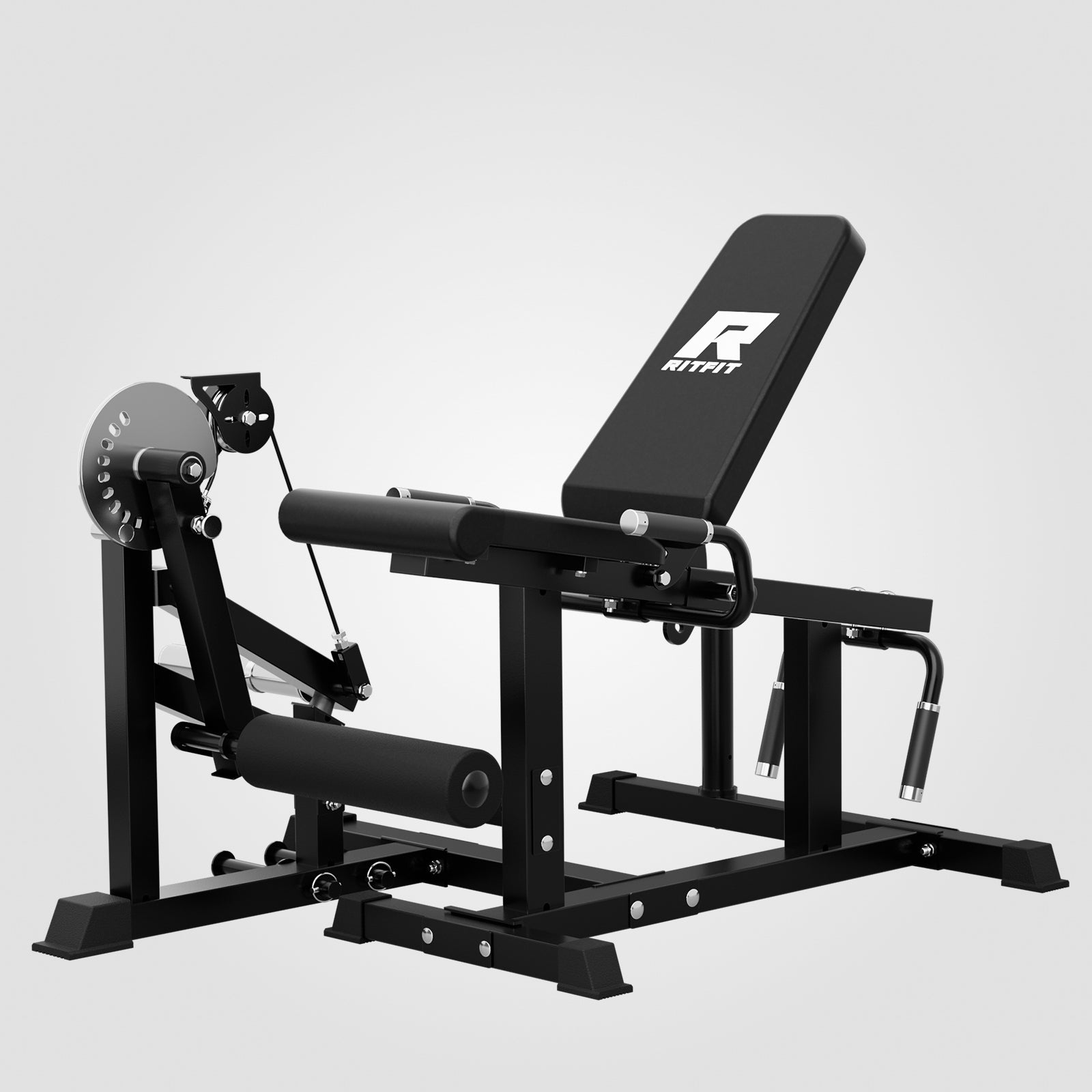
- Benches: Use the benches collection for chest supported rows, incline curls, and stable dumbbell work.
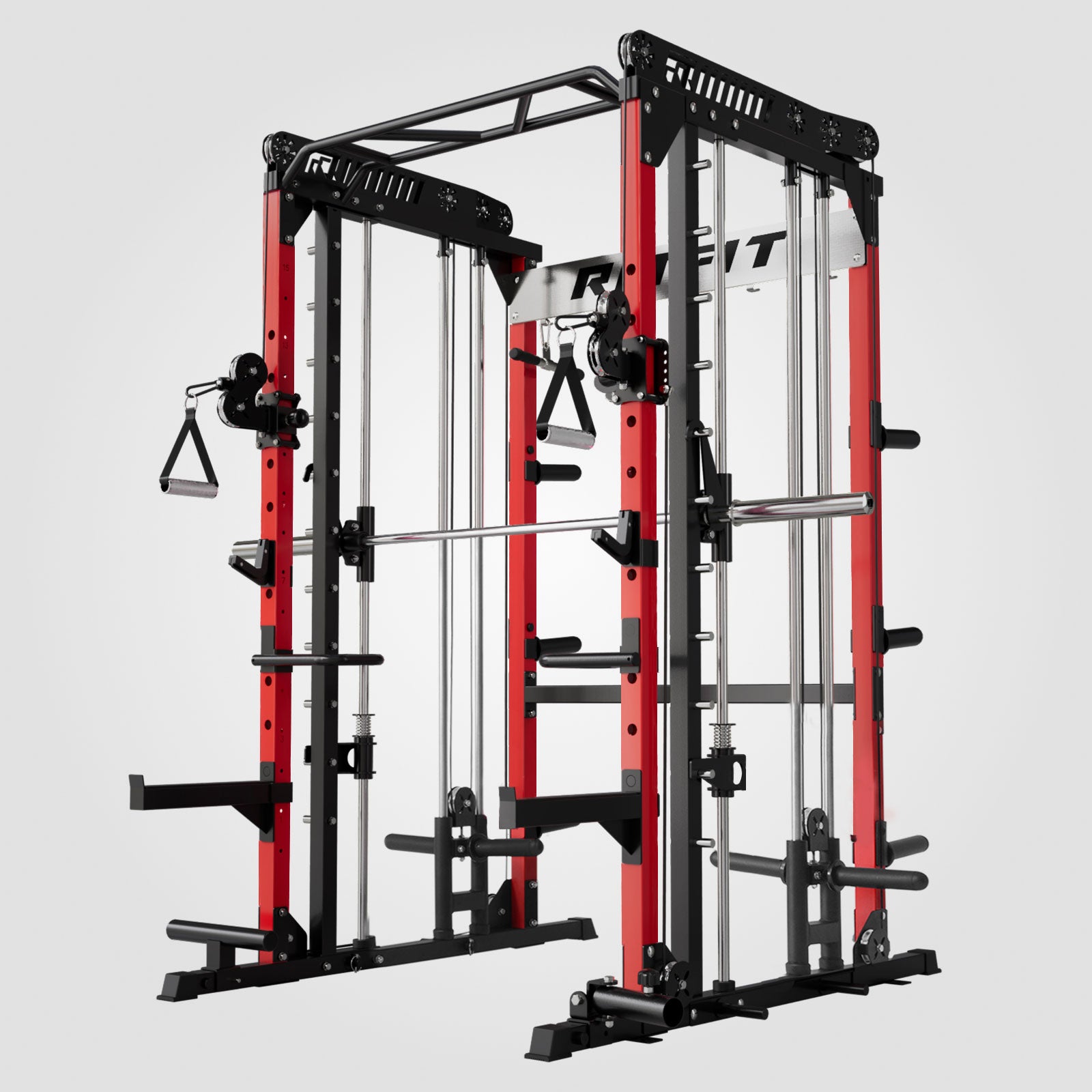
- Cable station: A cable crossover machine supports rows, pulldowns, face pulls, and cable curls.
- Smith machine setup: The Smith machine collection can support a broader home gym strength setup when paired with compatible attachments.
Simple 8 Week Back and Bicep Rotation
An 8 week rotation helps you combine heavy work, volume work, and recovery without changing exercises too often. Keep the same movements long enough to measure whether reps, load, control, or recovery are improving.
- Weeks 1 to 4: Use Workout 1 once per week, or pair Workout 1 and Workout 4 if you train pull twice weekly.
- Weeks 5 to 8: Use Workout 3 once per week, or pair Workout 3 and Workout 2 if you train pull twice weekly.
- Deload option: Reduce total sets by 30 to 40 percent if elbows, shoulders, or low back feel beat up.
Warm Up, Cool Down, and Recovery
A short warm up improves movement quality and helps you feel the target muscles before heavy pulling. Use light cardio, scapular activation, band work, and ramp up sets before the first hard exercise.
- Light cardio: Use 1 to 2 minutes to raise body temperature.
- Band pull aparts: Use 2 sets of 15 to 25 reps to prepare the upper back.
- Scapular pulldowns: Use 2 sets of 8 to 12 reps to practice shoulder blade control.
- Ramp up sets: Use 2 lighter sets before your first heavy row or pulldown.
- Recovery: Sleep, protein, hydration, and stable weekly volume matter more than adding random extra sets.
Common Back and Bicep Workout Mistakes
The most common mistake is letting grip, momentum, or ego lifting replace target muscle tension. Fixing technique usually improves training quality before you need more exercises.
- Swinging curls: Keep the upper arm stable and stop the set when hip drive takes over.
- Turning rows into curls: Pull with your elbows and let your hands act like hooks.
- Skipping vertical pulls: Add pulldowns, pull ups, or banded pulldowns if your plan is only rows.
- Doing too much volume: Reduce sets if performance drops for two weeks or elbows ache outside training.
- Ignoring grip limits: Use straps on heavy back sets if forearms fail before your lats or upper back.
When to Stop or Modify the Workout
Stop or modify any exercise that causes sharp pain, numbness, tingling, dizziness, or sudden weakness. Muscle fatigue is expected, but joint pain or nerve like symptoms should not be trained through.
Choose supported rows, lighter loads, shorter ranges, or cable variations when technique breaks down. If pain persists or worsens, consult a qualified clinician before continuing.
FAQs
Can I train back and biceps on the same day?
Yes. Training back and biceps together is efficient because rows, pull ups, and pulldowns already involve elbow flexion. Start with back exercises first, then use curls to finish the biceps after your larger pulling muscles have received enough quality work.
How many back and bicep exercises should I do?
Most lifters should use three back exercises and two bicep exercises in one session. This gives enough volume for lats, upper back, and elbow flexors without turning the workout into junk volume that is hard to recover from.
Should beginners use the same back and bicep workout as advanced lifters?
No. Beginners should use fewer exercises, lighter loads, and more reps in reserve than advanced lifters. Advanced lifters can usually handle heavier rows, more weekly sets, and extra curl variations because their technique and recovery capacity are more developed.
What is the best back and bicep workout for home training?
The best home back and bicep workout uses dumbbell rows, band rows, pull ups, straight arm pulldowns, dumbbell curls, and hammer curls. A bench, dumbbells, bands, and a cable station make progression easier, but consistent loading still matters most.
How often should I train back and biceps for muscle growth?
Most people can train back and biceps one to two times per week. Use one higher volume session if you train them once weekly, or split the work into one heavier pull day and one lighter pump day.
Why do my forearms fatigue before my back during rows?
Your forearms fatigue first because grip strength can limit pulling exercises before your lats or upper back are fully challenged. Use straps on heavy sets, choose chest supported rows, and think about driving your elbows instead of squeezing the handle harder.
Can I build bigger biceps with only pulling exercises?
Yes. Pulling exercises can grow the biceps, but direct curls usually improve arm development because they train elbow flexion with more targeted tension. Use rows and pulldowns for heavy indirect work, then add curls for complete bicep stimulus.
Conclusion
The best back and bicep workout is the one you can perform with clean technique, steady progression, and enough recovery. Pick one of the 5 routines, track reps and load, and adjust volume before adding more exercises.
For home training, combine dumbbells, a bench, bands, and cable options so you can train rows, pulldowns, pullovers, curls, and hammer curls without relying on a commercial gym.
Disclaimer
This article is for general educational purposes only and is not medical advice. If you have shoulder, neck, back, elbow, wrist pain, a recent injury or surgery, numbness, tingling, unexplained weakness, or dizziness, consult a qualified clinician before training. Stop any exercise that causes sharp pain.
References
- Simão R Spineti J de Salles BF Oliveira LF Matta T Miranda F et al. Influence of exercise order on maximum strength and muscle thickness in untrained men. J Sports Sci Med. 2010;9(1):1-7.
- Krzysztofik M Wilk M Wojdala G Golas A. Maximizing muscle hypertrophy: a systematic review of advanced resistance training techniques and methods. Int J Environ Res Public Health. 2019;16(24):4897. doi:10.3390/ijerph16244897.
- Grgic J Schoenfeld BJ Orazem J Sabol F. Effects of resistance training performed to repetition failure or non-failure on muscular strength and hypertrophy: a systematic review and meta-analysis. J Sport Health Sci. 2022;11(2):202-211. doi:10.1016/j.jshs.2021.01.007.
- Helms ER Cronin J Storey A Zourdos MC. Application of the repetitions in reserve based rating of perceived exertion scale for resistance training. Strength Cond J. 2016;38(4):42-49. doi:10.1519/SSC.0000000000000218.
- Wilk M Zajac A Tufano JJ. The influence of movement tempo during resistance training on muscular strength and hypertrophy responses: a review. Sports Med. 2021;51(8):1629-1650. doi:10.1007/s40279-021-01465-2.