The best calf exercises at home combine standing calf raises, seated calf raises, single leg calf raises, and leg press calf raises with full ankle range of motion and progressive overload.
Use straight knee variations to emphasize the gastrocnemius, bent knee variations to train the soleus, and heavier dumbbell or machine loading when bodyweight work stops challenging you.
Key Takeaways
- The best calf exercises use full ankle movement: Lower into a controlled stretch, then rise fully onto the ball of the foot.
- Standing calf raises are essential: They keep the knee straighter and place more emphasis on the visible gastrocnemius.
- Seated calf raises still matter: Bent knee calf work helps target the deeper soleus muscle.
- Progressive overload drives growth: Add reps, load, sets, or better range of motion over time.
- Home gym equipment makes progression easier: Dumbbells, a step, a Smith machine, or a leg press setup can turn simple calf raises into a measurable training plan.
Understanding Calf Anatomy
Calf training works best when you train both the gastrocnemius and soleus. These muscles both help create plantar flexion, which is the action of pointing the toes downward.
Gastrocnemius
The gastrocnemius is the large visible calf muscle that gives the lower leg most of its shape. It crosses the knee and ankle, so straight knee calf raises are especially useful for training it.
- Best movement: Standing calf raises, Smith machine calf raises, and leg press calf raises with a softer but mostly straight knee.
- Training goal: Use controlled heavy loading and a full stretch to build visible calf size.
- Home gym tip: Pair a step platform with dumbbells or use Smith machine calf raises when you need a more stable loaded variation.
Soleus
The soleus sits deeper under the gastrocnemius and contributes heavily to lower leg strength and endurance. Bent knee calf raises are the most practical way to bias this muscle at home.
- Best movement: Seated calf raises with dumbbells, plates, or a dedicated calf raise setup.
- Training goal: Use moderate to high reps with strict control and no bouncing.
- Home gym tip: A bench, step, and a pair of dumbbells can create an effective seated calf raise station.
Why Calves Are Hard to Develop
Calves are hard to grow because they are used daily, often trained with partial reps, and frequently treated as an afterthought after leg day. The solution is direct work, full range of motion, and progressive overload tracked like any major lift.
- Daily use: Walking and standing make the calves highly conditioned, so casual training often feels too easy.
- Limited range of motion: Many lifters bounce through short reps instead of using a deep stretch and strong top contraction.
- Insufficient loading: Bodyweight calf raises work early, but most lifters eventually need dumbbells, plates, a Smith machine, or a leg press platform.
- Inconsistent programming: One rushed set after squats is rarely enough to create measurable calf growth.
- Genetic structure: Muscle insertions affect calf shape, but training still improves size, strength, and definition.
Best Calf Exercises for Home Training
The best calf exercises for home training are the ones you can perform safely, load progressively, and repeat consistently. Start with standing and seated variations, then add single leg work and leg press calf raises as your home gym setup improves.
Standing Calf Raises
Standing calf raises are the best starting point for most home gym calf workouts because they directly train plantar flexion while the knee stays mostly straight. A 12 week study found greater triceps surae hypertrophy after standing calf raise training than seated calf raise training in untrained adults, supporting standing raises as a key growth movement when tolerated.[1]
- Best for: Visible calf size, gastrocnemius development, and beginner friendly training.
- How to do it: Stand on a step with the balls of your feet supported and your heels free to move downward.
- Execution cue: Lower until you feel a controlled calf stretch, then drive up through the ball of the foot.
- Progression: Add dumbbells, a weighted vest, or use a stable rack setup when bodyweight sets become too easy.
- Common mistake: Do not bounce out of the bottom position, because bouncing shifts tension away from the target muscle.
Calf Raises With Weights
Calf raises with weights are the simplest way to keep progressing after bodyweight reps become easy. Use a load that allows full reps, a clear pause at the bottom, and a strong contraction at the top.
- Dumbbell loading: Hold one or two dumbbells at your sides while using a wall or rack upright for balance.
- Barbell loading: Use a squat style setup only if you can control the bar and maintain stable foot placement.
- Plate loading: Hold a weight plate close to the body for light to moderate home training.
- Equipment link: Use RitFit Hex Rubber Dumbbells when you want a simple loading option for standing and single leg calf raises.
Seated Calf Raises
Seated calf raises are the best home option for emphasizing the soleus because the knees stay bent. They are also useful when standing variations fatigue your balance before your calves.
- Best for: Soleus development, higher rep calf work, and added lower leg thickness.
- How to do it: Sit on a bench with knees bent, place weight over the thighs, and set the balls of the feet on a raised surface.
- Execution cue: Raise the heels as high as possible, pause, then lower slowly into a stretch.
- Progression: Increase dumbbell load, add reps, or slow the lowering phase.
- Common mistake: Do not place the weight too close to the kneecap, because it can create discomfort and reduce control.
Single Leg Calf Raises
Single leg calf raises help correct left and right strength differences while making bodyweight training harder. They are ideal for small spaces because they need only a step, a wall, and controlled balance.
- Best for: Imbalance correction, ankle control, and bodyweight progression.
- How to do it: Stand on one foot with the ball of the foot on a step and hold a stable surface lightly for support.
- Execution cue: Keep the hips level and avoid twisting the ankle at the bottom of the rep.
- Progression: Add a dumbbell in the hand on the working side once you can complete strict full range reps.
- Common mistake: Do not turn the movement into a balance test, because calf tension should remain the priority.
Leg Press Calf Raises
Leg press calf raises are useful when you want heavier calf loading without holding dumbbells. Research in trained men found that leg press and calf raise exercises can promote similar plantar flexor activation, making the leg press a practical home gym variation for calf training.[2]
- Best for: Heavy loading, stable progression, and leg day accessory work.
- How to do it: Place the balls of the feet near the lower part of the platform and keep the knees soft.
- Execution cue: Press through the balls of the feet, rise into full ankle extension, then lower under control.
- Safety cue: Keep the foot securely on the platform and do not let the heel slip off under load.
- Equipment link: Learn setup options in the leg press hack squat machine guide.
Donkey Calf Raises
Donkey calf raises can create a strong calf stretch because the hips are flexed and the heels move through a deep range. They work best when you can load them safely without placing unstable pressure on the lower back.
- Best for: Stretch focused calf training and bodyweight variety.
- How to do it: Hinge forward, hold a stable surface, and perform calf raises with the balls of the feet on a raised edge.
- Progression: Use a weight belt or controlled external load only when your setup is secure.
- Common mistake: Do not ask a partner to sit on your back unless both lifters understand the setup and risk.
Best Calf Exercise Comparison
Use this comparison to match each calf exercise to your goal, equipment, and training level. The best program usually combines at least one straight knee and one bent knee variation.
| Exercise | Best For | Main Focus | Home Equipment |
|---|---|---|---|
| Standing Calf Raise | Visible calf size | Gastrocnemius | Step, dumbbells, Smith machine |
| Seated Calf Raise | Soleus development | Soleus | Bench, dumbbells, plates |
| Single Leg Calf Raise | Imbalance correction | Calves and ankle control | Step, wall support, dumbbell |
| Leg Press Calf Raise | Heavy loading | Plantar flexors | Leg press machine |
How to Program Calf Training for Growth
Calf growth depends on enough weekly volume, controlled reps, and measurable progression. Hypertrophy focused resistance training should create mechanical tension and enough training stress while still allowing recovery.[3]
Training Frequency
Train calves 2 to 4 times per week based on recovery and leg day volume. Beginners should start with 2 focused sessions and add frequency only when soreness and ankle comfort remain stable.
- Beginner: 2 sessions per week with 2 exercises per session.
- Intermediate: 3 sessions per week with standing, seated, and single leg variations.
- Advanced: 3 to 4 sessions per week with careful load management and planned recovery.
Reps and Sets
Most home gym lifters should use moderate to high reps with strict control. Heavy lower rep calf work can help advanced lifters, but sloppy heavy reps are less useful than full range controlled reps.
- Strength focus: 6 to 10 reps with heavier load and full control.
- Growth focus: 10 to 20 reps with a full stretch and strong top squeeze.
- Endurance focus: 20 to 30 reps with lighter load and steady tempo.
- Rest time: Rest 45 to 90 seconds for moderate sets and 90 to 150 seconds for heavy sets.
Tempo and Range of Motion
Use a controlled tempo instead of bouncing through reps. A simple pattern is 2 seconds up, 1 second squeeze, 3 seconds down, and 1 second stretch.
- Bottom position: Lower the heels until you feel a stretch, not sharp pain.
- Top position: Rise as high as possible without rolling onto the outer toes.
- Control cue: Stop the set when your range shortens or the ankle starts to wobble.
Progressive Overload
Progressive overload means making calf training gradually harder without losing technique. Add weight, reps, sets, or range of motion one variable at a time.
- Load progression: Add 5 to 10 pounds when all target reps are completed with full control.
- Rep progression: Add 1 to 3 reps per set before increasing load.
- Range progression: Improve the depth of the stretch before chasing heavier weights.
- Tracking: Record exercise, load, reps, sets, and calf circumference once per month.
Home Gym Calf Workout Routines
These calf workouts can fit after leg day or into short lower body accessory sessions. Choose the level that matches your current strength, equipment, and recovery.
Beginner Calf Workout
This workout builds basic calf strength with simple equipment and low complexity. Perform it 2 times per week with at least one recovery day between sessions.
- Standing calf raises: 3 sets of 15 to 20 reps.
- Seated dumbbell calf raises: 3 sets of 15 to 20 reps.
- Single leg calf raises: 2 sets of 8 to 12 reps per side.
- Progression target: Add reps before adding weight.
Intermediate Calf Workout
This workout adds more volume and uses both straight knee and bent knee work. Perform it 2 to 3 times per week depending on soreness and leg day intensity.
- Weighted standing calf raises: 4 sets of 10 to 15 reps.
- Seated calf raises: 4 sets of 12 to 20 reps.
- Single leg calf raises: 3 sets of 10 to 15 reps per side.
- Donkey calf raises: 2 sets of 15 to 20 reps.
Advanced Calf Workout
This workout uses heavier loading and more total calf volume. Perform it only if your ankles, Achilles tendon, and recovery are handling current training well.
- Heavy standing calf raises: 5 sets of 6 to 10 reps.
- Leg press calf raises: 4 sets of 10 to 15 reps.
- Seated calf raises: 4 sets of 15 to 25 reps.
- Weighted single leg calf raises: 3 sets of 8 to 12 reps per side.
- Burnout set: 1 controlled bodyweight set close to technical failure.
How to Add Calves to Leg Day
Calf training fits best near the end of leg day unless calf growth is your top priority. If calves are a weak point, train them earlier while focus and ankle control are still high.
- Compound lift: Squat, hack squat, or leg press.
- Hip hinge: Romanian deadlift or another hamstring focused movement.
- Quad isolation: Leg extension or controlled split squat pattern.
- Standing calf raise: Use 3 to 5 hard sets.
- Seated calf raise: Use 3 to 4 moderate to high rep sets.
- Finisher: Use single leg calf raises only if form stays clean.
For a full lower body setup, compare machine based options in the best leg machines for home training guide. This helps connect calf work with quads, glutes, hamstrings, and complete leg day programming.
Equipment for Home Calf Training
The best home calf training equipment depends on your training level and how much load you need. Start with a step and dumbbells, then upgrade to a Smith machine or leg press style system when progressive loading becomes the limiting factor.
Essential Equipment
A small setup can train calves effectively if it allows full range of motion and safe balance. The most useful basics are a step, stable support, and adjustable resistance.
- Step or platform: Allows the heel to drop below the forefoot for a deeper stretch.
- Dumbbells: Support simple loading for standing, seated, and single leg calf raises.
- Weight plates: Add load to seated calf raises or create a raised toe position.
- Bench: Helps set up seated calf raises and lower body accessory work.
Advanced Equipment
Advanced equipment helps you load calves more heavily and consistently. It is most useful for lifters who have outgrown bodyweight and dumbbell only progressions.
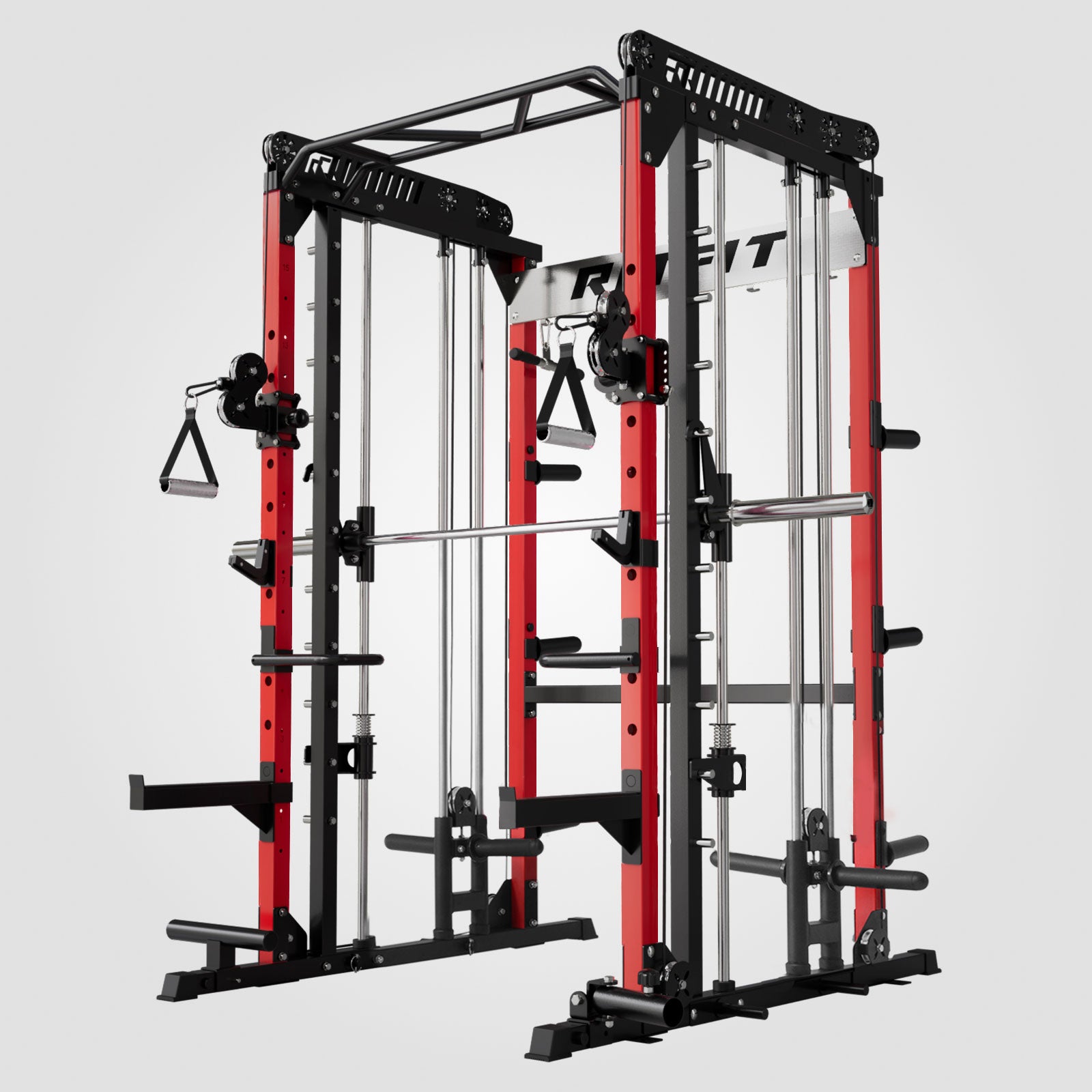
- Smith machine: A stable bar path can support loaded standing calf raises when the setup is controlled.
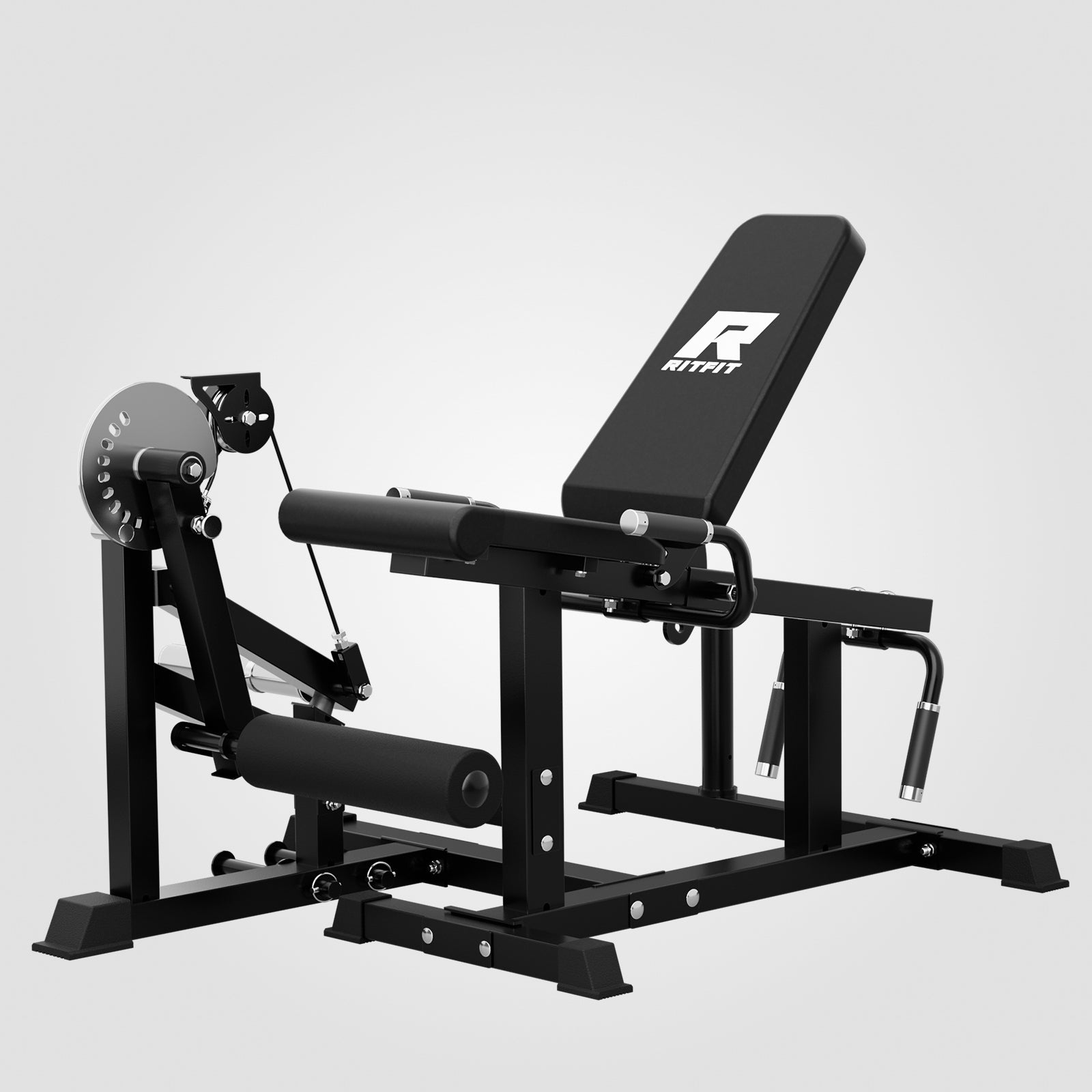
- Leg press machine: A platform based setup can make heavy calf raises easier to load and track.
- Calf raise machine: A dedicated machine is useful when calf training is a major goal.
- Cable machine: Cables can add variety, but they are not required for most calf growth plans.
For a compact calf and leg day option, the RitFit BLP01 Full Leg Workout Package 3 In 1 Leg Press Hack Squat and Calf Raise Set is the most directly relevant product path.
For a heavier leg press and hack squat focused setup, the RitFit GAZELLE PRO 3 In 1 Leg Press and Hack Squat Machine fits users building a fuller lower body machine station.
For users comparing compact options, the RitFit 3 In 1 Leg Press and Hack Squat Machine BLP01 is a relevant product page to review before choosing a machine based calf training setup.
Common Calf Training Mistakes
Most calf training mistakes come from using too much speed, too little range, or no progression plan. Fixing these errors often improves results before adding more exercises.
Bouncing Through Reps
Bouncing reduces muscular control and can add unnecessary stress to the Achilles tendon. Pause briefly at the bottom and top of each rep to keep tension on the calf muscles.
Using Half Reps
Short reps limit the stretch and contraction that make calf raises effective. Lower the heel fully under control, then rise as high as your ankle allows without rolling the foot.
Training Only One Calf Muscle
Only doing standing calf raises can leave soleus work underdeveloped. Combine straight knee and bent knee variations to train the lower leg more completely.
Going Too Heavy Too Soon
Heavy calf raises only help when the range of motion stays complete. Reduce the load if your heels barely move or your ankles shift under pressure.
Skipping Recovery
Calves may tolerate frequent training, but they still need recovery. Reduce frequency if calf soreness changes your walking, squat mechanics, or ankle comfort.
Stretching, Mobility, and Recovery
Calf mobility should support better training, not replace strength work. Use gentle warmups before training and longer relaxed stretches after training if they feel comfortable.
Pre Workout Mobility
Pre workout mobility should prepare the ankle for controlled movement. Keep it light and dynamic so your calves are ready to produce force.
- Ankle circles: Use slow circles to check ankle comfort before loading.
- Calf walks: Walk on the balls of the feet for a short warmup.
- Bodyweight calf raises: Use 1 to 2 easy sets before heavy work.
Post Workout Stretching
Post workout stretching can help restore comfort after hard calf training. Keep the stretch controlled and stop if you feel sharp pain.
- Wall calf stretch: Hold a gentle straight knee calf stretch for 30 to 45 seconds.
- Bent knee wall stretch: Bend the back knee slightly to shift attention toward the soleus.
- Step drop stretch: Use a step for a deeper stretch only when the ankle feels stable.
Nutrition for Calf Development
Calves grow best when training is supported by enough total food, protein, and recovery. A systematic review and meta analysis found that protein supplementation can improve resistance training induced gains in muscle mass and strength in healthy adults.[4]
Protein Intake
Distribute protein across the day instead of relying on one large meal. A protein rich meal after training is useful when it fits your schedule, but total daily intake matters most.
Calorie Support
Muscle growth is harder when calories are consistently too low. If calf size is the goal, pair progressive calf training with enough energy to support recovery.
Hydration and Sleep
Hydration and sleep support training quality, recovery, and repeated performance. Poor sleep can make heavy lower body sessions feel harder and reduce consistency.
Tracking Progress
Track calf progress with both performance and body measurements. Calves can change slowly, so monthly tracking is more useful than checking every workout.
- Calf circumference: Measure at the largest point once per month.
- Training load: Record weight, reps, sets, and exercise variation.
- Range quality: Note whether reps stayed full or became shortened.
- Photos: Take consistent photos in the same lighting and stance.
- Comfort markers: Track Achilles, ankle, and foot comfort after hard sessions.
FAQs
What are the best calf exercises at home?
The best calf exercises at home are standing calf raises, seated calf raises, single leg calf raises, and leg press calf raises. This mix trains the visible upper calf, the deeper soleus, balance, and progressive loading without requiring a full commercial gym setup.
How often should I train calves for growth?
Train calves two to four times per week depending on recovery, training age, and total leg day volume. Beginners should start with two focused sessions, then add frequency only when soreness, ankle comfort, and performance remain stable across several weeks.
Can calf raises with weights help calves grow?
Yes. Calf raises with weights help calves grow because they create progressive overload beyond bodyweight training. Use dumbbells, plates, a Smith machine, or a leg press platform, but keep every rep controlled through a full stretch and complete top contraction.
Is standing or seated calf raise better?
Standing calf raises are usually better for emphasizing the gastrocnemius, while seated calf raises are better for emphasizing the soleus. A complete calf workout should include both, because the knee position changes how the lower leg muscles contribute during plantar flexion.
How many reps should I do for calf growth?
Most lifters should use 10 to 20 controlled reps for calf growth, with some heavier sets and higher rep finishers added over time. The best rep range is the one you can progress while keeping a deep stretch, full rise, and stable ankle position.
Should I train calves before or after leg day?
Train calves after leg day if they are a secondary goal, but train them earlier if calf growth is a priority. Moving calves earlier improves focus and loading quality, especially for lifters who usually rush calf raises after squats, leg press, or hack squats.
What equipment do I need for a home gym calf workout?
You need a step, stable support, and some form of resistance for a home gym calf workout. Dumbbells work well for beginners, while a Smith machine, leg press machine, or calf raise setup helps advanced users add safer and more measurable loading.
Can a leg press machine be used for calf raises?
Yes. A leg press machine can be used for calf raises when the balls of the feet stay secure on the platform. Keep the knees soft, avoid locking out aggressively, and use controlled ankle movement instead of letting the weight bounce through the joints.
Conclusion
The best calf exercises at home are simple, but they must be trained with intention. Combine standing, seated, single leg, and leg press calf raises, use full range of motion, add load gradually, and track progress like any other strength goal.
For stronger calves and better leg day performance, build your home gym calf workout around progressive overload, safe ankle control, and equipment that matches your current level.
Disclaimer
This article is for general fitness education and is not medical advice. If you have Achilles pain, calf strain, ankle injury, plantar fasciitis, circulation issues, or a medical condition that affects lower body training, consult a qualified healthcare or fitness professional before adding heavy calf raises or high frequency calf training.
References
- Kinoshita M, Maeo S, Kobayashi Y, Eihara Y, Ono M, Sato M, Sugiyama T, Kanehisa H, Isaka T. Triceps surae muscle hypertrophy is greater after standing versus seated calf raise training. Front Physiol. 2023;14:1272106. doi:10.3389/fphys.2023.1272106
- Gentil P, Souza D, Santana M, Alves RR, Campos MH, Pinto RS, Bottaro M. Multi and single joint resistance exercises promote similar plantar flexor activation in resistance trained men. Int J Environ Res Public Health. 2020;17(24):9487. doi:10.3390/ijerph17249487
- Krzysztofik M, Wilk M, Wojdala G, Golas A. Maximizing muscle hypertrophy, a systematic review of advanced resistance training techniques and methods. Int J Environ Res Public Health. 2019;16(24):4897. doi:10.3390/ijerph16244897
- Morton RW, Murphy KT, McKellar SR, Schoenfeld BJ, Henselmans M, Helms E, Aragon AA, et al. A systematic review, meta analysis and meta regression of the effect of protein supplementation on resistance training induced gains in muscle mass and strength in healthy adults. Br J Sports Med. 2018;52(6):376-384. doi:10.1136/bjsports-2017-097608