The best core workouts build trunk stability, spinal control, and stronger movement patterns, not just visible abs. A complete routine trains bracing, anti extension, anti rotation, lateral stability, and controlled flexion at the right level.
This guide shows how to choose beginner, intermediate, and advanced core exercises so you can train safely, progress with control, and match your routine to your goal.
Table of Contents
- Understanding Your Core
- How to Choose Your Core Workout Level
- Getting Started: Core Workout Basics
- Beginner Core Workouts
- Intermediate Core Workouts
- Advanced Core Workouts
- Core Exercise Progressions and Regressions
- Core Workouts for Specific Goals
- Weekly Core Workout Schedules
- Common Mistakes in Core Workouts
- Safety, Modifications, and When to Seek Help
Key Takeaways
- A complete core workout trains the rectus abdominis, obliques, transverse abdominis, lower back, glutes, hips, and pelvic stabilizers.
- Beginners should master bracing, breathing, and neutral spine control before adding harder ab exercises.
- Intermediate lifters should add anti rotation, anti extension, loaded stability, and dynamic trunk control.
- Advanced core workouts should be earned through strict form, pain free control, and stable movement under fatigue.
- The best core routine supports your goal, recovery, training level, and available equipment instead of chasing the hardest exercise online.
Understanding Your Core
What Muscles Make Up the Core?
Your core includes the rectus abdominis, internal and external obliques, transverse abdominis, erector spinae, diaphragm, pelvic stabilizers, glutes, and hip muscles. These muscles help resist rotation, control spinal movement, stabilize the pelvis, and transfer force between the upper and lower body.
Benefits of Consistent Core Workouts
Consistent core workouts improve trunk stiffness, balance, posture control, and movement efficiency. Research on core stability training highlights muscle activation, neuromuscular control, static stabilization, and dynamic stability as key parts of a complete program.[1]
How Often Should You Train Your Core?
Most people can train core two to four times per week when volume and intensity are matched to recovery. Short sessions work well when they include static holds, controlled repetitions, anti rotation work, and enough rest between harder workouts.
How to Choose Your Core Workout Level
Choose your core workout level based on control, pain free movement, and your ability to maintain position under fatigue. The right level should challenge your trunk without forcing your lower back, neck, or hips to compensate.
- Beginner: Choose this level if you are learning to brace, cannot hold a clean plank for 30 seconds, or feel your lower back taking over during basic movements.
- Intermediate: Choose this level if you can hold a strict plank for 45 to 60 seconds and complete dead bugs, bird dogs, and side planks without pain.
- Advanced: Choose this level if you can maintain trunk position during loaded carries, rollouts, hanging movements, and anti rotation exercises without swinging.
Getting Started: Core Workout Basics
Warm Up for Core Workouts
A good warm up prepares your trunk, hips, and spine for controlled movement. Start with cat cow, bird dog, pelvic tilts, bodyweight glute bridges, and light cardio before harder core work.
Technique and Form Tips
Good core training starts with a neutral spine, steady breathing, and deliberate tension through the midsection. Brace before each rep, exhale during the hard phase, and stop the movement when your lower back arches or your hips rotate.
Equipment Options
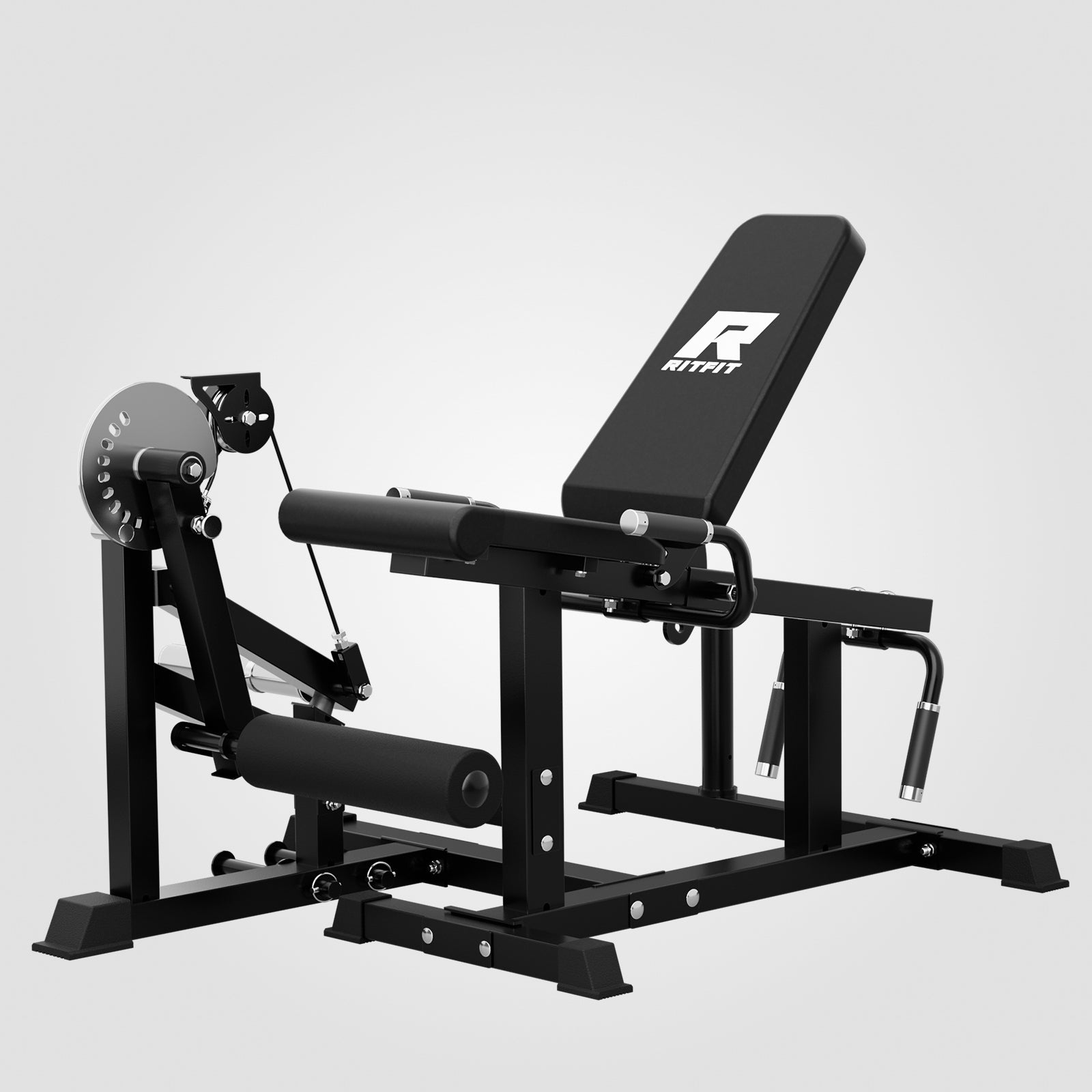
You can build an effective core workout with bodyweight alone, but equipment can expand progression options. Useful tools include a mat, bands, a stability ball, a pull up bar, dumbbells, adjustable weight benches, and cable stations.
What a Balanced Core Workout Should Include
A complete routine should include one anti extension exercise, one lateral stability exercise, one anti rotation drill, and one controlled movement pattern. This gives better coverage than only doing crunches or sit ups.
Beginner Core Workouts
Who Is a Beginner?
You are a beginner if you are new to exercise, returning after a long break, or still building basic trunk control. Your goal is to learn bracing, breathing, pelvic control, and stable movement without placing unnecessary stress on the lower back.
Best Beginner Core Exercises
Beginner core exercises should teach control before intensity. Start with stable positions, short ranges, and slow reps before adding load or longer holds.
- Dead Bug: Lie on your back, brace your abs, and extend the opposite arm and leg without letting your lower back lift. This trains anti extension control and cross body coordination.
- Bird Dog: Start on all fours and reach the opposite arm and leg long while keeping your hips square. This builds spinal stability and teaches you to resist rotation.
- Glute Bridge: Drive through your feet and lift your hips while keeping your ribs down. This connects the glutes and trunk for better pelvic control.
- Modified Side Plank: Support yourself on your forearm and knees while keeping your torso straight. This builds lateral core strength and oblique endurance.
- Front Plank: Hold a straight line from head to knees or feet while keeping tension through the abs and glutes. This improves bracing and anti extension strength.
- Pelvic Tilt: Flatten your lower back gently into the floor by controlling the pelvis. This helps beginners learn spinal position and abdominal engagement.
- Heel Taps: Start with hips and knees bent, then lower one heel at a time while keeping the trunk stable. This trains lower ab control with a short lever.
- Supine March: Lie on your back and alternate lifting one foot at a time. This builds stability without excessive spinal motion.
Sample Beginner Core Workout Routines
Beginner routines should feel controlled, repeatable, and pain free. Rest as needed so each rep looks the same from start to finish.
Routine A, Stability Focus
- Dead Bug: 2 to 3 sets of 8 to 10 reps per side
- Bird Dog: 2 to 3 sets of 6 to 8 reps per side
- Glute Bridge: 2 to 3 sets of 10 to 12 reps
- Modified Side Plank: 2 sets of 20 to 30 seconds per side
- Front Plank: 2 sets of 20 to 30 seconds
Routine B, Endurance and Control
- Pelvic Tilt: 2 sets of 10 reps
- Heel Taps: 2 to 3 sets of 8 to 10 reps per side
- Supine March: 2 to 3 sets of 10 reps per side
- Bird Dog: 2 sets of 6 reps per side with pauses
- Modified Side Plank: 2 sets of 20 seconds per side
Progression Tips for Beginners
Move up when you can keep your ribs down, pelvis stable, and breathing controlled through the full set. Progress by adding time, adding pauses, slowing the tempo, or choosing a slightly harder variation.
Intermediate Core Workouts
Who Is Intermediate?
You are likely intermediate if you can hold a strict plank for about 45 to 60 seconds and control beginner movements without pain. At this level, the goal shifts from basic activation to stronger anti rotation, anti extension, and dynamic trunk control.
Best Intermediate Core Exercises
Intermediate core exercises should challenge control from more angles. Add movement, resistance, and longer time under tension only when your spine and pelvis stay organized.
- Plank Shoulder Taps: Tap each shoulder while keeping the hips quiet. This challenges anti rotation without losing the anti extension focus.
- Full Side Plank: Balance on the forearm and feet while keeping the body stacked. This increases lateral core demand and hip stability.
- Russian Twists: Rotate the torso under control instead of swinging. This trains rotational control when done with good posture and moderate range.
- Reverse Crunch: Curl the pelvis toward the ribs instead of just lifting the legs. This improves controlled spinal flexion and lower ab control.
- Banded Dead Bug: Use band tension to increase the demand on trunk stability. This builds stronger anti extension mechanics.
- Slow Mountain Climbers: Drive one knee forward at a time without bouncing. This adds dynamic control and conditioning.
- Superman Hold: Lift the arms and legs slightly while keeping the neck neutral. This trains the backside of the trunk for balanced core development.
- Stability Ball Rollout: Roll forward slowly while resisting lower back extension. This bridges standard planks and harder rollout patterns.
Sample Intermediate Core Workout Routines
Intermediate routines should mix stability, controlled flexion, and anti rotation. Use a cable crossover machine or bands for Pallof style work when you want more resistance control.
Routine A, Strength and Stability
- Plank Shoulder Taps: 3 sets of 16 to 20 taps
- Full Side Plank: 3 sets of 25 to 40 seconds per side
- Reverse Crunch: 3 sets of 10 to 12 reps
- Banded Dead Bug: 3 sets of 8 reps per side
- Stability Ball Rollout: 3 sets of 8 to 10 reps
- Superman Hold: 2 sets of 20 to 30 seconds
Routine B, Conditioning Circuit
- Slow Mountain Climbers: 40 seconds
- Full Side Plank: 30 seconds per side
- Reverse Crunch: 12 reps
- Plank Reach: 10 reps per side
- Stability Ball Rollout: 8 reps
Complete 2 to 3 rounds with short rest between exercises. Prioritize position quality before pace.
Increasing Challenge at the Intermediate Level
Progress by increasing time under tension, range, resistance, or unilateral demand. Research on core muscle activity suggests exercise choice and position can change how strongly different trunk muscles work, so variety matters when form stays clean.[2]
Advanced Core Workouts
Who Is Advanced?
You are advanced if you can control intermediate movements under fatigue, brace under load, and maintain trunk mechanics during complex patterns. Advanced core work is less about burn and more about producing or resisting force without losing position.
Best Advanced Core Exercises
Advanced core exercises should be added only after you can control the simpler version. Hanging, loaded, rotational, and rollout exercises demand stronger bracing and better recovery.
- Hanging Leg Raises: Raise the legs with control instead of swinging from the hips. This demands lower ab control, grip, and pelvic positioning.
- V Ups: Fold the body with coordinated tension through the trunk and hips. This challenges fast but controlled flexion.
- Ab Wheel Rollouts: Roll forward while resisting spinal extension the entire time. This is one of the most demanding anti extension exercises when performed well.
- Pallof Press: Press the handle or band straight out and resist being pulled into rotation. This is an effective anti rotation movement for athletes and lifters.
- Landmine Rotations: Move the bar through a controlled arc while keeping the trunk organized. This develops rotational strength and force control.
- Turkish Get Up: Move from the floor to standing with a load overhead while maintaining alignment. This trains the core as part of a full body stability pattern.
- L Sit: Hold the legs extended while supporting your body on the hands. This builds intense anterior core tension and hip flexor strength.
- Single Arm Suitcase Carry: Walk with one heavy load while keeping the torso upright. This trains anti lateral flexion and oblique strength.
Sample Advanced Core Workout Routines
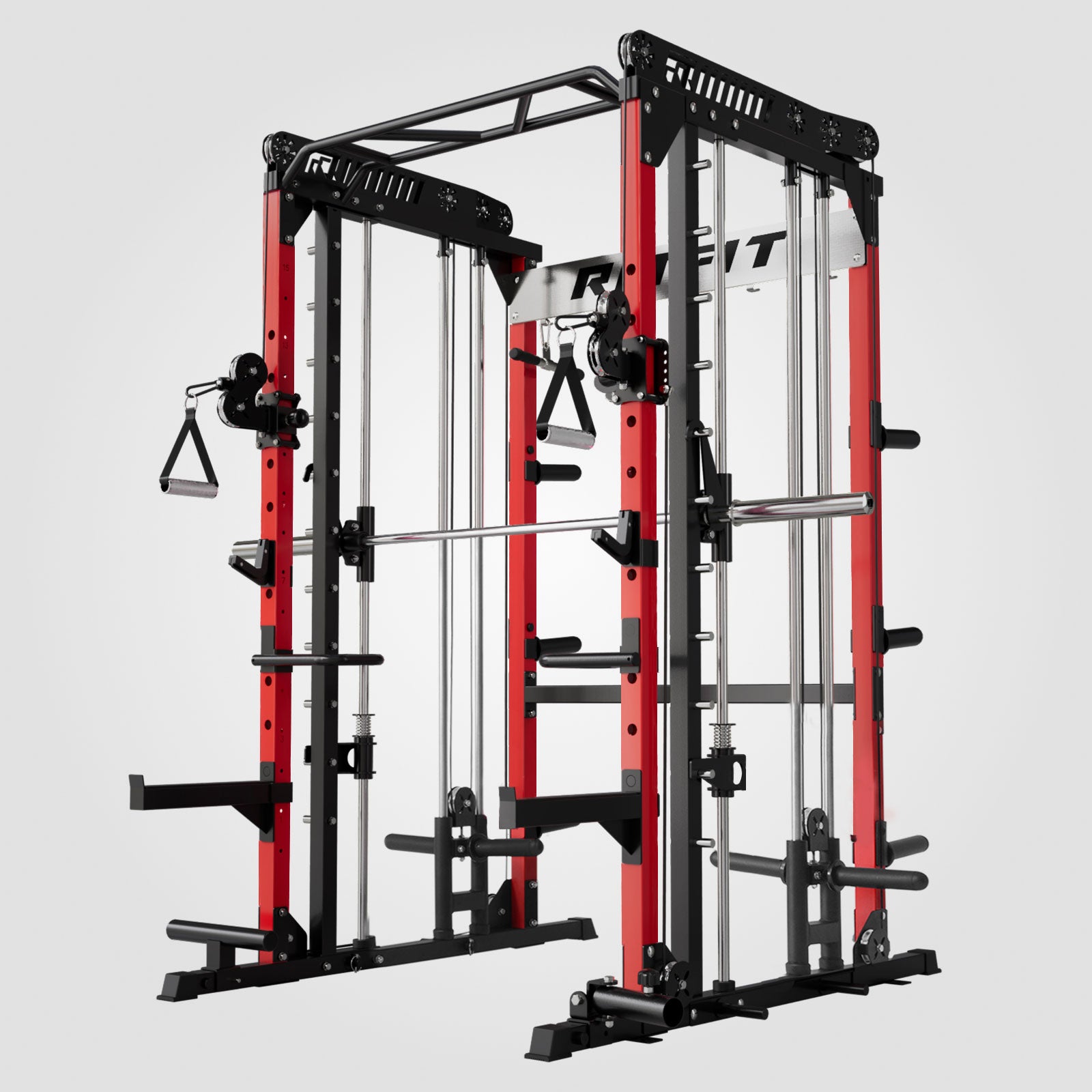
Advanced routines should rotate training stress across anti rotation, loaded carries, hanging work, and dynamic power. A Smith machine home gym, cable station, or rack setup can support stronger loaded core variations.
Routine A, Strength and Anti Rotation Focus
- Pallof Press: 3 to 4 sets of 10 reps per side
- Hanging Leg Raise: 3 sets of 8 to 10 reps
- Single Arm Suitcase Carry: 3 rounds of 20 to 40 meters per side
- Ab Wheel Rollout: 3 sets of 6 to 10 reps
- Side Plank with Reach: 2 sets of 20 to 30 seconds per side
Routine B, Athletic Power Workout
- Landmine Rotation: 3 sets of 8 reps per side
- Medicine Ball Slam: 3 sets of 8 to 12 reps
- Turkish Get Up: 3 sets of 3 reps per side
- V Up: 3 sets of 10 reps
- Loaded Carry Finisher: 4 to 6 short rounds
Managing Risk and Recovery
Advanced work should feel demanding, but it should not turn into uncontrolled lumbar extension, swinging, or compensation through the neck and hip flexors. If form breaks down, reduce the load, shorten the set, or return to a simpler variation.
Core Exercise Progressions and Regressions
The best core workout progression is based on control before difficulty. If you lose position, shorten the lever, reduce the range, or return to a simpler variation.
- Dead Bug: Regress to heel taps if your lower back arches. Progress to banded dead bugs when you can keep your ribs down.
- Front Plank: Regress to a knee plank if your hips drop. Progress to shoulder taps when your pelvis stays quiet.
- Side Plank: Regress to a bent knee side plank if your shoulder or hip position breaks. Progress to full side plank or side plank reach when alignment stays stable.
- Rollout: Regress to a stability ball rollout if the ab wheel pulls your lower back into extension. Progress only when you can return without sagging.
- Hanging Leg Raise: Regress to hanging knee raises if you swing. Progress to straight leg raises only when you can control the pelvis.
- Loaded Carry: Regress to a lighter dumbbell if you lean or rotate. Progress by increasing distance, load, or single side demand with hex rubber dumbbells.
Core Workouts for Specific Goals
For Lower Back Support and Posture
Choose exercises that improve trunk stiffness and pelvic control without aggravating symptoms. Dead bugs, bird dogs, side planks, front planks, glute bridges, and suitcase carries are usually better starting points than high volume crunches.
For Athletes
Athletes need a core that can resist force, transfer force, and create force at the right time. Meta analysis evidence suggests core training can improve performance variables such as balance, throwing or hitting actions, and jump performance when programmed well.[3]
For Visible Abs
Visible abs come from both muscle development and overall body composition. Core training builds the muscles, but nutrition, total training volume, and body fat levels shape how visible that definition becomes.
For Home Gym Training
A home core setup should make training consistent, safe, and easy to repeat. Consider interlocking gym flooring mats, dumbbells, bands, and home gym accessories before adding more advanced equipment.
Weekly Core Workout Schedules
Beginner Weekly Plan
Train core two to three times per week for 10 to 15 minutes per session. Add it after a walk, a full body session, or a light strength workout so the habit feels sustainable.
Intermediate Weekly Plan
Train core three times per week with a mix of stability, controlled flexion, and anti rotation work. Short finishers after lifting days work well because the sessions stay focused and practical.
Advanced Weekly Plan
Train core three to four times per week with different daily emphases. One day can focus on heavy bracing and anti rotation, one on dynamic movement and power, and one on loaded carries or endurance.
Recovery Rule
Core workouts should be trained with the same recovery mindset as other strength work. Hard rollouts, loaded carries, hanging movements, and heavy anti rotation work can fatigue the trunk and affect big lifts.
Common Mistakes in Core Workouts
What to Avoid
Most core workout mistakes happen when people chase difficulty before control. Fix the pattern first, then add load, speed, range, or time.
- Only training the front abs: A better core plan includes the obliques, spinal stabilizers, glutes, and hips.
- Using momentum: Fast reps reduce useful tension and shift stress away from the target muscles.
- Doing hard exercises too early: Advanced movements without control usually train compensation more than strength.
- Arching the lower back: This is common during leg raises, planks, and rollouts when bracing is lost.
- Training core hard every day: The trunk still needs recovery after loaded carries, heavy lifting, or intense anti extension work.
- Ignoring pain signals: Muscle fatigue is normal, but sharp back, neck, hip, or abdominal pain is a sign to stop and reassess.
Safety, Modifications, and When to Seek Help
How to Modify Safely
Use easier variations when your form breaks because smart regression is part of good programming. Bent knee planks, shorter lever positions, slower reps, and reduced range of motion can help you train safely while still progressing.
Muscle Fatigue vs Pain
Core fatigue should feel like controlled effort through the midsection, not sharp pain in the spine, hips, neck, or abdomen. Stop the exercise if symptoms increase, radiate, or change your movement pattern.
When to Seek Help
Get qualified guidance if you have chronic back pain, a recent abdominal or spinal injury, pelvic floor concerns, or symptoms that worsen during exercise. A certified coach or rehab professional can help you choose movements that fit your body.
Bracing and Breathing
Abdominal bracing should create firm trunk tension without forcing you to hold your breath through every rep. Research comparing abdominal bracing positions shows trunk muscle activity changes across exercises, so bracing should match the task and remain controlled.[4]
FAQs
How often should I do core workouts each week?
You should do core workouts two to four times per week. Beginners often improve with short sessions after full body training, while advanced lifters may need more planned recovery after loaded carries, hanging raises, rollouts, and heavy anti rotation work.
What are the best core workouts for beginners at home?
The best beginner core workouts at home include dead bugs, bird dogs, glute bridges, heel taps, front planks, and modified side planks. These exercises teach bracing, pelvic control, breathing, and spinal stability before you add harder ab movements.
Can core workouts help with lower back support?
Yes. Core workouts can support the lower back when they improve trunk control, hip stability, and bracing mechanics. Start with gentle stability exercises like dead bugs, bird dogs, side planks, and glute bridges, especially if high volume crunches bother your back.
Is it normal for my lower back to hurt during core workouts?
No. Sharp or increasing lower back pain is not a normal goal of core training. It often means your lower back is arching, your ribs are flaring, or the exercise is too advanced, so regress the movement and rebuild control.
When should I progress to advanced core workouts?
You should progress to advanced core workouts when you can hold clean planks, control side planks, complete dead bugs without arching, and maintain position under fatigue. Add hanging raises, rollouts, and loaded carries only after simpler patterns stay pain free.
Are crunches enough for a complete core workout?
No. Crunches train spinal flexion, but a complete core workout also needs anti extension, anti rotation, lateral stability, hip control, and lower back endurance. Use crunches as one option, not the entire plan, especially if posture and performance matter.
Which core workouts are best for athletes?
The best core workouts for athletes include Pallof presses, loaded carries, landmine rotations, side planks, hanging leg raises, and controlled rollout variations. These drills train force transfer, bracing, rotation control, balance, and trunk stiffness across sport specific movement patterns.
Do I need equipment for effective core workouts?
No. You can build a strong core with bodyweight exercises like planks, dead bugs, bird dogs, and side planks. Equipment such as dumbbells, bands, cable machines, benches, and mats adds progression options once your basic control is consistent.
Conclusion
The best core workouts match your current level and help you progress with control. Start with stability, build toward anti rotation and anti extension strength, and earn advanced movements only when your form, recovery, and trunk control are ready.
For a stronger home training setup, pair smart programming with stable flooring, simple loading tools, and practical strength equipment from the RitFit strength machines collection.
Disclaimer: This article is for general educational purposes only and is not medical advice. If you have back, neck, hip, abdominal, or pelvic pain, recent injury or surgery, numbness, tingling, weakness, dizziness, or symptoms that worsen during exercise, consult a qualified clinician before starting. Stop any exercise that causes sharp pain.
References
- Huxel Bliven KC, Anderson BE. Core stability training for injury prevention. Sports Health. 2013;5(6):514-522. doi:10.1177/1941738113481200
- Oliva-Lozano JM, Muyor JM. Core muscle activity during physical fitness exercises: a systematic review. Int J Environ Res Public Health. 2020;17(12):4306. doi:10.3390/ijerph17124306
- Rodríguez-Perea Á, Reyes-Ferrada W, Jerez-Mayorga D, Chirosa Ríos L, Van Den Tillar R, Chirosa Ríos I, Martínez-García D. Core training and performance: a systematic review with meta-analysis. Biol Sport. 2023;40(4):975-992. doi:10.5114/biolsport.2023.123319
- Maeo S, Takahashi T, Takai Y, Kanehisa H. Trunk muscle activities during abdominal bracing: comparison among muscles and exercises. J Sports Sci Med. 2013;12(3):467-474.