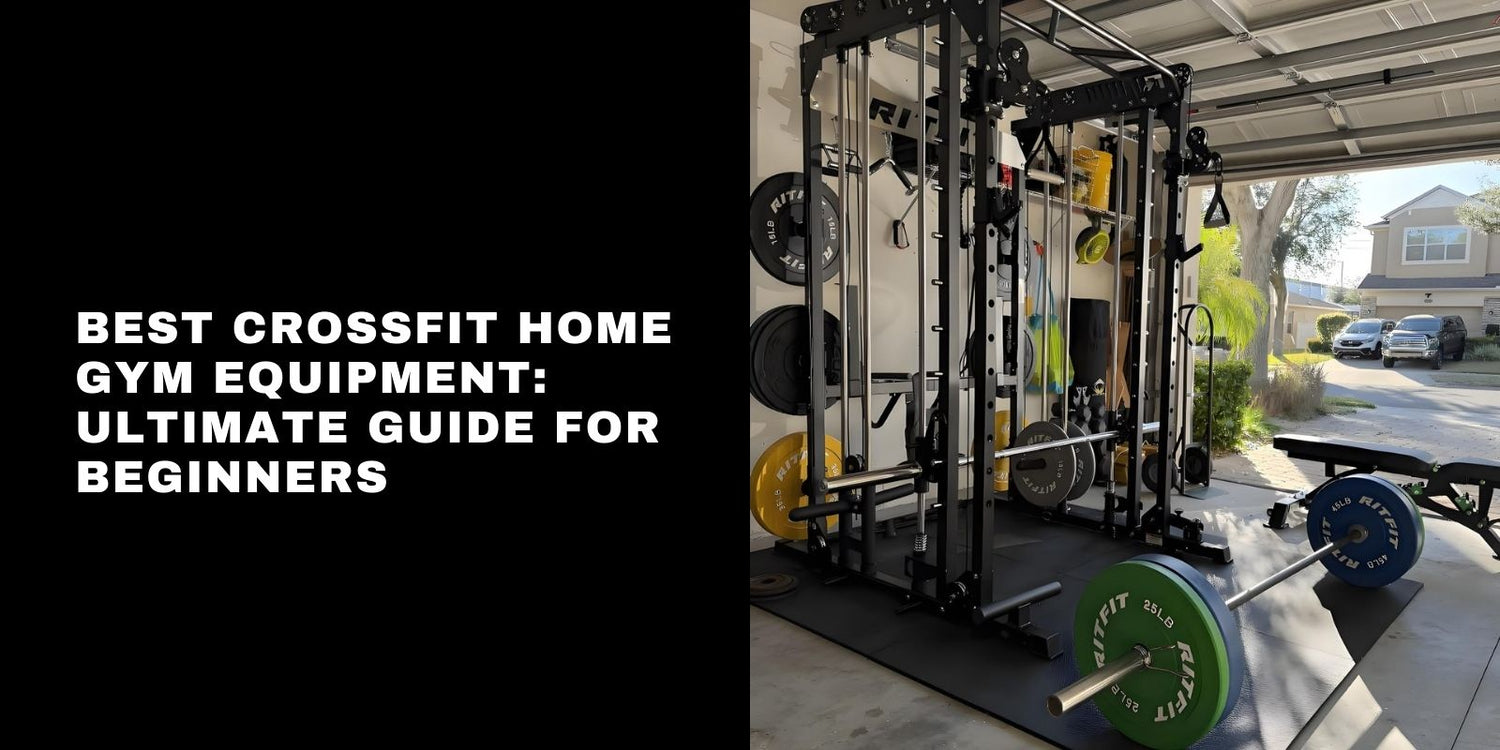
The best CrossFit home gym starts with a barbell, bumper plates, safe flooring, a stable rack or pull up station, and compact conditioning tools. Start with equipment that supports strength, conditioning, gymnastics basics, and safe solo training before adding specialty machines.
This guide explains what to buy first, what can wait, how to plan your space, and which RitFit equipment fits different home gym goals.
Table of Contents
- Planning Your CrossFit Home Gym
- What CrossFit Equipment Should You Buy First
- Must Have CrossFit Home Gym Equipment
- Essential RitFit Equipment for a CrossFit Home Gym
- Highly Recommended Next Tier CrossFit Equipment
- Nice to Have Add Ons
- How to Prioritize Your Purchases
- Sample CrossFit Home Gym Setups
- Safety, Maintenance, and Setup Tips
- Budget Saving Strategies
Key Takeaways
- Start with the foundation: A barbell, bumper plates, collars, rubber flooring, and a stable rack cover the most important strength and conditioning patterns.
- Buy for your space first: Ceiling height, floor protection, rack footprint, and storage flow should guide your equipment list before brand or budget.
- Choose safety before variety: Solo lifters should prioritize safety arms, stable uprights, proper anchoring, and clear lifting zones.
- Add conditioning tools gradually: Dumbbells, kettlebells, jump ropes, and plyo boxes add more workout variety without requiring a large footprint.
- Save specialty gear for later: GHDs, sleds, rope climbs, and multiple cardio machines are useful, but they are not required for a strong beginner setup.
Planning Your CrossFit Home Gym
A CrossFit home gym should be planned around space, safety, training goals, and purchase order. This prevents you from buying equipment that looks useful but does not fit your ceiling, floor, workout style, or storage needs.
Assess Your Space
Measure ceiling height, usable floor area, wall clearance, and barbell loading space before choosing equipment. Most users need room for overhead pressing, pull ups, box jumps, jump rope work, and a safe plate drop zone.
Set a Realistic Budget
Build your budget in phases instead of buying every item at once. A strong beginner setup should prioritize durable core equipment before specialty machines or duplicate cardio tools.
Define Your Training Goals
Your equipment list should match whether you train for general fitness, strength, conditioning, or competitive CrossFit style workouts. High intensity functional training commonly uses functional, multi joint movements that can be scaled to different fitness levels.[1]
- For general fitness: Start with a barbell, plates, dumbbells, jump rope, and a simple rack or stand.
- For strength focus: Prioritize a rack, bench, barbell, bumper plates, and safety arms.
- For conditioning focus: Add dumbbells, kettlebells, a plyo box, a jump rope, and one cardio machine when budget allows.
- For compact spaces: Choose foldable, vertical, or multi use equipment that leaves the floor clear after training.
What CrossFit Equipment Should You Buy First?
Buy the equipment that supports the widest range of safe workouts first. A beginner home setup should cover squats, hinges, presses, pulls, carries, jumps, and simple conditioning before adding advanced specialty tools.
- First priority: Olympic barbell, bumper plates, collars, and flooring. These support deadlifts, cleans, front squats, presses, and barbell cycling.
- Second priority: Rack or pull up station, safety arms, and an adjustable bench. These make solo squats, bench presses, strict pull ups, rows, and scaled gymnastics more practical.
- Third priority: Dumbbells, kettlebells, jump rope, and plyo box. These tools add metcon variety, unilateral work, carries, swings, step ups, and double under practice.
- Fourth priority: Rower, air bike, wall ball, and rings. These expand conditioning and gymnastics options once the strength base is already built.
- Later priority: GHD, sled, climbing rope, sandbags, and specialty attachments. These are useful for advanced programming but are not essential for most first home gyms.
Must Have CrossFit Home Gym Equipment
Must have equipment should be durable, space efficient, and useful across many workouts. The goal is not to copy a full commercial box, but to build a home setup that supports repeatable training.
Olympic Barbell
An Olympic barbell is the main tool for squats, deadlifts, presses, cleans, and rows. Choose a 2 inch sleeve bar that fits Olympic plates and matches the lifting style you plan to use most often.
For a simple starting point, explore the RitFit 7FT Olympic Barbell Bar or browse RitFit barbells and weight plates for bar and plate combinations.
Bumper Plates
Bumper plates are important because many functional fitness workouts include lifts that may be lowered quickly or dropped under control. Thick rubber plates help protect the bar, floor, and training area when used with proper flooring and safe technique.
The RitFit High Grade Color Bumper Plates are a practical choice for users building a barbell based garage gym.
Power Rack or Squat Rack
A rack gives you safer setup options for squats, bench presses, pull ups, and barbell storage. If you train alone, prioritize stability, J cups, safety arms, and enough walkout space.
Small space users can consider the RitFit Multi Functional Folding Squat Rack PMW02, while strength focused users can compare full rack options like the RitFit P3 Power Cage with Smooth Cable System.
Smith Machine or All In One Trainer
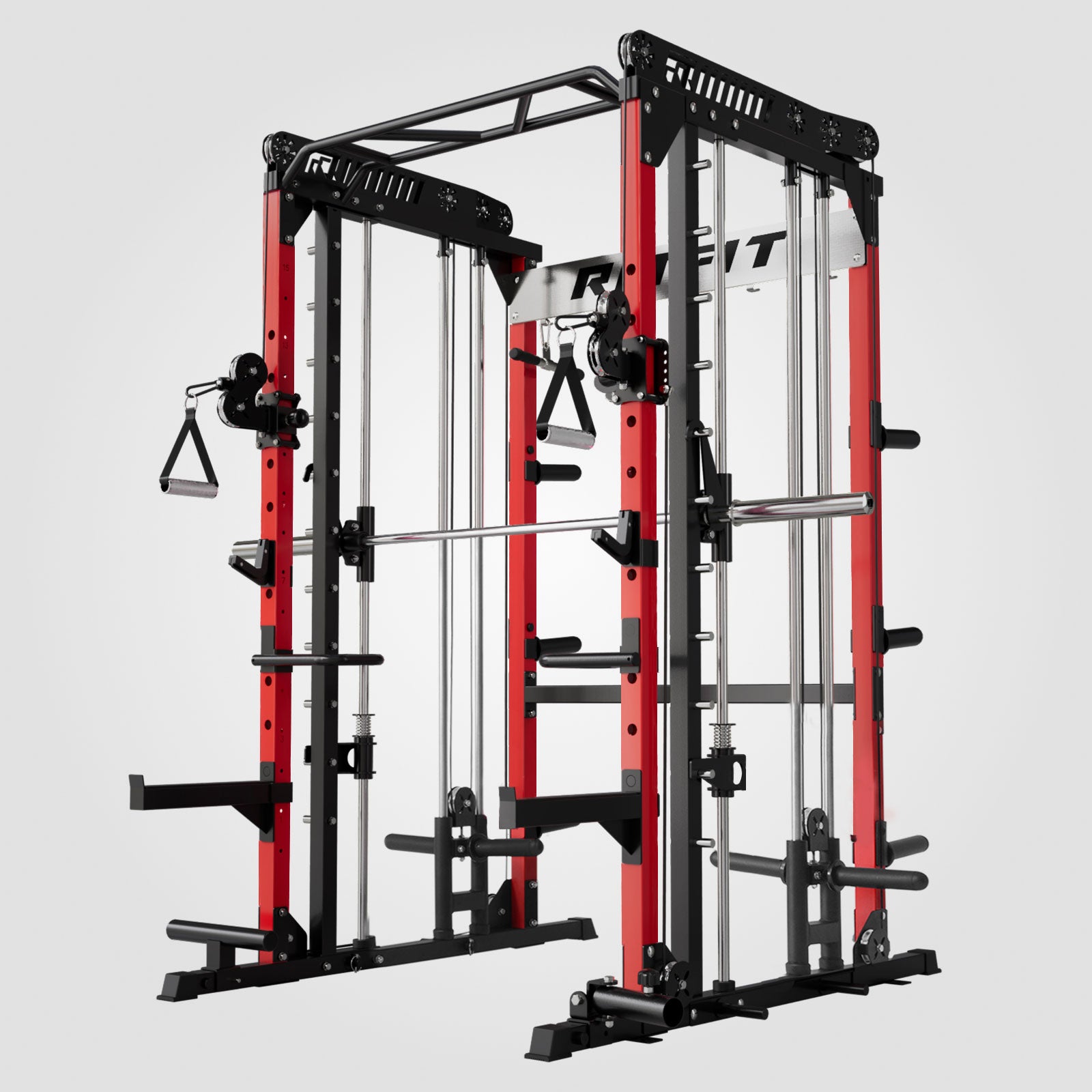
A Smith machine is not required for every CrossFit style home gym, but it can be useful for solo strength training, guided bar work, cable exercises, and accessory volume. It is best for users who want more controlled lifting and a more complete strength station in one footprint.
Users who want guided bar work, cable training, and rack style versatility can browse the RitFit Smith machine collection.
Adjustable Bench
An adjustable bench expands pressing, rows, step based scaling, and accessory strength work. Choose a bench that is stable enough for loaded pressing and compact enough for your available floor plan.
The RitFit GATOR Adjustable Weight Bench fits users who want a more versatile bench for incline pressing, flat pressing, and dumbbell rows.
Pull Up Bar or Rig
A pull up bar supports strict pull ups, chin ups, hanging knee raises, toes to bar progressions, and ring work when properly installed. Avoid dynamic kipping or swinging movements on any rack that is not stable enough for that use.
Dumbbells
Dumbbells are essential for snatches, lunges, thrusters, carries, step ups, and unilateral strength work. Rubber hex dumbbells are especially practical because they resist rolling and work well in fast paced floor based workouts.
For high rep dumbbell workouts, consider RitFit Rubber Hex Dumbbells.
Kettlebells
Kettlebells are compact tools for swings, goblet squats, carries, clean variations, and conditioning circuits. Start with one manageable weight before buying a full set.
Jump Rope
A jump rope is one of the most space efficient conditioning tools for a home gym. A speed rope with an adjustable cable is best for users practicing double unders.
Plyometric Box
A plyo box supports box jumps, step ups, seated strength variations, and conditioning workouts. A soft or foam box can reduce shin impact risk during missed jumps.
For box jumps and step ups, the RitFit 3 in 1 Soft Plyo Box is a useful add on for garage and basement gyms.
Flooring and Mats
Flooring protects your home, equipment, and joints during lifting and conditioning. Thick rubber mats are especially useful for garage gyms because they create a more durable lifting surface.
For home gym floor protection, consider RitFit Rubber High Density Interlocking Gym Flooring Mats.
Essential RitFit Equipment for a CrossFit Home Gym
The right RitFit setup depends on whether you need compact storage, heavy strength work, guided bar training, or more conditioning variety. Use this table to match your training need to the most relevant equipment type.
| Equipment Need | Recommended RitFit Product | Best For | Choose This If | Skip This If |
|---|---|---|---|---|
| Olympic barbell | RitFit 7FT Olympic Barbell Bar | Foundational strength work | You need one core bar for squats, deadlifts, presses, rows, cleans, and general barbell training. | You cannot safely load, lift, or store a full size Olympic bar in your space. |
| Bumper plates | RitFit High Grade Color Bumper Plates | Barbell cycling and Olympic lift practice | You plan to perform cleans, deadlifts, front squats, and controlled drops on proper flooring. | You only plan to train with dumbbells, kettlebells, or machines. |
| Compact rack | RitFit Multi Functional Folding Squat Rack PMW02 | Small garage or basement gyms | You need squats, presses, and pull up options while preserving floor space. | You want the enclosed feel of a full power cage. |
| Power cage | RitFit P3 Power Cage with Smooth Cable System | Strength focused solo training | You want a sturdier rack setup for squats, bench presses, pull ups, and cable accessories. | You need a foldaway rack for a very tight space. |
| Smith machine | RitFit Smith machine collection | All in one strength stations | You want guided bar training, cable work, accessory lifts, and a more complete station. | Your main focus is competition style Olympic lifting. |
| Adjustable bench | RitFit GATOR Adjustable Weight Bench | Pressing and accessory work | You want incline pressing, flat pressing, rows, and accessory movements. | You only do floor based workouts and need no bench support. |
| Dumbbells | RitFit Rubber Hex Dumbbells | High rep functional workouts | You want snatches, lunges, thrusters, carries, and unilateral work. | Your budget only allows one strength tool right now, in which case start with a barbell or one kettlebell. |
| Plyo box | RitFit 3 in 1 Soft Plyo Box | Box jumps and step ups | You want a safer box option for jumps, step ups, and conditioning circuits. | You do not have enough landing space around the box. |
Highly Recommended Next Tier CrossFit Equipment
Next tier equipment adds variety after your core setup is already useful. These items are excellent upgrades, but they should not replace safe flooring, a barbell, plates, and a stable training station.
Gymnastic Rings
Gymnastic rings add scalable pulling, dipping, support holds, rows, and muscle up progressions. Mount them only to a structure that is designed to handle bodyweight loading and movement.
Wall Ball or Medicine Ball
A wall ball adds squatting, throwing, and conditioning work in a simple package. Use a wall and ceiling area that can safely handle repeated contact.
Resistance Bands
Resistance bands are useful for warm ups, mobility, assisted pull ups, and light accessory work. They are affordable and easy to store in small home gyms.
Rowing Machine
A rower is a strong cardio choice because it trains legs, trunk, and upper body while staying relatively low impact. Add it after your strength foundation is complete and you have enough floor length.
Air Bike
An air bike is effective for short intervals, mixed modal conditioning, and high effort finishers. It can be loud and bulky, so it works better in garages than shared apartments.
Nice to Have Add Ons
Nice to have equipment can improve variety but should not be your first purchase. Buy these only after your base setup already supports safe and consistent training.
- GHD: Useful for posterior chain and trunk work, but large and not essential for beginners.
- Sled or prowler: Great for outdoor conditioning if you have a driveway, turf strip, or suitable surface.
- Sandbags: Useful for odd object training, carries, cleans, and functional strength.
- Climbing rope: Valuable for rope climbs, but it requires high ceilings and secure mounting.
- Mobility tools: Foam rollers, massage balls, and bands are practical for warm ups and recovery habits.
How to Prioritize Your Purchases
The smartest purchase order starts with the equipment you will use every week. Resistance training can improve muscle mass, strength, and physical function in healthy adults, so a home gym should first support progressive, repeatable strength work.[2]
- Minimalist setup: Barbell, bumper plates, collars, flooring, one kettlebell, and a jump rope.
- Intermediate setup: Add a rack, safety arms, adjustable bench, dumbbells, and a plyo box.
- Advanced setup: Add rings, rower, air bike, wall ball, cable attachments, and specialized storage.
- All in one setup: Use a Smith machine or power cage with cable options when you want guided lifting, cable work, and rack based strength in one area.
Sample CrossFit Home Gym Setups
Your best setup depends on space, training goal, and budget. Use these examples as buying paths rather than fixed rules.
- Apartment setup: Dumbbells, kettlebell, jump rope, resistance bands, and a foldable bench.
- Budget garage setup: Rubber mats, Olympic barbell, bumper plates, collars, squat rack, and plyo box.
- Strength focused setup: Power cage, adjustable bench, barbell, bumper plates, dumbbells, and cable attachment options.
- All in one setup: Smith machine, cable station, adjustable bench, dumbbells, bumper plates, and compact storage.
- Advanced functional fitness setup: Rack, rings, rower, air bike, wall ball, full dumbbell range, and wall timer.
Safety, Maintenance, and Setup Tips
Safety matters more at home because you may train without a coach, spotter, or commercial gym supervision. CrossFit injury research often highlights shoulders, backs, knees, hands, and wrists as important areas to protect through technique, load management, and equipment setup.[3]
Safety Considerations
Use safety arms for heavy squats and bench presses, keep collars on the bar, and avoid lifting in cluttered walkways. Do not perform dynamic pull ups, toes to bar, or ring movements unless your rack or mount is stable enough for that use.
Equipment Maintenance
Brush chalk and debris from barbell knurling, wipe sweat from benches, and inspect rack bolts regularly. Follow the manufacturer instructions for assembly, maintenance, maximum load, and anchoring.
Organizing Your Space
Use plate storage, dumbbell storage, and wall storage to keep the floor clear. A clean layout reduces trip hazards and makes fast transitions safer during metcon style workouts.
- Check clearance: Test overhead reach, bar path, box jump space, and jump rope space before training.
- Control loading: Increase load gradually because strength and hypertrophy can improve across a range of loads when training is programmed well.[4]
- Protect joints: Warm up shoulders, wrists, hips, knees, and ankles before high rep lifting or jumping.
- Respect fatigue: Reduce speed, load, or volume when technique starts breaking down.
Budget Saving Strategies
You can save money by buying your CrossFit home gym in phases, choosing multi use equipment, and waiting on specialty gear. The best budget choice is equipment you will use often, maintain easily, and store safely.
- Buy the base first: Barbell, plates, flooring, and rack options should come before niche machines.
- Use bundles carefully: Packages can save time and simplify setup when every included item matches your goals.
- Avoid duplicate tools: One cardio machine is usually enough for most home users at the beginning.
- Inspect used gear carefully: Used plates can be practical, but bent barbells, cracked plates, and unstable racks are not worth the risk.
- Plan storage early: A cluttered gym can make even good equipment frustrating to use.
What Equipment Can Wait?
Specialty equipment should wait until your training clearly requires it. HIFT and CrossFit style workouts can be effective, but safety depends on progressive scaling, suitable programming, and appropriate equipment selection.[5]
- GHD: Skip it early unless posterior chain and trunk training are a major part of your program.
- Climbing rope: Skip it if your ceiling height or mounting point is not suitable.
- Full dumbbell rack: Start with one or two useful pairs before buying a full run.
- Multiple cardio machines: Choose either a rower or air bike first, not both.
- Competition plates: Buy them only if you need competition style specifications or frequent Olympic lift practice.
FAQs
What CrossFit home gym equipment should beginners buy first?
Beginners should buy a barbell, bumper plates, collars, rubber flooring, and a stable rack first. These items support squats, hinges, presses, pulls, and safe solo lifting, which makes them more useful than specialty machines during the first stage of building a home gym.
How much space do you need for CrossFit home gym equipment?
You need enough space for a rack, barbell loading, overhead movement, box jumps, and jump rope work. A garage or basement works best when it has clear floor zones, durable flooring, ceiling clearance, and storage that keeps plates and dumbbells out of walking paths.
Can you build a CrossFit home gym in a small apartment?
Yes. A small apartment can support effective CrossFit style training with dumbbells, kettlebells, bands, a jump rope, and a foldable bench. Avoid loud drops, large racks, and high impact movements if your flooring, neighbors, or ceiling height create safety or noise limits.
Is a Smith machine good for CrossFit home gym training?
Yes. A Smith machine can support CrossFit style strength and accessory work, especially for solo lifters who want guided bar movement and cable options. It is not a complete replacement for free weight Olympic lifting, but it can fit all in one home gym goals.
What flooring is best for a CrossFit home gym?
Thick rubber gym flooring is the most practical choice for most CrossFit home gyms. It protects concrete, reduces equipment impact, improves traction, and creates a more durable lifting area, especially when you train with bumper plates, dumbbells, kettlebells, and plyo boxes.
Which RitFit rack is best for a compact CrossFit home gym?
The RitFit Multi Functional Folding Squat Rack PMW02 is best for compact spaces that need rack training without losing floor area. It works well for users who want squats, presses, and pull up options in a garage or basement with limited space.
Should you buy a rower or air bike first for home WODs?
Buy one cardio machine first based on space, noise, and workout preference. A rower is usually smoother and lower impact, while an air bike is excellent for intense intervals, but either option should come after your core strength and flooring setup.
How can you make CrossFit home gym training safer when training alone?
Use safety arms, collars, clear floor space, stable rack setup, and conservative load progression when training alone. Avoid dynamic gymnastics on unstable equipment, stop when technique breaks down, and follow manufacturer instructions for assembly, anchoring, maintenance, and maximum load limits.
Conclusion
A smart CrossFit home gym starts with safe, versatile basics before specialty gear. Build around your space, protect your floor, prioritize stable strength equipment, and add conditioning tools only when they support workouts you will actually repeat.
Disclaimer
This article is for general educational purposes only and is not medical advice. Consult a qualified clinician before starting if you have pain, injury, surgery history, numbness, dizziness, unexplained weakness, or medical limitations. Stop any exercise that causes sharp pain.
References
- Feito Y Heinrich KM Butcher SJ Poston WSC. High Intensity Functional Training HIFT, definition and research implications for improved fitness. Sports. 2018;6(3):76. doi:10.3390/sports6030076
- McLeod JC Currier BS Lowisz CV Phillips SM. The influence of resistance exercise training prescription variables on skeletal muscle mass, strength, and physical function in healthy adults, an umbrella review. J Sport Health Sci. 2024;13(1):47-60. doi:10.1016/j.jshs.2023.06.005
- Feito Y Burrows EK Tabb LP. A 4 year analysis of the incidence of injuries among CrossFit trained participants. Orthop J Sports Med. 2018;6(10):2325967118803100. doi:10.1177/2325967118803100
- Lopez P Radaelli R Taaffe DR Newton RU Galvao DA Trajano GS Teodoro JL Kraemer WJ Hakkinen K Pinto RS. Resistance training load effects on muscle hypertrophy and strength gain, systematic review and network meta analysis. Med Sci Sports Exerc. 2021;53(6):1206-1216. doi:10.1249/MSS.0000000000002585
- Poston WSC Haddock CK Heinrich KM Jahnke SA Jitnarin N Batchelor DB. Is high intensity functional training HIFT CrossFit safe for military fitness training. Mil Med. 2016;181(7):627-637. doi:10.7205/MILMED-D-15-00273