Good exercises for high blood pressure include low to moderate intensity aerobic activity and controlled strength training that lets you breathe normally. Walking, cycling, rowing, supported dumbbell work, cable rows, and resistance bands are practical choices for building a safer home routine.
The goal is not to train as hard as possible. The goal is to move consistently, manage effort, and avoid breath holding or maximal strain.
Key Takeaways
- Best first choice: Brisk walking, cycling, rowing, and swimming are reliable options for blood pressure friendly cardio.
- Strength training can help: Moderate resistance work may support blood pressure management when performed with controlled breathing and stable form.
- Avoid maximal strain: Heavy one rep max attempts, breath holding, and grinding reps are poor choices for most people with hypertension.
- Home equipment matters: Dumbbells, bands, benches, and cable based stations make it easier to adjust resistance and train safely.
- Medical guidance matters: Anyone with uncontrolled blood pressure, symptoms, or heart disease risk should speak with a healthcare professional before starting.
How Exercise Helps Manage Blood Pressure
Exercise helps manage blood pressure by improving blood vessel function, cardiorespiratory fitness, muscular strength, and long term activity habits. Current reviews describe physical activity as an adjunct strategy for hypertension management, not a replacement for prescribed treatment.[1]
A complete routine usually combines aerobic exercise, dynamic resistance training, mobility work, and recovery. This combination supports both heart health and practical strength for daily life.
Best Cardio Exercises for High Blood Pressure
1. Brisk Walking
Brisk walking is one of the safest starting points because it is low impact, easy to scale, and simple to repeat. Use the talk test, you should be able to speak in short sentences while moving.
2. Stationary Cycling
Stationary cycling gives you smooth cardiovascular work with less joint impact than running. Keep resistance moderate and avoid sprinting until your fitness and blood pressure control are well established.
3. Light Rowing
Rowing can train the legs, back, and cardiovascular system together when pace stays controlled. Use a smooth rhythm and avoid pulling so hard that you hold your breath.
4. Swimming or Water Walking
Swimming and water walking are useful for people who want a joint friendly cardio option. Choose steady laps or gentle intervals instead of breath limited sprints.
5. Low Step Ups
Low step ups build leg endurance and raise heart rate without needing heavy loads. Use a low platform, hold support if needed, and stop if dizziness or chest discomfort appears.
Best Strength Exercises for High Blood Pressure
Strength training should feel controlled, repeatable, and stable. Large reviews have found that endurance, dynamic resistance, combined training, and isometric training can all influence blood pressure, but programming and safety context matter.[2]
- Supported dumbbell row: Place one hand on a bench and row with a light to moderate dumbbell. This trains the upper back while reducing the need to brace aggressively.
- Incline push up: Use a bench or rack upright to make push ups easier to control. A higher hand position reduces intensity and helps beginners keep breathing steady.
- Sit to stand squat: Stand up from a bench or box with slow control. This builds leg strength without the spinal loading of a heavy barbell squat.
- Cable row: Use a smooth cable path and moderate resistance. A cable setup is useful because small weight changes can make training easier to manage.
- Band pull apart: Pull a resistance band apart at chest height while keeping shoulders relaxed. This builds posture strength with low joint stress.
- Dead bug: Lie on your back and move opposite arm and leg while breathing normally. This is a better core option than long breath holding planks for many beginners.
How to Strength Train Safely With High Blood Pressure
Strength training is not automatically unsafe for people with hypertension, but the way you train matters. A systematic review of randomized trials found strength training may reduce blood pressure in adults with arterial hypertension, especially when programs are structured and sustained.[3]
- Use moderate resistance: Choose a load you can lift with clean form for 8 to 15 controlled reps. Stop before the last reps become a full body strain.
- Breathe continuously: Exhale during the hardest part of the lift and inhale during the easier part. Do not hold your breath to force a rep.
- Rest longer: Rest 60 to 120 seconds between sets. Longer rest helps breathing and heart rate settle before the next effort.
- Train stable positions first: Supported rows, seated presses, cable movements, and bench based exercises are easier to control than unstable heavy lifts.
- Progress slowly: Add reps before adding weight. Small changes are safer than sudden jumps in load.
Exercises to Avoid or Modify With High Blood Pressure
Some exercises are not ideal when blood pressure is uncontrolled or when the workout encourages breath holding. Treat the following as exercises to modify, delay, or discuss with a healthcare professional.
- Max effort barbell lifts: One rep max squats, deadlifts, and bench presses can create high strain. Use submaximal sets instead.
- Long breath holding planks: Long static holds can make people brace too hard. Use short holds or dead bugs if you cannot breathe normally.
- All out HIIT sprints: Max effort intervals may be too aggressive for beginners with hypertension. Start with steady cardio and gentle intervals.
- Heavy overhead pressing: Overhead strain can be challenging to control. Use incline push ups, light seated presses, or cable chest presses first.
- Intense wall sits: Isometric training can reduce blood pressure in some research settings, but protocols are specific and should not become maximal pain holds at home.[4]
A Simple 3 Day Home Workout Plan
This plan is designed for beginners who want controlled movement, not maximum fatigue. Adjust volume based on your doctor’s guidance, current fitness level, and how your body responds.
Day 1: Cardio and Upper Body
- Warm up: Walk or cycle for 5 to 8 minutes at an easy pace.
- Main cardio: Walk, cycle, or row for 15 to 25 minutes at a conversational pace.
- Strength move 1: Incline push up, 2 sets of 8 to 12 reps.
- Strength move 2: Supported dumbbell row, 2 sets of 10 to 12 reps per side.
- Core: Dead bug, 2 sets of 6 to 10 reps per side.
Day 2: Lower Body and Mobility
- Warm up: Do 5 minutes of easy walking and gentle hip circles.
- Strength move 1: Sit to stand squat, 2 to 3 sets of 8 to 12 reps.
- Strength move 2: Low step up, 2 sets of 8 to 10 reps per side.
- Strength move 3: Glute bridge, 2 sets of 10 to 15 reps.
- Cool down: Walk slowly for 5 minutes and breathe evenly.
Day 3: Full Body Controlled Circuit
- Round structure: Perform each move slowly, then rest as needed before the next exercise.
- Move 1: Cable row or band row, 10 to 12 reps.
- Move 2: Dumbbell Romanian deadlift with light weights, 8 to 10 reps.
- Move 3: Bench supported chest press or incline push up, 8 to 12 reps.
- Move 4: Farmer carry with light dumbbells, 20 to 30 seconds while breathing normally.
For more programming ideas, read this workout routine for people with hypertension and this guide to beginner friendly circuit training workouts.
How to Set Up a Blood Pressure Friendly Home Gym
A blood pressure friendly home gym should help you adjust resistance easily and train in stable positions. The best setup does not need to be extreme, it needs to be controllable.
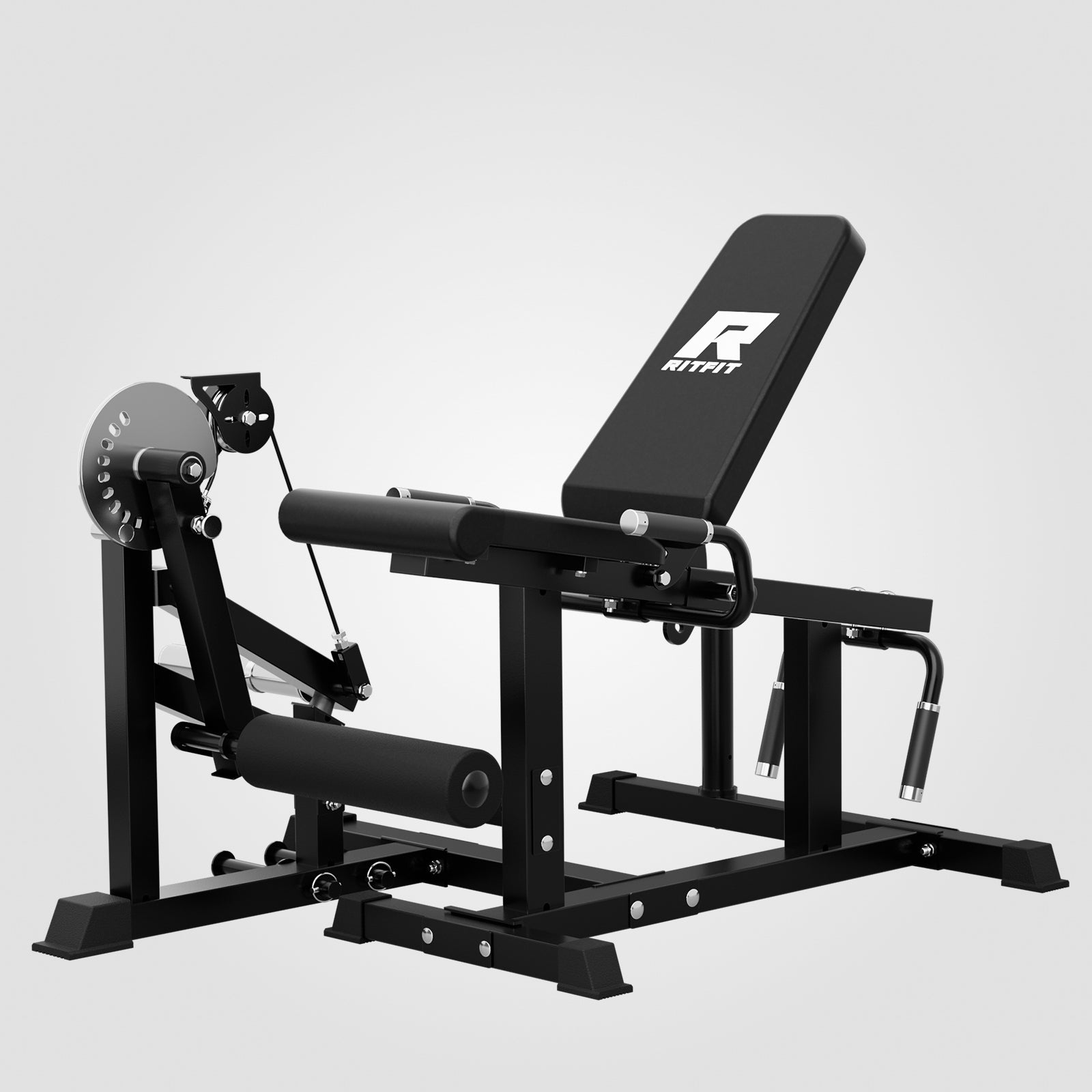
- Adjustable bench: A stable bench supports rows, incline push ups, seated presses, and step ups. See the RitFit GATOR adjustable weight bench if your routine needs supported positions.
- Dumbbells: Dumbbells make it easy to start light and progress in small steps. The RitFit hex rubber dumbbells work well for rows, carries, squats, and presses.
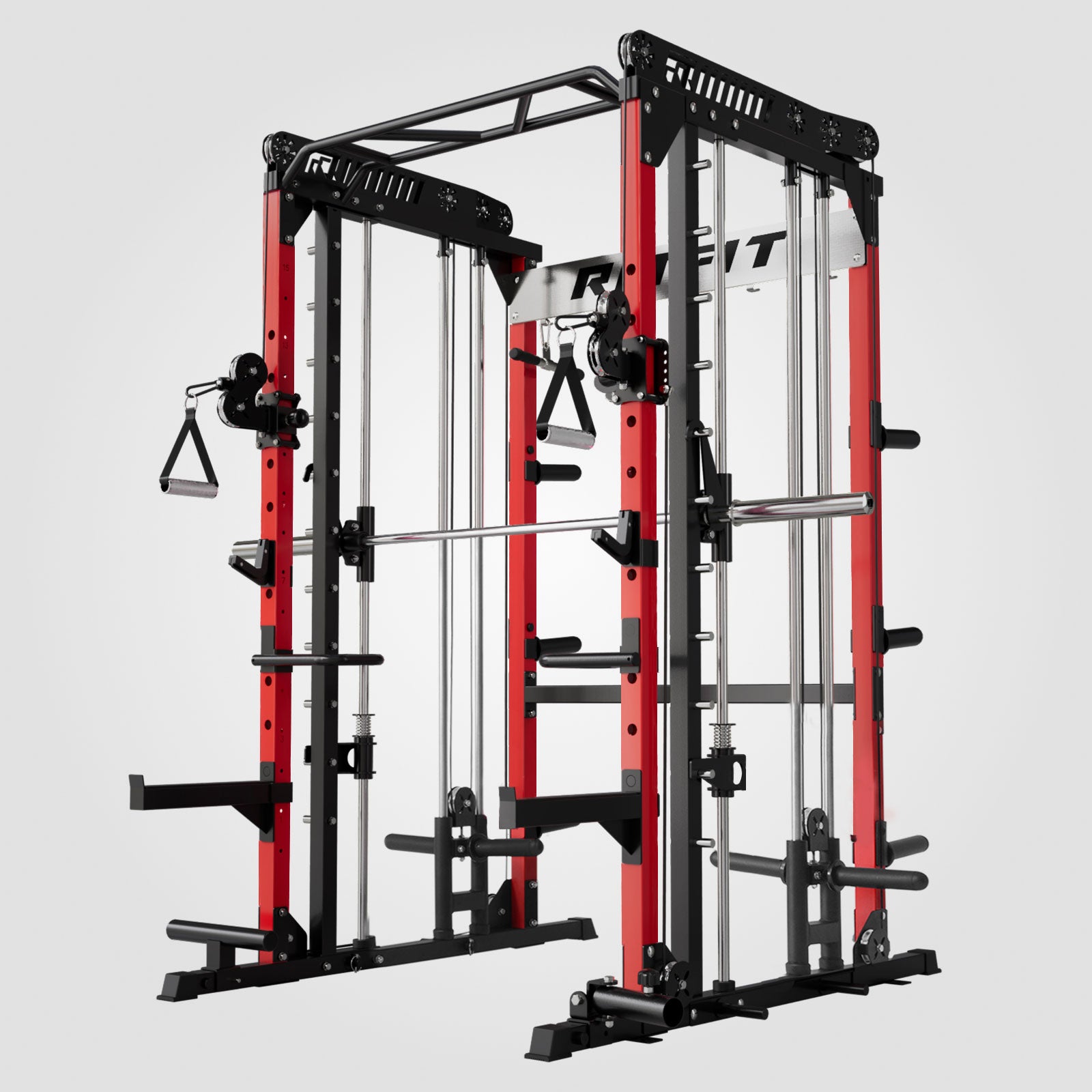
- Smith machine or cable station: A Smith machine setup can make bar path and cable exercises more repeatable. Learn more in this guide on how to train safely on the Smith machine at home.
- Home gym package: A compact all in one station can support rows, presses, and assisted lower body work. Explore the RitFit M1 Smith machine home gym package for a more complete strength setup.
- Beginner planning: If you are building from scratch, start with a bench, dumbbells, and bands before adding large machines. This home gym equipment guide for beginners can help you plan the basics.
If you want bench based exercises, this guide to the best adjustable weight bench for beginners can help you choose a safer support surface.
Common Mistakes to Avoid
- Training too hard too soon: High effort is not the goal at the beginning. Consistency and controlled breathing matter more.
- Holding your breath: Breath holding during lifting can create unnecessary pressure. Slow reps with steady breathing are safer.
- Skipping warm ups: Cold muscles and sudden effort make exercise feel harder. Start every workout with easy movement.
- Ignoring symptoms: Chest pain, faintness, unusual shortness of breath, or sudden weakness are stop signs. Do not push through them.
- Only doing cardio: Aerobic exercise is important, but strength training supports muscle, balance, and independence. Older women with hypertension may also gain functional benefits from exercise based interventions.[5]
When to Stop Exercising Immediately
Stop exercising if you feel chest pain, severe shortness of breath, dizziness, faintness, irregular heartbeat, sudden weakness, or unusual pressure. Seek medical help if symptoms are intense, new, or do not resolve quickly.
You should also get professional guidance before exercising if your blood pressure is uncontrolled, you recently changed medication, or you have known heart, kidney, or vascular disease. A safer plan begins with the right clearance.
FAQs
Can I exercise if I have high blood pressure?
Yes. Many people with high blood pressure can exercise safely when intensity is controlled and breathing stays normal. Start with walking, cycling, or light resistance training, and ask a healthcare professional for guidance if your blood pressure is uncontrolled or you have symptoms.
What are the best exercises for high blood pressure at home?
The best home exercises are brisk walking, stationary cycling, light rowing, supported dumbbell rows, incline push ups, sit to stands, cable rows, and resistance band work. These options are easier to control than maximal lifting and help build consistency without excessive strain.
Is strength training safe for people with hypertension?
Yes. Strength training can be safe when loads are moderate, sets are controlled, and you avoid breath holding. Choose exercises that feel stable, stop before grinding reps, and use longer rests so your heart rate and breathing can settle.
Should I avoid heavy lifting with high blood pressure?
You should avoid maximal lifting unless your healthcare professional has cleared it. Very heavy attempts, breath holding, and straining can sharply increase blood pressure during the lift, so most beginners should prioritize moderate resistance and smooth repetitions.
How often should I exercise to help manage blood pressure?
Most people benefit from regular weekly movement rather than occasional hard workouts. A practical goal is aerobic activity on most days plus strength training two or three days per week, adjusted to your fitness level and medical guidance.
What breathing rule should I follow during strength training?
Breathe continuously during every repetition. Exhale during the hardest part of the lift and inhale during the easier part, because holding your breath while straining can create unnecessary pressure and reduce exercise safety.
Which home gym equipment works best for blood pressure friendly workouts?
Adjustable dumbbells, resistance bands, a stable weight bench, and cable based equipment are useful for controlled home workouts. They allow small resistance changes, supported positions, and smooth movement patterns that are easier to manage than heavy barbell attempts.
When should I stop exercising and get medical help?
Stop exercising if you feel chest pain, severe shortness of breath, faintness, unusual pressure, sudden weakness, or irregular symptoms. These warning signs deserve medical attention, especially if you have diagnosed hypertension or other cardiovascular risk factors.
Conclusion
The best exercises for high blood pressure are the ones you can perform consistently, safely, and without excessive strain. Start with steady cardio, add moderate strength training, breathe normally, and build a home routine that supports long term health instead of short term intensity.
Disclaimer
This article is for general educational purposes only and is not medical advice. If you have high blood pressure, heart disease, kidney disease, chest pain, dizziness, or medication changes, consult a qualified healthcare professional before starting or changing an exercise program.
References
- Hayes P, Ferrara A, Keating A, McKnight K, O'Regan A. Physical activity and hypertension. Rev Cardiovasc Med. 2022;23(9):302. doi:10.31083/j.rcm2309302
- Cornelissen VA, Smart NA. Exercise training for blood pressure: a systematic review and meta analysis. J Am Heart Assoc. 2013;2(1):e004473. doi:10.1161/JAHA.112.004473
- Correia RR, Veras ASC, Tebar WR, Rufino JC, Batista VRG, Teixeira GR. Strength training for arterial hypertension treatment: a systematic review and meta analysis of randomized clinical trials. Sci Rep. 2023;13(1):201. doi:10.1038/s41598-022-26583-3
- Barbosa RM, Santos ACN, Sacramento MS, Santos CPC, Souza PES, Santana US, Petto J. Effect of isometric resistance exercise on blood pressure in normotensive adults: a systematic review of randomized clinical trials. Ann Transl Med. 2025;13(2):16. doi:10.21037/atm-24-124
- Leitão L, Marocolo M, Souza HLR, Arriel RA, Vieira JG, Mazini M, Louro H, Pereira A. Can exercise help regulate blood pressure and improve functional capacity of older women with hypertension against the deleterious effects of physical inactivity. Int J Environ Res Public Health. 2021;18(17):9117. doi:10.3390/ijerph18179117