Building muscle and strength requires progressive overload, not a commercial gym membership. Home bodybuilding empowers you to craft a specialized training space focused completely on hypertrophy and heavy compound lifting. This comprehensive guide details the exact equipment you need to build a scalable home setup using reliable RitFit gear. You will learn how to choose versatile free weights, heavy-duty racks, and specialized machines to maximize your physiological gains safely.
Key Takeaways
- Assess Space Accurately: Measure your floor area and ceiling height before purchasing equipment. A low-ceiling basement requires a compact folding rack rather than a standard towering cage.
- Prioritize Compound Lifting: Invest first in an Olympic barbell and a sturdy power rack. These tools enable the heavy lifting necessary for maximum muscle hypertrophy.
- Focus on Versatility: Adjustable dumbbells and weight benches maximize your training options while saving floor space. They allow seamless transitions between heavy pressing and isolation movements.
- Ensure Safety First: Purchase equipment constructed with 11-gauge steel and tested to industrial weight capacities. Reliable safety pins are mandatory for heavy, unassisted lifting sessions.
- Leverage Tax Benefits: Explore purchasing eligible home gym equipment using your HSA or FSA funds. This financial strategy makes premium strength gear significantly more affordable.
Proper Home Gym Planning Setup
Assessing your space and setting clear goals prevents costly equipment mistakes. You must match your available square footage and training style to the appropriate heavy-duty gear.
Space and Budget Assessment
- Measurement Verification: Measure your exact floor dimensions and ceiling clearance before buying. High-ceiling garages accommodate full power racks, while tight apartments require modular setups.
- Budget Allocation: Allocate your primary funds toward high-quality foundational pieces like a power rack and Olympic barbell. You can add specialized attachments and cable systems later as your strength progresses.
- Tax Advantage Utilization: Use your HSA or FSA funds to purchase eligible medical-grade fitness and rehabilitation equipment. This approach reduces out-of-pocket costs for essential home gym investments.
Defining Training Goals
- Hypertrophy Focus: Prioritize heavy free weights and progressive overload tools to stimulate maximum muscle growth. Adjustable benches and varying resistance profiles are critical for targeting different muscle fibers.
- Strength Progression: Invest heavily in 11-gauge steel racks and high-capacity Olympic weight plates for maximal lifting. Your equipment must safely support multi-rep max attempts on squats and deadlifts.
- Biomechanical Alignment: Choose machines and racks that support your specific anatomical levers and injury history. Proper joint alignment during compound movements prevents long-term connective tissue damage.
Core Bodybuilding Principles
- Progressive Overload Tracking: Select equipment that allows microadjustments in weight to ensure continuous physiological adaptation. Fractional plates and adjustable dumbbells guarantee you never hit a progress plateau.
- Movement Versatility: Incorporate tools that facilitate both heavy compound lifts and targeted isolation exercises. A complete setup must cover horizontal pressing, vertical pulling, and lower body mechanics.
- Unspotted Safety Mechanisms: Demand industrial-grade safety spotter arms and J-hooks for heavy solo training. Lifting to mechanical failure requires absolute confidence in your equipment's load ratings.
Essential Home Bodybuilding Equipment
Building a foundational home gym requires prioritizing high-yield, versatile strength tools. These core pieces facilitate the heavy compound movements responsible for the majority of muscle mass acquisition.
Adjustable Dumbbells
- Space Optimization: Adjustable dumbbells replace an entire rack of fixed weights to save massive amounts of floor space. They are the ultimate compact solution for targeting the chest, shoulders, and arms.
- Resistance Progression: High-quality models feature secure locking mechanisms and quick weight transitions. This engineering allows for rapid drop sets and precise progressive overload during isolation work.
- Biomechanical Freedom: Dumbbells allow unilateral training to correct muscular imbalances between your left and right sides. They also permit a natural range of motion to protect your shoulder joints during heavy pressing.
Barbell and Weight Plates
- Compound Lift Foundation: An Olympic barbell is the mandatory central tool for heavy squats, deadlifts, and bench presses. It allows for the greatest total systemic load to drive central nervous system adaptation.
- Load Capacity Specifications: Choose barbells constructed with high-tensile steel capable of supporting well over 1000 pounds. Proper knurling ensures a secure grip during maximum effort pulling movements.
- Plate Material Selection: Rubber bumper plates protect your flooring and reduce noise during heavy deadlift sessions. Cast iron plates offer a thinner profile, allowing you to load more weight onto the bar sleeves.
Adjustable Weight Bench
- Multi-Angle Activation: A robust adjustable bench enables flat, incline, and decline angles for complete chest and shoulder development. Changing the backrest angle directly shifts the mechanical tension to different muscle heads.
- Structural Stability: Your bench must handle the combined weight of your body and your heaviest lift without wobbling. Look for thick steel framing and high-density foam padding to support heavy dumbbell rows and seated presses.
- Footprint Efficiency: Many premium benches feature transport wheels for easy maneuverability within tight gym spaces. This mobility lets you quickly transition from heavy rack pulls to precise dumbbell flies.
Heavy-Duty Power Rack
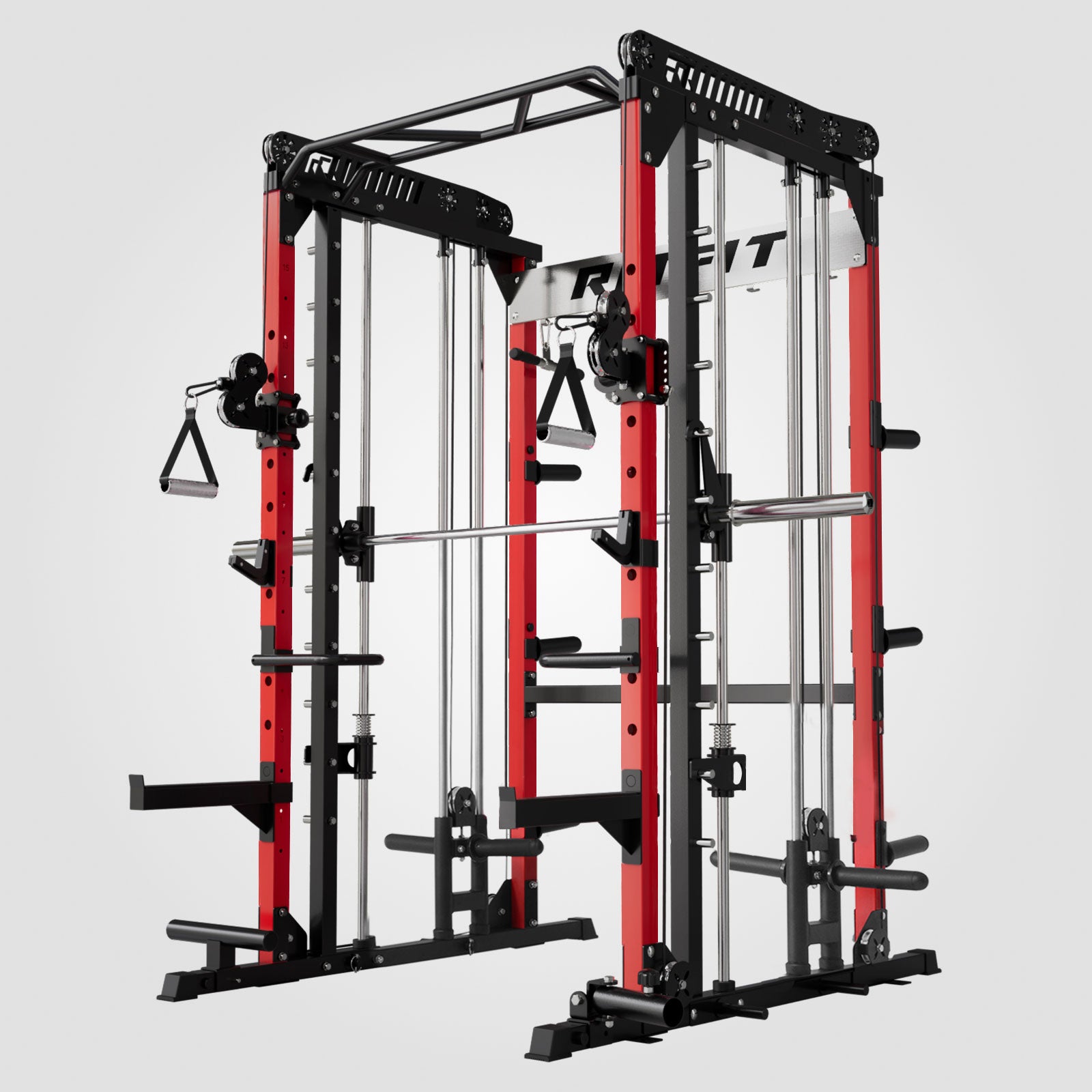
- Absolute Safety Infrastructure: A heavy-duty power rack is the non-negotiable centerpiece for safely lifting heavy weights alone. Robust safety pins and spotter arms will catch a failed squat or bench press attempt.
- Modular Expandability: Select racks featuring standard hole spacing for precise J-hook placement. This design accommodates add-ons like dip bars, landmines, and lat pulldown cable systems.
- Structural Integrity Rating: Look for cages built with 11-gauge steel that meet rigorous fitness equipment safety standards. High weight capacity ratings guarantee stability during aggressive re-racking of heavy barbells.
Essential Attachments for Muscle Growth
Expanding your setup with specialized attachments introduces new resistance profiles to accelerate hypertrophy. Cable systems and bands provide constant tension throughout the entire range of motion.
Cable and Pulley Systems
- Constant Tension Mechanics: Cable pulleys eliminate the dead zones found in standard free weight exercises. This continuous mechanical tension is highly effective for isolating the triceps, biceps, and lateral deltoids.
- Space-Saving Integration: Rack-mounted lat pulldown and low row attachments deliver commercial-gym functionality without increasing the overall footprint. Linear bearing systems ensure a smooth glide even under maximum weight loads.
- Angle Modification: Adjustable pulleys allow you to match the exact line of pull to your target muscle fibers. This precision is vital for executing optimal cable flies and rear delt pulls.
Resistance Bands
- Accommodating Resistance: Looping bands over a barbell increases the tension at the lockout phase of a squat or press. This technique forces your central nervous system to recruit more fast-twitch muscle fibers.
- Joint-Friendly Isolation: Bands offer a low-impact method for isolating smaller muscle groups like the rear deltoids and rotator cuff. They are excellent for dynamic warm-up protocols and injury rehabilitation phases.
- Portability Advantage: A full set of variable-tension bands easily fits into a small gym bag. They provide a legitimate muscle-building stimulus when traveling away from your dedicated home gym.
Dip Station Add-Ons
- Upper Body Mass Builder: Rack-attached dip handles provide a highly stable platform for building the lower chest and triceps. Dips are a superior closed-kinetic-chain exercise for adding significant upper body mass.
- Biomechanical Adjustment: Angled dip bars allow you to adjust your grip width to target either the pectorals or the triceps. Leaning forward emphasizes chest activation, while an upright torso isolates the triceps.
- Weight Capacity Assurance: Ensure your dip attachment locks securely onto thick steel uprights to prevent lateral shifting. It must safely support your body weight plus any heavy plates attached to a dip belt.
Flooring and Supportive Safety Gear
Protecting your physical environment and your body is critical for maintaining a sustainable home training routine. Proper gym flooring and lifting accessories prevent structural damage and physiological injuries.
Heavy-Duty Gym Flooring
- Impact Absorption: Thick rubber flooring mats protect your concrete foundation from dropped deadlifts and heavy dumbbells. They are a mandatory investment for preserving your home's structural integrity.
- Noise Reduction: Dense rubber drastically dampens the acoustic vibration caused by heavy lifting sessions. This soundproofing is essential for maintaining peace in family households or apartment buildings.
- Traction and Stability: Professional-grade mats provide a high-friction surface to prevent your feet from slipping during heavy squats. They also keep your weight benches and heavy power racks firmly anchored in place.
Belts, Straps, and Collars
- Intra-Abdominal Pressure: A thick leather lifting belt helps you brace your core during heavy spinal loading. This enhanced stability protects your fragile lumbar spine during maximal squats and deadlifts.
- Grip Endurance Enhancement: Heavy-duty lifting straps prevent your grip strength from failing before your back muscles during heavy pulling. They allow you to achieve true muscular failure on heavy barbell rows and shrugs.
- Plate Security Mechanisms: High-tension barbell collars keep heavy plates securely locked against the barbell sleeves. They prevent dangerous weight shifting that could cause a catastrophic imbalance mid-lift.
Storage and Organization
- Spatial Efficiency: Vertical plate trees and tiered dumbbell racks reclaim valuable floor space for actual training. Keeping loose weights organized prevents severe tripping hazards in a confined home gym.
- Barbell Preservation: Wall-mounted bar holders protect the delicate knurling and internal bearings of your expensive Olympic barbells. Storing bars vertically prevents them from bending or warping over time.
- Workflow Optimization: A well-organized gym allows for rapid weight changes between sets to maintain your training intensity. Clear pathways are crucial for moving safely from the squat rack to the bench.
Sample Home Bodybuilding Setups
Tailoring your equipment purchases to your specific experience level and budget ensures maximum return on investment. You can seamlessly scale these exact setups as your physical strength and financial resources increase.
Minimalist Budget Setup
- Foundation Core: Start with a heavy-duty adjustable bench and a high-quality set of adjustable dumbbells. This combination facilitates dozens of upper body and lower body hypertrophy movements.
- Tension Additions: Supplement the free weights with a comprehensive set of variable-resistance bands. This allows you to perform lat pulldowns and triceps extensions by anchoring the bands to a sturdy door.
- Spatial Requirement: This entire setup fits comfortably into a small bedroom corner or home office. It is the perfect entry-level solution for beginners focused on steady body recomposition.
Intermediate Strength System
- Compound Lift Expansion: Upgrade the minimal setup by adding an Olympic barbell, bumper plates, and a compact squat stand. You can now safely execute heavy barbell squats, overhead presses, and Romanian deadlifts.
- Isolation Integration: Incorporate a simple plate-loaded cable pulley system into your primary squat stand. This adds commercial-gym isolation capabilities for targeting the latissimus dorsi and biceps brachii.
- Training Split Application: This equipment tier perfectly supports heavy push-pull-legs or upper-lower training splits. It provides the necessary heavy loading required for intermediate lifters pushing past early plateaus.
Advanced Garage Sanctuary
- Heavy-Duty Infrastructure: Anchor your space with a modular 6-post power rack built from solid 11-gauge steel. This commercial-grade hub supports multiple users and extreme, industrial weight capacities.
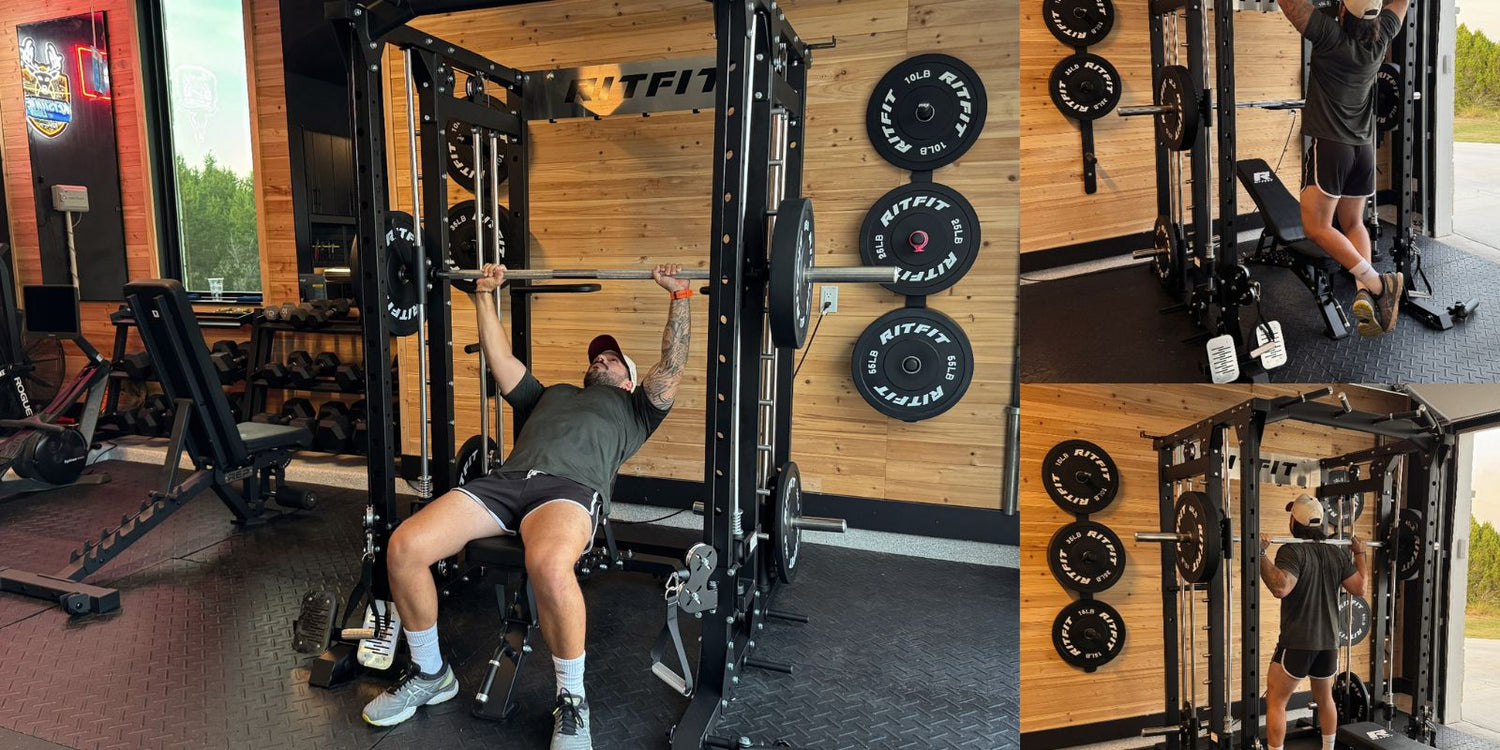
- Specialty Equipment Integration: Add a dedicated functional trainer cable machine, a leg press, and specialized cambered barbells. These advanced tools offer the precise biomechanical angles needed by highly competitive bodybuilders.
- Ecosystem Completion: Complete the sanctuary with comprehensive rubber flooring, dedicated accessory storage, and heavy-duty dip attachments. This setup rivals any commercial facility and removes all barriers to elite physical development.
Strategic Equipment Purchasing Decisions
Making informed purchasing choices prevents buyer remorse and ensures you build a cohesive, functional training environment. You must prioritize essential foundational gear over flashy, single-use fitness gadgets.
Priority-Based Acquisition
- Phase One Essentials: Always purchase your adjustable bench and primary resistance tools first. Dumbbells or a basic barbell setup yields the highest immediate return on structural muscle growth.
- Phase Two Infrastructure: Once your strength exceeds dumbbell limits, invest heavily in a premium power rack and Olympic plates. Do not compromise on the structural quality of this primary safety equipment.
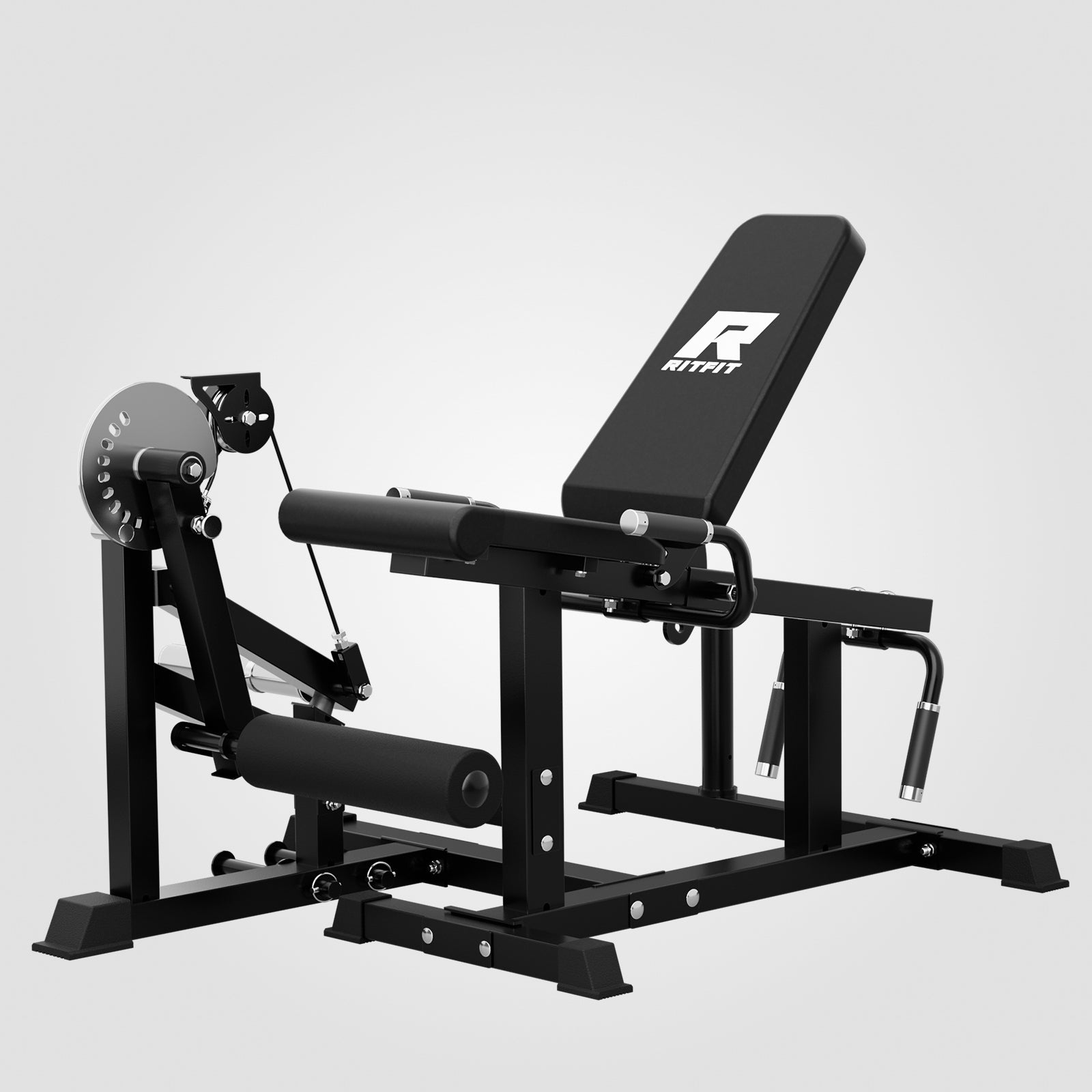
- Phase Three Specialization: Reserve the purchase of cable crossovers, leg extensions, and specialty bars for the final phase. These tools refine your physique only after you have built a massive foundation of raw strength.
Matching Training Styles
- Powerbuilding Focus: Lifters focused on raw strength should allocate the majority of their budget to calibrated plates and stiff barbells. A massive, heavy-duty rack with thick safety straps is your highest priority.
- Hypertrophy Focus: Bodybuilders should prioritize equipment that offers smooth resistance curves and multiple angles. High-quality adjustable dumbbells and robust cable pulley systems are critical for this specific style.
- Space Constraint Adaptations: If operating in a low-ceiling basement, prioritize folding wall-mounted racks and compact functional trainers. Always measure your equipment footprint against your available active lifting space.
Common Planning Mistakes
- Ignoring Safety Ratings: Never purchase unbranded, cheap weight benches or racks lacking solid spotter arms. Mechanical failure under heavy loads can lead to severe, permanent bodily injuries.
- Neglecting Vertical Space: Failing to account for exact ceiling height will render pull-up bars and overhead presses impossible. Measure your highest upward reach before finalizing any towering power rack purchase.
- Overlooking Maintenance: High-quality steel equipment requires routine cleaning to prevent rust and uphold structural integrity. Wipe down padded benches and lubricate moving cable pulleys monthly to ensure maximum longevity.
Conclusion
Constructing a home bodybuilding gym is a strategic investment in your long-term physical development. By prioritizing high-capacity power racks, versatile adjustable dumbbells, and essential safety gear, you create an optimal environment for progressive overload. Reliable brands provide the scalable, heavy-duty equipment necessary to support your journey from basic beginner routines to advanced hypertrophy splits. Plan your space carefully, invest in uncompromising steel infrastructure, and maintain a strict focus on heavy compound movements. Your dedicated home training sanctuary will eliminate travel excuses and empower you to build serious muscle safely.