Table of Contents
- Why Machines Work So Well for Glute Training
- What Makes a Good Glute Machine
- Hyperextension Machine
- How to Use the Hyperextension Machine for Glutes
- Hip Thrust Machine
- Cable Glute Kickback Machine or Cable Station
- Smith Machine for Glutes
- Leg Press Machine
- Abductor Machine
- Stair Climber and Incline Treadmill
- Glute Machine Evaluation Summary
- Sample Glute Focused Machine Workout
- Safety Tips and Form Essentials
The best gym machines for glutes are the hip thrust machine, hyperextension machine, Smith machine, leg press, cable station, and abductor machine. These machines train hip extension and hip abduction with more stability, better control, and less balance demand than many free weight exercises.
Use them to load the gluteus maximus, gluteus medius, and supporting posterior chain muscles through a repeatable range of motion. The best results come from clean setup, controlled reps, and steady progressive overload.
Key Takeaways
- The hip thrust machine is one of the strongest choices for overall glute growth because it loads hip extension hard at lockout.
- The hyperextension machine can target the glutes well when the pad is set below the hip crease and the movement stays hip dominant.
- The Smith machine is useful for glute focused hip thrusts, split squats, reverse lunges, and squats because it reduces balance demands.
- The leg press becomes more glute focused when the feet are placed higher and slightly wider on the platform.
- The abductor machine and cable kickbacks are best used as accessory lifts for isolation, side glute work, and extra weekly volume.
Why Machines Work So Well for Glute Training
Machines work well for glute training because they reduce balance demands and help you keep tension on the target muscles. A systematic review found no meaningful hypertrophy advantage when directly comparing free weight and machine based strength training, which supports using machines when they match your goals and setup needs.[1]
They are especially helpful if squats, lunges, or deadlifts become limited by balance, lower back fatigue, or poor body awareness. Machines let you repeat the same setup more consistently, which makes progress easier to track.
What Makes a Good Glute Machine
A good glute machine should train hip extension, hip abduction, or hip external rotation with stable loading and a useful range of motion. It should also allow clear adjustment so different users can align the machine with their body size and training goal.
Main Benefits of Using Machines for Glutes
- Better isolation: Machines reduce balance demands so you can focus on glute tension instead of staying upright.
- More repeatable setup: Fixed paths and adjustable pads help you reproduce the same position across workouts.
- Easy progression: Machines make it simple to add weight, adjust reps, or use drop sets without complex setup.
- Lower skill barrier: Beginners can often train the glutes safely before mastering advanced barbell technique.
Hyperextension Machine

The hyperextension machine is one of the most underrated glute machines when it is performed as a hip hinge instead of a lower back lift. It trains the glutes and hamstrings through a deep stretch with relatively low spinal loading.
What It Is
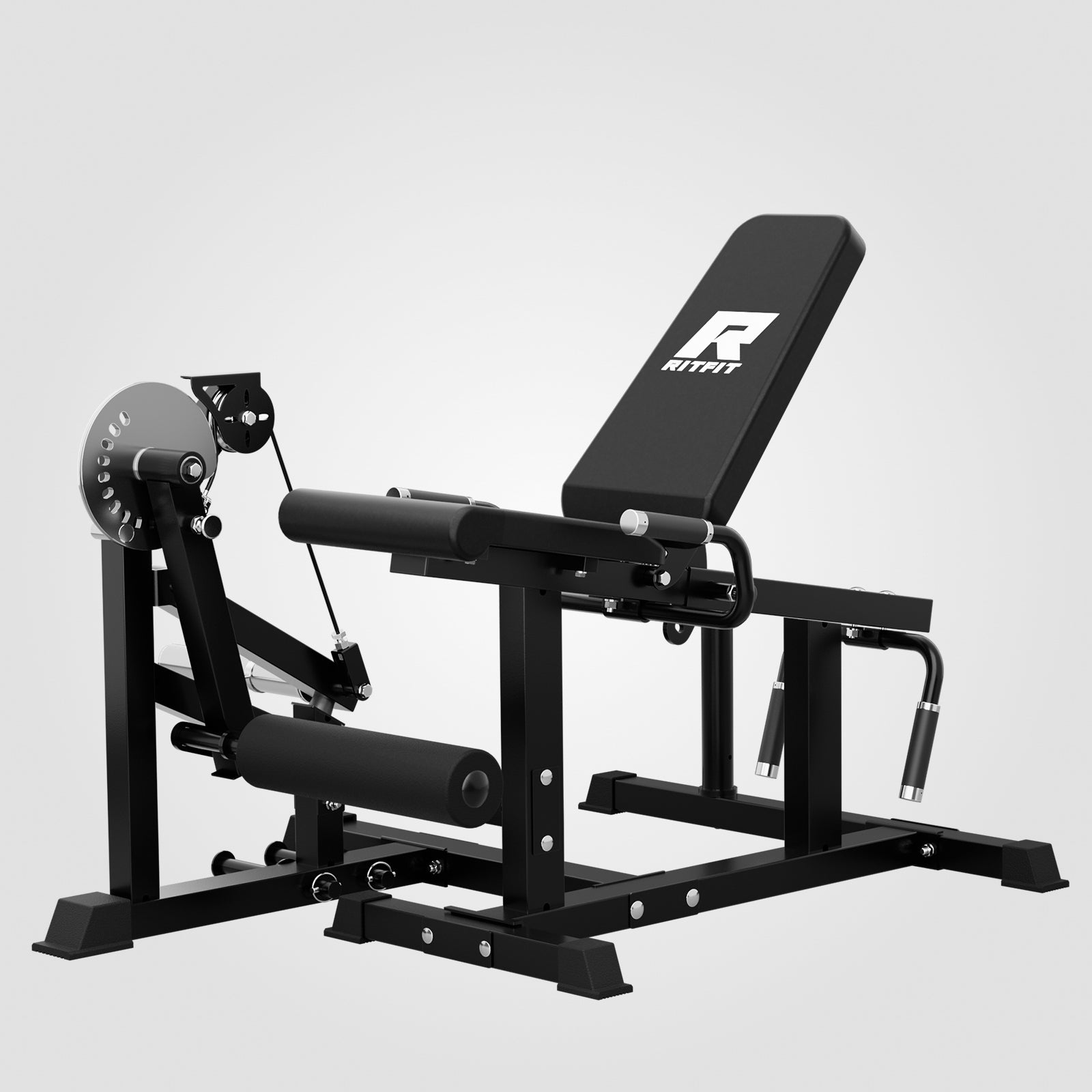
A hyperextension machine is usually a 45 degree back extension bench or a horizontal Roman chair. Both versions secure the feet while allowing the torso to hinge from the hips.
Muscles Worked
- Gluteus maximus: Drives hip extension when the torso rises from the bottom position.
- Hamstrings: Assist hip extension and help control the lowering phase.
- Erector spinae: Stabilize the spine, but they should not dominate if the goal is glute emphasis.
For a home gym setup, a dedicated adjustable back extension machine can help lifters train hip hinging without needing a full commercial gym station.
How to Use the Hyperextension Machine for Glutes
Glute focused hyperextensions depend more on setup than on load. Set the pad below the hip crease, move through the hips, and stop at a straight body line instead of overextending at the top.
- Pad position: Place the top edge of the pad just below the hip crease so your hips can move freely.
- Foot position: Turn the toes slightly outward if it helps you feel more glute engagement.
- Torso position: Keep a slight upper back round and a gentle chin tuck to reduce lower back dominance.
- Descent: Lower under control until you feel a stretch through the glutes and hamstrings.
- Ascent: Drive the hips into the pad and squeeze the glutes to lift the torso.
- Top position: Stop when your body forms a straight line and avoid throwing your chest upward.
Common Mistakes to Avoid
- Overextending at the top: Lifting too high shifts tension from the glutes to the lower back.
- Using momentum: Swinging through reps reduces muscle tension and makes the exercise harder to control.
- Poor pad height: A pad placed too high blocks the hips and turns the movement into spinal extension.
Progressions and Variations
Start with bodyweight until you can feel the glutes working through every rep. Add load by holding a plate or dumbbell at the chest once your setup is consistent.
Hip Thrust Machine
The hip thrust machine is one of the best machines for building glute size because it loads the glutes strongly near hip lockout. Recent research comparing hip thrust and squat training found that both can build glute muscle, which means hip thrusts are useful but should still be part of a complete lower body plan.[2]
Why It Is a Top Glute Machine
The hip thrust machine gives the main benefit of hip thrusting without the awkward setup of balancing a barbell across the hips. It is especially useful for lifters who want heavy glute loading with less setup friction.
Muscles Worked
The gluteus maximus is the primary target during a well performed hip thrust. The hamstrings, adductors, and trunk muscles assist, but the movement should feel driven by the hips.
How to Use It for Maximum Glute Activation
Secure the belt or pad over the hips and place the feet about hip width apart. At the top, aim for nearly vertical shins and a strong glute squeeze without arching the lower back.
Form Tips
- Rib control: Keep the ribs down so the lockout comes from the hips instead of the lower back.
- Foot pressure: Push through the heels and midfoot rather than rising onto the toes.
- Knee tracking: Keep the knees in line with the feet instead of letting them collapse inward.
- Tempo: Pause briefly at the top and lower under control to keep tension on the glutes.
Cable Glute Kickback Machine or Cable Station

Cable kickbacks are excellent for isolating the gluteus maximus with constant tension and low full body fatigue. They work best after heavier machine exercises when you want extra direct glute volume.
What It Targets
Cable kickbacks target hip extension, which makes the gluteus maximus the main working muscle. A review of gluteus maximus activation studies supports including hip extension based strength exercises when glute development is the goal.[3]
How to Perform It
Attach an ankle strap to a low pulley and hold the station for support. Hinge forward slightly, brace the torso, and drive the leg back without swinging.
Form Tips
- Steady torso: Keep the upper body still so the motion comes from the hip.
- Heel drive: Think about driving the heel back rather than kicking upward.
- Clean range: Use a smaller range if your lower back starts to arch.
- Controlled return: Lower the leg slowly so tension stays on the glute.
If you train at home, a cable crossover machine can support kickbacks, standing hip abduction, pull throughs, and other accessory glute movements.
Smith Machine for Glutes
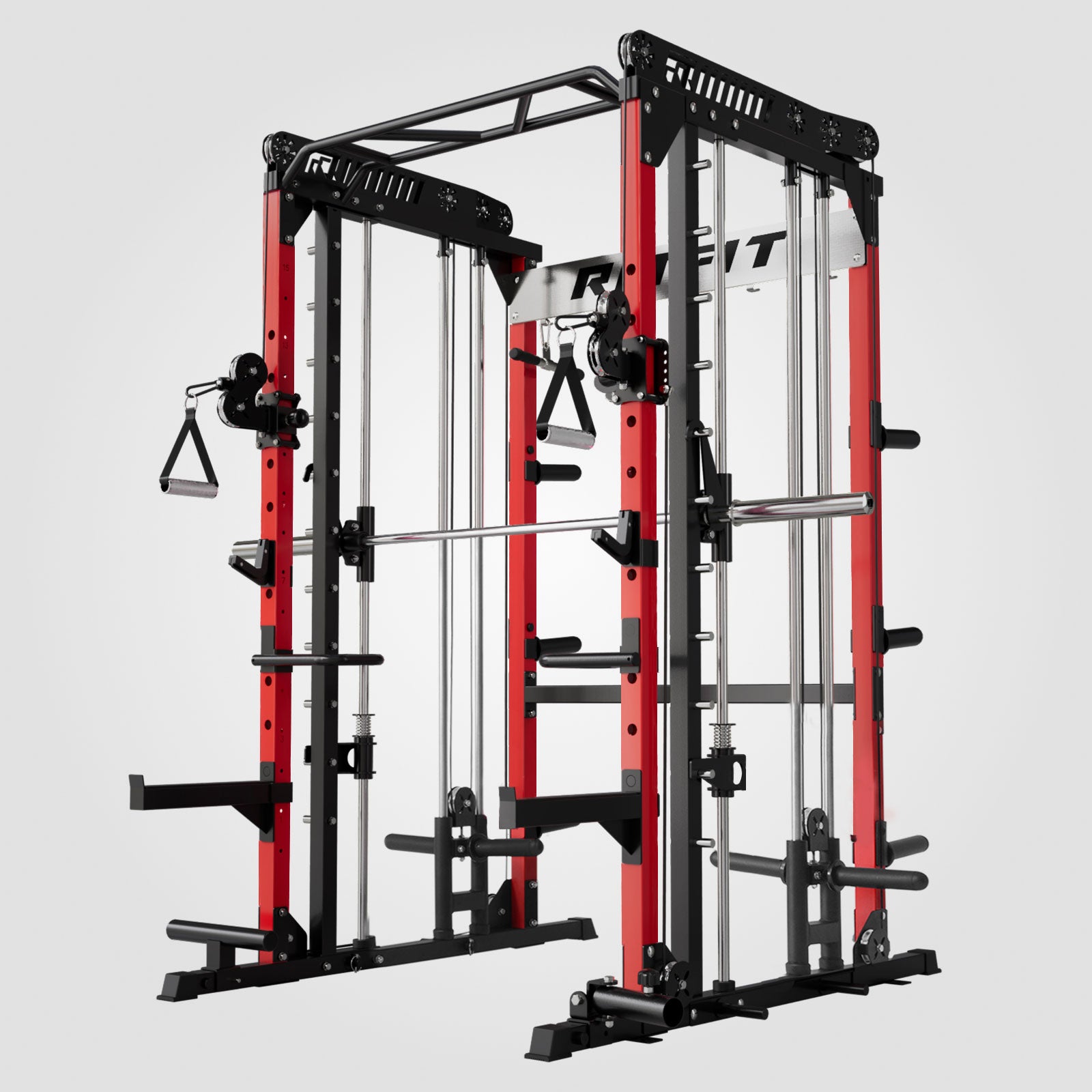
The Smith machine is useful for glute training because the guided bar path reduces balance demands during hip thrusts, split squats, reverse lunges, and squats. This lets many lifters focus more on stance, depth, and glute tension.
Why It Is Useful
The Smith machine lets you place the feet and torso in positions that shift more work toward the hips. This makes it practical for glute focused lower body training in a home gym or compact strength setup.
Best Smith Machine Glute Exercises
- Smith machine hip thrust: Stable, heavy, and easier to repeat than many barbell hip thrust setups.
- Smith machine Bulgarian split squat: Reduces balance demands so you can focus on depth and hip drive.
- Smith machine reverse lunge: A longer step back increases hip contribution and glute loading.
- Smith machine squat: A slightly forward foot position can help some lifters create a more hip dominant pattern.
Key Form Cues
Use a slightly longer stride for split squats and lunges so the shin stays more vertical. Lower with control, keep pressure through the full foot, and drive up by pushing the floor away.
For lifters building a compact home gym, the RitFit M1 Smith Machine with cable crossover can combine guided bar training with cable accessories for glute and full body work.
Leg Press Machine
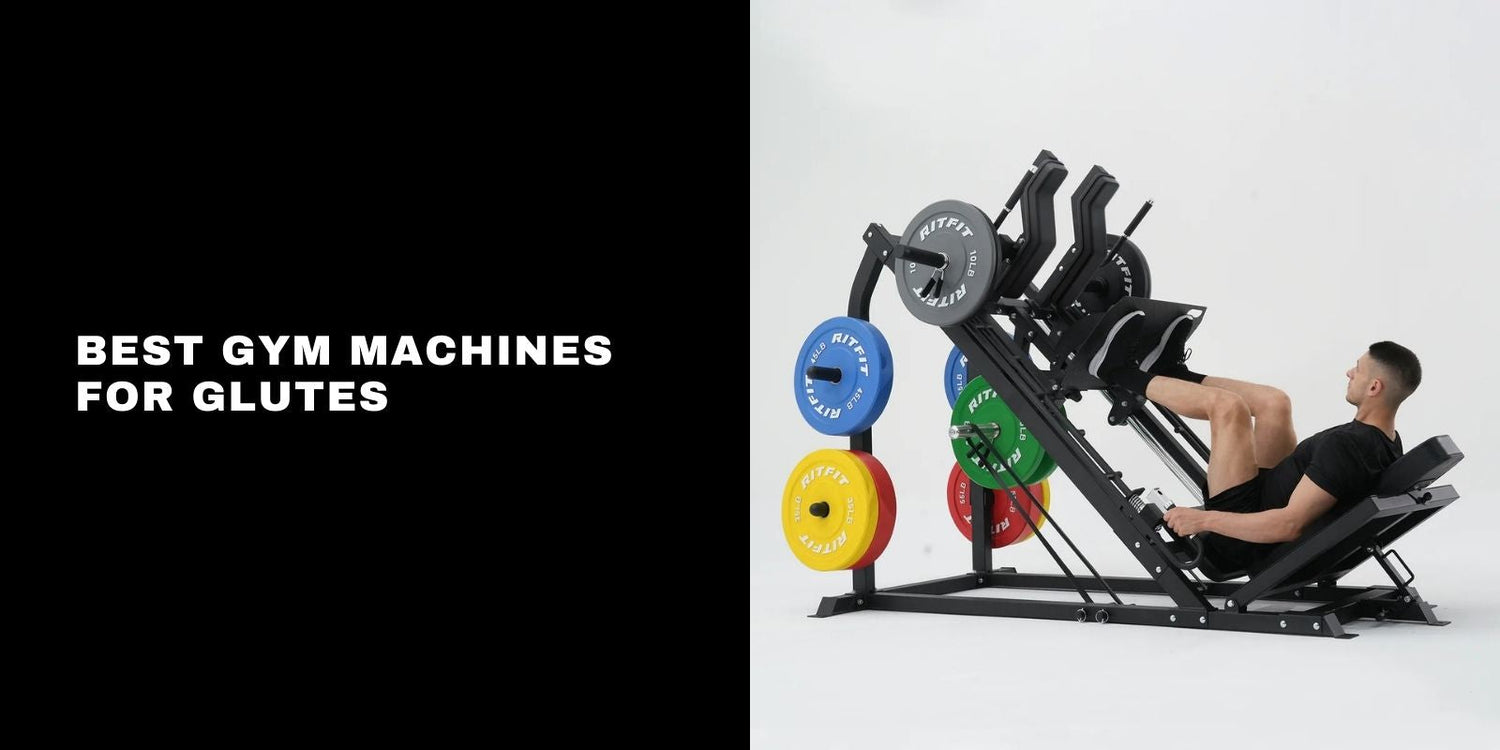
The leg press can train the glutes well when foot placement increases hip flexion and reduces quad dominance. A higher and slightly wider stance usually makes the exercise feel more glute and hamstring focused.
How to Set It Up for Glutes
Place your feet high on the platform and slightly wider than shoulder width. Lower the sled under control until you reach a strong stretch without the lower back rounding off the pad.
Execution Tips
- Control depth: Use the deepest range you can own without pelvic tuck or back rounding.
- Drive through the heels: Keep pressure through the heel and midfoot to reduce knee dominant pushing.
- Avoid locking hard: Stop just short of aggressive knee lockout to keep tension on the lower body.
- Progress slowly: Add weight only when every rep stays smooth and controlled.
For home gym leg training, the RitFit GAZELLE PRO 3 In 1 Leg Press and Hack Squat Machine is a relevant option for users who want leg press, hack squat, and calf raise training in one station.
Abductor Machine
The abductor machine is one of the best machines for targeting the side glutes. It trains hip abduction, which strongly involves the gluteus medius and gluteus minimus.
Role in Glute Training
The abductor machine builds the muscles that help stabilize the pelvis and control side to side hip movement. A systematic review on hip abduction and external rotation exercises highlights the importance of these patterns for gluteal muscle activity.[4]
How to Use It Effectively
Sit tall, press the knees outward under control, and return slowly without letting the weight stack slam. Keep the torso stable so the side glutes, not momentum, do the work.
When to Use It
Use the abductor machine near the end of a workout after heavier hip extension exercises. It works well for moderate to high reps when you want extra side glute volume without heavy spinal loading.
Stair Climber and Incline Treadmill
The stair climber and incline treadmill can support glute development when technique emphasizes strong hip extension. They are not replacements for loaded strength work, but they can add glute endurance and extra weekly training volume.
Why These Help the Glutes
Stepping and incline walking repeatedly extend the hip, which gives the glutes many low to moderate tension contractions. This makes these machines useful for conditioning days or finishers.
Technique for More Glute Focus
- Use full steps: Press through the whole foot and avoid tiny fast steps that reduce hip range.
- Stay tall: Lean slightly forward from the ankles if needed, but do not collapse onto the handles.
- Control pace: Choose a speed that lets every step feel deliberate.
- Avoid hanging: Holding too much bodyweight with the arms reduces lower body work.
Glute Machine Evaluation Summary
The best glute machine depends on whether you need heavy loading, isolation, side glute work, or lower fatigue. Use this table to match each machine with the role it plays in a complete glute program.
| Machine | Main Glute Focus | Best Use | Training Tip |
|---|---|---|---|
| Hip Thrust Machine | Gluteus maximus | Heavy hip extension | Pause at lockout without arching the back |
| Hyperextension Machine | Gluteus maximus and hamstrings | Hip hinge volume | Keep the pad below the hip crease |
| Smith Machine | Gluteus maximus | Hip thrusts, split squats, lunges | Use longer strides for more hip drive |
| Leg Press | Glutes, hamstrings, quads | Heavy lower body volume | Place feet higher and slightly wider |
| Abductor Machine | Gluteus medius and minimus | Side glute isolation | Use controlled moderate to high reps |
| Cable Station | Gluteus maximus and medius | Kickbacks, abductions, pull throughs | Keep the torso still and control the return |
Sample Glute Focused Machine Workout
A good glute machine workout should combine one heavy hip extension movement, one deep stretch movement, one unilateral or guided movement, and one abduction exercise. Loading can vary by goal, but research on resistance training suggests that a range of loads and rep targets can support strength and hypertrophy when sets are performed with enough effort.[5]
Beginner Friendly Routine
- Hip thrust machine: 3 sets of 8 to 12 reps.
- Hyperextension machine: 3 sets of 10 to 15 reps.
- Leg press: 3 sets of 10 to 12 reps with high foot placement.
- Abductor machine: 2 to 3 sets of 15 to 25 reps.
Intermediate Routine
- Smith machine hip thrust: 4 sets of 6 to 10 reps.
- Leg press: 4 sets of 8 to 12 reps.
- Cable glute kickback: 3 sets of 12 to 15 reps per side.
- Abductor machine: 3 sets of 15 to 25 reps.
- Incline treadmill or stair climber: 8 to 12 minutes at a controlled pace.
If your setup needs both Smith machine and leg press options, the RitFit M1 PRO Smith Machine with BLP01 package can support a broader lower body training layout.
Safety Tips and Form Essentials
Good glute training should feel challenging in the target muscles, not painful in the lower back, knees, or hips. Stop a set if your form changes, your range collapses, or joint discomfort replaces muscle tension.
- Warm up first: Use light sets, bodyweight hinges, and controlled hip abduction before heavier work.
- Control every rep: Momentum usually means the load is too heavy or the setup is wrong.
- Protect the lower back: Keep the ribs and pelvis controlled during hip thrusts, kickbacks, and hyperextensions.
- Use stable equipment: Make sure pads, pins, belts, and safety stops are secure before training.
- Progress gradually: Add weight, reps, or sets only when your technique stays consistent.
For exercises that require extra support, a stable adjustable bench such as the RitFit GATOR Adjustable Weight Bench can help with supported split squats, step ups, and accessory lower body work.
FAQs
Which gym machine is best for overall glute growth?
The hip thrust machine is usually the best machine for overall glute growth. It loads hip extension heavily, keeps the setup stable, and creates strong tension near lockout. For complete development, combine it with a leg press, hyperextension machine, cable kickbacks, and abductor machine.
How do you use a hyperextension machine for glutes?
Set the pad just below your hip crease and move mainly through the hips. Keep a slight upper back round, lower under control, then squeeze the glutes to return to a straight body line. Do not overextend at the top, because that shifts work into the lower back.
Where should you place your feet on the leg press for glutes?
Place your feet higher on the platform and slightly wider than shoulder width. This setup usually increases hip flexion and shifts more work toward the glutes and hamstrings. Keep the lower back against the pad, control the bottom position, and avoid bouncing out of the stretch.
What machine targets the side glutes best?
The abductor machine is one of the best choices for targeting the side glutes. It trains hip abduction, which emphasizes the gluteus medius and gluteus minimus. Use controlled reps, avoid swinging, and place it after heavier glute exercises for extra isolation volume.
Can Smith machine exercises build glutes?
Yes. Smith machine exercises can build the glutes when the movement is set up with hip dominant mechanics. Smith machine hip thrusts, Bulgarian split squats, reverse lunges, and squats can all work well when you use controlled depth, longer strides, and consistent foot pressure.
How often should you train glutes with machines?
Most lifters can train glutes with machines two to three times per week. Use enough volume to challenge the muscles, but leave recovery time between hard sessions. A balanced plan includes heavy hip extension, moderate leg press work, isolation kickbacks, and side glute abduction.
Conclusion
The best gym machines for glutes are the ones that let you load hip extension and hip abduction with control. Use the hip thrust machine, hyperextension bench, Smith machine, leg press, cable station, and abductor machine to build stronger glutes without relying only on barbells.
Choose the machine based on your goal, then progress slowly with clean form. Better setup, controlled reps, and consistent overload matter more than chasing the heaviest weight.
Disclaimer: This article is for general fitness education only and is not medical advice. Stop any exercise that causes sharp pain, numbness, dizziness, or unusual joint discomfort. If you have an injury, medical condition, or recent surgery, consult a qualified healthcare professional or certified strength coach before starting a new glute training program.
References
- Haugen ME Vårvik FT Larsen S et al. Effect of free weight vs machine based strength training on maximal strength, hypertrophy and jump performance, a systematic review and meta analysis. BMC Sports Sci Med Rehabil. 2023;15(1):103. doi:10.1186/s13102-023-00713-4
- Plotkin DL Rodas MA Vigotsky AD et al. Hip thrust and back squat training elicit similar gluteus muscle hypertrophy and transfer similarly to the deadlift. Front Physiol. 2023;14:1279170. doi:10.3389/fphys.2023.1279170
- Krause Neto W Soares EG Vieira TL Aguiar R Chola TA Sampaio VL Gama EF. Gluteus maximus activation during common strength and hypertrophy exercises, a systematic review. J Sports Sci Med. 2020;19(1):195-203.
- Macadam P Cronin J Contreras B. An examination of the gluteal muscle activity associated with dynamic hip abduction and hip external rotation exercise, a systematic review. Int J Sports Phys Ther. 2015;10(5):573-591.
- Schoenfeld BJ Grgic J Van Every DW Plotkin DL. Loading recommendations for muscle strength, hypertrophy, and local endurance, a re examination of the repetition continuum. Sports. 2021;9(2):32. doi:10.3390/sports9020032