








Table of Contents
- Understanding Hex Dumbbells and Storage Needs
- Types of Hex Dumbbell Racks
- Key Features to Look for in a Hex Dumbbell Rack
- How to Choose the Right Hex Dumbbell Rack
- Best Hex Dumbbell Rack Options By Category
- How to Set Up Your Hex Dumbbell Rack Safely
- Using and Maintaining a Hex Dumbbell Rack
- Common Mistakes to Avoid with Hex Dumbbell Racks
A hex dumbbell rack is a dedicated storage system engineered for hex-shaped dumbbells, using angled tiers and correct spacing so each pair sits stable, lifts out smoothly, and returns safely. When people say “rack set,” they usually mean either a dumbbell plus rack bundle or a rack built to hold a full run without extra storage. Proper storage is not just aesthetic. It reduces trip risk, protects coatings, and makes your training space feel professional and efficient.
In this guide, we will break down the different types of storage available, how to choose the right hex dumbbell rack for your specific needs, and the essential features that drive durability. You will also learn a simple capacity calculation, a safety checklist, and practical maintenance routines that prevent wobble, rust, and premature wear.
Key Takeaways
- A true hex dumbbell rack prevents sliding and tipping by using correct tray depth, spacing, and tier angle.
- Choose capacity by math, not guesswork. Total your set weight, then add at least a 20 percent buffer.
- Prioritize stability features: wide base, leveling feet, non-slip pads, and anchoring options when loads are heavy.
- Match the rack type to your use case. Horizontal is best for full runs, vertical works for small sets and tight spaces.
- Maintenance keeps racks safe. Tighten hardware after the first week, inspect trays and welds quarterly, and touch up scratches early.
Understanding Hex Dumbbells and Storage Needs
What Are Hex Dumbbells

Hex dumbbells feature hexagonal heads, typically made of cast iron or encased in rubber. Their distinct shape offers significant advantages: they do not roll away when placed on the floor, they provide a stable base for exercises like renegade rows or push-ups, and they are generally more affordable than round urethane dumbbells.
Why You Need a Dedicated Hex Dumbbell Rack

Leaving weights on the floor is a recipe for disaster. A dedicated rack solves several problems instantly:
- Space saving: Moves weights vertically or horizontally off the floor, freeing up training area.
- Safety: Drastically reduces tripping hazards and prevents injuries caused by stumbling over equipment.
- Protection: Keeps dumbbells safer from moisture, dust, and impact damage, preserving their coating and structural integrity.
- Organization: Allows you to arrange weights by size, making weight selection seamless during fast-paced sets.
Key Considerations Before Buying
Before making a purchase, assess your room layout. A home garage gym has different constraints than a commercial facility. Consider the size of your current collection and your user profile. Are you a casual lifter with a few pairs, or a serious lifter planning to expand to a 5 to 100 pound set?
Also decide who will use the area. If children, pets, or high foot traffic are involved, prioritize lower center of gravity, anti-tip design, and clear walkways over ultra-compact layouts.
Types of Hex Dumbbell Racks
Horizontal Hex Dumbbell Racks
These are the standard for most gyms. They feature long trays or rails.
- Pros: Easy access, clear organization light to heavy, and excellent stability.
- Cons: Larger footprint, requires more wall or floor space.
- Best for: Full dumbbell sets in home gyms and commercial facilities.
Vertical and Tree-Style Hex Dumbbell Racks
Designed to hold weights in a tower formation.
- Pros: Extremely compact footprint, often cheaper.
- Cons: Limited weight capacity and can be awkward to un-rack heavy pairs from lower pegs.
- Best for: Small sets such as 5 to 30 pounds, apartments, and beginners.
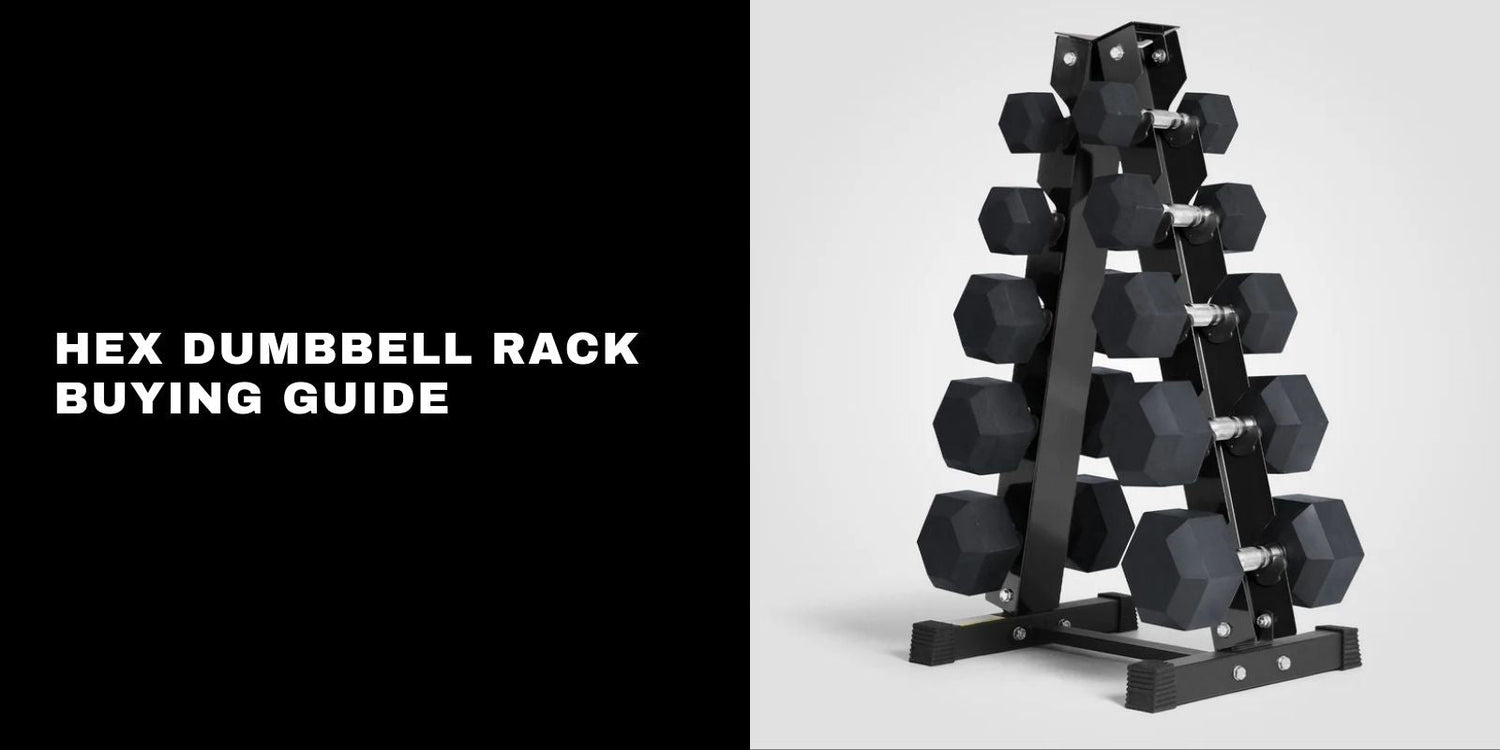
A-Frame Hex Dumbbell Racks

Shaped like the letter A, these store weights on the sides.
- Pros: Space-efficient and easy to move.
- Cons: Often limited to lighter or moderate weights; spacing can be tight for larger hands.
Modular and Expandable Hex Dumbbell Racks
These systems allow you to add tiers or lengthen the rack as your collection grows.
- Pros: Scalable and customizable.
- Cons: Higher initial investment and requires assembly planning.
- Best for: Growing home gyms and small training studios.
Wall-Mounted Hex Dumbbell Storage Options
Utilizes brackets or floating shelves mounted directly to studs.
- Pros: Maximizes floor space; offers a clean, modern look.
- Cons: Requires structural installation; weight load is limited by wall strength.
Wall storage is best for light to moderate pairs, not full heavy runs, unless the system is explicitly rated for that use.
Key Features to Look for in a Hex Dumbbell Rack
Weight Capacity and Structural Strength

Never ignore the weight rating. Calculate the total weight of your dumbbells and choose a rack with a buffer. Heavy-duty steel provides the necessary reinforcement for heavy loads.
Capacity quick math example
A full 5 to 50 pound set in 5 pound jumps is 10 pairs. Total weight equals 5 plus 10 through 50, then doubled for pairs. That is 275 times 2 equals 550 pounds. Add a 20 percent safety buffer, and you want a rack rated at least 660 pounds.
Dimensions and Footprint
Measure the length, width, and height. Ensure there is enough clearance around the rack for you to safely walk and lift weights without feeling cramped.
Practical rule: leave at least 36 inches of open space in front of the rack so you can un-rack, turn, and re-rack without twisting in a tight lane.
Tier Design and Tray Style
Look for angled trays that make racking easier on the wrists. Flat trays are versatile, but specific dumbbell saddles or lipped rails help prevent sliding.
Compatibility with Hex Dumbbells
Ensure the tray depth accommodates the hex heads securely. Some generic racks are too narrow, causing larger hex dumbbells to sit on the edge.
Safety and Stability Features
A wide base and anti-tip design are non-negotiable. Look for non-slip rubber feet to protect your floor and anchoring options if you are installing a tall or heavily loaded unit.
If the rack will hold heavy pairs or sit on uneven concrete, prioritize leveling feet and anchoring points. A stable rack is safer than a compact rack.
Materials, Coating, and Durability
Powder-coated finishes resist chipping and rust, a crucial feature for garage gyms exposed to humidity.
If you train in a garage, coating quality matters as much as steel thickness because rust starts at scratches and bolt holes.
Ease of Assembly and Maintenance
Check if the unit comes with clear instructions and labeled parts. A well-engineered rack should bolt together securely without professional help.
Aesthetics and Integration with Your Gym
Your rack should match the vibe of your gym. Whether it is matte black, industrial steel, or a custom color, the right look elevates the professional feel of your training space.
How to Choose the Right Hex Dumbbell Rack
Step 1: Audit Your Dumbbell Collection
List every pair you own and calculate the total weight. If you plan to buy heavier weights later, factor that into your capacity requirements now.
Step 2: Measure Your Space
Determine exactly where the rack will go. Account for doors, windows, and the working zone, the space you need to stand in front of the rack to pick up weights.
Step 3: Define Your Budget Range
Racks range from budget entry-level models to commercial-grade builds. Decide where to invest: stability and capacity are worth paying for, while branding is not a performance feature.
Step 4: Match Rack Type to Use Case
For a small corner in an apartment, an A-frame or vertical tree is ideal. For a dedicated garage gym with a full 5 to 50 pound set, a 2-tier or 3-tier horizontal rack is the standard.
Step 5: Compare Brands, Reviews, and Warranties
Read user reviews to check for complaints about wobbling or difficult assembly. A good warranty indicates the manufacturer trusts their materials and weld quality.
Look for repeated patterns in reviews such as bent trays, short bolt threads, missing washers, or feet that do not level. Those issues matter more than cosmetic scratches.
Best Hex Dumbbell Rack Options By Category
Best Overall Hex Dumbbell Rack
The 3-tier heavy-duty horizontal rack is the gold standard for most home and light commercial gyms. It typically holds a 5 to 75 pound set comfortably. Look for angled shelves for ergonomic access and a powder-coated finish. It offers the best balance of capacity, stability, and price.
Buying checklist for this category: verify the published rack rating, confirm tray depth fits your largest hex heads, and ensure the lowest tier height is comfortable for safe lifting.
Best Budget Hex Dumbbell Rack
The compact A-frame rack is ideal for beginners. These racks are affordable and effective for sets up to 30 or 40 pounds. While they may compromise spacing for larger hands, they are strong value and save floor space.
Choose budget racks only if your heaviest pairs are truly moderate. Once you move into heavier ranges, stability and tray design become higher priorities than cost.
Best Compact and Small-Space Hex Dumbbell Rack
The vertical dumbbell tree is perfect for tight rooms. These racks use vertical space to hold several pairs in a small footprint. They keep lighter weights organized without dominating the room.
If you store heavier pairs, avoid designs that force you to lift from very low pegs, especially when fatigued.
Best Heavy-Duty and Commercial Hex Dumbbell Rack
A commercial 3-tier mass storage rack is built for high traffic. These racks use thicker steel uprights and reinforced trays, designed for frequent daily use.
For facilities, prioritize long-term durability: thicker trays, stronger welds, protective tray liners, and easy access for fast class transitions.
Best Modular and Expandable Hex Dumbbell Storage System
Expandable rail systems let you start with a shorter section and add length or tiers as your collection grows. This is the smart choice for serious lifters building a larger run over time.
Modular works best when you plan your end goal. Confirm extension availability, matching hardware, and whether the expanded rack remains stable at full length.
Best Hex Dumbbell Rack for Home Gyms
A 2-tier storage rack often sits lower, fits under windows or mirrors, and holds a standard 5 to 50 pound run very well. It integrates cleanly into residential spaces without looking overly industrial.
If you value comfort and safety, 2-tier often feels better than 3-tier because the top shelf is not excessively high and the bottom shelf is not excessively low.
How to Set Up Your Hex Dumbbell Rack Safely
Unboxing and Inspection
Before starting, lay out all parts. Check for shipping damage, missing washers, or bent flanges. It is easier to resolve issues before assembly.
If any tray is visibly warped or any bolt will not thread by hand, stop and replace the part. Do not force alignment on a load-bearing rack.
Assembly Tips
Hand-tighten all bolts first. Fully tighten only after the structure is assembled. This helps the rack settle squarely on the floor and reduces wobble.
Ideal Placement in Your Gym
Place the rack away from high-traffic paths. Position it where you have enough open space to lift and turn safely.
Avoid placing a rack where people must squeeze past it. A clear lane prevents accidental shoulder bumps that can tip or shift a loaded unit.
Loading Your Hex Dumbbells Smartly
Always place the heaviest weights on the bottom tier to lower the center of gravity and increase stability. Group weights sequentially for intuitive selection.
Safety Checklist After Setup
Give the rack a firm shake. If it wobbles, adjust the feet or retighten bolts. Re-check all hardware after one week, as bolts can settle and loosen.
If the floor is uneven, level the rack before fully loading it. Uneven contact points are a common cause of rocking and tray stress over time.
Using and Maintaining a Hex Dumbbell Rack
Daily Use Best Practices
Re-rack weights gently. Dropping them onto trays can damage coatings and deform shelves. In shared spaces, always return weights to their designated spot.
Cleaning and Rust Prevention
Wipe rails weekly to remove sweat and dust. Touch up paint chips quickly to reduce rust risk, especially in humid environments.
Periodic Inspections
Inspect welds and bolts every few months. Look for metal fatigue or bending, especially on shelves holding your heaviest pairs.
Also inspect rubber feet and tray liners. Worn liners can increase sliding, and damaged feet can create new wobble even if bolts are tight.
When to Replace or Upgrade Your Rack
If the rack shows bending, significant rust, or instability that cannot be fixed by leveling or tightening, replace it. Never risk a collapse.
Common Mistakes to Avoid with Hex Dumbbell Racks
Overloading Beyond Rated Capacity
Ignoring the weight limit is dangerous. A rack rated for 500 pounds cannot safely hold a 1000 pound run even if the weights physically fit.
Storing Mixed Dumbbell Types That Do Not Fit Properly
Forcing round or adjustable dumbbells onto a rack designed for hex can create instability and rolling hazards.
Poor Placement
Blocking exits, walkways, or placing the rack too close to other equipment limits usability and increases trip risk.
Skipping Assembly Instructions
Leaving out washers or tightening bolts in the wrong sequence compromises rigidity.
Ignoring Early Signs of Damage
A small weld crack or bent shelf is a warning. Ignoring it can lead to failure when the rack is fully loaded.
Frequently Asked Questions
What size hex dumbbell rack do I need for a full set from 5 to 50 pounds
Most people need a 2-tier or 3-tier horizontal rack rated around 660 pounds or higher. A full 5 to 50 run in 5 pound jumps weighs about 550 pounds total, then you should add a safety buffer. Also confirm each tier has enough length and tray depth for your largest hex heads.
Is it safe to put the heaviest dumbbells on the top tier
No, load the heaviest pairs on the bottom tier to keep the center of gravity low. This reduces tip risk and makes re-racking safer when you are tired. If you must place heavy pairs higher due to spacing, choose a wider-base rack, level it carefully, and consider anchoring.
Can a vertical dumbbell tree hold heavier hex dumbbells
It can, but it is usually not the best choice for heavy pairs. Vertical designs save floor space, yet low pegs can force awkward lifting angles and increase strain during fatigue. If your set goes beyond moderate weights, a horizontal rack is generally safer and faster to use.
How do I know if my dumbbells will fit a specific rack
Measure your largest dumbbell head width and compare it to tray depth and cradle spacing. Many racks fail not because of strength but because the tray is too shallow or too narrow for large hex heads. Also check tier spacing so your hands can grip comfortably without pinching.
What maintenance prevents wobble and rust over time
Tighten bolts after the first week, level the feet, and clean the rack weekly. Sweat and humidity accelerate corrosion at scratches and bolt holes, so touch up paint chips early. Every few months, inspect trays, feet, and welds, especially where your heaviest pairs rest.
Conclusion
Investing in a high-quality hex dumbbell rack is about more than tidiness. It is a commitment to safety, equipment protection, and a training environment that feels organized and motivating.
Measure your space twice, know your total load, and plan for future growth. Do not skimp on stability. A sturdy rack is the backbone of a safe free-weight zone.
If you are unsure between two options, choose the rack with higher published capacity, better leveling, and deeper trays. Those features reduce risk and improve daily use.
Take a look at your current setup. If your weights are cluttering the floor, it is time to upgrade. Evaluate your space, choose the best rack type from this guide, and transform your gym into the organized powerhouse it should be.

RitFit Editorial Team
Learn MoreThis blog is written by the RitFit editorial team, who have years of experience in fitness products and marketing. All content is based on our hands-on experience with RitFit equipment and insights from our users.




