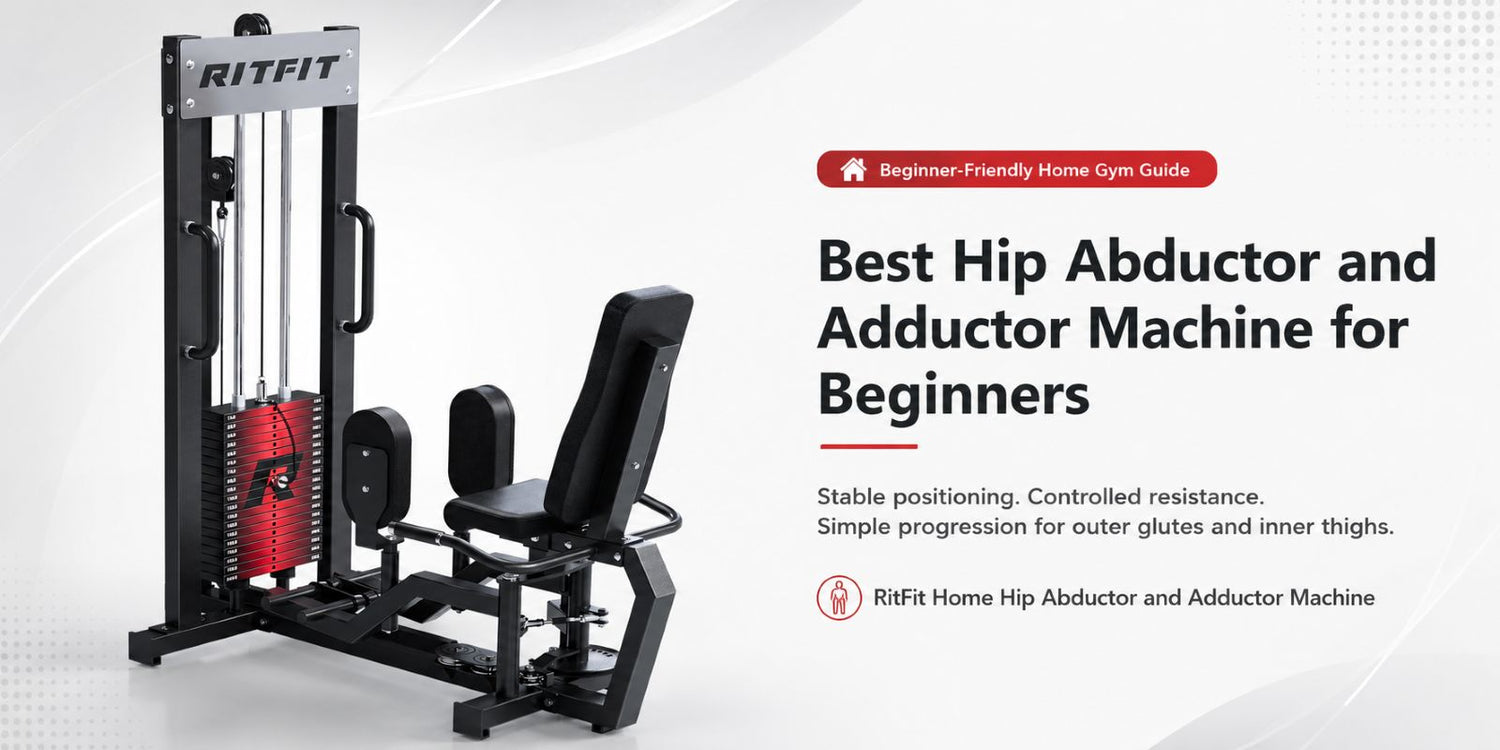
The best hip abductor and adductor machine for beginners is one that trains the outer glutes and inner thighs with stable positioning, controlled resistance, and simple adjustments. This guide explains what to look for, how to use the machine safely, and where the RitFit Home Hip Abductor and Adductor Machine fits in a home gym.
Table of Contents
Key Takeaways
- A hip abductor and adductor machine is useful for beginners who want controlled lower body isolation: It supports the body while helping users focus on the inner thighs, outer glutes, and hip control.
- Stability matters more than hype: A beginner friendly machine should feel secure, easy to enter, simple to adjust, and smooth through the full movement.
- The RitFit Home Hip Abductor and Adductor Machine is built for focused home leg training: Its listed footprint, frame material, resistance ratios, and range of motion make it easier to judge fit before purchase.
- Technique still matters on a guided machine: Start light, move slowly, and stop if you feel sharp hip, groin, knee, or lower back discomfort.
- The machine works best as accessory training: Use it after squats, leg press, lunges, or cable work to add targeted hip abduction and adduction volume.
What Is a Hip Abductor and Adductor Machine?
A hip abductor and adductor machine is a seated lower body machine that trains the legs moving outward and inward against resistance. It is especially useful for beginners because the machine supports the torso and creates a repeatable path of motion.
What Hip Abduction Trains
Hip abduction moves the thighs away from the midline of the body and mainly targets the outer glutes, including the gluteus medius and gluteus minimus. Research on gluteal muscle activity shows that dynamic hip abduction and hip external rotation exercises can meaningfully activate the gluteus medius and related hip muscles.[1]
What Hip Adduction Trains
Hip adduction moves the thighs toward the midline of the body and mainly targets the inner thigh muscles. These muscles help with lower body control, hip positioning, and athletic movement patterns.
- Primary abduction focus: Outer glutes, gluteus medius, gluteus minimus, and lateral hip control.
- Primary adduction focus: Inner thighs, adductor longus, adductor magnus, and groin area strength.
- Beginner value: The guided setup helps users feel the target muscles without needing complex balance or free weight skill.
Why Beginners Benefit From Hip Machine Training
Beginners benefit from hip machine training because it makes inner thigh and outer glute work easier to learn and repeat. The seated setup reduces the balance demand that often makes standing cable or band drills feel awkward for new lifters.
- Better movement awareness: The machine helps beginners understand the difference between pushing the knees outward and pulling the knees inward.
- More stable positioning: The seat, back pad, handles, and thigh pads help the user stay controlled during each rep.
- Simple progression: Beginners can add resistance gradually as technique becomes more consistent.
- Useful lower body support work: Hip abductor strengthening has been studied in knee osteoarthritis populations and may support pain and function outcomes when programmed appropriately.[2]
For shoppers building a complete training space, this machine pairs naturally with broader RitFit strength machines. It can also complement compound equipment such as a leg press, Smith machine, dumbbells, and cable stations.
Buying Criteria for Beginners
The best beginner machine should feel stable, comfortable, and easy to adjust before it feels advanced. A machine that is difficult to set up will usually limit consistency, even if it looks impressive on paper.
Safety and Stability
Choose a machine with a strong frame, stable base, secure adjustment points, and smooth resistance. Beginners should be able to enter the machine, adjust the pads, and perform controlled reps without rocking or twisting.
Comfort and Fit
Seat height, back support, pad thickness, handle position, and leg pad placement affect how comfortable the movement feels. A better fit helps you train the target muscles instead of fighting the machine.
Resistance and Progression
Look for resistance that starts light enough for clean technique and increases gradually as strength improves. Progress should come from better control, fuller range, and small load increases, not from forcing heavy reps too soon.
Space and Home Gym Compatibility
Measure your room before buying because a dedicated hip machine needs floor space plus clearance around the seat and loading area. If you already own plates, benches, or racks, plan how the machine fits into the same training zone.
- Check the footprint: Measure length, width, height, and walking clearance before placing the order.
- Check the range of motion: The machine should let you move through a comfortable range without forcing the hips.
- Check the resistance system: Plate loading is practical if you already own compatible plates.
- Check the full gym flow: Keep enough room for leg day equipment, storage, and safe movement around the machine.
RitFit Home Hip Abductor and Adductor Machine Overview
The RitFit Home Hip Abductor and Adductor Machine is a dedicated home gym station for seated hip abduction and adduction. It is best for users who want focused inner thigh and outer glute training without relying only on bands or standing cable drills.
Product Snapshot
RitFit lists the machine model as Hip Abductor And Adductor Machine, with a 60.2 inch length, 30.3 inch width, 63.7 inch height, 12.7 square foot occupied area, Q235 steel frame, and 200 pound weight capacity.
- Best for: Home leg strength training and lower body accessory work.
- Abduction range: 70 degrees per side.
- Adduction range: 96 degrees per side.
- Hip abduction resistance ratio: 0.88 to 1.
- Hip adduction resistance ratio: 0.66 to 1.
- Back pad thickness: 2.4 inches.
- Seat pad thickness: 2.4 inches.
This machine is a strong fit for beginners who want a dedicated lower body station and have enough room for a seated leg machine. If you are building a broader leg day setup, it can work alongside the RitFit GAZELLE PRO leg press and hack squat machine for compound lower body work.
Who This Machine Is Best For
This machine is best for beginners, home gym owners, and lower body focused lifters who want repeatable inner thigh and outer glute training. It is also useful for people who prefer a seated, supported setup over standing cable movements.
- Beginners: The guided movement makes it easier to learn hip abduction and hip adduction.
- Home gym owners: The dedicated footprint works well for users who have a planned strength training area.
- Glute focused lifters: The abduction side can support outer glute accessory work after hip thrusts, lunges, or leg press sets.
- Inner thigh focused lifters: The adduction side provides a direct way to train muscles that are hard to isolate with standard dumbbell movements.
If you also need pressing, rowing, squatting, and cable work, a multi station setup such as a RitFit cable crossover machine may offer more total exercise variety. For users who want hip training as one part of a complete strength room, both options can serve different roles.
Who Should Skip a Dedicated Hip Machine
You may not need a dedicated hip abductor and adductor machine if space is very limited or if hip isolation work is only an occasional warm up. In that case, bands, ankle straps, or a low cable pulley may be more practical.
- Very small rooms: Choose compact tools if a full machine would block safe walking space.
- Occasional users: Bands may be enough if you only need light activation before leg day.
- Users with active pain: Get professional guidance if hip, groin, knee, or back pain changes during training.
- Versatility first shoppers: A cable station may cover more total exercises in one footprint.
Machine vs Bands vs Cables
A dedicated machine is best for support and repeatability, while bands are best for low cost activation and cables are best for versatility. The right choice depends on how often you train hip abduction and adduction.
- Hip machine: Best for stable seated reps, progressive loading, and focused inner thigh or outer glute work.
- Resistance bands: Best for warm ups, travel workouts, and light glute activation.
- Cable station: Best for users who also want rows, pulldowns, kickbacks, curls, and standing hip drills.
- Accessory pairing: Cable handles and ankle strap movements can expand lower body options when used with RitFit cable machine attachments.
Dynamic hip adduction, abduction, and trunk exercises from groin injury prevention programs have shown enough intensity to be considered strengthening exercises in trained populations.[3] For beginners, that supports the value of choosing a resistance method that can be controlled and progressed safely.
How to Use the Machine Safely
Safe machine use starts with light resistance, correct pad placement, and slow reps. The goal is to feel the target muscles working without twisting the pelvis, forcing the hips, or leaning aggressively through the torso.
Initial Setup
Sit tall with your back supported, feet stable, and hands on the handles. Adjust the thigh pads so they contact the correct side of the knees without pressing into the joint.
Hip Abduction Technique
Set the pads against the outside of your knees, then press the knees outward in a smooth arc. Pause briefly at a comfortable range, then return slowly without letting the weight drop.
Hip Adduction Technique
Set the pads against the inside of your knees, then bring the thighs inward with controlled pressure. Stop at the center without slamming the pads together, then return slowly to the start.
- Start light: Choose a load you can control for 12 to 15 smooth reps.
- Control tempo: Use a slow outward or inward phase and a slow return.
- Keep the torso still: Do not swing, bounce, or lean to move the weight.
- Respect discomfort: Stop if you feel sharp pain, pinching, numbness, or groin irritation.
Beginner Workout Plan
Beginners should train hip abductors and adductors two times per week with at least one recovery day between sessions. The focus should be smooth reps, consistent range, and gradual resistance increases.
Weeks 1 to 4
Perform 3 sets of 12 to 15 reps for hip abduction and 3 sets of 12 to 15 reps for hip adduction. Use light resistance and stop each set with clean technique still available.
Weeks 5 to 12
Perform 4 sets of 10 to 12 reps for each movement and add a small amount of resistance when all reps feel controlled. Keep the last 2 reps challenging but not sloppy.
- Sample order: Leg press, Romanian deadlift, walking lunge, hip abduction, hip adduction.
- Home gym pairing: Use a stable bench such as the RitFit GATOR adjustable weight bench for dumbbell split squats, hip thrusts, or seated accessory work.
- Plate pairing: If your setup uses plate loaded machines, consider compatible RitFit high grade color bumper plates for progressive loading.
- Dumbbell pairing: Add lunges, step ups, and Romanian deadlifts with RitFit rubber hex dumbbells.
Common Beginner Mistakes to Avoid
The most common mistake is using too much weight before the hips can control the movement. Heavy, sloppy reps reduce muscle focus and may create irritation in the hips, groin, knees, or lower back.
- Using momentum: Swinging the knees outward or inward reduces control and makes the set less useful.
- Chasing maximum range too soon: Move only through a range that feels smooth and pain free.
- Leaning too far forward: Keep the torso supported so the hip muscles do the work.
- Skipping adduction: Train both directions to avoid only focusing on the outer glutes.
- Ignoring recovery: Hip accessory work still creates fatigue, especially when added after a full leg day.
Adductor injuries and long standing groin pain require careful load management, so users with current symptoms should avoid aggressive loading and seek qualified guidance before training through discomfort.[4]
Maintenance and Long Term Care
Basic maintenance keeps a hip abductor and adductor machine safer, smoother, and more comfortable to use. Wipe pads after workouts, check bolts regularly, and inspect moving parts before heavier sessions.
- Clean the pads: Remove sweat after each session to protect upholstery.
- Check hardware: Inspect bolts, pins, and adjustment points every few weeks.
- Watch moving parts: Listen for grinding, sticking, or sudden changes in resistance feel.
- Keep loading organized: Store plates safely so walking paths stay clear around the machine.
- Track training: Record weight, reps, and comfort so progression stays controlled.
Frequently Asked Questions
Is a hip abductor and adductor machine good for beginners?
Yes. A hip abductor and adductor machine is good for beginners because it supports the body and guides the movement path. Start with light resistance, slow reps, and a comfortable range, then increase load only when both inner thigh and outer glute control feel consistent.
What muscles does a hip abductor and adductor machine work?
The machine mainly trains the hip abductors, hip adductors, outer glutes, and inner thighs. Abduction emphasizes the gluteus medius and minimus, while adduction emphasizes the inner thigh group, so using both directions helps balance lower body accessory work for beginners.
How often should beginners use a hip abductor and adductor machine?
Most beginners should train hip abductors and adductors two times per week. This frequency gives enough practice for technique and muscle awareness, while still leaving recovery time between lower body sessions, especially if squats, lunges, or leg press work are already in the program.
Can a hip abductor machine help build glutes?
Yes. A hip abductor machine can help build the outer glutes when resistance, range of motion, and control are progressed over time. It should complement compound lifts, not replace squats, hip thrusts, deadlifts, or leg press patterns for complete lower body strength.
Should I use hip abduction before or after leg day?
Do machine hip abduction and adduction after your main lower body lifts if strength is the goal. Beginners can use one light warm up set before training, but heavier sets usually work better as accessory finishers after squats, presses, or lunges.
What weight should beginners start with on a hip adductor machine?
Beginners should start with a load they can control for 12 to 15 smooth reps. The right starting weight should feel challenging near the end of the set, but it should not force swinging, twisting, slouching, or pain during movement.
Is a hip abductor and adductor machine worth it for a home gym?
Yes. It is worth it for a home gym if you train lower body consistently and want a dedicated machine for inner thigh and outer glute work. If space is tight or use will be occasional, cables or bands may be more practical.
How much space does the RitFit hip abductor and adductor machine need?
The RitFit general info page lists the machine at 60.2 inches long, 30.3 inches wide, and 63.7 inches high. Plan extra room around the seat and weight loading area so you can enter, adjust pads, and train without bumping nearby equipment.
Conclusion
The best hip abductor and adductor machine for beginners should be stable, easy to adjust, comfortable, and simple to progress. The RitFit Home Hip Abductor and Adductor Machine is a strong choice for home gym users who want dedicated inner thigh and outer glute training with a clear footprint and beginner friendly setup.
Disclaimer: This article is for general fitness education only and is not medical advice. If you have hip, knee, groin, back, pelvic pain, recent surgery, or a diagnosed condition, consult a qualified healthcare professional before starting a new exercise routine or using resistance training equipment.
References
- Macadam P, Cronin J, Contreras B. An examination of the gluteal muscle activity associated with dynamic hip abduction and hip external rotation exercise, a systematic review. Int J Sports Phys Ther. 2015;10(5):573-591.
- Thomas DT, R S, Prabhakar AJ, Dineshbhai PV, Eapen C. Hip abductor strengthening in patients diagnosed with knee osteoarthritis, a systematic review and meta-analysis. BMC Musculoskelet Disord. 2022;23(1):622. doi:10.1186/s12891-022-05557-6
- Krommes K, Bandholm T, Jakobsen MD, Andersen LL, Serner A, Hölmich P, Thorborg K. Dynamic hip adduction, abduction and abdominal exercises from the Hölmich groin injury prevention program are intense enough to be considered strengthening exercises, a cross sectional study. Int J Sports Phys Ther. 2017;12(3):371-380.
- Thorborg K. Current clinical concepts, exercise and load management of adductor strains, adductor ruptures, and long standing adductor related groin pain. J Athl Train. 2023;58(7-8):589-601. doi:10.4085/1062-6050-0496.21