Building a home gym under $500 is realistic when you buy versatile equipment before specialty gear. This guide shows how to choose RitFit home gym equipment for strength training, conditioning, mobility, and safe beginner progression without wasting space or budget.
Table of Contents
Key Takeaways
- A $500 budget can build a functional beginner home gym when the first purchases are versatile and compact.
- Dumbbells, an adjustable bench, resistance bands, and a floor mat usually provide the strongest starting value.
- Your goal should decide your anchor item, because strength, conditioning, and mobility setups need different priorities.
- Safety matters even on a budget, so check stability, weight capacity, floor grip, and locking points before training.
- A phased buying plan helps you avoid early overbuying and makes each upgrade easier to justify.
Why Build a Home Gym Under $500?
A home gym under $500 can support consistent training when it focuses on equipment you will use every week. The biggest advantage is convenience, because removing travel time makes workouts easier to repeat.
Resistance training can improve strength, muscle mass, and physical function when it is performed with enough consistency and progression.[1] A small home setup can support that goal if it gives you enough ways to press, pull, squat, hinge, carry, and train your core.
Budget training also forces better decisions. Instead of filling a room with machines too early, you can start with compact equipment and expand only when your routine proves what you need.
How to Choose Home Gym Equipment
Choose home gym equipment by matching every purchase to your space, training goal, safety needs, and upgrade path. A good budget setup should solve your real training limits before it adds extra variety.
Space and Storage
Measure your training area before buying anything. A small bedroom, apartment corner, garage wall, or shared living space will each require different storage and movement clearance.
- Compact equipment: Choose items that can be stored against a wall, under a bed, or in a closet when space is limited.
- Floor clearance: Leave enough room for lunges, rows, presses, hinges, and mat work without moving furniture during every session.
- Noise control: Apartment users should prioritize mats, controlled dumbbell work, resistance bands, and lower impact conditioning.
Fitness Goals
Your main goal should decide your first anchor item. Strength focused users usually need dumbbells and a bench first, while conditioning focused users may start with a kettlebell, bands, and a mat.
- Muscle building: Prioritize tools that allow progressive overload across presses, rows, squats, hinges, and unilateral work.
- Fat loss and conditioning: Choose equipment that supports circuits, carries, intervals, step ups, swings, and full body movement.
- Mobility and general fitness: Start with a mat, bands, light dumbbells, and recovery tools that are easy to use often.
Versatility and Progression
The best budget equipment gives you more exercises without forcing an upgrade too soon. A tool is more valuable when it allows heavier loads, harder angles, more reps, slower tempos, or more advanced variations.
Training load does not need to be extreme to support muscle growth when effort and progression are managed well.[2] For most beginners, consistency and controlled progression matter more than owning heavy commercial machines.
Durability and Safety
Home gym equipment should feel stable, secure, and predictable during repeated use. Check frame construction, padding density, locking systems, weight capacity, fasteners, and floor grip before relying on any item.
Budget Strategy
A smart $500 setup usually works best with one anchor item and several support items. Put the largest share of the budget into the equipment that supports your main training goal, then use smaller tools to expand variety.
Best RitFit Home Gym Equipment Under $500
The best RitFit home gym equipment under $500 should cover strength, conditioning, mobility, and floor support without crowding the room. Start with the categories below before considering larger machines.
Dumbbells
Dumbbells are usually the best first strength purchase because they support full body training in a compact footprint. Browse RitFit dumbbells if you want a simple way to train presses, rows, lunges, Romanian deadlifts, curls, raises, and loaded carries.
- Best for: Strength focused beginners, apartment users, and anyone who wants many exercises from one category.
- Buying standard: Choose a weight range that feels useful now but still leaves room for progression.
- Budget role: Dumbbells can be the anchor purchase in a small home gym because they replace several single purpose tools.
Adjustable Bench
An adjustable bench expands dumbbell training by adding flat, incline, seated, supported, and lower body variations. The RitFit GATOR adjustable weight bench is a strong fit for users who want presses, chest supported rows, seated shoulder work, split squats, and hip thrust variations.
- Best for: Strength training, muscle building, and anyone who wants better exercise angles.
- Buying standard: Look for stable frame construction, secure adjustment points, supportive padding, and a weight capacity above your bodyweight plus working load.
- Budget role: A bench is often the best second purchase after dumbbells because it multiplies exercise options.
Resistance Bands and Tubes
Resistance bands are a low cost way to add warmups, mobility work, activation drills, assistance training, and travel workouts. Elastic resistance training has been shown to produce strength gains similar to conventional resistance training in varied populations and protocols.[3]
- Best for: Beginners, small spaces, mobility sessions, pull up assistance, and joint friendly accessory work.
- Buying standard: Choose a range of resistance levels so warmups and strength work both feel useful.
- Budget role: Bands are not usually the main anchor item, but they make almost every setup more flexible.
Floor Mats
Floor mats protect your surface, improve grip, reduce noise, and make floor exercises more comfortable. Add RitFit rubber high density interlocking gym flooring mats if your setup includes dumbbells, kettlebells, step ups, mobility work, or garage training.
Kettlebells
Kettlebells are excellent for conditioning, swings, carries, goblet squats, presses, and single side control. A compact option like the RitFit neoprene coated kettlebell set can add variety without taking over the room.
Plyo Box or Step Platform
A plyo box or step platform supports step ups, elevated push ups, split squat variations, box squats, and conditioning circuits. The RitFit classic 3 in 1 soft plyo box works best when you have enough landing space and can train with control.
Weight Plates and Barbell Accessories
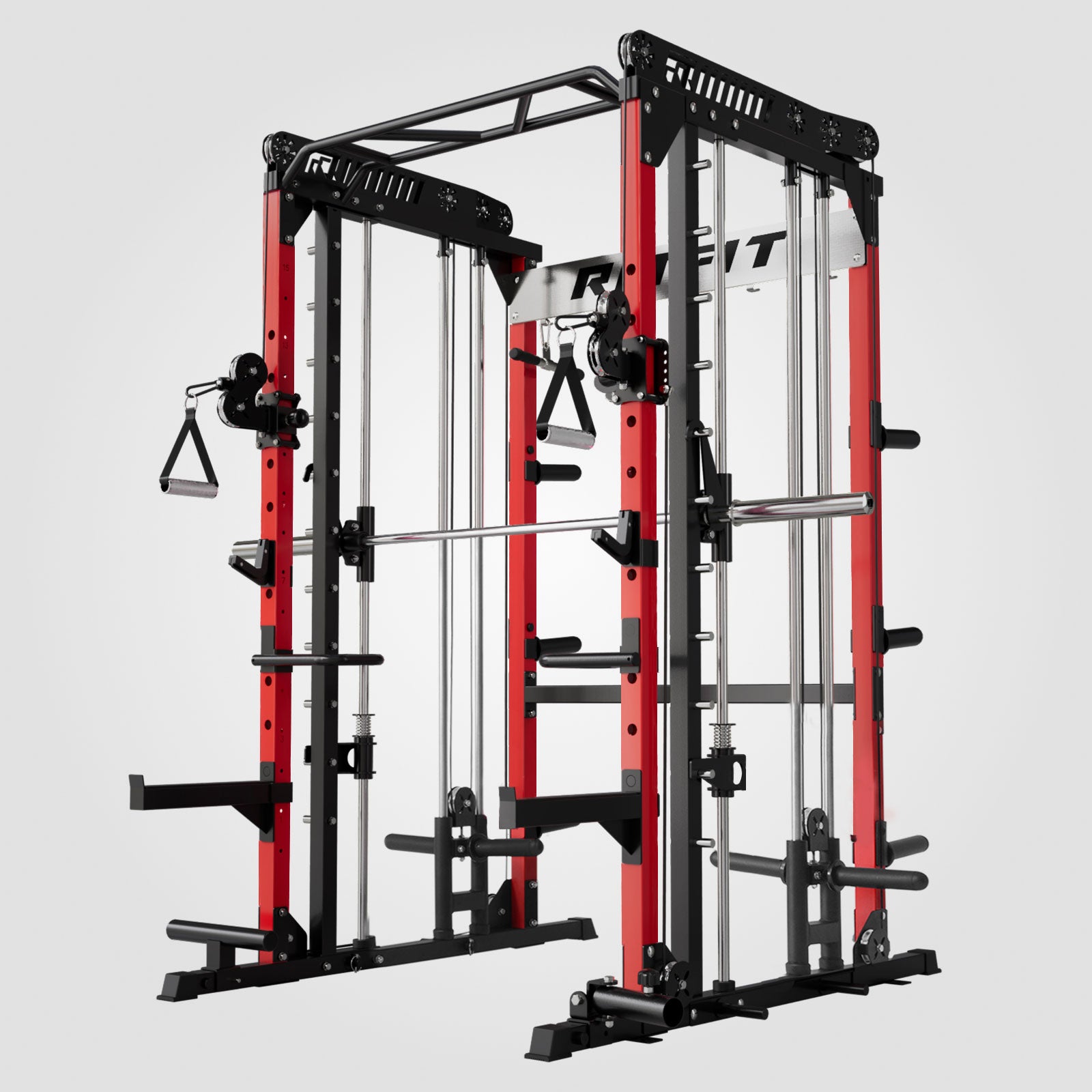
A barbell and plate setup can be useful, but it may not be the best first choice under $500 unless you already have safe support equipment. If you are planning future barbell work, explore RitFit barbells and weight plates after your core beginner setup is already working.
Sample RitFit Home Gym Setups Under $500
The best setup depends on how you train and how much space you have. Use these examples as planning frameworks, then confirm current prices and availability before buying.
Strength Focused Setup
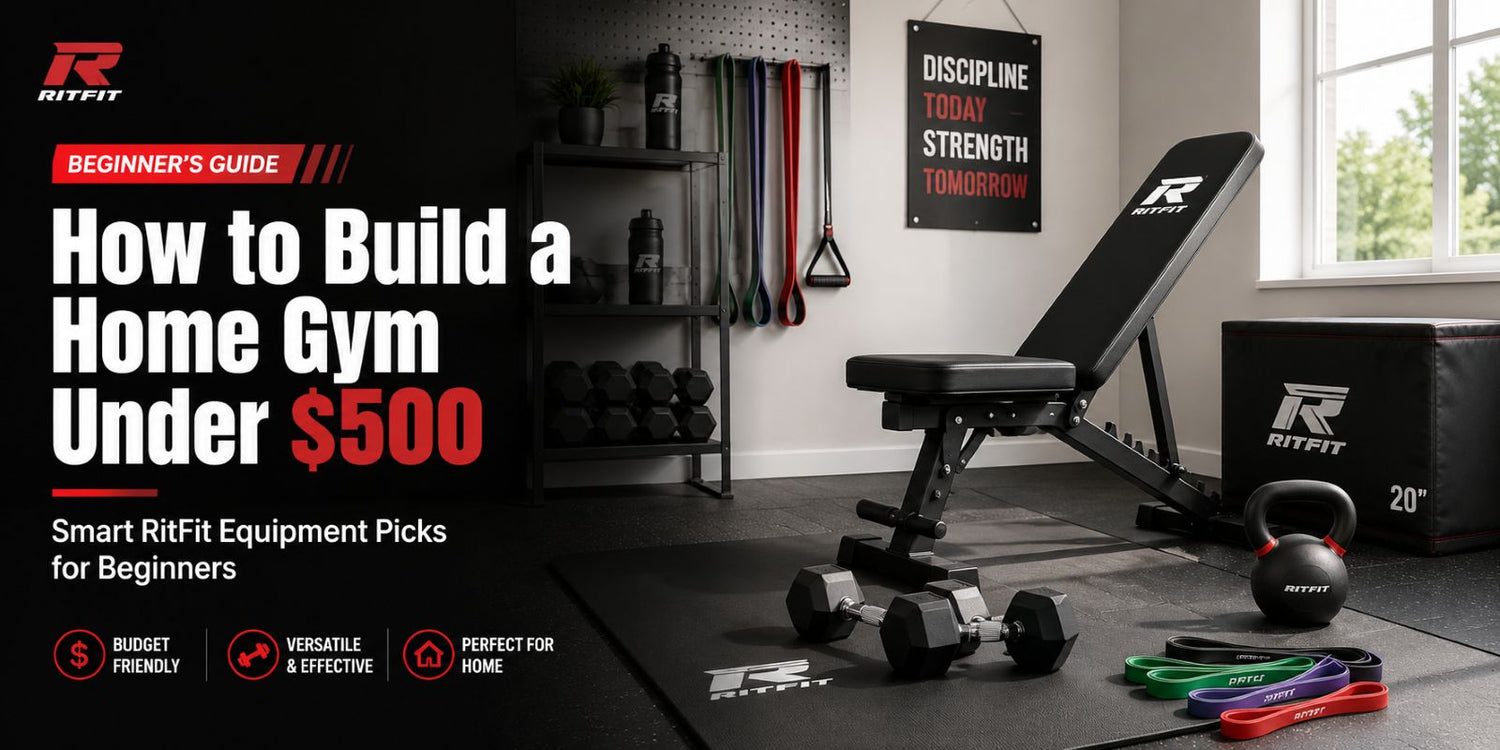
Choose dumbbells, an adjustable bench, resistance bands, and a floor mat if your goal is muscle and strength. This setup supports presses, rows, split squats, lunges, Romanian deadlifts, curls, raises, core work, and mobility.
Conditioning and Weight Loss Setup
Choose kettlebells, resistance bands, a plyo box or step platform, a mat, and a foam roller if your priority is faster paced training. This setup supports circuits, carries, swings, step ups, bodyweight work, and short rest intervals.
Small Apartment Setup
Choose compact dumbbells, resistance bands, a mat, and a foldable or compact bench if your space is limited. This setup keeps training quiet, practical, and easy to store between workouts.
Balanced Beginner Setup
Choose dumbbells, a bench, bands, a mat, and one recovery tool if you want general strength, mobility, and conditioning. This setup gives beginners enough variety to build consistency before investing in larger equipment.
Budget Comparison Table
A budget comparison table helps you avoid spending too much on one item too early. Use it to match your first purchase to your main training goal.
| Setup Type | Best Core Purchases | Best For | Main Advantage |
|---|---|---|---|
| Strength Focused | Dumbbells, adjustable bench, bands, mat | Muscle gain and progressive overload | Strong all around value |
| Conditioning Focused | Kettlebell, bands, plyo box or step platform, mat | Fat loss and faster paced workouts | High exercise variety |
| Balanced Beginner | Dumbbells, bench, bands, mat, recovery tool | New lifters and small spaces | Easy to grow over time |
| Apartment Setup | Compact dumbbells, bands, mat, foldable bench | Quiet training and tight spaces | Low storage demand |
Recommended Budget Breakdown
A simple budget split keeps the setup balanced. Put the largest share toward your anchor item, then use smaller tools to improve training variety and floor safety.
| Category | Suggested Budget Share | Why It Matters |
|---|---|---|
| Dumbbells or Kettlebells | 30% to 45% | Covers most strength and conditioning movements |
| Adjustable Bench | 25% to 35% | Expands pressing, rowing, seated, and lower body work |
| Resistance Bands | 5% to 10% | Adds warmups, mobility, and assistance training |
| Floor Mats | 10% to 15% | Protects floors and improves training comfort |
| Recovery Tools | 5% to 10% | Supports mobility and long term consistency |
How to Prioritize Purchases if You Cannot Buy Everything at Once
Build your gym in phases so each purchase solves a clear training problem. This approach reduces wasted spending and helps your setup grow around real habits.
Phase One
Start with the broadest training tools, usually dumbbells or bands plus a mat. This gives you enough equipment to begin immediately without waiting for a complete room setup.
Phase Two
Add structure with a bench, pull up option, or storage solution based on your goal and space. Home based exercise adherence is often linked to factors such as motivation, self efficacy, and practical support, so the setup should feel easy to use often.[4]
Phase Three
Add conditioning and recovery tools after your core routine is consistent. Kettlebells, plyo boxes, foam rollers, and extra accessories should improve your actual routine rather than distract from it.
Home Gym Safety Checklist
A budget home gym should still feel stable, predictable, and safe. Review the checks below before training alone.
- Check weight capacity: Make sure benches, platforms, racks, and bars support your bodyweight plus working load.
- Inspect locking points: Confirm that adjustable benches, dumbbells, and mounted equipment are secure before each workout.
- Clear the floor: Leave enough space for stepping, hinging, pressing, and setting weights down safely.
- Use floor protection: Mats improve grip, reduce noise, and help protect flooring from repeated training impact.
- Control your effort: Avoid uncontrolled max effort lifts when training alone or when equipment support is limited.
Common Budget Home Gym Mistakes
The biggest budget home gym mistakes come from buying too much too soon. A few versatile tools used consistently will usually outperform a crowded setup full of rarely used equipment.
- Buying specialty gear first: Start with tools that train many movement patterns before adding niche accessories.
- Ignoring storage: Choose equipment you can keep accessible instead of gear that becomes difficult to set up.
- Skipping floor support: Mats help protect surfaces, improve comfort, and make training feel more organized.
- Choosing price over stability: Low cost equipment only has value when it feels secure during repeated use.
- Forgetting progression: Choose equipment that allows more load, reps, range of motion, control, or exercise variety over time.
Tips to Get the Most From Your RitFit Home Gym
Use a simple structure so your equipment gets used consistently. A reliable workout can include a warmup, main strength work, short conditioning block, and cool down.
- Track your workouts: Record sets, reps, load, and exercise variations so progression is visible.
- Keep equipment accessible: Store your most used items where they are easy to reach.
- Train movement patterns: Include pushing, pulling, squatting, hinging, carrying, rotating, and core work across the week.
- Use RitFit storage when needed: Add RitFit weights storage when clutter starts limiting safe movement.
- Plan future upgrades: Explore RitFit weight benches or larger strength equipment only after your current routine feels consistent.
FAQs About Building a RitFit Home Gym
Is a home gym under $500 enough for beginners?
Yes. A home gym under $500 is enough for beginners when the setup starts with versatile strength tools, floor support, and simple accessories. The best approach is to buy one anchor item first, then add compact equipment that expands exercise variety without crowding the room.
What should I buy first for a RitFit home gym under $500?
Buy the item that supports your main goal first. Strength focused users usually benefit most from dumbbells or a bench, while conditioning focused users may start with a kettlebell, bands, and a mat. This keeps the budget focused on equipment used every week.
Can I build a small apartment home gym under $500?
Yes. A small apartment home gym under $500 works best with quiet, compact, and easy to store equipment. Dumbbells, resistance bands, a mat, and a compact bench usually fit better than large machines, heavy barbells, or high impact cardio tools.
How much space do I need for a budget home gym?
Most beginners can start with about 6 by 6 feet of clear space. This area is usually enough for dumbbell work, floor exercises, resistance bands, and a compact bench, although extra clearance improves safety for lunges, step ups, carries, and conditioning circuits.
Are adjustable dumbbells better than fixed dumbbells for a budget home gym?
Adjustable dumbbells are often better for tight budgets and small spaces. They replace several fixed pairs and make progression easier, while fixed dumbbells can still work well if you only need a narrow weight range or prefer faster weight changes.
Should I choose a bench or resistance bands first?
Choose a bench first if your main goal is strength training with dumbbells. Choose resistance bands first if you need a lower cost tool for warmups, mobility, travel workouts, and assisted strength work. Many beginners eventually benefit from owning both.
What equipment should I avoid in a home gym under $500?
Avoid bulky single purpose equipment, unstable low cost benches, and accessories that do not support progression. A budget setup should focus on tools that train multiple movement patterns, fit your space, and remain useful as strength, skill, and consistency improve.
How do I keep a budget home gym safe?
Keep a budget home gym safe by checking stability, weight capacity, floor grip, and clearance before training. Follow assembly instructions, inspect locking points, avoid uncontrolled max effort lifts when alone, and stop any exercise that causes sharp pain or unsafe equipment movement.
Conclusion
A high quality home gym under $500 starts with the right equipment, not the most equipment. Choose one anchor item, add compact support tools, and upgrade only when your training routine shows a clear need.
With a focused RitFit setup, beginners can build strength, improve conditioning, protect their space, and make home training easier to repeat.
Disclaimer: This article is for general educational purposes only and is not medical advice. Always follow product assembly instructions, check equipment stability before use, and consult a qualified professional if you are new to exercise, recovering from injury, managing pain, or unsure about proper form.
References
- Mcleod JC, Currier BS, Lowisz CV, Phillips SM. The influence of resistance exercise training prescription variables on skeletal muscle mass, strength, and physical function in healthy adults: an umbrella review. J Sport Health Sci. 2024;13(1):47-60. doi:10.1016/j.jshs.2023.06.005
- Lopez P, Radaelli R, Taaffe DR, et al. Resistance training load effects on muscle hypertrophy and strength gain: systematic review and network meta-analysis. Med Sci Sports Exerc. 2021;53(6):1206-1216. doi:10.1249/MSS.0000000000002585
- Lopes JSS, Machado AF, Micheletti JK, de Almeida AC, Cavina AP, Pastre CM. Effects of training with elastic resistance versus conventional resistance on muscular strength: a systematic review and meta-analysis. SAGE Open Med. 2019;7:2050312119831116. doi:10.1177/2050312119831116
- Ricke E, Dijkstra A, Bakker EW. Prognostic factors of adherence to home-based exercise therapy in patients with chronic diseases: a systematic review and meta-analysis. Front Sports Act Living. 2023;5:1035023. doi:10.3389/fspor.2023.1035023
- Ashworth NL, Chad KE, Harrison EL, Reeder BA, Marshall SC. Home versus center based physical activity programs in older adults. Cochrane Database Syst Rev. 2005;2005(1):CD004017. doi:10.1002/14651858.CD004017.pub2