The best machine to burn fat is the one you can use consistently, safely, and hard enough to support a calorie deficit. Rowers, treadmills, exercise bikes, ellipticals, stair climbers, and strength equipment can all help with weight loss when they fit your body, space, and training style.
This guide compares the top weight loss gym equipment for home users and explains how to combine cardio, strength training, and recovery for better long term fat loss.
Key Takeaways
- Best overall choice: A rowing machine is a strong option because it combines low impact cardio with full body movement.
- Best for walking and running: A treadmill works well if your joints tolerate impact, especially when incline walking is included.
- Best joint friendly machine: An exercise bike is stable, beginner friendly, and easy to use for longer sessions.
- Best supporting strategy: Strength training helps preserve lean mass while cardio increases weekly energy expenditure.
- Best real world answer: The right machine is the one that matches your space, joints, motivation, and weekly routine.
What Actually Burns Fat?
Fat loss happens when your body uses more energy than it receives over time. Exercise machines help by increasing energy expenditure, but nutrition, sleep, recovery, and consistency determine whether that effort becomes measurable weight loss.
Exercise alone may produce modest weight loss unless training volume and diet are managed together, so the best plan combines realistic workouts with sustainable eating habits.[1]
How Cardio Machines Help With Weight Loss
Intensity Drives Energy Demand
A harder workout usually requires more energy than an easy one. Speed, incline, resistance, cadence, stroke rate, and workout density all affect how demanding a session feels.
Duration Controls Total Work
Longer sessions can increase total energy output when intensity stays manageable. Beginners often do better by building repeatable moderate workouts before adding harder intervals.
Muscle Involvement Matters
Machines that use more major muscle groups can feel more demanding. Rowers and ellipticals often create a broader training effect than machines that mainly use the lower body.
Consistency Beats Perfect Selection
The best weight loss gym equipment is the machine you will use several times per week. Comfort, noise, storage, joint tolerance, and enjoyment often matter more than theoretical calorie burn.
Top Home Gym Machines for Fat Burning
Rowing Machine
A rowing machine is one of the best home options for users who want cardio, coordination, and low impact training in one machine. It uses the legs, hips, core, back, shoulders, and arms in a repeated pulling pattern.
- Best for: Full body cardio, low impact conditioning, compact home gym setups.
- Why it works: The stroke combines leg drive, hip hinge, core bracing, and upper body pulling.
- Watch out for: Poor technique can shift too much work to the lower back, so form matters.
- Training idea: Alternate steady rowing days with short interval sessions for variety.
Treadmill
A treadmill is highly effective if you enjoy walking, jogging, or running at home. It is especially useful because speed and incline can be adjusted quickly as fitness improves.
- Best for: Walking, running, incline cardio, simple progress tracking.
- Why it works: Running and incline walking use large lower body muscles and raise cardiovascular demand.
- Watch out for: Running may not suit users with knee, hip, or back discomfort.
- Low impact option: Use brisk incline walking instead of fast running.
Exercise Bike
An exercise bike is one of the most joint friendly fat burning exercises at home. It is stable, seated, easy to control, and practical for beginners who need a low barrier starting point.
- Best for: Beginners, heavier users, knee sensitive users, long steady sessions.
- Why it works: Resistance and cadence can be adjusted for easy, moderate, or intense training.
- Watch out for: Very easy pedaling may not create enough training stimulus.
- Training idea: Try short resistance surges within a longer moderate ride.
Elliptical Machine
An elliptical gives a smooth low impact cardio workout that can involve both the upper and lower body. It is useful for users who want longer sessions without repeated running impact.
- Best for: Low impact cardio, beginner workouts, longer steady sessions.
- Why it works: Resistance and handle use can increase total body demand.
- Watch out for: Leaning heavily on the handles can reduce training quality.
- Training idea: Increase resistance gradually instead of only moving faster.
Stair Climber
A stair climber is a demanding lower body cardio machine that challenges the glutes, quads, calves, and cardiovascular system. It can be effective, but it may feel too intense for some beginners.
- Best for: Lower body conditioning, glute focused cardio, users who like hard climbs.
- Why it works: Stepping against gravity creates high effort without high running speed.
- Watch out for: It may not be ideal for knee pain, balance issues, or very new exercisers.
- Training idea: Start with short blocks and build total time gradually.
Fat Burning Machine Comparison
Calorie burn varies by body size, intensity, technique, and session length, so use machine comparisons as decision guidance rather than fixed promises. The better question is which machine lets you train consistently without joint irritation or boredom.
- Rowing machine: Best for full body cardio and compact low impact conditioning.
- Treadmill: Best for walking, running, incline training, and simple progression.
- Exercise bike: Best for joint friendly cardio and beginner consistency.
- Elliptical: Best for smooth low impact sessions with optional upper body involvement.
- Stair climber: Best for high effort lower body conditioning.
Cardio vs Strength for Fat Loss
Cardio helps increase weekly energy expenditure, while strength training helps preserve lean mass and improve body composition. A study comparing aerobic training, resistance training, and combined training found that aerobic training was effective for reducing fat mass, while resistance training helped increase lean mass.[2]
For home users, this means the best fat loss setup is rarely one single machine. A smarter setup combines one cardio option with strength tools such as dumbbells, benches, cable systems, or strength machines.
- For beginners: Use 2 to 3 cardio sessions and 2 full body strength sessions per week.
- For muscle definition: Keep strength training in the plan while using cardio to support energy balance.
- For busy schedules: Use short machine intervals and simple full body circuits.
- For joint sensitive users: Choose cycling, rowing, elliptical work, and controlled strength training before high impact running.
If you want to build this combined approach, RitFit guides on HIIT workouts for cardio and circuit training workouts can help you connect machine training with strength based conditioning.
Can a Vibration Plate Help With Weight Loss?
A vibration plate should be treated as a supplemental tool, not the main fat loss machine. Research on whole body vibration shows possible effects on fat mass, but results are mixed and should not replace conventional cardio, strength training, and nutrition planning.[3]
A vibration plate may be useful for warm ups, low impact movement, circulation focused sessions, and recovery days. It is best used alongside regular exercise rather than as a stand alone weight loss solution.
How to Choose the Best Machine for Your Body and Home
If You Want the Most Complete Workout
Choose a rowing machine if you want low impact cardio with full body involvement. It works well for users who want a compact machine that still feels challenging.
If You Want the Easiest Starting Point
Choose an exercise bike if you need a stable, seated, and joint friendly option. It is one of the easiest machines to use while watching training videos or tracking steady progress.
If You Enjoy Walking or Running
Choose a treadmill if walking, jogging, or running feels natural to you. Incline walking is a practical alternative when running feels too harsh on the joints.
If You Have Limited Space
Choose compact equipment that supports more than one training style. A rower, folding bench, dumbbells, and resistance accessories can cover both cardio and strength in a small room.
If You Want More Muscle Definition
Choose a setup that includes strength training, not cardio alone. Resistance training has evidence for improving body composition outcomes, especially when combined with nutrition support in people with overweight or obesity.[4]
For more space planning ideas, read RitFit guides on home gym equipment under 2000 and home gym flooring for workout spaces.
Fat Burning Exercises at Home
The best fat burning exercises at home combine repeatable cardio with strength movements that use major muscle groups. Keep the workouts simple enough to repeat and adjust intensity as your fitness improves.
Rowing Interval Workout
Use this session when you want a short full body cardio workout. Keep your stroke controlled and push through the legs before finishing with the arms.
- Warm up: Row easily for 5 minutes.
- Main set: Row hard for 1 minute, then row easy for 1 minute.
- Repeat: Complete 8 to 10 rounds.
- Cool down: Row easily for 5 minutes.
Incline Treadmill Walk
Use incline walking when you want a lower impact alternative to running. Start with a moderate incline and increase only when your breathing and stride stay controlled.
- Warm up: Walk easy for 5 minutes.
- Main set: Walk briskly for 20 to 30 minutes at a challenging incline.
- Progression: Add small increases in incline or time each week.
- Cool down: Walk flat and easy for 5 minutes.
Spin Bike Intervals
Use bike intervals when you want intense cardio without running impact. Keep your hips stable and adjust resistance so each sprint is hard but controlled.
- Warm up: Pedal easily for 5 minutes.
- Main set: Sprint for 30 seconds, then pedal easy for 90 seconds.
- Repeat: Complete 8 to 12 rounds.
- Cool down: Pedal easily for 5 minutes.
Full Body Fat Loss Circuit
Use a circuit when you want strength and conditioning in the same session. Move with control and rest enough to keep good form.
- Round 1: Row 300 to 500 meters.
- Round 2: Perform 12 dumbbell squats.
- Round 3: Perform 10 push ups or incline push ups.
- Round 4: Perform 12 kettlebell swings or hip hinges.
- Round 5: Hold a plank for 30 to 45 seconds.
For more structured routines, use RitFit resources on full body circuit training workouts for beginners and exercise machines for belly fat loss and core strength.
RitFit Equipment for a Smarter Fat Loss Home Gym
A strong fat loss home gym should help you burn energy, build strength, and stay consistent. RitFit strength equipment can support the strength side of that plan while your preferred cardio machine handles conditioning.
Users who want guided strength work can explore RitFit strength machines, while users focused on lower body training can compare the RitFit GAZELLE PRO 3 In 1 Leg Press and Hack Squat Machine.
- Dumbbells: Useful for circuits, presses, rows, lunges, carries, and full body strength work.
- Adjustable benches: Helpful for presses, rows, step ups, core work, and strength progressions.
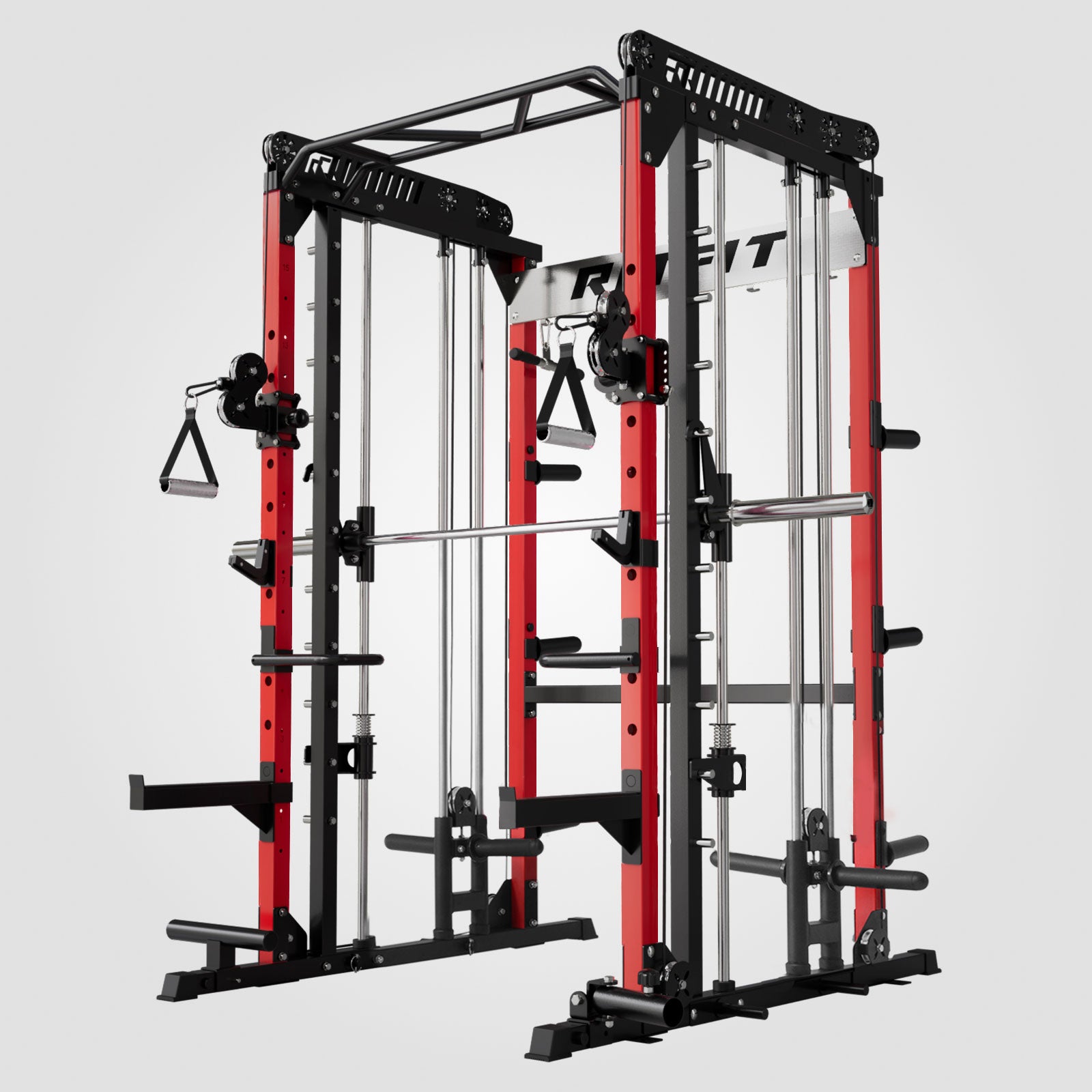
- Smith machine systems: Useful for guided strength training and solo home workouts.
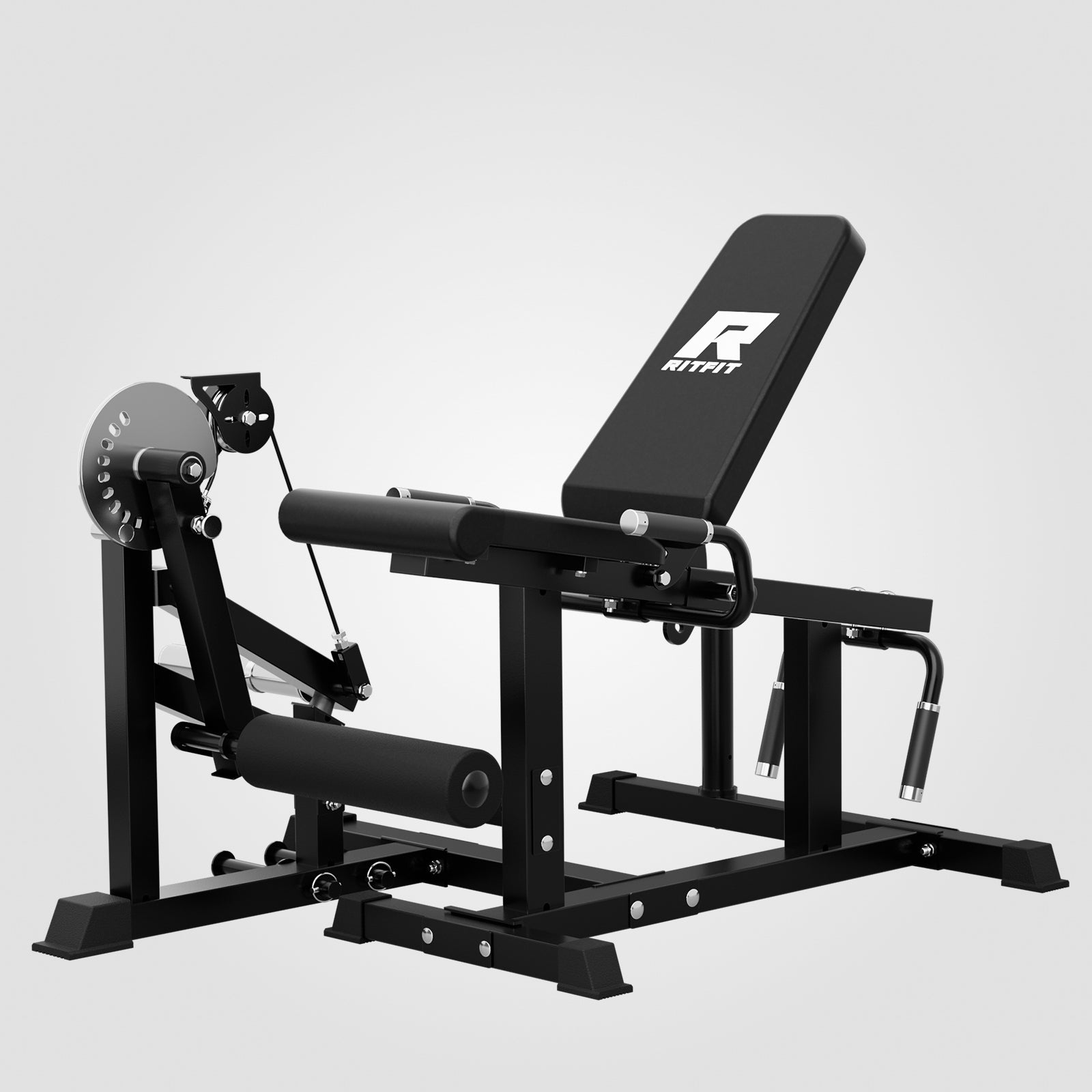
- Leg machines: Helpful for users who want structured lower body strength work at home.
If you need a versatile strength foundation, pair cardio work with an adjustable weight bench for home workouts and progressive free weight training.
Nutrition and Recovery Basics
Nutrition is the foundation of fat loss because exercise does not guarantee a calorie deficit by itself. Most users do better with a moderate deficit, adequate protein, whole foods, hydration, and consistent sleep.
- Calorie control: Aim for a sustainable deficit rather than extreme restriction.
- Protein intake: Include protein at meals to support fullness and muscle maintenance.
- Recovery: Use rest days so joints, muscles, and motivation can recover.
- Progress tracking: Track weight trends, measurements, workout performance, and energy levels.
How Often Should You Use a Fat Burning Machine?
Most beginners can start with 3 cardio sessions per week and add strength training on 2 other days. Advanced users may train more often, but recovery and joint comfort should guide volume.
HIIT can improve body composition, but it should be used carefully because high effort intervals are more stressful than steady cardio.[5] Use hard intervals 1 to 3 times per week and keep other sessions easier.
FAQs
What is the best machine to burn fat at home?
The best machine to burn fat at home is the one you can use consistently at a challenging intensity. Rowers, treadmills, bikes, ellipticals, and stair climbers can all support fat loss when paired with nutrition control, strength training, and recovery.
Which cardio machine burns the most fat?
No. One cardio machine does not automatically burn the most fat for every person. Treadmills, rowers, and stair climbers can feel very demanding, but actual fat loss depends on effort, workout duration, body size, food intake, and weekly consistency.
Can you lose belly fat with weight loss gym equipment?
Yes. Weight loss gym equipment can help reduce belly fat by increasing weekly energy expenditure. It cannot target belly fat directly, so results still depend on an overall calorie deficit, enough protein, strength training, sleep, and steady habits.
Is a rowing machine better than a treadmill for fat loss?
A rowing machine may be better if you want low impact full body cardio, while a treadmill may be better if you enjoy walking or running. The right choice depends on your joints, space, fitness level, technique, and long term motivation.
Should I do cardio or strength training first for fat loss?
Do strength training first if muscle retention and lifting performance matter most. Do cardio first if endurance is your main goal, or separate the sessions when possible, since both cardio and strength training can support fat loss in different ways.
How often should I use fat burning exercises at home?
Most beginners can start with 3 cardio sessions and 2 strength sessions per week. Build gradually, keep some workouts easy, and avoid turning every session into maximum effort, because recovery affects consistency, joint comfort, and long term progress.
Can a vibration plate for weight loss replace cardio?
No. A vibration plate for weight loss should not replace cardio or strength training. It may support warm ups, low impact movement, and recovery style sessions, but meaningful fat loss still depends on calorie balance, consistent training, and nutrition habits.
Which weight loss gym equipment is best for small spaces?
The best small space equipment is compact, versatile, and easy to store. A rowing machine, exercise bike, adjustable bench, dumbbells, kettlebells, and resistance accessories can create a strong fat loss setup without requiring a full dedicated gym room.
Conclusion
The best machine to burn fat depends on your body, space, budget, and training preference. Rowers, treadmills, bikes, ellipticals, stair climbers, vibration plates, and strength equipment can all play useful roles when they support consistent movement and a sustainable calorie deficit.
For the best long term results, combine cardio with strength training, realistic nutrition, and recovery. Choose equipment you will actually use, then build a repeatable weekly routine around it.
Disclaimer: This article is for general fitness education only and is not medical advice. If you have heart disease, joint pain, pregnancy, obesity related complications, a recent injury, or any medical condition, consult a qualified healthcare professional before starting a new exercise or weight loss program.
References
- Swift DL, Johannsen NM, Lavie CJ, Earnest CP, Church TS. The role of exercise and physical activity in weight loss and maintenance. Prog Cardiovasc Dis. 2014;56(4):441-447. doi:10.1016/j.pcad.2013.09.012.
- Willis LH, Slentz CA, Bateman LA, Shields AT, Piner LW, Bales CW, Houmard JA, Kraus WE. Effects of aerobic and/or resistance training on body mass and fat mass in overweight or obese adults. J Appl Physiol. 2012;113(12):1831-1837. doi:10.1152/japplphysiol.01370.2011.
- Omidvar M, Alavinia SM, Craven BC. The effects of whole body vibration therapy on reducing fat mass in the adult general population: A systematic review and meta-analyses. J Musculoskelet Neuronal Interact. 2019;19(4):455-464.
- Lopez P, Taaffe DR, Galvão DA, Newton RU, Nonemacher ER, Wendt VM, Bassanesi RN, Turella DJP, Rech A. Resistance training effectiveness on body composition and body weight outcomes in individuals with overweight and obesity across the lifespan: A systematic review and meta-analysis. Obes Rev. 2022;23(5):e13428. doi:10.1111/obr.13428.
- Khodadadi F, Bagheri R, Negaresh R, Moradi S, Nordvall M, Camera DM, Wong A, Suzuki K. The effect of high-intensity interval training type on body fat percentage, fat and fat-free mass: A systematic review and meta-analysis of randomized clinical trials. J Clin Med. 2023;12(6):2291. doi:10.3390/jcm12062291.