








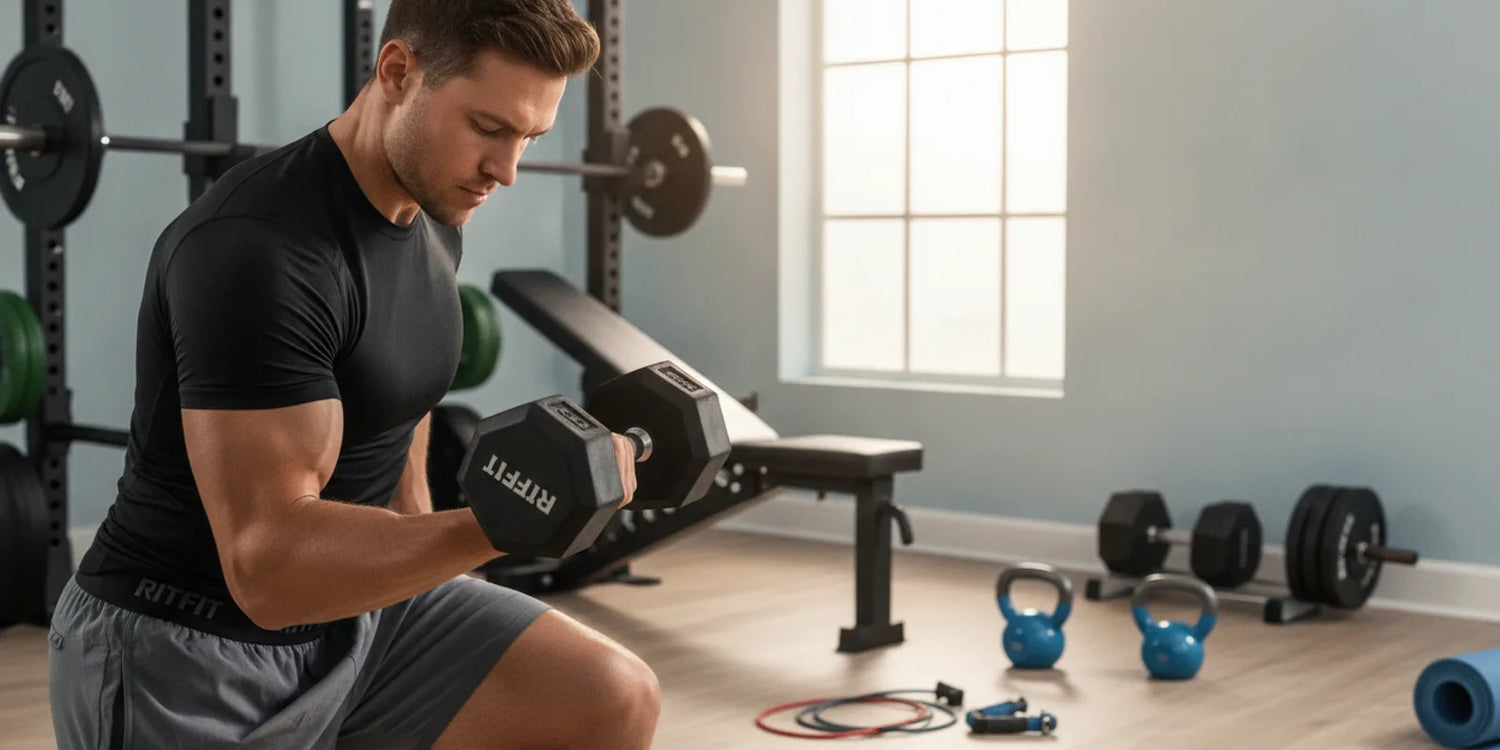
Rubber coated dumbbells combine a cast iron core with a protective rubber shell that cuts noise, protects flooring, and improves grip compared to bare metal weights, making them a popular home gym choice.
This guide covers what to check before buying, how RitFit's rubber coated and rubber hex dumbbells compare across budgets and spaces, and how to keep a set in good shape for years.
Quick Answer: The best rubber coated dumbbells combine a fully sealed rubber layer over a cast iron core, a hex or near hex head to prevent rolling, and a weight range that matches your current lifts with room to add heavier pairs as you progress.
Key Takeaways
- Coating quality: Look for a rubber layer that fully seals the metal head without seams or thin spots.
- Head shape: Hex heads prevent rolling and protect floors, especially in garage or apartment gyms.
- Weight range: Match your set to your current lifts, with room to add heavier pairs later.
- Value: The extra cost of rubber coating is generally worth it for noise reduction and floor protection.
- Long term plan: Choose a rack compatible option early to avoid rebuying storage later on.
What Makes Rubber Coated Dumbbells Different From PVC or Cast Iron
Rubber coated dumbbells differ from PVC coated and cast iron dumbbells in how much protection and grip the outer layer adds over a standard metal core. A full rubber coating insulates hands from cold metal, improves grip when sweaty, and helps prevent rust, according to outdoor gear testers.
- Rubber coated: a full rubber shell over the metal head gives the best noise reduction and floor protection.
- PVC coated: a thinner vinyl shell that often feels lighter and offers less floor protection than rubber.
- Cast iron, uncoated: the most durable core material, but with no floor or noise protection and a tendency to chip paint over time.
- Durability tradeoff: metal is typically more durable, while rubber and neoprene coatings are softer and less likely to damage floors, according to Traci Thompson, associate professor of Health and Kinesiology at the University of Utah.
The rubber layer does not change how the weight trains your muscles. A 2018 study on resistance training equipment used rubber coated iron dumbbells ranging from 1 to 25 kilograms as the free weight comparison tool when measuring upper body muscle activation.[1]
If floor protection and quiet operation matter most, a fully coated rubber hex dumbbell is usually the better fit than a thinner PVC coated dumbbell.
What Should You Check Before Buying Rubber Coated Dumbbells
The most important factors when buying rubber coated dumbbells are coating thickness, head shape, handle grip, and available weight range. These four factors determine how well a set protects your floor, feels in your hand, and grows with your training.
- Coating thickness: look for a rubber layer that fully encases the head without seams or thin spots.
- Head shape: hex heads stop the dumbbell from rolling, an important safety feature in a home gym.
- Handle grip: a knurled or textured handle underneath the coating keeps your grip secure when sweaty.
- Weight range: confirm the set covers your lightest warm up movement through your heaviest lift.
- Increment spacing: smaller weight jumps make progressive overload easier to manage over time.
- Warranty coverage: check whether the coating and core are covered separately, since coating wear is the most common failure point.
A single pair of dumbbells also supports many different pressing angles. A 2013 study found that dumbbell shoulder press activated the upper trapezius and anterior deltoid significantly more than incline press, which in turn activated them more than bench press.[2]
Pair a well coated set with the RitFit Hex Rubber Dumbbells shown in the comparison table below if you already own a rack and just need to fill in missing weights.
Which RitFit Rubber Coated or Rubber Hex Set Fits Your Home Gym
The right RitFit rubber coated dumbbell option depends on whether you need a single replacement weight, a complete starter set, or a rack organized system for a growing collection. Budget, floor space, and how many pairs you already own are the three deciding factors.
| Product | Format | Best For |
|---|---|---|
| RitFit Hex Rubber Dumbbells | Single pair, rubber coated hex head | Replacing or filling out an existing set |
| 550 lb Rubber Coated Dumbbell Set With Rack Stand | Multi pair set plus rack | Full home gym buildout with organized storage |
| RitFit PWR05 3-Tier Rack With Rubber Hex Dumbbell Set | Rack plus rubber hex set | Growing collections that need tiered organization |
Comparison limited to RitFit's own rubber coated and rubber hex dumbbell lineup, no competitor products included.
Watch how the rubber hex design holds up in practice before deciding which RitFit set fits your space.
Still deciding on a format. Compare every RitFit dumbbell option side by side before committing to a set.
Is the Rubber Coating Worth the Extra Cost
Rubber coating on dumbbells is worth the extra cost for most home gym owners because it protects flooring and reduces workout noise.
- Floor protection: the coating reduces noise and improves floor protection compared with bare metal weights, according to one buying guide.
- Higher upfront cost: rubber coated models often cost more than basic uncoated dumbbells.
- Apartment friendly: quieter drops matter more in shared living spaces than in a standalone garage.
- Resale value: a well maintained rubber coating keeps a set looking newer for longer.
Need a lighter feeling, lower cost alternative for occasional use. The RitFit PVC Coated Round Head Dumbbells trade some floor protection for a lower price point, and the Rubber Coated Grip Plates Technical Specification page details how RitFit measures coating quality across its product line.
How Should You Plan for Long Term Growth
Planning for long term growth means picking a rack compatible dumbbell format now so you are not rebuying storage or replacing pairs as your strength increases. A adjustable or expandable set lets you add weight in small increments without buying a whole new pair.
- Rack compatibility: confirm your current or planned rack can hold the full weight range you intend to reach.
- Adjustable options: an adjustable dumbbell saves floor space compared with stocking many fixed pairs.
- Fixed pair sets: a fixed rubber hex set is simpler to grab quickly but takes more storage as the range grows.
- Budget pacing: buying a mid size set first and adding heavier pairs later spreads out cost.
Machine based strength training and free weight training, including dumbbells, produce comparable gains in maximal strength, hypertrophy, and jump performance, according to a 2023 systematic review and meta-analysis.[3]
Need to add adjustable options to a fixed rubber hex collection. Browse the Adjustable Dumbbells collection or start with a bundled Dumbbells and Rack Package to plan storage from day one.
What Buying Mistakes Should You Avoid
The most common rubber coated dumbbell buying mistakes are choosing a weight range too narrow for growth, skipping the rack plan, and assuming all rubber coatings offer the same protection. Each mistake usually shows up within the first few months of use.
- Buying too light: a set that tops out near your current max leaves no room to progress.
- Ignoring storage: loose pairs on the floor damage coatings faster than rack stored pairs.
- Assuming coatings are equal: a thin or seamed coating wears and cracks sooner than a fully sealed one.
- Skipping increment planning: large jumps between pairs make progressive overload harder to manage.
Avoiding these mistakes early saves you from replacing a set within the first year of ownership.

How Do You Maintain Rubber Coated Dumbbells
Maintaining rubber coated dumbbells mainly means wiping off sweat after each use and storing them on a rack instead of the floor. These two habits prevent most of the coating damage that shortens a set's lifespan.
- Wipe after use: sweat left on the rubber can degrade the coating over time.
- Store on a rack: stacking pairs on a hard floor increases the chance of cracking or flat spots.
- Avoid extreme heat: direct sun or a hot garage can soften and prematurely age rubber coatings.
- Inspect handles regularly: check knurling and end caps for looseness before each workout.
A few minutes of care after each session keeps a rubber coated set looking and performing like new for years.
What Do Trainers Say About Training With Dumbbells
Trainers value dumbbells for the range of pressing and squatting movements a single pair supports, from shoulder press to goblet squat. This versatility is a major reason dumbbells anchor most home gym programs.
Exercise scientists point out that dumbbells cover pressing, curling, and squatting patterns without needing multiple machines.
"Dumbbells are great, sure. Shoulder press, chest press. You can do squats, you can do a goblet squat, where you hold the dumbbell here and do a squat."
Brad Schoenfeld, PhD, Exercise Science Researcher specializing in Muscle Hypertrophy, CUNY Lehman College
FAQs About Rubber Coated Dumbbells
What are rubber coated dumbbells?
Rubber coated dumbbells are cast iron weights wrapped in a rubber shell that protects floors, reduces noise, and improves grip compared with bare metal. The coating does not change the muscle building effect of the weight, only the handling and protection.
How thick should the rubber coating be?
The rubber coating should fully seal the metal head with no seams or thin spots, especially around the edges of the hex faces. A thin or gapped coating wears through faster, cracks sooner, and offers less floor protection over time than a fully sealed layer.
Is paying more for rubber coated dumbbells worth it?
Yes. Rubber coating is worth the extra cost for most home gym owners because it protects floors, cuts noise, and helps resist rust from sweat exposure over time. Garage or commercial gyms with rubber flooring already installed see less added benefit from the coating itself.
What weight range should a beginner buy?
A beginner should buy a set that covers their lightest warm up movement through a weight slightly heavier than their current working max on each lift. This leaves room to progress without needing to replace the entire set within a few months of consistent training.
What is the difference between rubber coated and rubber hex dumbbells?
Rubber hex dumbbells are a specific rubber coated design with a hexagonal head that prevents rolling, while rubber coated is the broader category covering any coated shape or head design. Most rubber coated dumbbells sold today use the hex head design for this reason.
How do you maintain rubber coated dumbbells?
Wipe sweat off the rubber after each workout and store the pairs on a rack instead of leaving them on the floor. Avoiding direct sun and extreme heat also helps the coating last longer without cracking, softening, or peeling away from the metal core.
Conclusion
The best rubber coated dumbbells fully seal a cast iron core in rubber, use a hex or near hex head to stop rolling, and cover a weight range that matches your current lifts with room to grow. Check coating thickness and handle grip before you buy.
Start with a single pair to fill gaps in an existing set, or choose a rack compatible bundle if you are building a home gym from scratch. Browse the full Dumbbells collection to compare every RitFit option.
Disclaimer
This article is for general informational purposes only and is not a substitute for professional fitness or medical advice. Consult a qualified trainer or healthcare provider before starting a new strength training program, especially if you have an existing injury or health condition.
Save on your next RitFit order
Tap the button to copy your code, then paste it at checkout.
References
1. Bergquist R, Iversen VM, Mork PJ, Fimland MS. Muscle Activity in Upper-Body Single-Joint Resistance Exercises with Elastic Resistance Bands vs. Free Weights. J Hum Kinet. 2018;61:5-13. doi:10.1515/hukin-2017-0137
2. Luczak J, Bosak A, Riemann BL. Shoulder Muscle Activation of Novice and Resistance Trained Women during Variations of Dumbbell Press Exercises. J Sports Med (Hindawi Publ Corp). 2013;2013:612650. doi:10.1155/2013/612650
3. Haugen ME, Vårvik FT, Larsen S, Haugen AS, van den Tillaar R, Bjørnsen T. Effect of free-weight vs. machine-based strength training on maximal strength, hypertrophy and jump performance, a systematic review and meta-analysis. BMC Sports Sci Med Rehabil. 2023;15(1):103. doi:10.1186/s13102-023-00713-4





