Yes, a Smith machine can build muscle when it helps you train hard, repeat reps, and progress safely over time. This RitFit guide covers the best Smith machine exercises for muscle building, the movements that deliver the most hypertrophy value, and how to turn one station into an efficient full body program at home.
You will find 20 exercises grouped by muscle, the RitFit lineup matched to training goals, a 3 day program, and setup rules that keep solo lifting safe. Jump straight to chest, back, legs, shoulders, arms, or core in the sections below.
Quick Answer: The best Smith machine exercises for muscle building pair compound lifts such as squats, bench presses, rows, and hip thrusts with cable accessory work. The guided bar lowers balance demands, so you can keep tension on the target muscle, train close to failure, and progress safely toward hypertrophy at home.
Key Takeaways
- Muscle growth works on any guided machine: A Smith machine builds muscle when mechanical tension, training volume, effort, and progression stay high over time.
- Machine training matches free weights for size: Research comparing free weight and machine based training found no meaningful hypertrophy disadvantage when training was matched.
- Match the model to your training goal: Cable combo models support full body variety, while rack based Smith setups favor heavier basics and simpler strength work.
- Setup quality drives safety and results: Bench placement, foot position, safety stop height, and bar path alignment affect comfort, control, and target muscle tension.
- One station can run a complete program: A planned Smith machine workout trains chest, back, legs, shoulders, arms, and core without moving between machines.
Can a Smith Machine Really Build Muscle?
Yes, a Smith machine can build muscle when you train close enough to failure, use enough weekly volume, and increase difficulty over time. The guided bar reduces balance demands, which helps many home gym users focus more directly on the working muscle.
A 2023 systematic review and meta analysis found no meaningful hypertrophy difference between free weight and machine based training when comparing available studies.[1] Research on resistance training load also shows muscle hypertrophy can occur across a wide range of loads when effort is high, while heavier loading remains especially useful for strength development.[2]
What Makes the Best Smith Machine for Muscle Building?
The best Smith machine for muscle building helps you train hard, train safely, and progress without constant setup friction. For home gym users, the right machine combines stability, smooth movement, practical safety stops, and enough exercise variety to support long term training.
- Stable guided bar path: A stable path helps you repeat squats, presses, rows, and hip thrusts with less balance demand. This can make progression easier to measure from week to week.
- Smooth bar travel: Smooth movement helps you control tempo and maintain tension through the full rep. Sticky or uneven travel can make hard sets less consistent.
- Strong frame feel: A rigid frame matters most during heavy squats, presses, rows, and hip thrusts. The machine should feel stable before you add challenging loads.
- Useful range of motion: The setup should allow deep squats, incline presses, Romanian deadlifts, hip thrusts, and overhead work when space allows. Good range of motion increases the number of productive exercises you can perform.
- Reliable safety stops: Adjustable stops are essential for solo training. They should sit just below your lowest safe position for each lift.
- Cable or attachment options: Cable stations, pull up bars, J hooks, spotter arms, dip handles, and plate storage can make one station more complete. These features matter more when you want a full home gym in one footprint.
Which RitFit Smith Machine Should You Pick for Home Gym Training?
The best RitFit Smith machine for you matches your training style, room layout, and need for cable work. Start with the Smith machine collection if you want to compare current options in one place.
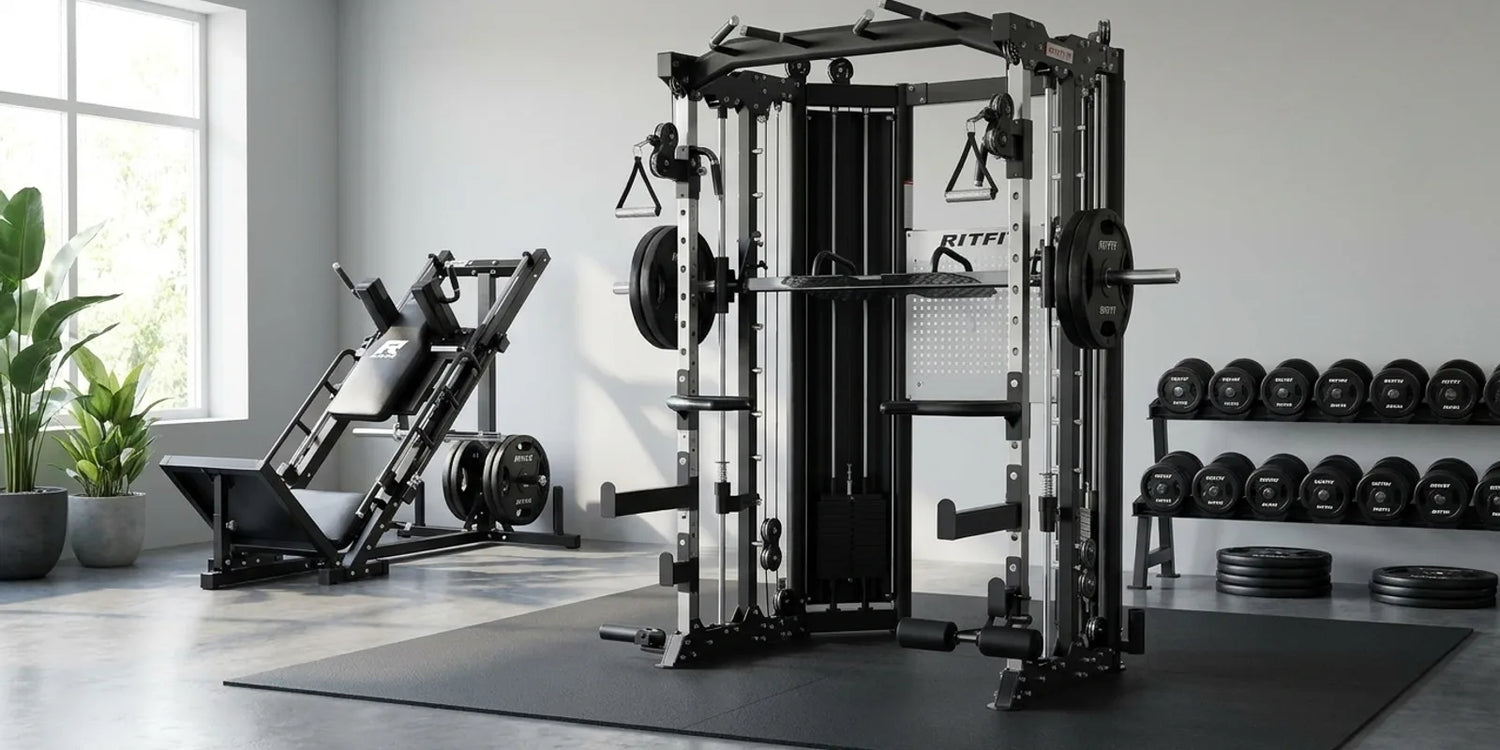
- Smith machine with cable crossover: This style is best for lifters who want compound lifts and cable accessories in one station. It supports presses, rows, flyes, pulldowns, curls, pushdowns, and lower body work.
- Smith machine home gym package: This style is best for users who want a broader home gym setup with rack functions and accessories. The M1 PRO Smith machine is a strong example for buyers who want one larger training hub.
- Modular Smith machine setup: This style is best for users who want to expand their station over time. The M2 multi-functional Smith machine fits users who want more upgrade flexibility.
- All in one Smith machine setup: This style is best for lifters who value training convenience and a more complete station. The BPC06 all-in-one Smith machine package is relevant for shoppers comparing all in one home gym systems.
"Training in the floating range means your primary movers and the stabilizing muscles around the lift both have a job to do. For hypertrophy work at moderate to sub-maximal loads, that middle ground produces a training feel that is genuinely different from a standard Smith machine."
BJ Nelson, Head of Field Testing, The Iron Clinic, RitFit M2 Pro 3D Review
How Did We Evaluate Smith Machines for Muscle Growth?
We evaluated Smith machines by how well they support repeatable training, progressive overload, full body exercise coverage, and safe solo lifting. These criteria matter because hypertrophy depends on consistent stimulus and a setup that users can train with regularly.
- Training versatility: The machine should support squats, presses, rows, hip thrusts, lunges, and accessory work. Cable options add value for isolation exercises.
- Safety system: Safety stops and lockout positions should be easy to understand before training heavy. Solo lifters need a clear bailout option.
- Home gym fit: Footprint, ceiling height, plate loading space, and bench travel should match the room. A machine only works well when the room supports the movements.
- Progression potential: The setup should let you increase load, reps, sets, or exercise difficulty over time. A clear path to progressive overload keeps training productive.
- Accessory compatibility: Attachments can increase long term value when they add real exercise variety. A cable station, bench, barbell, and plates can turn the Smith machine into a complete training system.
What Is the Best RitFit Smith Machine Setup by Training Goal?
The best RitFit Smith machine setup depends on what you need the station to do most often. Choose by goal first, then confirm space, attachments, and product specifications before buying.
| Training Goal | Best Setup Type | Why It Works | Buyer Note |
|---|---|---|---|
| Full body hypertrophy | Smith machine with cable crossover | Combines compound lifts with cable flyes, pulldowns, curls, and pushdowns. | Best for users who want more exercise variety from one station. |
| Heavy basic strength work | Rack based Smith machine setup | Supports squats, presses, rows, hip thrusts, and other loaded basics. | Prioritize frame feel, safety stops, and bench clearance. |
| Expandable home gym | Modular Smith machine setup | Allows more upgrade paths through compatible attachments. | Check future accessory compatibility before choosing. |
| Convenient all in one training | Smith machine home gym package | Reduces the need for separate stations in a garage or spare room. | Measure footprint and ceiling clearance carefully. |
| Accessory focused training | Cable compatible Smith machine | Supports isolation work for chest, back, shoulders, arms, and core. | Consider lat pulldown attachments if your program uses frequent cable work. |
Setup recommendations are guidance based on how each Smith machine style trains. Confirm your exact model specifications on the product page before buying.
Which Smith Machine Features Matter Most?
The most important Smith machine features are the ones that affect safety, movement quality, and training consistency. Focus on the features you will use every week, not only the longest accessory list.
- Guide rods and bearings: Smooth guide rods and bearings help the bar travel evenly. This improves rep control and makes tempo work easier.
- Safety stops: Safety stops should be adjustable for squats, presses, rows, and hip thrusts. Set them before every hard working set.
- Bench compatibility: A stable adjustable bench expands pressing angles and hip thrust options. The Gator adjustable bench is a solid pairing for a Smith machine training station.
- Weight plate support: Plate loaded systems work best when you have enough plates and storage space. Pairing the machine with bumper plates supports progressive lower body and pressing work.
- Cable options: Adjustable pulleys increase exercise variety for isolation training. They are especially useful for chest flyes, lat work, lateral raises, curls, and triceps extensions.
- Attachment ecosystem: Useful attachments can reduce the need for separate machines. Landmine, dip, lever arm, pulldown, and cable handles may add value when they fit your actual program.
Is a Smith Machine as Good as Free Weights for Muscle Growth?
A Smith machine is not automatically better or worse than free weights for muscle growth. A 2023 systematic review and meta analysis found no significant hypertrophy difference between free weight and machine based training when comparing available studies.[1]
Free weights are better when your goal is sport specific skill with a free bar path. Smith machines are better when you want a stable path, safer solo training, and repeatable tension on target muscles.
What Are the Best Smith Machine Exercises for Muscle Building?
The best Smith machine exercises for muscle building are the movements that let you load the target muscle safely and progress over time. Use the machine for stable compound lifts first, then add cable and accessory work to fill training gaps.
Chest
Smith machine presses build chest size because the guided path lets you focus on controlled reps and stable tension.
- Flat Smith machine bench press: Set the bench so the bar lowers to your mid chest. Keep your shoulder blades pulled back and set safety stops before heavy sets.
- Incline Smith machine bench press: Use a moderate incline to bias the upper chest and front delts. Avoid flaring the elbows into an uncomfortable shoulder position.
- Close grip Smith press: Use a narrower grip to emphasize triceps while still training the chest. Keep the elbows controlled and avoid bouncing the bar.
- Cable fly: Use the cable station if your model includes pulleys. Keep the motion controlled and stop where the chest feels stretched without shoulder pain.
Back
Smith machine back exercises work best when you use the fixed path to reduce setup instability and keep tension on the lats and upper back.
- Smith machine bent over row: Hinge at the hips and pull the bar toward the lower ribs or upper waist. Keep the torso braced and avoid turning the row into a shrug.
- Inverted row: Set the bar at a height that lets you control the full rep. Keep the body straight and pull the chest toward the bar.
- Cable pulldown: Use a pulldown attachment if your setup supports it. Pull with the elbows and keep the torso stable.
- Seated cable row: Use a cable handle to train the mid back and lats. Keep the ribs down and avoid jerking the handle.
Legs and Glutes
Smith machine lower body training is valuable because the stable bar path helps you load squats, split squats, Romanian deadlifts, and hip thrusts with more control.
- Smith machine squat: Place your feet where your knees and hips move comfortably. Many lifters prefer a slightly forward stance for a smoother quad focused path.
- Romanian deadlift: Keep the bar close and push the hips back until you feel a strong hamstring stretch. Control the lowering phase and keep the spine braced.
- Split squat: Use the guided bar to reduce balance demands and load the front leg hard. Keep the front foot stable and avoid bouncing from the bottom.
- Reverse lunge: Step back under control and drive through the front leg. This adds leg volume with less balance demand than free weight lunges.
- Hip thrust: Use a stable bench and a bar pad. Reach full glute contraction at the top without overextending the lower back.
Shoulders
Smith machine shoulder training is most effective when the bar path feels natural and does not force the shoulder into a painful angle.
- Seated Smith machine overhead press: Set the bench and bar so the press path feels smooth. Stop the set if the shoulders feel pinched or unstable.
- Cable lateral raise: Use the cable station for lateral delt isolation. Keep the motion slow and avoid swinging the torso.
Arms
Smith machine and cable arm work adds direct volume without requiring a separate station.
- Smith machine drag curl: Keep the bar close to the torso and move the elbows slightly back. Use controlled reps instead of momentum.
- Cable curl: Use cables for constant biceps tension. Keep the upper arms steady and squeeze at the top.
- Cable triceps pushdown: Use a rope or straight handle if available. Keep the elbows pinned and finish each rep with control.
Core
Core work on a Smith machine station is most useful when it supports controlled trunk position rather than swinging or rushing reps.
- Hanging knee raise: Use the pull up bar if your model includes one. Raise the knees with control and avoid swinging.
- Pallof press: Use a cable handle to train anti rotation. Hold the torso still and press straight forward.
How Should You Program a RitFit Smith Machine Workout?
The fastest way to grow with a Smith machine is to combine compound lifts, accessory work, and steady progression. Use enough weekly volume, a practical rep range, and progress one variable at a time.
Progressive overload can come from either load progression or repetition progression, so you can keep growing even when the bar weight stays steady for a week.[3] Research on hypertrophy variables also supports using enough weekly volume and avoiding excessively slow reps when the goal is efficient muscle growth.[4]
- Use practical hypertrophy rep ranges: Most compound lifts work well for 6 to 12 reps. Many cable and isolation exercises work well for 10 to 15 reps.
- Train each major pattern: Include a squat, hip hinge, horizontal press, row, vertical press, unilateral leg movement, and core exercise. This gives the program full body coverage.
- Progress one variable at a time: Add weight, reps, sets, or better control when your form remains stable. Do not chase heavier loads if your range of motion breaks down.
- Use 2 to 4 weekly sessions: Beginners often do well with full body workouts. Higher volume lifters may prefer push, pull, and legs.
Sample 3 Day Smith Machine Muscle Building Plan
This simple plan trains the full body three times per week with a mix of compound and accessory work.
| Day | Main Lift | Second Lift | Accessory Work | Core or Finisher |
|---|---|---|---|---|
| Day 1 | Smith machine squat | Smith machine bench press | Cable row | Hanging knee raise |
| Day 2 | Smith Romanian deadlift | Incline Smith press | Cable pulldown | Cable triceps pushdown |
| Day 3 | Smith split squat | Smith overhead press | Smith hip thrust | Cable curl |
This plan is a starting template. Adjust set and rep numbers to your training level and recovery.
How Do You Set Up a Smith Machine Safely?
Safe setup makes harder training possible. Most Smith machine problems come from poor bench placement, safety stops set too low, or forcing a stance that does not match your joints.
- Measure your room first: Check ceiling height, wall clearance, bench travel, and plate loading space. This is especially important in basements and compact garage gyms.
- Set safety stops before working sets: Position them just below the lowest controlled point of the lift. The stops should protect you without shortening a safe range of motion.
- Practice the lockout pattern: Rack and unrack the empty bar before adding serious weight. Solo training is safer when the lockout feels automatic.
- Match stance to bar path: Adjust your foot position until the target muscle stays loaded and the joints feel comfortable. Do not force a squat stance that irritates your knees, hips, or lower back.
- Use stable accessories: A bench, bar pad, collars, plates, and cable handles should be secure before the set starts. Recheck the setup whenever you change exercises.
- Confirm product specs: Bar resistance, cable ratio, load capacity, footprint, and included attachments can vary by model. Always verify the exact RitFit product page before planning heavy training.
Who Is a RitFit Smith Machine Best For?
A RitFit Smith machine is best for home gym users who want a stable strength station with broad exercise coverage. It is especially useful for people who train alone, value time efficiency, or want guided bar work combined with cable training.
- Home gym buyers: One Smith machine station can replace several separate training zones. This helps users build a garage, basement, or spare room gym with fewer machines.
- Busy lifters: A Smith machine can reduce transition time between exercises. This makes short training sessions more productive.
- Beginners: The guided bar can make squats, presses, rows, and lunges feel more approachable. Beginners should still start light and learn each setup carefully.
- Solo lifters: Safety stops and clear lockout positions make hard sets more manageable without a spotter. This is one of the biggest reasons home gym users choose Smith machines.
- Lower body focused lifters: Smith squats, split squats, Romanian deadlifts, and hip thrusts are high value leg and glute exercises. The stable bar path helps many users load them consistently.
How Do You Choose the Right RitFit Smith Machine?
Choose your RitFit Smith machine by training goal first, then room layout, then upgrade needs. This usually leads to a better long term fit than choosing by price alone.
- Choose a cable combo for maximum variety: This is the best route if you want cable flyes, pulldowns, curls, pushdowns, and lateral raises in the same station. The Buffalo Smith machine is relevant for users comparing versatile Smith machine systems.
- Choose a package for a fuller home gym: A package can reduce the need to buy every component separately. Confirm exactly what is included on the product page before ordering.
- Choose a modular setup for future expansion: Modular systems make sense if you expect to add attachments over time. Match future accessories to your actual training plan.
- Choose a compact setup for tighter spaces: Smaller rooms require careful measuring before purchase. Check ceiling clearance, pull up space, and bench travel before deciding.
- Choose based on real exercises: Your machine should support the lifts you will actually perform every week. Do not overvalue attachments that do not fit your program.
FAQs About Smith Machine Exercises for Muscle Building
Can a Smith machine build muscle as well as free weights?
Yes. A Smith machine can build muscle effectively when training effort, volume, and progression are high enough. Free weights may transfer better to free bar skills, but a guided bar can help many home lifters train target muscles with more control and confidence.
Is a RitFit Smith machine good for beginners?
Yes. A RitFit Smith machine can be a strong beginner option because the guided bar and safety stops make solo training feel more manageable. Beginners should still practice the empty bar path, learn lockout points, and start with conservative loading.
Which RitFit Smith machine is best for full body muscle building?
The best choice is usually a Smith machine with cable or functional trainer features. This setup supports compound lifts, cable isolation work, and full body training from one station. The right model depends on room size, training style, and attachment needs.
What are the best Smith machine exercises for muscle growth?
The best Smith machine exercises are squats, bench presses, incline presses, Romanian deadlifts, split squats, rows, overhead presses, and hip thrusts. These movements support progressive loading and cover the major muscle groups needed for full body hypertrophy.
How often should you train with a Smith machine for muscle growth?
Most lifters can train with a Smith machine 2 to 4 times per week depending on volume and recovery. Beginners often do best with full body sessions, while experienced lifters may prefer push, pull, and legs for more weekly volume.
Does a Smith machine help with safer solo training?
Yes. A Smith machine can make solo training safer when the safety stops are set correctly and the lifter understands the lockout pattern. It does not remove all risk, so proper setup, controlled reps, and conservative loading still matter.
Can you use a Smith machine for glute growth?
Yes. A Smith machine is useful for glute growth when you program hip thrusts, Romanian deadlifts, split squats, reverse lunges, and squat variations. The guided bar can help keep tension on the glutes while reducing balance demands.
How do you choose the right Smith machine for a home gym?
Choose the right Smith machine by matching it to your training goal, room size, and accessory needs. Measure ceiling height, bench travel, wall clearance, and plate loading space first, then compare cable options, safety stops, and attachment compatibility.
How many reps should you do on a Smith machine for muscle growth?
Use a practical hypertrophy rep range of 6 to 12 reps for most compound Smith machine lifts. Many cable and isolation exercises work well for 10 to 15 reps. Stop each set with one to two reps in reserve so you can recover for the next session.
Is a Smith machine safe for your joints?
A Smith machine can be joint friendly when the bar path matches your body and the safety stops are set correctly. Many users find squats and presses more comfortable because the guided bar reduces balance demand. Adjust foot placement and stop any movement that causes sharp pain.
Conclusion
A RitFit Smith machine can be an excellent muscle building tool when you want stable bar training, safer solo workouts, and efficient full body programming at home. Choose the model that fits your space and training style, master the core lifts, and use steady progression to turn one station into a complete hypertrophy setup.
Start with the 20 exercises above, run the 3 day plan for four to six weeks, and track your sets and reps. Check the RitFit discount guide before you order to save on your next home gym upgrade.
Disclaimer
This guide is for general education only and does not replace medical advice, injury assessment, or qualified coaching. Use only the setup, load limits, and safety features listed for your exact RitFit model, stop any exercise that causes sharp pain or loss of control, and start with conservative loading if you are new, deconditioned, or returning after injury.
References
1. Haugen ME, Vårvik FT, Larsen S, Haugen AS, van den Tillaar R, Bjørnsen T. Effect of free weight vs machine based strength training on maximal strength, hypertrophy and jump performance. BMC Sports Sci Med Rehabil. 2023;15:103. doi:10.1186/s13102-023-00713-4. PMCID: PMC10426227
2. Lopez P, Radaelli R, Taaffe DR, Newton RU, Galvão DA, Trajano GS, Teodoro JL, Kraemer WJ, Häkkinen K, Pinto RS. Resistance training load effects on muscle hypertrophy and strength gain. Med Sci Sports Exerc. 2021;53:1206-1216. doi:10.1249/MSS.0000000000002585. PMCID: PMC8126497
3. Plotkin D, Coleman M, Van Every DW, Maldonado J, Oberlin D, Israetel M, Feather J, Alto A, Vigotsky AD, Schoenfeld BJ. Progressive overload without progressing load. PeerJ. 2022;10:e14142. doi:10.7717/peerj.14142. PMCID: PMC9528903
4. Bernárdez-Vázquez R, Raya-González J, Castillo D, Beato M. Resistance training variables for optimization of muscle hypertrophy. Front Sports Act Living. 2022;4:949021. doi:10.3389/fspor.2022.949021. PMCID: PMC9302196