








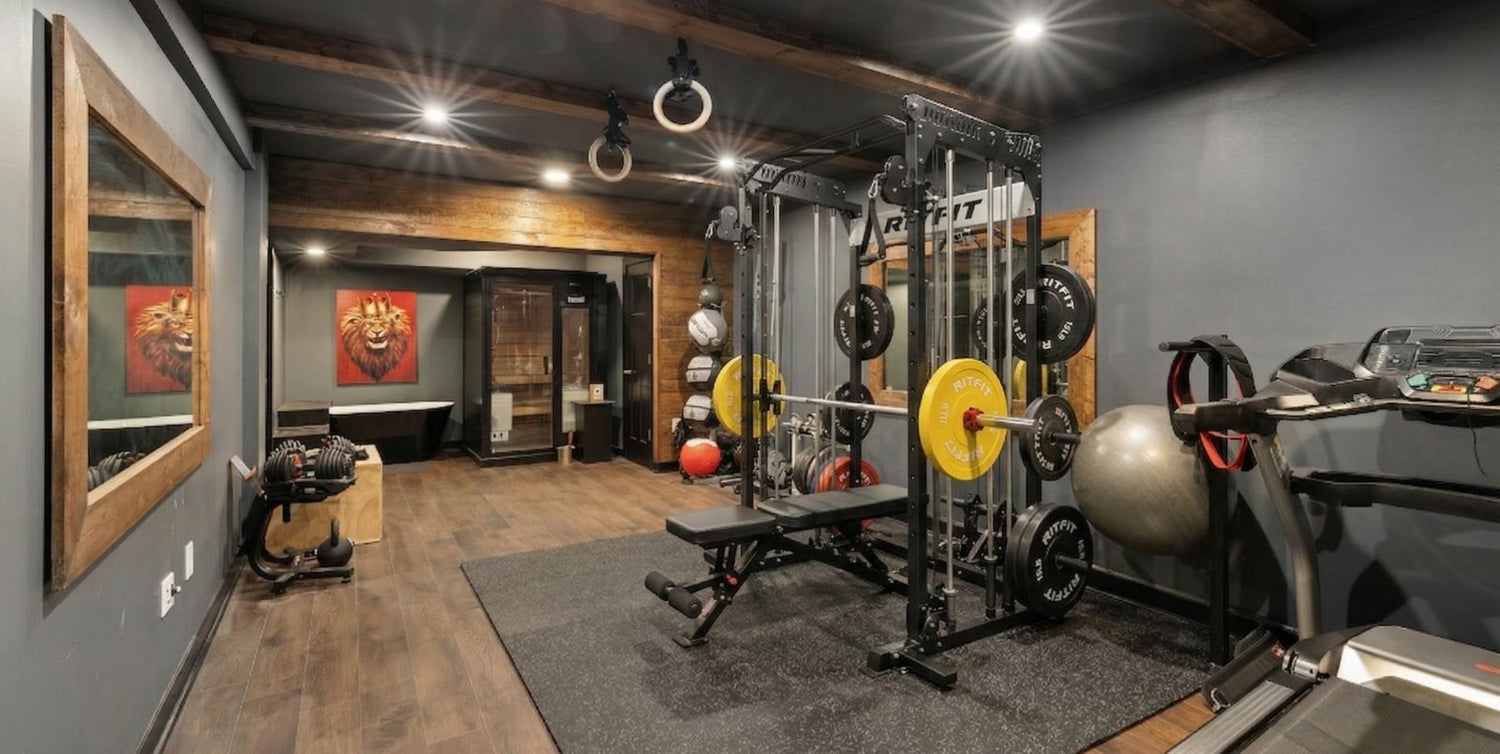
Best Smith machine for basement gym planning starts with ceiling clearance, delivery access, and training needs, not a product comparison alone. The RitFit M1 PRO can suit a basement gym when the room accommodates its 85.3 inch height and the owner wants guided bar work, cable training, storage, and rack functions in one station.
This guide helps basement home gym builders measure the real training envelope, choose a practical configuration, control noise, and decide whether an all in one Smith machine is a sensible fit before moving heavy boxes downstairs.
Quick Answer: The best Smith machine for a basement gym is one that clears the lowest ceiling obstacle, fits the delivery route, and supports the training you will repeat weekly. The RitFit M1 PRO is a practical option for a suitable basement because it combines a guided bar, cable system, rack functions, and storage in one station.
Key Takeaways
- Start with clearance: Measure to the lowest joist, pipe, duct, or light fixture, then map the bench and plate loading paths.
- Use one station well: A Smith machine with cables and rack functions can reduce the need for separate equipment in a constrained room.
- Check the access route: Door widths, stair turns, landings, and box staging matter as much as the finished floor plan.
- Protect the room: Flooring, controlled re-racking, and moisture management help a basement setup stay quieter and better maintained.
- Buy for your routine: The M1 PRO makes the most sense for lifters who want guided compounds, cable accessories, and shared-use convenience in one footprint.
What should you measure before choosing a Smith machine for a basement gym?
A basement Smith machine should be chosen only after the full training envelope and delivery route have been measured. The machine footprint alone does not show whether a bench can move, plates can load, or a lifter can use the pull-up area safely.
- Height: Measure from the finished floor to the lowest permanent obstruction, not only to the ceiling drywall.
- Working space: Mark the bench path, side-loading room, cable travel, and walking path before ordering.
- Access: Measure every doorway, stair turn, landing, and low point between the delivery entrance and the final room.
- Floor: Confirm that the surface is level and plan protective flooring before assembly begins.
Basement buyers should also decide whether full pull-ups and standing overhead work are priorities. A low ceiling can still support many productive movements, but it changes which features will be used at full range.
Why does the RitFit M1 PRO fit some basement gyms?
The RitFit M1 PRO fits a basement gym when 85.3 inches of machine height and usable clearance are available, and the owner values several training stations in one place. The frame combines guided bar work, cable training, rack functions, and storage instead of requiring separate footprints for each function.
| Basement decision | What to check | Why it matters |
|---|---|---|
| Ceiling | 85.3 inch machine height plus movement clearance | Low obstructions can limit pull-ups and overhead work. |
| Training range | Guided bar, cables, rack use, and storage | More functions in one station can simplify a compact layout. |
| Delivery | Stairs, turns, doors, and staging space | A finished room fit does not guarantee a practical move-in route. |
| Room conditions | Level floor, rubber protection, and humidity control | These details affect day-to-day use and long-term care. |
Machine height and feature details are based on the current M1 PRO product listing. Confirm current specifications and package options before purchase.
For a broader look at available configurations, compare the current RitFit Smith machine collection after measuring your room.
"Few pieces of equipment in the home exercise industry are as comprehensive and versatile as this all-in-one gym system. The robust system provides a natural, centered bar path for compound lifts like squats, presses, and rows, and incorporates a dual cable crossover station with a full rack of precision-engineered attachments."
Tom Eskey, CF-L1, CPT, Home Gym Equipment Reviewer, Garage Gym Revisited, RitFit M1 Multi-functional Smith Machine, Our Review
"We got the M1 Pro with the weight stacks. What a great choice. Love the setup. Feels very sturdy and have had no issues so far."
Travis O. Verified Buyer, RitFit M1 PRO Smith Machine Weight Stack Home Gym Package
How do RitFit M1 PRO features affect basement training?
The RitFit M1 PRO turns its published 1,600 pound maximum load, 2:1 pulley ratio, 15 cable adjustment positions, and 33 pound Smith bar into practical training options for a compact home gym. Those specifications matter when they help a lifter move from squats or presses to rows, pulldowns, flyes, and arm work without changing rooms or adding another machine.
Durability and stability
The 339 pound rack weight and published maximum load describe a substantial integrated frame for home use. In a basement, a level setup and gradual bolt tightening matter because a stable base supports more confident squats, presses, rows, and re-racking.
Versatility and training flow
The guided bar, rack area, and cable system let one station cover compound lifts and accessories. A lifter can use Smith squats or incline presses, then shift to pulldowns, rows, flyes, pushdowns, curls, and lateral raises without giving up more floor area.
Performance in daily use
Verified M1 PRO buyers describe the weight-stack configuration as convenient and the setup as sturdy. That is useful evidence for a shared or short-rest basement routine, but individual assembly quality and room layout still affect the experience.
Value and boundaries
The M1 PRO offers the most value when its combined stations replace equipment you would otherwise buy and store separately. It is a weaker match when a basement is too low, the stair route is difficult, or a simpler free-weight rack is the only training priority.
Use RitFit rack attachments selectively, choosing only accessories that add a movement you will use regularly rather than filling limited basement space.
How should you install a Smith machine in a basement?
A basement Smith machine should be assembled at its final location after the access route, floor protection, and bench path have been confirmed. Heavy frames are much harder to reposition once partly assembled, especially in a room with narrow paths or stored household items.
- Stage components: Move boxes near the final location and sort hardware before building the frame.
- Keep it square: Tighten bolts gradually while checking alignment, rather than fully tightening each connection immediately.
- Protect the slab: Use high-density gym flooring mats to help protect the floor and reduce the sharp impact of equipment contact.
- Test movement paths: Place the bench, load a light bar, and test cable travel before a full workout.
If anchoring is being considered, confirm the appropriate process and hardware with a qualified professional. A level freestanding setup still needs disciplined loading and enough room around the frame.
What training works well with a basement Smith machine?
A basement Smith machine supports a productive full-body routine when the exercise order matches the available space and equipment. Guided compounds can be followed by cable accessories, which reduces setup changes during a short home session.
- Lower body: Smith squats, split squats, lunges, and Romanian deadlifts can use a repeatable bar path.
- Upper body pushing: Flat or incline Smith pressing becomes more practical when an adjustable bench can enter and leave the rack smoothly.
- Upper body pulling: Cable pulldowns and rows add back work without a separate functional trainer.
- Accessories: Flyes, pushdowns, curls, lateral raises, and cable chops can fill training gaps without new floor space.
An adjustable weight bench makes pressing and supported rows more practical, but plan its path before committing to a layout. Set safeties before a working set and choose movements and loads that suit your experience and space.[1]
How can you manage basement noise, moisture, and maintenance?
Basement noise and maintenance are easiest to manage through room preparation and consistent habits. Rubber flooring, controlled eccentrics, careful re-racking, and not dropping plates do more for a quieter training space than an equipment claim alone.
- Noise: Re-rack deliberately, avoid dumping plates, and use suitable flooring to reduce impact and vibration.
- Moisture: Keep the room dry, wipe rails and contact points, and use a dehumidifier when damp conditions persist.
- Inspection: Periodically check bolts, cables, rails, and contact points so small issues are handled early.
- Longevity: A dry room, level setup, and equipment that is not overloaded or constantly bumped support long-term use.
These routines help preserve the machine's durability and keep a basement gym more comfortable for the household.
Who should choose the RitFit M1 PRO for a basement gym?
The RitFit M1 PRO is best suited to a basement lifter who wants guided bar work, cable accessories, rack functions, and storage in one station. It is particularly practical for solo training and shared home gyms when the ceiling, access route, and floor plan have already been checked.
- Good fit: You want one central station for compound lifts, cables, and accessories, and your basement accommodates the full training envelope.
- Consider another layout: Your ceiling is very low, the delivery route cannot handle the boxes, or a shorter rack and primarily free-bar training better match your routine.
- Check before ordering: Review the current RitFit M1 PRO weight stack package details and ensure the selected package fits your intended use.
What should you buy with a basement Smith machine?
A basement Smith machine setup works best when the first accessories protect the room and improve the exercises you perform most often. Flooring, a compatible bench, plates, and a small set of cable handles usually add more practical value than buying bulky extras too early.
- Prioritize the basics: Plan flooring, a bench, plates, and the handles required for your weekly program.
- Budget for the room: Include delivery access, storage, and basement protection in the overall plan, not only the machine price.
- Confirm support details: Review current shipping, return, and warranty information before placing an order, particularly when the installation is difficult to reverse.
For a current view of compatible all-in-one options, browse the multifunctional Smith machine range and the RitFit M1 multi-functional home gym Smith machine before finalizing your room plan.
FAQs
Is the RitFit M1 PRO a good Smith machine for a basement gym?
Yes. It is a strong basement gym option if your room can handle its 85.3 inch height and you want guided bar work, cable training, and rack functions in one station. The main fit checks are ceiling clearance, side loading space, bench path, and delivery access downstairs.
How much ceiling height do you need for the M1 PRO in a basement?
You should plan for the machine height plus practical training clearance, not just the frame height. If your basement is close to the machine height, pull ups, top attachments, and standing overhead work can feel restricted, so measure floor to the lowest joist before ordering.
Can a Smith machine reduce noise in a basement gym?
Yes. A Smith machine can help reduce some noise because the bar path is guided and re racking is more controlled than free bar dumping. Noise and vibration still depend on your plates, flooring, lifting style, and whether you use rubber mats or crash pads.
What should you measure before moving a Smith machine into a basement?
You should measure the full delivery path before you buy. Check doorway width, stair turns, landing space, ceiling obstructions, and the room itself, because a machine can fit the basement floor plan and still become a problem on the way downstairs.
Does the M1 PRO work well for solo lifting at home?
Yes. It works well for solo lifting because it combines a guided bar path, adjustable safeties, rack features, and cable work in one footprint. That setup can make hard training feel more manageable when you do not have a spotter and want faster exercise changes.
Which accessories matter most for a basement Smith machine setup?
The most useful accessories are the ones that improve training flow without wasting floor space. An adjustable bench, durable flooring mats, practical cable handles, and a few well chosen rack attachments usually add more real value than buying extra bulky equipment too early.
Conclusion
The best Smith machine for a basement gym is the one that fits the full room, access route, and weekly training plan. The RitFit M1 PRO is a strong option for a suitable basement when its 85.3 inch height clears the room and its combined guided bar, cable, rack, and storage functions match the way you train.
Measure before ordering, prepare the floor, and choose only the accessories that improve your weekly routine. Review the RitFit discount guide when you are ready to plan the full setup.
Disclaimer
This article provides general equipment and training information, not medical, engineering, or professional installation advice. Consult a qualified professional for health concerns, structural questions, or installation decisions that require expert assessment.
References
1. Aerenhouts D, D'Hondt E. Using Machines or Free Weights for Resistance Training in Novice Males? A Randomized Parallel Trial. Int J Environ Res Public Health. 2020;17(21). doi:10.3390/ijerph17217848. PMCID: PMC7662789
2. Iversen VM, Norum M, Schoenfeld BJ, Fimland MS. No Time to Lift? Designing Time-Efficient Training Programs for Strength and Hypertrophy: A Narrative Review. Sports Med. 2021;51(10):2079-2095. doi:10.1007/s40279-021-01490-1. PMCID: PMC8449772
3. Hong AR, Kim SW. Effects of Resistance Exercise on Bone Health. Endocrinol Metab (Seoul). 2018;33(4):435-444. doi:10.3803/EnM.2018.33.4.435. PMCID: PMC6279907
4. Kompf JM, Rhodes RE, Lee S. Selecting Resistance Training Exercises for Novices: A Delphi Study with Expert Consensus. Am J Lifestyle Med. 2025;19(3):437-449. doi:10.1177/15598276221115662. PMCID: PMC11873903





