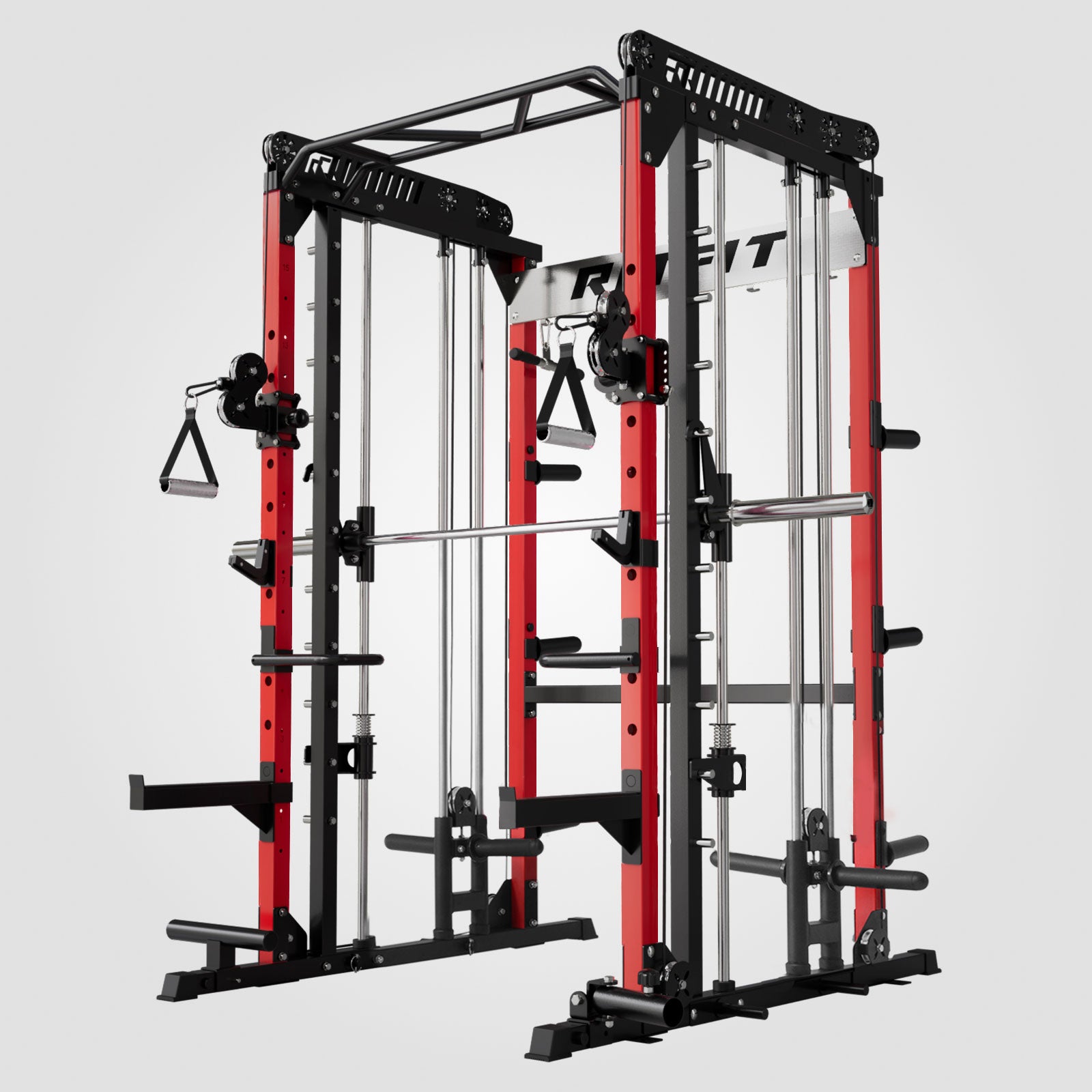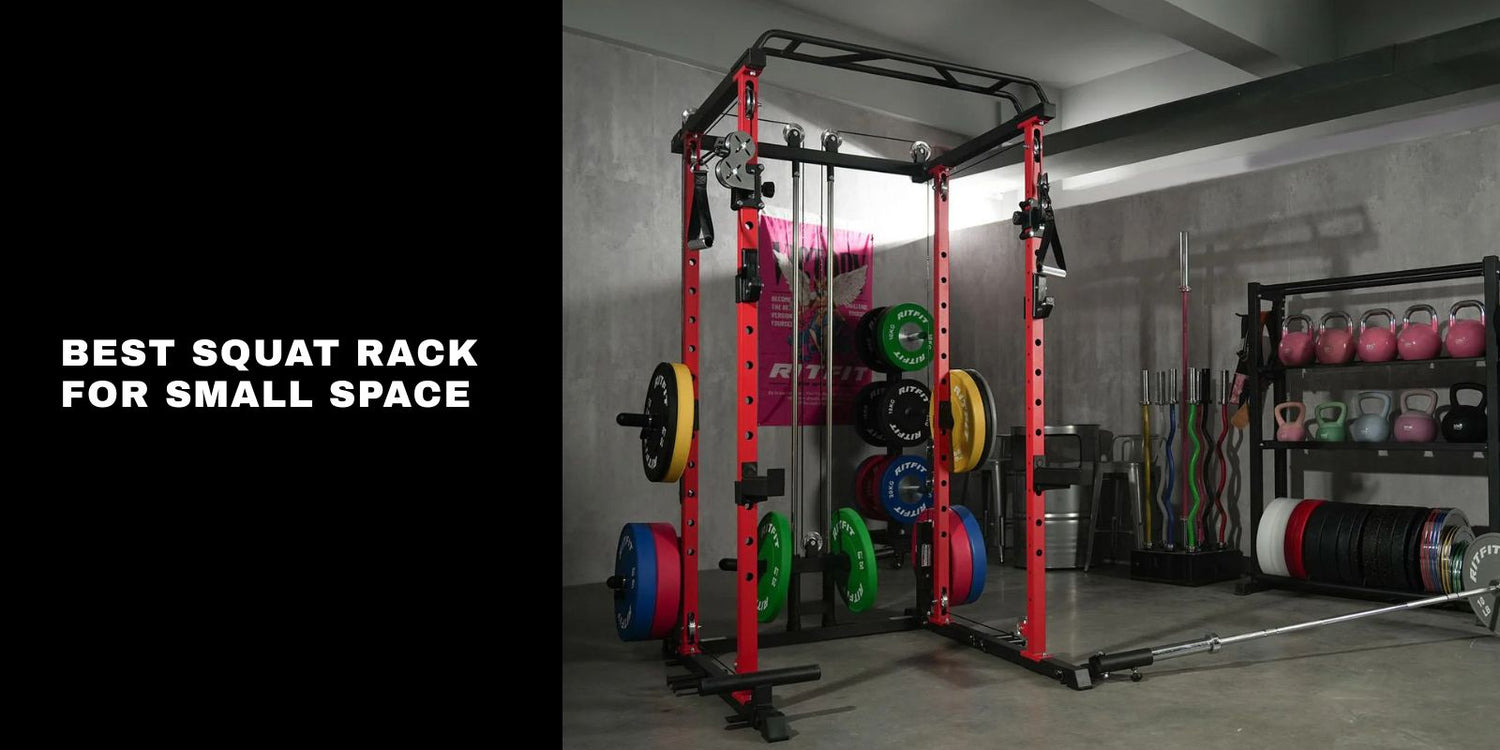
The best squat rack for small space is one that gives you safe barbell training, cable exercise variety, pull up capability, and storage without forcing you to buy separate machines. For home gym owners working with a garage corner, basement room, spare bedroom, or compact training zone, the RitFit P3 Power Cage is a strong option because it combines multiple training stations in one frame.
This guide explains how to judge compact rack size, working clearance, safety features, and long term value before choosing the RitFit P3 1200LBS Power Cage with Smooth Cable System.
Key Takeaways
- Best use case: The RitFit P3 is best for small home gyms that need one station for squats, bench press, cable work, pull ups, and plate storage.
- Space planning matters: Rack dimensions are only the starting point, because real setup space also includes barbell loading, bench movement, cable travel, and walkaround clearance.
- Safety advantage: A full cage setup gives solo lifters more controlled barbell support than basic squat stands when J hooks and safety spotter arms are set correctly.
- Best alternative: A folding wall rack saves more floor space when not in use, but it does not offer the same all in one cable and storage function.
- Buying rule: Choose the P3 if you value training variety and permanent readiness more than clearing the floor after every session.
Understanding Small Space Squat Rack Requirements
A compact squat rack must save space without removing the safety features that make barbell training practical at home. The best option should balance rack footprint, ceiling height, barbell clearance, storage, and exercise variety.
Footprint Efficiency
Footprint efficiency means the rack should deliver more training options per square foot. The RitFit P3 combines a power cage, cable system, pull up bar, and plate storage, which can reduce the need for separate stations.
- Rack frame: RitFit lists the P3 at 67.2 inches long, 59.1 inches wide, and 81 inches tall.
- Working space: Plan more space than the listed frame size because a barbell, bench, cable handles, and plate loading all need room.
- Best planning target: If your room allows it, use a larger training zone than the rack footprint so you can move safely around the equipment.
Height Considerations
Height is critical because basement gyms and garage gyms often have limited ceiling clearance. At 81 inches tall, the P3 can fit many residential spaces, but pull ups and overhead work require extra room above the frame.
- Low ceiling rooms: Measure floor to ceiling height before ordering, especially if you plan to use the pull up bar.
- Overhead pressing: Some users may need to press outside the rack or use seated variations if the ceiling is low.
- Pull up clearance: Make sure your head can clear the bar path without hitting the ceiling.
Storage Integration
Built in storage matters in small rooms because loose plates and attachments quickly make a compact gym feel crowded. The P3 includes plate storage pegs that help keep loaded plates close to the rack and off the floor.
- Plate organization: Store heavier plates lower when possible to improve access and rack stability.
- Attachment control: Keep cable handles, collars, and small accessories in one bin or wall mounted organizer.
- Future expansion: If you add more accessories, browse compatible RitFit rack attachments before changing your layout.
Solo Lifting Safety
Solo lifters need safeties because home training usually happens without a spotter. A full cage gives better bar control than basic squat stands when the safeties are adjusted to the correct height.
- J hooks: Set J hooks at a height that lets you unrack without shrugging or standing on your toes.
- Safety spotter arms: Set safeties just below the lowest safe point of each lift.
- Technique priority: Safety equipment is backup protection, not a replacement for controlled reps and smart loading.
RitFit P3 Power Cage Overview
The RitFit P3 Power Cage is built for home gym owners who want a compact but versatile strength station. It is most relevant for people who want barbell lifts, cable exercises, pull ups, and storage in one dedicated setup.
Core Training Functions
The P3 works as a rack first, then expands into cable and accessory training. That makes it more useful than a basic squat stand for lifters who want full body programming in limited space.
- Squat and press station: The rack supports core barbell lifts such as squats, bench press, overhead press, and rack pulls.
- Cable station: The integrated cable system supports rows, curls, pushdowns, flyes, face pulls, and rotational core work.
- Pull up station: The multi grip pull up bar expands back and arm training without requiring a separate tower.
- Storage: Integrated plate storage helps reduce loose equipment around the rack.
Why It Fits Small Home Gyms
The P3 is space efficient because it consolidates several training needs into one fixed station. This matters when your home gym also shares space with parking, shelves, laundry, tools, or household storage.
- Garage gym use: It can work well along a wall or corner if you leave room for plate loading and bench movement.
- Basement gym use: It can fit many basement layouts if the ceiling is high enough for pull ups and cable attachments.
- Spare room use: It is better suited to dedicated rooms than shared living spaces because the rack is a permanent setup.
If you want a bundled setup rather than choosing each item separately, compare the RitFit P3 Power Cage 1200LBS Home Gym Package with your current barbell, plates, and bench needs.
Who Should Choose the RitFit P3
Choose the P3 if you want one rack to cover most strength training patterns in a compact training zone. It is especially useful for home lifters who do not want to buy a separate cable machine, pull up tower, and plate storage rack.
- Garage gym owners: Good fit for lifters who need to keep training equipment organized in a shared space.
- Basement lifters: Good fit if ceiling height and pull up clearance are confirmed before purchase.
- Solo trainers: Good fit for users who want J hooks and safeties for home barbell work.
- Compact gym builders: Good fit for users who prefer one all in one station over several separate machines.
Who Should Consider a Different Rack
Choose a different rack if your main goal is clearing the floor after every workout. The P3 is compact for its function set, but it is not a folding rack that disappears against the wall.
- Renters with no dedicated gym zone: A lighter stand or folding option may be easier to manage.
- Very low ceiling rooms: A shorter rack may be better if pull ups or overhead work are important.
- Commercial style rack buyers: A larger 3 by 3 rack ecosystem may suit users who want maximum accessory expansion.
- Minimal barbell only lifters: Basic squat stands may be enough if you do not need cable work or pull ups.
Small Space Fit Checklist Before You Buy
Measure the room before buying a squat rack because the equipment footprint is not the same as the training footprint. You need enough room for the rack, barbell, bench, plates, cable exercises, and safe movement around the frame.
- Ceiling height: Confirm the rack height first, then add extra room for pull ups, cable attachments, and overhead movements.
- Barbell side clearance: A standard barbell extends beyond the rack width, so both sides need space for loading and unloading plates.
- Bench path: Leave enough front and rear room to slide an adjustable bench into flat, incline, and seated positions.
- Cable movement: Cable flyes, rows, and face pulls need more working clearance than the rack frame alone suggests.
- Door and package access: Confirm that boxes and uprights can move through doors, stairs, and hallway turns before assembly.
- Flooring: Use rubber flooring or dense gym mats to protect the floor, reduce vibration, and improve grip.
- Storage plan: Decide where plates, collars, cable handles, and the barbell will live before you assemble the rack.
RitFit P3 vs Other Small Space Squat Rack Options
The best small space rack depends on whether you value floor clearance, training variety, safety, or permanent readiness most. The P3 favors training variety and readiness, while folding racks and squat stands favor open floor space.
RitFit P3 vs Folding Wall Rack
A folding wall rack saves more space when not in use, but it usually requires wall mounting and offers fewer built in training stations. The P3 needs a permanent footprint, but it adds cable work, pull ups, and storage in one frame.
- Choose the P3: You want cable training, pull ups, storage, and no wall mounted installation.
- Choose a folding rack: You need to park a car, clear the floor, or fold equipment away after training.
- Key tradeoff: Folding racks save inactive space, while the P3 saves total equipment count.
RitFit P3 vs Squat Stands
Squat stands take less space, but they offer less protection and less exercise variety than a full cage. The P3 is better for solo lifters who want more structure around the barbell and more options beyond squats.
- Choose the P3: You train alone, bench press at home, and want cable accessories.
- Choose squat stands: You only need light to moderate barbell basics and maximum portability.
- Key tradeoff: Squat stands are smaller, while the P3 is safer and more versatile for most home programs.
RitFit P3 vs Half Rack
A half rack is easier to access from the front, but it does not fully surround the bar path like a cage. The P3 gives more contained lifting support and combines more training tools in one compact footprint.
- Choose the P3: You want a fuller cage feel, cable work, and built in storage.
- Choose a half rack: You prefer open access and already own separate cable or storage equipment.
- Key tradeoff: Half racks feel open, while the P3 offers broader function from one station.
How to Set Up the RitFit P3 in a Small Room
The best setup places the rack where barbell loading, bench movement, cable work, and walking access do not collide. Start with clearance planning before assembly because moving a built rack in a tight room is difficult.
Garage Layout
Place the P3 against the longest practical wall if you need the rest of the garage for storage or parking. Keep enough side clearance for plates and enough front clearance for bench press and cable rows.
- Best placement: Use a side wall or rear wall depending on where the garage door, shelves, and vehicle path sit.
- Flooring tip: Use rubber mats under the rack and bench zone to protect concrete and reduce equipment noise.
- Storage tip: Keep plates on the rack pegs and accessories in one wall bin to avoid clutter.
Basement Layout
Basement setup starts with ceiling height because overhead work is usually the limiting factor. If the ceiling is tight, prioritize squats, bench press, rows, and seated cable work over standing overhead movements.
- Best placement: Put the rack where ceiling beams, lights, and vents do not interfere with pull ups.
- Moisture tip: Keep the frame away from damp walls and use flooring that allows better surface protection.
- Noise tip: Use controlled lifting, mats, and plate storage to reduce vibration through the house.
Spare Room Layout
A spare room can work if it is truly dedicated to training and has enough room for the barbell. Avoid placing the rack so close to a wall that you cannot load plates safely.
- Best placement: Center the rack enough to allow side loading and front bench movement.
- Wall protection: Add wall spacing or protective panels near plate storage zones.
- Equipment pairing: Choose one compact adjustable bench from the RitFit benches collection rather than multiple single purpose benches.
Complete Training Options in One Compact Station
The P3 is valuable in a small gym because it supports the major movement patterns without requiring separate machines. Well planned resistance training can improve strength, hypertrophy, and muscular endurance when load and progression match the goal.[1]
Lower Body Training
The P3 supports lower body lifts that build strength through squatting, hinging, and loaded pulling patterns. Use the safeties correctly and choose loads that match your current skill level.
- Squats: Back squats and front squats train the legs and trunk with a barbell pattern.
- Rack pulls: Rack pulls let you train heavy hip and back extension from a controlled starting height.
- Cable pull throughs: Cable pull throughs add a hinge pattern with less setup space than a dedicated machine.
- Landmine work: Landmine squats and rows can add variety when your room limits free movement.
Upper Body Push Training
The P3 supports pressing patterns when paired with a stable adjustable bench. Free weight and machine based training can both improve strength and hypertrophy, but rack based barbell lifts also demand more coordination and setup control.[2]
- Bench press: Use flat or incline bench positions when your bench path has enough clearance.
- Overhead press: Use standing or seated pressing depending on ceiling height.
- Cable flyes: Use controlled cable flyes when there is enough side and front clearance.
- Triceps pushdowns: Cable pushdowns fit small rooms well because they require limited floor travel.
Upper Body Pull Training
The P3 supports vertical pulls, horizontal pulls, and accessory cable work from one frame. This helps compact gym owners train the back without a separate lat tower or row machine.
- Pull ups: Multi grip pull ups train the back, arms, and trunk with bodyweight resistance.
- Lat pulldowns: Cable pulldowns are useful when pull ups are not yet practical or when you want controlled volume.
- Rows: Cable rows and barbell rows cover horizontal pulling in the same rack zone.
- Face pulls: Face pulls add rear shoulder and upper back work with minimal floor space.
Hypertrophy Training
Hypertrophy focused training depends on enough mechanical tension, effort, and repeatable progression. A rack with cables helps because it supports both heavy compound lifts and controlled isolation work in the same small training area.[3]
- Compound lifts: Squats, presses, rows, and pulls provide the foundation for strength and muscle building.
- Cable accessories: Flyes, curls, pushdowns, and face pulls help add volume without extra machines.
- Progression: Track load, reps, sets, and form quality so your program improves over time.
Value Analysis for Small Home Gyms
The value of the P3 comes from consolidation rather than minimal size alone. It can reduce the need to buy a separate rack, cable machine, pull up station, plate tree, and accessory station.
Equipment Consolidation
One compact station can be more efficient than several smaller pieces spread around a room. This is especially true if you want both barbell and cable training in a home gym.
- Rack function: Supports squat, press, bench, and pull patterns.
- Cable function: Adds rows, flyes, curls, pushdowns, and core work.
- Storage function: Keeps plates closer to the lifting zone.
- Upgrade path: Explore RitFit rack packages if you want a fuller setup instead of one rack only.
Space Cost
Every square foot in a home gym has a purpose, especially in a garage, basement, or apartment. A compact power cage becomes more valuable when it replaces multiple training zones with one planned station.
- Best value: One rack that supports many exercises usually gives better space efficiency than several single purpose machines.
- Best pairing: Add only the essentials first, usually a bench, barbell, plates, collars, and flooring.
- Plate planning: Use compatible plates from the RitFit barbells and weight plates collection to keep your setup consistent.
Maintenance and Long Term Use
Small space equipment needs regular maintenance because dust, sweat, plate contact, and cable use are concentrated in one area. A simple monthly inspection helps keep the rack safer and easier to use.
- Bolts: Check bolts monthly and tighten them if movement appears.
- Cables: Inspect cable coating and pulley travel for wear or friction.
- J hooks: Check protective lining and bar contact areas for damage.
- Flooring: Keep mats flat and dry so the rack and bench stay stable.
- Training progression: Progressive resistance training is most useful when loads increase gradually and safely over time.[4]
Best Buying Recommendation
The RitFit P3 is a strong choice if your small space needs one permanent training station with rack, cable, pull up, and storage functions. It is not the smallest rack type, but it is more complete than basic stands and more versatile than many folding setups.
For shoppers comparing rack families, also review the RitFit Smith machine collection if you prefer a guided bar path, cable integration, or an all in one home gym system.
FAQs
What is the best squat rack for small space training?
The best squat rack for small space is one that balances rack footprint, working clearance, safety, and exercise variety. A compact power cage like the RitFit P3 can work well when you measure ceiling height, barbell loading space, bench position, cable movement, and walkaround access before buying.
Can the RitFit P3 fit in a basement gym?
Yes. The RitFit P3 can fit many basement gyms because the rack is listed at 81 inches tall. You still need extra clearance for pull ups, overhead movements, cable attachments, and safe barbell loading, so measure the room before planning the final setup.
How much space do I need around a squat rack?
You need more space than the rack footprint because lifting requires working clearance. Plan room for the barbell ends, plate loading, bench movement, cable handles, pull ups, and a safe walking path, especially if the rack sits in a garage, basement, or spare room.
Is a folding rack better than a power cage for small spaces?
No. A folding rack is better only when clearing the floor is your top priority. A compact power cage like the RitFit P3 is better when you want stronger training variety, cable exercises, pull ups, storage, and a rack that stays ready for every session.
Do I need to bolt down the RitFit P3 power cage?
Not always. Many home users can train on a level floor with careful loading and proper setup, but bolting down or using dense rubber flooring may improve stability. Heavy lifters, aggressive cable users, and users on uneven floors should consider extra anchoring support.
Can a compact squat rack replace a cable machine?
Yes. A compact squat rack with an integrated cable system can replace many common cable machine functions. It can support rows, curls, triceps work, flyes, face pulls, and core work, although it may not feel identical to a large commercial functional trainer.
Should I choose squat stands or a power cage for solo lifting?
Choose a power cage for solo lifting if safety and exercise variety matter more than portability. Squat stands take less floor space, but a cage with J hooks and safety arms gives better backup support for squats, bench press, rack pulls, and heavier home training.
Which home gym buyer should choose the RitFit P3?
The RitFit P3 is best for buyers who want one compact station for barbell lifts, cable training, pull ups, and plate storage. It suits garage gyms, basement gyms, and spare rooms where permanent setup space is available and training variety matters more than fold away storage.
Conclusion
The best squat rack for small space is not always the smallest rack, it is the rack that gives you the most safe training value inside the room you actually have. The RitFit P3 is a strong 2026 choice for lifters who want a compact power cage with cable work, pull ups, storage, and full body strength training in one planned station.
Start by measuring your room, then choose the rack setup that fits both your space and your training goals.
Disclaimer
This article is for general fitness and equipment planning only. Always confirm product specifications on the official product page before purchase, follow the assembly manual, inspect hardware before training, and consult a qualified fitness professional or medical professional if you have injuries, medical conditions, or concerns about resistance training safety.
References
- Schoenfeld BJ Grgic J Van Every DW Plotkin DL. Loading Recommendations for Muscle Strength, Hypertrophy, and Local Endurance: A Re Examination of the Repetition Continuum. Sports Basel. 2021;9(2):32. doi:10.3390/sports9020032
- Haugen ME Vårvik FT Larsen S Haugen AS van den Tillaar R Bjørnsen T. Effect of free weight vs machine based strength training on maximal strength, hypertrophy and jump performance: a systematic review and meta analysis. BMC Sports Sci Med Rehabil. 2023;15(1):103. doi:10.1186/s13102 023 00713 4
- Krzysztofik M Wilk M Wojdała G Gołaś A. Maximizing Muscle Hypertrophy: A Systematic Review of Advanced Resistance Training Techniques and Methods. Int J Environ Res Public Health. 2019;16(24):4897. doi:10.3390/ijerph16244897
- Liu CJ Latham NK. Progressive resistance strength training for improving physical function in older adults. Cochrane Database Syst Rev. 2009;2009(3):CD002759. doi:10.1002/14651858.CD002759.pub2