The best strength exercises for soccer players build sprint force, single leg control, trunk stability, contact strength, and explosive power. A smart program uses squats, deadlifts, split squats, Nordic curls, upper body training, core work, plyometrics, and short sprint drills to support match performance.
This guide explains which exercises matter most, how they transfer to soccer, and how to organize them across the season without adding unnecessary fatigue.
Key Takeaways
- Train for soccer qualities: The best strength exercises improve acceleration, braking control, balance, jumping, shielding, and repeated high intensity movement.
- Build the lower body first: Squats, deadlifts, split squats, hip thrusts, and Nordic curls create the strength base behind sprinting, cutting, and physical duels.
- Use single leg work: Soccer is played mostly on one leg at a time, so unilateral exercises help improve control during changes of direction and landings.
- Convert strength into power: Plyometrics, short sprint starts, and resisted sprints help players apply force faster in game like actions.
- Adjust by season: Off season training can build strength and muscle, while in season training should maintain power and freshness around matches.
Table of Contents
- Principles of Strength Training for Soccer
- Best Soccer Strength Exercises by Goal
- Lower Body Strength Exercises for Soccer
- Upper Body Strength Exercises for Soccer
- Core and Trunk Stability Exercises for Soccer
- Power and Plyometric Exercises for Soccer
- Home Gym Equipment for Soccer Strength Training
- Structuring a Soccer Strength Workout
- Evidence and Effectiveness on Performance
- Practical Tips and Common Mistakes
Principles of Strength Training for Soccer
Soccer strength training should improve usable force, not just gym numbers. The goal is to help players sprint faster, cut cleaner, jump higher, hold position in contact, and repeat intense actions with better control.
Soccer Specific Strength Needs
Soccer players need lower body force production, unilateral stability, eccentric hamstring strength, trunk stiffness, and fast power output.
- Acceleration: Strong hips and legs help players push harder into the ground during first steps.
- Deceleration: Strong quads, glutes, hamstrings, adductors, and trunk muscles help players brake before cutting.
- Contact strength: Upper body and core training help players shield the ball and stay balanced under pressure.
- Repeated power: Soccer requires many short bursts, so strength work must support speed without creating excessive soreness.
How Strength Affects Performance
Strength training can improve sprinting, jumping, change of direction, and high intensity actions when it is matched with field based speed and technical work.[1]
- Ground force: Stronger players can apply force more effectively during acceleration and jumping.
- Movement control: Single leg and trunk work improve stability during tackles, turns, landings, and quick stops.
- Fatigue management: Better strength capacity can help players maintain movement quality later in training and matches.
Best Soccer Strength Exercises by Goal
The best soccer strength exercises depend on the performance quality you want to improve. Use this table to match each training goal with exercises that transfer well to the field.
| Training Goal | Best Exercises | Soccer Transfer |
|---|---|---|
| Acceleration | Deadlifts, hip thrusts, resisted sled sprints | Improves first step power, recovery runs, pressing, and short races to loose balls. |
| Change of Direction | Bulgarian split squats, lateral bounds, Pallof press | Improves single leg control, braking strength, lateral movement, and trunk resistance. |
| Jumping and Aerial Duels | Squats, box jumps, countermovement jumps | Improves vertical force, takeoff speed, landing control, and header contests. |
| Hamstring Resilience | Nordic curls, Romanian deadlifts, glute bridges | Builds eccentric posterior chain strength for high speed running demands. |
| Contact Strength | Push ups, bench press, pull ups, rows | Helps players absorb contact, protect the ball, and maintain posture under pressure. |
Lower Body Strength Exercises for Soccer
Lower body strength is the foundation of soccer performance because sprinting, jumping, tackling, and cutting all start from force applied through the ground. These exercises build strength and control that players can use in match situations.
Back Squat and Front Squat
Squats are foundational exercises for building lower body force production and total body bracing.
- Muscles worked: Squats train the quadriceps, glutes, adductors, hamstrings, and trunk stabilizers.
- Soccer transfer: Stronger squats support jumping, tackling, short acceleration, and body position in physical duels.
- Coaching notes: Use controlled depth, stable foot pressure, and a neutral spine before adding heavy load.
- Suggested loading: Use 3 to 5 sets of 3 to 6 reps for strength, or goblet squats for beginners.

Deadlift Variations
Deadlift variations train hip extension and posterior chain strength, which are central to acceleration and sprint mechanics.
- Muscles worked: Deadlifts emphasize the glutes, hamstrings, spinal erectors, upper back, and grip.
- Soccer transfer: They help players produce force during starts, transitions, and recovery runs.
- Best variations: Trap bar deadlifts, Romanian deadlifts, and conventional deadlifts can all work when technique is sound.
- Suggested loading: Use 3 to 4 sets of 3 to 6 reps for strength, or 6 to 8 reps for controlled posterior chain development.
Bulgarian Split Squat
Bulgarian split squats build single leg strength and hip control, which are essential for soccer movement.
- Muscles worked: They train the quadriceps, glutes, adductors, calves, and hip stabilizers.
- Soccer transfer: They improve sprint support, cutting control, landing balance, and pelvic stability.
- Coaching notes: Keep the front foot stable, control the descent, and avoid collapsing the knee inward.
- Suggested loading: Use bodyweight first, then progress with dumbbells for 3 sets of 6 to 10 reps per side.
Nordic Hamstring Curl
Nordic curls target eccentric hamstring strength, a key quality during high speed running and sprint deceleration.
- Muscles worked: They heavily load the hamstrings during the lengthening phase.
- Soccer transfer: Nordic hamstring exercise has been linked with positive effects on sprint performance, eccentric strength, and hamstring injury risk reduction in reviewed research.[2]
- Coaching notes: Start with low volume because soreness can be high after early sessions.
- Suggested loading: Use 1 to 3 sets of 3 to 6 controlled reps once or twice per week.
Loaded Hip Thrust and Glute Bridge
Hip thrusts and glute bridges train horizontal hip extension, which supports acceleration and powerful first steps.
- Muscles worked: They emphasize the glutes and hamstrings with less spinal loading than many heavy pulls.
- Soccer transfer: They support quick starts, shielding strength, and explosive separation from defenders.
- Coaching notes: Pause at the top, keep the ribs controlled, and avoid overextending the lower back.
- Suggested loading: Use 3 to 4 sets of 6 to 10 reps with smooth control.
For progressive lower body strength work at home, a stable RitFit 7FT Olympic barbell can support squats, deadlifts, Romanian deadlifts, hip thrusts, and loaded carries.
Upper Body Strength Exercises for Soccer
Upper body strength helps soccer players stay balanced during contact and maintain posture while sprinting, jumping, and shielding. It should support athletic control rather than unnecessary bulk.
Push Ups and Bench Press
Push ups and bench press variations build pressing strength for contact balance and shoulder robustness.
- Muscles worked: They train the chest, shoulders, triceps, serratus anterior, and trunk stabilizers.
- Soccer transfer: Pushing strength helps players absorb contact, hold ground, and protect space.
- Coaching notes: Keep shoulder blades controlled and avoid bouncing the weight or rushing reps.
- Suggested loading: Use push ups for control and bench press for progressive strength in 3 to 4 sets of 5 to 8 reps.
Pull Ups and Chin Ups
Pull ups and chin ups strengthen the upper back and grip, which support posture and body control.
- Muscles worked: They train the lats, upper back, biceps, forearms, and trunk.
- Soccer transfer: Better upper back strength supports arm action, aerial contests, and contact stability.
- Coaching notes: Use assisted variations if full reps are not controlled.
- Suggested loading: Use 3 sets of 4 to 8 reps, or controlled assisted reps for beginners.
Single Arm Row
Single arm rows build upper back strength while challenging trunk stability and anti rotation control.
- Muscles worked: They train the lats, rhomboids, traps, rear delts, biceps, and obliques.
- Soccer transfer: Rows help balance pressing volume and improve control during turns and duels.
- Coaching notes: Keep the torso stable and pull through the elbow without twisting.
- Suggested loading: Use 3 sets of 8 to 12 reps per side.
An adjustable weight bench makes it easier to train bench press, incline press, chest supported rows, split squats, and hip thrusts in a compact home gym.
Core and Trunk Stability Exercises for Soccer
Core training for soccer should focus on resisting unwanted movement and transferring force between the lower and upper body. This is more useful than chasing endless sit ups.
Plank Variations
Plank variations build isometric trunk stiffness for balance, shielding, and controlled changes of direction.
- Best variations: Front planks, side planks, shoulder tap planks, and long lever planks all have value.
- Soccer transfer: They help players hold posture while cutting, landing, and absorbing contact.
- Coaching notes: Keep the ribs down, glutes engaged, and breathing controlled.
- Suggested loading: Use 2 to 4 sets of 20 to 45 seconds with perfect position.
Pallof Press and Anti Rotation Drills
Pallof presses train the trunk to resist twisting forces during sprinting, turning, and contact.
- Muscles worked: They target the obliques, deep core, glutes, and shoulder stabilizers.
- Soccer transfer: Anti rotation strength supports body control when players are pushed, pulled, or changing direction.
- Coaching notes: Stand tall, press slowly, and avoid letting the cable rotate your torso.
- Suggested loading: Use 2 to 3 sets of 8 to 12 reps per side.
Medicine Ball Rotational Throws
Medicine ball throws train fast rotational power through the hips, trunk, and upper body.
- Muscles worked: They train the glutes, obliques, shoulders, and trunk as one connected system.
- Soccer transfer: They can support striking mechanics, driven passes, crosses, and stronger total body rotation.
- Coaching notes: Use light to moderate loads and move explosively without losing balance.
- Suggested loading: Use 3 to 5 sets of 3 to 6 powerful throws per side.
For anti rotation drills and accessory training, cable machine exercise handles can support Pallof presses, rows, face pulls, chops, and controlled rotational work.
Power and Plyometric Exercises for Soccer
Strength builds the ability to produce force, while plyometrics teach players to apply force quickly. Plyometric training has shown benefits for jumping, sprinting, and change of direction performance in adolescent soccer players when programmed appropriately.[3]
Box Jumps and Countermovement Jumps
Box jumps and countermovement jumps train vertical power, fast takeoff, and landing control.
- Soccer transfer: These drills support headers, aerial duels, rebounds, and explosive first steps.
- Coaching notes: Land quietly, reset between reps, and avoid turning jump training into conditioning.
- Suggested loading: Use 3 to 5 sets of 3 to 5 reps with full recovery.
Lateral Bounds and Skater Jumps
Lateral bounds develop side to side force production and single leg landing control.
- Soccer transfer: They help defensive shuffling, cutting, recovery steps, and wide player movement patterns.
- Coaching notes: Stick each landing before progressing to faster rebound reps.
- Suggested loading: Use 2 to 4 sets of 4 to 6 reps per side.
Sprint Starts and Resisted Sled Sprints
Short sprint starts and resisted sprints directly target acceleration and early phase force production.
- Soccer transfer: These drills support pressing actions, recovery runs, and short races into space.
- Coaching notes: Keep distance short, rest fully, and stop before speed drops sharply.
- Suggested loading: Use 4 to 8 reps of 5 to 20 meters with high intent.
A sturdy plyo box is useful for jump training, step ups, elevated push ups, and controlled landing practice.
Home Gym Equipment for Soccer Strength Training
A simple soccer strength setup can cover most needs with a barbell, weight plates, dumbbells, an adjustable bench, a plyo box, and basic cable attachments. This equipment supports strength, power, trunk control, unilateral work, and progressive overload without requiring a commercial gym.
| Equipment | Best Uses for Soccer Players | Helpful RitFit Page |
|---|---|---|
| Barbell and plates | Squats, deadlifts, hip thrusts, Romanian deadlifts, rows | Barbells and weight plates |
| Dumbbells | Split squats, rows, presses, lunges, single leg work | Dumbbells |
| Adjustable bench | Bench press, rows, hip thrusts, rear foot elevated split squats | Weight benches |
| Plyo box | Box jumps, step ups, landing control, elevated push ups | 3 in 1 soft plyo box |
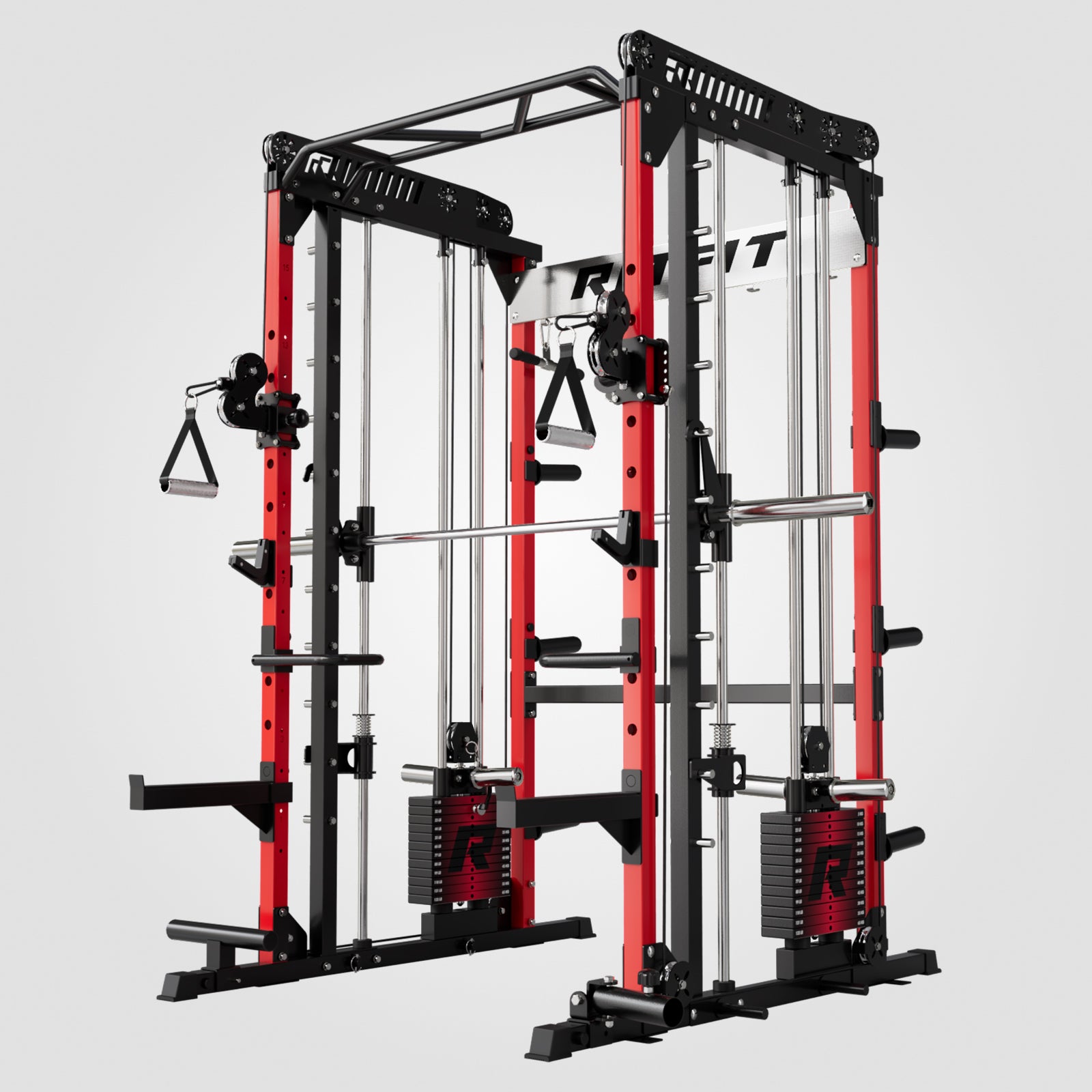
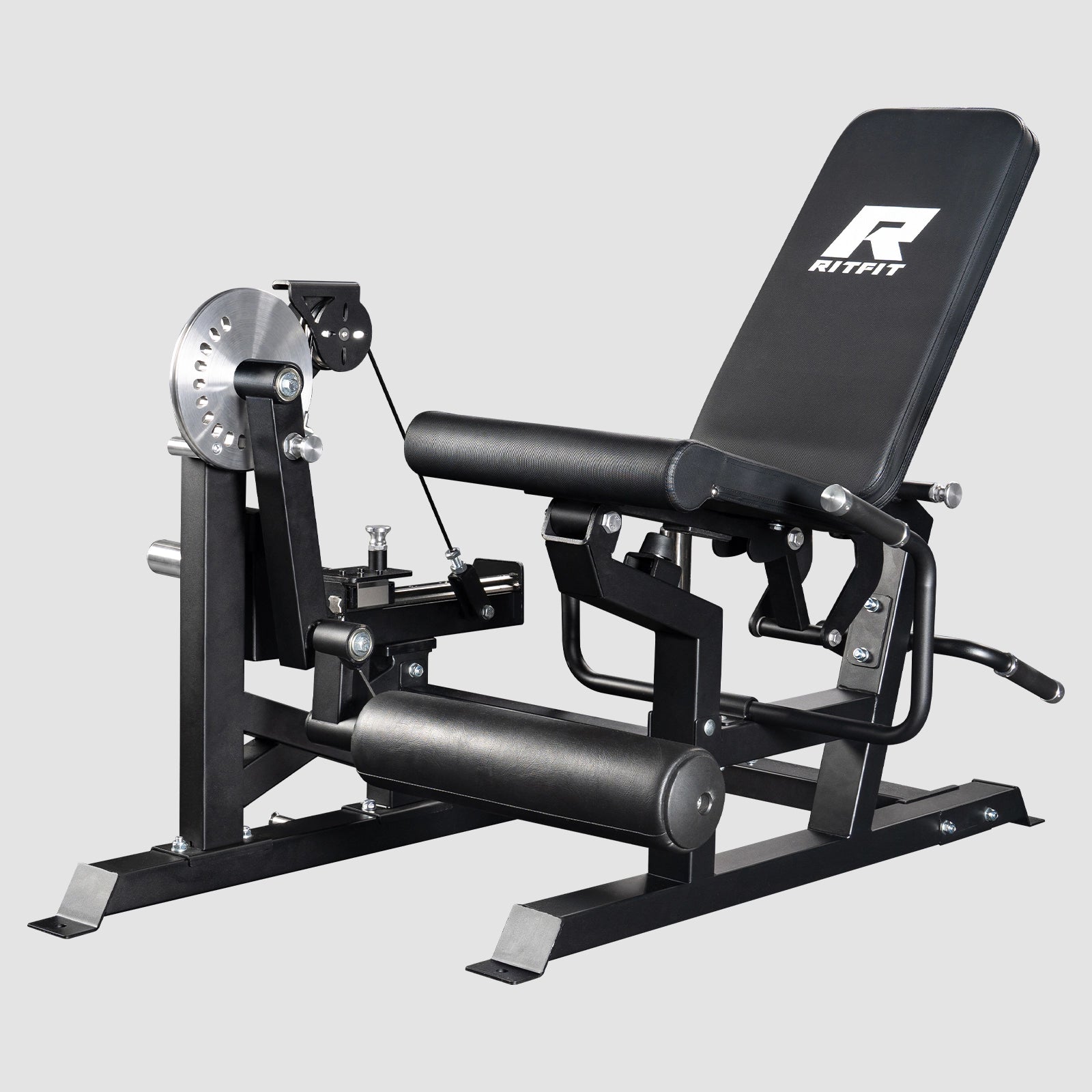
| Strength machines | Controlled accessory work, leg strength, cable drills, upper body support | Strength machines |
Structuring a Soccer Strength Workout
A good soccer strength workout improves performance without taking energy away from practice or matches. The best plan changes across the year based on match schedule, field training, recovery, and player experience.
In Season vs Off Season
Off season training can build strength and muscle, while in season training should maintain strength and power with lower total volume.
- Off season: Use higher training volume, progressive loading, and more technical time for strength development.
- Pre season: Keep strength work consistent while adding more sprinting, conditioning, and soccer specific intensity.
- In season: Reduce volume, keep intent high, and avoid hard lower body sessions too close to match day.
Sample Weekly Outline
This sample plan works best when adjusted around match day, field workload, soreness, and player recovery.
| Training Day | Primary Focus | Included Exercises | Best Timing |
|---|---|---|---|
| Day 1 | Lower Body Strength and Core | Squats, split squats, Nordic curls, planks | At least 48 hours before match day |
| Day 2 | Upper Body Strength and Power | Push ups, bench press, pull ups, rows, jumps | After a lighter field session |
| Day 3 | Full Body Power and Stability | Deadlifts, hip thrusts, lateral bounds, Pallof press | Off season or low match congestion weeks |
Programming Guidelines
Use low to moderate volume, high quality reps, and progressive overload that does not interfere with soccer performance.
- Main lifts: Use 3 to 5 sets of 3 to 6 reps for strength focused exercises.
- Accessory lifts: Use 2 to 4 sets of 6 to 12 reps for split squats, rows, hip thrusts, and core work.
- Power work: Use low reps, full rest, and fast intent on every jump or sprint.
- Recovery rule: Reduce volume when field training, matches, travel, or soreness are high.
Evidence and Effectiveness on Performance
Strength training is most effective for soccer when it is specific enough to support sprinting, jumping, change of direction, trunk control, and repeated high intensity play. The strongest approach combines gym based strength with field based sprinting, ball work, and recovery planning.
Strength and Sprint Qualities
Heavy and moderate resistance training can support sprint and power qualities when paired with soccer specific running and technical work.
- Best fit: Squats, deadlifts, hip thrusts, and split squats are most useful when they improve field movement rather than only gym numbers.
- Training note: Players should avoid training to failure on main lifts during competitive weeks.
Hamstrings and High Speed Running
Eccentric hamstring strength matters because sprinting places high lengthening demands on the posterior thigh.
- Best fit: Nordic curls, Romanian deadlifts, bridges, and sprint exposure can all help build posterior chain capacity.
- Training note: Add Nordic curls gradually and avoid high volume before matches.
Power and Change of Direction
Complex training can improve sprint, jump, and change of direction ability in soccer players when strength and explosive exercises are combined carefully.
- Best fit: Pair a strength lift with a related explosive drill only when the player has sound technique and enough recovery.
- Training note: Quality matters more than fatigue, especially for speed and plyometric work.
Practical Tips and Common Mistakes
The biggest soccer strength training mistakes are doing too much fatigue, ignoring single leg work, skipping hamstrings, and training hard too close to match day. Better results come from simple exercises done consistently with good timing.
- Do not chase soreness: Soreness is not the goal, better sprinting, jumping, balance, and durability are the goal.
- Do not skip unilateral work: Split squats, lunges, step ups, and single leg balance drills match soccer demands better than only bilateral lifts.
- Do not ignore adductors: Copenhagen planks and lateral lunges can support groin strength and cutting control.
- Do not rush plyometrics: Land well before progressing to faster and higher intensity jumps.
- Do not overload young players: Youth resistance training can be safe and useful when supervised, age appropriate, and focused on proper technique.[4]
FAQs About Soccer Strength Training
What are the best strength exercises for soccer players?
The best strength exercises for soccer players are squats, deadlifts, split squats, Nordic curls, hip thrusts, rows, presses, planks, and plyometric jumps. These exercises train force production, single leg stability, trunk control, and explosive power for sprinting, cutting, jumping, shielding, and repeated match actions.
How often should soccer players do strength training?
Most soccer players should strength train two to three times per week, depending on season, match load, age, and recovery. Off season programs can use more volume, while in season programs should use shorter sessions that maintain strength and power without reducing speed, freshness, or technical training quality.
Can strength training make soccer players faster?
Yes. Strength training can help soccer players get faster when it improves lower body force production and is combined with sprint practice. Deadlifts, squats, hip thrusts, split squats, jumps, and resisted sprints support stronger first steps, better acceleration mechanics, and more powerful short distance movement.
Should soccer players lift heavy weights during the season?
Yes. Soccer players can lift heavy during the season, but volume should be low and timing should protect match freshness. Heavy strength work is usually best placed far enough from match day, with fewer total sets, clean technique, full recovery, and no grinding reps that create unnecessary fatigue.
Are squats good for soccer players?
Yes. Squats are good for soccer players because they build lower body strength, trunk bracing, and force production. They can support jumping, acceleration, tackling, and physical duels, especially when paired with single leg work, sprint training, mobility, and recovery based programming.
What leg exercises help soccer players change direction faster?
The best leg exercises for faster change of direction are Bulgarian split squats, lateral lunges, Copenhagen planks, lateral bounds, step ups, and controlled deceleration drills. These exercises strengthen the hips, quads, hamstrings, adductors, and trunk so players can brake, plant, turn, and reaccelerate more efficiently.
How do Nordic curls help soccer players?
Nordic curls help soccer players by building eccentric hamstring strength, which is important during high speed running. They are commonly used because sprinting places strong lengthening demands on the hamstrings, but players should start with low volume and progress slowly to reduce excessive soreness.
Which core exercises are best for soccer players?
The best core exercises for soccer players are side planks, front planks, Pallof presses, dead bugs, cable chops, farmer carries, and medicine ball rotational throws. These movements train trunk stiffness, anti rotation control, balance, and force transfer, which help during sprinting, turning, shielding, passing, and shooting.
Conclusion
The best strength exercises for soccer players build usable speed, power, balance, contact strength, and movement control. A strong plan combines lower body lifts, unilateral training, hamstring work, upper body strength, core stability, plyometrics, and sprint drills while adjusting volume to the season and match schedule.
Disclaimer: This article is for general educational purposes only and is not medical advice. If you have pain, injury history, recent surgery, numbness, dizziness, unexplained weakness, or any medical concern, consult a qualified clinician before training. Stop any exercise that causes sharp pain, and use professional coaching when learning heavy lifts or plyometrics.
References
- Silva JR Nassis GP Rebelo A. Strength training in soccer with a specific focus on highly trained players. Sports Med Open. 2015;1:17. doi:10.1186/s40798-015-0006-z
- Nunes H Fernandes LG Martins PN Ferreira RM. The effects of Nordic hamstring exercise on performance and injury in the lower extremities: an umbrella review. Healthcare. 2024;12(15):1462. doi:10.3390/healthcare12151462
- Zheng T Kong R Liang X Huang Z Luo X Zhang X et al. Effects of plyometric training on jump, sprint, and change of direction performance in adolescent soccer player: a systematic review with meta analysis. PLoS One. 2025;20(4):e0319548. doi:10.1371/journal.pone.0319548
- Faigenbaum AD Myer GD. Resistance training among young athletes: safety, efficacy and injury prevention effects. Br J Sports Med. 2010;44(1):56-63. doi:10.1136/bjsm.2009.068098