Why Strength Training Matters for Women
Strength training matters because it helps women build muscle, protect movement quality, and stay stronger through different life stages. It is especially valuable for home exercisers who want a practical way to train consistently without waiting for machines or commuting to a gym.
- Lean muscle: Resistance training helps build and maintain muscle, which supports shape, strength, and long term body composition.
- Bone health: Resistance exercise can support bone health and may help reduce age related bone loss when programmed appropriately.[1]
- Metabolic support: Strength training can improve muscle quality and help support healthier body composition, especially when paired with adequate nutrition.
- Midlife strength: A 20 week trial found that resistance training changed body composition in middle aged women, with results influenced by menopause status.[2]
- Mental health support: Resistance exercise training has been associated with reduced depressive symptoms in adults, although it should not replace professional mental health care.[3]
- Daily function: Stronger legs, hips, back, shoulders, and core make daily tasks like carrying groceries, lifting kids, and moving furniture easier.
- Home confidence: Training at home can reduce intimidation, improve consistency, and let you progress at your own pace.
What Women Should Know Before Starting
The safest way to start strength training is to learn basic movement patterns before chasing heavier weights. Your first goal is controlled form, steady breathing, and a repeatable routine you can maintain for months.
Choose a starting weight you can control
Pick a weight that lets you finish each set with 1 to 3 good reps left in reserve. If your posture changes, your range of motion shortens, or you rush the last reps, the load is too heavy.
Warm up before every session
A good warm up should raise body temperature, move major joints, and rehearse the exercises you will train. Use 5 to 8 minutes of light cardio, bodyweight squats, hip hinges, band pulls, and easy warm up sets.
Use progressive overload slowly
Progressive overload means making training slightly harder over time. Add weight, reps, sets, slower tempo, or better range of motion only when your technique stays consistent.
Stop movements that cause sharp pain
Muscle effort is normal, but sharp pain, dizziness, joint pinching, numbness, or unusual shortness of breath is not. Modify the movement or ask a qualified professional for help before continuing.
Train the whole body
The best strength training for women includes lower body, upper body, core, and posture focused work. A balanced plan helps avoid overtraining one area while neglecting another.
Best Strength Training Exercises for Women
The best strength training exercises for women are compound movements that train multiple muscles at once. These exercises give beginners more results from fewer movements and help advanced lifters keep building strength at home.
1. Squats
Squats train the quads, glutes, hamstrings, and core while building lower body strength for daily movement. Start with a bodyweight squat or goblet squat before moving to barbell or Smith machine variations.
- Best for: Lower body strength, glute development, and knee dominant movement practice.
- Beginner option: Squat to a bench so you can control depth and balance.
- Progression: Move from bodyweight squats to goblet squats, then to barbell or Smith machine squats.
- Common mistake: Letting the knees collapse inward or shifting all weight into the toes.
- RitFit link: For a safer solo setup, compare options in the RitFit Smith machine collection.
2. Romanian Deadlifts
Romanian deadlifts train the glutes, hamstrings, spinal erectors, and hip hinge pattern. They are one of the best movements for building the posterior chain without needing many exercise variations.
- Best for: Glutes, hamstrings, hip strength, and posture support.
- Beginner option: Use dumbbells and stop when you feel a hamstring stretch while keeping your spine neutral.
- Progression: Add weight gradually, then move to a barbell when your hinge pattern is consistent.
- Common mistake: Squatting the weight down instead of pushing the hips back.
- RitFit link: Build this movement with RitFit dumbbells before adding a barbell.
3. Reverse Lunges
Reverse lunges build single leg strength, balance, and glute control with less forward knee stress than some forward lunge variations. They are especially useful for women training in small home gym spaces.
- Best for: Glutes, quads, balance, and unilateral lower body strength.
- Beginner option: Hold bodyweight only and use a wall or rack upright for balance.
- Progression: Add dumbbells, increase range of motion, or use a slow lowering tempo.
- Common mistake: Taking too narrow a step and losing hip stability.
4. Hip Thrusts
Hip thrusts target the glutes with a strong lockout position and are highly effective for building hip extension strength. Use a stable bench, keep the ribs down, and squeeze the glutes at the top without over arching the lower back.
- Best for: Glute growth, hip power, and lower body shape.
- Beginner option: Start with bodyweight glute bridges on the floor.
- Progression: Move to dumbbell hip thrusts, then barbell or Smith machine hip thrusts.
- Common mistake: Pushing through the lower back instead of the glutes.
- RitFit link: Learn more from the Smith machine hip thrust guide.
5. Push Ups
Push ups train the chest, shoulders, triceps, and core with no equipment required. Start with incline push ups on a bench or rack bar if floor push ups are too difficult.
- Best for: Upper body pushing strength and core stiffness.
- Beginner option: Use incline push ups with hands elevated.
- Progression: Lower the incline over time, then progress to floor push ups.
- Common mistake: Letting the hips sag or flaring the elbows too wide.
6. Dumbbell Overhead Press
The dumbbell overhead press builds shoulder strength, arm definition, and trunk stability. Use a standing or seated version and press with control instead of leaning backward.
- Best for: Shoulders, triceps, upper traps, and core control.
- Beginner option: Use light dumbbells and a seated position.
- Progression: Increase weight slowly once you can press without rib flare.
- Common mistake: Turning the movement into a lower back arch.
7. Dumbbell Rows
Dumbbell rows train the lats, upper back, rear delts, and biceps while helping balance pressing work. Row toward the hip and squeeze the shoulder blade without twisting your torso.
- Best for: Back strength, posture, and shoulder balance.
- Beginner option: Use one hand on a bench for support.
- Progression: Add weight, pause at the top, or use chest supported rows.
- Common mistake: Pulling only with the arm instead of the back.
- RitFit link: Pair rows and presses with RitFit adjustable benches.
8. Lat Pulldowns
Lat pulldowns strengthen the lats and upper back while helping beginners build toward pull ups. A cable system or band setup makes this movement easier to control at home.
- Best for: Back width, pulling strength, and posture support.
- Beginner option: Use a resistance band pulldown from a high anchor.
- Progression: Move to cable pulldowns, then assisted pull ups or controlled negatives.
- Common mistake: Pulling the bar behind the neck or shrugging the shoulders.
- RitFit link: Explore full body pulling options in RitFit home gym packages.
9. Plank Variations
Planks build core endurance and help protect the spine during squats, deadlifts, presses, and carries. Train standard planks, side planks, and shoulder taps with a neutral spine.
- Best for: Core stability, posture, and safe bracing.
- Beginner option: Start with short sets of 15 to 25 seconds.
- Progression: Add time, side planks, or controlled shoulder taps.
- Common mistake: Holding too long after form breaks down.
10. Farmer Carries
Farmer carries build grip, traps, core, posture, and full body coordination. Hold dumbbells at your sides, walk slowly, and keep your ribs stacked over your pelvis.
- Best for: Functional strength, grip, trunk stability, and daily carrying ability.
- Beginner option: Walk 20 to 30 seconds with moderate dumbbells.
- Progression: Add distance, load, or single arm suitcase carries.
- Common mistake: Leaning backward or letting the shoulders round forward.
Full Home Strength Training Plan for Women
A 3 day weekly plan is enough for most women to build strength, improve muscle tone, and stay consistent at home. Rest at least one day between hard sessions when you are new or returning after a long break.
Day 1: Lower Body and Core
This session trains squat strength, hip hinge control, glutes, and core stability. Use a load that feels challenging but repeatable across all sets.
- Goblet squat: 3 sets of 10 to 12 reps.
- Dumbbell Romanian deadlift: 3 sets of 10 to 12 reps.
- Reverse lunge: 3 sets of 8 to 10 reps per leg.
- Dumbbell hip thrust: 3 sets of 12 to 15 reps.
- Plank: 3 sets of 30 to 45 seconds.
- Dead bug: 3 sets of 8 to 10 reps per side.
Day 2: Upper Body and Core
This session balances pushing, pulling, shoulders, arms, and core control. Keep the shoulder blades moving naturally and avoid rushing the lowering phase.
- Incline push up: 3 sets of 8 to 12 reps.
- Dumbbell overhead press: 3 sets of 8 to 12 reps.
- Single arm dumbbell row: 3 sets of 10 to 12 reps per arm.
- Band or cable lat pulldown: 3 sets of 10 to 12 reps.
- Dumbbell lateral raise: 2 to 3 sets of 12 to 15 reps.
- Side plank: 3 sets of 20 to 30 seconds per side.
Day 3: Full Body Strength
This session combines lower body, upper body, and core work into one balanced workout. It is ideal for women who want efficient home training without long sessions.
- Squat variation: 3 sets of 8 to 10 reps.
- Dumbbell chest press: 3 sets of 10 to 12 reps.
- Romanian deadlift: 3 sets of 10 to 12 reps.
- Dumbbell row: 3 sets of 10 to 12 reps per arm.
- Walking lunge: 3 sets of 10 to 12 steps per leg.
- Farmer carry: 3 rounds of 30 to 45 seconds.
How to progress
When you can complete every set at the top of the rep range with clean form, increase the challenge slightly. Add 5 percent weight, 1 to 2 reps, one extra set, or slower tempo rather than changing everything at once.
Strength Training at Home for Women: Equipment Guide
The best home gym equipment for women depends on space, budget, training experience, and long term goals. Start with versatile tools first, then add larger equipment when you know which exercises you actually use.
Minimal Setup
A minimal setup is best for beginners, apartments, bedrooms, and small workout corners. It should support squats, hinges, presses, rows, lunges, carries, and core work.
- Dumbbells: Choose 2 or 3 weight pairs so you can train both upper body and lower body movements.
- Resistance bands: Use bands for pulldowns, rows, warm ups, and assisted mobility drills.
- Exercise mat: Use a mat for planks, dead bugs, stretching, and floor based glute work.
- Helpful link: Browse RitFit Hex Rubber Dumbbells for beginner and intermediate strength work.
Strong Starter Setup
A strong starter setup is best for women who want more exercise variety and better long term progression. An adjustable bench and dumbbells create enough options for full body training at home.
- Adjustable bench: Supports chest press, incline press, rows, step ups, Bulgarian split squats, and hip thrusts.
- Dumbbell storage: Keeps weights organized and reduces clutter in small rooms or garage gyms.
- Barbell and plates: Add these when squats, deadlifts, hip thrusts, and presses need heavier loading.
- Helpful link: Compare bench options in the adjustable weight bench for beginners guide.
Complete Home Gym Setup
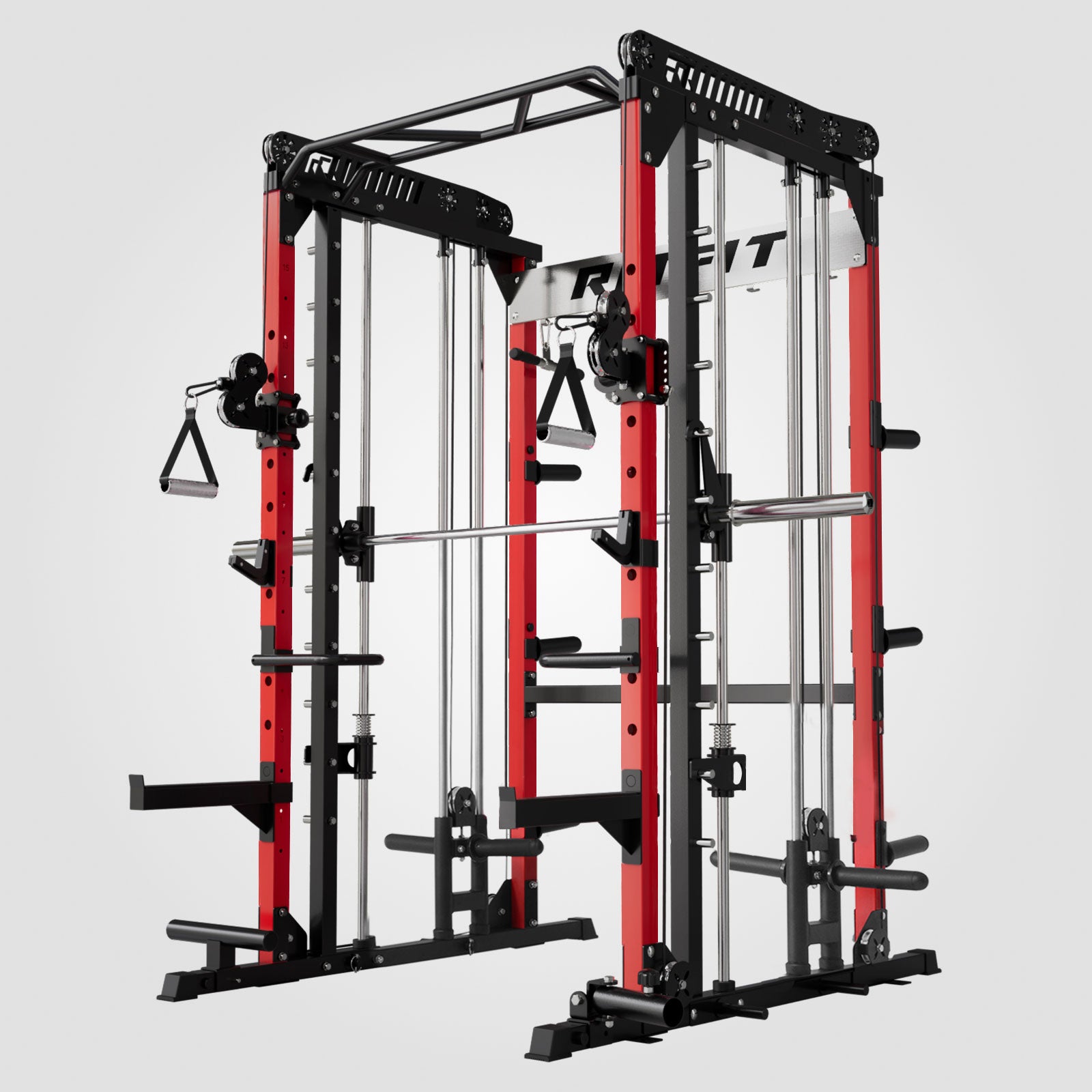
A complete setup is best for women who want cable exercises, safer solo lifting, and room to progress for years. A Smith machine, rack package, bench, plates, and dumbbells can replace many commercial gym stations.
- Smith machine or rack: Supports squats, presses, rows, pull ups, hip thrusts, and safer solo training when used correctly.
- Cable system: Adds lat pulldowns, cable rows, face pulls, triceps work, biceps work, and glute cable exercises.
- Bench and plates: Make the system more complete for progressive overload.
- Helpful link: Read the best Smith machine for women guide before choosing a larger setup.
Common Myths About Women and Strength Training
Many women avoid strength training because of outdated myths about bulk, heavy weights, cardio, and home workouts. These myths can slow progress more than the workout itself.
Myth 1: Lifting weights will make women bulky
Most women will not become bulky unintentionally from lifting weights. Significant muscle gain usually requires years of progressive training, enough calories, recovery, genetics, and consistency.
Myth 2: Women should only use light weights and high reps
Light weights can build endurance, but strength and muscle development require muscles to be challenged over time. Most women benefit from a mix of moderate reps, heavier sets, and controlled technique.
Myth 3: Cardio is better than strength training for body composition
Cardio and strength training work best together for many goals. Cardio supports heart health and calorie expenditure, while strength training helps build and maintain lean mass.
Myth 4: Home workouts cannot build real strength
Home workouts can build real strength when they use progressive overload and enough resistance. Dumbbells, benches, racks, cables, and Smith machines can support serious long term training.
Nutrition Tips to Support Strength Training
Nutrition supports strength training by giving your body the materials and energy needed to recover. Keep the approach simple, consistent, and realistic before worrying about advanced timing strategies.
- Protein: Include protein in each meal to support muscle repair and training adaptation.
- Calories: Eat slightly above maintenance for muscle gain or slightly below maintenance for fat loss while keeping protein high.
- Carbohydrates: Use fruits, grains, potatoes, rice, and vegetables to fuel training and recovery.
- Hydration: Drink enough water so your urine is pale yellow during most of the day.
- Meal timing: A protein rich meal after training can help, but total daily intake matters more than a narrow timing window for most recreational lifters.
Strength Training for Women Over 40
Women over 40 should prioritize strength, balance, mobility, and recovery rather than training only for appearance. Resistance exercise can improve functional capacity in older women with sarcopenic obesity, although individual programming should account for health status and ability level.[4]
- Train major movement patterns: Include squats, hinges, pushes, pulls, carries, and core stability drills.
- Protect recovery: Add rest days and avoid adding weight too quickly.
- Support bone loading: Use controlled weight bearing exercises when appropriate.
- Improve balance: Add step ups, split squats, carries, and single leg stability work.
- Use safer setups: Consider a rack, Smith machine, or cable system when training alone at home.
Frequently Asked Questions
How should beginners start strength training for women at home?
Start with 2 to 3 full body workouts per week using bodyweight moves, dumbbells, and controlled tempo. Focus on squats, hinges, rows, presses, lunges, and core stability before adding heavier loads or complex equipment.
What dumbbell weight should women start with for strength training?
Most beginners should choose a weight they can lift for 8 to 12 clean reps with 1 to 3 reps left. Many women need lighter dumbbells for shoulders and heavier dumbbells for legs, so multiple pairs are useful.
Can women build muscle with only dumbbells?
Yes. Dumbbells can build muscle when exercises are challenging, consistent, and progressively overloaded. Squats, Romanian deadlifts, presses, rows, lunges, hip thrusts, and carries can train the full body without machines.
Is strength training good for women over 40?
Yes. Strength training can help women over 40 maintain muscle, support bone health, improve balance, and protect daily function. Start with controlled movements, moderate loads, and enough recovery between hard sessions.
How many days a week should women lift weights?
Most women can lift weights 2 to 4 days per week depending on experience, recovery, and goals. Beginners often progress well with 3 full body sessions, while advanced lifters may use upper and lower body splits.
Should women do cardio or strength training first?
Do strength training first if building muscle or getting stronger is the main goal. Do cardio first if endurance is the main priority, or separate cardio and lifting on different days when recovery allows.
What equipment do women need for a home strength workout?
A strong starter setup includes dumbbells, resistance bands, a mat, and an adjustable bench. As goals progress, a barbell, plates, rack, Smith machine, or cable system can expand exercise variety and loading options.
How long does it take women to see strength training results?
Many women notice strength improvements within 2 to 4 weeks when training consistently. Visible muscle tone and body composition changes usually take longer, often 8 to 16 weeks with proper nutrition, recovery, and progressive overload.
Conclusion: Start Strong and Build From There
The best strength training for women is simple, progressive, and built around movements you can repeat with confidence. Start with dumbbells, a bench, and full body workouts, then expand into racks, cables, or Smith machines as your strength and goals grow.
For a practical next step, explore home gym equipment under 1000 dollars or build your setup from the RitFit best sellers collection.
Disclaimer: This article is for general fitness education only and is not medical advice. If you are pregnant, recovering from injury, managing a medical condition, or new to exercise, speak with a qualified healthcare professional before starting or changing a strength training program.
References
- Hong AR, Kim SW. Effects of resistance exercise on bone health. Endocrinol Metab Seoul. 2018;33(4):435-444. doi:10.3803/EnM.2018.33.4.435
- Isenmann E, Kaluza D, Havers T, Elbeshausen A, Geisler S, Hofmann K, et al. Resistance training alters body composition in middle-aged women depending on menopause: a 20-week control trial. BMC Womens Health. 2023;23(1):526. doi:10.1186/s12905-023-02671-y
- Gordon BR, McDowell CP, Hallgren M, Meyer JD, Lyons M, Herring MP. Association of efficacy of resistance exercise training with depressive symptoms: meta-analysis and meta-regression analysis of randomized clinical trials. JAMA Psychiatry. 2018;75(6):566-576. doi:10.1001/jamapsychiatry.2018.0572
- Debes WA, Sadaqa M, Németh Z, Aldardour A, Prémusz V, Hock M. Effect of resistance exercise on body composition and functional capacity in older women with sarcopenic obesity: a systematic review with narrative synthesis. J Clin Med. 2024;13(2):441. doi:10.3390/jcm13020441