Table of Contents
- Quick Start (the simplest plan that works)
- Brisk Walking (the safest “starter” workout)
- Cycling or elliptical (joint-friendly cardio with steady intensity)
- Swimming or water aerobics (low-impact, full-body conditioning)
- Resistance Training (weights, machines, bands, or bodyweight)
- Isometric Resistance (short holds like wall sits, planks, and gentle handgrip work)
- Stretching and Mobility (plus calm breathing for stress support)
- A simple weekly plan (beginner template)
- Frequently Asked Questions
Medical + safety disclaimer (please read): This article is for general fitness education and is not medical advice. If you have very high or uncontrolled blood pressure, heart disease, kidney disease, diabetes, are pregnant/postpartum, or you experience chest pain, unusual shortness of breath, fainting, severe headache, or new neurologic symptoms, talk to a qualified clinician before starting or changing an exercise plan. Stop exercising and seek medical care immediately if warning symptoms occur. Do not stop, start, or change blood pressure medication without your prescriber’s guidance.
If you're one of those people with hypertension, medicines are a big part of your treatment plan. Medication for high blood pressure works best when taken exactly as prescribed by your doctor. As a result, you must take the correct dosage at the correct times every day.
If medication is not your first choice or you want to do more alongside it, exercise can be a powerful, evidence-supported lifestyle tool. Regular activity improves blood vessel function by increasing nitric oxide production, which allows arteries to dilate more easily and reduces the workload on your heart[1].
How does exercise help hypertension? In simple terms, regular activity can improve blood vessel function, support healthy body weight, reduce stress reactivity, and strengthen your heart so it pumps more efficiently. The key is consistency and appropriate intensity, not “going all out.”
Quick Start (the simplest plan that works)
Aim for:
-
150 minutes per week of moderate-intensity aerobic activity (like brisk walking), split into 20–40 minute sessions
-
2–3 days per week of light-to-moderate resistance training
-
Most days: 5–10 minutes of mobility/stretching
-
A 5-minute warm-up and 5-minute cool-down every session
How hard is “moderate”? Use the Talk Test: you can talk in full sentences, but you can’t sing. Or use RPE (rate of perceived exertion) 1–10: Aim for 4–6 most days.
Important hypertension training rules (read once, use forever)
-
Breathe; don’t brace and hold your breath. Breath-holding during effort can spike blood pressure. Exhale as you push/pull, and inhale as you return.
-
Progress gradually. Increase only one variable at a time (time, frequency, or load) by small amounts week to week.
-
Prefer steady, moderate work over max efforts. Save very hard intervals and heavy lifts for later and only with medical clearance if needed.
-
Cool down. A gradual cool-down helps prevent dizziness and sudden blood pressure shifts after exercise.
-
Be heat- and dehydration-aware. Hot environments, saunas, and dehydration can raise cardiovascular strain. Hydrate and train in comfortable conditions.
-
Below are six of the best workout types for high blood pressure, chosen because they’re effective, scalable for beginners, and generally well tolerated when done correctly.
Brisk Walking (the safest “starter” workout)
Why it helps: Walking is accessible, low-impact, and reliably improves cardiovascular fitness when done consistently.
How to do it (beginner-friendly prescription):
-
Frequency: 5–7 days/week
-
Duration: Start with 10–15 minutes, build to 30–45 minutes
-
Intensity: Moderate (Talk Test / RPE 4–6)
-
Progression: Add 5 minutes per session each week until you reach your target time.
Form + safety tips:
-
Start with 5 minutes easy, and finish with 5 minutes easy.
-
Keep your shoulders relaxed and take natural, steady breaths.
-
If you feel lightheaded, slow down, hold a stable support, and cool down.
Cycling or elliptical (joint-friendly cardio with steady intensity)
Why it helps: These options provide a smooth aerobic stimulus with less joint stress than running, which can make consistency easier.
How to do it:
-
Frequency: 3–6 days/week
-
Duration: 15–40 minutes
-
Intensity: Moderate, steady pace (RPE 4–6)
-
Progression: Increase time first, then add gentle “tempo” segments later.
Simple progression idea (once you’re comfortable):
-
After 2–3 weeks of steady sessions: add 3–5 minutes slightly faster in the middle (still able to talk, just more effort), then return to an easy pace.
Safety tip: Avoid “all-out” sprints early on. Build your base first.
Swimming or water aerobics (low-impact, full-body conditioning)
Swimming is another aerobic workout that, if you enjoy being in the water, may help you lower your blood pressure.
Why it helps: Water supports your body weight, reduces joint impact, and allows a full-body workout at a controllable intensity.
How to do it:
-
Frequency: 2–4 days/week
-
Duration: 15–30 minutes to start, build gradually
-
Intensity: Easy to moderate; breathe steadily, avoid breath-holding
Practical tips:
-
Warm up before you swim (light movements and easy laps).
-
If you’re new, start with an instructor or structured water-walking/aerobics class.
-
Avoid long underwater breath-holds. Prioritize relaxed, regular breathing.
Resistance Training (weights, machines, bands, or bodyweight)
Strength exercise is good for your bones and muscles. It also helps in weight loss, as it burns many calories.
Strength training should be considered if you have hypertension. Try out some simple exercises for beginners.
Why it helps: When performed with good technique and breathing, resistance training supports healthy body composition, improves strength for daily life, and can contribute to long-term blood pressure improvement.
Before you lift: If you plan to start a rigorous weight-lifting program, get your clinician’s consent, especially if your blood pressure is not well controlled or you’re new to exercise.
How to do it (safe “hypertension-friendly” setup):
-
Frequency: 2–3 days/week (non-consecutive is ideal)
-
Sets/Reps: 1–3 sets of 8–12 reps per exercise
-
Intensity: Moderate (RPE 5–7), leaving 2–3 reps in reserve
-
Rest: 60–120 seconds between sets
-
Focus: Smooth reps, steady breathing, no straining
Great beginner exercise menu (pick 5–7 moves):
-
Squat to a box or chair
-
Hip hinge (Romanian deadlift pattern with light dumbbells) or glute bridge
-
Incline push-up or chest press machine
-
One-arm row or seated row
-
Overhead press (light) or landmine press
-
Step-ups
-
Farmer carry (light-to-moderate)
The biggest rule: Never hold your breath during the hard part of a lift. Exhale as you lift/push; inhale as you lower.
Optional equipment note (with disclosure):
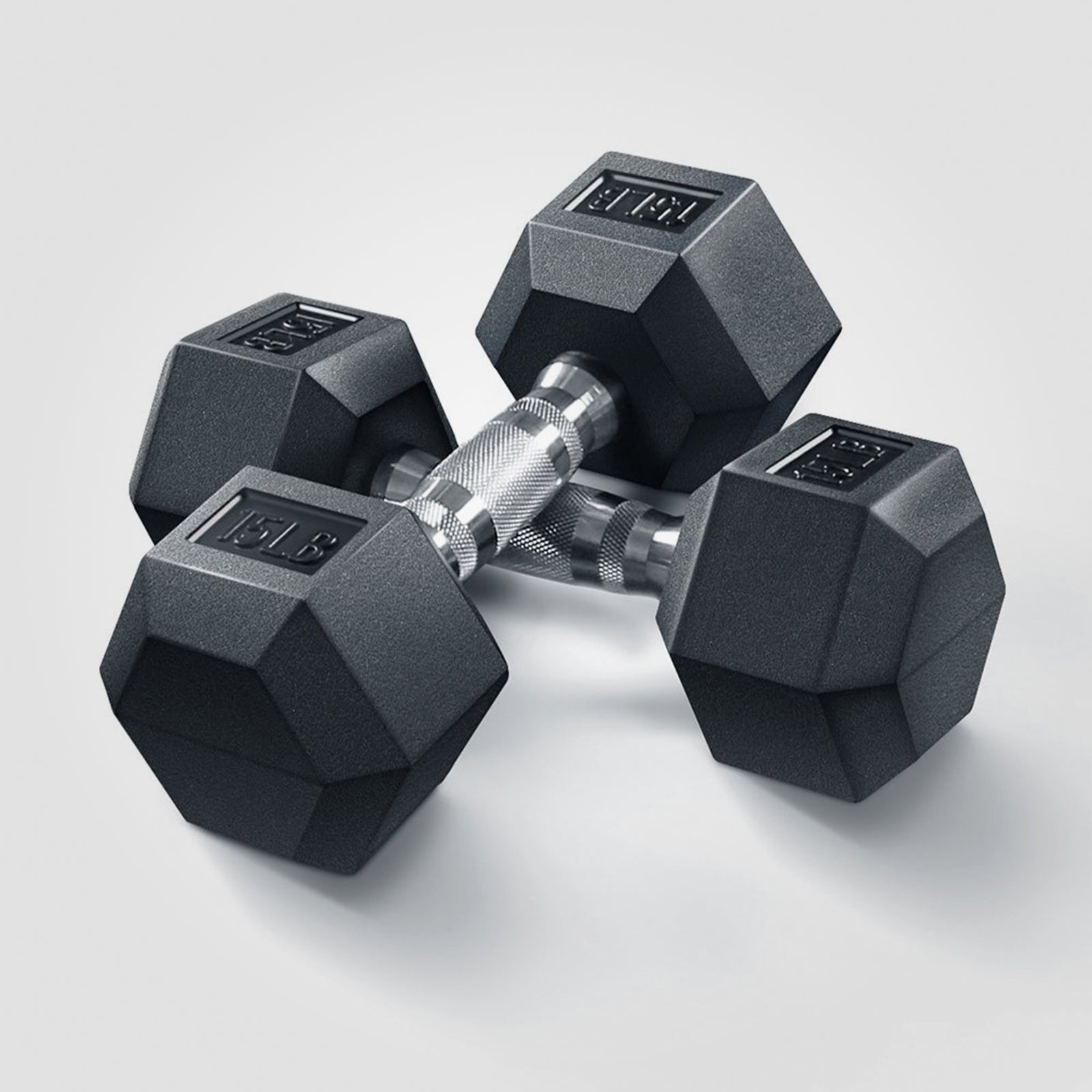
If you prefer dumbbells at home, a moderate pair (like adjustable dumbbells or hex dumbbells) can cover most beginner strength work. Mention of any product is for equipment illustration only, not medical advice, and you should choose what fits your space, budget, and comfort.
Isometric Resistance (short holds like wall sits, planks, and gentle handgrip work)
Isometrics involve holding a position without movement. Recent meta-analyses have revealed that isometric training, particularly wall sits and planks, provides a superior blood pressure-lowering effect compared to traditional aerobic training alone[2].
Safe examples (beginner options):
-
Wall sit (knees comfortable, back supported)
-
Plank (on elbows or elevated on a bench)
-
Glute bridge hold
-
Side plank (from knees if needed)
How to do it:
-
Frequency: 3–5 days/week
-
Protocol: 3–5 rounds of 20–45 seconds, with 60–90 seconds rest
-
Effort: Moderate (you feel work, but you can still breathe steadily)
Safety note: Isometrics can feel deceptively intense. Keep the effort moderate, avoid shaking/straining, and stop if you feel pressure symptoms, dizziness, or a headache.
Stretching and Mobility (plus calm breathing for stress support)
Stretching improves your flexibility. It's good for your body in a multitude of ways. It will focus on your muscles, keep you safe from injuries, and work by increasing blood flow to your muscles. Also, stretching can help with anxiety and back pain.
Why it helps: Stretching and mobility can reduce stiffness, support recovery, and help downshift stress, an often-overlooked factor in blood pressure management.
How to do it:
-
Frequency: Most days (even daily)
-
Duration: 5–15 minutes; longer sessions 2–4 days/week if desired
-
Style: Gentle holds, no pain, steady breathing
Simple routine (8–10 minutes):
-
Calf stretch (1 minute each side)
-
Hip flexor stretch (1 minute each side)
-
Hamstring stretch (1 minute each side)
-
Thoracic rotation (8–10 reps each side)
-
Child’s pose or supported breathing position (2 minutes)
-
Slow nasal breathing (optional): inhale 4 seconds, exhale 6 seconds for 2–3 minutes
Important: Stretching works best as a complement to aerobic and resistance training, not a total replacement, unless your clinician has directed otherwise.
A simple weekly plan (beginner template)
Day 1: Brisk walk 20–30 min + 5 min stretching
Day 2: Strength training 25–40 min (full-body) + cool-down
Day 3: Cycling/elliptical 20–30 min (moderate)
Day 4: Walk 20 min + isometrics 8–12 min
Day 5: Strength training 25–40 min + gentle stretching
Day 6: Swim/water aerobics 20–30 min (easy-moderate)
Day 7: Easy walk 15–30 min + mobility 10 min
If this feels like too much, start with 3 days/week (walk–strength–walk). Add one day every 1–2 weeks.
Frequently Asked Questions
Q1: Should I avoid exercise if I have high blood pressure?
Not usually, but you should avoid starting hard training if your blood pressure is uncontrolled or you have warning symptoms. Ask a clinician if you’re unsure.
Q2: Is strength training safe for hypertension?
Yes, when it’s moderate, controlled, and paired with steady breathing. Avoid maximal lifts and breath-holding.
Q3: What’s the safest intensity for cardio?
Moderate intensity (talk test) is a great default. You should feel warm and slightly out of breath but still be able to speak.
Q4: What should I do if I feel dizzy during a workout?
Stop, sit or hold a stable support, breathe normally, and sip water. If symptoms persist or are severe, seek medical care.
Q5: Do I need equipment to lower blood pressure with exercise?
No. Walking plus bodyweight resistance and stretching can be enough. Equipment only helps with variety and progression.
Q6: How long until I see improvement?
Many people notice changes within a few weeks of consistent training, but results vary. Consistency matters most.
Final Thoughts
Hypertension is a significant health concern that, if not addressed, can lead to catastrophic problems. Fortunately, you may treat it with medications and a healthy lifestyle. Moderate exercise and weight training routines will help you keep your hypertension in control and feel much better.
Exercise has numerous health benefits. Aerobic exercise, such as brisk walking and other moderate cardio, is a foundational approach for blood pressure support. If you want to add strength training to your routine, focus on good technique, steady breathing, and gradual progression, and get medical clearance if you have any concerns.
References
- Pinckard K, Baskin KK, Stanford KI. Effects of Exercise to Improve Cardiovascular Health. Front Cardiovasc Med. 2019;6:69. Published 2019 Jun 4. doi:10.3389/fcvm.2019.00069
- Jung SW, Seong JY, Kim S, et al. Acute effects of isometric plank exercise on 24-hour ambulatory blood pressure in young adults with prehypertension: a randomized cross-over trial. Clin Hypertens. 2025;31:e40. Published 2025 Dec 1. doi:10.5646/ch.2025.31.e40