A busy dad workout plan should match your real schedule, current fitness, and recovery capacity before it pushes intensity. This guide breaks training into four practical levels so fathers can build strength, muscle, energy, and consistency at home or in the gym.
Use the lowest level you can repeat for several weeks, then progress when your workouts, sleep, soreness, and daily energy all stay manageable.
Key Takeaways
- Start with repeatability: The best busy dad workout plan is the one you can complete during real work and family weeks.
- Progress by recovery: Move up only when your form, energy, soreness, and schedule can handle more training.
- Use short sessions: Many fathers can make progress with focused 15 to 40 minute workouts when effort and progression are consistent.
- Train at home when needed: Dumbbells, an adjustable bench, cables, or a Smith machine can make busy weeks easier to manage.
- Protect the long game: Sleep, protein, hydration, mobility, and stress control matter because fatherhood already adds recovery demands.
- What Is a Busy Dad Workout Plan?
- Who This Plan Is Best For
- Quick Comparison: Which Level Should You Start With?
- Level 1: Foundation
- Level 2: Momentum
- Level 3: Performance
- Level 4: Legacy
- How to Choose Your Starting Level
- Sample Weekly Plans for Busy Dads
- Best Home Gym Equipment for Busy Dad Workouts
- Common Obstacles and How to Handle Them
- Recovery and Nutrition Guidelines
What Is a Busy Dad Workout Plan?
A busy dad workout plan is a flexible strength and conditioning system built around limited time, uneven sleep, family responsibilities, and realistic recovery. It should help fathers train consistently without needing long gym sessions or perfect weekly conditions.
The goal is not to do more work for the sake of doing more work. The goal is to choose the smallest effective training dose that improves strength, muscle, stamina, and energy while still fitting family life.[1]
Who This Plan Is Best For
This plan is best for fathers who want better fitness but cannot rely on long, predictable training windows. It fits new dads, busy professionals, returners, home gym users, and experienced lifters who need a more sustainable structure.
- New fathers: Use the plan to protect consistency when sleep and schedule control are low.
- Out of shape fathers: Start with low joint stress, basic movement patterns, and short sessions.
- Home gym users: Train with dumbbells, a bench, cables, or a Smith machine when travel time is the biggest barrier.
- Former athletes: Choose the level that matches current recovery, not past performance.
- Experienced lifters: Use higher levels to maintain strength while avoiding burnout from family and work stress.
Quick Comparison: Which Level Should You Start With?
Choose your level based on consistency, recovery, movement quality, and available time. A lower level done every week beats a harder level that falls apart after ten days.
| Level | Best For | Weekly Schedule | Training Focus | Equipment Fit | Move Up When |
|---|---|---|---|---|---|
| Foundation | Beginners, returners, tired dads | 2 to 3 sessions, 15 to 25 minutes | Movement quality, habit, basic strength | Bodyweight, bands, light dumbbells | You complete 4 to 6 steady weeks |
| Momentum | Consistent fathers who want visible progress | 3 sessions, 20 to 35 minutes | Muscle, conditioning, progressive overload | Dumbbells, bench, cable station | You progress for 6 to 8 weeks without recovery issues |
| Performance | Trained dads who want more output | 3 to 4 sessions, 30 to 40 minutes | Strength, power, work capacity | Smith machine, rack, barbell, cables | Your technique stays strong under harder training |
| Legacy | Fathers building lifelong fitness | 3 to 5 sessions with lighter weeks | Resilience, joint health, long term energy | Full home gym or flexible gym setup | You maintain consistency year round |
Level 1: Foundation
The Foundation level is for fathers who need consistency before intensity. It rebuilds movement quality, basic strength, and confidence without turning every workout into a recovery problem.
- Best for: Start here if you feel out of shape, miss workouts often, feel stiff, or are returning after a long break.
- Primary goal: Build the habit of training while improving squat, push, pull, hinge, carry, and walking capacity.
- Weekly target: Train 2 to 3 times per week for 15 to 25 minutes per session.
- Intensity guide: Finish each workout feeling like you could do a little more, not like you need two days to recover.
- Progression standard: Move up after 4 to 6 weeks of completed sessions, stable energy, and no lingering joint pain.
Sample Foundation workout: Complete 2 rounds of bodyweight squats, incline push ups, dumbbell rows, glute bridges, farmer carries, and a 5 minute walk. Keep every rep controlled and stop any movement that causes sharp pain.
Level 2: Momentum
The Momentum level is for fathers who already train most weeks and want clearer changes in strength, stamina, posture, and body composition. This level adds more work, but it still protects recovery.
- Best for: Choose Momentum if you can already train weekly and want more visible progress without long sessions.
- Primary goal: Build muscle and conditioning through repeatable full body workouts and controlled progression.
- Weekly target: Train 3 times per week for 20 to 35 minutes per session.
- Intensity guide: Add reps, load, or total work slowly while keeping form clean.
- Progression standard: Move up when you can progress for 6 to 8 weeks while sleep, soreness, and daily energy stay steady.
Sample Momentum workout: Complete 3 rounds of goblet squats, dumbbell bench press, one arm dumbbell rows, Romanian deadlifts, planks, and a short bike or jump rope finisher. For home training, a pair of RitFit hex rubber dumbbells can cover many basic strength patterns.
Level 3: Performance
The Performance level is for fathers who already train consistently and want higher strength, power, and conditioning output. This level works best when your schedule and recovery are stable enough to support harder work.
- Best for: Choose Performance if you already handle structured strength training and want measurable gains.
- Primary goal: Build stronger lifts, better work capacity, and more athletic output for sport, work, and daily life.
- Weekly target: Train 3 to 4 times per week for 30 to 40 minutes per session.
- Intensity guide: Use one main strength movement, targeted accessories, and a short conditioning block.
- Progression standard: Move beyond this level only when technique stays strong under load and recovery remains reliable.
Sample Performance workout: Pair a main lift with an upper body push, an upper body pull, a lower body accessory, and a short interval finisher. Fathers training alone at home can explore the RitFit Smith machine collection for guided bar work and safer solo lifting options.
Level 4: Legacy
The Legacy level is for fathers who want fitness to support decades of work, family life, active weekends, and healthy aging. It is less about proving intensity and more about staying capable year after year.
- Best for: Choose Legacy if training is already a stable lifestyle habit and your goal is long term durability.
- Primary goal: Maintain strength, protect joints, build conditioning, and model active habits for your family.
- Weekly target: Train 3 to 5 times per week with planned lighter weeks across the year.
- Intensity guide: Rotate heavy, moderate, light, mobility, and conditioning sessions instead of pushing hard every day.
- Success standard: Stay consistent year round with low injury disruption, steady energy, and fast recovery after normal workouts.
Sample Legacy week: Use two strength sessions, one conditioning session, one mobility focused day, and one active family activity. Research on fathers suggests paternal physical activity can support both father health and the health behaviors children observe at home.[5]
How to Choose Your Starting Level
Pick your starting level by looking at your current week, not your ideal week. Your best level is the one you can repeat when work runs late, sleep is imperfect, and family needs change.
- Start with Foundation: Choose this level if you have missed training for months, feel stiff, or cannot predict your schedule.
- Start with Momentum: Choose this level if you already complete weekly workouts and want more muscle, stamina, and body composition progress.
- Start with Performance: Choose this level if you already lift with good technique and can recover from structured training.
- Start with Legacy: Choose this level if training is already part of your identity and you need a lifelong system.
Simple readiness test: If you can complete your planned workouts for two straight weeks without joint pain, poor sleep spiraling, or unusual fatigue, your level is probably realistic. If you miss more than half the sessions, reduce the level before adding motivation tricks.
Sample Weekly Plans for Busy Dads
A good weekly plan gives you a standard version and a minimum version. This helps you stay consistent during chaotic family weeks instead of skipping completely.
| Available Time | Best Session Type | Workout Example | Best Level |
|---|---|---|---|
| 10 minutes | Minimum effective session | Squat, push up, row, carry | Foundation |
| 20 minutes | Full body circuit | Goblet squat, press, row, hinge | Foundation or Momentum |
| 30 minutes | Strength plus finisher | Main lift, accessories, short conditioning | Momentum or Performance |
| 40 minutes | Structured strength day | Main lift, assistance work, carries, intervals | Performance or Legacy |
For most fathers, the 20 to 30 minute version is the sweet spot. It is long enough to train the whole body but short enough to survive school runs, work calls, and uneven sleep.
Best Home Gym Equipment for Busy Dad Workouts
The best home gym equipment for busy dads removes friction from training. Choose equipment that supports full body strength, fast setup, safe solo lifting, and easy progression.
- Dumbbells: Dumbbells are the most flexible starting tool for squats, presses, rows, hinges, carries, and lunges. Browse RitFit dumbbells if your goal is simple home strength training.
- Adjustable bench: A bench expands chest press, incline press, rows, split squats, step ups, and core work. The RitFit GATOR adjustable weight bench is a strong fit when your plan includes dumbbell and pressing movements.
- Bench collection: Fathers who want different size or storage options can compare RitFit benches before building a compact training area.
- Cable training: Cable exercises make joint friendly pulling, rowing, arm work, and accessory training easier to program. A RitFit cable crossover machine can support higher volume work without relying only on heavy barbell loading.
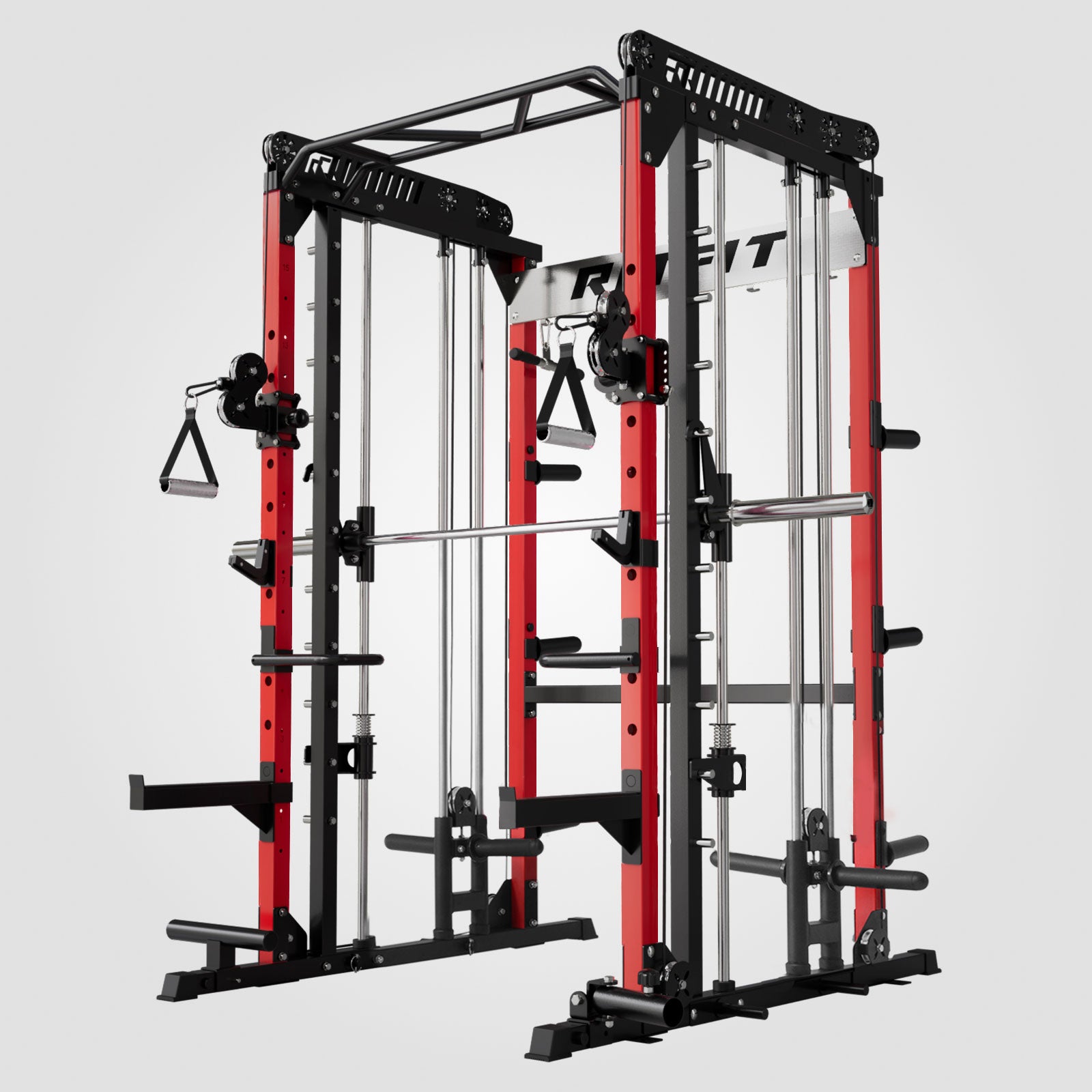
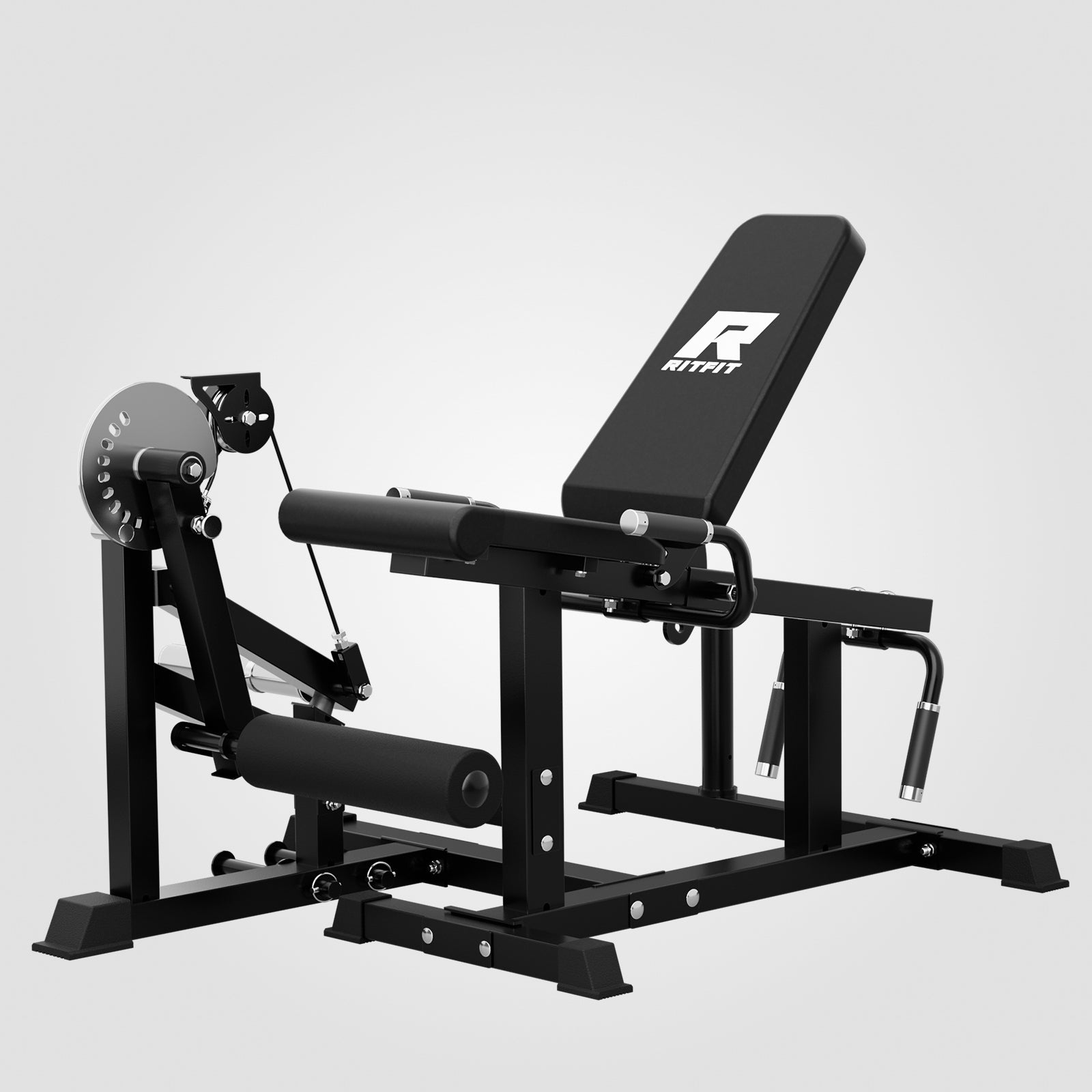
- Rack or Smith machine: A rack or Smith machine helps trained fathers perform structured strength work at home. This becomes more useful in the Performance and Legacy levels when progressive overload needs safer setup.
Do not buy equipment only because it looks advanced. Buy the equipment that helps you repeat the movements your current level actually requires.
Common Obstacles and How to Handle Them
Most busy dads do not fail because they lack discipline. They fail because the plan does not match the time, stress, and recovery limits of fatherhood.
- No time: Use the minimum version of the workout instead of skipping. Ten focused minutes keeps the habit alive.
- Low motivation: Track completed sessions, not feelings. Motivation often returns after visible proof of consistency.
- Poor sleep: Reduce volume before you cancel the habit. Keep technique clean and avoid max effort work after very rough nights.
- Family conflicts: Keep one home workout option ready. Training at home removes travel time and protects consistency.
- Soreness: Lower sets or load if soreness disrupts stairs, work, sleep, or parenting. Recovery should support life, not compete with it.
Recovery and Nutrition Guidelines
Recovery is the factor that determines whether a busy dad workout plan becomes sustainable. Hard training only works when sleep, food, hydration, and stress management can support adaptation.
- Protein: Keep protein consistent across the day to support strength and muscle goals. Research shows protein supplementation can enhance resistance training gains in muscle mass and strength in healthy adults.[2]
- Sleep: Treat poor sleep as a signal to adjust training volume. Sleep hygiene research connects sleep quality with recovery, performance, and readiness in active populations.[3]
- Hydration: Start workouts well hydrated and avoid relying on caffeine alone. Low energy is often a recovery signal, not a motivation problem.
- Stress: Lower the workout dose during high stress weeks. Resistance training recovery depends on balancing stress, fatigue, and performance demands across the training week.[4]
- Progress tracking: Record sessions completed, main lifts, energy, soreness, and sleep quality. These notes help you progress based on evidence instead of ego.
FAQs
What is the best busy dad workout plan for beginners?
The best busy dad workout plan for beginners is the Foundation level. It uses short full body sessions, simple movement patterns, and low recovery stress so fathers can build consistency before adding heavier weights, harder conditioning, or more weekly training days.
How many days per week should a busy dad train?
Most busy dads should start with 2 to 3 training days per week. This schedule gives enough practice to build strength and fitness while leaving room for work stress, family demands, poor sleep, and basic recovery between sessions.
Can busy dads build muscle with 30 minute workouts?
Yes. Busy dads can build muscle with 30 minute workouts when the sessions use progressive overload, compound movements, controlled reps, and enough weekly consistency. The workout must be focused, because short sessions leave little room for wasted sets or excessive rest.
Should busy dads train when sleep is poor?
Yes. Busy dads can train after poor sleep, but the workout should be easier. Reduce sets, avoid max effort lifting, keep technique strict, and treat the session as habit maintenance rather than a test of toughness or personal discipline.
What equipment do busy dads need for home workouts?
Busy dads need equipment that supports fast full body training. A practical home setup can start with dumbbells, an adjustable bench, bands, and floor space, then expand to a rack, Smith machine, or cable machine when strength goals require more loading options.
How long should each busy dad workout phase last?
Each busy dad workout phase should usually last at least 4 to 8 weeks. This gives enough time to judge consistency, soreness, strength progress, energy, and schedule fit before increasing workout length, training frequency, or total intensity.
How do busy dads know when to move up a level?
Busy dads should move up when workouts feel repeatable and recovery stays stable. Good signs include completed weekly sessions, clean technique, manageable soreness, steady energy, and the ability to add reps or load without sacrificing sleep or family responsibilities.
Is a busy dad workout plan good for fat loss?
Yes. A busy dad workout plan can support fat loss when it combines strength training, conditioning, daily movement, and sustainable nutrition. The workouts help preserve muscle and improve energy, but calorie control and consistent eating habits still drive most fat loss results.
Conclusion
The best busy dad workout plan is the one that matches your current capacity and survives real life. Start with the level you can repeat, build proof for several weeks, and progress only when your strength, energy, and recovery are ready.
Better fitness for fathers does not begin with a perfect plan. It begins with a repeatable plan that helps you train, recover, and show up consistently for work, home, and family.
Disclaimer
This article is for general fitness education only and is not medical advice. If you have chest pain, dizziness, uncontrolled blood pressure, a heart condition, recent injury, sharp joint pain, or concerns about exercise readiness, speak with a licensed healthcare provider before starting or progressing your training.
References
- Nuzzo JL, Pinto MD, Kirk BJC, Nosaka K. Resistance exercise minimal dose strategies for increasing muscle strength in the general population: an overview. Sports Med. 2024;54(5):1139-1162. doi:10.1007/s40279-024-02009-0
- Morton RW, Murphy KT, McKellar SR, Schoenfeld BJ, Henselmans M, Helms E, et al. A systematic review, meta-analysis and meta-regression of the effect of protein supplementation on resistance training-induced gains in muscle mass and strength in healthy adults. Br J Sports Med. 2018;52(6):376-384. doi:10.1136/bjsports-2017-097608
- Vitale KC, Owens R, Hopkins SR, Malhotra A. Sleep hygiene for optimizing recovery in athletes: review and recommendations. Int J Sports Med. 2019;40(8):535-543. doi:10.1055/a-0905-3103
- Sousa CA, Zourdos MC, Storey AG, Helms ER. The importance of recovery in resistance training microcycle construction. J Hum Kinet. 2024;91(Spec Issue):205-223. doi:10.5114/jhk/186659
- Young MD, Morgan PJ. Paternal physical activity: an important target to improve the health of fathers and their children. Am J Lifestyle Med. 2017;11(3):212-215. doi:10.1177/1559827616689544