A chest and back workout for women is an efficient way to build upper body strength, improve posture, and train balanced pushing and pulling patterns in one session. This guide gives you a clear routine with safe exercise options, sets, reps, form cues, and home gym equipment suggestions.
Use this workout 1 to 2 times per week for 6 to 8 weeks, and focus on clean reps before adding weight. Women can build measurable strength and performance through resistance training when frequency, intensity, and duration are planned well.[1]
Key Takeaways
- A chest and back workout helps women train push and pull strength in one balanced upper body session.
- The best routine combines presses, pulldowns, rows, flyes, and controlled accessory work.
- Beginners should start with dumbbells, machines, and cables before chasing heavier free weight loads.
- Back volume should usually match or slightly exceed chest volume to support posture and shoulder balance.
- Progress comes from better form, steady tempo, small weight increases, and repeatable weekly training.
Why Train Chest and Back Together?
Training chest and back together works because it pairs opposing movement patterns in one efficient session. Your chest handles pressing strength, while your back supports pulling strength, posture, and shoulder control.
Muscle Balance and Posture
A balanced chest and back routine helps women avoid overtraining the front of the body while undertraining the upper back. This matters for desk workers, beginners, and anyone who notices rounded shoulders or poor pulling strength.
Time Efficiency
Chest and back pair well because one side can recover while the other side works. This makes the workout easier to finish in 45 to 60 minutes without rushing through important form cues.
Aesthetic Benefits
Training chest and back together can create a stronger and more athletic upper body shape. It supports the visual structure of the shoulders, upper back, arms, and torso without relying on excessive isolation volume.
Performance Benefits
Stronger chest muscles improve push ups, presses, and controlled carrying tasks. Stronger back muscles improve rows, pulldowns, grip support, and everyday lifting mechanics.
Understanding the Muscles Involved
A good chest and back workout should train horizontal pushing, vertical pulling, horizontal pulling, and controlled shoulder movement. This creates better strength transfer than choosing random upper body machines.
Chest
The chest is mainly built around the pectoralis major and pectoralis minor. Flat presses emphasize overall pressing strength, incline presses shift more focus to the upper chest, and fly variations train chest tension through a wider range of motion.
Back
The back includes the latissimus dorsi, rhomboids, trapezius, teres major, and rear deltoids. Pulldowns train vertical pulling, rows train mid back control, and straight arm pulldowns help beginners feel lat engagement.
Shoulder Blades
The shoulder blades guide the quality of both chest and back exercises. Scapular stabilization based exercise has been studied for posture, shoulder mobility, and shoulder related discomfort, which makes upper back control important for safe pressing and pulling.[4]
Before You Start: Safety, Warm Up, and Setup
Proper setup helps you train the target muscles without shifting stress into the neck, wrists, elbows, or lower back. Start light, use stable equipment, and stop any movement that causes sharp or worsening pain.
Who This Workout Is For
This workout is for women who want stronger chest, back, shoulders, posture, and upper body confidence. It works well for beginners, intermediate lifters, commercial gym users, and home gym users with dumbbells, a bench, or cable equipment.
Who Should Modify It
Modify this workout if you have shoulder, neck, wrist, elbow, or back pain. Also reduce range of motion or choose machines if free weights feel unstable or uncomfortable.
Warm Up
A warm up should prepare the joints, raise body temperature, and make the first working sets feel smoother. Research on warm ups emphasizes preparation for the demands of the main activity, so keep this section active, specific, and short.[3]
- Light Cardio: Walk, cycle, or row for 5 minutes to raise body temperature.
- Arm Circles: Perform 10 small and 10 large circles in each direction.
- Band Pull Aparts: Complete 12 to 15 controlled reps to wake up the upper back.
- Wall Slides: Perform 8 to 10 reps while keeping the ribs controlled.
- Practice Sets: Use light rows and light presses before your first working set.
Choosing Weights
Choose a weight that makes the final 2 to 3 reps challenging while still allowing clean form. If you shrug, bounce, twist, or shorten the range of motion, reduce the load.
Equipment Setup
An adjustable bench, dumbbells, cable station, and row option cover most chest and back training needs. For home training, start with an adjustable weight bench and a pair of hex rubber dumbbells before adding larger machines.
Workout Overview
This routine is designed for balanced upper body strength, posture, and muscle tone. Use the table below as your quick training map before reading the exercise cues.
| Training Detail | Recommendation |
|---|---|
| Goal | Upper body strength, posture, and balanced chest and back development |
| Frequency | 1 to 2 times per week |
| Time Needed | 45 to 60 minutes |
| Main Equipment | Dumbbells, adjustable bench, cable machine, lat pulldown, row machine |
| Rest Time | 60 to 90 seconds for main lifts, 30 to 60 seconds for accessories |
| Training Level | Beginner to intermediate, with advanced progression options |
Main Routine
This chest and back workout starts with compound lifts, then moves into controlled accessory work. For muscle growth and strength, evidence supports using a range of loads as long as effort, volume, and progression are managed well.[2]
Compound Chest Exercise
- Options: Barbell Bench Press, Dumbbell Bench Press, or Machine Chest Press.
- Sets and Reps: 3 to 4 sets of 8 to 12 reps.
- Rest: Rest 60 to 90 seconds between sets.
- Key Cue: Set your shoulder blades down and back, keep your feet planted, and lower the weight with control.
- Home Gym Note: A stable bench from the RitFit benches collection supports flat and incline dumbbell pressing.
Compound Back Exercise
- Options: Lat Pulldown, Assisted Pull Up Machine, or Cable Pulldown.
- Sets and Reps: 3 to 4 sets of 8 to 12 reps.
- Rest: Rest 60 to 90 seconds between sets.
- Key Cue: Pull your elbows down toward your ribs instead of yanking with your hands.
- Home Gym Note: A cable crossover machine can support pulldowns, rows, flyes, and cable presses in one training area.
Incline Chest Exercise
- Options: Incline Dumbbell Press or Incline Machine Press.
- Sets and Reps: 3 sets of 10 to 12 reps.
- Rest: Rest 60 seconds between sets.
- Key Cue: Use a controlled tempo and avoid bouncing at the bottom.
- Best For: This movement trains the upper chest and front shoulder in a beginner friendly pressing angle.
Horizontal Row
- Options: Seated Cable Row, Chest Supported Row Machine, or One Arm Dumbbell Row.
- Sets and Reps: 3 sets of 10 to 12 reps.
- Rest: Rest 60 seconds between sets.
- Key Cue: Keep your chest proud, keep your spine neutral, and finish each rep by pulling the shoulder blades together.
- Beginner Swap: Choose a chest supported row if your lower back takes over during rowing.
Chest Isolation Accessory
- Options: Cable Chest Fly, Pec Deck Machine, or Light Dumbbell Fly.
- Sets and Reps: 2 to 3 sets of 12 to 15 reps.
- Rest: Rest 30 to 60 seconds between sets.
- Key Cue: Use a light to moderate weight and focus on tension, not maximum load.
- Safety Note: Keep the elbows softly bent and avoid forcing a deep stretch if the shoulders feel irritated.
Back Isolation Accessory
- Options: Straight Arm Pulldown, Single Arm Dumbbell Row, or Cable Face Pull.
- Sets and Reps: 2 to 3 sets of 12 to 15 reps.
- Rest: Rest 30 to 60 seconds between sets.
- Key Cue: Keep your torso quiet and let your back move the weight.
- Home Gym Note: The RitFit dumbbells collection can support single arm rows, dumbbell presses, and accessory movements.
Optional Finisher
A finisher should add light conditioning without turning the workout into sloppy extra volume. Keep it short, controlled, and easy to recover from.
Push Pull Superset
Perform push ups followed by band rows for 2 to 3 rounds of 12 to 15 reps each. This simple pairing reinforces chest endurance, back activation, and upper body coordination.
Cable Circuit
Perform cable chest press followed by cable row for 2 to 3 rounds of 12 reps each. This option works well when you want smooth resistance and quick setup changes.
Modifications for Different Fitness Levels
The best version of this workout is the one you can repeat with clean form and steady recovery. Adjust exercise selection, sets, and load based on your current skill level.
Beginner Modifications
Beginners should use machines, cables, and dumbbells that allow stable positions. Start with 2 working sets per exercise, and focus on feeling the chest and back before adding more volume.
Intermediate Progressions
Intermediate lifters can use 3 working sets on most movements and add small weight increases when reps feel consistent. Supersets can be useful, but only when form stays controlled.
Advanced Progressions
Advanced lifters can add one extra set to the main press or row, shorten rest slightly, or use slower eccentrics. Do not add all three at once, because recovery quality matters more than doing more work.
How to Progress This Workout
Progressive overload means making the workout slightly more challenging over time without sacrificing form. For most women, the best progression is small, consistent, and easy to track.
- Weeks 1 to 2: Learn the exercises and stop each set with about 2 reps left in reserve.
- Weeks 3 to 4: Add 1 to 2 reps per set when your form is stable.
- Weeks 5 to 6: Increase weight slightly on the main chest press and main row.
- Weeks 7 to 8: Add one accessory set only if your joints and recovery feel good.
- Tracking Method: Write down exercises, weights, reps, and notes about shoulder comfort.
Common Mistakes to Avoid
Most chest and back workout mistakes come from rushing, loading too heavy, or losing shoulder blade control. Fixing these mistakes often improves results without adding more exercises.
- Using Too Much Weight: Heavy loading only helps when you can control the full range of motion.
- Letting Shoulders Roll Forward: This can reduce chest quality on presses and back quality on rows.
- Pulling With the Hands: On pulldowns and rows, think about moving through the elbows instead.
- Relying on Momentum: Swinging shifts work away from the chest and back and makes progress harder to measure.
- Skipping Back Volume: Many women benefit from equal or slightly higher back volume for posture and shoulder balance.
- Ignoring Pain Signals: Sharp, radiating, or worsening pain is a reason to stop and modify the movement.
Cool Down and Recovery
Recovery helps your muscles, joints, and connective tissues adapt before your next upper body session. Use easy stretching, hydration, protein, and sleep to support the work you just completed.
- Doorway Chest Stretch: Hold a comfortable stretch for 20 to 30 seconds per side.
- Childs Pose With Lat Reach: Reach one hand slightly across the body to stretch the side of the back.
- Light Band Pull Aparts: Perform 10 slow reps to restore upper back awareness.
- Recovery Check: Wait until soreness and joint irritation are low before training chest and back hard again.
Sample Weekly Placement
This chest and back workout fits best when it does not sit directly before a hard shoulder day. Leave enough recovery time between upper body sessions so your pressing and pulling quality stays high.
- Day 1: Lower Body or Full Body.
- Day 2: Chest and Back Workout.
- Day 3: Rest, walking, or light cardio.
- Day 4: Legs and Glutes.
- Day 5: Shoulders and Arms.
- Day 6: Active Recovery.
- Day 7: Rest.
Best Home Gym Equipment for Chest and Back Training
You do not need a crowded commercial gym to train chest and back well. The right home gym setup should support pressing, rowing, pulldown patterns, stable bench angles, and progressive loading.
Best Starter Setup
A starter setup should include an adjustable bench and a pair of dumbbells. This combination supports dumbbell bench press, incline press, single arm rows, pullovers, and simple accessory training.
Best Cable Setup
A cable setup adds smoother resistance for chest flyes, cable rows, straight arm pulldowns, face pulls, and cable presses. For more complete training stations, explore RitFit strength machines.
Best All In One Setup
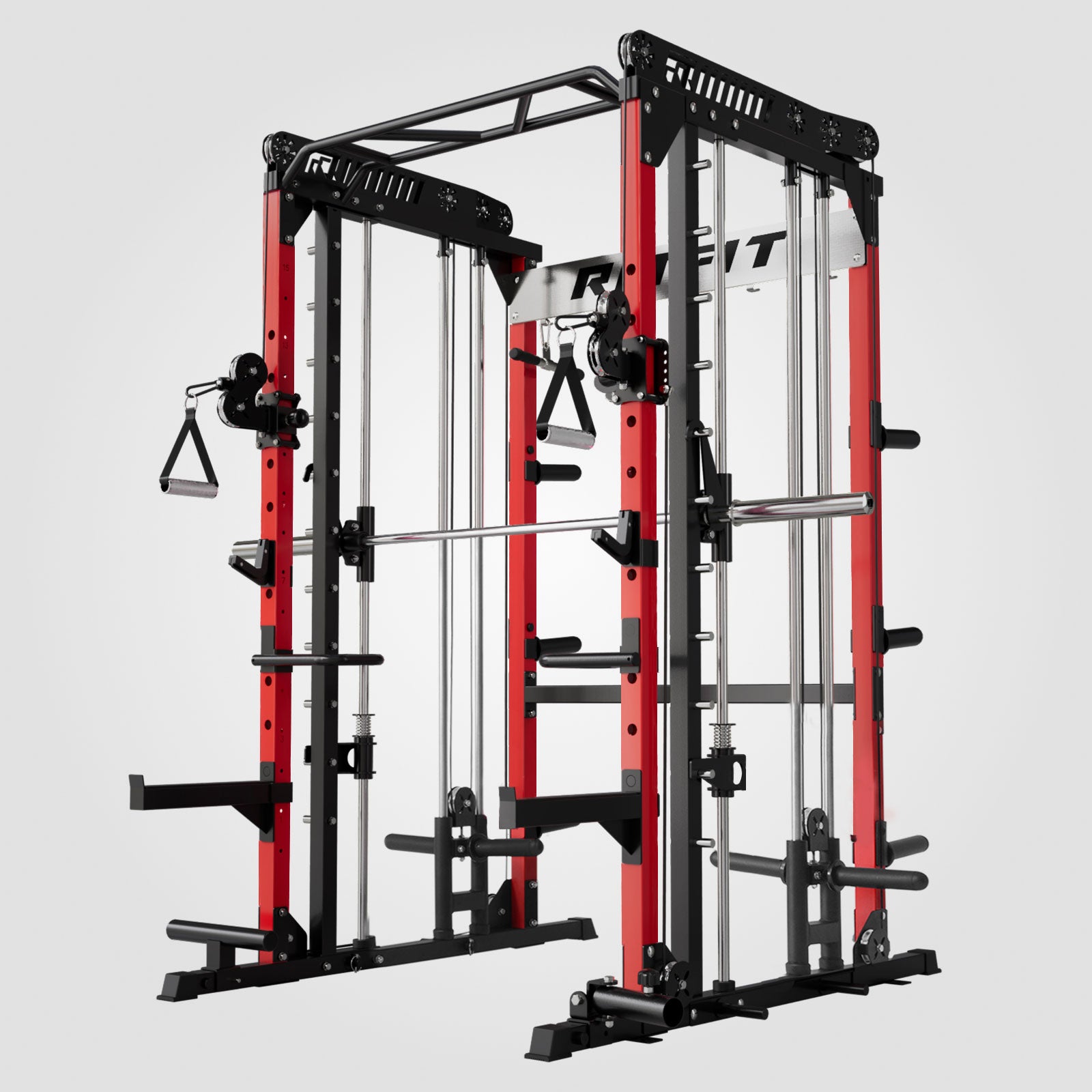
An all in one setup works well when you want guided bar work, cable training, rows, pulldowns, and pressing options in one space. For broader home gym planning, compare options in the Smith machine collection.
Best Machine Press Option
A chest and shoulder press machine can help users who prefer guided movement and stable pressing. The RitFit GORILLA 2 In 1 Chest and Shoulder Press Machine is a relevant option for users building a strength focused home gym.
Empowering Mindset for Women in the Weight Room
Women should not avoid chest and back training because of outdated fear around looking bulky. Upper body strength training is gradual, controllable, and shaped by training volume, nutrition, recovery, and consistency.
Start With Control
Confidence grows when you know what to do, how many reps to perform, and how the movement should feel. Start with stable equipment, controlled reps, and small wins you can repeat each week.
Train for Capability
Chest and back training is not just about appearance. It helps you press, pull, carry, reach, support posture, and feel more capable in and outside the gym.
FAQs
Can women train chest and back on the same day?
Yes. Women can train chest and back on the same day because the two areas use opposite movement patterns. Pairing presses with rows or pulldowns helps balance pushing and pulling strength, saves time, and supports better shoulder control when exercise form and volume are managed well.
Is a chest and back workout good for beginners?
Yes. A chest and back workout is good for beginners when the exercises are stable and easy to control. Machines, cables, and dumbbells are useful starting points because they let new lifters learn pressing and pulling patterns without needing heavy loads or complex barbell setups.
What equipment do women need for a chest and back workout?
Most women need an adjustable bench, dumbbells, and one pulling option for a strong chest and back workout. A cable machine, lat pulldown, row machine, or Smith machine can add more variety, but the routine can still work with simple home gym equipment.
How often should women do a chest and back workout?
Most women can train chest and back 1 to 2 times per week. One session is enough for beginners or busy schedules, while two sessions can work for intermediate lifters if recovery is good and the weekly plan still leaves room for legs, shoulders, and rest.
Should women lift heavy during chest and back workouts?
Yes. Women can lift heavy during chest and back workouts when technique stays clean and joints feel comfortable. Heavy is relative, so the best weight is one that feels challenging near the final reps while still allowing a steady tempo and full control.
Will chest workouts make women bulky?
No. Chest workouts will not automatically make women bulky because muscle growth is gradual and depends on training volume, intensity, nutrition, and time. Chest training can improve pressing strength, shoulder support, posture, and confidence without creating unwanted size for most recreational lifters.
Which chest and back exercises are best for posture?
Rows, pulldowns, face pulls, and controlled chest presses are best for posture when performed with good shoulder blade control. Back exercises help strengthen the muscles that support the upper spine, while chest exercises should be trained with stable shoulders instead of rounded forward positions.
How can women do this chest and back workout at home?
Women can do this chest and back workout at home with dumbbells, an adjustable bench, and resistance bands or cables. Use dumbbell presses, incline presses, one arm rows, band rows, push ups, and pullovers, then progress by adding reps, slowing tempo, or increasing weight.
Conclusion
A chest and back workout for women is a smart way to build upper body strength, improve posture, and train balanced push pull movement. Use this plan for 6 to 8 weeks, track your reps and loads, and prioritize clean form before increasing weight.
Disclaimer: This article is for general educational purposes only and is not medical advice. If you have shoulder, neck, back, elbow, or wrist pain, a recent injury, surgery, pregnancy related concerns, or any condition that affects exercise tolerance, speak with a qualified healthcare professional before starting and stop any movement that causes sharp, radiating, or worsening pain.
References
- Kraemer WJ, Fragala MS, Ratamess NA. Evolution of resistance training in women: History and mechanisms for health and performance. Sports Med Health Sci. 2025;7(5):351-365. doi:10.1016/j.smhs.2025.01.005. PMCID: PMC12421175.
- Schoenfeld BJ, Grgic J, Van Every DW, Plotkin DL. Loading recommendations for muscle strength, hypertrophy, and local endurance: a re-examination of the repetition continuum. Sports (Basel). 2021;9(2):32. doi:10.3390/sports9020032. PMCID: PMC7927075.
- Afonso J, Brito J, Abade E, Rendeiro-Pinho G, Baptista I, Figueiredo P, Nakamura FY. Revisiting the Whys and Hows of the warm-up: Are we asking the right questions? Sports Med. 2024;54(1):23-30. doi:10.1007/s40279-023-01908-y. PMCID: PMC10798919.
- Moezy A, Sepehrifar S, Solaymani Dodaran M. The effects of scapular stabilization based exercise therapy on pain, posture, flexibility and shoulder mobility in patients with shoulder impingement syndrome: a controlled randomized clinical trial. Med J Islam Repub Iran. 2014;28:87. PMCID: PMC4301231.