Close grip and wide grip lat pulldowns both train your lats, but they change your elbow path, grip comfort, and supporting muscle demand. Wide grip pulldowns usually feel more lat focused, while close grip and neutral grip pulldowns often allow a longer range of motion and stronger arm assistance.
This guide explains the muscles worked, form differences, programming tips, and home gym equipment choices so you can choose the right lat pulldown grip for your back training goal.
Key Takeaways
- Both grips train the lats: Wide grip and close grip lat pulldowns both work the latissimus dorsi as the main target muscle.
- Wide grip changes the pull path: A wide pronated grip emphasizes shoulder adduction and is commonly used for back width training.
- Close grip can improve range of motion: A close or neutral grip often lets lifters pull lower and keep stronger elbow control.
- Neutral grip is often joint friendly: Many lifters find a neutral grip easier on the wrists, elbows, and shoulders.
- Form matters more than grip hype: Current EMG research does not support treating one grip as universally superior for lat activation.
Lat Pulldown Muscles Worked
The lat pulldown mainly trains the latissimus dorsi, with help from the biceps, brachialis, brachioradialis, rear delts, teres major, rhomboids, and trapezius. The exact feel changes with grip width, forearm position, torso angle, and how well you control your shoulder blades.
| Muscle Group | Role in the Lat Pulldown | Training Note |
|---|---|---|
| Latissimus dorsi | Drives shoulder adduction and extension during the pull. | This is the main target muscle in all major pulldown grips. |
| Teres major | Assists the lats during upper arm movement. | Often contributes strongly when elbows travel down and slightly back. |
| Biceps brachii | Helps bend the elbow as the bar or handle moves down. | Usually feels more involved with close or supinated grips. |
| Brachialis and brachioradialis | Support elbow flexion and grip strength. | Neutral grip pulldowns often make these muscles feel active. |
| Middle and lower trapezius | Help control scapular depression and retraction. | They support shoulder position rather than acting as the main mover. |
| Rear delts | Assist shoulder extension and upper arm control. | They may become more noticeable when you lean back slightly. |
| Core muscles | Stabilize the torso and help prevent swinging. | Good bracing keeps the movement focused on the back. |
One experimental study found only small changes in latissimus dorsi and biceps activity between wide grip pulldowns and reverse grip pulldowns, which supports using grip choice as a technique tool rather than a magic shortcut.[1]
Close Grip vs Wide Grip Lat Pulldown Comparison
The wide grip lat pulldown is usually better for practicing a broad elbow path, while the close grip lat pulldown is often better for range of motion and arm assisted pulling strength. Both can build your back when the load, control, and weekly volume are appropriate.
| Grip Type | Main Feel | Best Use | Watch Out For |
|---|---|---|---|
| Wide pronated grip | Broad lat and upper back tension | Back width, shoulder adduction practice, classic pulldown training | Going too wide can reduce range of motion and irritate shoulders |
| Close grip | Strong squeeze and longer pull path | Lat contraction, beginner control, heavier controlled sets | Too much arm pulling can reduce back focus |
| Neutral grip | Comfortable wrists and elbows | Joint friendly back work, home gym training, high quality volume | Leaning too far back can turn it into a row |
| Supinated grip | More biceps involvement | Arm assisted pulldowns and controlled strength work | Excessive load can stress the elbows or wrists |
Wide Grip Lat Pulldown Muscles Worked
The wide grip lat pulldown trains the lats, teres major, upper back, rear delts, and elbow flexors. It usually places the arms farther from the body, which changes the shoulder path and makes the movement feel wider across the back.
What Wide Grip Does Best
A wide pronated grip is useful when you want a classic vertical pull that teaches you to drive the elbows down while keeping the chest tall.
- Primary focus: Latissimus dorsi and teres major.
- Secondary muscles: Biceps, brachialis, brachioradialis, rear delts, rhomboids, middle traps, and lower traps.
- Best cue: Pull your elbows down toward your ribs instead of pulling with your hands.
- Best range: Use a width that lets your shoulders stay controlled and your forearms stay close to vertical at the bottom.
- Common mistake: Gripping extremely wide, cutting the range short, and forcing the shoulder joint into an uncomfortable position.
In a recent EMG study comparing several lat pulldown variations, latissimus dorsi activation stayed relatively stable across grip types, which means wide grip should be selected for comfort, technique, and training goal rather than assumed superiority.[2]
Close Grip Lat Pulldown Muscles Worked
The close grip lat pulldown works the lats through shoulder extension while increasing the role of elbow flexors and grip strength. Many lifters feel a stronger bottom contraction because the hands can travel lower and the elbows can move closer to the torso.
What Close Grip Does Best
A close grip is useful when you want a controlled pull, a longer range of motion, and an easier setup for learning how to keep the shoulders down.
- Primary focus: Latissimus dorsi, especially when the elbows travel down and slightly back.
- Secondary muscles: Biceps, brachialis, brachioradialis, teres major, rear delts, and mid back stabilizers.
- Best cue: Start by setting the shoulder blades down, then pull the handle toward the upper chest.
- Best range: Pull until your elbows are near your sides and your lats are fully contracted.
- Common mistake: Turning the exercise into a biceps dominant pull by bending the elbows before setting the shoulders.
Close grip pulldowns are not automatically better than wide grip pulldowns, but they can be easier to repeat with clean form. That makes them a strong choice for beginners, home gym lifters, and anyone who wants consistent weekly back volume.
Neutral Grip Lat Pulldown Muscles Worked
The neutral grip lat pulldown trains the lats, biceps, brachialis, brachioradialis, teres major, and scapular stabilizers. Because the palms face each other, this grip often feels more natural for lifters who dislike the wrist or shoulder position of wide pronated pulldowns.
Why Neutral Grip Feels Comfortable
Neutral grip handles often let the elbows track closer to the body, which can help lifters keep tension on the back without forcing the shoulders into a wide position.
- Primary focus: Lats and teres major through a strong vertical pulling path.
- Secondary muscles: Biceps, brachialis, brachioradialis, rear delts, traps, and rhomboids.
- Best cue: Pull the handles down toward the top of your chest while keeping your ribs controlled.
- Best range: Use a full stretch at the top and a firm lat squeeze at the bottom.
- Common mistake: Leaning back too far and changing the movement from a pulldown into a seated row.
Which Lat Pulldown Grip Should You Use?
Use the grip that lets you train hard with clean form, full control, and no joint irritation. If multiple grips feel good, rotate them across the week instead of searching for one perfect option.
| Your Goal | Best Grip Choice | Why It Works |
|---|---|---|
| Back width | Comfortable wide pronated grip | It trains a broad elbow path and classic vertical pulling mechanics. |
| Beginner back training | Close neutral grip | It is usually easier to control and easier to feel through a full range. |
| Shoulder comfort | Neutral grip | It often keeps wrists, elbows, and shoulders in a more natural line. |
| Biceps assisted pulling | Close or supinated grip | It gives the elbow flexors a stronger role during the pull. |
| Hypertrophy volume | Wide grip plus neutral grip rotation | It gives your back varied stimulus while keeping technique repeatable. |
Foot placement and body stabilization can also change how a pulldown feels, so do not judge grip width alone. A small study on pull down exercise found that foot placement influenced latissimus dorsi and low back muscle activity, which reinforces the value of stable full body setup.[3]
How to Do Lat Pulldowns Correctly
Set your body first, then pull with control. Good lat pulldown form should feel like your elbows are driving the movement while your hands simply connect you to the bar or handle.
Setup
Sit tall, secure your thighs under the pads, brace your torso, and choose a grip that allows your shoulders to move without discomfort.
- Step 1: Grip the bar or handle and let your arms reach overhead without shrugging aggressively.
- Step 2: Set your shoulder blades down before bending your elbows.
- Step 3: Pull the bar or handle toward the upper chest with a controlled tempo.
- Step 4: Squeeze the lats at the bottom without leaning far back.
- Step 5: Return to the top under control and allow a full stretch without losing shoulder position.
Tempo
A controlled tempo helps keep tension on the back and reduces swinging, especially when using a home gym cable station.
- Pull phase: Use 1 to 2 seconds to bring the handle down.
- Bottom position: Pause briefly and feel the lats contract.
- Return phase: Use 2 to 3 seconds to return to the top.
- Breathing: Exhale as you pull down and inhale as you return upward.
Common Lat Pulldown Mistakes
Most lat pulldown problems come from using too much weight, moving too fast, or choosing a grip that does not match your shoulder structure. Fixing these issues usually improves back tension immediately.
- Using a grip that is too wide: Extremely wide grips can shorten range of motion and make the shoulders feel pinched.
- Pulling behind the neck: Behind the neck pulldowns may place some lifters in an uncomfortable shoulder position, so front pulldowns are usually the safer default.
- Swinging the torso: A small natural lean is fine, but excessive momentum turns the exercise into a partial row.
- Pulling with the hands first: Start with shoulder depression so the lats begin the movement before the arms take over.
- Cutting the stretch short: A controlled top stretch helps train the lats through a fuller range of motion.
- Ignoring pain signals: Sharp pain is not a normal training cue, so adjust the load, grip, range, or exercise choice.
Research comparing front and back lat pulldown patterns suggests that front lat pulldowns can provide strong prime mover excitation without requiring the behind the neck path that many lifters find less comfortable.[4]
How to Program Lat Pulldowns for Back Growth
For muscle growth, train lat pulldowns with enough weekly volume to challenge your back while leaving room for recovery. Most lifters do well with 2 to 4 pulldown slots per week across different grips or rep ranges.
| Training Level | Sets | Reps | Grip Strategy |
|---|---|---|---|
| Beginner | 2 to 3 sets | 10 to 12 reps | Start with neutral or close grip for easier control. |
| Intermediate | 3 to 4 sets | 8 to 15 reps | Rotate wide grip and neutral grip across the week. |
| Advanced | 4 to 5 sets | 6 to 15 reps | Use grip rotation, pauses, slow eccentrics, and planned progression. |
Sample Weekly Setup
A simple weekly setup is one heavier close grip day and one moderate wide grip day, with rows added elsewhere for mid back thickness.
- Day 1: Close grip lat pulldown, 4 sets of 8 to 10 reps.
- Day 2: Wide grip lat pulldown, 3 sets of 10 to 12 reps.
- Optional finisher: Neutral grip pulldown, 2 sets of 12 to 15 reps.
- Progression: Add reps first, then add weight once all sets are clean.
If your biceps fatigue before your back, reduce the load and focus on elbow path. A study on biceps pre exhaustion during front lat pulldowns found that pre fatiguing the biceps reduced performance and increased perceived effort, especially with narrower grips.[5]
Home Gym Equipment for Lat Pulldown Variations
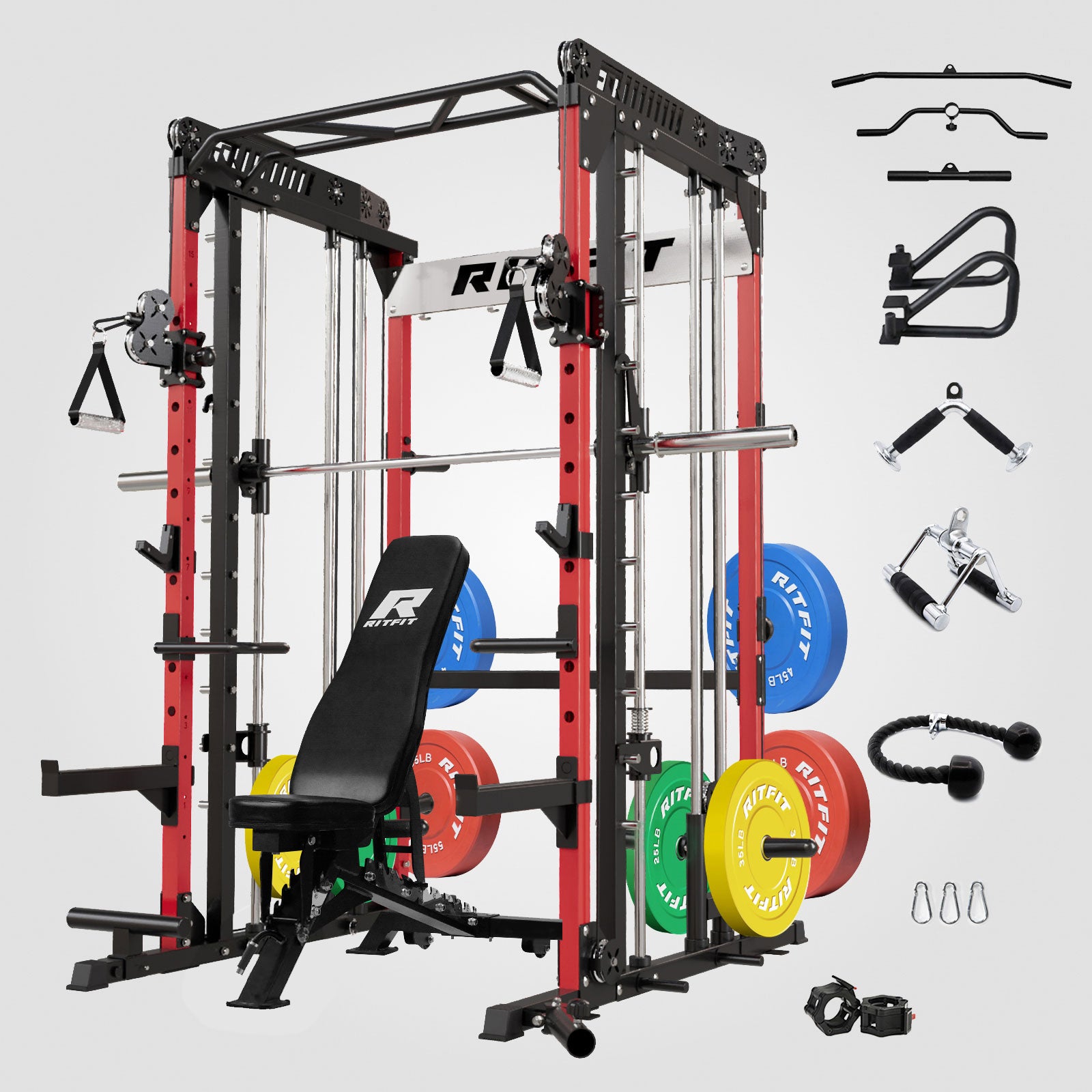
For home gym training, the most useful setup is a cable system that supports multiple handles. A wide lat bar, close grip handle, and neutral grip handle let you rotate pulldown variations without needing separate machines.
If you already train with a rack based system, a cable attachment can expand your back workouts with vertical pulling, rows, curls, face pulls, and triceps work. The RitFit lat pulldown attachments page is the most relevant place to compare handle options for different grip positions.
Lifters who want a rack with an integrated cable system can review the RitFit P3 Power Cage with Smooth Cable System. It supports a broader strength training setup for squats, presses, pulls, and cable accessory work.
If you prefer a dedicated cable station, the RitFit Cable Crossover Machine can support pulldown style training, rows, flyes, face pulls, and single arm cable work. For rack based upgrades, browse RitFit rack attachments to match your training space and equipment setup.
For all in one home gym planning, compare broader strength equipment through the RitFit strength machines collection and the RitFit Smith machine collection. If you want to explore complete rack based packages, the RitFit racks package collection can help you build a fuller home gym around both free weight and cable training.
Attachment Selection Tips
Choose attachments by grip comfort, cable compatibility, and the movement path you want to train.
- Wide lat bar: Best for classic wide grip pulldowns and back width training.
- Close grip row handle: Best for close grip pulldowns, rows, and strong bottom contractions.
- Neutral grip handle: Best for joint friendly pulling and repeatable hypertrophy work.
- Straight bar: Best for pulldowns, curls, pressdowns, and simple accessory training.
FAQs
Which lat pulldown grip is best for lats?
The best lat pulldown grip for lats is the one that lets you pull with control and feel your elbows drive down. Wide, close, and neutral grips can all train the lats well, but comfort, range of motion, and consistent technique matter more than grip width alone.
Is close grip or wide grip lat pulldown better?
Neither grip is universally better. Wide grip pulldowns are useful for a broad vertical pull, while close grip pulldowns often allow a longer range of motion and stronger bottom contraction. Use both if they feel comfortable and match them to your back training goal.
Does close grip lat pulldown work the biceps more?
Yes. Close grip lat pulldowns often make the biceps and forearm flexors feel more active because the elbows bend through a strong pulling path. The lats still remain a main target, but you should avoid turning the exercise into a curl by pulling with your arms first.
Is wide grip lat pulldown better for back width?
Wide grip lat pulldowns can be helpful for back width because they train a broad elbow path and strong shoulder adduction. However, they are not automatically superior for lat growth. Use a comfortable wide grip that allows full control instead of forcing an extreme hand position.
Is neutral grip lat pulldown better for shoulders?
Yes, for many lifters. Neutral grip lat pulldowns often feel easier on the shoulders, wrists, and elbows because the palms face each other and the elbows track naturally. It is a strong option for beginners, home gym users, and anyone who dislikes wide pronated grips.
How wide should my grip be for lat pulldowns?
Your grip should be wide enough to feel your lats working but not so wide that your shoulders pinch or your range of motion becomes short. A practical starting point is slightly wider than shoulder width, then adjust until your elbows move smoothly and your chest stays tall.
Can lat pulldowns build a V taper?
Yes. Lat pulldowns can help build a V taper by strengthening the lats and improving back width when combined with progressive overload. For best results, pair pulldowns with rows, rear delt work, and consistent nutrition that supports muscle growth and body composition goals.
Conclusion
Close grip and wide grip lat pulldowns both belong in a smart back training plan. Wide grip pulldowns train a broad pulling path, close grip pulldowns often improve range and control, and neutral grip pulldowns are usually the most joint friendly option.
Choose the grip that lets you train hard, feel your lats, and keep your shoulders comfortable. Rotate grips over time for complete back development.
Disclaimer
This article is for general fitness education only and is not medical advice. Stop any exercise that causes sharp pain, numbness, or unusual discomfort. If you have a shoulder, elbow, wrist, neck, or back condition, consult a qualified medical professional, physical therapist, or certified coach before changing your training program.
References
- Lehman GJ, Buchan DD, Lundy A, Myers N, Nalborczyk A. Variations in muscle activation levels during traditional latissimus dorsi weight training exercises: an experimental study. Dyn Med. 2004;3:4. doi:10.1186/1476-5918-3-4.
- Buonsenso A, Di Fonza D, Di Claudio G, Carangelo M, Centorbi M, di Cagno A, Calcagno G, Fiorilli G. Electromyographic analysis of back muscle activation during lat pulldown exercise: effects of grip variations and forearm orientation. J Funct Morphol Kinesiol. 2025;10(3):345. doi:10.3390/jfmk10030345.
- Yoo WG. Effect of the foot placements on the latissmus dorsi and low back muscle activities during pull down exercise. J Phys Ther Sci. 2013;25(9):1155-1156. doi:10.1589/jpts.25.1155.
- Padovan R, Toninelli N, Longo S, Tornatore G, Esposito F, Ce E, Coratella G. High density electromyography excitation in front vs back lat pull down prime movers. J Hum Kinet. 2024;91:47-60. doi:10.5114/jhk/185211.
- Vilaça Alves J, Geraldes L, Fernandes HM, Vaz L, Farjalla R, Saavedra F, Reis VM. Effects of pre exhausting the biceps brachii muscle on the performance of the front lat pull down exercise using different handgrip positions. J Hum Kinet. 2014;42:157-163. doi:10.2478/hukin-2014-0068.