Some muscles are harder to build because leverage, muscle architecture, daily workload, and programming mistakes can limit how much productive tension they receive. The good news is that most lagging muscles improve when exercise choice, weekly volume, range of motion, and recovery match what that muscle actually does.
Key Takeaways
- Calves: Calves are the most common weak point because they work all day, recover quickly, and are often trained carelessly.
- Upper chest and rear delts: These muscles often lag because bigger muscles or stronger movement patterns steal the work.
- Technique matters: Controlled reps, full usable range, and stable setup usually beat rushed momentum reps.
- Programming matters: Lagging muscles usually need earlier placement, more weekly exposure, and clearer progression.
- Genetics matter, but not alone: Structure affects how easy growth is to see, but smart training still changes the outcome.
What Makes a Muscle Hard to Build?
Genetics and anatomical structure
Muscle belly length, tendon length, and limb leverage can change how much visible size a muscle can gain and how easy it is to load through a productive path. This is one reason two lifters can train similarly but show very different visual development.
Daily activity and fiber profile
Some stubborn muscles handle low level work all day, so they are already efficient at doing repetitive tasks and can feel resistant to casual gym effort. Muscle growth can still happen across a broad loading spectrum, but the work has to be challenging enough to create a real hypertrophy stimulus.[1]
Recovery and programming quality
A muscle often looks hard to build when it is simply under prioritized, poorly executed, or trapped inside a weak program. The issue is usually not one magic exercise, it is the combined effect of setup, volume, intensity, progression, and recovery.
The Calves, the Classic Stubborn Muscle Group
Why calves lag for so many lifters
Calves are stubborn because they deal with bodyweight work every day, and some lifters also have shorter calf bellies that make visible growth slower to notice. Research also shows that calf raise selection changes which part of the triceps surae grows most, not just whether the calves grow at all.[4]
Common calf training mistakes
Most people train calves too late, use too little total work, and rush the stretch instead of owning the bottom position. They also rely on one pattern only, which usually leaves either the gastrocnemius or the soleus under trained.
How to build calf muscle more effectively
Calves usually respond better when you train them early, use both straight leg and bent knee patterns, and make every rep slow and measurable. A fuller range of motion and more time at longer muscle lengths can improve hypertrophy outcomes in resistance training.[2]
- Standing calf raises: Use these to emphasize the gastrocnemius and to load the calf through a longer straight leg position.
- Seated calf raises: Use these to give the soleus direct bent knee work instead of guessing that daily walking is enough.
- Single leg work: Use unilateral sets when one side clearly lags or when you keep bouncing through both legs together.
- Progression: Add reps, load, or one extra hard set only when your pauses and range stay honest.
Other Commonly Stubborn Muscle Groups
Hamstrings
Hamstrings often lag because many lifters say they train legs while still under training knee flexion and lengthened hip hinge work. Romanian deadlifts, seated or lying leg curls, and stable setup choices usually fix more hamstring problems than simply adding random extra sets.
Upper chest
The upper chest usually lags because flat pressing dominates most push programs and front delts often take over steep pressing patterns. Better upper chest growth usually comes from moderate incline pressing, low to high cable work, and putting that work first instead of last.
Rear delts
Rear delts lag because traps, lats, and biceps can easily steal tension when the arm path is wrong or the load is too heavy. Most lifters get better results when they lighten the weight, lead with the elbow, and use movements that keep the shoulder moving instead of the torso swinging.
Forearms and grip
Forearms can be stubborn because gripping rows and deadlifts is often not enough direct work for visible hypertrophy. Loaded carries, wrist flexion and extension work, reverse curls, and thicker grip variations usually work better than hoping compound lifts will do everything.
Systemic Reasons Your Hard Muscles Still Will Not Grow
Poor exercise execution
Weak points rarely grow when the load is so heavy that the target muscle never stays under control. Technique choices such as stable joint positions, long muscle length emphasis, and sensible tempo all affect how well a hypertrophy exercise actually does its job.[5]
Imbalanced programming
Lagging muscles stay lagging when the weekly split never gives them priority or enough quality work. Weekly set volume is one of the clearest levers for hypertrophy, so a muscle that gets token work should not be expected to grow like a muscle that gets planned work.[3]
Nutrition and bodyweight trends
You cannot expect a stubborn muscle to add noticeable size while bodyweight is flat for months and protein intake is inconsistent. Even a great program under delivers when recovery resources are too low for growth.
Program hopping
Weak points usually need months of repeated exposure, not a new trick every ten days. If the exercises, loading, and order keep changing, your lagging muscle never gets a fair chance to accumulate meaningful progress.
Advanced Strategies for Stubborn Muscle Groups
Run a short specialization phase
A six to eight week specialization block works well when one or two body parts clearly hold back your physique. Keep most other muscles at maintenance volume, then spend your best recovery and attention on the area that actually needs help.
Use micro sessions carefully
Short calf, rear delt, or forearm sessions can work when they add focused quality without wrecking recovery. The goal is more productive exposure, not random fatigue for its own sake.
Apply intensity methods sparingly
Drop sets, rest pause work, and lengthened partials can help a stubborn muscle, but only after the basics are already in place. They should make good reps harder, not replace good reps completely.
Equipment That Can Help Weak Points Grow at Home
Useful home gym options
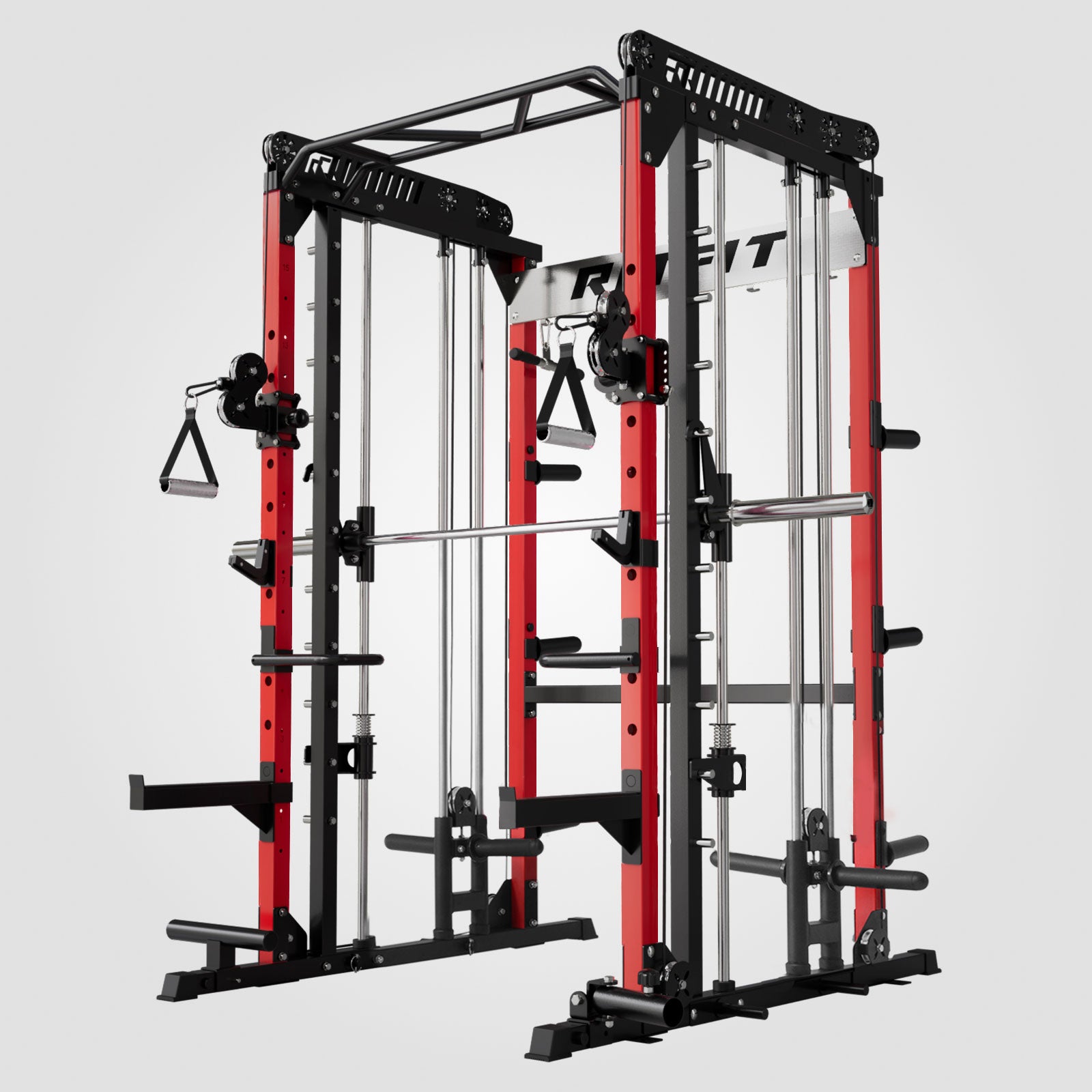
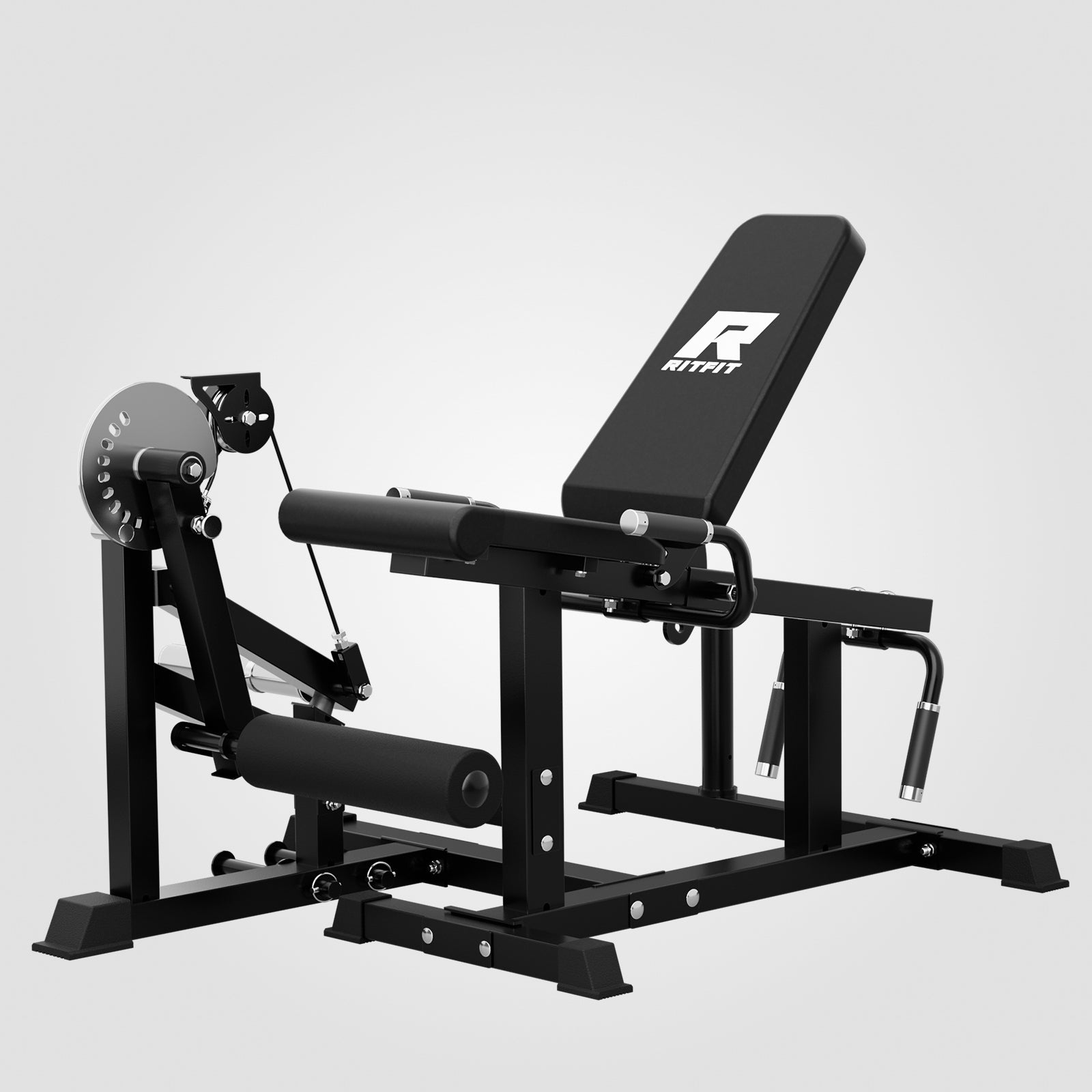
The right equipment does not replace smart programming, but it can make weak point training more stable, repeatable, and easier to progress. For example, a quality adjustable weight bench helps set better incline angles for the upper chest, a Smith machine collection supports repeatable pressing and calf work, a strength machines collection makes targeted lower body work easier, the Gazelle Pro leg press and hack squat machine helps hammer quads and calves, and a dumbbells collection gives flexible rear delt, incline press, and unilateral options.
Putting It All Together, a Simple Weak Point Training Week
- Lower Body Day 1: Start with seated calf raises, move into Romanian deadlifts, then add leg curls and quad work.
- Upper Body Day 1: Start with incline dumbbell or Smith presses, then add rows and focused rear delt work.
- Lower Body Day 2: Start with standing calf raises, then use squats, hack squats, or leg press patterns and finish with hamstring curls.
- Upper Body Day 2: Start with another upper chest press or fly variation, then finish with rear delts and forearms.
- Micro Session Option: Add one short calf or rear delt session later in the week if recovery stays good.
FAQs
Why are calves one of the hardest muscles to build?
Calves are hard to build because they already handle bodyweight work every day, and many lifters train them with rushed reps and poor range. Genetics can affect how much calf size is visible, but weak programming is usually a bigger problem than people think.
How often should you train stubborn muscle groups for growth?
You should usually train a stubborn muscle group two to four times per week, as long as the quality stays high and recovery stays intact. Weak points often grow better with more frequent hard practice, not with one rushed burnout session at the end of the week.
Can upper chest training fail even if you bench press a lot?
Yes. Heavy flat benching can build the chest, but it does not always solve an upper chest weakness. If your front delts dominate incline work, or your pressing angle is too flat or too steep, the clavicular fibers may still lag behind visually.
What rear delt training mistake stops rear delts from growing?
The most common rear delt mistake is using too much weight and turning every rep into a trap, lat, or torso movement. Rear delts usually respond better when you reduce momentum, lead with the elbow, and keep tension on the shoulder instead of the spine.
Should you train weak muscles first in a workout?
Yes. Training a weak muscle first usually improves focus, rep quality, and progression because your energy is highest at the start. Most lagging muscles stay lagging because they only get leftover effort after the compounds and better loved body parts are finished.
Could genetics make a muscle impossible to grow?
No. Genetics can change shape, insertion, leverage, and growth speed, but they do not make a normal muscle impossible to improve. In most cases, the muscle can still grow, it just may require more patient programming and may never look like someone else’s version.
Conclusion
The hardest muscles to build are usually the ones that get the worst combination of leverage, priority, and execution. If you treat calves, hamstrings, upper chest, rear delts, and forearms like real training projects instead of afterthoughts, they usually stop acting stubborn and start acting trainable.
Disclaimer: This guide is for general education, not medical diagnosis or personal rehabilitation advice. If you have pain, tendon irritation, a recent injury, or a health condition that changes exercise tolerance, get individualized guidance from a qualified clinician or coach before increasing training load.
References
- Schoenfeld BJ, Grgic J, Van Every DW, Plotkin DL. Loading recommendations for muscle strength, hypertrophy, and local endurance, a re examination of the repetition continuum. Sports (Basel). 2021;9(2):32.
- Schoenfeld BJ, Grgic J. Effects of range of motion on muscle development during resistance training interventions, a systematic review. SAGE Open Med. 2020;8:2050312120901559.
- Schoenfeld BJ, Contreras B, Krieger JW, et al. Resistance training volume enhances muscle hypertrophy but not strength in trained men. Med Sci Sports Exerc. 2019;51:94-103.
- Kinoshita M, Maeo S, Kobayashi Y, et al. Triceps surae muscle hypertrophy is greater after standing versus seated calf raise training. Front Physiol. 2023;14:1272106.
- Androulakis Korakakis P, Wolf M, Coleman M, et al. Optimizing resistance training technique to maximize muscle hypertrophy, a narrative review. J Funct Morphol Kinesiol. 2023;9(1):9.