Most adults would need about 17,500 to 24,500 jumping jacks to burn the energy equivalent of one pound, using the common 3,500 calorie estimate. Your actual number depends on body weight, pace, workout density, recovery, and your total daily calorie balance.
Jumping jacks can support fat loss, but they work best as part of a balanced plan that includes nutrition, daily movement, and strength training.
Quick Answer and Calculation Method
Using the common 3,500 calorie estimate for one pound, and an average burn of about 100 calories per 500 to 700 jumping jacks, many adults would need roughly 17,500 to 24,500 jumping jacks.
This is a planning estimate, not a guaranteed fat loss result, because calorie burn and body weight change are influenced by many daily variables.
The Science Behind Fat Loss and Calorie Burn
Fat loss happens when you maintain an energy deficit over time. Research on weight management consistently identifies energy deficit as the key driver of weight loss, although the best strategy should be individualized.[1]
Jumping jacks can help create that deficit by raising heart rate and increasing total activity, but food intake and daily movement still decide the final result.
How These Calorie Estimates Are Calculated
Jumping jack calorie estimates are usually based on body weight, exercise intensity, and workout duration. A heavier person generally burns more calories per minute because moving a larger body requires more energy.
For practical use, treat the numbers as a useful range instead of an exact metabolic measurement.
How Many Calories Do Jumping Jacks Burn?
Jumping jacks usually burn more calories when you move faster, use a full range of motion, and keep rest periods short. They fit well into short home cardio workouts because they require no equipment and raise heart rate quickly.
| Body Weight | Moderate Pace in 10 Minutes | Vigorous Pace in 10 Minutes |
|---|---|---|
| 120 lb / 55 kg | About 60 calories | About 80 calories |
| 150 lb / 68 kg | About 75 calories | About 100 calories |
| 180 lb / 82 kg | About 90 calories | About 120 calories |
What Changes the Number?
- Body weight: Heavier bodies usually burn more calories per minute because they require more energy to move.
- Pace and cadence: A faster rhythm increases total work, heart rate, and estimated calorie burn.
- Range of motion: A full arm reach and wider foot movement usually cost more energy than short partial reps.
- Rest time: Long breaks reduce workout density and lower the total calories burned per session.
- Fitness level: Efficient movers may complete the same reps with a slightly different energy cost.
How Many Jumping Jacks Burn 100 Calories?
For most people, about 500 to 700 jumping jacks will burn roughly 100 calories. A person around 150 pounds moving at a moderate pace may need about 13 to 14 minutes, which works out to roughly 520 to 560 reps.
- Moderate pace: About 30 to 40 jumping jacks per minute is realistic for steady cardio work.
- Vigorous pace: About 50 to 60 jumping jacks per minute increases intensity and may reduce the total reps needed.
- Beginner pace: About 20 to 30 jumping jacks per minute may be more realistic if you need frequent breaks.
How Many Jumping Jacks to Lose a Pound?
If 100 calories takes about 500 to 700 reps, one pound works out to roughly 17,500 to 24,500 jumping jacks. This estimate assumes your diet and the rest of your daily activity stay mostly unchanged.
This number is best used as perspective, not as a one day challenge. It shows why sustainable habits usually work better than extreme sessions.
Why Chasing One Pound With Jumping Jacks Is Not Practical
Trying to complete tens of thousands of reps can overload the ankles, calves, knees, hips, and lower back. It can also become boring fast, which makes consistency harder.
- Exercise calories are easy to overestimate: Many people burn less than they expect and then erase the deficit through extra food.
- Daily movement matters too: Walking, standing, chores, and stairs often contribute meaningfully to weekly energy expenditure.
- Nutrition still drives results: Jumping jacks help, but fat loss depends on whether a real calorie deficit happens.
- Impact volume adds up: Repeating high impact landings without progression can irritate joints and soft tissue.
What This Means for a Real Home Workout Plan
Instead of trying to burn one pound through jumping jacks alone, use them to increase weekly activity volume. A realistic goal is 5 to 10 minutes per session, 3 to 5 times per week, paired with strength training and a moderate calorie deficit.
| Goal | Practical Jumping Jack Use | Better Pairing |
|---|---|---|
| Burn extra calories | 5 to 10 minute intervals | Walking and daily movement |
| Improve conditioning | 30 to 45 second rounds | Bodyweight circuits |
| Support fat loss | Short weekly cardio blocks | Strength training and nutrition |
How to Use Jumping Jacks Effectively for Fat Loss
Jumping jacks work best as part of a balanced plan that includes cardio, resistance training, and realistic nutrition habits. Exercise training can improve weight loss and body composition outcomes in adults with overweight or obesity, especially when the plan is consistent.[2]
- Use them in intervals: Work for 30 to 45 seconds, then rest for 15 to 30 seconds to keep intensity high without losing form.
- Use movement snacks: A few short sets during the day can raise total activity without requiring a long workout block.
- Use them as warm ups: Add easy sets before strength training to increase body temperature and prepare your joints.
- Use them as finishers: Add short rounds after a strength circuit when you want a final cardio push.
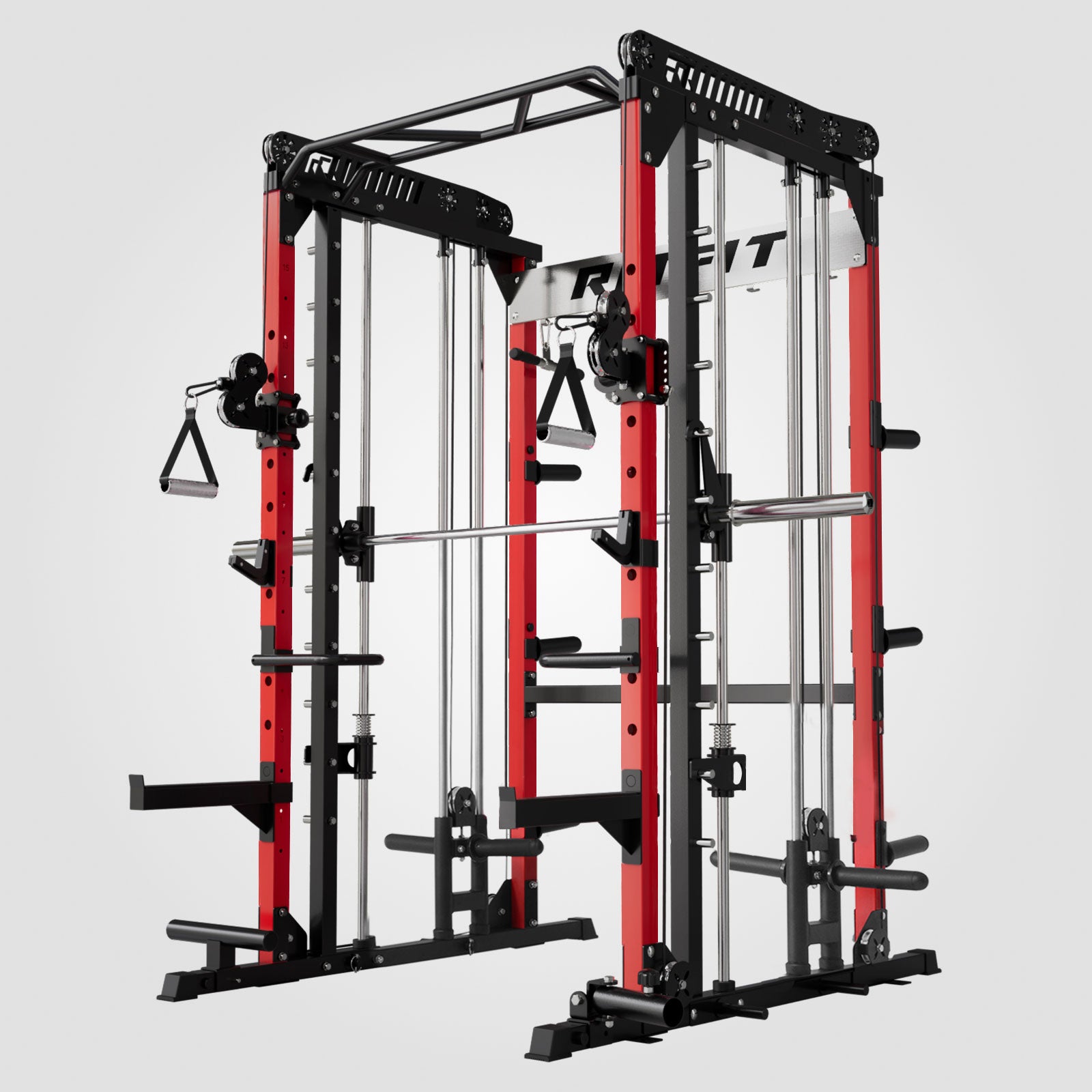
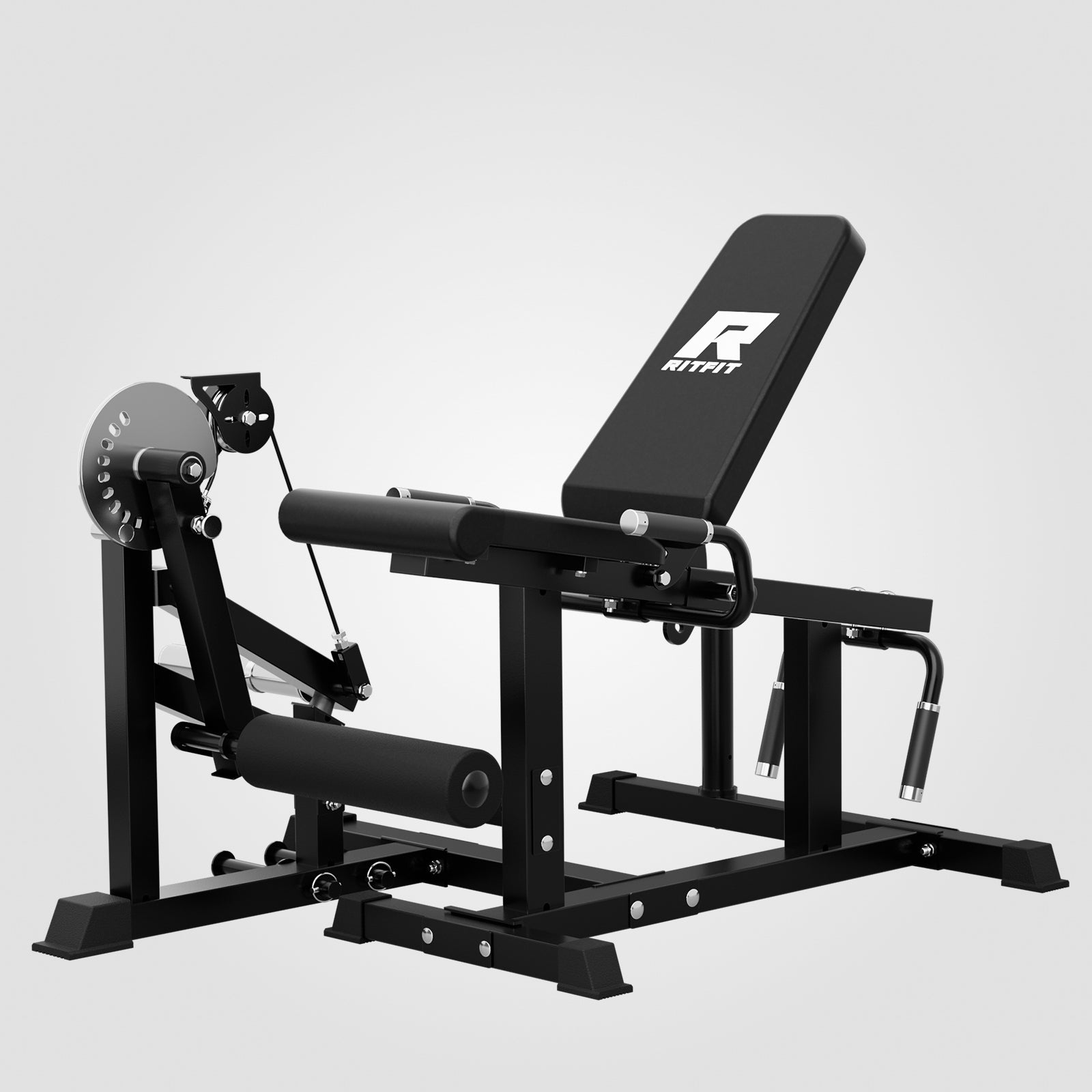
- Pair them with strength work: Combine them with dumbbell strength circuits, adjustable weight bench workouts, or home strength machines to build a more complete fat loss routine.
- Add variety when needed: Use plyo box training tools carefully if you want more athletic conditioning options at home.
Why Strength Training Still Matters
Jumping jacks can raise calorie burn, but strength training helps you preserve and build lean tissue while losing weight. Resistance training is supported by research as an effective option within multicomponent programs for improving body composition in people with overweight or obesity.[3]
If your home setup allows it, pair cardio intervals with Smith machine training, barbell and weight plate workouts, or guided machine based sessions.
Simple Routines to Try
- Beginner 5 minute session: Do 40 seconds of work, rest 20 seconds, and repeat for 5 rounds.
- Intermediate 10 minute session: Do 45 seconds of work, rest 15 seconds, and repeat for 10 rounds.
- Desk break option: Do 25 to 50 reps every hour to increase daily movement without a long workout block.
- Strength circuit option: Alternate jumping jacks with squats, rows, presses, or Smith machine hip thrusts for a more complete home session.
Safety, Form, and Low Impact Options
Good form matters because sloppy landings can turn a simple cardio move into repetitive joint stress. Land softly, keep a slight bend in the knees, stay tall through the torso, and keep your core engaged.
- Protect your landing: Aim for quiet, controlled foot contact instead of pounding into the floor.
- Choose the right surface: A supportive floor and stable shoes can reduce impact compared with hard concrete.
- Use low impact step jacks: Step one foot out at a time if jumping feels rough on your knees, ankles, or lower back.
- Watch for warning signs: Stop if you feel dizziness, sharp pain, chest discomfort, or unusual shortness of breath.
- Progress gradually: Increase time, pace, or total reps slowly so your calves, ankles, and knees can adapt.
How to Track Progress
Track active minutes, rounds completed, reps per minute, or how often you train each week. These markers are more useful than obsessing over one giant rep goal.
Fitness watches and calorie counters can help with estimates, but they are not exact metabolic measurements.
How We Created This Guide
This guide uses general exercise calorie estimation principles, practical rep ranges, conservative safety guidance, and published research on energy balance and exercise. Muscle preservation during weight loss is especially important, and research supports combining adequate nutrition with physical activity and resistance type exercise.[4]
The article is intended for general fitness education and should not replace individualized guidance from a qualified healthcare or fitness professional.
FAQs
How many jumping jacks burn 100 calories?
Most adults need about 500 to 700 jumping jacks to burn 100 calories. The exact number depends on body weight, pace, rest time, and range of motion, so use this as a practical estimate rather than a precise measurement.
How many jumping jacks should I do a day to lose weight?
A realistic daily target is 100 to 500 jumping jacks, depending on your fitness level. Weight loss still depends on your total calorie balance, so jumping jacks should support nutrition habits, walking, and strength training.
Can jumping jacks help lose belly fat?
Yes. Jumping jacks can help reduce belly fat when they contribute to a consistent calorie deficit. They cannot target belly fat directly, so combine them with nutrition control, daily movement, and resistance training for better results.
Is 100 jumping jacks a day enough to lose weight?
No. One hundred jumping jacks a day is helpful for movement, but it is usually not enough by itself for noticeable weight loss. It works better as a small daily habit inside a broader fat loss plan.
Are jumping jacks good cardio for beginners?
Yes. Jumping jacks are good beginner cardio when volume and impact are managed carefully. Beginners can start with short intervals, slower reps, or low impact step jacks to build conditioning without overloading the joints.
Do jumping jacks burn more calories than walking?
Usually yes. Jumping jacks often burn more calories per minute than casual walking because they use more muscle groups and higher impact movement. Walking may still be easier to sustain for longer total weekly activity.
Should I do jumping jacks before or after strength training?
You can do jumping jacks before strength training as a warm up or after lifting as a finisher. Keep pre workout sets easy, then use higher intensity intervals after strength work if your form still feels controlled.
What is the safest jumping jack alternative for bad knees?
Step jacks are usually the safest jumping jack alternative for sensitive knees. Step one foot out at a time, keep the knees soft, avoid hard landings, and stop if you feel sharp pain or unusual joint discomfort.
Conclusion
Jumping jacks can support fat loss, but they are most effective when they help you build a repeatable calorie deficit through regular movement. Use the rep estimates as practical guidance, combine them with strength training and smart nutrition, and focus on consistency instead of extreme one day targets.
Disclaimer
These calorie and rep estimates are general fitness guidelines, not medical advice or exact metabolic measurements. If you have joint pain, heart concerns, balance issues, pregnancy, or a medical condition, speak with a qualified healthcare professional before starting a new exercise routine.
References
- Kim JY. Optimal diet strategies for weight loss and weight loss maintenance. J Obes Metab Syndr. 2021;30(1):20-31. doi:10.7570/jomes20065
- Bellicha A, van Baak MA, Battista F, et al. Effect of exercise training on weight loss, body composition changes, and weight maintenance in adults with overweight or obesity: an overview of 12 systematic reviews and 149 studies. Obes Rev. 2021;22(Suppl 4):e13256. doi:10.1111/obr.13256
- Lopez P, Taaffe DR, Galvao DA, et al. Resistance training effectiveness on body composition and body weight outcomes in individuals with overweight and obesity across the lifespan: a systematic review and meta-analysis. Obes Rev. 2022;23(5):e13428. doi:10.1111/obr.13428
- Cava E, Yeat NC, Mittendorfer B. Preserving healthy muscle during weight loss. Adv Nutr. 2017;8(3):511-519. doi:10.3945/an.116.014506