Most lifters need 2 to 4 shoulder exercises per workout for balanced shoulder growth. Beginners can start with 1 to 2 exercises, intermediate lifters usually do best with 3 to 4, and advanced lifters may use 4 to 6 on a dedicated shoulder day.
The best number depends on your weekly shoulder sets, training frequency, pressing volume, recovery, and whether your goal is size, strength, or better shoulder shape.
Key Takeaways
- Most lifters need 2 to 4 shoulder exercises per workout: This usually covers one press, one side delt raise, and one rear delt movement.
- Beginners should start with 1 to 2 exercises: Extra shoulder volume is rarely needed when chest pressing already trains the front delts.
- Intermediate lifters usually need 3 to 4 exercises: This allows direct work for the front, side, and rear delts without excessive fatigue.
- Advanced lifters may use 4 to 6 exercises: This works best on a dedicated shoulder day with careful recovery and volume tracking.
- Total weekly sets matter more than exercise count: Most lifters should start around 10 to 16 hard shoulder sets per week, then adjust based on progress.
Table of Contents
- How Many Shoulder Exercises Per Workout?
- Understanding Shoulder Anatomy
- How Many Sets for Shoulders Per Week?
- The Best Number by Training Level
- The Best Shoulder Exercise Mix
- Shoulder Workout Templates
- Home Gym Shoulder Training Setup
- Common Shoulder Training Mistakes
- Should You Train Shoulders With Pain?
How Many Shoulder Exercises Per Workout?
Most lifters should do 2 to 4 shoulder exercises per workout. This range gives enough direct work for the delts while leaving room for chest pressing, back training, arm work, and recovery.
| Training Level | Exercises Per Workout | Best Exercise Mix | Weekly Shoulder Sets |
|---|---|---|---|
| Beginner | 1 to 2 | Overhead press, lateral raise | 6 to 10 direct sets |
| Intermediate | 3 to 4 | Press, lateral raise, rear delt exercise | 10 to 16 direct sets |
| Advanced | 4 to 6 | Press, two side delt moves, one or two rear delt moves | 14 to 22 direct sets |
Research on trained men suggests that higher resistance training volume can improve hypertrophy outcomes, but more volume is not automatically better if recovery or exercise quality drops.[1] Use the table as a starting point, then adjust based on soreness, performance, and weekly progression.
Understanding Shoulder Anatomy
The shoulder is mainly trained through three deltoid heads, the anterior deltoid, lateral deltoid, and posterior deltoid. A good shoulder workout should cover these heads without overloading the front delts that already work hard during pressing.
The Anterior Deltoid
The anterior deltoid is the front shoulder head, and it works during overhead pressing, bench pressing, incline pressing, and front raising. Most lifters already train it heavily through push workouts, so extra front raise volume is often optional.
The Lateral Deltoid
The lateral deltoid is the side shoulder head, and it contributes most to the visual width of the shoulders. It usually needs direct work from dumbbell lateral raises, cable lateral raises, or machine lateral raises because pressing does not train it enough for most lifters.
The Posterior Deltoid
The posterior deltoid is the rear shoulder head, and it helps with shoulder balance, pulling mechanics, posture, and upper back appearance. It gets some work from rows and pull ups, but most lifters still benefit from direct reverse flyes, face pulls, or cable rear delt work.
How Many Sets for Shoulders Per Week?
Most lifters should start with 10 to 16 direct shoulder sets per week. Beginners may grow with fewer sets, while advanced lifters may need more volume if their sleep, nutrition, joint comfort, and pressing performance stay strong.
| Deltoid Area | Beginner Weekly Sets | Intermediate Weekly Sets | Advanced Weekly Sets |
|---|---|---|---|
| Front Delts | 2 to 4 direct sets | 3 to 6 direct sets | 4 to 8 direct sets |
| Side Delts | 4 to 6 direct sets | 6 to 10 direct sets | 8 to 14 direct sets |
| Rear Delts | 3 to 6 direct sets | 6 to 10 direct sets | 8 to 12 direct sets |
Training variables such as load, total sets, proximity to failure, exercise selection, and rest periods work together rather than in isolation.[2] This is why the best shoulder program is not the one with the most exercises, but the one you can repeat and progressively improve.
The Best Number by Training Level
Your training level should decide how many shoulder exercises you include per workout. The more advanced you are, the more targeted volume you may need, but only if your recovery can support it.
Beginners
Beginners should usually do 1 to 2 shoulder exercises per workout. A simple overhead press and lateral raise combination is enough to build skill, strength, and early shoulder size without overwhelming recovery.
Intermediate Lifters
Intermediate lifters should usually do 3 to 4 shoulder exercises per workout. A strong session includes one press, one lateral raise, one rear delt movement, and sometimes a second side or rear delt variation.
Advanced Lifters
Advanced lifters may use 4 to 6 shoulder exercises on a dedicated shoulder day. This can include one heavy press, two side delt movements, one or two rear delt movements, and one lighter pump focused finisher.
The Best Shoulder Exercise Mix
The best shoulder workout is built around movement coverage, not random exercise variety. Most lifters should use one press, one or two lateral raise variations, and one rear delt movement.
One Pressing Exercise
Choose one compound press such as the standing overhead press, seated dumbbell press, Arnold press, or machine shoulder press. Use controlled reps and stop the set before form breaks down.
One or Two Side Delt Exercises
Choose lateral raise variations to target shoulder width. Dumbbells are simple and accessible, while cables provide constant tension through more of the range of motion.
One Rear Delt Exercise
Choose face pulls, reverse flyes, or cable rear delt flyes to train the back of the shoulder. This helps balance pressing volume and supports a more complete shoulder look.
Best Shoulder Exercises for Size and Strength
The best shoulder exercises are the ones that train the right deltoid head with stable technique and repeatable progression. A balanced plan uses presses for strength, raises for width, and rear delt work for structure.
- Standing overhead press: Best for full body pressing strength and front delt development.
- Seated dumbbell shoulder press: Best for controlled shoulder pressing with less lower body assistance.
- Dumbbell lateral raise: Best for simple side delt training at home or in a gym.
- Cable lateral raise: Best for constant side delt tension and cleaner resistance through the lift.
- Reverse dumbbell fly: Best for rear delt isolation with minimal equipment.
- Face pull: Best for rear delts, external rotation, and upper back control.
For hypertrophy, a wide range of loads can work when sets are performed with good technique and sufficient effort.[3] Heavy presses fit lower reps, while lateral raises and rear delt exercises usually feel better with moderate to higher reps.
Recommended Rep Ranges and Rest Times
Use lower reps for presses and higher reps for isolation exercises. This keeps heavy work stable and lets smaller shoulder muscles receive enough tension without forcing sloppy form.
| Exercise Type | Best Rep Range | Rest Time |
|---|---|---|
| Overhead press variations | 5 to 10 reps | 2 to 3 minutes |
| Lateral raise variations | 10 to 20 reps | 60 to 90 seconds |
| Rear delt isolation | 12 to 25 reps | 60 to 90 seconds |
Shoulder Workout Templates
Use these templates as starting points, not rigid rules. Add or remove sets based on recovery, joint comfort, and whether shoulders are trained alone or after chest.
Beginner Shoulder Workout
Do seated dumbbell shoulder press for 3 sets of 8 to 10 reps, then do dumbbell lateral raises for 3 sets of 12 to 15 reps. This gives beginners enough pressing and side delt work without overcomplicating the session.
Intermediate Shoulder Workout
Do seated dumbbell shoulder press for 3 sets of 8 to 10 reps, cable lateral raises for 3 sets of 12 to 15 reps, and reverse dumbbell flyes for 3 sets of 12 to 20 reps. This covers all three deltoid heads in a simple and balanced way.
Advanced Shoulder Workout
Do overhead press for 4 sets of 5 to 8 reps, dumbbell lateral raises for 3 sets of 10 to 15 reps, cable lateral raises for 3 sets of 12 to 20 reps, reverse pec deck for 3 sets of 15 to 20 reps, and face pulls for 2 to 3 sets of 15 to 25 reps. Use this only if your shoulders recover well between sessions.
Dumbbell Shoulder Workout at Home
Do seated dumbbell press, standing lateral raise, bent over reverse fly, and dumbbell shrug for 3 sets each. You can build a complete home shoulder workout with a pair of dumbbells and a stable adjustable bench.
Home Gym Shoulder Training Setup
A home shoulder setup should let you press, raise, and train rear delts safely. The most practical setup starts with dumbbells and a bench, then adds cables or a power cage when you want more variation.
- Adjustable dumbbells or fixed dumbbells: Use a pair of rubber hex dumbbells for lateral raises and reverse flyes.
- Bench support: Use an adjustable weight bench for seated dumbbell shoulder presses.
- Dumbbell collection: Explore home gym dumbbells for shoulder training if you want more loading options.
- Bench collection: Compare adjustable benches for home gym pressing if you train shoulders and chest at home.
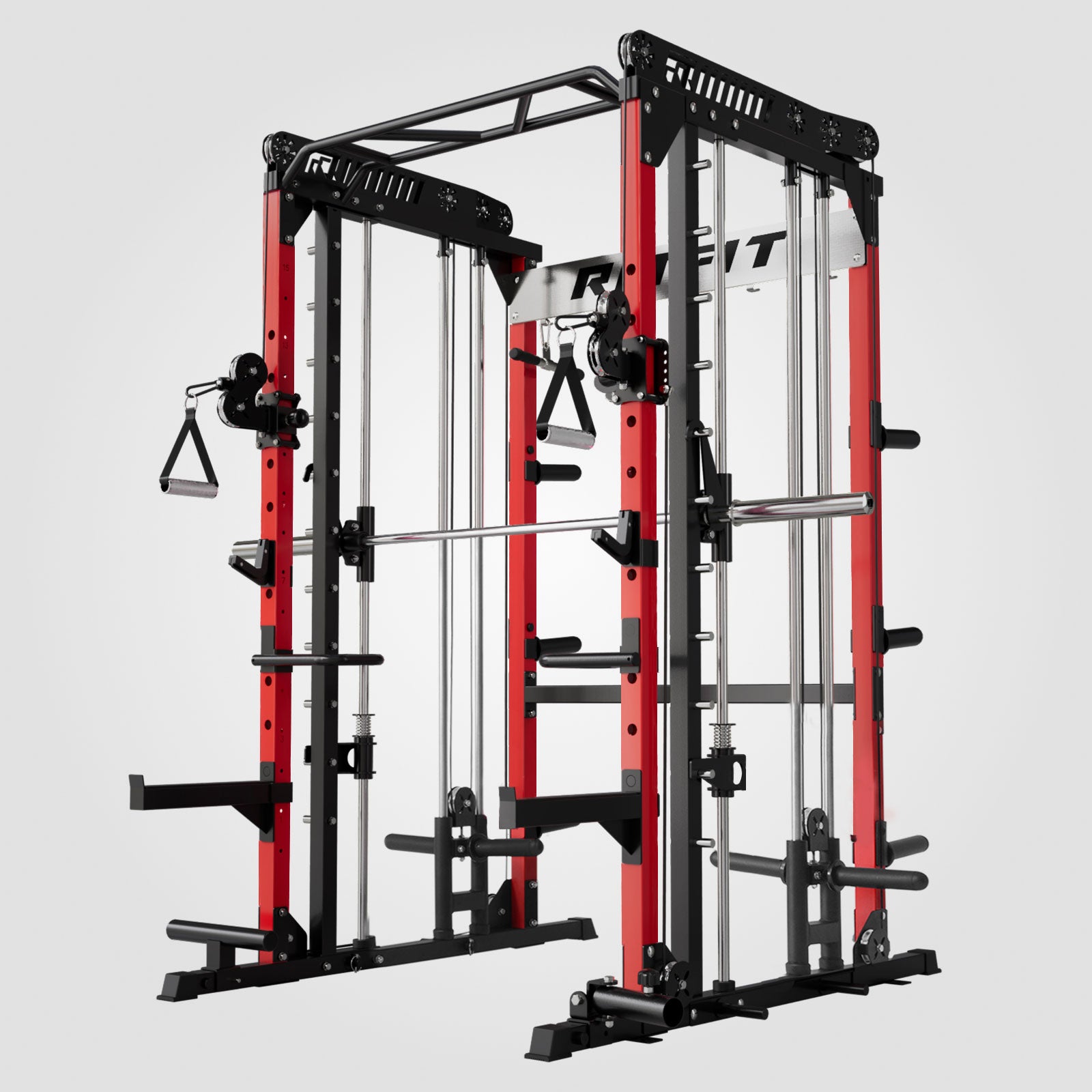
- Cable work: Use a cable crossover machine for face pulls and cable lateral raises.
- Rack based training: A power cage with cable system for shoulder accessory work can support presses, face pulls, and cable raises.
- Accessory upgrades: Browse rack attachments for cable and pressing variations if your home gym already has a rack.
How to Choose Your Shoulder Exercise Count
Choose fewer shoulder exercises if you train shoulders after chest or if your pressing performance is dropping. Choose more exercises only when shoulders have their own session and you can recover without joint pain or stalled progress.
- Choose 1 to 2 exercises: Best for beginners, full body training, or push days after heavy chest work.
- Choose 3 to 4 exercises: Best for most lifters who want balanced shoulder growth.
- Choose 4 to 6 exercises: Best for advanced lifters using a dedicated shoulder day.
- Reduce volume when needed: Lower your sets if soreness lasts too long or pressing strength declines.
- Add volume slowly: Add one or two sets per week before adding another exercise.
Nutrition and Recovery for Shoulder Growth
Shoulder growth requires enough training stimulus, protein, calories, and recovery. If those foundations are missing, adding more shoulder exercises usually creates fatigue instead of better growth.
- Protein: Protein supplementation and adequate daily protein intake can support resistance training gains in muscle size and strength.[4]
- Calories: A small calorie surplus is often helpful when the main goal is visible muscle gain.
- Sleep: Sleep is a key recovery behavior for athletes and active people because it supports fatigue management and performance readiness.[5]
- Progression: Add reps, load, or cleaner technique before adding more exercises.
Common Shoulder Training Mistakes
The most common shoulder training mistakes come from doing too much front delt work and not enough side or rear delt work. Better balance usually improves both shoulder shape and long term training comfort.
- Doing too many front raises: Front delts already work hard during overhead pressing, bench pressing, and incline pressing.
- Skipping side delts: Side delts need direct raises if shoulder width is your main goal.
- Ignoring rear delts: Rear delt work helps balance pushing volume and improve shoulder shape.
- Swinging lateral raises: Momentum shifts tension away from the side delts and makes progression harder to track.
- Adding exercises before mastering technique: Poor execution across six exercises is less useful than clean progression across three.
- Training through joint pain: Pain is a signal to adjust load, range of motion, setup, or exercise selection.
Should You Train Shoulders With Pain?
You should stop or modify any shoulder exercise that causes sharp pain, pinching, grinding, numbness, or sudden weakness. Muscle fatigue is normal, but joint pain should not be ignored.
Safety note: If shoulder pain continues outside training, limits your range of motion, or affects daily activities, consult a qualified medical or rehabilitation professional before continuing heavy shoulder work.
Frequently Asked Questions
How many shoulder exercises per workout should most lifters do?
For most lifters, 2 to 4 shoulder exercises per workout is enough. This range usually lets you train a press, a side delt raise, and a rear delt movement without turning the session into excessive junk volume.
Is 3 shoulder exercises enough for shoulder growth?
Yes. Three shoulder exercises can build bigger shoulders when they cover the main movement patterns. A strong plan usually includes one overhead press, one lateral raise variation, and one rear delt exercise, repeated with progressive overload.
Can I train shoulders twice per week?
Yes. Training shoulders twice per week works well for most lifters because it spreads weekly volume across more recoverable sessions. Keep each session moderate, and adjust direct front delt work if you already bench press often.
Should beginners do front raises for shoulders?
Usually no. Beginners rarely need front raises if they already perform overhead presses, bench presses, or incline presses. Side delt and rear delt work usually add more value because those areas receive less indirect work.
How many sets for shoulders per week is best?
Most lifters should start with 10 to 16 weekly shoulder sets. Beginners can grow with less, advanced lifters may need more, and everyone should count pressing and pulling exercises that already train the delts.
What is the best shoulder exercise mix for size?
The best mix is one press, one or two lateral raise variations, and one rear delt exercise. This structure trains the front, side, and rear delts while keeping the workout simple enough to progress over time.
Can I build shoulders at home with dumbbells only?
Yes. Dumbbells can train shoulders effectively through presses, lateral raises, reverse flyes, front raises, and shrugs. An adjustable bench improves stability and angles, but beginners can still make progress with standing dumbbell movements.
Should I stop shoulder exercises if I feel pain?
Yes. Stop any shoulder exercise that causes sharp pain, pinching, grinding, numbness, or sudden weakness. Muscle fatigue is normal, but joint pain is a warning sign that your setup, load, range of motion, or exercise choice needs attention.
Conclusion
Most lifters should do 2 to 4 shoulder exercises per workout, with beginners starting lower and advanced lifters using more only when recovery allows. Build each session around one press, one lateral raise, and one rear delt movement, then adjust weekly sets based on progress, comfort, and performance.
Disclaimer: This article is for general fitness education only and is not medical advice. Stop any exercise that causes sharp pain, pinching, grinding, numbness, or sudden weakness. If you have a shoulder injury, chronic pain, limited range of motion, or a medical condition, consult a qualified healthcare professional before starting or changing a shoulder training program.
References
- Schoenfeld BJ, Contreras B, Krieger J, Grgic J, Delcastillo K, Belliard R, et al. Resistance training volume enhances muscle hypertrophy but not strength in trained men. Med Sci Sports Exerc. 2019;51(1):94-103. doi:10.1249/MSS.0000000000001764. https://pmc.ncbi.nlm.nih.gov/articles/PMC6303131/
- Bernárdez-Vázquez R, Raya-González J, Castillo D, Beato M. Resistance training variables for optimization of muscle hypertrophy: an umbrella review. Front Sports Act Living. 2022;4:949021. doi:10.3389/fspor.2022.949021. https://pmc.ncbi.nlm.nih.gov/articles/PMC9302196/
- Schoenfeld BJ, Grgic J, Van Every DW, Plotkin DL. Loading recommendations for muscle strength, hypertrophy, and local endurance: a re-examination of the repetition continuum. Sports (Basel). 2021;9(2):32. doi:10.3390/sports9020032. https://pmc.ncbi.nlm.nih.gov/articles/PMC7927075/
- Morton RW, Murphy KT, McKellar SR, Schoenfeld BJ, Henselmans M, Helms E, et al. A systematic review, meta-analysis and meta-regression of the effect of protein supplementation on resistance training-induced gains in muscle mass and strength in healthy adults. Br J Sports Med. 2018;52(6):376-384. doi:10.1136/bjsports-2017-097608. https://pmc.ncbi.nlm.nih.gov/articles/PMC5867436/
- Doherty R, Madigan SM, Nevill A, Warrington G, Ellis JG. The sleep and recovery practices of athletes. Nutrients. 2021;13(4):1330. doi:10.3390/nu13041330. https://pmc.ncbi.nlm.nih.gov/articles/PMC8072992/