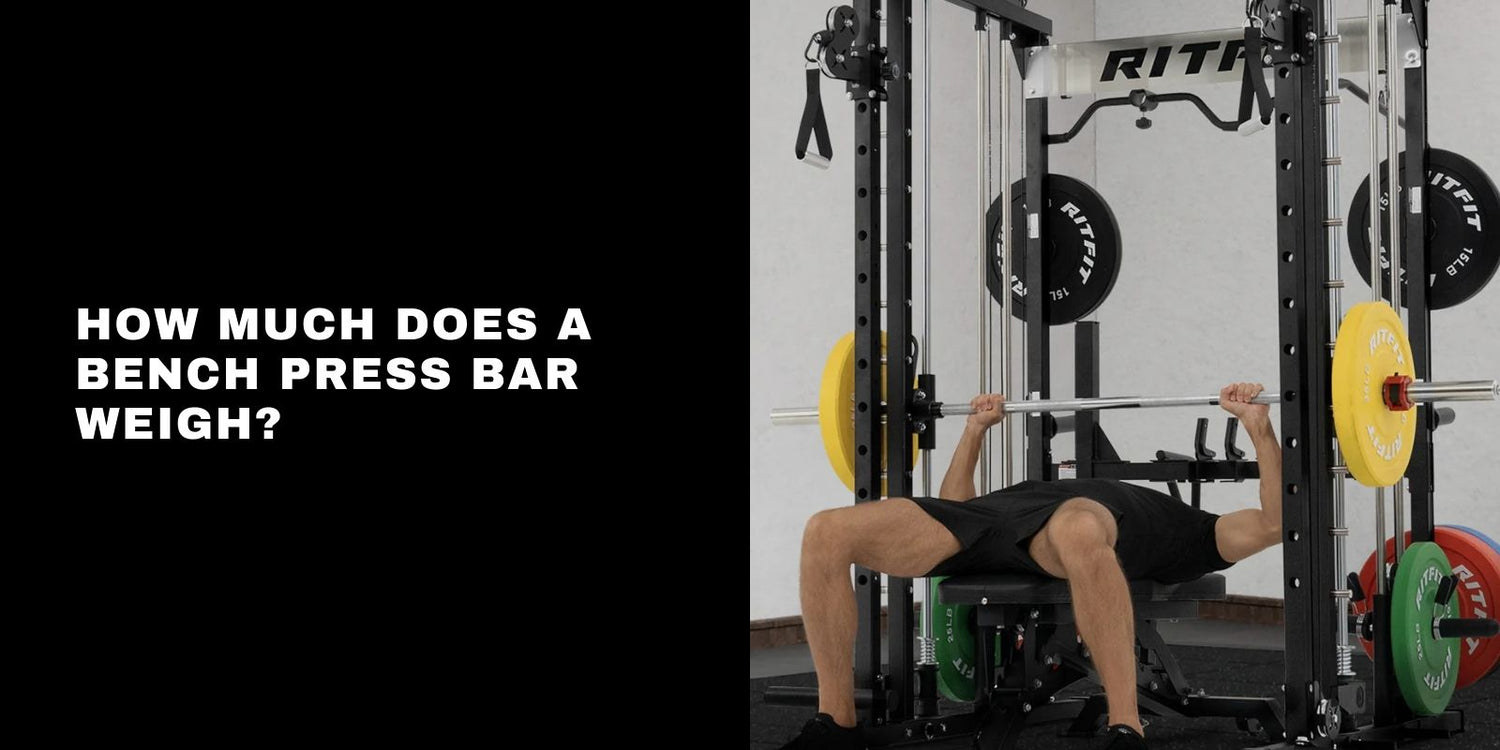
A standard bench press barbell usually weighs 20 kg, or 44.1 lb, and most U.S. gyms round that number to 45 lb. The exact answer changes if you use a women’s Olympic bar, a home gym bar, a Smith machine, or a fixed weight barbell.
Knowing the bar weight helps you log your true total, follow strength programs correctly, and avoid adding more load than you intended.
Key Takeaways
- Most commercial gyms use a 20 kg Olympic barbell, which equals 44.1 lb and is commonly rounded to 45 lb.
- Women’s Olympic barbells usually weigh 15 kg, or 33.1 lb, and use a thinner shaft for easier grip.
- Powerlifting competition setups often count the bar and collars together, so check whether your log includes collars.
- Smith machine starting resistance varies by model, so never assume the bar equals 45 lb.
- If a bar is unmarked, weigh it safely before using it for percentage based training or personal record tracking.
Table of Contents
- Quick Answer
- The Standard Bench Press Barbell Weight
- Bench Press Bar Weight Chart
- Different Types of Bench Press Barbells
- Smith Machine Bench Press Bar Weight
- How to Calculate Total Bench Press Weight
- How to Verify Your Barbell Weight
- Why Barbell Weight Matters
- Best Home Gym Setup for Bench Press Tracking
- Common Bench Press Weight Mistakes
Quick Answer
Most standard bench press barbells weigh 20 kg, or 44.1 lb, and are commonly counted as 45 lb in U.S. gyms. If you add one 45 lb plate to each side, your total bench press is 135 lb because the empty bar is included.
The Standard Bench Press Barbell Weight
The standard bench press barbell in most commercial gyms weighs 20 kg, or 44.1 lb. This is usually the same straight Olympic bar used for squats, rows, overhead presses, and deadlifts.
The key detail is that the empty bar counts toward your total lift. If your program says to bench 95 lb, that usually means a 45 lb bar plus 25 lb of plates on each side.
Bench Press Bar Weight Chart
The fastest way to avoid tracking mistakes is to identify the bar type before you load plates. Use this chart as a practical reference for gym and home gym settings.
| Bar Type | Typical Weight | Best For | How to Check |
|---|---|---|---|
| Standard Olympic barbell | 20 kg or 44.1 lb | Bench press, squat, deadlift, overhead press | Check end cap or gym standard |
| Women’s Olympic barbell | 15 kg or 33.1 lb | Lifters who prefer a thinner grip | Check end cap and shaft diameter |
| Standard home gym bar | About 22 to 33 lb | Budget home gyms and 1 inch plates | Weigh it because standards vary |
| Technique bar | About 11 to 33 lb | Beginners, warmups, skill practice | Check manufacturer specs |
| Fixed weight barbell | Labeled weight | Light bench work, curls, circuits | The printed number is the total weight |
| Smith machine bar | Varies by machine | Guided pressing and solo training | Look for starting resistance label |
| Multi grip bar | Usually 22 to 44 lb | Neutral grip pressing and shoulder comfort | Check product specs before logging |
Different Types of Bench Press Barbells
Not every bench press bar is the same, even when it looks similar on the rack. Weight, sleeve size, shaft diameter, and machine design can all change how much you are actually lifting.
- Olympic barbell: A standard Olympic barbell usually weighs 20 kg, or 44.1 lb. It uses 2 inch sleeves and is the most common choice for bench press in commercial gyms.
- Women’s Olympic barbell: A women’s Olympic barbell usually weighs 15 kg, or 33.1 lb. It is shorter and has a thinner shaft, which can help lifters with smaller hands get a stronger grip.
- Standard 1 inch barbell: A standard home gym bar often weighs 22 to 33 lb. These bars are less standardized, so the safest approach is to weigh yours once and record it.
- Technique bar: A technique bar can weigh 11 to 33 lb depending on the material and model. It is useful for beginners who are not ready for a full 45 lb bar.
- Fixed weight barbell: A fixed barbell shows the total weight on the end. If the bar says 60 lb, you are lifting 60 lb total.
- Multi grip bar: A multi grip bar gives you neutral handles for pressing. Because there is no universal weight standard, always check the manufacturer’s listing.
- Competition setup: In powerlifting, collars may be counted with the bar for loaded attempts. This is why a competition setup can differ from a casual gym log.
Smith Machine Bench Press Bar Weight
A Smith machine bench press bar does not always weigh 45 lb because the rail and counterbalance system changes the starting resistance. The number you should track is the machine’s listed starting resistance, not the physical size of the bar.
Many Smith machines feel lighter than a free barbell, especially when cables or counterweights offset part of the load. If you are comparing a Smith machine bench press to a free weight bench press, log them as separate exercises.
How to Calculate Total Bench Press Weight
Your total bench press weight equals the barbell weight plus all plates loaded on both sides. This matters because strength programs, personal records, and one rep max estimates usually count the complete loaded bar.
- 45 lb bar plus two 10 lb plates: 45 plus 10 plus 10 equals 65 lb total.
- 45 lb bar plus two 25 lb plates: 45 plus 25 plus 25 equals 95 lb total.
- 45 lb bar plus two 45 lb plates: 45 plus 45 plus 45 equals 135 lb total.
- 20 kg bar plus two 20 kg plates: 20 plus 20 plus 20 equals 60 kg total.
- 15 kg bar plus two 10 kg plates: 15 plus 10 plus 10 equals 35 kg total.
How to Verify Your Barbell Weight
The best way to verify barbell weight is to check the end cap, manufacturer page, or gym equipment label. If the bar has no marking, weigh it safely and write the number in your training log.
- Check the end cap: Many Olympic bars show the brand, model, and weight on the sleeve end. This is the quickest way to confirm whether the bar is 20 kg or 15 kg.
- Check the sleeve size: Olympic bars use 2 inch sleeves, while many budget home bars use 1 inch sleeves. Sleeve size helps you identify plate compatibility, but it does not guarantee the bar weight.
- Use a floor scale: Step on the scale without the bar, then step on again while safely holding the bar. Subtract your body weight from the combined number.
- Ask gym staff: Commercial gyms often use uniform bars across bench stations. Staff may also know whether specialty bars or women’s bars are mixed into the rack.
- Record the result: Save the bar weight in your training app or notebook. This keeps your progressive overload data consistent across workouts.
Why Barbell Weight Matters
Barbell weight matters because inaccurate tracking can change your real training load. Research on bench press and push up performance shows that small differences in loading can change repetition outcomes and muscle demand, which makes accurate logging important for real progress.[1]
- Progress tracking: If you forget to count the bar, your training log underreports every set. This makes it harder to see whether your bench press is actually improving.
- Program accuracy: Percentage based programs depend on accurate totals. A mistake of 10 to 20 lb can make a prescribed set too easy or too difficult.
- Muscle activation: The barbell bench press can produce high activation in the pectoralis major, anterior deltoids, and triceps. Accurate load tracking helps you compare pressing variations more reliably.[2]
- Progressive overload: Progressive overload can come from adding weight or adding reps over time. Both methods need consistent tracking to show whether training demand is increasing.[3]
- Safety: A lifter moving from a light home bar to a 45 lb gym bar may accidentally lift more than expected. Confirming the bar weight reduces that risk.
Best Home Gym Setup for Bench Press Tracking
A reliable home bench press setup starts with a known bar weight, compatible plates, secure collars, and a stable bench. For most home gym users, a 7 foot Olympic barbell is the most versatile choice because it works across bench press, squat, row, and deadlift patterns.
- Choose a full size Olympic bar: A 7FT Olympic barbell gives you the most consistent tracking for common strength lifts.
- Use compatible plates: Pair the bar with barbells and weight plates that match your sleeve size and loading goals.
- Secure every loaded set: Use barbell accessories such as collars or clamps when plates may shift during training.
- Train on a stable bench: A strong weight bench supports safer setup, better leg drive, and more consistent pressing position.
- Upgrade with an adjustable bench: The RitFit GATOR adjustable weight bench supports flat, incline, and accessory pressing setups for a broader home gym program.
- Consider guided pressing: A Smith machine for home gym can help users who want a guided bar path and built in rack support.
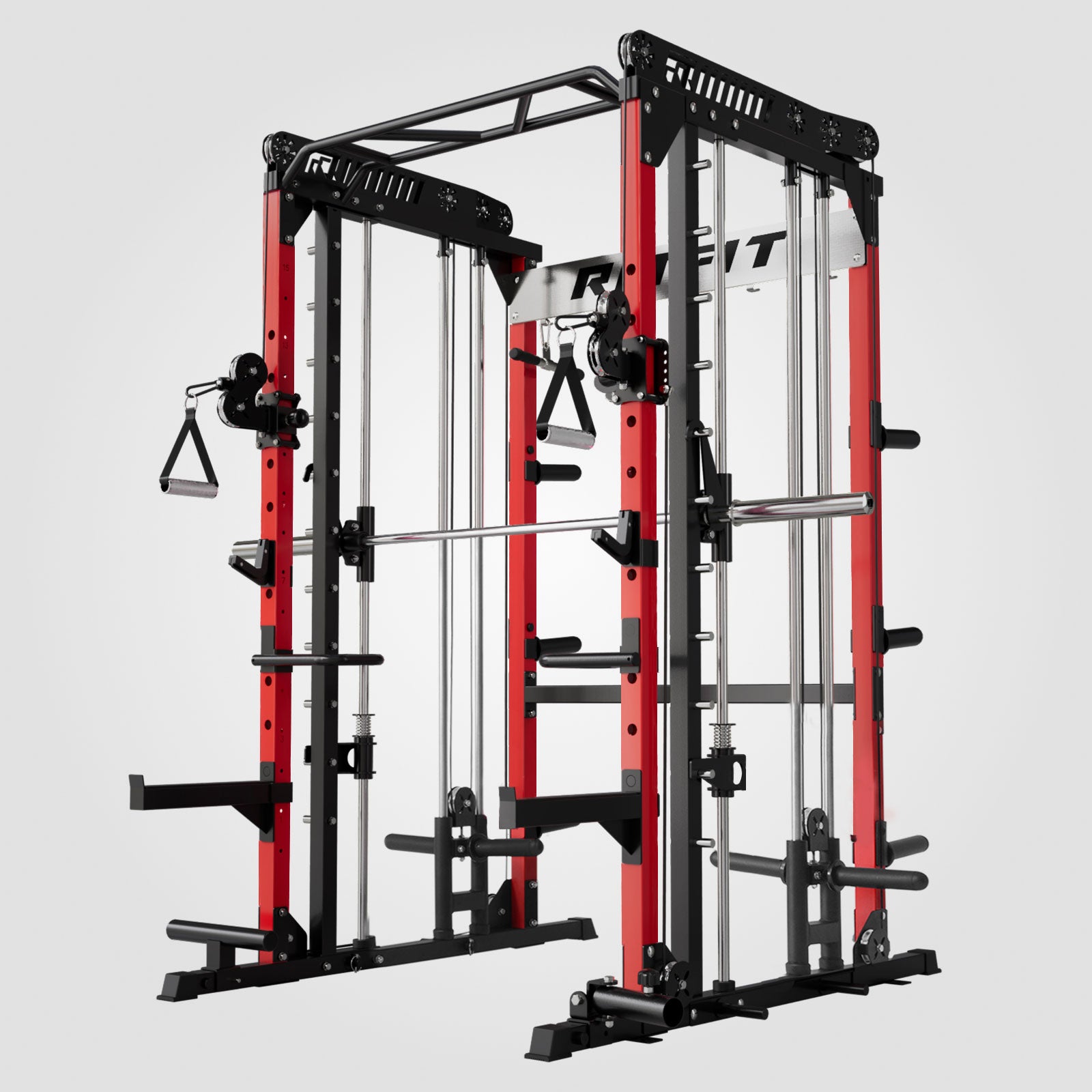
- Build a complete station: The RitFit M1 Smith Machine combines pressing, cable work, and rack based strength training in one home gym footprint.
Resistance training results depend on matching load, repetitions, effort, and recovery to your goal. Current evidence suggests strength and hypertrophy can improve across several loading ranges, but the way you track load should stay consistent from week to week.[4]
Common Bench Press Weight Mistakes
Most bench press tracking mistakes come from counting plates but forgetting the bar. The fix is simple, identify the bar first, then add both sides of the loaded plates.
- Forgetting the empty bar: The bar is part of the lift. A 45 lb bar with two 45 lb plates equals 135 lb, not 90 lb.
- Assuming every bar is 45 lb: Women’s bars, technique bars, and standard home bars can be lighter. Always check when equipment looks different.
- Counting only one side of plates: You must count plates on both sides. One 25 lb plate per side adds 50 lb total.
- Mixing kg and lb plates: Kilogram plates and pound plates should not be treated as the same. Check plate markings before logging.
- Ignoring Smith machine starting resistance: A Smith machine bar can feel much lighter than a free barbell. Track it as its own exercise.
- Miscounting fixed barbells: The number printed on a fixed barbell already includes the bar and heads. Do not add extra bar weight.
FAQs
How much does a standard bench press barbell weigh?
A standard bench press barbell usually weighs 20 kg, or 44.1 lb, and most U.S. gyms count it as 45 lb. This empty bar weight is included in your total lift, so always add it before logging plates.
How do you calculate total bench press weight?
You calculate total bench press weight by adding the barbell weight plus all plates on both sides. For example, a 45 lb bar with one 45 lb plate on each side equals 135 lb total.
Does the bench press bar count toward your total weight?
Yes. The bench press bar always counts toward your total lifted weight. If you ignore the bar, your training log will undercount every set, which can distort personal records, program percentages, and long term progress tracking.
How much does a Smith machine bench press bar weigh?
A Smith machine bench press bar varies by brand and model, so the safest answer is to check the starting resistance label. Many feel lighter than 45 lb because rails, pulleys, or counterbalance systems reduce effective resistance.
Is every Olympic bench press bar 45 pounds?
No. Many men’s Olympic bars are 20 kg, or 44.1 lb, which gyms round to 45 lb. Women’s Olympic bars are usually 15 kg, while specialty bars and home gym bars may use different weights.
What is the difference between a 20 kg and 15 kg barbell?
A 20 kg barbell is longer and heavier, while a 15 kg barbell is shorter and has a thinner shaft. The 15 kg version can help lifters with smaller hands grip the bar more securely during pressing.
How can you weigh an unmarked bench press bar at home?
You can weigh an unmarked bar by using a floor scale and subtracting your body weight from the combined number. Hold the bar safely, stand still on the scale, and record the result for future workouts.
Should beginners start with a 45 lb bench press bar?
Beginners should start with a 45 lb bar only if they can control it with safe form. If the bar feels too heavy, use a lighter technique bar, dumbbells, or push ups until pressing strength improves.
Conclusion
So, how much does a bench press barbell weigh? For most gym lifters, the answer is 20 kg, or 44.1 lb, commonly rounded to 45 lb.
If you use a women’s bar, a home gym bar, a fixed barbell, or a Smith machine, verify the equipment before logging your lift. Accurate tracking keeps your program honest and your progress real.
Disclaimer
This article is for general fitness education and equipment tracking only. Always confirm your equipment weight, follow your gym’s safety instructions, use a spotter or safety arms for heavy bench press attempts, and consult a qualified fitness professional if you are unsure about technique, programming, or safe loading.
References
- Alizadeh S, Rayner M, Mahmoud MMI, Behm DG. Push-Ups vs. Bench Press Differences in Repetitions and Muscle Activation between Sexes. J Sports Sci Med. 2020;19(2):289-297.
- Solstad TE, Andersen V, Shaw MP, Hoel EM, Vonheim A, Saeterbakken AH. A Comparison of Muscle Activation between Barbell Bench Press and Dumbbell Flyes in Resistance-Trained Males. J Sports Sci Med. 2020;19(4):645-651.
- Plotkin D, Coleman M, Van Every D, Maldonado J, Oberlin D, Israetel M, et al. Progressive overload without progressing load? The effects of load or repetition progression on muscular adaptations. PeerJ. 2022;10:e14142. doi:10.7717/peerj.14142
- Schoenfeld BJ, Grgic J, Van Every DW, Plotkin DL. Loading Recommendations for Muscle Strength, Hypertrophy, and Local Endurance: A Re-Examination of the Repetition Continuum. Sports. 2021;9(2):32. doi:10.3390/sports9020032