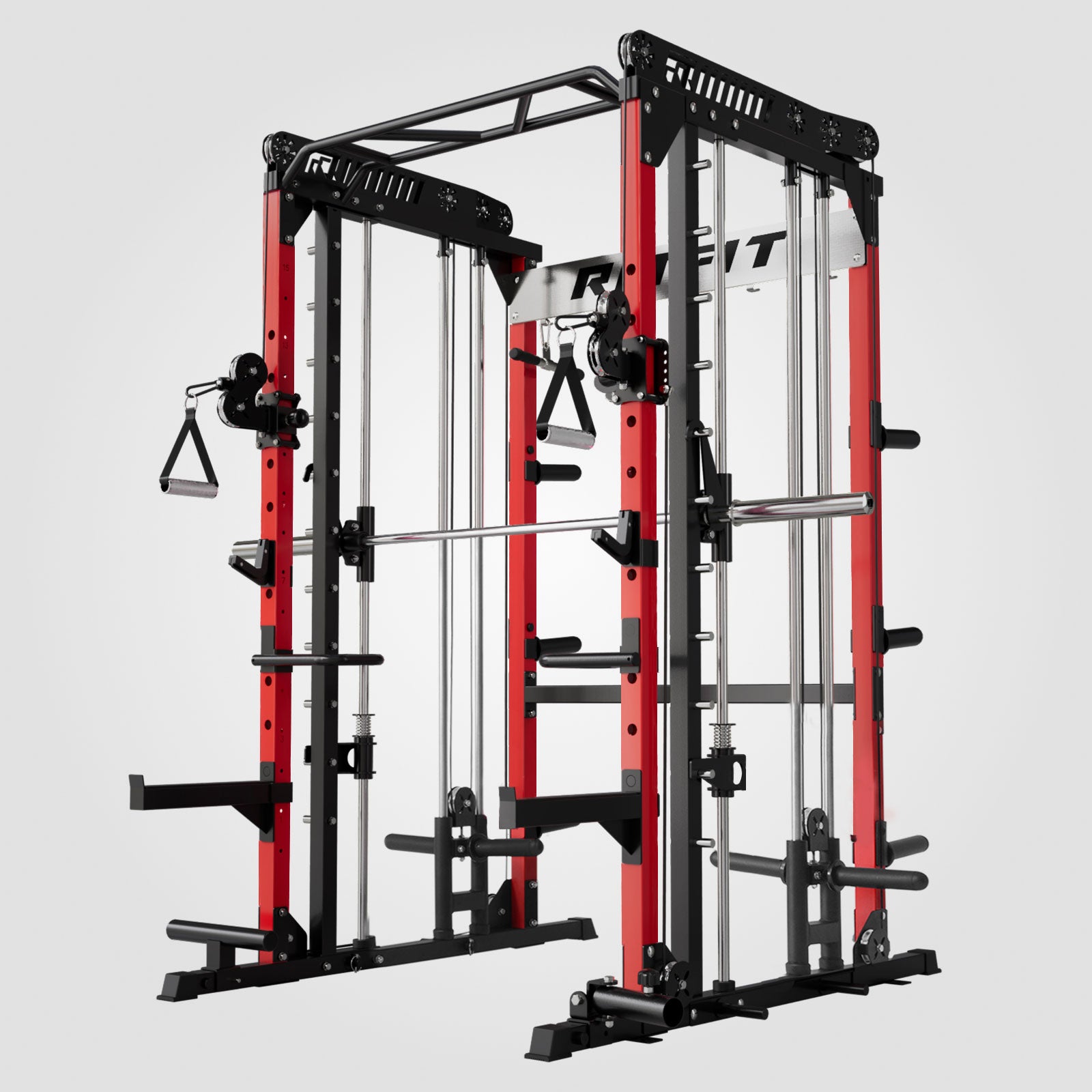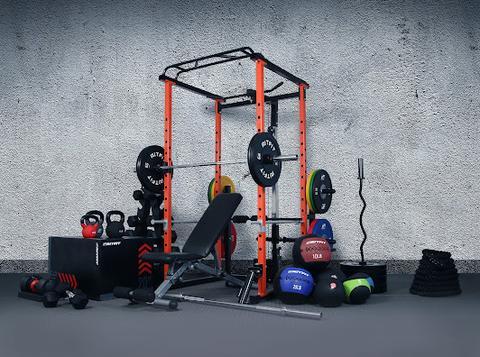
A home gym usually costs $300 to $7,000 for most personal setups, depending on your equipment, space, flooring, and renovation needs. A simple dumbbell corner can work for beginners, while a garage gym with a rack, barbell, bench, plates, and cable training needs a larger budget.
Key Takeaways
- Most home gyms cost $300 to $7,000: Small setups stay near the low end, while full garage gyms with racks, machines, and flooring cost more.
- Equipment is the biggest cost driver: A bench and dumbbells cost far less than a rack, Smith machine, leg machine, or cardio machine.
- Flooring and storage matter early: Rubber flooring, plate storage, and attachment storage protect your space and keep training safer.
- Start with core strength equipment: A bench, dumbbells, barbell, plates, and rack or Smith machine cover most strength goals.
- Buy in phases: A staged build helps prevent overspending on machines, accessories, or cardio equipment you may not use consistently.
Quick Answer: How Much Does a Home Gym Cost?
A realistic home gym budget starts around $300 for a compact starter setup and can exceed $25,000 for a fully renovated premium training space. Most buyers can build a strong, useful home gym for $1,000 to $5,000 if they prioritize equipment carefully.
| Budget Level | Estimated Cost | Best For | Typical Equipment |
|---|---|---|---|
| Basic Starter | $300 to $1,000 | Apartments, beginners, small spaces | Dumbbells, bands, mat, folding bench |
| Intermediate Setup | $1,000 to $3,000 | Strength training at home | Rack or Smith machine, bench, barbell, plates |
| Advanced Home Gym | $3,000 to $7,000 | Garage gyms and full body training | All in one machine, dumbbells, flooring, storage |
| Premium Build | $7,000 to $25,000 plus | Dedicated rooms and luxury garage gyms | Multiple machines, cardio, flooring, HVAC, mirrors |
How We Estimated These Home Gym Costs
These cost ranges are planning estimates based on common U.S. home gym equipment categories, space preparation needs, and typical buyer scenarios. Current product prices, shipping terms, financing options, promotions, and return policies should always be checked before purchase.
Training consistency is the real value driver, not just equipment quantity. Research on home based exercise shows that adherence can depend on motivation, support, self efficacy, and past exercise behavior, so the best budget is the one that supports repeatable training habits.[1]
Home Gym Cost Breakdown by Budget Tier
Your best budget depends on how you train, how much space you have, and whether you need renovation work. Start with the lowest tier that supports your actual workouts, then upgrade only when your training requires more equipment.
Basic Starter Home Gym: $300 to $1,000
A basic starter home gym is enough for beginners, apartment users, and anyone focused on dumbbell training, bodyweight workouts, mobility, and simple conditioning.
- Core equipment: Adjustable dumbbells, resistance bands, yoga mat, folding bench, pull up bar, and jump rope.
- Best first buy: A compact bench and dumbbells give you more exercise variety than most single purpose accessories.
- RitFit fit: Compare adjustable benches for home gyms and dumbbells for compact home gyms if you want a small space setup.
- Skip for now: Large cardio machines, full dumbbell racks, specialty machines, and cosmetic room upgrades.
Intermediate Home Gym: $1,000 to $3,000
An intermediate home gym is the best value range for most lifters because it can support squats, presses, deadlifts, rows, and accessory training.
- Core equipment: Power rack or Smith machine, Olympic barbell, weight plates, adjustable bench, flooring, and storage.
- Best training coverage: This level can cover most strength goals without requiring several single station machines.
- RitFit fit: Explore rack packages for garage gyms, Smith machine home gym systems, and barbells and weight plates.
- Budget caution: Do not spend the whole budget on one machine if it leaves no money for flooring, plates, storage, and safety clearance.
Advanced Home Gym: $3,000 to $7,000
An advanced home gym is ideal for a garage, basement, or spare room where you want full body strength training, cable work, dumbbells, and leg training in one space.
- Core equipment: All in one Smith machine, cable system, dumbbells, bench, leg machine, storage, and full training zone flooring.
- Best for: Lifters who want to replace most commercial gym strength workouts at home.
- RitFit fit: Pair strength machines for home gyms with a rack or Smith machine only if your space allows safe movement around each station.
- Upgrade logic: Add machines after your rack, bench, barbell, plates, and flooring are already handled.
Premium Home Gym: $7,000 to $25,000 Plus
A premium home gym is a dedicated training environment with multiple machines, full dumbbell storage, cardio equipment, upgraded flooring, mirrors, lighting, and climate control.
- Core equipment: Multiple strength machines, cardio equipment, full dumbbell set, heavy duty storage, and upgraded room finishes.
- Space requirement: A premium build usually needs a garage, basement, or dedicated room with clear training zones.
- Renovation caution: HVAC, electrical, insulation, subfloor work, and wall finishing can cost more than expected.
- Best use case: This tier makes sense when several household members train often or when the home gym replaces a long term commercial gym habit.
What Drives the Cost of a Home Gym?
The biggest cost drivers are equipment choice, room condition, flooring, delivery, assembly, and long term upgrade needs. A smaller but better planned setup often delivers more value than a crowded room filled with low use equipment.
Equipment Selection
Equipment selection has the largest impact on total home gym cost because free weights, racks, Smith machines, cable systems, leg machines, and cardio machines vary widely in price and space needs.
- Lowest cost path: Dumbbells, bands, mat, and a bench.
- Best strength path: Rack or Smith machine, bench, barbell, and plates.
- Most complete path: All in one machine, dumbbells, leg machine, storage, and cardio.
Space and Renovation
Space preparation can stay low if you already have a flat garage, spare room, or basement, but it can become expensive if the area needs flooring, lighting, wiring, ventilation, insulation, or climate control.
- Small room: Prioritize compact equipment and wall friendly storage.
- Garage gym: Check moisture, temperature, flooring, ceiling height, and door clearance.
- Basement gym: Check ceiling height, ventilation, humidity, and stairway delivery access.
Flooring
Flooring is worth budgeting early because it protects your subfloor, reduces noise, improves traction, and creates a safer lifting area.
- Basic option: Rubber mats for the main lifting zone.
- Better option: Interlocking rubber tiles for cleaner coverage and easier layout.
- Avoid: Thin foam tiles under heavy racks, barbells, or dropped weights.
Delivery and Assembly
Delivery and assembly can add real cost because racks, Smith machines, weight plates, and leg machines are heavy and often require careful room access planning.
- Before ordering: Measure doorways, stairways, garage entry, and ceiling height.
- During assembly: Use the manual, organize hardware, and tighten bolts only after the frame is aligned.
- After assembly: Recheck bolts, pulleys, guide rods, storage pegs, and floor contact points.
Home Gym Costs by Training Type
Your training style changes the budget more than the room itself. A yoga and mobility setup can be very affordable, while strength and cardio focused gyms need more equipment and space.
Strength Training Gym
A strength training home gym typically costs $1,000 to $5,000 because it needs a rack or Smith machine, barbell, plates, bench, flooring, and storage.
- Best for: Muscle building, progressive overload, barbell training, and full body strength.
- Core equipment: Rack or Smith machine, adjustable bench, barbell, plates, and dumbbells.
- Evidence note: Resistance training supports muscular strength and function in older adults, which makes safe equipment selection important for long term use.[2]
Functional Training Gym
A functional training home gym typically costs $800 to $4,000 because it uses modular equipment that can be added in phases.
- Best for: Conditioning, athletic movement, circuits, and mixed strength workouts.
- Core equipment: Kettlebells, dumbbells, bumper plates, pull up station, medicine ball, plyo box, and jump rope.
- Budget tip: Start with tools you can use for many exercises before buying niche accessories.
Cardio Focused Home Gym
A cardio focused home gym typically costs $1,000 to $8,000 because treadmills, rowers, bikes, and ellipticals can be expensive and space intensive.
- Best for: Conditioning, heart health, warmups, and low impact daily activity.
- Core equipment: One main cardio machine plus mat space for mobility or bodyweight work.
- Budget tip: Buy one cardio machine you will use weekly instead of several machines that crowd the room.
Yoga and Mobility Studio
A yoga and mobility home gym can cost $100 to $1,000 because it needs very little equipment compared with strength or cardio setups.
- Best for: Flexibility, recovery, balance, light strength, and daily movement.
- Core equipment: Mat, blocks, straps, bands, foam roller, mirror, and speaker.
- Upgrade tip: Add dumbbells or a bench only when your training shifts toward strength work.
Home Gym vs Gym Membership Cost
A home gym can become cheaper than a gym membership over time if you train consistently and avoid unnecessary upgrades. The break even point depends on your membership fee, equipment budget, commuting cost, and how often you actually use the space.
Simple Five Year Comparison
A $2,000 home gym may cost less over five years than a $70 monthly membership, while a $5,000 setup may need more time to break even.
- $70 monthly gym membership: About $4,200 over five years before fuel, parking, or commute time.
- $2,000 home gym: Lower total cost over five years if the equipment meets your needs.
- $5,000 home gym: Better justified when several people train at home or when it replaces a premium membership.
Convenience Value
The biggest non financial benefit of a home gym is friction reduction because the equipment is always available and there is no commute.
- Time saved: No drive, parking, locker room, or waiting for a rack.
- Privacy: Better for beginners, busy parents, and lifters who prefer quiet training.
- Consistency: A convenient setup can support repeatable exercise habits when it matches the user’s goals and motivation.[3]
How to Build a Home Gym on a Budget
The smartest way to build a budget home gym is to buy equipment in the order it improves training value. Avoid filling the room before you know which exercises you will repeat every week.
Step 1: Protect the Floor First
Start with rubber flooring in the lifting zone because floor damage is harder to fix after racks and plates are installed.
- Small setup: Cover the area under your bench and dumbbells.
- Rack setup: Cover the full rack footprint and barbell loading zone.
- Garage setup: Check moisture before installing mats or tiles.
Step 2: Buy Versatile Strength Tools
Choose tools that support many exercises before buying single purpose machines.
- Best first tools: Dumbbells, bench, barbell, plates, and bands.
- Best next upgrade: Rack or Smith machine for safer heavy lifting.
- RitFit fit: The RitFit GATOR adjustable weight bench is a strong match for buyers who need one bench for presses, rows, split squats, and accessory work.
Step 3: Add a Rack or Smith Machine
Add a rack or Smith machine when you are ready for heavier squats, presses, pulls, and full body strength training.
- Rack advantage: More free weight feel and flexible bar path.
- Smith machine advantage: Guided bar path, cable options on some models, and easier solo training for many users.
- Safety note: Always set safeties, use correct loading, and follow equipment instructions.
Step 4: Upgrade Only What You Use
Upgrade after you have trained for several weeks and can identify the missing exercises in your routine.
- Good upgrades: Cable handles, plate storage, dumbbell rack, landmine, leg machine, or cardio machine.
- Avoid early: Specialty bars, oversized mirrors, multiple cardio machines, and redundant attachments.
- RitFit fit: For lower body expansion, compare the GAZELLE PRO leg press and hack squat machine after your core strength station is complete.
What You Should Not Buy First
The easiest way to waste money is to buy impressive equipment before you know your training habits. Start with equipment that solves daily training needs, then add specialty tools later.
- Single purpose machines: Avoid them until your main lifts and weekly routine are consistent.
- Multiple cardio machines: Buy one cardio machine only when you know you will use it often.
- Full dumbbell sets: A few key pairs or adjustable dumbbells may be enough at the start.
- Decor upgrades: Mirrors, wall panels, paint, and premium lighting can wait until the gym works well.
- Random attachments: Buy attachments only when they add exercises you already plan to perform.
Common Home Gym Mistakes That Waste Money
Most home gym budget mistakes come from buying too much too soon or ignoring space requirements. A well planned setup should feel easy to use, safe to move around in, and simple to upgrade.
Buying Everything at Once
Buying everything at once often leads to unused equipment because your real training preferences become clear only after consistent use.
- Better approach: Start with three to five core pieces and expand after several weeks of training.
- Core starter list: Bench, dumbbells, flooring, barbell, plates, and rack or Smith machine.
Ignoring Ceiling Height
Ceiling height affects pull ups, overhead presses, rack height, cable stations, and some cardio machines.
- Measure first: Check total ceiling height and your overhead reach with shoes on.
- Low ceiling option: Choose compact racks, lower cable systems, or exercises that do not require overhead clearance.
Buying Weak Flooring
Thin foam flooring is not a good choice under heavy strength equipment because it can compress, shift, and reduce stability.
- Better choice: Use rubber flooring for racks, benches, dumbbells, and plate zones.
- Safety benefit: A stable surface helps protect both equipment and the user.
Forgetting Training Progression
A good home gym should allow progressive overload because strength and muscle gains depend on training that can gradually increase in challenge.
- Important equipment: Plates, adjustable dumbbells, cable resistance, or weight stacks support progression.
- Evidence note: Resistance exercise is a widely recognized strategy for combating age related muscle loss and supporting neuromuscular health.[4]
FAQs
How much does a basic home gym cost?
A basic home gym usually costs $300 to $1,000. This budget can cover dumbbells, bands, a mat, a compact bench, and simple storage, which is enough for beginner strength training, mobility work, and small space workouts.
What is the biggest home gym cost?
Equipment is usually the biggest home gym cost. Racks, Smith machines, barbells, plates, dumbbells, cable systems, and cardio machines can change the total budget quickly, while flooring, storage, and assembly add extra setup costs.
Can I build a home gym for under $1,000?
Yes. You can build a useful home gym under $1,000 by choosing dumbbells, resistance bands, a folding bench, a mat, and basic flooring. This setup works best for beginners, apartment users, and people who do not need heavy barbell training yet.
Is a Smith machine worth it for a home gym?
Yes. A Smith machine can be worth it if you want guided barbell movement, solo training support, and cable options in one station. It is most useful when your goal is strength training in a garage, basement, or dedicated room.
How much space do I need for a home gym?
Most basic home gyms need 50 to 100 square feet. A rack or Smith machine setup usually needs 150 to 200 square feet, while a full garage gym with machines, dumbbells, and cardio equipment works better with 300 square feet or more.
What hidden home gym costs should I expect?
Common hidden costs include flooring, shipping, storage, assembly tools, maintenance, lighting, ventilation, and room comfort. These expenses matter because a safe and organized home gym often needs more than equipment alone.
Is a home gym cheaper than a gym membership?
Yes. A home gym can be cheaper over time if you train consistently and avoid unnecessary upgrades. The break even point depends on your membership fee, equipment cost, commuting cost, and how many people use the home gym.
Should I buy cardio equipment first for a home gym?
No. Most buyers should buy cardio equipment first only if cardio is their main training goal. For general fitness, strength equipment such as dumbbells, a bench, a rack, or a Smith machine often gives broader training value.
Final Thoughts: Build the Home Gym You Will Actually Use
The best home gym is not the most expensive setup, it is the setup that fits your space, budget, training goals, and weekly habits. Start with the equipment that supports your main workouts, then add machines, accessories, and room upgrades only when they solve a real training need.
For most people, a smart path is simple: protect the floor, choose versatile strength tools, add a rack or Smith machine, then upgrade in phases.
Disclaimer
This article is for general educational and budgeting purposes only. It is not medical, financial, construction, or professional installation advice. Always confirm current product prices, shipping terms, return policies, ceiling height, flooring condition, equipment clearances, and assembly requirements before purchase. Consult a qualified professional for electrical, HVAC, structural, or medical concerns.
References
- Ricke E, Dijkstra A, Bakker EW. Prognostic factors of adherence to home based exercise therapy in patients with chronic diseases: a systematic review and meta analysis. Front Sports Act Living. 2023;5:1035023. doi:10.3389/fspor.2023.1035023. PMCID: PMC10080001.
- Peterson MD, Rhea MR, Sen A, Gordon PM. Resistance exercise for muscular strength in older adults: a meta analysis. Ageing Res Rev. 2010;9(3):226-237. doi:10.1016/j.arr.2010.03.004. PMCID: PMC2892859.
- Hart PD, Buck DJ. The effect of resistance training on health related quality of life in older adults: systematic review and meta analysis. Health Promot Perspect. 2019;9(1):1-12. doi:10.15171/hpp.2019.01. PMCID: PMC6377696.
- Lavin KM, Roberts BM, Fry CS, Moro T, Rasmussen BB, Bamman MM. The importance of resistance exercise training to combat neuromuscular aging. Physiology. 2019;34(2):112-122. doi:10.1152/physiol.00044.2018. PMCID: PMC6586834.