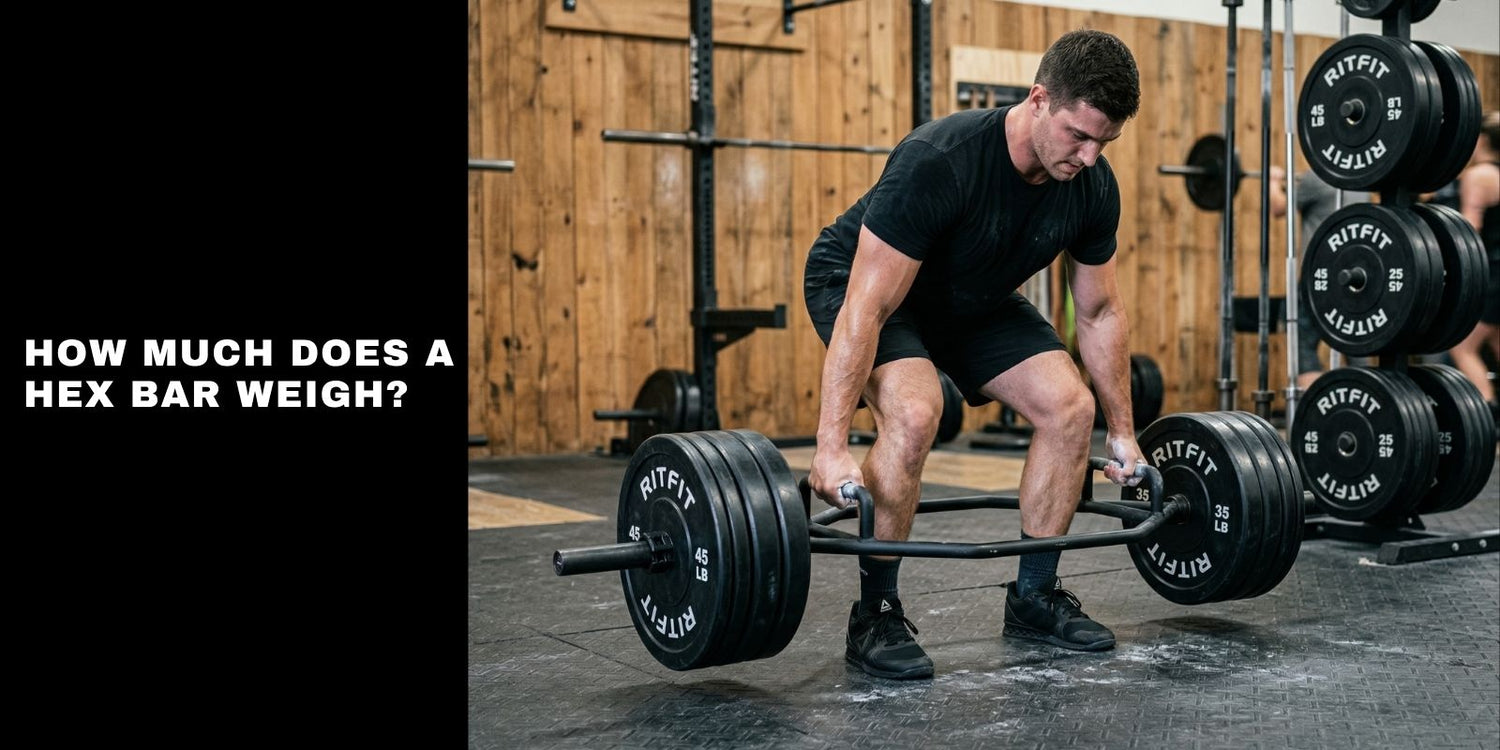
Most trap bars weigh about 45 to 70 pounds, but lighter home gym models can start near 40 pounds and heavier open or rackable designs can exceed 80 pounds. That range matters because the empty bar changes your total load, your training log, your one rep max estimates, and your overall lifting safety.
Key Takeaways
- Most trap bars do not share one standard empty weight.
- Basic closed hex bars are often lighter than open, rackable, or commercial designs.
- Bar weight affects plate math, progressive overload, and percent based programming.
- You should always count the trap bar itself when logging total weight.
- The best way to avoid guesswork is to verify your bar through the manufacturer or a scale.
What Is a Trap Bar?
A trap bar, also called a hex bar, is a specialty barbell that places you inside the frame and uses a neutral grip. That design keeps the load closer to your center of mass, which can make deadlifts, carries, shrugs, and jumps feel more balanced and more comfortable for many lifters.
Standard Trap Bar Weights
There is no universal standard for trap bar weight, so the empty bar depends on frame size, steel thickness, handle style, sleeve length, and whether the bar is open or closed. In practice, most trap bars fall into three useful groups: lighter basic bars, heavier commercial bars, and specialty open or rackable bars.
| Type of Trap Bar | Approximate Weight | Typical Use |
|---|---|---|
| Basic Standard | 40 to 55 lbs | Home gyms, budget setups, general fitness |
| Heavy Duty Commercial | 60 to 70 lbs | Commercial gyms, strength rooms, athletic facilities |
| Open or Specialty | 60 to 80 plus lbs | Advanced strength training, lunges, carries, power work |
Common Types of Trap Bars and Their Weights
Basic Standard Trap Bar
A basic trap bar usually has a closed hex frame, fixed handles, and a simpler steel build, so it often lands around 40 to 55 pounds. These bars are common in garage gyms and entry level setups because they are affordable, compact, and easy to use.
Heavy Duty Commercial Trap Bar
A commercial trap bar is usually built with thicker tubing, tougher sleeves, and a wider frame, so it often weighs about 60 to 70 pounds. That extra mass improves durability in high traffic gyms where the bar gets used, dropped, and reloaded all day.
Open Trap Bar
An open trap bar removes the rear frame section, which makes lunges, split squats, carries, and Romanian deadlifts easier to perform. Many open designs still weigh 60 to 80 pounds or more because they use more reinforcement, longer sleeves, and multiple handle options.
Specialty and Heavy Trap Bars
Some specialty trap bars include raised handles, rackable sleeves, built in jacks, or oversized frames for strongman and high performance training. These bars can exceed 80 pounds before plates are added, so assuming they weigh the same as a straight barbell can create a big logging error.
How to Find Out How Much Your Trap Bar Weighs
Check Manufacturer Specifications
The fastest way to find the correct weight is to check the product page, manual, or brand specifications for that exact trap bar model. If you are in a gym, look for a logo, sleeve marking, end cap label, or model name that can help you identify the bar.
Weigh the Trap Bar Yourself
If no label is available, weigh yourself on a scale, then weigh yourself again while holding the empty trap bar and subtract the difference. This simple method is usually good enough for training logs and helps you stop guessing about your working weight.
Ask the Facility Staff
Gym staff may already know the empty bar weight, especially if the same bar has been used in group training or strength classes. Once you confirm the number, save it in your notes so you can keep your future sessions consistent.
Why Trap Bar Weight Actually Matters
Accurate Load Tracking
If you do not know the empty bar weight, your total load is wrong from the start. That makes it harder to judge progress, compare sessions, and know whether you actually added weight over time.
Programming and Percent Based Work
Percent based training only works when your starting load is accurate, because a heavier trap bar can quietly turn a planned volume day into a much tougher session. Even a 10 to 20 pound mistake changes your working sets, recovery demands, and training max calculations.
Comparing Trap Bar and Straight Bar Deadlifts
Many lifters compare trap bar deadlifts with straight bar deadlifts, but that comparison only makes sense when the true load is known. Even then, the numbers are not perfectly interchangeable because handle height, body position, and bar path all change the movement.
Safety and Injury Risk
Unexpected load jumps raise fatigue and make technique harder to control, especially for beginners and lifters coming back from pain or injury. Knowing the real empty bar weight helps you warm up better, progress more smoothly, and avoid loading mistakes.
Trap Bar vs. Barbell: Other Factors Besides Weight
Weight is only one part of the equation because a trap bar changes how the lift feels and how force is distributed through the body. The neutral grip and centered load often allow a more upright torso and make the movement more approachable for beginners.
Handle height also matters because raised handles shorten the range of motion and often make the lift easier from the floor. That is why two lifts with the same total pounds can still feel very different when one uses a trap bar and the other uses a straight barbell.
Practical Tips for Training with a Trap Bar
- Log the exact bar: Write down the specific trap bar and its empty weight in your training notes. This keeps your progress tracking clean when you switch between a home gym and a commercial gym.
- Use the same bar when possible: Consistency makes your numbers easier to compare from week to week. Using the same bar also keeps handle height, balance, and starting position more predictable.
- Adjust your plate math: A 65 pound trap bar with two 45 pound plates equals 155 pounds, not 135. Small math errors add up fast when you are training close to a target load.
- Warm up with the empty bar first: An empty bar set tells you how the trap bar feels before you load heavy plates. It also helps you notice handle height, bar balance, and whether the frame feels different from the one you used last time.
FAQs
Does every trap bar weigh the same?
No, trap bars are not standardized like a typical 45 pound Olympic barbell. Depending on the design, the empty bar can be closer to 40 pounds or well above 80 pounds.
What does a trap bar weigh in kilograms versus pounds?
Many standard trap bars fall around 20 to 32 kilograms, which is about 45 to 70 pounds. Heavier open and specialty bars can go beyond 36 kilograms, especially when they include rackable sleeves or reinforced frames.
Do women’s trap bars exist and do they weigh less?
Trap bars are not usually sold with the same men’s and women’s standard system used for Olympic barbells. Some lighter models do exist, but the best approach is still to check the actual manufacturer specification instead of assuming the bar was built for one group of lifters.
How much does the trap bar at commercial chains usually weigh?
Many commercial gyms use trap bars that land closer to 60 to 70 pounds because heavier steel improves durability. Even so, equipment can vary a lot by brand and location, so it is smart to verify the exact bar before logging a heavy session.
Should I count the trap bar when logging my deadlift weight?
Yes, you should always count the trap bar in your total load. Leaving it out makes your training log less accurate and can throw off your volume tracking, progress comparisons, and future programming.
Conclusion
Most trap bars do not weigh the same, and that difference is large enough to affect how you train, log progress, and compare lifts. If you want more accurate programming and safer heavy sessions, verify the empty bar weight first, then record it every time you use that bar.
Disclaimer:This article is for general education only and does not replace medical advice, injury rehab guidance, or in person coaching. Trap bar design and empty bar weight vary by manufacturer, so always verify your own bar before lifting heavy or returning from injury.