Table of Contents
- The Basic Components of Barbell Weight
- What Does 2 45 Plates on Each Side Mean?
- Step by Step: How Much Is 2 45 Plates on Each Side?
- General Method for Calculating Barbell Weight
- Common Mistakes When Counting Plates
- Variations: Different Bars and Plate Types
- Why Knowing Your Exact Weight Matters
- Quick Reference: Common Barbell Setups
Two 45 lb plates on each side of a standard 45 lb bar equals 225 lb. That answer changes if the bar is lighter, heavier, or built into a Smith machine, so the bar itself always matters.
Key Takeaways
- Two 45 lb plates on each side of a standard 45 lb bar equals 225 lb.
- The fastest way to calculate barbell weight is to total one side, double it, then add the bar.
- This setup is only 225 when the bar itself weighs 45 lb.
- Women’s bars, 20 kg bars, Smith machines, and specialty bars can change the final total.
- Accurate plate math improves safety, progress tracking, and load selection.
The Basic Components of Barbell Weight
Barbell math has two parts: the weight of the bar and the weight of the plates. You need both numbers to know what you are actually lifting.
The Bar Weight Comes First
In most commercial gyms, a standard men’s Olympic bar weighs 45 lb. Some bars weigh 35 lb, 20 kg, or more, so never assume every straight bar is identical.
The Plates Must Be Counted on Both Sides
Each sleeve of the bar holds its own plates, and both sides count toward the total. If one side has 90 lb of plates, the full plate load is 180 lb before you add the bar.
What Does 2 45 Plates on Each Side Mean?
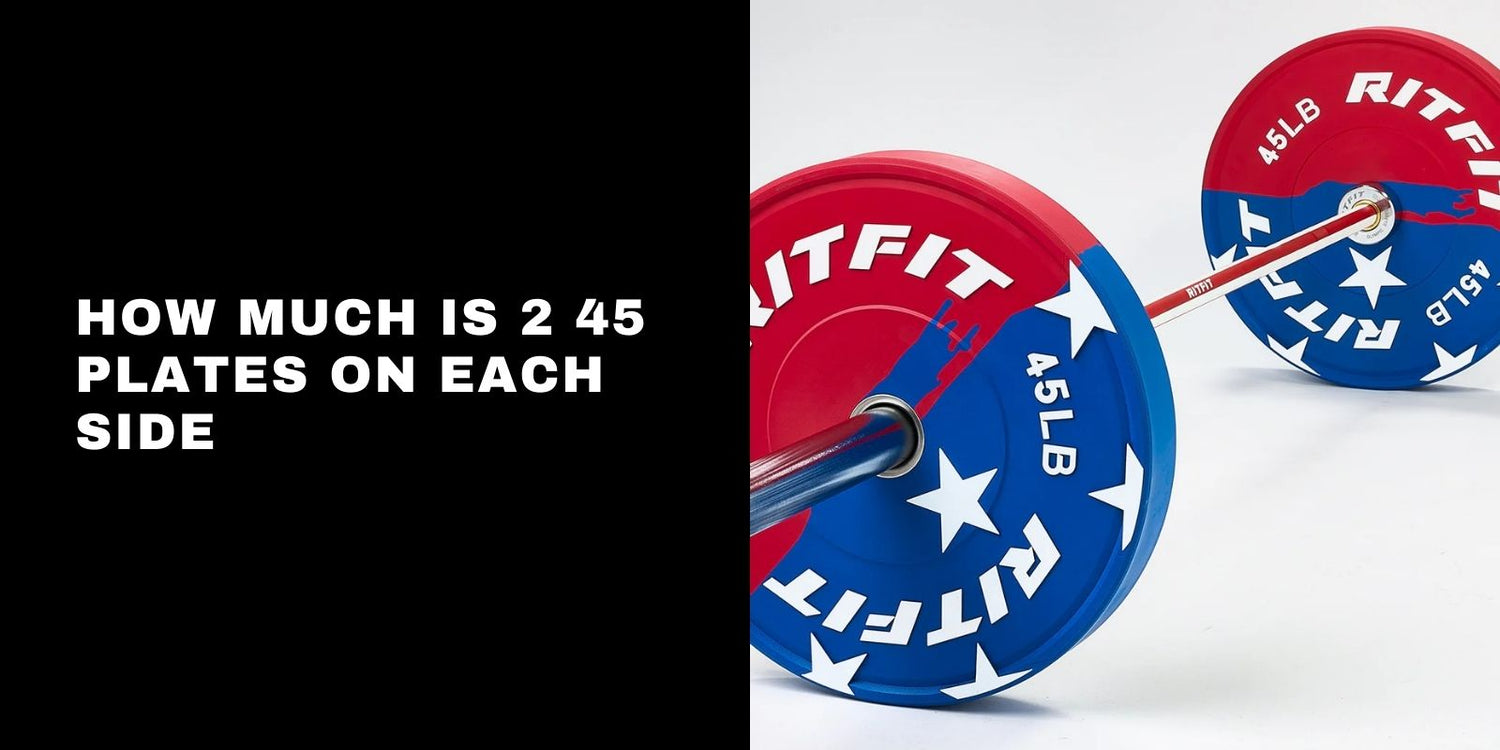
This setup means the left side has two 45 lb plates and the right side also has two 45 lb plates. In other words, the bar carries four 45 lb plates in total.
Step by Step: How Much Is 2 45 Plates on Each Side?
Count One Side First
One side has two 45 lb plates, so one sleeve holds 90 lb. Starting with one side makes the math faster and easier to check.
- One side: 2 × 45 = 90 lb
- Both sides: 90 + 90 = 180 lb
- Add the bar: 180 + 45 = 225 lb
The Final Answer
Two 45 lb plates on each side of a standard 45 lb bar equals 225 lb. That is why 225 is one of the most recognized strength milestones in the gym.
General Method for Calculating Barbell Weight
You can calculate almost any straight barbell setup with the same simple method. Add the plates on one side, double that number, then add the bar weight.
Use This Formula
Total plates on one side × 2 + bar weight = total load. Once you know the bar weight, the rest is simple plate math.
- 1 plate on each side: 45 + 45 + 45 = 135 lb
- 1 plate and 25 on each side: 70 + 70 + 45 = 185 lb
- 2 plates and 10 on each side: 100 + 100 + 45 = 245 lb
- 3 plates on each side: 135 + 135 + 45 = 315 lb
Common Mistakes When Counting Plates
Most plate math errors happen because lifters rush or assume the equipment is standard. A small counting mistake can lead to a heavier set than expected.
- Forgetting the bar: Four 45 lb plates equal 180 lb, not 225 lb, until you add the 45 lb bar.
- Counting only one side: Seeing 90 lb on one sleeve does not mean the full bar is 90 lb.
- Confusing pounds and kilograms: A 20 kg plate looks close to a 45 lb plate, but it weighs slightly less.
- Assuming every bar is standard: Women’s bars, technique bars, and specialty bars can change the final load.
- Guessing on a Smith machine: The starting resistance depends on the machine design and may not match a free weight bar.
Variations: Different Bars and Plate Types
Not every loaded bar that looks like 225 actually is 225. The bar type and the plate system can change the real number.
When It Is Not 225
It is only 225 when the bar weighs 45 lb. If the bar or machine starts lighter or heavier, the total changes immediately.
- Women’s bar: Four 45 lb plates plus a 35 lb bar equals 215 lb.
- 20 kg Olympic bar with 20 kg plates: Two 20 kg plates on each side plus the bar equals 100 kg, which is about 220 lb.
- Smith machine: The starting resistance varies by model, guide system, and counterbalance.
- Specialty bar: Trap bars, safety squat bars, and other specialty designs often weigh more or less than a standard bar.
Bumper Plates and Iron Plates
A 45 lb bumper plate and a 45 lb iron plate weigh the same even though they look very different. The main difference is size, thickness, and intended use, not the number on the bar.
Why Knowing Your Exact Weight Matters
Accurate barbell math helps you train more safely and track progress more honestly. It also makes percentage based programs, personal records, and planned jumps in weight easier to manage.
Why Lifters Double Check the Setup
Correct loading helps you avoid accidental jumps, uneven sleeves, and bad training logs. This matters even more when you train alone, switch gyms, or use unfamiliar bars and machines.
Quick Reference: Common Barbell Setups
This table uses a standard 45 lb bar and common pound plates. If your gym uses a different bar, adjust the final number before you lift.
| Setup | Total Weight |
|---|---|
| Bar only | 45 lb |
| 1 plate on each side | 135 lb |
| 1 plate and 25 on each side | 185 lb |
| 2 plates on each side | 225 lb |
| 2 plates and 25 on each side | 275 lb |
| 3 plates on each side | 315 lb |
| 4 plates on each side | 405 lb |
FAQs
FAQs
How much weight is 2 45 plates on each side of a barbell?
The total weight is exactly 225 pounds. You get this number by adding the standard bar weight of 45 pounds to the four loaded plates. Each side holds 90 pounds, which makes the total plate weight 180 pounds before factoring in the empty barbell.
Do you count the bar when calculating 2 45 plates on each side?
Yes, you always count the bar to determine the true lifted weight. A standard barbell weighs 45 pounds and must be included in your plate math. Forgetting the bar is a common beginner mistake that leads to inaccurate training logs and poor strength tracking.
What is the formula to calculate barbell load with 45 plates?
You multiply the total weight of plates on one side by two and add the bar weight. This simple mental math works for any setup. If you have two 45 plates on one side, you double that 90 pounds and add the 45 pound bar.
Are bumper plates heavier than iron plates when using 2 45 plates?
No, the numerical weight is exactly the same for both types. A setup with two 45 pound bumper plates on each side still equals 225 pounds total. The only difference is visual because bumper plates are made of dense rubber and look much thicker.
Why is reaching 2 45 plates on each side a major milestone?
Lifting 225 pounds represents a significant level of strength for most gym members. It is a highly recognizable visual standard in fitness communities. Accurate plate math is crucial to ensure you are actually hitting this specific target safely without dangerous imbalances during your progressive overload.
Conclusion
Two 45 lb plates on each side equals 225 lb only when the bar weighs 45 lb. Once you know that rule, you can calculate almost any setup quickly, avoid loading mistakes, and train with more confidence.
Disclaimer: This guide is for general educational use. Always check the listed weight of your bar, plates, or machine before lifting, especially if you are using a Smith machine, a women’s bar, or specialty equipment.