To calculate calories from carbs, protein, and fat, multiply carb grams by 4, protein grams by 4, and fat grams by 9, then add the results together. This simple macro calorie formula helps you understand where your food energy comes from and how each meal fits your fitness goal.
Macro math is most useful when you use it as an estimate, not a perfect medical measurement. Labels, fiber, serving sizes, and food databases can all create small differences.
Key Takeaways
- Carbs provide 4 calories per gram: Multiply total carbohydrate grams by 4 to estimate carb calories.
- Protein provides 4 calories per gram: Multiply protein grams by 4 to estimate protein calories.
- Fat provides 9 calories per gram: Fat is more calorie dense than carbs or protein.
- Total calories come from adding macro calories: Use carbs plus protein plus fat to estimate meal calories.
- Macro math is an estimate: Nutrition labels may differ because of rounding, fiber, sugar alcohols, and serving size rules.
Calories Per Gram for Carbs, Protein, and Fat
Carbohydrates and protein each provide about 4 calories per gram, while fat provides about 9 calories per gram.[1] These values are known as Atwater factors and are widely used for nutrition labels and food energy estimates.
| Macronutrient | Calories Per Gram | Basic Formula |
|---|---|---|
| Carbohydrates | 4 calories | Carb grams x 4 |
| Protein | 4 calories | Protein grams x 4 |
| Fat | 9 calories | Fat grams x 9 |
The Macro Calorie Formula
The standard macro calorie formula is total calories equals carb grams x 4 plus protein grams x 4 plus fat grams x 9. This gives you an estimated calorie total based on the three main energy yielding macronutrients.
- Carb calories: Total carb grams x 4.
- Protein calories: Total protein grams x 4.
- Fat calories: Total fat grams x 9.
- Total macro calories: Carb calories plus protein calories plus fat calories.
How to Calculate Calories From Macros Step by Step
Start with the grams of carbs, protein, and fat listed on the nutrition label or food tracking app. Then multiply each macro by its calorie value and add the results.
- Step 1: Find total carbohydrate grams, protein grams, and fat grams per serving.
- Step 2: Multiply carbohydrate grams by 4.
- Step 3: Multiply protein grams by 4.
- Step 4: Multiply fat grams by 9.
- Step 5: Add all three results to estimate total calories.
Example Calculation for One Meal
A meal with 50 grams of carbs, 30 grams of protein, and 15 grams of fat has an estimated 455 calories. The calculation is 50 x 4 plus 30 x 4 plus 15 x 9.
| Macro | Grams | Calories Per Gram | Calories |
|---|---|---|---|
| Carbs | 50 g | 4 | 200 |
| Protein | 30 g | 4 | 120 |
| Fat | 15 g | 9 | 135 |
| Total | 455 |
How to Calculate Macro Percentages
Macro percentages show how much of your total calorie intake comes from carbs, protein, and fat. Divide each macro calorie number by total calories, then multiply by 100.
- Carb percentage: Carb calories divided by total calories x 100.
- Protein percentage: Protein calories divided by total calories x 100.
- Fat percentage: Fat calories divided by total calories x 100.
In the example above, carbs provide about 44 percent, protein provides about 26 percent, and fat provides about 30 percent of the meal calories. These percentages help you compare meals, but they should not replace overall food quality.
How to Convert Calories Back to Macro Grams
You can convert calories back to grams by dividing carb calories by 4, protein calories by 4, and fat calories by 9. This is useful when you want to build a meal plan around a calorie target.
| Goal | Conversion Formula | Example |
|---|---|---|
| Carb grams | Carb calories divided by 4 | 200 carb calories = 50 g carbs |
| Protein grams | Protein calories divided by 4 | 120 protein calories = 30 g protein |
| Fat grams | Fat calories divided by 9 | 135 fat calories = 15 g fat |
Why Nutrition Label Calories May Not Match Your Math
Nutrition label calories may not match your macro calculation exactly because labels use rounding rules and food energy values are estimates. Dietary energy research also shows that metabolizable energy can vary by food type, processing, and digestibility.[2]
- Label rounding: Calories and macro grams may be rounded on packaged foods.
- Fiber: Fiber can contribute fewer usable calories than starch or sugar.
- Sugar alcohols: Some low sugar foods contain sweeteners with different calorie values.
- Serving size: A small serving size difference can change the final calorie count.
- Food structure: Whole foods may not release all calculated energy during digestion.
Atwater Factors Are Useful, But Not Perfect
Atwater factors are reliable for everyday calorie estimates, but they do not measure every food with perfect precision. Research on almonds found that measured energy was lower than the value predicted by Atwater calculations, showing why macro math should be treated as an estimate.[3]
This does not mean macro tracking is useless. It means consistency matters more than chasing exact numbers for every bite.
Thermic Effect of Food and Macro Calories
The thermic effect of food means your body uses energy to digest, absorb, and process food. Protein generally has a higher thermic effect than carbs or fat, but this does not make calorie math unnecessary.[4]
For practical tracking, keep using the 4, 4, and 9 formula. Then focus on food quality, protein adequacy, training consistency, and sustainable habits.
How Macro Calories Support Fitness Goals
Macro calories help connect nutrition decisions to training goals. They show whether your meals support energy, recovery, muscle growth, or fat loss.
- For muscle gain: Prioritize enough total calories, adequate protein, and progressive strength training.
- For fat loss: Use macro tracking to create a moderate calorie deficit that you can sustain.
- For performance: Keep enough carbs to support training intensity, especially during high volume workouts.
- For general health: Use macro ranges as a guide, then prioritize whole foods, fiber, hydration, and consistency.
Protein, Strength Training, and Muscle Recovery
Protein tracking is especially useful for people who lift weights because protein supports muscle repair and training adaptation. A large meta analysis found that protein supplementation improved strength and muscle size during resistance training, with benefits leveling around 1.6 grams per kilogram per day for many healthy adults.[5]
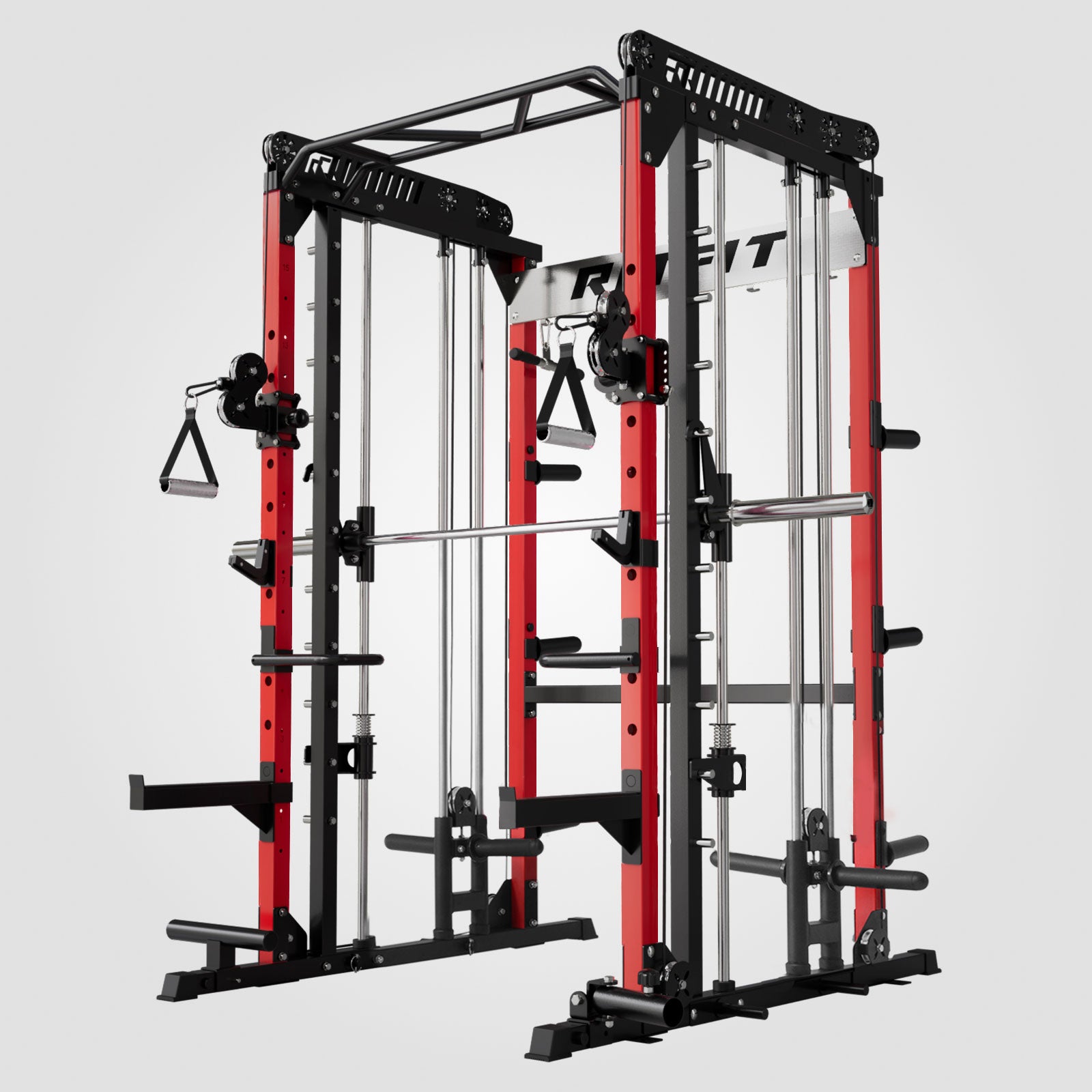
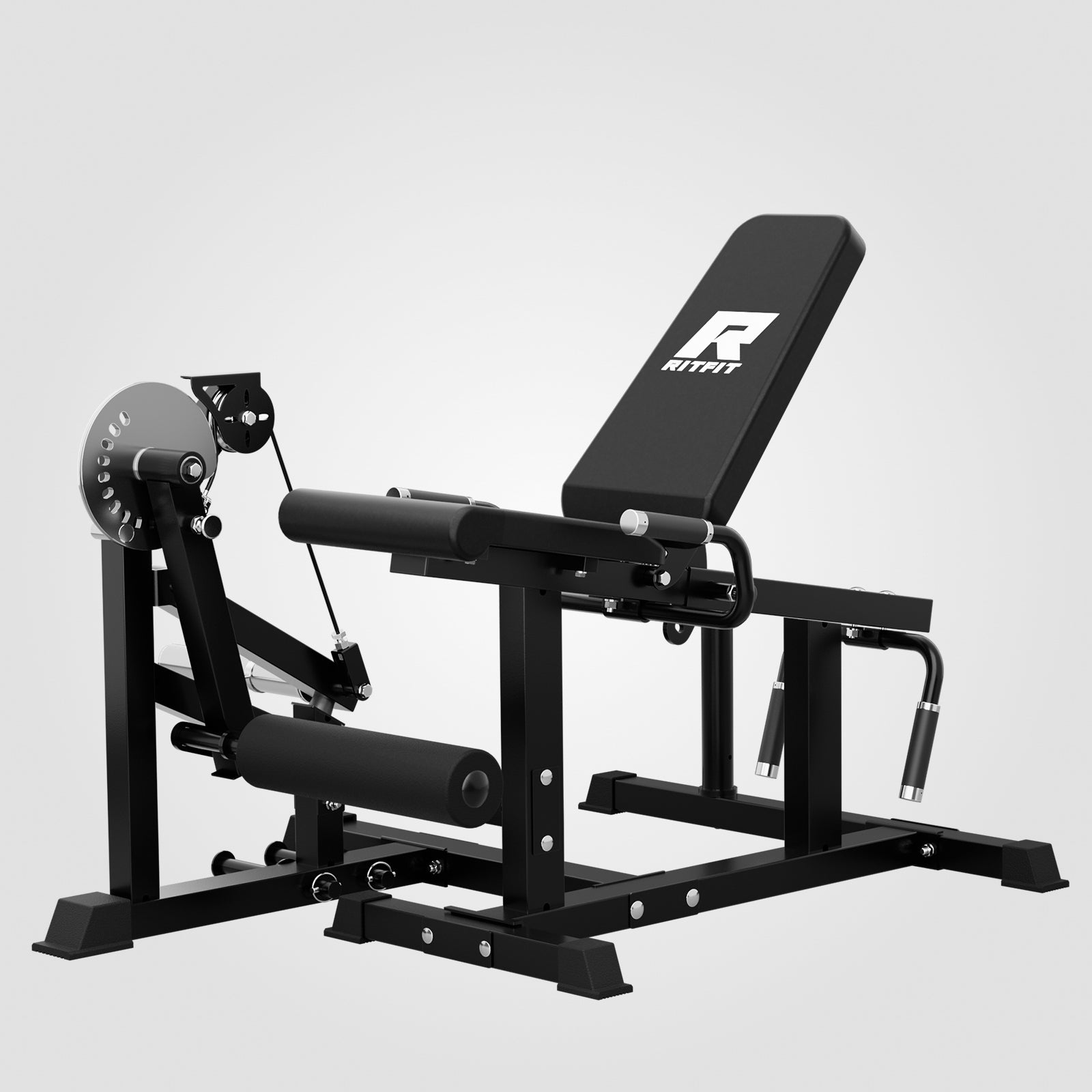
Pairing macro awareness with a consistent training space can make your routine easier to follow. RitFit offers strength machines for home gym training, Smith machines for guided strength workouts, and dumbbells for progressive strength training.
Macro Tracking for a Home Gym Routine
Macro tracking works best when it supports a realistic training plan. If you train at home, your nutrition plan should match your weekly workout volume, recovery needs, and available equipment.
For a balanced home setup, consider pairing your nutrition goals with adjustable weight benches for home workouts, barbells and weight plates for strength progression, and a complete home gym equipment plan.
Common Mistakes When Calculating Calories From Macros
Most macro calculation mistakes come from serving size errors, incomplete tracking, or treating estimates as exact science. Fixing these basics usually improves accuracy more than changing your macro ratio.
- Using the wrong serving size: Always check whether the label lists one serving or the full package.
- Forgetting cooking changes: Raw and cooked weights can produce different tracking results.
- Ignoring added oils: Cooking oil can add calories quickly because fat contains 9 calories per gram.
- Counting only protein foods: Many foods contain more than one macro, such as beans, dairy, nuts, and grains.
- Overtrusting app entries: User submitted database entries may be inaccurate or incomplete.
Simple Macro Calculator Template
Use this manual template when you want to calculate a meal quickly. Enter the grams from your food label or tracking app, then complete the formula.
| Input | Your Grams | Formula | Your Calories |
|---|---|---|---|
| Carbs | grams x 4 | ||
| Protein | grams x 4 | ||
| Fat | grams x 9 | ||
| Total | Add all calories |
When Macro Math Is Most Useful
Macro math is most useful when you need a clear view of your calorie sources. It can help you compare meals, plan protein intake, adjust fat intake, or understand why two foods with similar serving sizes have different calories.
- Meal planning: Build meals that fit your calorie and protein goals.
- Label reading: Check whether the listed calories make sense.
- Fitness tracking: Match your food intake to your training routine.
- Weight management: Create a consistent calorie target without guessing.
When You Should Be More Cautious
Be cautious with macro tracking if you have a medical condition, pregnancy related nutrition needs, kidney disease, diabetes, or a history of disordered eating. In those cases, a registered dietitian or qualified healthcare professional can help you choose safer targets.
Macro calculators can support awareness, but they cannot diagnose nutrient needs or replace individualized care. Use the numbers as a guide rather than a rule.
FAQs
How do you calculate calories from carbs, protein, and fat?
Multiply carbohydrates by 4, protein by 4, and fat by 9, then add the results. This gives an estimated calorie total from the three main macronutrients. Small differences can happen because labels round values and some foods contain fiber or sugar alcohols.
What are calories per gram for each macronutrient?
Carbohydrates provide 4 calories per gram, protein provides 4 calories per gram, and fat provides 9 calories per gram. These standard values are useful for label reading and meal planning, but they are estimates rather than perfect measurements for every food.
Can macro calories help with weight loss?
Yes. Macro calories can help with weight loss because they show where your energy intake comes from. A sustainable calorie deficit still matters most, and macro targets should be adjusted around hunger, training, food quality, medical needs, and long term consistency.
Is it better to track macro grams or percentages?
Track grams when you need precision, and use percentages when you want a quick overview of your diet pattern. Grams are usually more useful for protein targets, while percentages help compare whether a meal is carb heavy, fat heavy, or balanced.
Should you subtract fiber when calculating calories?
Sometimes. Fiber may contribute fewer usable calories than starch or sugar, but nutrition labels and apps handle it differently. For everyday tracking, use the label total first, then stay consistent with one method instead of changing your approach from meal to meal.
How much protein should strength training adults eat?
Protein needs vary, but strength training adults often benefit from higher protein than sedentary adults. Research suggests gains may level off around 1.6 grams per kilogram per day for many healthy lifters, but personal needs depend on training, body size, and medical status.
Conclusion
Calculating calories from carbs, protein, and fat is simple once you know the 4, 4, and 9 formula. Use macro math to understand meals, compare labels, and support your fitness goals, but remember that calorie values are estimates and your long term habits matter most.
Disclaimer: This article is for general educational purposes only and is not medical or dietetic advice. Calorie and macro needs vary by age, body size, activity level, health status, medication use, and goals. Consult a registered dietitian or qualified healthcare professional for personalized nutrition guidance.
References
- Bray GA. In the Footsteps of Wilbur Olin Atwater: The Atwater Lecture for 2019. Adv Nutr. 2020;11(3):743-750. doi:10.1093/advances/nmz128
- Roberts SB, Flaherman V. Dietary Energy. Adv Nutr. 2022;13(6):2681-2685. doi:10.1093/advances/nmac092
- Novotny JA, Gebauer SK, Baer DJ. Discrepancy between the Atwater factor predicted and empirically measured energy values of almonds in human diets. Am J Clin Nutr. 2012;96(2):296-301. doi:10.3945/ajcn.112.035782
- Ravn AM, Gregersen NT, Christensen R, et al. Thermic effect of a meal and appetite in adults: an individual participant data meta-analysis of meal-test trials. Food Nutr Res. 2013;57:19676. doi:10.3402/fnr.v57i0.19676
- Morton RW, Murphy KT, McKellar SR, et al. A systematic review, meta-analysis and meta-regression of the effect of protein supplementation on resistance training-induced gains in muscle mass and strength in healthy adults. Br J Sports Med. 2018;52(6):376-384. doi:10.1136/bjsports-2017-097608